
Are you eyeing a 400-watt (W) solar panel? Wondering if it’s the right solution for your energy needs? That’s an excellent question. Producing your own electricity is tempting, and it’s becoming increasingly accessible. Whether you’re a homeowner or a renter, in the North or the South, the idea of generating your own local, renewable energy can seem like a good deal. But concretely, what can a 400W solar panel do for you? How does its efficiency work? We’ll break it all down to help you see more clearly before you dive in.
Key Takeaways
- The efficiency of a 400W solar panel, expressed as a percentage, indicates the amount of solar energy converted into electricity. It is influenced by factors such as orientation, tilt, the area’s sunshine, temperature, and the quality of the equipment.
- The nominal power of 400 peak watts (Wp) of a 400W solar panel is a measure of performance under ideal conditions. Actual production in kilowatt-hours (kWh) varies depending on weather and location, but can cover a portion of a household’s needs.
- To optimise the efficiency of your 400W solar panel, ensure it is well-oriented (ideally south), tilted at about 30-35 degrees, and regularly cleaned to prevent the accumulation of dirt or shade.
- There are different types of solar panels (monocrystalline, polycrystalline, amorphous), each with varying efficiency. Monocrystalline panels generally offer the best efficiency but can be more expensive.
- A 400W solar panel is a good option for covering the baseline consumption (minimum electricity expenses) and reducing your bill, but it does not allow for complete electrical autonomy or energy storage in a battery.
Understanding the Efficiency of a 400W Solar Panel
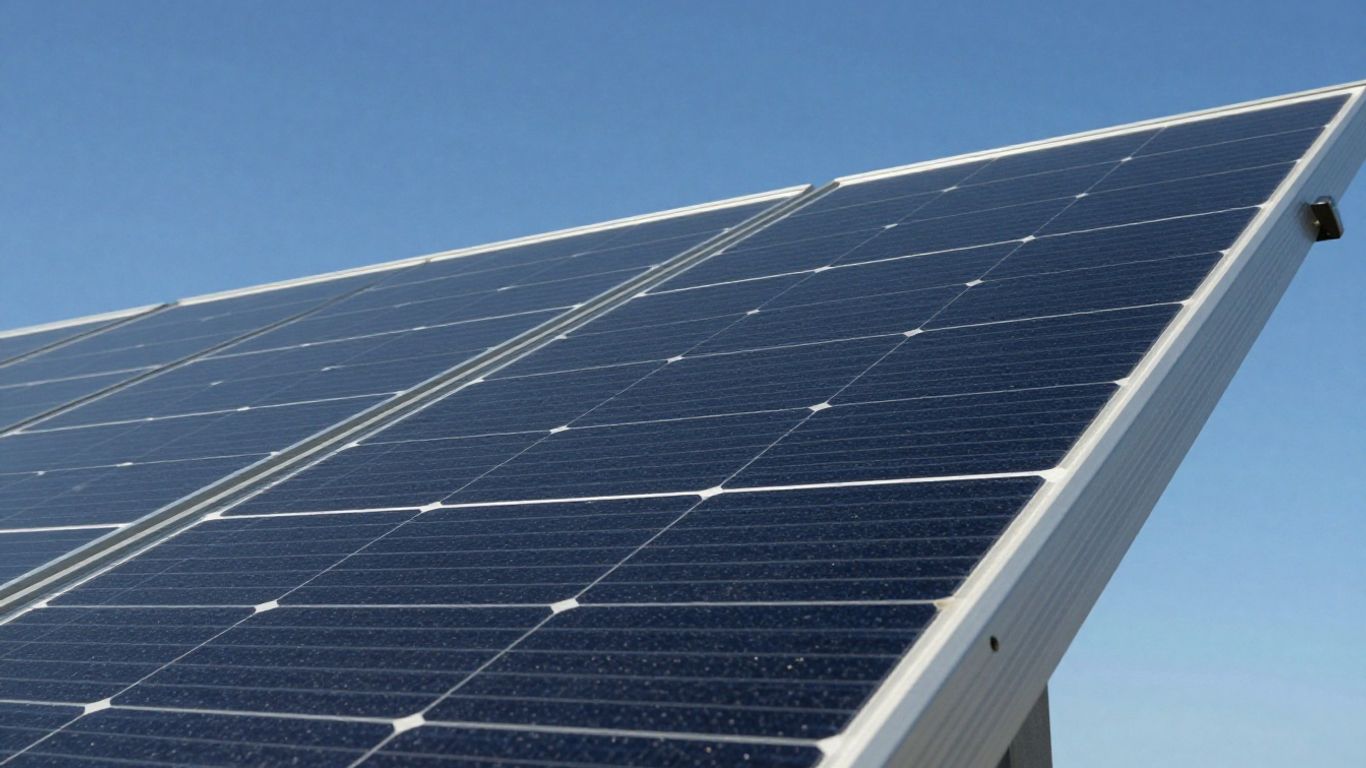
Before you embark on installing solar panels, it’s essential to fully grasp what photovoltaic efficiency is and what influences it. This will enable you to make informed choices and optimise your energy production.
Definition of Photovoltaic Efficiency
The efficiency of a solar panel, expressed as a percentage, represents its capacity to convert the light energy it receives into usable electricity. Concretely, if a panel has an efficiency of 20%, it means it transforms 20% of the solar energy that reaches it into an electric current. Current domestic solar panels generally display efficiencies between 13% and 24%. Higher efficiency means better performance for a given surface area.
Factors Influencing Panel Performance
Several elements can affect the actual performance of your solar panels. It’s not solely about the nominal power indicated on the technical sheet. The environment in which the panel is installed plays a major role. Orientation, tilt, the presence of shadows, as well as ambient temperature and the cleanliness of the panel’s surface, are all variables that modulate the amount of electricity produced.
It is important to understand that the efficiency announced in a laboratory often differs from that obtained in the field. Real-world conditions are rarely ideal.
Calculating Solar Panel Efficiency
To estimate efficiency, a simple formula is used: Efficiency = Electrical power produced / Solar power received. Solar power received takes into account the panel’s surface area and the intensity of solar radiation (often standardised at 1000 W/m² in tests). For example, a 1.7 m² panel with 20% efficiency receiving 1000 W/m² will produce 340 Wp (1.7 m² * 1000 W/m² * 0.20). It is useful to know the dimensions of a 400W solar panel to estimate the total surface area of your installation.
Power and Production of a 400W Solar Panel
When we talk about a 400-watt solar panel, it’s important to distinguish its nominal power from its actual production. They are not quite the same thing, and understanding this difference will help you better assess what you can expect from your installation.
Understanding the Concept of Peak Watts (Wp)
The power of a solar panel is generally expressed in peak watts (Wp). This measurement represents the maximum power the panel can generate under ideal laboratory conditions. Imagine a perfect environment: a temperature of 25°C, optimal sunshine, and a complete absence of shade. These ideal conditions are rarely met in everyday life. The 400 Wp figure therefore indicates the maximum potential, much like a car’s top speed. It’s important to remember that actual production will often be lower.
Estimating Daily Production in kWh
To get a more concrete idea of what your panel can produce, you need to look at kilowatt-hours (kWh) over a day. The actual production of a 400 Wp panel varies considerably depending on several factors, including your geographical location and the weather. On average, it is estimated that such a panel can produce between 986 Wh and 1534 Wh per day. This range gives you a better idea of the energy you can actually use or store. For more precise calculations, it is useful to consult estimates of daily production.
Difference Between Nominal Power and Actual Production
Nominal power (the 400 Wp) is a theoretical figure. Actual production, on the other hand, is influenced by sunshine, temperature, the orientation, and the tilt of your panel. For example, a cloudy day or excessive heat can significantly reduce the amount of electricity produced compared to the advertised 400 Wp. It is therefore more realistic to base your planning on the estimated daily production in kWh for powering your appliances. Remember that even a 400 Wp panel will generally not be enough to cover all the needs of a household, but it can help reduce your electricity bill by covering part of your consumption, such as powering a refrigerator or an internet router. Estimating production is therefore a key step before you start.
Key Elements Determining Efficiency
Several factors come into play to determine how much electricity your solar panels will actually produce. It’s not just a matter of nominal power; the environment and installation play an important role.
The Importance of Location and Orientation
Where you install your panels is truly crucial. Ideally, you should aim for a south-facing exposure. This is where the sun shines strongest during the day, especially in the Northern Hemisphere. A south orientation maximises direct sunlight time. If south is not possible, a southeast or southwest orientation can also work, but expect slightly lower production.
The Impact of Optimal Tilt
The angle of your panels relative to the ground is also a matter of calculation. To capture the maximum solar energy throughout the year, the sun’s rays should hit the panels as perpendicularly as possible. In mainland France, a tilt of around 30 to 35 degrees is often recommended. This helps compensate for the variation in the sun’s height between summer and winter. Of course, the pitch of your roof may influence this choice, and compromises sometimes have to be made.
Influence of Geographical Area and Sunshine
It is obvious that the climate of your region has a direct impact. The southern regions of France benefit from more generous sunshine than those in the north. This translates into higher electricity production, even with identical panels. Beyond the sheer amount of sun, you also need to consider weather conditions: fewer rainy or foggy days mean more production. Temperature also plays a role: panels that are too hot, above 25°C, see their efficiency decrease. This is why good ventilation around the panels is recommended.
It is important to note that the efficiency of a solar panel is not a fixed value. It changes according to many external parameters, and even ambient temperature. A well-designed installation takes these variations into account to optimise long-term production.
Optimising the Performance of Your Solar Installation
Once your solar panels are installed, you can take steps to ensure they produce the maximum amount of electricity possible. Several simple actions can make a real difference in the long run.
The Benefits of Regular Cleaning
Dust, dead leaves, pollution, or even bird droppings can accumulate on the surface of your solar panels. This layer of dirt acts like a veil, blocking some of the sun’s rays before they even reach the photovoltaic cells. A clean panel is a panel that produces more. It is therefore recommended to clean your panels at least twice a year, ideally in spring and autumn. Use demineralised water and a soft brush to avoid scratching the surface. In winter, also remember to remove any snow that might accumulate.
Managing Shade for Maximum Production
Shade is the number one enemy of solar production. Even a small shaded area on part of the panel can significantly reduce the overall performance of the installation. It is important to monitor the environment around your panels. Over time, trees can grow, branches can extend, or new buildings can appear. If trees are causing shade, simple *pruning* may be enough to restore optimal exposure. Remember to regularly check that nothing is obstructing the direct sunlight on your panels.
Controlling Panel Temperature
We often think that the hotter it is, the stronger the sun, and therefore the better it is for solar panels. In reality, it’s a bit more complex. Solar panels perform less well when they overheat. Ambient temperatures that are too high, above 25°C, can reduce their efficiency. To limit this effect, it is best to ensure good air circulation around the panels. So-called « on-roof » installations, where the panels are slightly raised from the roof, promote this natural ventilation and help maintain a more reasonable temperature for optimal operation.
Types of Solar Panels and Their Efficiency
The world of solar panels is not uniform; there are several technologies, each with its own efficiency characteristics. Understanding these differences is essential for making an informed choice, especially when aiming for a specific power output like that of a 400W panel.
Monocrystalline Panels and Their Efficiency
Monocrystalline panels are often considered the high-end option in terms of efficiency. They are made from a single crystal of pure silicon, which allows electrons to flow more freely. This uniform structure translates into higher efficiency, generally between 16% and 24%. They are particularly suitable for confined spaces, as they produce more electricity per square metre. If your budget allows, monocrystalline panels represent a wise investment to maximise your energy production, even if their initial cost is higher. They are an excellent option for installations where space is limited, such as on the roofs of houses in urban areas.
Polycrystalline Panels: A Good Compromise
Polycrystalline panels, on the other hand, are made from melted-together silicon fragments. This process is less expensive, which is reflected in the price of the panels. Their efficiency is generally slightly lower than that of monocrystalline panels, ranging between 13% and 18%. They represent excellent value for money and are very common on the market. For a 400W installation, they can certainly meet needs, provided there is sufficient surface area to compensate for their slightly lower efficiency.
Amorphous Silicon Panels: A Less Efficient Option
Finally, amorphous silicon panels (or thin-film) use a thin layer of non-crystalline silicon. They are more flexible and cheaper to produce, but their efficiency is significantly lower, generally ranging between 6% and 9%. Although they can be useful in specific applications where flexibility is paramount or for very limited energy needs, they are rarely the preferred choice for a domestic installation aiming for a 400W output, as they would require a much larger surface area to achieve the desired production.
Here is a simplified comparison table:
| Panel Type | Average Efficiency | Advantages |
|---|---|---|
| Monocrystalline | 16% – 24% | High efficiency, ideal for limited space |
| Polycrystalline | 13% – 18% | Good value for money, very common |
| Amorphous Silicon | 6% – 9% | Flexible, low cost, for targeted applications |
The choice of panel type will therefore have a direct impact on the surface area required to achieve 400W of power and, consequently, on the overall cost of your installation.
Practical Applications of a 400W Solar Panel
Powering Everyday Appliances
A 400-watt peak (Wp) solar panel may seem modest, but it is perfectly capable of handling a portion of your daily electricity needs. It’s not about powering your entire house, but rather targeting specific appliances. For example, it can help power a refrigerator, an internet router, a few LED bulbs, or a laptop. The idea is to offload the electrical grid for these basic consumptions, especially during daylight hours.
Covering Baseline Electricity Consumption
Every household has a minimum electricity consumption, known as ‘baseline consumption’, even when no one is present or few appliances are running. This is due to appliances that run continuously, like the refrigerator, or those that remain on standby. A 400W solar panel is a relevant solution for covering this basic consumption. By producing free electricity during the day, it reduces the portion of this consumption that would otherwise be drawn from the grid, thus saving you money.
Contributing to Reducing Your Energy Bill
By taking on a portion of your electricity consumption, particularly baseline consumption, the 400W solar panel actively contributes to reducing your electricity bill. Although it is not enough to achieve complete autonomy, every kilowatt-hour (kWh) produced and consumed locally represents a direct saving. In the long term, the cumulative impact of this solar production can translate into substantial savings, making the investment all the more worthwhile.
Installing a 400W solar panel is a pragmatic step for those who wish to start in solar energy without a heavy investment. It allows you to familiarise yourself with renewable electricity production while observing concrete benefits on your consumption and your bill.
Choosing Quality for Sustainable Performance
When we think about installing solar panels, we often imagine sunshine, savings, and clean energy. But there’s one aspect we sometimes forget: the quality of the equipment. It’s not just about price; it’s primarily about long-term performance. A solar panel needs to last for years, and for it to continue producing well, the components must be robust.
The Importance of Overall Solar Kit Quality
You shouldn’t just look at the panel itself. The entire system needs to be well-made. We’re talking about the panel, of course, but also the inverter, cables, fixings… everything that makes up your solar installation. If even one component is of poor quality, it can affect the performance of the whole. For example, a less efficient inverter can limit the amount of electricity your panels can actually provide, even if they are of very good quality. Therefore, you need to think of the installation as a coherent whole. A well-designed installation with quality components is the key to reliable and sustainable energy production.
Checking Certifications and Guarantees
How do you know if a product is of good quality? Certifications are there for that. They attest that the equipment has been tested and meets certain standards. Look for the labels and certifications that accompany the products. Similarly, the guarantees offered by the manufacturer are a good indicator. A long guarantee on the panel’s performance, for example, shows that the manufacturer has confidence in its product. There are guarantees on the panel’s structure, and others on the power it is expected to produce after several years. It’s a bit like buying a car: you look at the brand, safety tests, and the length of the warranty to get an idea of its reliability.
Impact of Quality on Longevity
Ultimately, choosing quality components means ensuring that your solar installation won’t cause you problems in a few years. A cheaper, but poor-quality panel, could degrade faster, see its production drop drastically, or even break down. This would mean repair or replacement costs, which would negate the initial savings. Monocrystalline panels, for example, are known for their efficiency, but their longevity also depends on the quality of manufacture. Think of it as an investment: you spend a little more upfront to be worry-free for longer. An installation that lasts is an installation that remains profitable over time and truly helps reduce your electricity bill in the long run. It’s a choice that makes sense for your wallet and for the planet.
The 400W Solar Panel for Renters
Mobility and Adaptability of Installations
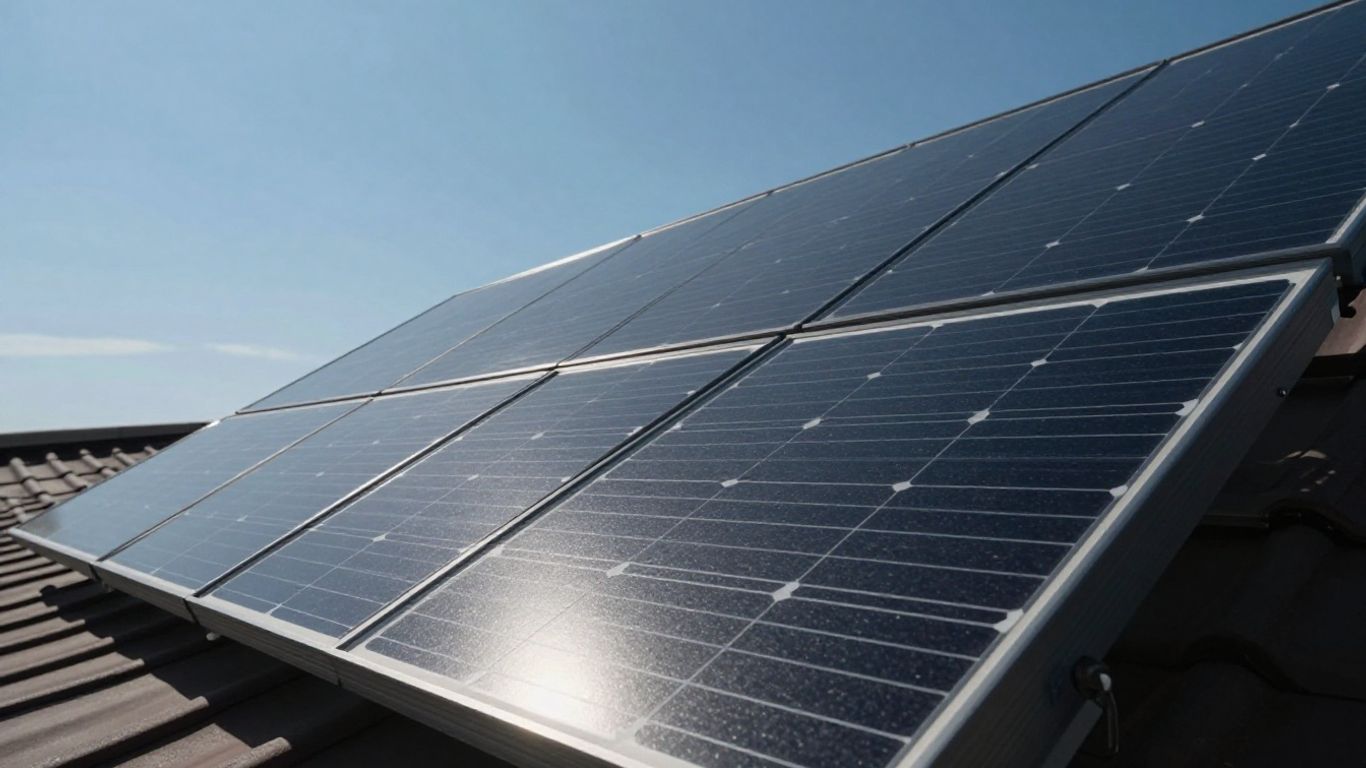
For those who do not own their homes, the idea of installing solar panels may seem complicated, even impossible. However, the 400W solar panel proves to be a particularly suitable solution. Its modular design and relative lightness make it easy to move. This is a major advantage for renters who want to benefit from solar energy without a long-term commitment to a property. It offers appreciable flexibility, allowing adaptation to changing circumstances, such as moving house.
Ease of Installation and Relocation
The installation of a 400W solar panel is often designed to be simple, sometimes even without the need for professional intervention. For renters, this means fewer technical and administrative constraints. Many kits are available, designed for quick installation, sometimes in less than an hour. The day you need to move, the panel can simply be unplugged and transported. This avoids losing the investment made and allows you to continue producing your own electricity in a new location. It’s a *pragmatic* approach to self-consumption.
Solutions Adapted to Rental Constraints
The constraints related to renting are well known: prohibition of modifying the building structure, the need to return the property to its original state, etc. The 400W solar panel meets these challenges. It can be installed on the ground, on a balcony, or discreetly attached to a facade without major work. The absence of a need for battery storage for this power level also simplifies installation and reduces costs. It is important to note that such a system does not aim for complete electrical autonomy, but rather to cover part of the consumption, such as baseline consumption, thereby reducing the electricity bill. For an easy-to-set-up all-in-one solution, a 400W solar kit can be an excellent option.
Here are some points to consider for a rental installation:
- Landlord’s Permission: Although the installation is often reversible, it is always best to inform and obtain the landlord’s agreement.
- Location: Prioritise a spot with good sun exposure, without shade, such as a south-facing balcony or terrace.
- Safety: Ensure the installation is stable and secure, especially in strong winds.
- Local Regulations: Check if there are any specific local rules regarding temporary solar installations in your municipality.
Limitations and Considerations for a 400W Panel
Do Not Aim for Complete Electrical Autonomy
It is important to keep in mind that a 400W solar panel, while efficient for many applications, will generally not be sufficient to cover all of your daily electricity needs. Its production, estimated between 360 and 560 kWh per year depending on conditions, is ideal for reducing your energy bill or powering specific appliances, but aiming for total autonomy with a single panel is unrealistic. For complete coverage, a more substantial installation would need to be considered, potentially with multiple panels and a storage system.
No Need for Battery Storage
For a simple, self-sufficient installation with a 400W panel, adding a battery for storage is often not essential. The main objective is generally to consume the electricity produced instantly, thereby reducing your dependence on the grid. If your production exceeds your immediate consumption, the surplus is fed back into the grid. Batteries become relevant for larger installations aiming for increased autonomy or for storing energy produced during the day to use at night, which is not the case with a basic configuration with a single panel.
Reselling Surplus Production
When your 400W solar panel produces more electricity than you consume at a given moment, this surplus can be sold back to the electricity grid. This process, while potentially profitable, involves administrative procedures and compliance with certain standards. It is essential to consult your energy provider and local authorities to understand the buy-back terms and current tariffs. This option allows you to valorise unused energy and improve the overall profitability of your solar installation. For example, a 140 kW installation generated approximately 140 MWh since February 2025, demonstrating the production potential on a large scale.
- Optimal Orientation: South
- Ideal Tilt: 30-35 degrees
- Maintenance: Regular cleaning to maintain performance
It is crucial to have realistic expectations regarding the capacity of a 400W solar panel. It is an excellent supplement for reducing your energy expenses, but it does not entirely replace grid power for an average household.
Choosing a 400W solar panel is good, but you also need to consider the limitations! Sometimes, you can’t install as many panels as you want due to available space or regulations. It’s important to know this before you start. To learn more about what to check, visit our website and discover all our tips for a successful solar project.
Conclusion: Is the 400W Solar Panel Right for You?
So, after exploring all these points, we can say that the 400W solar panel presents itself as a truly interesting solution for those looking to take their first steps into the world of solar energy. It’s an accessible option, easy to install, and can help reduce your electricity bill, especially for covering what’s known as ‘baseline consumption’. It won’t make you completely self-sufficient in electricity, and it’s not really designed for use with battery storage, but for simple and effective self-consumption, it’s a good choice. Don’t forget that orientation and regular maintenance will play a key role in its efficiency. If your project fits these criteria, go for it!
Frequently Asked Questions
What is the efficiency of a 400W solar panel?
The efficiency of a solar panel is a bit like its ‘effectiveness’. It shows what proportion of the sun’s energy it receives is actually converted into electricity. For a 400W panel, this efficiency, expressed as a percentage, depends on several factors, but it indicates its capacity to produce electricity.
How do I know if a 400W panel is suitable for my needs?
A 400W panel is ideal if you’re looking for a simple solution to start with solar energy. It’s perfect for covering your home’s basic needs, like the fridge, internet router, and a few lights. It won’t make you completely independent of the electrical grid, but it helps reduce your bill and cover your minimum consumption.
How much electricity can a 400W solar panel produce?
A 400W panel, also called 400 peak watts (Wp), produces an average of 360 to 560 kilowatt-hours (kWh) per year. This can vary depending on where you live, how much sun there is, and how the panel is installed.
Does the location where I install my solar panel affect its production?
Absolutely! The location, orientation (ideally south-facing), and tilt (around 30-35 degrees) are very important. Good sunshine and avoiding shade (like from trees or buildings) allow the panel to produce much more electricity.
Do 400W solar panels need to be cleaned?
Yes, it is advisable to clean your solar panels at least twice a year. Dust, leaves, or snow can cover them and reduce the amount of sunlight they receive, thus reducing their electricity production. Regular cleaning ensures better performance.
What appliances can I power with a 400W solar panel?
A 400W panel can power appliances that don’t consume too much electricity continuously. For example, it can help run a refrigerator, an internet router, a television, or several LED bulbs. It is mainly useful for covering what is called ‘baseline consumption’, which is the electricity your home consumes even when you’re not there.
Is a 400W solar panel sufficient to become completely self-sufficient in electricity?
No, a single 400W panel is generally not enough to make a home completely self-sufficient in electricity. It is designed more to help reduce your bill and cover part of your needs through self-consumption (producing and consuming your own electricity). For complete autonomy, you would need many more panels and potentially a storage system.
Can I install a 400W solar panel if I am a renter?
Yes, it is entirely possible! ‘Plug and play’ solar panels or mobile kits are often easy to install and dismantle. They are perfect for renters as they can be taken with you when you move. Sometimes, only a few discreet holes are needed, or they can be placed on the ground.
