
The idea of producing your own electricity using the sun is gaining traction. For those looking for a simple and quick solution, plug and play solar kits are an interesting option. They allow you to start self-consuming without complex work. But which is the best self-consumption solar kit for you? We’ve taken a closer look at some popular options to help you see more clearly.
Key Takeaways
- The best self-consumption solar kit is generally easy to install, often in under 30 minutes.
- These kits include solar panels, a micro-inverter, and the necessary wiring for direct connection.
- Kit power varies, but many are between 300Wp and 500Wp, suitable for moderate consumption.
- Production monitoring is often done via a dedicated mobile app, offering a real-time view of your consumption.
- Prices vary, but the investment can be recouped in a few years thanks to savings on electricity bills.
1. Sunology PLAY 2
The Sunology PLAY 2 presents itself as a ready-to-use solar solution, designed to simplify access to renewable energy. This kit stands out for its ease of installation, requiring no specific technical skills. Its integrated mounting system allows for quick setup on a balcony, terrace, or even on the ground.
This model uses bifacial panel technology, meaning it captures light from both sides of the panel. This optimises energy production, even in variable sunlight conditions. The panel’s efficiency is 22.52%, a figure that attests to its performance.
To monitor your production, Sunology provides a free app, STREAM. It offers real-time tracking of the energy produced, allowing you to visualise your savings. It’s possible to connect up to four PLAY 2 kits to a single electrical socket, reaching a total power of 1,800Wp, which multiplies the savings potential.
Here’s an overview of its main features:
- Power: 450Wp
- Technology: Bifacial panel
- Efficiency: 22.52%
- Monitoring app: STREAM
- Warranty: 25 years on equipment, micro-inverter, and panels
The installation of the Sunology PLAY 2 is designed to be as accessible as possible. The frame is already attached to the panel, and the ballast system avoids the need to drill into installation surfaces.
The brand also offers an extension, the Sunology Play Extension, for those who wish to increase their solar production capacity.
2. Beem On
The Beem On solar kit stands out for its refined design and performance. It is equipped with photovoltaic modules featuring bifacial TopCon monocrystalline cells, a technology that captures light from both sides of the panel. Its nominal power of 500Wp is designed to generate significant savings on your electricity bills, potentially up to €270 per year.
For those looking to maximise their energy production, Beem On offers the possibility of coupling up to two kits to the same electrical socket, reaching a total power of 1,000Wp. This modularity is a major asset for adapting to higher energy needs.
A key element of this kit is the Beem Box, a patented production monitoring station. It allows real-time tracking of your solar panels’ performance via a dedicated mobile app, Beem Energy. This app offers an intuitive interface to view your production and understand your consumption.
Installation is designed to be simple and quick. The kit comes with adjustable mounting brackets, allowing for easy installation on a wall or directly on the ground. In just a few minutes, you can install your solar modules.
The simplicity of installation and real-time production monitoring are the strong points of the Beem On kit, making it accessible even to those with little DIY experience.
Here’s an overview of its technical specifications and warranties:
- Nominal power: 500Wp (expandable up to 1,000Wp with a second kit)
- Panel technology: Bifacial TopCon monocrystalline cells
- Production monitoring: Beem Box with Beem Energy mobile app
- Installation: Adjustable brackets for wall or ground mounting
- Equipment warranty: Not specified (see comparison table for details on other kits)
- Solar panel warranty: Not specified (see comparison table for details on other kits)
- Micro-inverter warranty: Not specified (see comparison table for details on other kits)
- Photovoltaic power guaranteed at 25 years: 80% of nominal power
- Estimated payback period: Less than 5 years
The Beem On kit is an interesting solution for those seeking an easy-to-implement solar installation and clear production monitoring. Its ability to be coupled with a second kit offers valuable flexibility for increasing your solar energy production. The user experience during installation was described as very smooth, with good quality equipment installation of a Beem Energy solar kit.
3. Sunethic F500
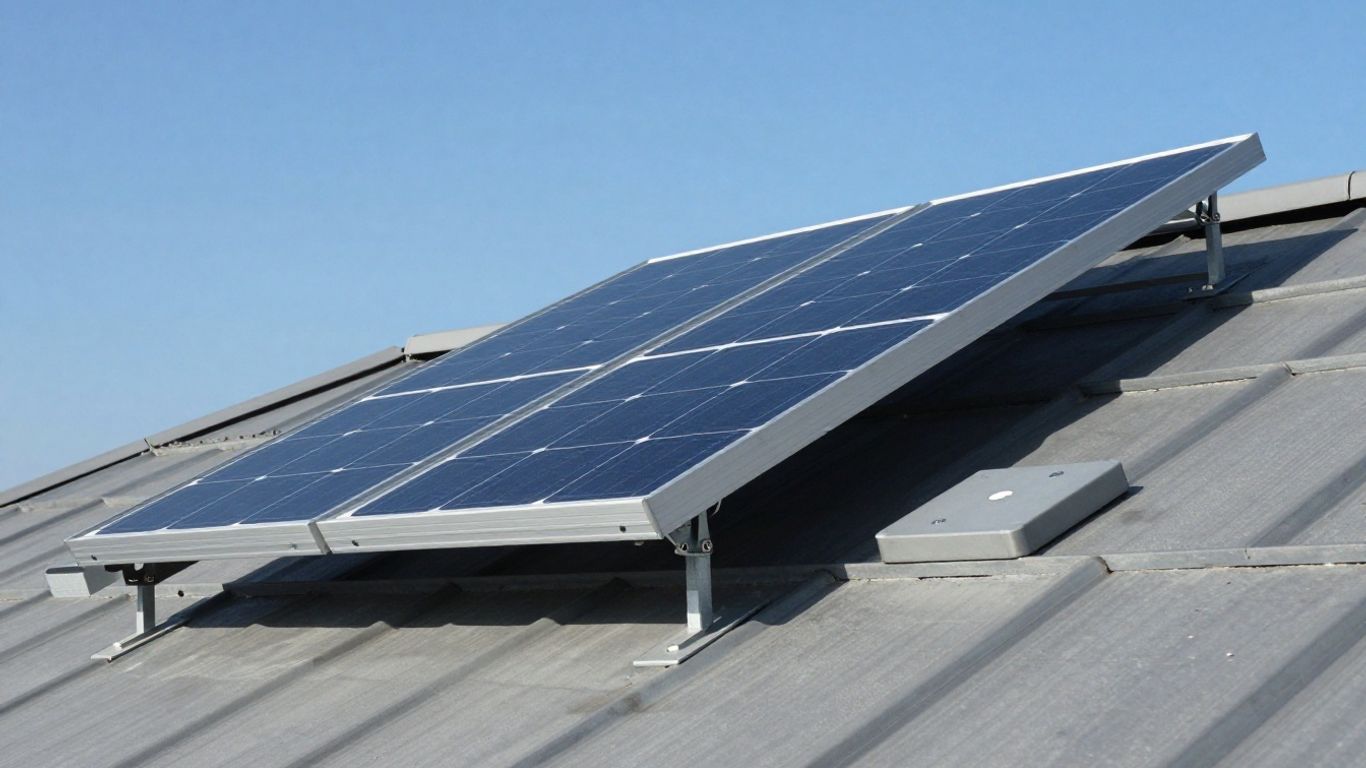
The Sunethic F500 solar kit is a modular solution for those who want to produce their own electricity. Its base power is 500Wp, corresponding to one solar panel, but it’s possible to extend the system up to 2,000Wp by adding three more panels. This flexibility allows the installation to be adapted to your evolving energy production needs.
This kit is designed for quick and simplified installation, positioning itself as a high-performance plug and play option. It adapts to various configurations: ground, facade, or flat roof installation, whether fixed or ballasted. The solar station is delivered pre-assembled, significantly reducing installation time, which can often be completed in just a few minutes.
For production monitoring, Sunethic integrates a dedicated box and offers a mobile app. This allows you to monitor in real-time the amount of electricity your installation generates. Estimated annual savings are around €190, a figure that can vary depending on your consumption and electricity tariffs.
Quality components are a strong point of this kit, including a VOLTEC Solar panel and an APsystems micro-inverter, a major player in this market. The warranty extends to 20 years for the kit and 25 years for the panel, offering appreciable peace of mind.
Although designed to be simple, installation may require assistance for handling the entire unit, especially if you opt for multiple panels. Connecting to the app, while facilitated by updates, may require some patience during initial setup.
Here’s an overview of the main features:
- Initial power: 500Wp (1 panel)
- Possible extension: up to 2,000Wp (4 panels)
- Installation type: Plug and Play
- Key components: VOLTEC Solar panel, APsystems micro-inverter
- Monitoring: Integrated box and mobile app
- Warranty: 20 years (kit), 25 years (panel)
The Sunethic F500 is an interesting option for those looking for a scalable and high-performance solution to start with solar self-consumption. You can learn more about modular solar solutions to compare the different options available.
4. Ekwateur plug and play solar kit
The Ekwateur solar kit stands out for its simplicity and transparent approach. It is designed for quick installation, allowing users to start producing their own electricity without delay. This kit focuses on energy production thanks to its bifacial panels, which capture sunlight from both sides, thus optimising efficiency, even in variable sunlight conditions. The packaging is designed to facilitate handling and unpacking, reducing the time needed before commissioning.
Installation is made easy thanks to detailed instructions provided by Ekwateur, making the process accessible even for those with no DIY experience. The configuration includes a high-performance micro-inverter and all the necessary wiring for direct connection.
Here are the main features of the Ekwateur kit:
- Solar panel: 1 bifacial 500Wp panel, offering double-sided production.
- Micro-inverter: 1 unit of 500W with 99.8% efficiency.
- Mounts: Adjustable tilt with 3 possible angles, pre-assembled for quick installation.
- Consumption monitoring: Smart Wi-Fi meter and mobile app (Smart Life) for real-time monitoring of production and consumption.
This kit is an interesting solution for those looking to reduce their electricity bill and take a first step towards self-consumption. The profitability calculations provided by Ekwateur are based on the current electricity tariff, without speculating on future increases, which offers a realistic perspective of potential savings. To learn more about plug and play solar kits, it is useful to compare the different offers available on the market.
5. Sunology City 300 W
The Sunology City 300 W is positioned as a solution particularly suited to urban environments, especially for balconies. Its installation is designed to be as simple as possible, allowing for quick commissioning without the need for specialised technical intervention. This kit is delivered in a single package, facilitating its reception and handling.
The contents of the pack include the essential elements to get started: two 150Wp monocrystalline solar panels, totalling 300Wp of power, as well as a 400W micro-inverter. The panels measure 115.3 x 68.3 x 2.1 cm and weigh only 2 kg, making them easy to attach. The warranty offered is 15 years for the panels and 25 years for the micro-inverter. Connection to the domestic electrical grid is via a Tuya smart plug, certified IP 44 for better weather resistance.
This kit is ideal for those looking for a discreet and easy-to-implement solar solution. Although its power is modest compared to other offers on the market, it represents an excellent starting point for light self-consumption. The associated app allows for production monitoring, although some users find it a bit basic in its features. The payback period for the investment can vary, but it is generally estimated between 4 to 8 years depending on the geographical location and sunlight conditions. It is an interesting option for starting in solar, offering a plug and play installation accessible to everyone. For quick implementation, this type of kit is a benchmark for quick installation.
Key points of the Sunology City 300 W:
- Total power: 300Wp
- Panel type: Monocrystalline
- Micro-inverter: 400W
- Panel warranty: 15 years
- Micro-inverter warranty: 25 years
- Connection: Tuya IP 44 smart plug
The practical aspect and ease of installation make the Sunology City 300 W a relevant choice for city dwellers wanting to get into solar energy without complications.
6. Plug and play solar panels
Plug and play solar panels are an increasingly popular solution for those who want to produce their own electricity without complications. These kits are designed for quick installation, often in less than five minutes, and plug directly into a standard electrical socket. This approach democratises solar self-consumption, making it accessible to the greatest number.
The principle is simple: a solar panel, equipped with a micro-inverter, is connected to your home electrical system via a socket. The energy produced then adds to that from the grid, thus reducing your overall consumption and, consequently, your electricity bill. Ease of installation is their major advantage, eliminating the need for a qualified electrician for assembly.
Here are some points to consider when choosing a plug and play kit:
- Power: Available kits generally range from 310Wp to 500Wp. The choice will depend on your electricity consumption and needs. It is advisable not to exceed a certain power per electrical circuit for safety reasons, often limited to 900W per circuit according to current standards.
- Efficiency: The panel’s efficiency, expressed as a percentage, indicates its ability to convert sunlight into electricity. The most efficient models show efficiencies above 20%.
- Warranty: A solid warranty, often 25 years, is a guarantee of reliability for the equipment, micro-inverter, and panels themselves.
- Manufacturing and components: Opting for kits assembled in Europe may be a criterion for some, while also considering the origin of the components.
It is important to note that the installation of these kits must comply with certain rules, particularly the power limit per circuit. For more details on standards and best practices, it is recommended to consult the technical guides available, such as those from ADEME. These solutions offer an excellent opportunity to reduce your carbon footprint and achieve savings, with ready-to-use solar kits that can save you up to 30% on your bill. You can find interesting options starting at affordable prices, such as those available on this website.
The evolution of regulations, particularly around the NF C15-100 standard, is worth monitoring. However, for now, these installations remain permitted under certain conditions, offering accessible energy transition.
7. Solar Station
A solar station, often called a plug and play solar kit, is a compact and easy-to-install energy solution. It generally consists of one or more solar panels, a micro-inverter, and the necessary cables for connection. The main objective is to enable individuals to produce their own electricity autonomously and reduce their energy bill.
These systems are designed for quick installation, without the need for a qualified professional. They plug directly into a standard electrical socket, hence their « plug and play » designation. This greatly simplifies the adoption process of solar energy. Ease of installation is their major advantage.
Here are some points to consider when choosing a solar station:
- Power: Expressed in Watts-peak (Wp), it determines the amount of electricity the panel can produce under optimal conditions. Models generally range from 300Wp to over 500Wp.
- Panel type: Monocrystalline or polycrystalline, each technology has its advantages in terms of efficiency and cost.
- Dimensions and weight: Important for installation, especially on a balcony or terrace.
- Warranty: Manufacturers offer warranties on panels (often 15 to 25 years) and on the micro-inverter (often 20 to 25 years).
- Connectivity: Some models include mobile apps for real-time production monitoring.
Adding a battery can increase the self-consumption rate, allowing stored energy to be used later. However, this adds complexity and cost to the system. For optimal use, it is advisable to properly size your installation according to your actual needs. A solar station like the Sunology PLAY 2 offers a high-performance and simple solution for starting with self-consumption.
The main advantage of a solar station lies in its ability to democratise access to solar energy. It allows for an immediate reduction in grid electricity consumption, thus contributing to financial savings and a reduced ecological footprint. The modularity of some systems also allows for future evolution, adapting to the changing needs of the household.
8. Solar Panel Kit
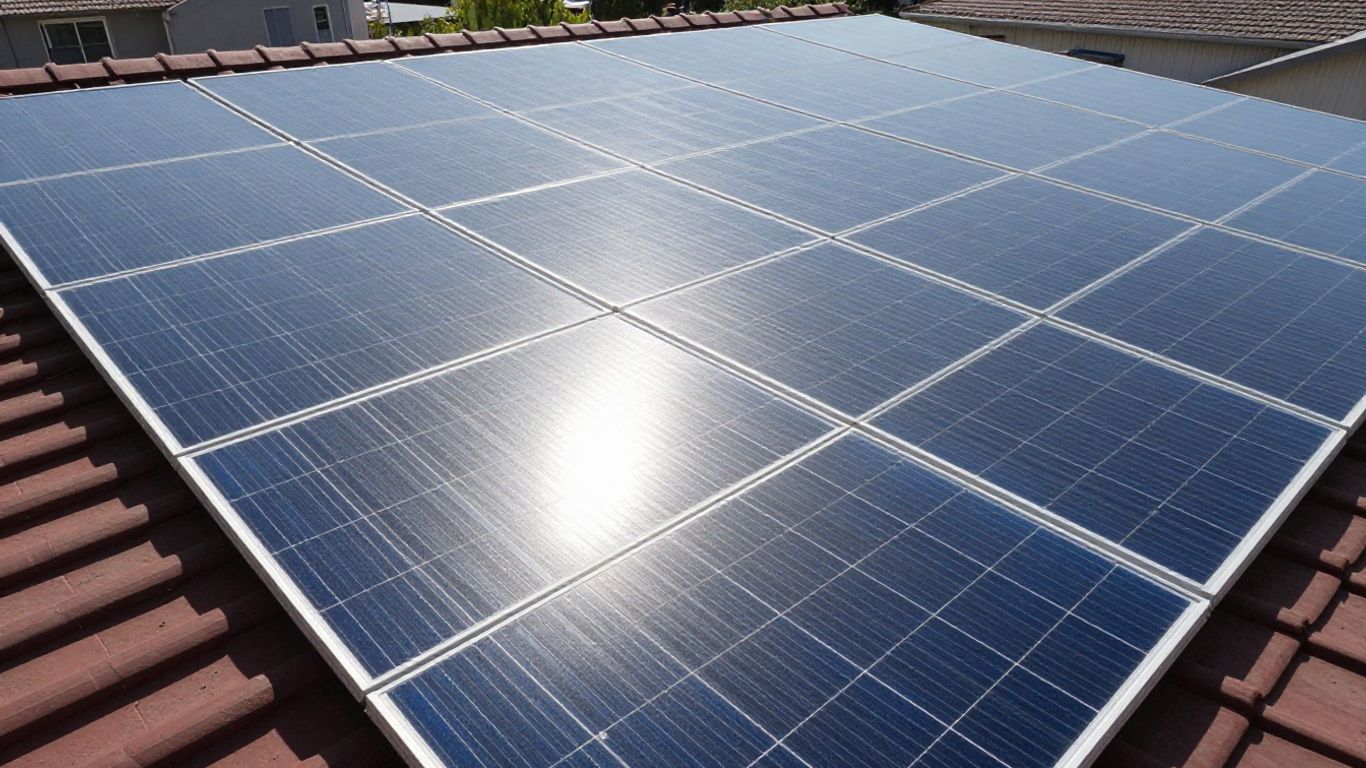
A solar panel kit, often called a plug and play solar kit, is a renewable energy solution designed for easy installation by the individual. It generally consists of one or more photovoltaic panels, a micro-inverter that converts the direct current produced by the panels into alternating current usable by your appliances, and the necessary wiring for connection to your home electrical system. The main objective is to enable direct self-consumption of the electricity produced, thereby reducing your energy bill.
Choosing a solar panel kit should take into account several factors for optimal efficiency. The power of the panels, expressed in Watts-peak (Wp), is a key element. It determines the amount of energy the panel can produce under ideal conditions. For common domestic use, kits often range from 300Wp to 500Wp per panel.
Here are some points to consider when making your selection:
- Peak power (Wp): Adapt it to your consumption. A 400Wp panel, for example, can produce between 360 and 630 kWh per year depending on your location and sunlight.
- Cell type: Monocrystalline cells are generally more efficient than polycrystalline cells, offering better performance, especially in low light conditions.
- Micro-inverter technology: Ensure it is compatible with your panel’s power and offers production monitoring features if that interests you.
- Warranty: A warranty of 20 to 25 years on the panels is common and indicates the product’s durability.
It is important to note that regulations may impose limits on the number of kits that can be connected to the same electrical circuit. For example, it is often recommended not to exceed 3 kits of 500Wp on a 16A socket with a 2.5mm² cable section.
Installing a plug and play solar panel kit is an accessible step that requires a good understanding of your home’s energy needs and the technical specifics of the chosen equipment. A preliminary study of your situation will maximise the benefits of your investment.
9. Micro-inverter
The micro-inverter is an essential component of your solar installation, particularly in rapid self-consumption kits. Unlike a central inverter, it is installed directly behind each photovoltaic panel. Its main function is to convert the direct current (DC) produced by the panel into alternating current (AC), the type of electricity we use at home. This conversion happens instantly, panel by panel.
One of the major advantages of micro-inverters is their ability to optimise the production of each panel individually. If one panel is partially shaded or less efficient, it will not affect the production of the others. This is a strong point, especially if your roof has varying shaded areas throughout the day. They are often preferred for their ease of installation and flexibility.
Here are some points to consider regarding micro-inverters:
- Panel independence: Each micro-inverter manages a single panel, avoiding the domino effect in case of a problem with one component.
- Adaptability: They are well suited for complex roofs or those with multiple orientations.
- Safety: AC current is produced directly at the panel level, reducing the risks associated with transporting high-voltage DC current over long distances.
- Production monitoring: Most systems with micro-inverters allow detailed production monitoring, panel by panel, via an app or online platform.
The choice between a micro-inverter and a central inverter will depend on your specific configuration and priorities. For quick installation and individual optimisation, the micro-inverter is often a preferred solution. It is important to check the compatibility of micro-inverters with your panel’s power to get the most out of your installation.
10. Wiring
Wiring is an often underestimated step, yet it is absolutely essential for the safety and proper functioning of your solar installation. It involves connecting the different components together: solar panels, micro-inverter, and your home electrical panel.
A well-executed connection ensures that the electricity produced is efficiently routed to your home, while preventing electrical hazards. It is important to note that plug-and-play solar kits are designed to simplify this process, but this does not negate the need for a certain level of care.
Here are the key elements to consider for wiring:
- Solar cables: They must be resistant to weather and UV rays. The required length will depend on the distance between your panels and your electrical connection point. Some kits provide cables of specific lengths, such as a 3 to 5 metre mains cable, and interconnection cables if you plan to add panels later.
- Connectors: Ensure you use waterproof connectors suitable for the equipment, often MC4 type for solar panels. The quality of the connectors is crucial to avoid losses and short circuits.
- Earthing: Essential for safety, it protects against surges and insulation faults. It must be correctly carried out according to current standards.
- Electrical protection: A suitable residual current device (RCD) must be installed on your electrical panel to protect the installation and users.
It is strongly recommended to consult the wiring diagram provided with your kit. This details precisely how to connect each element. If you have any doubts, calling a professional is the best option for a compliant and safe installation. You will find electrical accessories for solar kits, including the necessary cables, on various specialised websites.
The simplicity of a plug-and-play kit should not mask the importance of careful wiring. An electrical installation compliant with standards guarantees reliable energy production and optimal safety for your home.
In this section, we will discuss wiring. It’s an important step for everything to work well. If you have any questions or want to know more about how we install solar panels, don’t hesitate to visit our website to discover all our services.
To conclude: your solar project within reach
Choosing the right self-consumption solar kit may seem complex, but as we’ve seen, several options stand out for their ease of installation and efficiency. Whether you opt for Beem, Sunology, or Ekwateur, the goal is the same: to simplify your access to solar energy. These plug and play kits represent an accessible solution to reduce your electricity bills and contribute to the environment, without requiring heavy work. Take the time to carefully compare the specificities of each model to find the one that best suits your needs and situation.
Frequently Asked Questions
What is a plug and play solar kit and how does it work?
A plug and play solar kit is a set of solar panels that you can plug directly into an electrical socket in your home. It’s like plugging in a household appliance. The idea is that the sun hits the panels, which convert this light into electricity. This electricity is then used by your appliances, allowing you to consume less electricity from the grid and therefore save money on your bills.
Is installing a plug and play solar kit complicated?
No, not at all! The big advantage of these kits is their ease of installation. They are designed so that anyone can assemble them themselves, without being a DIY expert. You generally just need to fix the panels (sometimes on a wall, on the ground, or on a balcony) and plug them in. The instructions are usually very clear and explain everything step by step.
How much savings can I expect with a plug and play solar kit?
Savings vary depending on several factors: the size of the kit, the amount of sunshine in your region, and how you use the electricity produced. Generally, these kits can save you between €100 and €200 per year, or even more. It’s a good way to reduce your electricity expenses a little each month.
What is the difference between the various plug and play solar kits?
The kits differ mainly in the power of the panels (expressed in Watts peak or Wp), the quality of the components (panel, micro-inverter), the design, the accessories provided (such as the connection cable), and the warranties. Some kits are more powerful, others are more compact for balconies, and prices can also vary.
Can I install a plug and play solar kit on my balcony?
Absolutely! There are kits specifically designed for balconies. They are often smaller and lighter, and can be easily attached to railings or placed on the ground. It’s an excellent solution for those who don’t have a garden or a roof.
Do I need to complete any administrative procedures to install a plug and play solar kit?
For most plug and play kits with limited power (often up to 300W or 375W depending on local regulations), no complex administrative procedures are required. You just need to plug them in. However, for more powerful kits, a simple declaration to Enedis (the electricity grid operator) may be requested to inform them of the installation.
How do I monitor the production of my solar kit?
Most modern kits come with a dedicated mobile app. Once you have plugged in your kit, you can download this app to your smartphone. It allows you to see in real-time how much electricity your panels are producing and track your savings.
What is the lifespan of a plug and play solar kit?
Solar panels are designed to last a long time, often 25 years or more. Manufacturers generally offer long warranties, sometimes up to 25 years for the panels and micro-inverter. This means your investment is protected over a long period.
