
In a context where solar energy is gaining ground in France, particularly for reducing electricity bills and participating in the ecological transition, choosing the right equipment becomes essential. Faced with a plethora of options, it’s not always easy to navigate. This article offers a comparison of the best solar panels available in 2026 to help you make an informed choice, taking into account your needs and budget.
Key Takeaways
- The EcoFlow 175W rigid solar panel is a versatile and high-performance option for most users.
- For simplified installation, the Amerisolar kit offers an interesting ‘plug and play’ solution.
- The OHM-Énergie project stands out for those who prioritise self-consumption and wish to delegate installation.
- The Zendure SolarFlow 800 Pro is ideal for beginners, offering a complete and easy-to-assemble kit.
- Monocrystalline panels, like the Jackery SolarSaga 100W, generally offer better efficiency and greater durability.
EcoFlow 175W Rigid Solar Panel
The EcoFlow 175W rigid solar panel is a particularly interesting option for those looking to get started in solar energy or supplement an existing installation. With an advertised efficiency of 25%, it positions itself as a high-performance product, capable of maximising electricity production even on limited surfaces. Its rigid design makes it resistant to bad weather and corrosion, which is a major asset for prolonged outdoor use. This model is also appreciated for its versatility, being suitable for homes, motorhomes, and cars alike.
This panel is designed for quick and easy installation. Its 175W unit power may seem limited for very large installations, but it is ideal for modest-sized projects or specific needs. It offers excellent value for money, making it a wise choice for an initial investment in photovoltaics.
Here are some key features of this model:
- Efficiency: 25%
- Indicative lifespan: 30 years
- Protection rating: IP68
- Warranty: 5 years
- Type: Rigid
This panel stands out for its efficiency, even in low light conditions or at high temperatures. It represents a practical solution for those who wish to test solar energy production in their garden or power devices on the go. For a more in-depth assessment of solar projects, it is advisable to consider the study of solar potential.
One of the notable advantages of this panel is its ability to function effectively even when conditions are not ideal, such as on cloudy days or during heatwaves, which is an important point for reliable energy production throughout the year.
Amerisolar Kit
The Amerisolar kit is a particularly interesting solution for those who wish to get started with photovoltaic self-consumption. It is a set designed to be simple to install, often described as ‘plug and play’, meaning it is ready to use upon receipt. This type of kit is ideal for individuals who want to produce their own electricity without undertaking overly complex procedures.
What sets the Amerisolar kit apart is its modularity. It is possible to choose configurations ranging from a single panel to several, allowing the total power and covered area to be adapted to your specific needs and the available roof space. The power can vary from a few hundred peak watts (Wp) up to over 3000 Wp for larger installations.
This kit is an excellent entry point into the world of residential solar energy. It generally includes an Amerisolar solar panel, known for its reliability, and a micro-inverter. The presence of a micro-inverter simplifies installation and optimises the production of each panel individually. Furthermore, Amerisolar often offers an extended warranty on its panels, sometimes reaching 30 years, which demonstrates the manufacturer’s confidence in the durability of its products.
Here are some key points to consider for an Amerisolar kit:
- Ease of installation: Designed to be accessible to DIY enthusiasts.
- Modularity: Adaptable to different roof sizes and energy needs.
- Reliability: Robust panels with long warranties.
- Self-consumption: Ideal for reducing electricity bills.
For those considering such an installation, it is always wise to conduct a photovoltaic impact study. This allows for the simulation of expected production, taking into account local weather conditions and roof orientation. Specialised tools can assist you in this process for a better assessment of the return on investment and the environmental impact of your photovoltaic project.
One of the major advantages of these kits is the possibility of benefiting from assistance with administrative procedures, often offered as an option by resellers. This can greatly facilitate the process for first-time solar energy adopters.
OHM-Énergie Project
OHM-Énergie positions itself as a key player for professionals looking to equip themselves with solar panels. The company offers a turnkey approach, thus simplifying the installation process for businesses. Their promise is to provide a complete solution, from quotation to commissioning, with a single point of contact for the entire project duration.
This approach aims to eliminate the complexities often associated with commercial solar installations. By centralising management, OHM-Énergie allows businesses to focus on their core activities while benefiting from the advantages of solar energy. The emphasis is on the quality of the equipment, with components guaranteed for a period of 20 years, ensuring peace of mind and long-lasting performance.
OHM-Énergie’s offer is specifically aimed at the needs of businesses, providing solutions tailored to their consumption and space constraints. Whether it’s to reduce energy costs or improve their ecological footprint, the company supports its clients in the transition to cleaner energy. It is important to thoroughly analyse one’s needs for total optimisation of the installation.
For a complete solar self-consumption installation, it is essential to understand your consumption habits. This includes the « background noise » (constant minimum consumption) and peak demand. Good analysis allows for adequate system sizing, so that solar production best matches your actual needs. Strategies such as smart appliance management and battery storage can improve efficiency, but their economic impact must be assessed. The choice between total, partial self-consumption, or selling surplus will depend on this in-depth analysis of your consumption habits and potential surplus management to optimise a solar installation.
In summary, OHM-Énergie offers a reliable and simplified solution for businesses considering solar panel installation, with a focus on quality, warranty, and personalised support for a turnkey solution for businesses.
Zendure SolarFlow 800 Pro
The Zendure SolarFlow 800 Pro is a balcony power station solution, particularly interesting for those looking to optimise their electricity consumption without undertaking complex installation. This all-in-one system integrates a power station, a battery, and an artificial intelligence-based energy management system. One of its major assets is its modularity; you can compose your kit by choosing the power and number of solar panels, as well as the mounting brackets adapted to your configuration, whether it’s a balcony, a wall, or a flat roof. This personalised approach allows the solution to be tailored to your specific needs and available space.
The SolarFlow 800 Pro system is designed to be intuitive. It uses HEMS (Home Energy Management System) technology that optimises the use of the solar energy produced. This means the system learns your consumption habits to better manage electricity, thereby reducing waste and potentially your bills. It is an option to consider if you want a more autonomous solution, while remaining connected to the traditional grid for supply security. It is important to note that solar panels are not always included in the basic kit and must be selected separately.
Here are some key points to consider for the Zendure SolarFlow 800 Pro:
- Modularity: Ability to choose the power and number of panels, as well as mounting brackets.
- Smart Management: AI-based HEMS system to optimise energy consumption.
- Simplified Installation: Designed to be more accessible than traditional solar installations, ideal for balconies.
- Expandability: Storage capacity can be extended up to 11.5 kWh, offering great flexibility for the future.
The Zendure SolarFlow 800 Pro is an attractive option for those new to solar energy or with limited space such as a balcony. Its intelligent management system and modular design make it a versatile solution for reducing energy dependence. However, it is recommended to check component compatibility and consider adding solar panels for optimal performance.
The price of the basic model, including a 1920 Wh battery, is around 999 euros. Complete kits can be found on platforms like Zendure or other retailers. This solution is part of a local energy production approach, an increasingly important aspect of domestic electricity consumption management, and can be combined with a broader self-consumption management system if your needs evolve.
Jackery SolarSaga 100W Foldable Monocrystalline
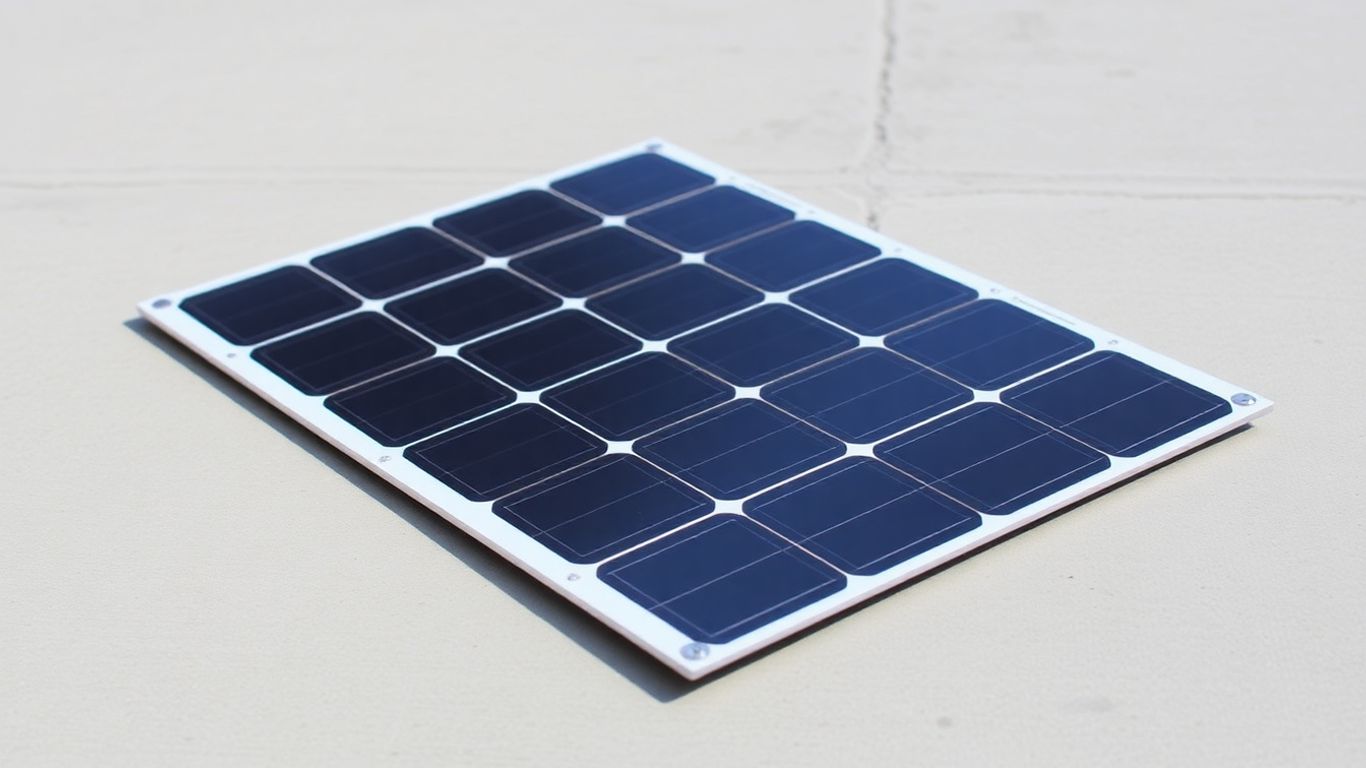
The Jackery SolarSaga 100W solar panel stands out for its foldable design and 100W power, making it particularly suitable for mobile users. Its monocrystalline technology allows it to achieve an efficiency of 23%, which is quite good for a panel in this category. It is designed to be lightweight, weighing around 4.69 kg, and includes a kickstand to facilitate its positioning towards the sun. This is a major asset for those travelling in motorhomes, vans, or going hiking and wanting to recharge their devices autonomously.
This panel is also equipped with integrated USB-A and USB-C ports, simplifying the connection of your devices without needing an additional adapter. It can operate in a temperature range of -10°C to +65°C, offering some flexibility of use in various climatic conditions. The 2-year warranty is a point to consider, as it is slightly shorter than that of some competitors in the solar panel market.
The Jackery SolarSaga 100W is a wise choice for outdoor enthusiasts and travellers seeking a portable and efficient power solution. Its ease of transport and efficiency make it a companion of choice for staying connected, even far from traditional electrical outlets.
Here are some key features:
- Power: 100W
- Technology: Monocrystalline
- Efficiency: Up to 23%
- Weight: 4.69 kg
- Connectivity: Integrated USB-A, USB-C
- Warranty: 2 years
Although its price may seem substantial, its portability and efficiency for occasional outdoor use make it an interesting investment for adventurers. It is important to note that for more intensive use or a fixed installation, other more powerful options might be more suitable. This panel is an excellent example of how solar technologies are evolving to adapt to our lifestyles.
It is designed to capture maximum sunlight, which translates into more reliable performance for your energy needs on the go. The quality of the monocrystalline cells used ensures more efficient conversion of solar energy into electricity compared to other technologies.
EcoFlow 400W Portable Panel
The EcoFlow 400W portable solar panel stands out for its high unit power, which is difficult to match in the portable panel market. Designed for those seeking efficiency and practicality, even on the go, it represents a high-end investment for caravanners and campers.
This panel offers an efficiency of 23%, which is very competitive for a portable model. It is made with durable multi-layer materials and benefits from an award-winning design (Design Award 2022), highlighting its practical and aesthetic aspects. Its adjustable tilt allows for optimal solar capture depending on sunlight.
Here are its main features:
- Type: Monocrystalline
- Power: 400W
- Efficiency: 23%
- Waterproof rating: IP68
- Weight: 16 kg
- Features: Plug and play, foldable into 4 panels, adjustable self-supporting stand, carrying bag included.
- Warranty: 2 years
Although its price is high and its weight is not negligible, the EcoFlow 400W panel is a wise choice for reliable mobile energy production. It is particularly suitable for those who wish to produce their own electricity during their travels or outdoor stays, thus complementing a basic installation for increased autonomy. For a domestic installation, it is important to consider the different types of panels available, such as monocrystalline or polycrystalline, in order to choose the most suitable system.
The investment in this EcoFlow 400W portable panel is justified by its performance and robust design, making it ideal for demanding nomadic use. Its ease of installation and transport, facilitated by the dedicated bag, make it a prime piece of equipment for outdoor enthusiasts.
Amerisolar 520Wp Bifacial
The Amerisolar 520Wp bifacial solar panel stands out for its particularly attractive value for money, making it accessible for larger solar installations. Its bifacial design means it can capture light on both sides, which can increase energy production, especially if the panel is installed on a reflective surface such as white gravel or light concrete. Although its appearance is classic, it integrates easily onto most roofs.
This model uses TOPCon N-type monocrystalline technology, known for its efficiency. With a power of 520Wp and an efficiency of around 23.40%, it offers solid performance for its category. Its robustness is also an asset, with an anodised aluminium alloy frame designed to withstand harsh weather conditions, including salt fog and hail. Compatibility with MC4 connectors and a cable length of 2600mm facilitate its installation.
One of the major strengths of this panel is its 30-year production warranty, offering long-term peace of mind. It represents a wise choice for those looking to maximise their electricity production economically.
The efficiency of a bifacial panel depends heavily on its installation environment. An environment with high albedo (ability to reflect light) will allow full advantage to be taken of the bifacial technology, offering a significant production gain compared to an equivalent monofacial panel.
Here are some key features:
- Technology: Bifacial and TOPCon N-type monocrystalline
- Power: 520Wp
- Efficiency: 23.40%
- Weight: 27.3 kg
- Production warranty: 30 years
For those considering a solar installation in 2025, it is important to consider regulatory changes and falling panel prices. Criteria such as efficiency (aiming for over 20%) and the duration of the product warranty (15-25 years) are paramount. The Amerisolar 520Wp fits well within these photovoltaic market trends.
This panel is a serious option for supplementing an existing installation or for building a larger solar project, aiming for sustained and reliable electricity production. It is often cited as an excellent choice for its value for money.
Orium 60W Foldable Izywatt
The Orium 60W foldable solar panel, compatible with the Izywatt system, is an auxiliary charging solution particularly suited for mobile needs. Its foldable design, when closed, gives it a compact format, comparable to a briefcase, making it easy to transport and store. It is ideal for powering small electronic devices during travel or outdoors.
This panel is designed to be lightweight, weighing only 2.5 kg, making it easy to handle. It incorporates adjustable feet that serve as a double support, allowing it to be optimally oriented towards the sun. Its 60W power is modest, but sufficient for targeted uses such as charging smartphones or small external batteries.
Strengths:
- Lightweight and compact for easy transport.
- Integrated feet for flexible positioning.
- Carrying bag included, enhancing its mobile aspect.
- Available for purchase by professionals.
Weaknesses:
- Limited power, not suitable for higher energy needs.
This panel is an interesting option for camping, hiking enthusiasts, or anyone needing a reliable and easy-to-transport auxiliary power source. Its ease of use and portability make it a practical companion for keeping your devices charged away from traditional electrical outlets.
Monocrystalline Solar Panels
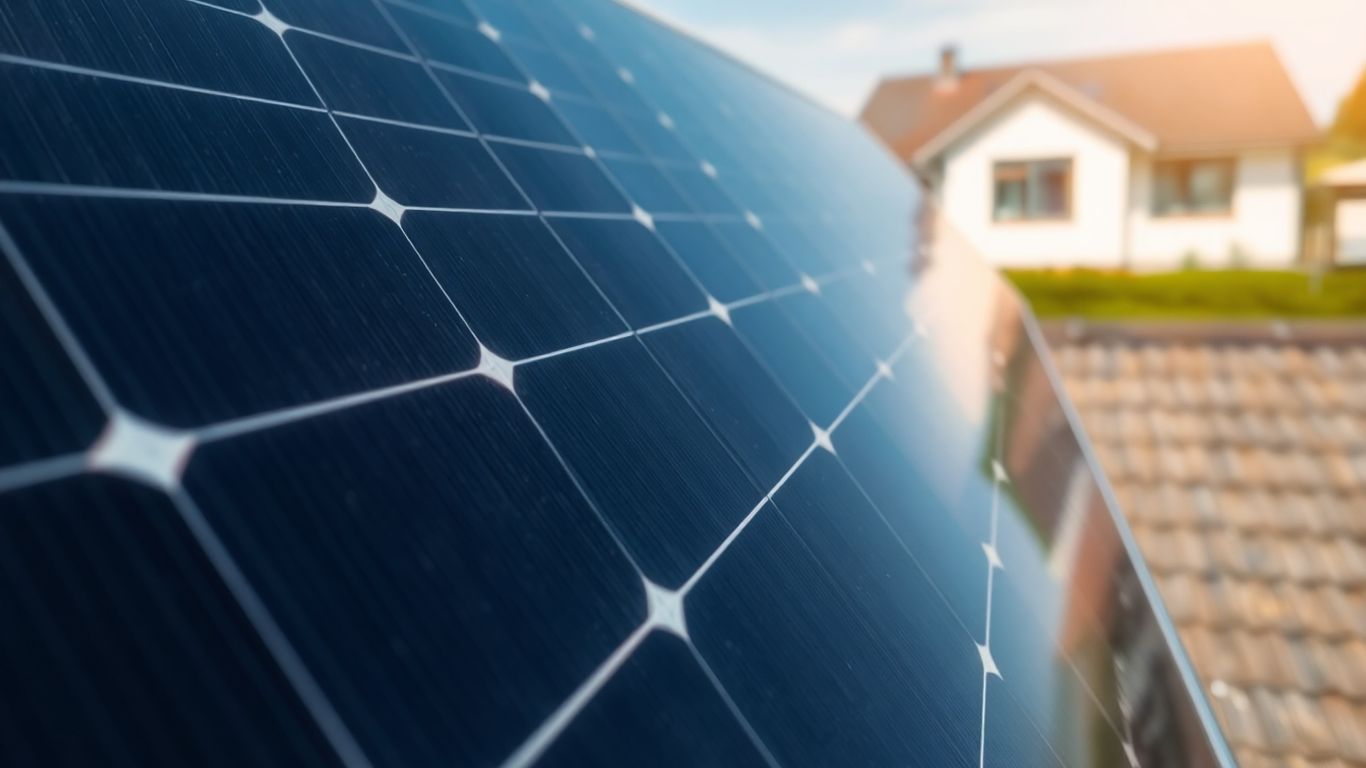
Monocrystalline solar panels are now the most widespread technology for residential installations, and for good reason. Their efficiency and durability make them a preferred choice. They are made from a single silicon crystal, which allows electrons to flow more freely. This ordered structure minimises energy loss and maximises overall efficiency.
In practice, this translates into energy conversion efficiencies generally ranging from 21% to 23%, thus surpassing polycrystalline panels which are often between 16% and 19%. This difference is particularly noticeable in low light conditions or on cloudy days. Furthermore, their temperature coefficient is generally more favourable, meaning they lose less efficiency as the temperature rises, a significant advantage during the summer months.
Here are some key points to consider regarding monocrystalline panels:
- Higher efficiency: They capture more solar energy per square metre.
- Durability: They have a longer lifespan, often estimated between 30 and 35 years, or even more for certain advanced technologies like HJT.
- Aesthetics: Monocrystalline panels, often uniformly black, integrate more discreetly onto roofs.
- Performance in hot weather: Technologies like HJT (Heterojunction) offer better heat resistance, limiting summer production losses.
It is important to note that the choice of technology, whether TOPCon or HJT, can influence overall performance, especially in hot regions. A well-designed installation with adequate ventilation is also essential to maintain panel efficiency over the long term. Good rear ventilation, for example, can reduce summer production losses by 5% to 10%.
For a standard installation on most roofs, TOPCon monocrystalline is often the default choice, offering excellent performance-price ratio. If you live in a particularly hot region, HJT technology might prove more advantageous in the long run, despite a potentially higher initial cost. Investing in solar panels is a step that contributes to reducing CO2 emissions and lowering electricity bills, thus offering a sustainable and economical energy solution. Photovoltaic solar panels help reduce CO2 emissions and lower electricity bills.
It is always recommended to consult a professional to assess the most suitable solution for your specific situation and budget.
Polycrystalline Solar Panels
Polycrystalline panels, although historically popular for their more affordable initial cost, tend to be less efficient than their monocrystalline counterparts in today’s solar landscape. Their manufacturing involves melting several silicon crystals, which creates grain boundaries. These boundaries can hinder electron movement, thus reducing the overall efficiency of the cell. Consequently, their efficiency is generally lower than that of monocrystalline panels, which use a single, purer, and more ordered silicon crystal.
For a project aiming to maximise energy production on a given surface, choosing polycrystalline may prove less wise in the long term. Although the purchase saving may seem attractive, it often translates into lower electricity production over the lifespan of the installation. This can make the cost per kilowatt-hour produced higher, negating the initial advantage.
Here is a simplified comparison of expected performance over 25 years:
| Criterion | Polycrystalline (estimate) | Monocrystalline (estimate) | Difference |
|---|---|---|---|
| Production over 25 years | 150,000 kWh | 164,000 kWh | -14,000 kWh |
| Indicative value of lost kWh | + €3,220 | – | + €3,220 |
| Actual cost over 25 years | €12,740 | €10,320 | + €2,420 |
It is important to note that these figures are indicative and may vary. However, they illustrate the general trend: the slightly higher initial investment in monocrystalline panels can generate more energy production and thus a better return on investment in the long term. Polycrystalline panels are sometimes still considered for identical replacements on existing installations, where technical compatibility is paramount. For new installations, it is generally recommended to opt for more efficient technologies, such as monocrystalline panels, which offer better efficiency and greater durability.
Polycrystalline solar panels are a great option for those who want to produce their own electricity. They are known for being quite robust and efficient. If you’re wondering how they work or if they’re the right choice for you, we have all the information you need. Come and discover how these panels can help you save money and help the planet. For more information, visit our website today!
Conclusion: The Sun, Your Ally for the Future
Investing in solar panels is a smart choice for your wallet and for the planet. Our 2026 comparison has shed light on the most efficient options on the market. It’s now up to you to take action, taking into account your budget, your specific needs, and your desires. Don’t forget to inquire about local aid that could reduce your investment. The sun offers clean and economical energy, it would be a shame to miss out!
Frequently Asked Questions
What type of solar panel is the most efficient?
In general, monocrystalline solar panels are the most efficient. Their efficiency can even exceed 20%, meaning they convert more sunlight into electricity than other types.
What is the difference between monocrystalline and polycrystalline panels?
Monocrystalline panels are made from a single silicon crystal, making them more efficient. Polycrystalline panels, on the other hand, are made from multiple silicon crystals. They are often cheaper, but also less efficient.
What panel power should I choose for my home?
For a home, solar panels often have a power ranging from 300W to 500W. If you are looking for smaller panels for travel, they will be less powerful.
How much does a solar panel installation cost?
The price of a solar panel installation depends on many factors: the size of the installation, the type of panels, the complexity of the installation, and whether you use a professional. It is important to compare prices and, above all, to clearly define your needs before starting.
Do solar panels work when it’s cloudy?
Yes, solar panels produce electricity even on cloudy days, but their efficiency is much lower. They work best when the sun is shining brightly.
How long do solar panels last?
Modern solar panels are designed to last a long time, often more than 25 years. Technologies like TOPCon or HJT can even offer an even longer lifespan, up to 35 or 40 years.
Is it better to consume your own electricity or sell it?
In 2025, it is generally more advantageous to consume your own electricity (self-consumption). This allows you to make direct savings on your bills. Selling all the electricity produced is often less profitable for individuals.
How do I choose the best solar panel for my situation?
There is no perfect solar panel for everyone. The best choice depends on your roof, your region’s climate, your budget, and your electricity needs. It is advisable to study your options carefully and request multiple quotes.
