
Installing solar panels at home is a sensible step to take today. Not only do you contribute to a greener future, but you can also earn a little money. If you have solar panels, you produce electricity. You consume some of it, and the surplus? Well, you can sell it. This is where EDF’s purchase obligation, or EDF OA solaire, comes in. It might seem complicated, but it’s actually quite simple once you understand the steps. This article guides you through selling your solar electricity effectively.
Key Takeaways
- EDF’s purchase obligation (OA) allows you to sell the surplus electricity produced by your solar panels at a fixed rate.
- To sell your electricity, your installation must be carried out by an RGE-certified professional and be installed on a roof, with limited power.
- Several administrative steps must be followed, including declaring your installation to the DIDEME and requesting connection to the Enedis network.
- Subscribing to the EDF OA contract is done online, where you will choose between a total or partial buy-back of your production.
- A production meter is installed to measure the electricity sold, and billing is done annually or semi-annually.
Understanding the EDF OA Solar Purchase Obligation
Definition of the Purchase Obligation
The Purchase Obligation (OA) is a scheme implemented to encourage the development of renewable energies in France. In concrete terms, this means that EDF, or Local Distribution Companies (ELDs), are legally obliged to purchase electricity produced by certain installations, particularly photovoltaic ones. This obligation is governed by the Energy Code and aims to guarantee a stable income for green energy producers. For solar, we specifically talk about OA solaire. This mechanism applies to installations with a power output not exceeding 500 kWp. It thus allows individuals and small businesses to make their investment in solar panels profitable.
Objectives of the OA Solar Scheme
The main objective of OA solar is to stimulate electricity production from solar energy. By guaranteeing a fixed purchase price over a long period (generally 20 years), the scheme offers financial security to investors. This encourages the installation of solar panels, thus contributing to the energy transition and reducing dependence on fossil fuels. OA solar also promotes self-consumption by allowing the resale of surplus unused electricity.
Scope of Application for Photovoltaic Installations
The Purchase Obligation applies to photovoltaic installations with a power output of 500 kWp or less. This covers the vast majority of residential installations and small businesses. To benefit from this scheme, several conditions must be met, including installation by an RGE-certified professional and the location of the installation. The aim is to ensure that installations are carried out to a high standard and effectively contribute to renewable energy production. To get started, it is important to sign a purchase contract with EDF OA.
OA solar is a cornerstone of the development of renewable energies in France, offering a secure framework for photovoltaic electricity producers.
Here are the key points to remember regarding the scope of application:
- Maximum Power: 500 kWp.
- Types of Installations: Primarily residential and small businesses.
- Objective: To encourage solar energy production and self-consumption.
- Contract Duration: Generally 20 years, with a guaranteed tariff.
Prerequisites for Selling Solar Electricity
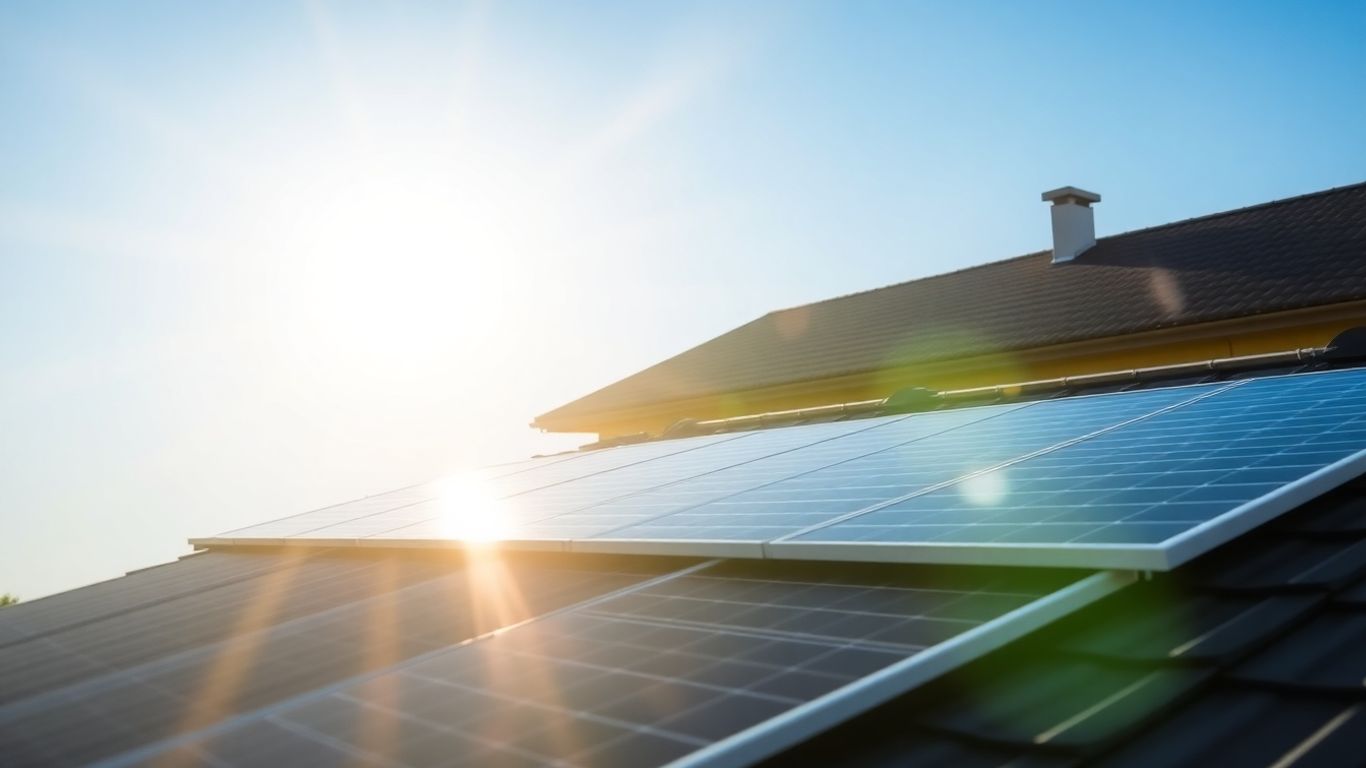
Before you can sell the electricity produced by your solar panels to EDF OA, several conditions must be met. These prerequisites are designed to ensure your installation complies with regulations and is properly integrated into the national electricity grid. It is therefore essential to ensure that your project meets these criteria from the outset to avoid any future complications.
Installation by an RGE-Certified Professional
The first and one of the most important steps is to use a qualified professional for the installation of your photovoltaic panels. It is imperative that the installer holds RGE (Reconnu Garant de l’Environnement) certification. This qualification attests to the company’s expertise and the quality of the work carried out, while potentially making you eligible for certain government aid. Without this certification, your electricity sales application will not be accepted.
Location of the Photovoltaic Installation
To benefit from the OA solar Purchase Obligation scheme, the installation of your photovoltaic panels must comply with specific location requirements. The panels must be installed on the roof of a dwelling, garage, pergola, or shed. Installations placed directly on the ground are generally not eligible for the OA solar scheme. This rule aims to promote landscape integration and space optimisation.
Maximum Installation Power
The EDF OA Purchase Obligation framework is defined for installations of a certain size. Currently, the maximum power of your photovoltaic installation must not exceed 100 kWp (kilowatt-peak). Beyond this limit, other schemes, such as tenders, may apply. It is therefore important to dimension your project correctly beforehand to remain within the regulatory framework of the OA.
It is advisable to carefully check the eligibility criteria before starting the process. An installation that complies from the start greatly simplifies the process of selling your electricity production.
Administrative Steps for Selling Electricity
Once your photovoltaic installation is in place and ready to feed electricity into the grid, several administrative steps are necessary to be able to sell your production. These formalities, although sometimes perceived as complex, are essential to benefit from the OA solar Purchase Obligation scheme.
Declaration of the Installation to the DIDEME
The first step is to declare your installation to the Directorate for Economic and Statistical Information and Documentation (DIDEME). This declaration officially registers your solar power plant. It is generally carried out by your professional installer, but it is good to ensure that this step has been completed. It is a prerequisite for any connection request.
Connection Request to the Enedis Network
Next, you must request the connection of your installation to the public electricity distribution network, managed by Enedis. This request is made via their online portal. You will need to provide several documents, such as:
- A copy of the planning permission (building permit or prior declaration, if necessary).
- A site plan and a master plan of the installation.
- Photos of the installation.
- Proof of ownership of the property.
- A copy of your installer’s RGE certification.
Connection for selling surplus electricity is generally free for individuals. For total sales, fees may apply, the amount of which will depend on the complexity of the intervention. Enedis details its procedures and prices in its service catalogue.
Obtaining an Operating Permit
After the connection request and before the actual commissioning, it is necessary to obtain a certificate of conformity issued by Consuel. This body verifies that your installation complies with all current electrical safety standards. Once this certificate is obtained, and the connection is made by Enedis, your installation is technically ready to operate and feed electricity into the grid.
It is important to note that the purchase price of your electricity is set on the date you request the full connection of your installation. This date is therefore crucial for the valuation of your production over the contract period [f761].
These administrative steps are key to subsequently subscribing to the EDF OA purchase contract and starting to receive payment for the electricity you sell.
Subscribing to the EDF OA Purchase Contract
Once your installation is declared and you have obtained the operating permit, the next step is to subscribe to a purchase contract with EDF Obligation d’Achat (EDF OA). This is an administrative procedure that allows you to sell the electricity you produce.
Accessing the EDF OA Photovoltaic Space
To begin, you need to go to the EDF OA website. They have a dedicated space for photovoltaic producers. This is where you can initiate your contract application. It is important to locate this space correctly to avoid selecting the wrong section.
Providing Information About Your Installation
Once logged into your space, you will need to enter several pieces of information about your solar installation. This generally includes:
- The power of your installation (in kWp).
- The type of installation (e.g., roof-mounted or ground-mounted).
- The precise address where the installation is located.
- Details about the solar panels and inverter used.
- Your billing details (bank details, etc.).
This information is essential for EDF OA to evaluate your application and offer you a suitable contract.
Choosing Between Partial and Total Buy-back
When subscribing, EDF OA will offer you two main options for buying back your electricity:
- Buy-back for self-consumption with surplus resale: In this case, you consume part of the electricity produced by your solar panels for your own needs. The excess electricity, that which you do not consume, is then sold to EDF OA. This is the most common option for individuals.
- Total buy-back of your production: Here, all the electricity produced by your installation is sold to EDF OA. You therefore do not consume your own solar production.
The choice between these two options will depend on your objectives: do you want to reduce your electricity bill by consuming your production, or are you primarily looking to generate income by selling all your production? The purchase contract is generally signed for a period of 20 years, ensuring you have long-term income visibility at the rate set when you sign.
Installation of Measurement Equipment
Once your project is approved and your contract is signed, the installation of measurement equipment is a key step. These devices are essential for accurately quantifying the electricity you produce and, consequently, the amount you can resell. They ensure fair and transparent billing.
Importance of the Production Meter
The production meter is the heart of your electricity resale system. It records the total amount of electricity generated by your solar panels. This meter is essential for determining the volume of energy fed into the grid and intended for sale to EDF OA. Without it, it would be impossible to value your surplus production. It also allows you to monitor the overall performance of your photovoltaic installation, giving you a clear picture of its daily efficiency.
Role of Enedis in Installation
In the vast majority of cases, Enedis, the electricity distribution network operator, is responsible for installing the production meter. This intervention is carried out by qualified technicians who ensure that the connection is made in compliance with safety standards and current regulations. The connection request, which you initiate, triggers Enedis’s intervention for meter installation. It is important to note that connection fees may vary depending on whether you opt for total sales or surplus sales.
Simplification with Linky Meters
The introduction of Linky smart meters has greatly simplified the procedures related to measuring solar electricity production. These smart meters allow for remote monitoring and automatic transmission of production data to Enedis and, by extension, to EDF OA. This considerably simplifies the billing process, as meter readings no longer require manual intervention. If your home is already equipped with a Linky meter, integrating the measurement system for electricity resale is generally easier. You can also track your production via the dedicated customer area, which is a good way to understand the potential of your solar installation to become a producer.
Here are the key points regarding the installation of measurement equipment:
- Technical Validation: The installation must comply with standards to ensure the accuracy and reliability of measurements.
- Professional Intervention: Enedis or a certified professional must be used for meter installation.
- Data Monitoring: The information recorded by the meter is the basis for your billing and for optimising your production.
The installation of a production meter is a technical step that must be carried out carefully. It determines the proper valuation of the electricity you feed into the grid. Collaboration with Enedis and the use of modern technologies like Linky greatly facilitate this process.
Production and Billing of Electricity Sold
Once your photovoltaic installation is connected and operational, it begins to feed the electricity produced into the electricity grid. This surplus electricity, which you do not consume immediately, is purchased by EDF OA. This is how your installation contributes to the renewable energy supply while generating income for you.
Feeding Surplus Electricity into the Grid
The electricity produced by your solar panels is first directed to your home to meet your consumption needs. If production exceeds your instantaneous consumption, the surplus is automatically sent to the public distribution network. It is this quantity of electricity injected that will be measured and valued by EDF OA.
Billing Arrangements (Annual or Semi-Annual)
To receive your payment, you will need to send invoices to EDF OA. The billing frequency is set when your contract is signed. You generally have the choice between annual or semi-annual billing.
- Annual Billing: You send an invoice to EDF OA each year, on the anniversary of your installation’s commissioning.
- Semi-Annual Billing: You issue two invoices per year. The first is sent six months after commissioning, and the second on the anniversary date.
The price per kilowatt-hour (kWh) is fixed in your contract and remains stable for its entire duration. For example, for installations up to 9 kWp, the rate is €0.04/kWh, while it is €0.0617/kWh for larger installations [de59].
Sending Invoices to EDF OA
Your invoices can be sent directly through your personal space on the EDF OA website. This space allows you to manage your information and track your production. Once your invoice is received, EDF OA undertakes to process payment within 30 days. It is important to note that regular monitoring of your production, for example using monitoring tools, can help you optimise your income [949a].
The implementation of Linky smart meters has greatly simplified the procedures related to measuring and billing electricity produced [057c]. These meters allow for more precise monitoring and easier data transmission, making the process smoother for the producer.
Managing the EDF OA Solar Contract
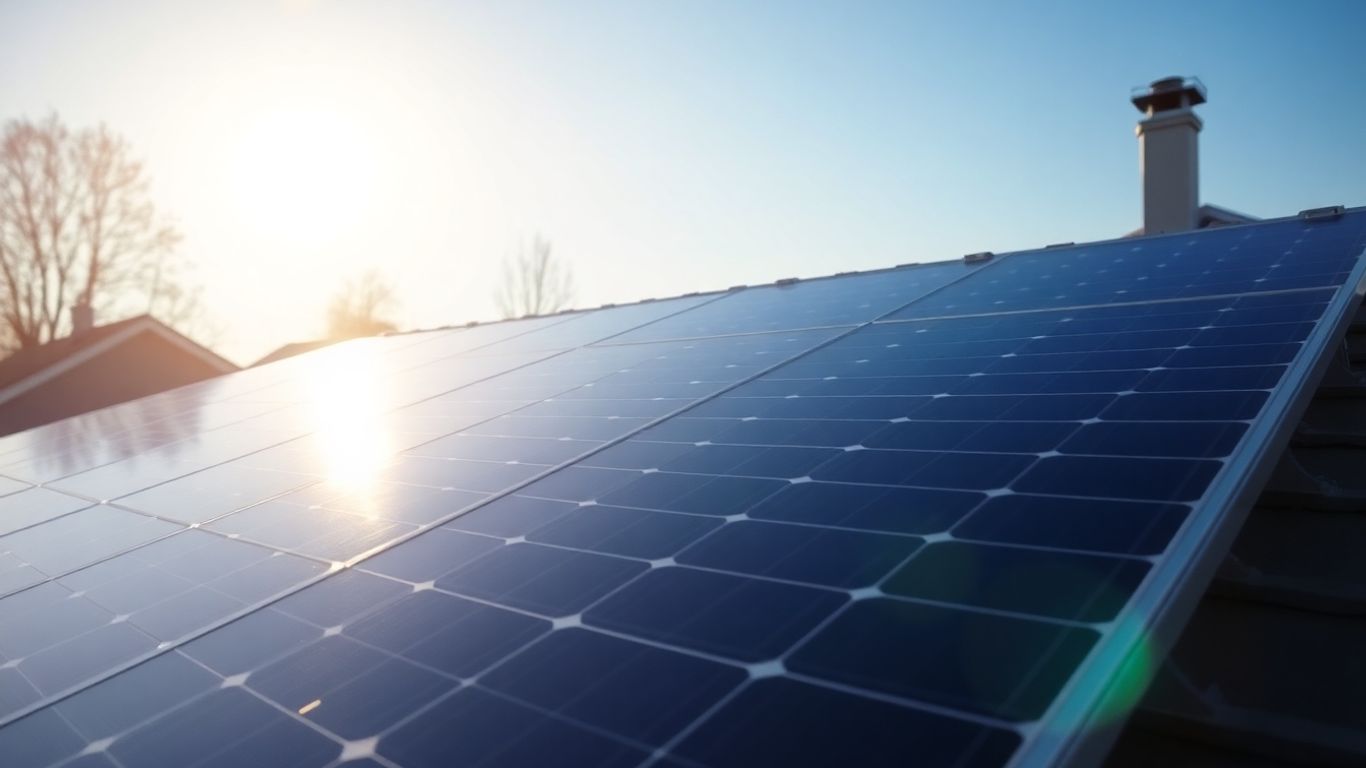
Once your OA solar contract is signed with EDF OA, it is important to know how to manage it in the long term. This includes its duration, procedures in case of selling your property, and even its impact on your property’s value.
Contract Duration and Non-Renewal
The solar electricity purchase contract with EDF OA is concluded for a period of 20 years. It is important to note that this contract is not renewable upon its expiry. If you wish to continue operating your photovoltaic installation after these 20 years, several options are available to you. You can either consume your production entirely or find a different buyer outside the scope of the Purchase Obligation. As the lifespan of solar panels is generally over 30 years, you will have the opportunity to continue producing green electricity. It is also possible to recycle your panels at the end of their life.
Transfer of Contract in Case of Property Sale
Selling your property equipped with solar panels does not pose any particular problem with an EDF OA contract. You can sell your house without issue. However, it is necessary to transfer the purchase contract to the buyer. This ensures the continuity of electricity sales. It should be noted that if you move, you cannot dismantle the panels to reinstall them elsewhere and retain the benefits of the OA solar contract. The contract is linked to the installation and its original location.
Impact on the Energy Performance Certificate
The installation of solar panels has a positive impact on your home’s Energy Performance Certificate (EPC). By producing your own green electricity, your home becomes more energy-efficient. This generally translates into an improvement in your EPC rating. This improvement can, in turn, increase the value of your property, thus giving you an advantage during a sale negotiation. It is therefore beneficial to highlight this aspect during the transaction.
Insurance and Compensation for Loss of Income
In the event of a breakdown of your solar installation, it is possible to cover potential loss of income through specific insurance. There are insurance policies covering ‘business interruption’ or ‘loss of revenue’. It is important to note that this insurance is not mandatory. Only owners who have subscribed to such a contract will be compensated. For individuals, the relevance of subscribing to such insurance can be debated, as premiums can sometimes exceed the income generated by selling surplus electricity. However, for professionals whose electricity production and sales represent a significant part of their business, this type of cover can be very useful. It is advisable to carefully assess the cost-benefit ratio before committing. For more information on purchase conditions, you can consult the details on the purchase obligation.
Proactive management of your EDF OA solar contract, including understanding its duration, transfer procedures, and implications for property value, is an essential step to optimise your photovoltaic investment in the long term. Also consider the possibility of total self-consumption for simplified energy management.
Insurance and Compensation for Loss of Income
Even with a well-maintained solar installation, unforeseen events can occur. It is therefore relevant to consider insurance to cover potential losses of income.
Coverage in Case of Breakdown
In the event of a malfunction of your photovoltaic installation, electricity production stops, leading to a loss of potential income. Specific insurance, often called « business interruption insurance » or « loss of revenue insurance, » can cover this shortfall. It is important to note that this insurance is not mandatory. Only owners who have subscribed to such a contract will be compensated.
It is essential to read the terms of your insurance contract carefully to understand precisely what is covered and what the compensation conditions are.
Relevance of Insurance for Individuals
For individuals, subscribing to loss of income insurance is not always the most sensible decision. Insurance premiums can sometimes exceed the total income generated by selling surplus electricity. Therefore, a cost-benefit analysis should be carried out before committing. For example, if your installation produces little surplus, the cost of insurance may not be justified.
Benefits for Professionals
On the other hand, for professionals whose business relies partly on selling solar electricity, this insurance makes perfect sense. A breakdown can have significant financial consequences, and the coverage offered by loss of revenue insurance then becomes an important security element. This helps maintain financial stability despite technical uncertainties. If you have an installation of more than 3 kWp, it is advisable to inquire about insurance options to protect your solar investment.
Here are some points to consider when choosing insurance:
- Premium Amount: Compare annual costs with potential lost income.
- Excess: Check the amount you are liable for in case of a claim.
- Exclusions: Ensure that the most likely causes of breakdown are covered.
- Indemnity Limits: Verify that the maximum reimbursed amount is sufficient to cover your losses.
Don’t worry if your income is affected. We are here to help you find solutions to compensate for losses. Discover how we can support you and secure your financial future. Visit our website to learn more about our offers.
In Summary
In conclusion, selling your surplus solar electricity to EDF OA is a process that, while requiring several administrative and technical steps, offers a concrete opportunity to make your photovoltaic installation profitable. By meeting the eligibility criteria and completing the necessary procedures with the relevant authorities, each producer can thus contribute to the energy transition while benefiting from a complementary source of income. It is always advisable to seek professional assistance to simplify these processes and ensure their proper execution.
Frequently Asked Questions
What is EDF’s Purchase Obligation (OA) for solar?
The Purchase Obligation is a system set up so that EDF (or other energy distributors) buys the electricity you produce with your solar panels. It’s a way to encourage people to produce their own green energy and sell it if they produce more than they need.
Who can sell their solar electricity to EDF OA?
Almost anyone can sell their solar electricity! Whether you are an individual with panels on your roof or a business, if your installation meets certain rules (like being installed by a professional and not exceeding a certain power output), you can benefit from it.
What are the conditions for selling my solar electricity?
There are three important rules: your panels must be installed by an RGE-certified professional (this is a quality guarantee), the installation must be on a roof (not on the ground), and its power output must not be too high (less than 100 kWp).
How do I start selling my electricity?
First, you need to have your panels installed by an RGE professional. Then, you need to declare your installation to an administration (DIDEME if your installation is small). After that, you ask Enedis to connect your installation to the grid, and finally, you sign a contract with EDF OA to tell them whether you want to sell them all or part of your electricity.
Do I need to install a special meter to sell my electricity?
Yes, you need a meter to measure how much electricity you produce and sell. Enedis often handles this. If you have a Linky meter, it can even simplify things.
How am I paid for the electricity I sell?
EDF OA pays you for the electricity you feed into the grid. You will need to send them invoices, either once a year or twice a year, depending on what you chose in your contract.
What happens if I sell my house which has solar panels?
You can sell your house without any problems. The new owner will just need to take over your contract with EDF OA. However, you cannot dismantle the panels to reinstall them elsewhere and keep the same contract.
Am I protected if my solar panels stop producing electricity for a while?
This is not automatic. If you want to be compensated for lost income in case of a problem with your panels, you need to take out special insurance. For individuals, this is not always very profitable, but it can be for professionals.
