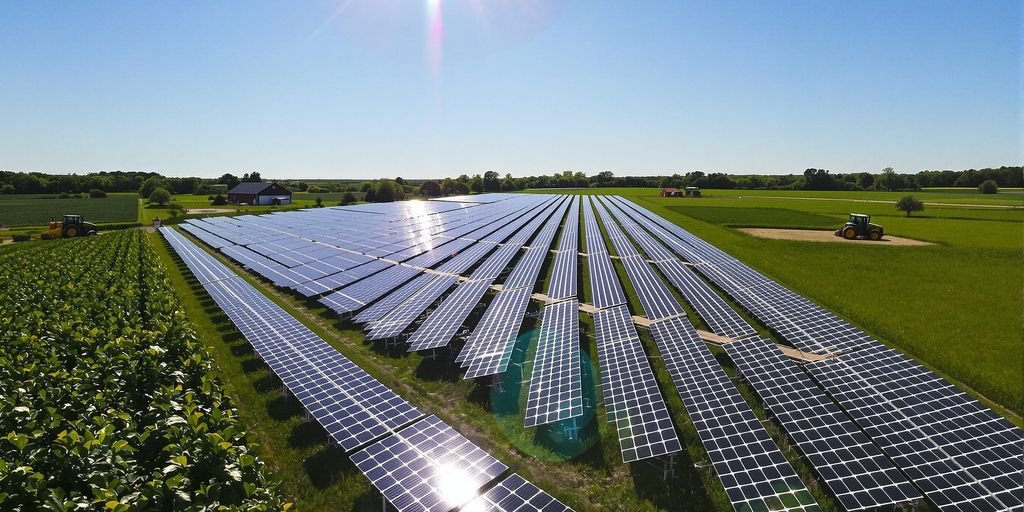
Are you a farmer looking for ways to improve your farm? Agricultural solar panels could well be the solution. It’s a technology that generates energy while protecting your crops and livestock. We’ll look together at how this innovation can transform your farm, bringing you plenty of benefits. Get ready to discover how the sun can become your best ally!
Key Points
- Agricultural solar panels protect crops from extreme weather conditions (heat, UV).
- They help create a favourable microclimate, which improves plant growth.
- Producing your own electricity reduces energy bills and increases self-sufficiency.
- Animals also benefit from shade and a more stable environment.
- It’s an environmentally friendly approach that reduces the farm’s carbon footprint.
1. VIP tanning for your crops
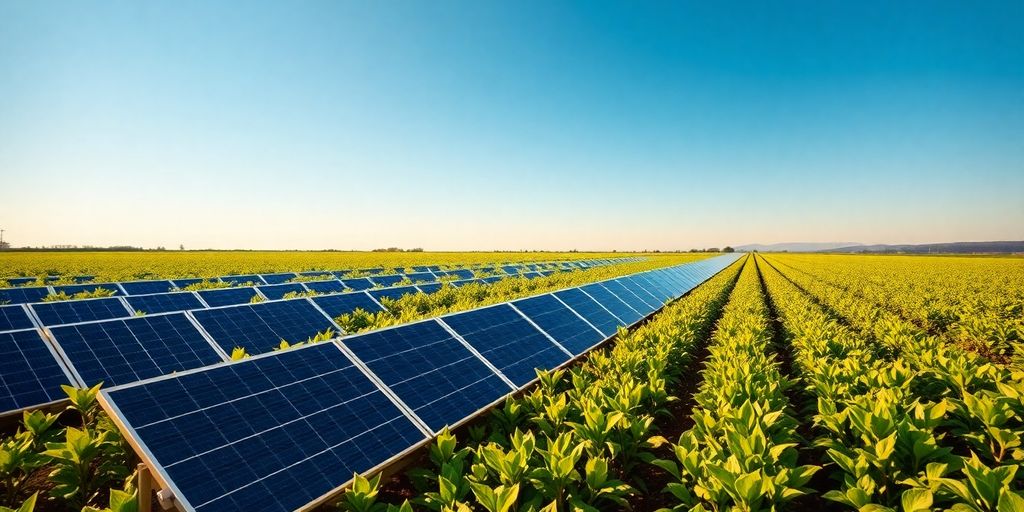
Imagine your crops basking under a delicate shade, sheltered from the sun’s fiercest rays. That’s precisely what agricultural solar panels offer: tailor-made protection for your precious plants. No more sunburn for your lettuces and tomatoes that wither before they’re ripe!
Agri-photovoltaics is a bit like offering your crops a luxury holiday. They benefit from an ideal microclimate, with a more stable temperature and better-controlled humidity.
And that’s not all! As well as pampering your crops, you’re producing green electricity. It’s a bit like your plants working part-time to power your farm. Not bad, eh?
Agricultural solar panels don’t just protect your crops from the sun. They create an environment optimised for their growth, while producing clean energy. It’s a win-win solution for modern agriculture.
Here are some of the concrete benefits of this solar protection:
- Reduced water stress for plants
- Improved crop quality
- Reduced need for pesticides thanks to a healthier environment
In short, offering your crops a “VIP tan” means investing in their well-being and in the profitability of your farm. Consider installing agricultural solar panels for sustainable agriculture.
2. Solar tomatoes, no heatwave
With rising summer temperatures, it’s becoming imperative to protect your crops from the harmful effects of the heat. Agricultural photovoltaic shade structures offer an effective solution for creating a microclimate that’s conducive to the growth of your vegetables, even during heatwaves. It acts as a shield, reducing direct exposure to the sun and maintaining a more stable temperature.
Installing such a structure makes it possible to:
- Reduce thermal stress on plants.
- Reduce water consumption thanks to lower evaporation.
- Improve crop quality and yield.
Agricultural photovoltaic shade structures represent a wise investment for farmers concerned about the quality of their produce and the preservation of their resources. It guarantees consistent production, even in periods of intense heat, while contributing to the energy transition.
As well as protecting your crops, agricultural photovoltaic shade structures produce solar energy, a clean, renewable source of energy. This energy can be used to power your farm, reducing your dependence on fossil fuels and your electricity bills. You can also consider an agri-solar project for your farm. It’s an effective way of combining agricultural production with green energy production. For those interested in the environmental impact, it’s important to note that shade structures contribute to the energy transition by reducing your farm’s carbon footprint.
In short, agricultural photovoltaic shade structures are a win-win solution for farmers who want to protect their crops from heatwaves, produce clean energy and reduce their operating costs. It allows you to grow solar tomatoes with complete peace of mind, even when the mercury is soaring. It is possible to accept a loss of yield in photovoltaic greenhouses.
3. Solar power, your farm’s new superpower
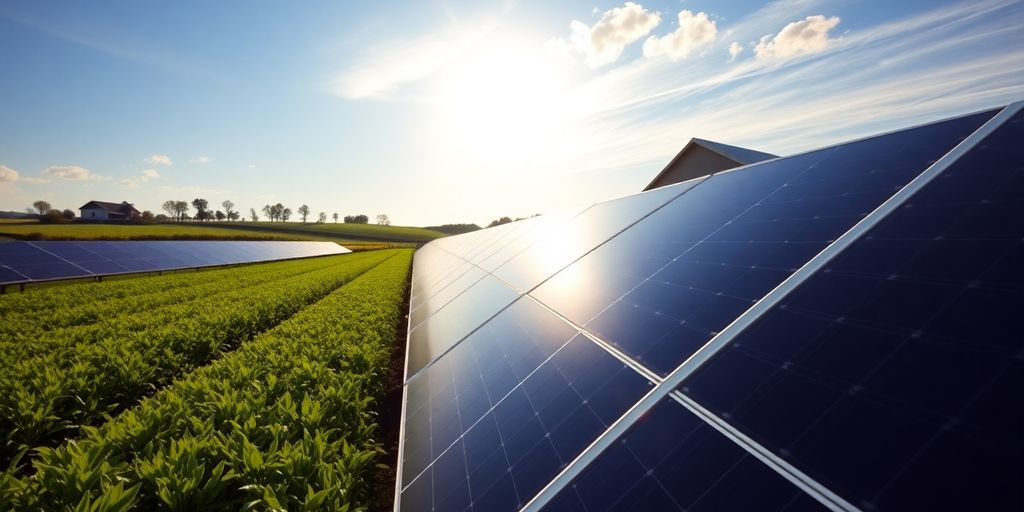
Agricultural shade structures are much more than just a shelter for your crops. Think of it as a real energy shield for your farm. Equipped with photovoltaic panels, it transforms sunlight into green electricity, a clean, renewable source of energy at your disposal. It’s a bit like your crops becoming the superheroes of solar energy, and your farm the headquarters of sustainability. You can even consider becoming a partner for more sustainable agriculture.
With agri-photovoltaics, your farm becomes an autonomous power plant. No more dependence on fossil fuels and fluctuating electricity prices. You produce your own energy, reducing your carbon footprint and helping to protect the environment. It’s a smart investment that saves you money in the long term while contributing to the energy transition.
Solar energy offers valuable energy autonomy, reducing vulnerability to energy crises and stabilising operating costs. It’s a major asset for the long-term viability of your farm.
Here are some of the concrete benefits of solar energy for your farm:
- Increased energy autonomy
- Reduced carbon footprint
- Renewable and sustainable energy source
- Savings on electricity bills
- Enhancement of your image with consumers
Don’t hesitate to contact Solencia to discuss your solar energy needs and discover the solutions best suited to your farm. You can also consult our guide to agri-solar to find out more.
4. Goodbye electricity bills, hello savings!
With an agricultural solar panel installation, the prospect of saying goodbye to electricity bills becomes a tangible reality. Your farm is transformed into an energy plant, exploiting an inexhaustible and free resource: the sun. This energy transition offers greater autonomy and a significant reduction in operating costs.
Imagine a scenario where, instead of depending on fluctuations in the electricity market, you produce your own energy. The savings made can be reinvested in your farm, promoting its growth and modernisation. What’s more, a photovoltaic installation adds real value to your property.
The initial investment in an agricultural solar system may seem substantial, but it is quickly recouped thanks to the energy savings made in the long term. What’s more, various financial aid and subsidies are available to encourage the adoption of this technology.
Here are some concrete financial benefits:
- Reduction, or even elimination, of electricity bills.
- Resale of surplus energy produced to the electricity grid.
- Improved overall farm profitability.
The profitability of photovoltaic panels on farm buildings for self-consumption is directly linked to electricity prices; the higher the prices, the higher the profitability. It is therefore crucial to carefully assess your energy needs and size your installation correctly to maximise benefits. The photovoltaic future transforms solar energy.
By opting for solar energy, you’re making a wise choice that benefits both your wallet and the environment. It’s a sustainable investment that ensures the long-term viability of your farm. You can choose between self-consumption or selling all the electricity produced to calculate your specific profitability.
5. Happy, healthy animals
It is essential to consider animal welfare in any farming operation. Agri-photovoltaics offers significant benefits in this regard. The installation of agricultural solar panels can help improve the living conditions of animals.
Agri-photovoltaics, by creating a more pleasant microclimate, can improve animal welfare by reducing heat stress in cows.
- Reduced heat stress: Solar panels provide shade, which is particularly important during the hot months. This reduces heat stress in animals, improving their health and productivity.
- Improved comfort: A more temperate environment contributes to the overall comfort of the animals, which can translate into a better quality of life.
- Protection from the elements: In addition to shade, agri-photovoltaic structures can offer protection from other adverse weather conditions, such as rain or hail.
The shade provided by solar panels can significantly improve the comfort of animals, especially during periods of high heat. This results in reduced stress, better feeding and, consequently, increased production.
The integration of photovoltaic panels into a farm can therefore have a positive impact on animal welfare, while generating clean energy and optimising land use. Agri-photovoltaics provides shade for animals, reducing heat stress and improving their well-being. It also protects market garden crops, demonstrating a dual benefit for both energy production and agricultural practices. The installation of agri-solar systems requires a careful assessment of the farm’s energy needs and the characteristics of the land, but can be a cost-effective and sustainable solution.
6. Double harvest, double satisfaction
The integration of agri-photovoltaics offers a unique opportunity to optimise the use of your agricultural land. You harvest the fruits of your crops and solar energy, maximising your income and satisfaction. It’s a win-win approach that transforms your farm into a thriving agricultural and energy business.
Agri-photovoltaics, by combining agricultural production and solar energy production, enables optimal land use. This synergy offers a dual source of income, increasing the overall profitability of your farm.
Agri-photovoltaics represents an innovative solution for diversifying agricultural income while contributing to the energy transition. By producing green electricity, you are actively participating in reducing the carbon footprint and preserving the environment.
Here are some of the concrete benefits of this double harvest:
- Increased income through the sale of electricity.
- Optimisation of agricultural land use.
- Diversification of agricultural activities.
- Contribution to the energy transition.
By adopting agri-photovoltaics, you transform your farm into an energy plant while continuing to cultivate your land. This sustainable and profitable approach ensures you a double satisfaction: that of producing quality food and contributing to a cleaner energy future. Consider exploring the benefits for farms to better understand how agri-photovoltaics can transform your farm.
The installation of flexible solar panels can also open up new perspectives, particularly for nomadic applications. Discover the applications for photovoltaic panels and how they can be integrated into your farm.
7. A green boost for the environment
Adopting agricultural solar panels represents a significant gesture in favour of environmental protection. In fact, this approach actively contributes to reducing your farm’s carbon footprint. It’s a sustainable investment that’s part of an environmental responsibility approach.
The integration of agri-photovoltaics helps to reduce greenhouse gas emissions, in particular by reducing dependence on fossil fuels. What’s more, it promotes the production of clean, renewable energy, thus contributing to the fight against global warming. The integration of methanisation and photovoltaics on a farm helps to reduce greenhouse gas emissions.
By opting for solar energy, you are actively participating in the energy transition and contributing to the preservation of natural resources for future generations. It’s a concrete commitment to a more sustainable future.
Here are some concrete environmental benefits:
- Reduction of CO2 emissions.
- Production of clean, renewable energy.
- Preservation of natural resources.
- Reduced dependence on fossil fuels.
- Improved air quality.
By producing your own energy, you contribute to your farm’s energy independence and reduce your impact on the environment. Farmers can achieve energy independence and reduce costs by integrating solar panels into their operations. In addition, the eco-PTZ can provide up to €50,000 for comprehensive energy renovation projects, including the installation of solar panels.
Want to find out more about how to help our planet? Visit our website to discover simple and effective tips. Every little gesture counts towards a greener future!
Conclusion
In short, solar panels for agriculture are a real opportunity. We’re talking about reducing electricity bills, producing your own energy, and even earning money by selling the surplus. It’s also a gesture for the planet, less pollution, more clean energy. And it can help protect crops or animals. It’s an investment, yes, but one that pays off in the long term, for the farm and for the environment. It’s a solution that makes sense for agriculture today and tomorrow.
Frequently Asked Questions
What is an agricultural solar panel?
Agricultural solar panels, often called photovoltaic shade structures, are structures equipped with solar panels installed above crops or livestock areas. They generate electricity while providing protection for plants and animals.
How do agricultural solar panels protect crops and animals?
These installations protect crops from the elements (excessive heat, hail) and can improve crop quality. For animals, they provide shelter from the sun and high temperatures, contributing to their well-being.
What are the economic benefits of solar panels for a farm?
By producing your own electricity, you significantly reduce your energy bills. What’s more, the surplus electricity can be sold to the grid, generating additional income for your farm.
What is the environmental impact of solar energy in agriculture?
The installation of agricultural solar panels contributes to the production of clean, renewable energy, thus reducing your farm’s carbon footprint and promoting a more sustainable and environmentally friendly agricultural model.
Is there any financial assistance available for the installation of agricultural solar panels?
Yes, there are various government or regional grants and subsidies to encourage the adoption of solar energy in agriculture. We advise you to contact the relevant organisations to find out about the eligible schemes.
What is the lifespan and maintenance of agricultural solar panels?
The lifespan of solar panels is generally 25 to 30 years, or even longer. Their maintenance is relatively simple and consists mainly of regular cleaning to ensure optimum performance.
Is the installation process complex?
The installation depends on the size of your farm and your energy needs. It is recommended that you call on professionals for a personalised study and an installation that complies with current standards.
Are agricultural solar panels suitable for all types of farms?
Yes, agricultural solar panels can be adapted to different types of crops and livestock. Agri-photovoltaics, for example, combines agricultural production and energy production on the same plot, optimising land use.
