
You’ve heard about solar energy everywhere but when someone mentions “photovoltaic,” you feel completely lost and embarrassed not to understand this technology that’s revolutionizing our energy future. This knowledge gap frustrates you because photovoltaic systems are becoming essential in today’s world, yet technical jargon makes the subject seem inaccessible to non-experts. You worry about missing out on important conversations about renewable energy or making uninformed decisions about solar installations for your home. The fear of appearing ignorant when discussing environmental solutions with friends, colleagues, or contractors creates unnecessary stress in your daily interactions. You want to contribute meaningfully to sustainability discussions but feel excluded by complex terminology that nobody takes time to explain clearly. The photovoltaic definition encompasses a fascinating technology that converts sunlight directly into electricity through a simple yet ingenious physical process. This comprehensive guide breaks down the photovoltaic concept into 5 essential points that will transform you from confused bystander to informed participant in the solar energy revolution. You’ll master the fundamental principles, key components, and practical applications that make photovoltaic technology the cornerstone of our clean energy future.
Key Points
- Photovoltaics is the direct conversion of sunlight into electricity, without going through heat. It’s the photovoltaic effect, discovered a long time ago, that makes this possible.
- The operation relies on semiconductor materials, such as silicon, which release electrons when struck by photons from the sun, thus creating an electric current.
- Photovoltaic cells are the small units that make up the panels. They are the heart of the system and transform light into direct current.
- Solar panels are assemblies of these cells. They capture the sun’s energy and are usually installed on roofs, but also on the ground.
- The inverter is a super important device: it takes the direct current produced by the panels and transforms it into alternating current, the one we use in our homes and that is compatible with the electricity grid.
1. Photovoltaic definition
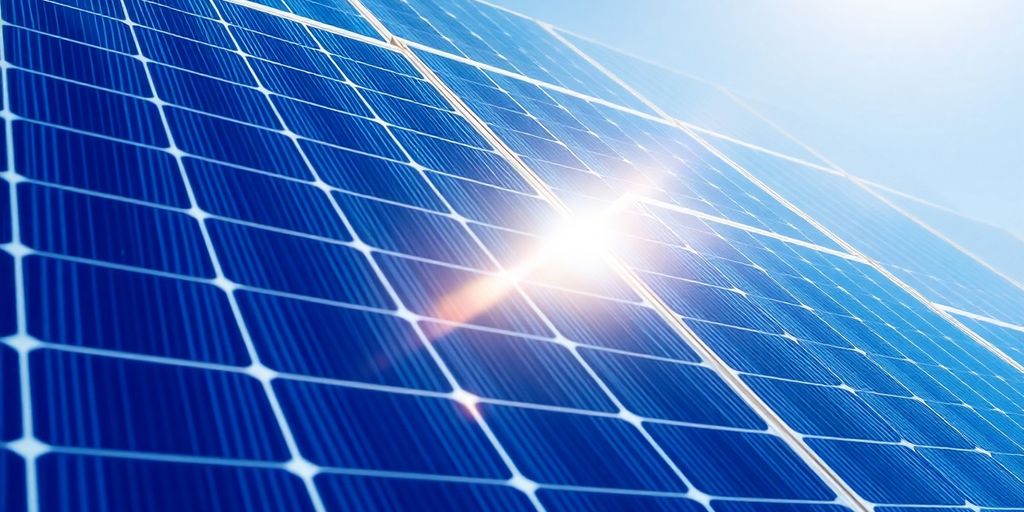
The term photovoltaic refers to two things. First, it designates the physical phenomenon discovered by Alexandre Edmond Becquerel in 1839, namely the photovoltaic effect. Secondly, it encompasses the technology that uses this effect to produce electricity. Basically, it’s science and technology coming together to transform light into electric current.
Solar photovoltaic energy is therefore the electricity produced from solar radiation. It’s a renewable energy source, as it uses an inexhaustible resource: the sun.
Photovoltaic energy is increasingly present in our daily lives, from small solar calculators to large power plants. Its development is a key element of the energy transition.
To understand it well, here are some important points:
- The photovoltaic effect is a physical process that occurs in certain materials, such as silicon.
- Photovoltaic cells are the basic components of solar panels.
- Solar panels are used to convert sunlight into electricity.
Solar photovoltaic energy is a promising solution for a more sustainable energy future. It allows us to reduce our dependence on fossil fuels and limit greenhouse gas emissions. In addition, it offers the possibility of producing electricity in a decentralised manner, which can be particularly interesting for isolated areas. It is important to understand the key factors for the development of profitable photovoltaic projects. Photovoltaic energy is a solution for the future.
2. Operation
The operation of photovoltaic systems relies on a multi-stage process, transforming sunlight into usable electricity. It’s a bit like an assembly line, but for energy!
How does it work, in practice?
It all starts with photovoltaic cells. These cells, generally composed of silicon, are the heart of the system. When a photon (a particle of light) strikes the cell, it transfers its energy to an electron of the silicon. This electron, excited by the energy, is released and creates an electric current. That’s the photovoltaic effect in action!
This electric current is a direct current (DC), like the one produced by a battery. However, most of our electrical appliances operate with alternating current (AC). This is where the inverter comes in, an essential component of the system. The inverter transforms the direct current produced by the panels into alternating current, compatible with the electricity grid and our household appliances.
Imagine that the sun sends millions of small balls (the photons) onto the panels. These balls strike the cells and release electrons, creating a flow of electricity. The inverter, on the other hand, is like a translator that transforms this flow into a language that our devices can understand.
The key elements of a photovoltaic system
A complete photovoltaic system includes several elements, each playing a crucial role:
- The solar panels solar panels, made up of photovoltaic cells, which capture sunlight.
- The inverter, which transforms direct current into alternating current.
- The wiring and connectors, which ensure the circulation of electric current.
- The fixing system, which holds the panels in place on the roof or on the ground.
- Possibly, a storage system (batteries), to store the energy produced and use it later.
Optimisation and efficiency
Several factors influence the efficiency of a photovoltaic system. The orientation and inclination of the panels are essential to capture the maximum amount of sunlight. Shading, even partial, can significantly reduce electricity production. The temperature of the panels also plays a role: a panel that is too hot loses efficiency. This is why it is important to choose the location carefully and ensure the ventilation of the panels. A well-thought-out solar panel installation is the key to optimal production.
Direct Current vs Alternating Current
| Characteristic | Direct Current (DC) | Alternating Current (AC) |
|---|---|---|
| Direction of current | Unique | Changes periodically |
| Voltage | Constant | Varies (sinusoidal) |
| Typical use | Batteries, solar panels | Electricity grid, household appliances |
| Long-distance transport | Difficult (significant losses) | Easy (transformers) |
Understanding the difference between these two types of current is essential to understand the role of the inverter in a photovoltaic system. Without the inverter, the solar energy produced could not power our homes and businesses. The inverter is therefore an essential element to ensure the efficiency and functionality of solar systems.
3. Photovoltaic cells
Photovoltaic cells are the basic components of solar panels. They are responsible for converting sunlight into electricity. It’s a bit like the bricks of a house, except that instead of building a shelter, they build energy.
Photovoltaic cell
A photovoltaic cell is an electronic device that directly converts light into electricity thanks to the photovoltaic effect. It’s the smallest unit of electricity production in a solar panel. Imagine a small factory that works tirelessly to transform photons into direct current. These cells are generally made from silicon, an abundant semiconductor material. When light strikes the cell, it releases electrons, thus creating an electric current. Several cells are then connected to form a photovoltaic module, more commonly called a solar panel. To find out more about the photovoltaic effect, you can consult this article.
The different types of cells
There are several types of photovoltaic cells, each having its own characteristics and performance. The most common are:
- Monocrystalline cells: Made from a single crystal of silicon, they offer high efficiency but are more expensive to produce. They are recognisable by their uniform colour and smooth appearance.
- Polycrystalline cells: Composed of several crystals of silicon, they are cheaper to produce but have a slightly lower efficiency. They are distinguished by their “frosted” appearance.
- Thin-film cells: Made by depositing a thin layer of semiconductor material on a support, they are flexible and lightweight, but their efficiency is generally lower. They are often used in specific applications such as integrated solar roofs.
The choice of cell type will depend on several factors, including budget, available space and desired performance. It is important to study the different options carefully before making a decision.
Other cell technologies
Although silicon is the most used material, other photovoltaic cell technologies exist, although less widespread. Among these, we find thin-film cells based on cadmium telluride (CdTe) or copper, indium and gallium selenide (CIGS). These cells offer advantages in terms of cost and flexibility, but their efficiency is often lower than that of crystalline silicon cells. There is also research on organic cells and perovskite cells, which could offer interesting alternatives in the future. For photovoltaic projects, Solencia can assist you with your solar panel installations.
Hybrids: thermal and photovoltaic
Another interesting approach is that of hybrid cells, which combine the production of electricity and heat. These systems, also called hybrid solar collectors, make it possible to recover the heat released by the photovoltaic cells, thus increasing the overall efficiency of the system. Indeed, the efficiency of solar cells decreases when their temperature increases. By recovering this heat, we can both improve electrical efficiency and obtain an additional source of heating. It’s a promising solution to optimise the use of solar energy and reduce dependence on fossil fuels.
4. Solar panels
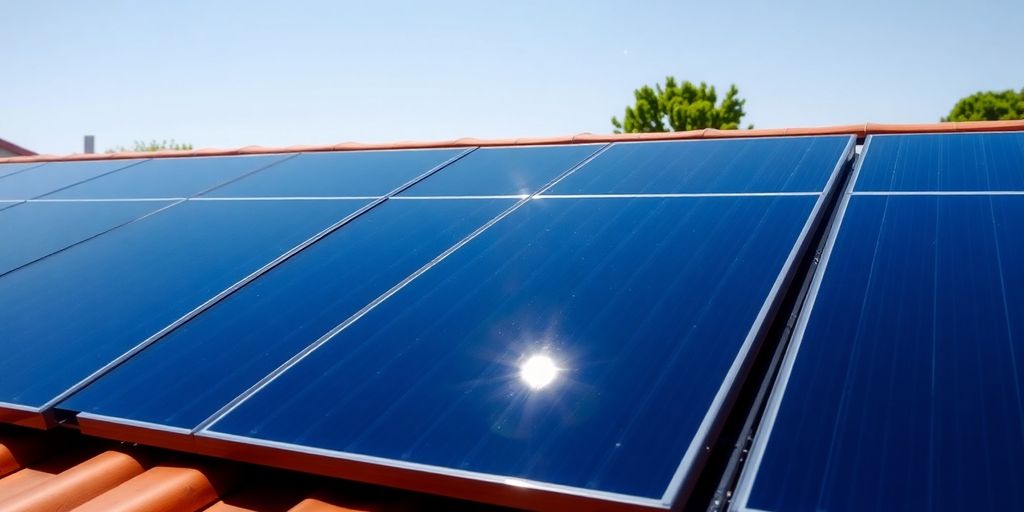
After exploring photovoltaic cells, it’s time to look at their assembly: solar panels. These devices are at the heart of the conversion of solar energy into electricity. They represent the visible and tangible element of your photovoltaic installation.
Solar panels are designed to withstand the weather and last for many years, making them a sustainable investment for your energy production. It is important to understand how they work and the different types available to make an informed choice.
Types of solar panels
There are mainly three types of solar panels on the market: monocrystalline, polycrystalline and thin-film. Each has its own characteristics in terms of efficiency, cost and appearance.
- Monocrystalline: They are made from a single crystal of silicon, which gives them high efficiency and a uniform black appearance. They are generally more expensive than other types.
- Polycrystalline: They are made up of several crystals of silicon melted together, which gives them a bluish appearance and a slightly lower efficiency than monocrystalline. They are often more affordable.
- Thin-film: They are made by depositing a thin layer of photovoltaic material on a substrate. They are more flexible and lightweight, but their efficiency is generally lower. They can be a good option for specific applications, such as nomadic flexible solar panels.
Important characteristics
Several characteristics are to be taken into account when choosing your solar panels. These elements will help you assess the performance and durability of the panel.
- Nominal power: Expressed in watts (W), it indicates the maximum power that the panel can produce under standard test conditions (STC).
- Efficiency: This is the ratio between the power produced and the surface area of the panel. A high efficiency means that the panel produces more electricity for the same surface area.
- Voltage and current: These values are important for correctly sizing your installation and choosing the right equipment (inverter, cables, etc.).
- Temperature coefficient: It indicates the loss of efficiency of the panel when its temperature increases. A low coefficient is preferable.
- Warranty: It generally covers manufacturing defects and loss of efficiency over time. A long warranty is a guarantee of quality.
Installation and orientation
The installation of solar panels must be carried out by a qualified professional to guarantee the safety and performance of your installation. The orientation and inclination of the panels are also key factors for optimising energy production. In France, a south-facing orientation is generally recommended, with an inclination of approximately 30 to 45 degrees.
A correct installation is essential to maximise the energy production of your solar panels. Do not hesitate to call on a RGE (Recognised Guarantor of the Environment) certified installer to benefit from a quality installation and possible financial aid.
Price and profitability
The price of solar panels varies depending on the type, power and brand. It is important to compare offers and take into account the financial aid available to calculate the profitability of your project. Self-consumption with sale of surplus can be an interesting option to reduce your electricity bill and amortise your investment more quickly. Don’t forget to inquire about the rates and premiums in force.
In summary, solar panels are an essential element of your photovoltaic installation. Choosing your panels well means ensuring optimal energy production and a profitable investment in the long term. Remember to inform yourself well and call on professionals to support you in your project.
5. Inverter
The inverter is an essential component of a photovoltaic system. Its main role is to transform the direct current (DC) produced by the solar panels into alternating current (AC), which is the type of current used by most electrical appliances and injected into the electricity grid.
Without an inverter, the electricity produced by your solar panels could not be used directly in your home or sent back to the grid. It’s a bit like having an electrical outlet that doesn’t match your devices: you need an adapter.
There are different types of inverters, each having its advantages and disadvantages. The choice of inverter will depend on the size of your installation, your budget and your specific needs. It is important to understand the characteristics of each type of inverter before making a decision.
Here are some elements to consider when choosing an inverter:
- The power of the inverter: it must be adapted to the power of your photovoltaic installation.
- The efficiency of the inverter: the higher the efficiency, the less energy will be lost during the conversion of the current.
- The reliability of the inverter: it is important to choose a quality inverter, manufactured by a recognised brand.
- The functionalities of the inverter: some inverters offer additional functionalities, such as remote monitoring of energy production or the possibility of storing energy in batteries.
It is also important to note that the price of an inverter can vary considerably depending on its characteristics. A monobloc model can cost between £130 and £300 for 2.5 kW, while powers of 2.5 to 3.5 kW vary from £260 to £860. For needs greater than 3.5 kW, plan a budget of £860 to more than £3,000. It is advisable to carry out a thermal assessment with a professional for a custom installation.
In summary, the inverter is a key element of your photovoltaic installation. It ensures the conversion of direct current into alternating current, thus allowing the use of the solar energy produced. Choosing the right inverter is therefore essential to optimise the efficiency and lifespan of your installation. To correctly size your installation, you can consult a guide to size your installation. The future of photovoltaics is promising, with constant innovations. Photovoltaic greenhouses are an example of innovative application.
To find out everything about inverters and how they protect your devices, visit our website. You will find simple explanations and practical advice to choose your inverter well.
In summary
Photovoltaic energy is a really interesting solution for producing electricity. We’ve seen how it works, with the cells that transform sunlight into current. It’s a technology that is constantly improving, and that’s good news for the environment. In addition, it can help save money in the long term. Whether for a house or for larger projects, solar has an important role to play in our energy future. It’s an option to consider seriously for those who want cleaner and more autonomous energy.
Frequently Asked Questions
What is photovoltaic energy?
Photovoltaic energy is a form of electricity produced directly from sunlight. Special panels, called solar panels, capture this light and transform it into electric current. It’s a clean and renewable way to produce energy.
How does a solar panel work?
Solar panels are composed of small units called photovoltaic cells. When sunlight strikes these cells, it releases small particles of electricity (electrons). This movement of electrons creates a direct electric current, which is then transformed to be used in our homes.
What are photovoltaic cells made of?
Photovoltaic cells are the basic elements of solar panels. They are generally made of silicon, a material that has the ability to release electrons when exposed to sunlight, thus producing electricity.
What is a solar inverter used for?
An inverter is an essential device in a solar system. It takes the direct current produced by the solar panels and transforms it into alternating current, which is the type of current used by all the electrical appliances in our homes and by the public electricity grid.
Why is the orientation of solar panels important?
The orientation and inclination of solar panels are very important. To capture the maximum amount of sunlight throughout the day and seasons, the panels must be oriented towards the south (in the northern hemisphere) and have an inclination adapted to the latitude of the location.
Can the electricity produced by solar panels be stored?
Yes, it is possible to store the electricity produced by solar panels in batteries. This allows you to use the energy even when there is no sun, for example at night or in cloudy weather, and to reduce your dependence on the electricity grid.
What is watt-peak (Wp)?
The watt-peak (Wp) is a unit of measurement that indicates the maximum power that a solar panel or system can produce under ideal laboratory conditions. It is an indicator of the electricity production capacity of a solar installation.
What is solar self-consumption?
Self-consumption means that you directly use the electricity produced by your solar panels for your own needs. If you produce more electricity than you consume, the surplus can be sold to the public grid or stored.
