Carrying out an energy audit in a company is much more than a simple formality. It is a process that allows you to understand where your energy is going, reduce your bills, and comply with the law. For some companies, it is even an obligation. But beyond that, how can this audit concretely help your business? This guide explains everything, simply.
Key Takeaways
- An energy audit analyses your consumption to find areas for savings and improve the efficiency of your installations.
- It helps reduce your energy expenditure by identifying waste and proposing concrete solutions.
- For large companies, this audit is a legal obligation every four years, under penalty of sanctions.
- The process is part of a sustainable development approach, reducing environmental impact and greenhouse gas emissions.
- The cost of the audit can be reduced thanks to various financial aids and subsidies available, particularly through ADEME.
What is a company energy audit?
Definition of a company energy audit
An energy audit in a company is a bit like a detailed health check for your energy consumption. It is an in-depth analysis that examines how your organisation uses energy on a daily basis. The main idea is to draw an accurate picture of your energy expenditure, identifying where each kilowatt-hour goes and, above all, where there might be waste. Everything is looked at: from the heating and air conditioning systems to production machinery, including lighting. The objective is to identify the equipment and processes that consume the most and to see if there are ways to improve efficiency. It is a process that allows you to concretely understand your energy footprint.
An energy audit is not just an administrative formality; it is a strategic tool for better managing your resources, reducing your costs, and positioning yourself as a responsible company.
The key points of an energy audit include:
- Consumption analysis: Examining bills and consumption data to understand trends.
- Installation diagnosis: Assessing the condition and performance of energy equipment (boilers, ventilation systems, lighting, etc.).
- Identification of waste: Pinpointing energy losses due to poor insulation, inappropriate settings, or obsolete equipment.
- Proposal of actions: Suggesting concrete measures to reduce consumption and improve efficiency.
It is a process that helps to make informed decisions to optimise energy use. For a more global view of energy management, it is possible to consider standards such as ISO 50001, which offers a structured framework.
Objectives of an energy audit
The reasons for carrying out an energy audit are numerous and go far beyond simple legal compliance. Firstly, the main objective is to reduce your energy costs. By precisely identifying where energy is consumed and where it is potentially wasted, you can implement targeted actions to lower your bills. This can involve simple adjustments, such as optimising the settings of your heating or air conditioning systems, or more significant investments, such as replacing old equipment with more efficient models. The idea is to improve the overall efficiency of your company.
Secondly, an energy audit is an excellent way to contribute to sustainable development goals and the transition to a low-carbon economy. By reducing your energy consumption, you directly reduce your greenhouse gas emissions. It is a concrete way to demonstrate your environmental commitment, which is increasingly appreciated by customers, partners, and even your employees. This strengthens your brand image and your social responsibility.
Finally, for some companies, carrying out an energy audit is a legal obligation. Complying with this regulation allows you to avoid financial penalties and demonstrate your seriousness to the authorities. It is therefore a strategic, economic, and environmental process. An energy audit allows you to take stock of your energy consumption and identify concrete areas for improvement.
Why carry out an energy audit in a company?
Carrying out an energy audit is not a mere administrative formality; it is a strategic process that brings concrete benefits to your organisation. Beyond regulatory compliance, this exercise allows for better control of your expenses, improved operational efficiency, and strengthened environmental commitment. It is an investment that translates into tangible gains in the medium and long term.
Reducing energy costs and optimising performance
One of the most immediate benefits of an energy audit is the reduction of your bills. By analysing your consumption in detail, the audit highlights the areas where energy is used the most and, above all, where it is potentially wasted. This could be due to aging equipment, insufficient insulation, or simply unoptimised settings. The resulting recommendations allow for the targeting of the most profitable actions to reduce your consumption without impacting your business. Better energy management directly translates into improved profitability. For example, identifying heat loss in your buildings can lead to insulation work which, once completed, will sustainably reduce your heating needs identify weaknesses in your buildings.
Contributing to sustainable development and low-carbon goals
In a context where climate issues are increasingly pressing, an energy audit is a powerful tool for aligning your company with sustainable development goals. By reducing your energy consumption, you mechanically decrease your greenhouse gas emissions. This is a direct contribution to the energy transition and the fight against climate change. Furthermore, a proactive approach to energy efficiency enhances your brand image and attractiveness to your customers, partners, and employees, who are increasingly sensitive to environmental issues. This demonstrates your commitment to a more sustainable future.
Complying with legal requirements and avoiding sanctions
For large companies, an energy audit is not an option but a legal obligation. The Energy Code requires an energy audit to be carried out every four years for companies with more than 250 employees or with an annual turnover exceeding 50 million euros. Failure to comply with this rule exposes you to financial penalties. Beyond the coercive aspect, this obligation aims to encourage better energy management at a national level. Carrying out this audit therefore allows you to remain compliant and avoid penalties, while benefiting from the advantages of better control over your consumption improve your energy management.
The regulation surrounding mandatory company energy audits
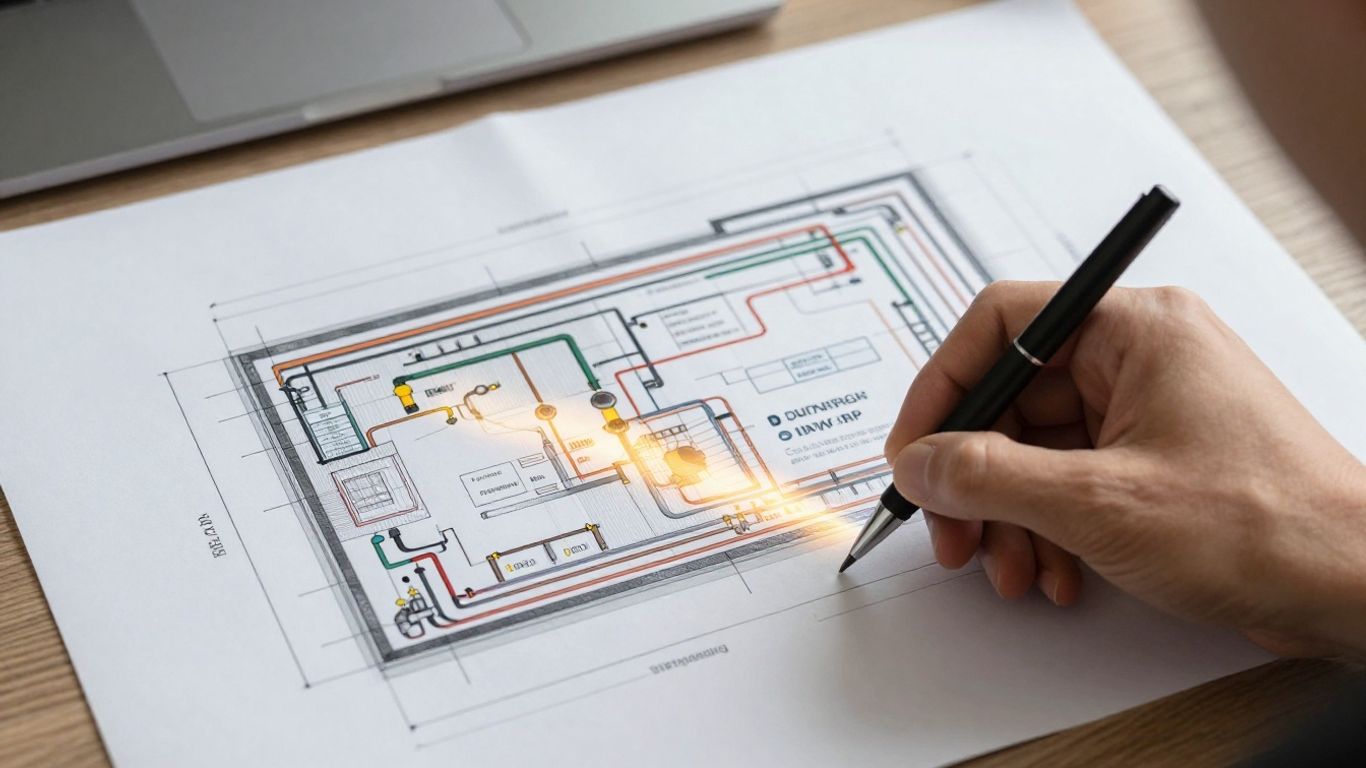
What is the current legislation?
In France, carrying out an energy audit is not always a voluntary process; for some structures, it constitutes a legal obligation. This requirement is part of a regulatory framework aimed at encouraging more responsible energy management and reducing the environmental impact of economic activities. Legislation is evolving, particularly with the transposition of European directives, to better target the most energy-consuming companies.
The obligation for energy audits is primarily governed by the Energy Code. It stipulates that companies exceeding certain thresholds must carry out this audit periodically. The NF EN 16247 standard defines the quality standards for carrying out these audits, thus ensuring a rigorous and comparable methodology between different assessments.
Following recent developments, the trigger for the obligation may also be based on an energy consumption threshold rather than solely on the size of the company. For example, a final energy consumption exceeding 2.75 GWh per year can make an audit mandatory, regardless of the number of employees or turnover. This approach allows for a greater number of economic actors to be included in the energy optimisation process.
The regulation aims to ensure that companies with a significant energy impact implement concrete actions to improve their efficiency and reduce their carbon footprint.
Who is concerned by the mandatory energy audit?
The obligation to carry out an energy audit mainly concerns large companies. The criteria for being considered a large company and therefore subject to this obligation are generally as follows:
- Workforce: At least 250 employees.
- Turnover: An annual turnover exceeding 50 million euros.
- Balance sheet total: A balance sheet total exceeding 43 million euros.
These thresholds are defined to target entities whose energy consumption is the highest and which, consequently, have significant potential for improvement. Companies that do not fall into these categories are not obliged to carry out an audit, but can do so voluntarily to benefit from the advantages in terms of cost reduction and performance improvement. It is important to note that new regulations may extend the scope of companies concerned, particularly those exceeding a certain energy consumption threshold, as mentioned in the Commercial Code.
For very large consumers, exceeding, for example, 23.6 GWh per year, enhanced obligations apply, including the implementation of an energy management system (EnMS) certifiable according to ISO 50001. The implementation of such a system may, in certain cases, exempt from the periodic energy audit, as it attests to a continuous process of improving energy performance [f352].
The process of an energy audit
Initial analysis of the company’s energy consumption
Even before setting foot on your site, the auditor begins by studying your energy bills for the past twelve months. It’s a bit like looking at your bank statements before deciding where to save money. Electricity, gas, and any other fuel you use are examined. The idea is to understand where your money is going, when consumption is high, and which areas (heating, lighting, machinery) are the most demanding. This first step provides an overall picture of your consumption and identifies the most promising avenues for the audit. It is the foundation for all subsequent work.
Key steps of a company energy audit
An energy audit is not just a quick visit. It is a structured process in several phases to ensure that nothing is left to chance. Here’s how it generally works:
- Data collection and documentary analysis: We start by gathering all relevant documents: energy bills, building plans, descriptions of industrial processes, and any previous energy study reports. This is an opportunity to understand your operations on paper.
- Site visit and field surveys: The auditor visits the site to observe your installations concretely. They take measurements, check the operation of equipment (boilers, ventilation systems, lighting, production machinery…), and discuss with your teams to understand actual energy usage. It is on the ground that you see things that documents don’t tell you.
- Identification of significant energy uses (SEUs): Based on the data collected and observations, we identify the areas that consume the most energy. For each SEU, performance indicators (PIs) are defined, and the factors influencing them are analysed.
- Analysis of saving potentials: This is the core of the audit. We actively look for opportunities to reduce your consumption. This can involve technical improvements (insulation, equipment replacement), changes to your processes, or shifts in your operating habits.
- Development of an action plan: For each identified saving avenue, the auditor proposes concrete actions. These actions are detailed, with an estimate of potential savings (in energy and money) and an overview of investment costs. We help you prioritise these actions to maximise your return on investment. An audit can generate an average of 5-10% energy savings.
The ultimate goal is to provide you with a clear roadmap for improving your energy performance. It’s not just about reducing your bills, but also about making your company more resilient and environmentally friendly. It is a process that is part of a logic of continuous improvement, much like what ISO 50001 offers for energy management.
This process ensures that the recommendations are realistic and adapted to your specific context. It is important that the audit is conducted according to recognised standards, such as the NF EN 16247 series, which guarantees a rigorous methodology.
The energy audit report
Content and structure of the report
The energy audit report is the final deliverable of the mission. It synthesises all the data collected, analyses carried out, and observations made on site. This document is the company’s roadmap for improving its energy efficiency. It is generally structured around several key sections:
- Summary of findings: A summary of current energy consumption, main expenditure areas, and initial observations on the installations.
- Identification of saving potentials: A detailed description of improvement opportunities, whether they concern equipment, processes, or behaviours.
- Technical and organisational recommendations: Proposals for concrete actions, ranked by priority, with an estimate of their feasibility and impact.
- Techno-economic analysis: For each recommendation, an assessment of the necessary investments, expected energy and financial savings, as well as a calculation of the return on investment.
- Proposed action plan: A suggested set of steps for implementing the recommendations, including deadlines and responsibilities.
This report must be clear, precise, and directly usable by the company’s teams. It serves as a basis for decision-making and future investment planning. The analysis of the company’s consumption is at the heart of this document [ede1].
Using the recommendations for the company
The energy audit report is only the first step. Its true value lies in the implementation of the recommendations it contains. The company must take ownership of this document to transform analyses into concrete actions.
Exploiting the recommendations allows for a transition from simple awareness to a continuous improvement process. It is a strategic tool for optimising performance and reducing costs.
Here’s how a company can effectively use the report:
- Prioritising actions: Review recommendations based on their saving potential, investment cost, and ease of implementation. Quick return actions are often favoured to generate positive momentum.
- Budget planning: Integrate necessary investments into the company’s annual or multi-year budgets.
- Operational implementation: Define a precise schedule for carrying out work or organisational changes.
- Monitoring and evaluation: Establish indicators to measure the effectiveness of actions taken and adjust the strategy if necessary. This monitoring ensures that the planned savings are actually achieved [db23].
Management commitment and team mobilisation are essential for the audit recommendations to translate into tangible benefits for the company.
Cost of an energy audit and available financial aid

Factors influencing the cost of an energy audit
The price of an energy audit for a company is not fixed. It varies quite a bit depending on several factors. Firstly, the size of your company plays a role. A small structure with a single building will not have the same cost as a multinational with multiple sites. The number of buildings to be examined is therefore a key factor. Secondly, the complexity of your energy systems is very important. If you have very specific industrial processes or energy-intensive equipment, the audit will be more in-depth and therefore more expensive. Generally, you should expect to pay between €2,000 and €5,000 for an SME, but this can quickly increase, sometimes exceeding €20,000 for large companies or multi-site audits. It is an investment, of course, but think about the savings you can achieve afterwards.
Financial aid and subsidies for energy audits
Fortunately, there are schemes to help you finance this process. ADEME, for example, offers subsidies. For SMEs, this can cover between 30% and 50% of the total cost of the audit. For large companies, the aid can go up to 50% for non-mandatory audits. Amounts can reach €50,000. Some regions also have their own complementary aid. It is therefore really advisable to find out what you are entitled to. These aids make energy audits more accessible and reduce the initial financial burden. Don’t hesitate to check your eligibility on the ADEME website; they have information on available financial aid.
It is important to consider the cost of the audit not as an expense, but as a strategic investment. The energy savings achieved following the recommendations can quickly amortise the initial amount, while improving your company’s image and its contribution to sustainable development goals.
Here is a simplified table of potential ADEME aid for a tertiary energy audit:
| Type of company | Percentage of coverage | Aid ceiling |
|---|---|---|
| Small company | Up to 70% | €50,000 |
| Medium-sized company | Up to 60% | €50,000 |
| Large company (non-mandatory) | Up to 50% | €50,000 |
These figures give an idea, but you should always check the specific conditions. Also consider tax incentives that can sometimes reduce the cost of optimisation work resulting from the audit. It is a process that can really be worthwhile. To get a more precise idea of costs and aid, you can consult price comparisons.
Certification and qualification of energy auditors
For an energy audit to be reliable and usable, it is essential that it be carried out by competent professionals. The quality of the audit depends directly on the auditor’s expertise. It is not simply a matter of recording figures, but of understanding a company’s energy flows and proposing concrete and appropriate solutions.
Importance of auditor qualification
A qualified energy auditor has in-depth knowledge of energy systems, buildings, and industrial processes. They must be able to identify sources of waste, assess saving potentials, and propose recommendations that are technically feasible and economically viable. Without a competent auditor, the audit risks remaining superficial and not delivering the expected benefits. It is therefore crucial to ensure that the chosen professional has the necessary skills to carry out this complex mission.
Auditor qualification according to standard NF X50-091
In France, standard NF X50-091 establishes a precise framework for the qualification of energy auditors. This standard defines the technical skills and experience level required to practice this profession. It aims to guarantee a high level of quality and rigour in the execution of energy audits.
To be recognised as a qualified auditor according to this standard, a professional must generally demonstrate:
- Relevant technical training in the field of energy or buildings.
- Significant experience in assessing energy performance.
- Knowledge of analysis methods, measurement tools, and current regulations.
Ensuring that your auditor is certified according to the NF X50-091 standard is a guarantee of seriousness. This assures you that the audit will be conducted according to recognised standards and that the recommendations will be based on rigorous analysis. Organisations such as AFNOR Certification offer professional assessments to attest to these skills.
Choosing a certified auditor means ensuring you receive an accurate diagnosis and concrete improvement suggestions to reduce your energy consumption and associated costs.
Frequency and renewal of energy audits
Once the initial energy audit has been carried out, it is not a one-off process. Regulations require regular monitoring to ensure that energy efficiency improvement efforts continue and adapt to changes in the company and technologies.
Frequency of mandatory audits
For companies subject to the obligation, the energy audit must be renewed every four years. This four-year period allows for the measurement of progress made since the previous audit, the identification of new optimisation avenues, and assurance that the initial recommendations have been effectively implemented. It is an opportunity to re-evaluate consumption and update the company’s energy strategy. Companies whose final energy consumption exceeds 2.75 GWh per year are subject to this renewal obligation [8af0].
Exemptions for ISO 50001 certified companies
There is a notable exemption for companies that have implemented a certified Energy Management System (EnMS) according to the ISO 50001 standard. These companies are exempt from the obligation to carry out periodic regulatory energy audits. ISO 50001 certification implies a continuous improvement process for energy performance, with regular monitoring and structured action plans, which meets the fundamental objectives of an energy audit. This certification is mandatory for very large energy consumers (over 23.6 GWh/year) from 2027, thus replacing the regulatory audit [7fb3].
The renewal of the audit is a key moment to take stock of the actions implemented and evaluate the results. Companies certified ISO 50001 are exempt from this mandatory audit renewal obligation. Indeed, this certification requires continuous monitoring and permanent improvement of energy performance, which meets the same objectives as the mandatory audit. For large companies, respecting this frequency not only allows them to remain compliant but also to adopt a sustainable strategy, year after year.
The four-year frequency for the renewal of the energy audit aims to ensure a constant dynamic in energy management within the concerned companies. It ensures that energy gains are not ephemeral but are part of a continuous improvement process.
An energy audit is a bit like getting a health check for your house to see where it’s consuming too much energy. It needs to be done again from time to time to ensure everything is okay and to take advantage of new tips. Want to know when to do it again? Visit our website to discover the key dates and how we can help you keep your house in top energy shape!
In Brief: The Energy Audit, a Strategic Tool for Business
Ultimately, carrying out an energy audit is not just a box to tick for large companies. It is a smart way to better understand how energy is consumed, find ways to spend less, and do something for the planet. Whether it’s to comply with the law or simply to improve performance, the audit provides concrete avenues. Financial aid is available to make it more accessible, and the final report is a roadmap to becoming more efficient. In short, it is an investment that makes sense for the future of your company.
Frequently Asked Questions
What is an energy audit for a company?
An energy audit is like a health check for your company’s energy. We look at where energy goes, how it’s used, and if there are any leaks or waste. The goal is to find ways to use less energy and use it better.
Why is it important to have an energy audit?
It’s important for several reasons! Firstly, it helps you pay less for your energy bills. Secondly, it helps the planet by polluting less. And finally, for some companies, it’s even a legal obligation to avoid fines.
Do all companies have to do an energy audit?
No, not all of them. In France, it’s mainly large companies that are obliged to do it. You need to have more than 250 employees or exceed a certain turnover amount. Smaller companies can do it on a voluntary basis.
How is an energy audit carried out?
It starts with an analysis of your energy bills to understand how you consume. Then, an expert comes to inspect your installations (heating, lighting, machinery…). They identify problems and suggest solutions to save energy.
What does the audit report contain?
The report is the result of the audit. It explains what was found, the consumption problems, and most importantly, it gives precise advice for saving money. It also states how much money and energy you could save by following this advice.
How much does an energy audit cost?
The price can vary, it depends on the size of your company and the complexity of your installations. But think of it as an investment: the savings you’ll make afterwards will pay back the cost of the audit. There are also financial aids to help pay for it.
Who can carry out an energy audit?
It needs to be someone competent and knowledgeable about the subject. There are labels and certifications to ensure that the auditor is qualified to do a quality job and provide good advice.
How often should an energy audit be repeated?
For companies that are obliged to do so, the audit must be repeated every four years. This allows us to see if the actions taken have worked and if there are still things to improve. If a company has a special certification (ISO 50001), it may be exempt from this regular audit.

Journaliste spécialisée en transition énergétique et consultante RSE. À 42 ans, Claire combine une formation en journalisme (Master Sciences Po) et un diplôme d’ingénierie environnementale (École des Mines / INSA). Après 10 ans dans la presse économique et 7 ans en cabinet de conseil RSE, elle écrit pour aider les décideurs B2B à comprendre les réglementations, les enjeux climatiques et les innovations énergétiques.