
Many people wish to produce their own green energy, but not all roofs are suitable for installing solar panels. Whether your roof is too small, poorly oriented, or affected by shading that hinders production, there is a solution: ground-mounted solar panels. This alternative offers remarkable flexibility for those whose roofing is not ideal. Let’s explore why and how this solution can be yours.
Key Takeaways
- Ground-mounted solar panels are an excellent alternative when roof installation presents constraints (size, orientation, shading, condition).
- This solution offers complete freedom to optimise panel orientation and tilt, thereby maximising energy yield.
- Ground installation allows for an increase in production surface area without being limited by the building’s structure, thus meeting greater energy needs.
- Maintenance and upkeep are greatly facilitated with a ground installation, as access to the panels is direct and simple.
- Various configurations exist, from fixed structures to solar tracking systems, adapting to different terrains and needs, while remaining eligible for financial aid.
When the Roof Isn’t an Option for Your Solar Panels
Limitations of Photovoltaic Roof Installations
Sometimes, installing solar panels on the roof of a house or building is simply not feasible. Several factors can make this option impractical. The age of the roofing, for example, can pose a structural problem or require costly repairs before even considering panel installation. Similarly, a roof that is too small, poorly oriented (facing north, for instance), or frequently shaded by trees or neighbouring buildings will significantly limit energy production. In dense urban areas or historic centres, planning regulations can be very strict, prohibiting or severely restricting this type of installation to preserve the aesthetic of buildings. For tenants or residents in apartment buildings, access and decisions regarding the roof do not always depend on their wishes.
Why Consider an Alternative to the Roof
Faced with the limitations of roof installations, it becomes relevant to seek alternative solutions. The main objective is to benefit from solar energy even when the roof is not suitable. This allows one not to give up on producing green electricity and achieving energy independence. Alternatives often offer greater flexibility, both in terms of design and performance. They can also meet greater energy needs than a standard roof could support. The idea is to find an effective way to capture solar energy without being constrained by the architectural or regulatory specifics of the main building.
Urban Planning and Structural Constraints
Urban planning constraints are a major obstacle for some solar projects. Local Urbanism Plans (PLU) can impose strict rules regarding the external appearance of buildings, particularly in listed sites or protected areas. These regulations aim to preserve architectural heritage but can prevent the installation of solar panels on roofs. Structurally, the load-bearing capacity of the roof is an important factor. An old or poorly maintained roof might not support the weight of the panels and mounting structures, making installation dangerous. The pitch and orientation of the roof, which are not always ideal for optimising solar production, must also be considered. These limitations therefore encourage the exploration of other installation avenues.
Ground-Mounted Solar Panels: A Flexible and High-Performance Solution
Freedom of Orientation and Tilt for Maximum Yield
When your roof is not suitable for an optimal photovoltaic installation, ground-mounted solar panels offer a very attractive alternative. The main strength of this solution lies in the flexibility it provides. Unlike a roof installation, where one is often constrained by the existing tilt and orientation of the building, a ground installation gives you total control. You can position the panels to face perfectly south and precisely adjust their tilt to capture the maximum amount of solar radiation throughout the year. This freedom allows for higher energy yields, as the angle and direction are optimised independently of architectural constraints.
Adaptability to Growing Energy Needs
One of the major advantages of ground-mounted solar panels is their ability to adapt to your evolving needs. If, over time, you decide to increase your energy consumption, or if you wish to power new equipment, a ground installation can be more easily extended. It generally suffices to add more panels to the existing structure, without needing to modify the building. This is a scalable approach that allows you to grow your green energy production in line with your needs, without excessive initial investment.
Optimising Solar Exposure Independently of the Building
Solar exposure is the key factor for maximising photovoltaic electricity production. With ground-mounted solar panels, you are no longer dependent on the immediate environment of your house or building. It is possible to choose a location on your land that benefits from maximum sunshine, away from shadows cast by trees, neighbouring buildings, or even your own house’s chimneys. This independence from the building’s structure and its immediate surroundings ensures more consistent and higher-performing energy production, even in situations where a roof would be shaded for part of the day.
Concrete Advantages of Installing Ground-Mounted Solar Panels
Ease of Access for Cleaning and Maintenance
One of the most appreciated benefits of ground-mounted solar panels is their accessibility. Unlike panels fixed high up on a roof, those installed on the ground are much easier to reach. This greatly simplifies cleaning operations, which are nevertheless necessary to maintain optimal performance. There’s no longer a need to call in specialised companies to work on scaffolding or use cherry pickers. Simple regular cleaning is often sufficient, representing a significant saving in time and money over the installation’s lifespan.
Fewer Constraints Related to Building Structure
Installing ground-mounted solar panels allows you to bypass the structural and technical constraints of a roof. It is no longer necessary to check the roof’s load-bearing capacity, its general condition, or its orientation and tilt. This independence from the building opens up possibilities where a roof installation would be impossible or too expensive. It is a particularly interesting solution for older buildings, rental properties, or apartment buildings where roof modifications are complex to implement.
Greater Installation Potential in Terms of Surface Area
When ground space is available, it offers considerable flexibility for installing solar panels. You are no longer limited by your roof’s surface area. This allows for larger-scale installations, suited to greater energy needs, or simply to maximise green electricity production. Whether in a garden, a field, or on unused land, the ground space can often accommodate a greater number of panels than a roof would allow, thus leading to more substantial energy production.
Choosing the Right Location for Your Ground Installation
Assessing Available Space and Its Potential
Finding the right spot for your ground-mounted solar panels is a bit like choosing the ideal location for a vegetable patch: you need to consider light, space, and what might cause obstructions. For a solar installation, the available space is obviously the primary criterion. You need to ensure you have enough surface area to accommodate the number of panels required for your energy needs. We’re not just talking about a few square metres, but a clear area where the panels can be installed without being cramped. Also, think about the future: if you plan to expand your installation later, allow for some leeway. The idea is to maximise the long-term energy production potential.
Minimising Shading for Optimal Production
Shade is the number one enemy of solar production. Even a small shadow on one panel can reduce the output of the entire string. That’s why it is essential to choose a location that benefits from maximum sunshine throughout the day and year. You need to observe the site carefully: are there nearby trees that could grow and cast shadows? Neighbouring buildings? Elements on your own property like a chimney or a garden shed? The ideal is to find an open space, far from any potential obstacles. If shading is unavoidable, you may need to adjust the panel layout or consider specific technologies to limit its impact. A detailed solar study is often recommended to confirm the best positioning.
Considerations Regarding Proximity to Consumption Points
Once the ideal location has been found in terms of space and sunshine, you need to think about the connection. The closer your solar panels are to your home or business, the less energy loss you will have during the transport of the electricity produced. This also means lower installation costs, as there will be less cabling to lay. If you have a large plot of land, it may be wise to install the panels near the main building or the outbuilding you wish to power first. This simplifies the connection and optimises the overall efficiency of your solar system. Therefore, a balance must be struck between perfect solar exposure and distance from your electricity consumption.
Different Configurations for Ground-Mounted Solar Panels
When opting for a ground-mounted solar installation, you benefit from great flexibility. It’s not a one-size-fits-all solution, but rather a range of possibilities tailored to various needs and site configurations. The choice of structure will have a direct impact on your system’s yield, aesthetics, and even maintenance.
Fixed Structures for Proven Stability
The most common and often most economical configuration involves fixed structures. These systems are designed to hold solar panels at a predefined angle and orientation, generally optimised to capture maximum sunlight throughout the year. The angle is often chosen for a good compromise between summer and winter production, and the orientation favours south in the Northern Hemisphere. These structures are robust, designed to withstand adverse weather, and their installation is relatively simple. They require less maintenance as there are no moving parts.
- Advantages: Lower initial cost, high reliability, reduced maintenance.
- Disadvantages: Slightly lower yield compared to solar tracking systems.
- Ideal for: Projects where budget is a priority and maximum optimisation is not strictly necessary.
Solar Tracking Systems for Increased Performance
For those aiming for the highest possible yield, solar tracking systems, or trackers, are an option to consider. These devices allow the panels to pivot throughout the day to follow the sun’s path. There are single-axis trackers (which follow the sun on one axis, usually east-west) and dual-axis trackers (which also adjust tilt). This ability to dynamically adapt to the sun’s position can increase energy production by 20 to 25% compared to a fixed installation. Of course, this increased performance comes at a higher cost and requires more extensive maintenance due to the mechanical parts and motors.
Investing in a solar tracking system should be evaluated based on the region’s sunshine hours and the cost of the electricity produced or saved.
- Advantages: Significantly higher energy production.
- Disadvantages: Higher purchase and installation costs, more frequent maintenance, energy consumption by the tracking system itself.
- Ideal for: Large installations where every percentage of yield counts, and space is not a major constraint.
Landscape and Functional Integration of Installations
Beyond purely technical aspects, the configuration of ground-mounted solar panels must also consider integration into the environment. This can mean choosing structures that minimise their visual impact, for example by placing them behind hedges or using colours that blend into the landscape. For businesses, solar carports over car parks combine energy production with vehicle protection. In some cases, panels can be integrated into fences or walls, offering a discreet solution. The goal is to make the installation both efficient and harmonious with its surroundings, whether it’s a residential garden, a farm, or an industrial area. It is important to choose the panel orientation to maximise their efficiency.
- Aesthetics: Choice of materials, colours, and layout.
- Functionality: Dual use (shelter, fence) or space optimisation.
- Regulations: Compliance with local planning rules for landscape integration.
Technical and Regulatory Aspects of Ground-Mounted Solar Panels
Simplified Administrative Procedures for Small Installations
For small ground-mounted solar panel installations, generally those with a power output not exceeding 3 kilowatts-peak (kWp) and a height of less than 1.80 metres, administrative procedures are often simplified. In most cases, a simple prior declaration of works submitted to your local council is sufficient. This ensures that your project complies with local planning regulations, such as the Local Urbanism Plan (PLU), without imposing a lengthy and complex procedure. It is always advisable to check with your local council for specific local requirements.
Building Permit for Larger Projects
When the installation’s power output exceeds 3 kWp, or if the panel height is greater than 1.80 metres, a building permit is generally required. This also applies to more imposing structures such as photovoltaic carports or solar pergolas over 20 m². Obtaining a building permit involves a more in-depth analysis of the project, particularly in terms of landscape integration and safety. A longer processing time for this application should be anticipated.
Safety Standards and Grid Connection
Safety is a crucial point for any photovoltaic installation. Ground structures must be robust and well-anchored to withstand adverse weather. Protection against theft must also be considered. Electrically, compliance with current standards is mandatory, often certified by a certificate of conformity such as Consuel. If you plan to sell surplus electricity, the connection to the electricity grid, managed by Enedis or a local utility, must be planned. This connection requires specific procedures and compliance with precise technical standards to ensure the grid’s safety and stability.
Here is an overview of the procedures according to installation size:
- Small installations (≤ 3 kWp, < 1.80 m high):
- Prior declaration of works.
- PLU verification.
- Large installations (> 3 kWp, > 1.80 m high, carports, pergolas > 20 m²):
- Building permit.
- Impact study (sometimes).
- Grid connection (if selling surplus).
It is important to note that regulations can vary. Always consult your local council’s planning department and grid operators for the most up-to-date information regarding your specific project.
Profitability and Financial Aid for Ground-Mounted Solar Panels
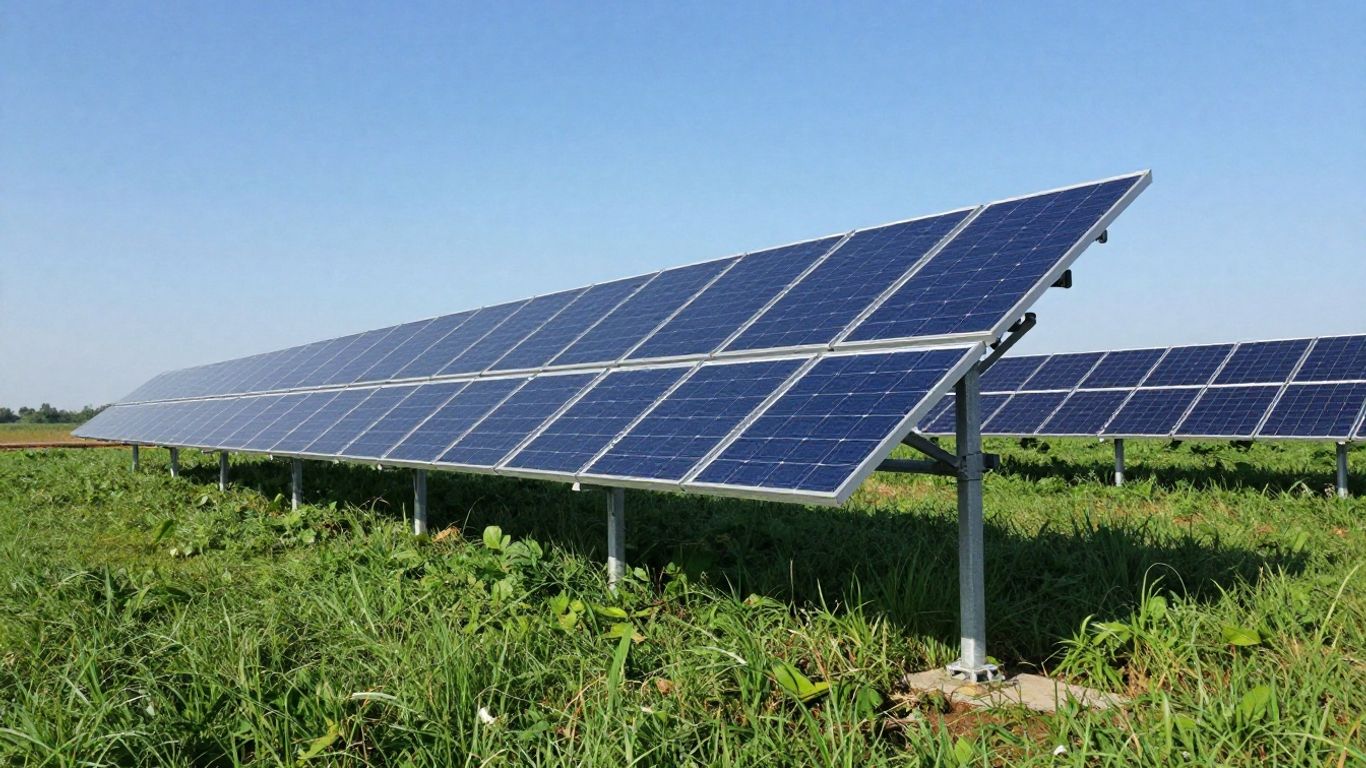
Installing ground-mounted solar panels can represent an initial investment, but profitability is often achieved, especially thanks to existing aid schemes. It is important to properly assess the potential return on investment.
Eligibility for National and Local Aid Schemes
Good news: ground-mounted solar installations, just like roof-mounted ones, are eligible for numerous financial aids. These schemes aim to encourage the energy transition and make photovoltaics more accessible. Among the most common aids are:
- The self-consumption bonus, which directly supports self-consumption projects.
- Energy Savings Certificates (CEE), which reward energy efficiency work.
- A reduced VAT rate (often 10%), applicable under certain conditions of power output and property age.
- Regional and local aid, which can vary considerably from one authority to another. It is therefore essential to inquire with your local council, department, or region. For example, some regions offer specific subsidies for ground installations or carports.
It is essential to submit your aid application before starting the work to ensure your eligibility. Poor planning can cause you to miss out on significant funding.
Optimising Return on Investment Through Yield
The profitability of a ground-mounted solar installation depends on several key factors. The freedom of orientation and tilt offered by a ground installation often allows for higher yields than a roof installation. A south-facing orientation and optimal tilt (generally between 30° and 35° in mainland France) maximise electricity production throughout the year. Furthermore, the absence of shading caused by roof elements or surrounding trees (if the location is well chosen) contributes to more stable and higher production. Good location planning is therefore paramount for maximising return on investment.
Comparison of Costs with Other Photovoltaic Solutions
When comparing costs, one must consider the initial investment, maintenance costs, installation lifespan, and available financial aid. Ground structures can sometimes represent an additional cost compared to direct roof mounting, due to foundations and the support system. However, this extra cost is often offset by better yields and greater flexibility. It is also important to compare with other alternatives, such as solar carports or pergolas, which may have higher installation costs but offer additional benefits (shelter, shade). For large-scale projects, specific aid may be available, such as that offered for collective self-consumption projects or for businesses. Don’t forget to check available aid, such as the eco-PTZ, an interest-free loan to finance energy renovation work, including the installation of solar panels as part of global projects.
Adaptability of Ground-Mounted Solar Panels to Specific Environments
Solutions for Agricultural and Industrial Land
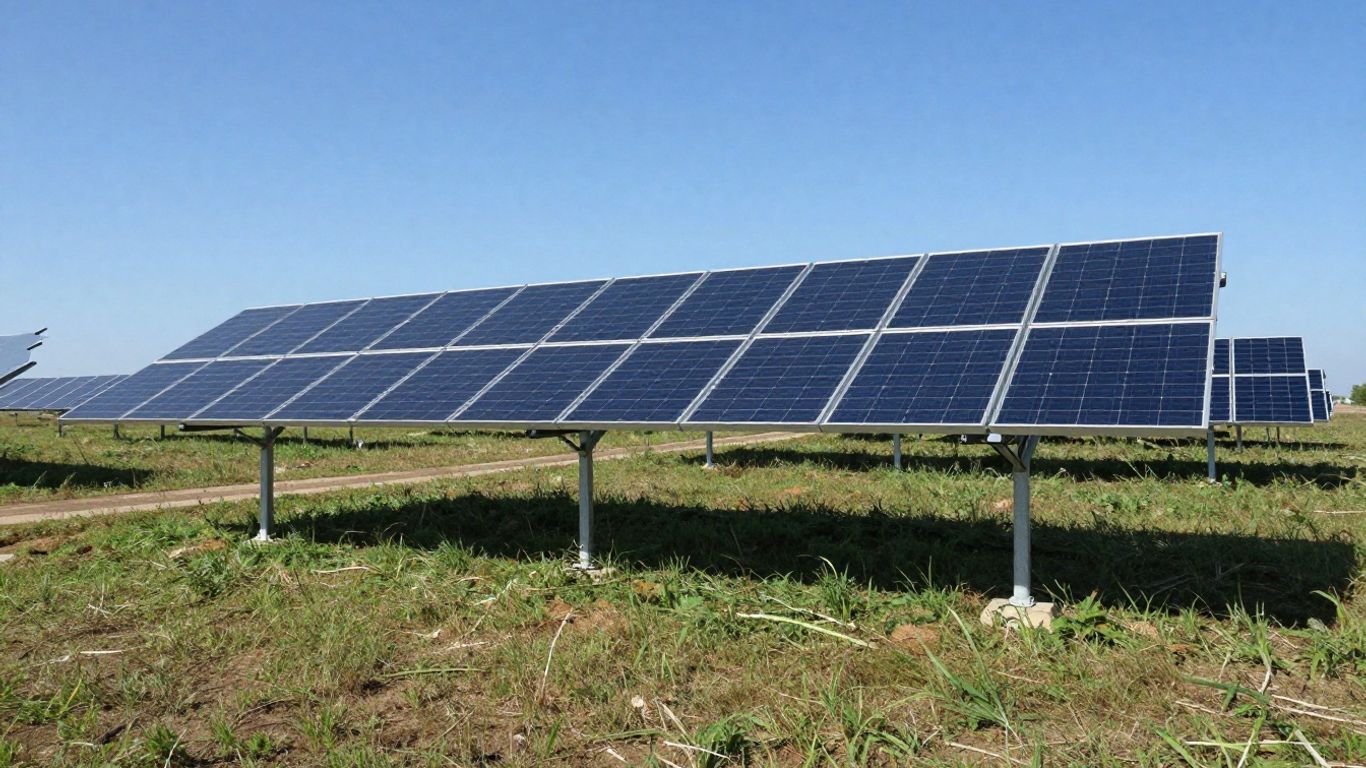
Ground-mounted photovoltaic installations are not limited to residential gardens. They find a prime place on agricultural and industrial land, offering a dual function. In the agricultural sector, for example, panels can be installed above crops, creating controlled shaded areas that protect certain sensitive crops from excessive sun while producing electricity. This is known as agrivoltaics. This approach allows farmers to diversify their income and optimise land use. For industrial sites, the vast surfaces often available, such as car parks or unused land, are perfectly suited for installing large ground-mounted solar farms. These installations can directly power factories, thus reducing energy costs and the company’s carbon footprint. It is important to note that for larger projects, a building permit may be required, especially if the power exceeds certain thresholds, to ensure good landscape integration and compliance with urban planning authorization.
Integration into Urban and Peri-Urban Areas
Installing ground-mounted solar panels in urban or peri-urban areas may seem complex, but it offers innovative solutions. In areas where roofs are limited or unsuitable (historic buildings, apartment buildings with strict rules, etc.), available land, even if more restricted, can be used. This could include redeveloped industrial wastelands, vacant lots, or even landscaped green spaces. The trick lies in careful planning to avoid shading from surrounding buildings and to optimise orientation. Elevated structures or specific mounting systems can be used to maximise energy production while minimising visual impact. The goal is to make solar energy accessible even in dense environments.
Utilising Existing Outbuildings and Dependencies
Beyond large plots of land, existing outbuildings and dependencies represent an often-overlooked opportunity for installing ground-mounted solar panels. Garages, garden sheds, hangars, or even carports can be equipped with solar panels. These structures, when positioned judiciously, can offer excellent solar exposure. The advantage is twofold: they enhance existing constructions and allow for electricity production without encroaching on living spaces or gardens. Installation on these outbuildings is generally simpler and less expensive than on a main roof, and it offers great flexibility in terms of orientation and tilt for optimal yield. It’s a practical solution for increasing your green energy production.
Our ground-mounted solar panels adapt to all terrains, even the most challenging. Whether your project is in the city, the countryside, or by the sea, we have the perfect solution for you. Discover how our installations can perform in various conditions and help you produce your own green energy. To learn more about our personalised solutions, visit our website today!
In Summary: The Ground Solution, a Concrete Alternative
For those whose roofs do not allow for optimal solar installation, ground-mounted panels represent a very serious alternative. They offer appreciable flexibility for orientation and space, thus allowing for maximised energy production. Furthermore, their accessibility simplifies maintenance. If you have a garden or available land, this option is definitely worth considering for your renewable energy project.
Frequently Asked Questions
Why choose a ground-mounted solar installation if my roof is not suitable?
If your roof is not ideal for solar panels (too small, poorly oriented, shaded), a ground installation is an excellent alternative. It gives you the freedom to choose the best angle and direction to capture maximum sunlight, without being limited by your house’s structure. It’s also a perfect solution if you want to install more panels than your roof could accommodate.
Can I install ground-mounted solar panels even if I am a tenant?
Yes, it’s entirely possible! A ground installation does not alter the structure of your dwelling. It is placed on supports fixed in the ground. This makes it ideal if you are a tenant or live in an apartment building, as it does not require the owner’s or the general assembly’s approval for roof work.
What is the yield of a ground-mounted solar installation compared to a roof installation?
In general, a ground installation can offer a higher yield. This is due to the ability to perfectly orient the panels towards the south and adjust their tilt to capture sunlight optimally throughout the year. Furthermore, it allows for avoiding shadows cast by trees or other buildings.
Do I need a large plot of land to install ground-mounted solar panels?
Not necessarily. The required surface area depends on the power output you wish to achieve. For a standard house, a few dozen square metres are often sufficient. For greater needs, such as for a business or a farm, larger areas will of course be necessary. There are also solutions for small spaces, such as balcony kits.
Is the maintenance of ground-mounted solar panels complicated?
No, maintenance is generally simpler than with roof-mounted panels. As they are on the ground, it is easier to access them for cleaning or checking their proper functioning. There’s no need to go up on the roof or call in professionals for a simple cleaning.
What are the administrative procedures for installing ground-mounted solar panels?
The procedures vary depending on the installation’s size. For small installations (up to 3 kWp and less than 1.80m high), a simple declaration of works is often sufficient. For larger projects, a building permit may be required. It is always advisable to check with your local council.
Is there any financial aid available for ground-mounted solar panels?
Yes, ground-mounted solar installations are generally eligible for the same aid as roof-mounted installations. This can include self-consumption bonuses, a reduced VAT rate, energy savings certificates (CEE), and sometimes local or regional aid. It is important to find out about the current schemes.
Can the tilt of ground-mounted solar panels be adjusted throughout the seasons?
Absolutely! This is one of the major advantages of ground installations. It is possible to adjust the tilt of the panels to optimise sunlight capture depending on the season. For example, a steeper tilt in winter to capture the low sun, and a shallower tilt in summer.
