
Wondering how much a photovoltaic installation costs in 2026? That’s an excellent question, as the price of these systems is constantly changing. Between technological advancements, policy shifts, and market demand, it’s natural to want a clear overview. This article aims to shed light on the various financial aspects to help you plan your solar project.
Key Takeaways
- The total cost of a photovoltaic installation in 2026 will depend on the desired power output, the technologies used (panels, inverters), the brand of equipment, and installation fees. A 6 kWp installation, for example, could cost between €9,000 and €12,000 including VAT.
- For self-consumption, ‘plug and play’ solar kits are an economical option for individuals, with average prices ranging from €400 to €1,000 including VAT for a 1 kWp kit. However, they do not qualify for financial aid if the installation is not carried out by an RGE-certified professional.
- Photovoltaic module prices tend to stabilise, or even slightly increase in Europe following changes in trade policies, particularly concerning Chinese exports. Average prices in 2025 range from €0.055/Wp for entry-level to €0.13/Wp for ‘Full Black’ modules.
- The return on investment for a 6 kWp installation is estimated between 7 and 9 years, and self-consumption is generally more advantageous than selling all the electricity produced, as feed-in tariffs are lower than the prices for purchasing electricity from the grid.
- To obtain a reliable quote, it is recommended to contact an RGE-certified installer. Financial aid, such as that offered by Hydro-Québec ($1,000 per kW installed, up to 40% of the total cost), can significantly reduce the net cost of the installation.
Estimating the Cost of a Photovoltaic Installation in 2026
The year 2026 promises to be an interesting time to consider a photovoltaic installation. Solar panel prices are tending to stabilise, making the investment more predictable. However, several elements come into play in determining the final cost of your project.
Factors Influencing Solar Panel Prices
The cost of a photovoltaic installation is not a fixed figure. It depends on numerous factors, including the quality and brand of the panels, the complexity of the installation (overlay roofing or integrated into the building), the type of inverter (centralised or micro-inverters), and the potential presence of a battery storage system. Solar panels represent approximately 50% of the total cost, followed by mounting hardware and installation (around 20%). The inverter accounts for about 10%, and energy management for the rest.
Price Analysis by Installation Power
To give you a more concrete idea, here is an estimate of the average costs for different installation powers in 2026:
| Power (kWp) | Estimated Price incl. VAT (€) | Notes |
|---|---|---|
| 3 kWp | €7,000 – €9,000 | Basic residential system, without battery |
| 6 kWp | €10,000 – €14,000 | For higher consumption, without battery |
| 9 kWp | €15,000 – €18,000 | For large homes, without battery |
It is important to note that these prices are averages and can vary. For example, Chinese-made panels like DMEGC could cost around €6,991 including VAT for a 3 kWp system, while European panels like Solarwatt could cost €8,050 including VAT for the same power.
Impact of Technologies and Brands on the Budget
The chosen technology has a direct impact on the budget. Bifacial panels or
Analysis of Solar Kit Prices for Self-Consumption
Cost of Plug and Play Kits for Individuals
‘Plug and play’ solar kits, also known as DIY kits, are gaining popularity among individuals looking to reduce their energy expenses. These systems are designed for simplified installation, without requiring the intervention of a certified professional. In 2026, a complete kit, including panels, micro-inverter, wiring, and safety equipment, will generally range from €300 to €800 including VAT for a power output of 300 to 800 Wp. For a kit of approximately 1 kWp, the budget can extend from €400 to €1,000 including VAT, depending on the chosen brand and technical specifications such as bifacial panels or European manufacturing. Self-installation makes energy production more affordable, but it’s important to note that it excludes access to financial aid and premiums, which are reserved for installations carried out by RGE professionals. Self-consumption thus becomes an attractive option for managing your energy budget.
Price Comparison by Power and Components
The price of a photovoltaic solar installation for self-consumption in 2025 varies considerably depending on several factors. The brand of the panels, whether they are overlay or integrated into the building, the presence of a home automation system or batteries (physical or virtual) directly influence the final cost. Here is an estimate of average prices for different power outputs:
| Power (kWp) | Estimated Price incl. VAT (€) | Note |
|---|---|---|
| 3 kWp | €7,000 – €9,000 | Basic residential system without battery |
| 6 kWp | €10,000 – €14,000 | System for higher consumption, excluding battery |
| 9 kWp | €15,000 – €18,000 | For larger homes, without battery |
It should be noted that solar panels represent approximately 50% of the total cost, the inverter 10%, mounting and installation 20%, and energy management and other expenses the remaining 20%. For example, a 3 kWp kit with Chinese-made panels could cost around €6,991 including VAT, while an equivalent kit with European panels (such as Solarwatt) could cost €8,050 including VAT.
Eligibility Conditions for Kit Subsidies
To benefit from financial aid and self-consumption premiums, it is essential that the photovoltaic installation is carried out and connected by an RGE (Reconnu Garant de l’Environnement) certified professional. ‘Plug and play’ solar kits, although more economical to purchase and easy to install yourself, do not qualify for these support schemes. The feed-in tariff for excess electricity by EDF OA is also exclusively reserved for professional installations. Therefore, if the goal is to maximise financial benefits through aid, the intervention of a qualified installer is a prerequisite. It is important to carefully consider this point before choosing between a self-installed system and one eligible for subsidies, especially in a context where the electricity buy-back price has significantly decreased, making direct self-consumption more attractive. The buy-back price for photovoltaic electricity only yields €0.04/kWh, while the average price of electricity billed by EDF is around €0.21/kWh in 2025 [787f].
The current trend favours direct self-consumption over selling surplus electricity. This strategy is all the more relevant as the price paid for solar electricity by suppliers decreases, while the cost of grid electricity increases. It is therefore advisable to prioritise using the energy produced for one’s own consumption to optimise the profitability of a photovoltaic installation.
Evolution of Photovoltaic Module Prices
Trends in Solar Panel Prices in Europe
Solar panel prices have fluctuated in recent years. While a general downward trend had emerged, recent factors are changing this landscape. In Europe, the residential market has seen some deceleration, while larger-scale, more competitive installations are capturing an increasing share of sales. However, a recent policy decision in China, aimed at removing certain export tax benefits, could have a notable impact on costs. This measure is likely to lead to an increase of approximately 9% in module prices on the European continent. Manufacturers, already under pressure on their margins, will likely have to pass on this increase.
Impact of Trade Policies on Costs
Decisions relating to trade policies, particularly those concerning international trade, play a decisive role in setting solar panel prices. The removal of export tax benefits for Chinese manufacturers, for example, directly alters the cost structure for European importers. This can translate into increased prices for the end consumer, even if the intrinsic production costs of the modules have not necessarily increased. It is therefore important to monitor these developments to anticipate budget variations for a photovoltaic project.
Average Prices per Module Category in 2025
As of October 2025, the average prices for crystalline photovoltaic modules are as follows, reflecting different technologies and performance levels:
| Module Category | Average Price (€ / Wp) | Change since Sept. 2025 | Description |
|---|---|---|---|
| High Efficiency | 0.115 | Stable (0.0%) | HJT, N-type / TOPCon or xBC mono or bifacial cells, offering efficiency above 23%. |
| Full Black | 0.13 | +4.0% | HJT, N-type, p-type or xBC mono or bifacial modules, with black frame and backing, appreciated for their aesthetics. |
| Standard (Mainstream) | 0.10 | Stable (0.0%) | Classic modules based on N-type / TOPCon or xBC cells, with efficiency up to 23%. |
| Entry-level (Low Cost) | 0.055 | -8.3% | Factory stock, liquidation products, or older generation modules, often without warranty and sometimes not eligible for bank financing. |
These prices are averages observed in the European market. It should be noted that module prices reached their historic low in 2025, but a significant further decrease seems unlikely given the stabilisation of production and transport costs. Panel performance should, however, continue to improve, which increases the overall profitability of installations.
Installation Costs and Return on Investment
Average Budget for a 6 kWp Installation
The average cost for a 6 kWp photovoltaic installation, including panels, inverter, installation, and administrative procedures, generally ranges between €9,000 and €12,000 including VAT. This amount can vary depending on the quality of the chosen equipment and the complexity of the installation. It is important to note that the price per Watt-peak (Wp) tends to decrease as the size of the installation increases, making larger projects proportionally more economical. For example, overlay systems are often less expensive than roof-integrated modules, which can represent an additional cost of nearly 11%.
Investment Amortisation Period
The period required for the photovoltaic installation to recoup its initial cost, known as the return on investment, is a key factor. For a 6 kWp installation, this amortisation is generally achieved in 7 to 9 years. This timeframe can be shortened thanks to financial aid and self-consumption premiums, which make the project even more attractive. It should also be considered that the cost of the inverter, although included in the initial budget, will need to be factored in for replacement after 10 to 12 years, representing an additional cost of approximately €800 to €1,200 including VAT.
Advantages of Self-Consumption over Selling
Self-consumption, i.e., consuming the electricity you produce, offers several advantages over simply selling your production. It allows for an immediate and significant reduction in your electricity bill. Furthermore, with the decrease in feed-in tariffs for excess electricity, producing for your own consumption is becoming increasingly relevant. ‘Plug and play’ solar kits, although not eligible for aid, offer an entry-level solution for those who wish to produce their own energy at a lower cost. However, to benefit from self-consumption premiums and guaranteed feed-in tariffs, installation by an RGE-certified professional is essential. The evolution of photovoltaic module prices, which reached historically low levels in 2025, makes the investment all the more attractive, even if a significant further decrease is not expected. Continuous progress in panel performance should, however, improve the overall profitability of installations in the coming years, making photovoltaics an increasingly solid energy pillar photovoltaic sector.
The analysis of the cost per square metre of a solar panel, generally between €250 and €350 including VAT including installation, must be put into perspective with the power delivered and the technology used. A more expensive panel is not systematically more profitable; the balance between price, performance, lifespan, and local sunshine conditions is decisive for the final choice.
Here are some points to consider to optimise your return on investment:
- Choose the right power output: A 6 kWp installation is often a good compromise for a detached house, but a personalised study is recommended.
- Prioritise RGE-certified installers: This guarantees the quality of the installation and eligibility for financial aid.
- Compare quotes: Obtaining multiple quotes allows you to compare offers, panel brands, and warranties, while keeping in mind that production and transport costs have stabilised photovoltaic costs.
- Understand available aid: Enquire about local subsidies, such as those offered by Hydro-Québec, which can significantly reduce the initial cost.
Understanding the Cost Structure of an Installation
To fully grasp the budget for a photovoltaic installation, it is useful to know how the costs are broken down. The overall investment is not limited to the purchase of panels; several expense categories are involved.
Breakdown of Total Installation Cost
The total cost of a solar installation is generally broken down into several key elements. It is important to note that these percentages are indicative and can vary depending on the specifics of each project and material choices.
- Photovoltaic solar panels: They often represent the largest share of the budget, generally around 50% of the total cost. The quality, brand, and technology of the panels directly influence this amount.
- Inverter(s): This equipment, essential for converting the direct current produced by the panels into alternating current usable by your home, accounts for approximately 10% of the cost. Replacement should be planned after 10 to 12 years.
- Mounting hardware and installation: The fixing structures, cabling, and labour for installation represent about 20% of the budget.
- Energy management and other costs: This includes monitoring systems, home automation, potential administrative procedures, and the installer’s margin, making up the remaining 20%.
Cost of Solar Panels and Inverter
The price of solar panels varies considerably. In 2025, for a 3 kWp installation for self-consumption, the cost was between €7,000 and €9,000 including VAT. This price includes the panels, inverter, mounting hardware, and installation. The price difference between Chinese-made panels (like DMEGC) and European ones (like Solarwatt) can be significant, with the latter being more expensive. The inverter, although included in the initial cost, represents an expense to anticipate for future replacement, estimated between €800 and €1,200 including VAT for a standard residential installation.
Costs Related to Mounting and Energy Management
Mounting costs include all the elements necessary to fix the panels to your roof (or ground) as well as qualified labour. These costs can be higher for complex roofs or those requiring specific adaptations. Energy management, which can include production and consumption monitoring systems, or even home automation, represents an additional cost. Administrative procedures, often included in the quote by the installer (between €100 and €500), can be carried out by the owner to slightly reduce the total cost, although this requires time and specific knowledge. It should be noted that grid-connected systems do not require the purchase of batteries, unlike off-grid systems which require this additional investment. The financial aid offered by Hydro-Québec from 2026, up to 40% of the total installation cost, can significantly reduce the overall budget for residential projects in Quebec. Solar panel systems with ‘integrated’ roof modules are generally about 11% more expensive than ‘overlay’ modules. The cost per Watt-peak decreases as the installation size increases, making larger projects more cost-effective per installed watt. For optimised financial planning and inventory management, the degressive tariff structure for the purchase of solar electricity is a factor to consider, thus promoting the accessibility and profitability of solar projects. The pricing structure for solar energy is influenced by purchase volume, material quality, and technical complexity.
The Price per Square Metre of a Solar Panel
When thinking about installing solar panels, we often imagine the power in kilowatts-peak (kWp). But it’s also useful to consider the cost per square metre, especially if available space is a constraint. This provides another perspective on the investment.
Estimated Cost per Square Metre, Including Installation
It is difficult to give a single figure, as many elements come into play. However, we can estimate that a square metre of solar panel, including installation, generally costs between €250 and €350 including VAT. This price includes not only the panel itself, but also the inverter, fixings, cabling, and of course, qualified labour. It should be kept in mind that this figure is an average and can vary.
Variations According to Technology and Installation Type
The technology of solar panels has a direct impact on their cost per square metre. High-efficiency panels, for example, which use technologies like TOPCon or HJT, are more expensive to purchase. However, they offer better energy production for a given surface area. Similarly, aesthetics play a role: panels
Outlook for Solar Panel Price Trends
Forecasts for Stabilisation of Production Costs
There is a general trend towards stabilisation, or even a slight increase, in the production costs of solar panels. After years of continuous decline, the ex-factory prices of photovoltaic modules reached a floor in 2025. Manufacturers, many of whom are based in China, are facing stabilised transport and production costs. Furthermore, a recent decision by Beijing to remove export tax benefits for Chinese manufacturers is expected to lead to an increase of approximately 9% in module prices in Europe. Producers, already under pressure on their margins, will be forced to pass on this increase to selling prices. It is therefore unlikely that solar panel prices will continue to fall significantly in the coming years.
Expected Progress in Panel Performance
While price reductions seem to be reaching their limits, technological advancements continue to improve the performance of solar panels. We can expect a steady increase in efficiency, particularly thanks to technologies such as HJT, TOPCon, or xBC cells. These innovations allow for efficiencies exceeding 23%, or even more for high-end models. The aesthetics of panels are also improving, with options such as modules
Comparison of Costs Between Different Configurations
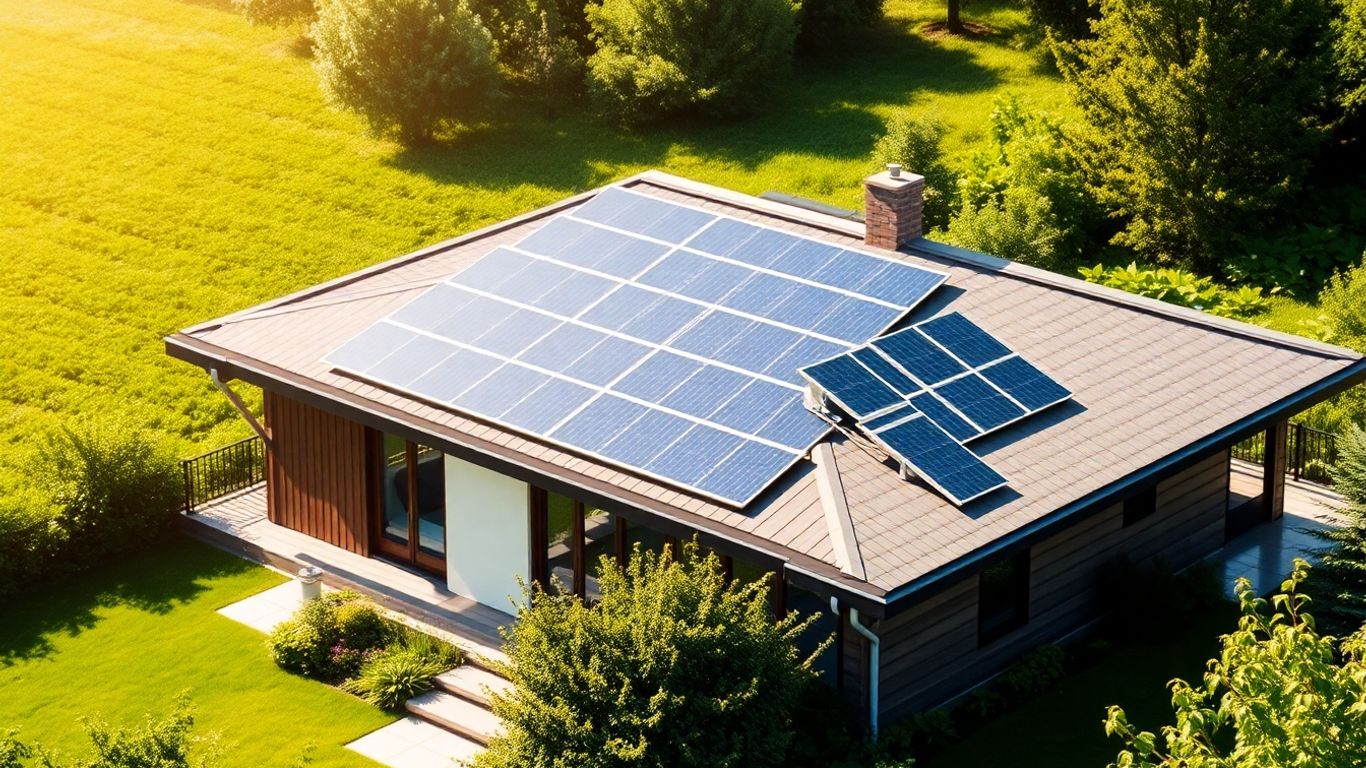
When considering a photovoltaic installation, it is essential to understand that not all systems are equal in terms of cost. Several factors come into play, particularly how the panels are installed and the overall power of the system. It is important to weigh these differences to make an informed choice.
Price Difference Between Integrated and Overlay Modules
Systems where solar panels are directly integrated into the roof, replacing part of the existing covering, are generally more expensive. They are estimated to cost about 11% more than overlay systems. The latter involve installing the panels on top of the existing roof covering, which simplifies installation and reduces labour and ancillary material costs. The choice between these two methods will therefore depend on your budget, but also on the desired aesthetics and the condition of your roof.
Relationship Between Installation Size and Cost per Watt-peak
A well-established economic principle applies here: the greater the total power of your installation, the lower the cost per Watt-peak (Wp). In other words, buying a large amount of solar power is proportionally cheaper. For example, a 6 kWp installation will have a lower cost per Wp than a 3 kWp installation. This economy of scale makes larger projects more financially attractive in the long run. To give you an idea, a 6 kWp installation can cost between €8,000 and €9,000.
Relevance of Off-Grid Systems versus Grid-Connected Systems
There are two main types of systems: grid-connected systems and off-grid systems. Grid-connected systems are the most common; they allow excess electricity to be fed into the public grid and received when production is insufficient. Off-grid systems, on the other hand, require battery storage and are designed for complete independence from the grid. Although complete autonomy may seem attractive, it represents a much higher initial investment due to the cost of batteries. For most households, a grid-connected system, potentially supplemented by a storage solution if needs warrant it, remains the most economically relevant solution. Self-consumption with sale of surplus is often a good strategy to optimise the return on investment of your solar project.
The choice of your solar installation configuration should be carefully considered. It’s not just about comparing the raw prices of the panels, but about evaluating the overall cost, expected performance, and suitability for your energy needs and budget. A thorough analysis of the different options will allow you to maximise the profitability of your solar energy investment.
Obtaining a Reliable Quote for Your Photovoltaic Project
To bring your solar installation project to fruition, obtaining an accurate and reliable quote is a crucial step. It’s not just about comparing figures, but about ensuring the project will meet your expectations in terms of performance, durability, and budget.
Importance of Using an RGE-Certified Installer
The first step to take is to select a qualified professional. Using an RGE (Reconnu Garant de l’Environnement) certified installer is highly recommended. This certification attests to the company’s competence and compliance with current standards. Furthermore, it is often a prerequisite for benefiting from certain financial aid and subsidies. An RGE installer will be able to advise you on the best technologies suited to your situation and budget, while also handling the often complex administrative procedures. You can consult the directory of qualified installers to find a professional near you.
Tips for Comparing Offers and Warranties
Once you have identified several potential installers, it’s time to request quotes. Don’t settle for just one proposal. Request at least three free quotes to compare offers. When comparing, pay attention to the following:
- Equipment details: Check the brand, model, and power of the solar panels, as well as the type of inverter offered. The quality of the components has a direct impact on the performance and longevity of your installation.
- Warranties: Carefully examine the warranties offered. There is usually a warranty on the panels (often 25 years on performance), a warranty on the inverter (typically 5 to 10 years), and a ten-year warranty on the installation itself.
- Total cost and included services: Ensure the quote details all costs: materials, labour, administrative fees, and any grid connection costs. The average price of a 3 kWp installation, for example, is often between €7,000 and €9,000 including VAT in 2026.
- Production estimate: The quote should include an estimate of the annual electricity production in kWh, based on the characteristics of your site (orientation, tilt, shading).
Administrative Procedures Included in the Quote
Administrative procedures can represent a significant cost and source of complexity. They generally include applying for a building permit (if necessary), declaration to the town hall, application for grid connection with Enedis, and procedures to benefit from financial aid. The cost of these procedures can range from €100 to €500 depending on the installer. It is important to check if these fees are included in the quote. If you decide to handle these procedures yourself, be aware that it can be a long and tedious process. A good understanding of Enedis connection costs is also useful for anticipating potential expenses.
Financial Aid and Subsidies for Installation
Overview of Aid Offered by Hydro-Québec
Hydro-Québec plans to provide financial support for the purchase of solar panels from 2026 onwards. This aid will take the form of a contribution of $1,000 per kilowatt-peak (kWp) installed. It is important to note that this subsidy will be capped at 40% of the total installation cost. For an average-sized home, this could represent up to $5,000 in aid. This measure aims to make solar energy more accessible to households.
Eligibility Conditions for Subsidies for Individuals and Businesses
To benefit from this aid, several conditions must be met. The installation must comply with current technical standards and be carried out by a specialised master electrician. Furthermore, the equipment used, particularly solar panels and inverters, must be CSA approved. Precise details regarding eligibility criteria for individuals and businesses will be communicated by Hydro-Québec before the official launch of the programme in 2026. It is advisable to consult Hydro-Québec’s official information for all requirements.
Impact of Aid on the Total Installation Cost
The impact of these subsidies on the overall budget of a photovoltaic installation can be significant. By reducing the final bill, they improve the return on investment and shorten the amortisation period. For example, an installation with a total cost of $15,000 could see its price reduced by several thousand dollars thanks to Hydro-Québec’s aid. It should also be noted that since 1 October 2025, a reduced VAT rate of 5.5% applies to residential solar installations of less than 9 kWp, which also helps to reduce the acquisition cost. To obtain a precise quote taking these aids into account, it is recommended to contact an RGE-certified installer who can guide you through these procedures.
Assessing your current and future energy needs is a key step. A specialised consultant can help you determine the optimal size of your solar system and simulate the expected energy production, taking into account local climatic conditions.
Here is a list of elements to consider for a solar installation:
- Solar panels: Must be approved.
- Inverter: Converts direct current to alternating current and must be CSA approved.
- Batteries (if applicable): Necessary for off-grid storage systems.
- Mounts and fixings: Suitable for the type of installation (roof, ground, etc.).
- Safety equipment: Circuit breakers, emergency stop devices.
Looking for help financing your solar project? There are aids and subsidies available to help you install photovoltaic panels. These financial boosts can make your project more accessible. To learn more about the different options and how to take advantage of them, visit our website today!
In Summary: A Profitable Investment for the Future
In 2026, installing photovoltaic solar panels represents an increasingly accessible and sensible step. Equipment prices have fallen, making self-consumption a serious option for controlling long-term energy expenses. While ‘plug and play’ kits offer an economical solution for those who wish to install themselves, it is important to note that financial aid is reserved for professional installations certified by RGE. The return on investment, estimated between 7 and 9 years for a 6 kWp installation, is an attractive prospect, especially as electricity costs are expected to continue to rise. In summary, investing in photovoltaics in 2026 is a strategic choice for your wallet and for the planet.
Frequently Asked Questions
What is the average cost of a solar installation for a house in 2026?
In 2026, the price to install solar panels on a house, including panels, inverter, and installation, generally ranges between €7,000 and €14,000 for systems from 3 kWp to 6 kWp. The exact price depends on the chosen power output, the quality of materials, and the specifics of your roof.
Will the price of solar panels continue to fall in 2026?
It is unlikely that solar panel prices will fall significantly in 2026. Manufacturing and transport costs have stabilised. However, panels are becoming more efficient, making installations more profitable.
What is a ‘plug and play’ solar kit and how much does it cost?
A ‘plug and play’ solar kit is a set of solar panels and equipment that you can install yourself to produce your own electricity. For a power output of approximately 300 to 800 Wp, these kits cost on average between €300 and €800. A 1 kWp kit can cost between €400 and €1,000.
Are ‘plug and play’ solar kits eligible for financial aid?
No, solar kits that are self-installed, without going through an RGE (Reconnu Garant de l’Environnement) certified professional, do not qualify for state aid or self-consumption premiums.
What is the price difference between integrated panels and panels installed on the roof?
Solar panels that are directly integrated into the roof cost about 11% more than those that are simply installed on the roof (overlay).
How long does it take to recoup the cost of a solar installation?
A 6 kWp solar installation is generally recouped in 7 to 9 years. This timeframe can be shorter if you benefit from financial aid for self-consumption.
What is the average price per square metre of a solar panel?
The average cost for a square metre of solar panel, including installation, is around €250 to €350. This price can vary depending on the panel technology and who manufactures them.
What financial aid is available for installing solar panels in Quebec in 2026?
From 2026, Hydro-Québec will offer financial aid of $1,000 per kilowatt-peak installed, capped at 40% of the total cost. For an average home, this aid could reach up to $5,000.
