
The rapidly expanding photovoltaic sector relies on a multitude of stakeholders with well-defined roles. Understanding who does what is essential to grasp the dynamics of this market. This article focuses on institutional stakeholders, their definition, their role, and their scope of action within the solar ecosystem.
Key Takeaways
- Institutional stakeholders in the photovoltaic sector encompass public and private entities that shape the regulatory, financial, and operational framework of solar projects.
- Local authorities play a role in the planning and integration of PV projects within their territory, while financing bodies provide essential financial support.
- Industry companies, from manufacturers to installers, as well as professional associations, are pillars of the value chain and sector representation.
- Project developers, whether citizens, associations, or businesses, initiate operations and must structure groups of stakeholders for their implementation.
- Technical experts, legal advisors, energy suppliers, grid operators, inspection bodies, and insurers each contribute their expertise to ensure the feasibility, safety, and longevity of photovoltaic installations.
Understanding Institutional Stakeholders in the Photovoltaic Sector
The rapidly expanding photovoltaic sector mobilises a diverse range of institutional stakeholders whose role is crucial for the development and longevity of solar projects. These entities, whether public or private, structure the framework within which individual and collective initiatives operate. Their involvement covers a broad spectrum, from defining energy policies to facilitating funding, as well as territorial planning and the technical validation of installations. A thorough understanding of their missions and interactions is therefore essential to grasp the dynamics of the photovoltaic market. All these stakeholders contribute to shaping an ecosystem conducive to the energy transition.
Definition and Role of Institutional Stakeholders
Institutional stakeholders in the photovoltaic sector refer to organisations and entities that, by virtue of their status and missions, influence or frame the development, implementation, and operation of solar installations. Their role can be multifaceted: they can be policy-makers, regulators, funders, facilitators, specialised service providers, or industry representatives. They often act within the framework of public policies aimed at promoting renewable energies, reducing greenhouse gas emissions, and ensuring energy supply security. Their actions are often governed by regulatory and legislative frameworks specific to the energy sector.
Importance of their Involvement in the PV Landscape
The involvement of institutional stakeholders is of paramount importance for the deployment of photovoltaics. They provide the necessary structure and legitimacy for the implementation of large-scale projects. For example, local authorities play a key role in land-use planning and the integration of solar projects into local urban planning documents, such as inter-municipal Local Urban Plans (PLU(i)). Financial organisations, for their part, make projects possible by offering tailored financing solutions, whether through direct loans or partnerships with installers. Without their involvement, the sector’s development would be considerably slowed down, or even impossible in many configurations.
Regulatory and Institutional Framework of Photovoltaics
The photovoltaic sector is governed by a set of rules and institutional structures that define the conditions for the development and operation of installations. This includes energy laws, implementing decrees, electricity purchase tariffs, support mechanisms, technical standards, and administrative procedures. Public administrations, at different levels (national, regional, local), are responsible for developing, implementing, and monitoring compliance with this framework. Professional associations also play a role in representing businesses and in dialogue with public authorities to evolve regulations. Understanding this framework is essential for all stakeholders in the sector, including for solar project developers.
It should be noted that the regulatory framework can evolve, influenced by national and European energy transition objectives and market feedback. Constant adaptation to these changes is a necessity for sector stakeholders.
Public Entities and their Involvement in Solar Development
Local authorities, financing bodies, and public administrations play a significant role in the advancement of the photovoltaic sector. Their actions revolve around several key areas, ranging from territorial planning to the implementation of support policies.
Local Authorities and their Role in Planning
Local authorities are at the heart of a territory’s energy planning. They integrate the development of renewable energies, including photovoltaics, into their climate-energy strategies, such as Territorial Climate-Air-Energy Plans (PCAET) or urban planning documents (PLU(i)). They are responsible for processing urban planning permit applications, thereby ensuring compliance with solarisation obligations on buildings and car parks. Furthermore, they can identify buildings within their heritage most suitable for rooftop solar panel installation. Local taxation, particularly via the Flat-Rate Tax on Network Companies (IFER), also represents a source of revenue for local authorities from photovoltaic installations.
Financing Bodies and their Support for Projects
Financial organisations, whether banks or dedicated institutions, provide essential support for photovoltaic projects. They offer tailored financing solutions, ranging from advantageous loans to optimised financial arrangements, thereby facilitating access to capital for developers and investors. These stakeholders play a key role in bringing projects to fruition, by evaluating economic viability and structuring financial operations. Their involvement is often the driving force that enables the transition from conception to the realisation of a solar installation.
Role of Administrations in Policy Development
Public administrations, at various levels, are responsible for defining the regulatory and policy framework of the photovoltaic sector. They develop support policies, pricing mechanisms (such as feed-in tariffs), and regulations that govern the development of solar installations. Their action aims to create a favourable environment for investment, encourage innovation, and ensure the sector’s growth. They also define urban planning rules and administrative procedures necessary for project implementation, while ensuring the technical and environmental compliance of installations. The development of clear and stable policies is a decisive factor for market confidence and the large-scale deployment of solar energy. The choice of semiconductor materials, for example, is influenced by standards and political guidelines.
Private Stakeholders and their Contribution to the PV Sector
The photovoltaic sector relies heavily on the commitment and expertise of private stakeholders. These cover a wide spectrum of activities, ranging from component manufacturing to the installation and maintenance of solar systems. Their dynamism is an essential driver for the development of renewable energies in France.
Photovoltaic Industry Companies: Manufacturers and Installers
Manufacturers of solar panels, inverters, and other equipment play a leading role by supplying the necessary hardware for electricity production. They are often grouped within professional associations that represent their interests and participate in the development of sectoral policies. Installers, for their part, are at the forefront of project implementation, ensuring the fitting of panels and the connection of installations. Their technical expertise is essential to guarantee the performance and safety of the systems. The quality of their work directly impacts the profitability and durability of solar installations.
Service Providers and Specialised Consulting Firms
Beyond manufacturers and installers, a multitude of service providers and consulting firms bring their expertise to the sector. These entities carry out techno-economic feasibility studies, energy audits, or provide support in the legal and financial structuring of projects. They can also offer production monitoring and maintenance services, thereby ensuring the optimal performance of installations over the long term. Their role is increasingly important for structuring projects and optimising their profitability.
Professional Associations and their Representative Role
Professional associations, such as the SER (Renewable Energies Syndicate) or Enerplan, play a major representative role for companies in the photovoltaic sector. They act as an intermediary between professionals and public authorities, participating in discussions on regulations, electricity purchase tariffs, and support schemes. They also contribute to promoting best practices and disseminating information within the industry. Their action aims to create a favourable environment for the development of photovoltaics, taking into account the specificities of different company sizes. They are a valuable source of information for understanding market developments and the challenges of the PV sector.
The involvement of private stakeholders is fundamental for the energy transition. Their capacity for innovation and their responsiveness to technological and regulatory changes are major assets for the deployment of solar solutions.
Project Developers and the Structuring of Operations
In the solar photovoltaic energy sector, the success of an installation relies on the ability to effectively gather and coordinate various stakeholders. Project developers play a central role in this dynamic, acting as the catalyst that initiates and guides the development of an operation, whether it’s a small residential installation or a large-scale solar farm. The diversity of these developers is notable, including individuals keen to reduce their energy bills, businesses looking to optimise their operating costs, associations working for the energy transition, or local authorities committed to sustainable development policies. Each brings their vision and constraints, requiring an adapted structure.
Diversity of Project Developers: Businesses, Associations, Citizens
The figure of the project developer in photovoltaics is far from monolithic. We thus find:
- Individuals and citizens: Often motivated by an ecological approach and a desire for energy autonomy, they can initiate individual projects or participate in collective projects, such as energy cooperatives. Their involvement can translate into installing panels on their roofs or subscribing to shares in a solar farm.
- Businesses: Whether local SMEs or large industrial groups, businesses can undertake projects to reduce their electricity costs, enhance their land value (for example, with car park canopies), or meet CSR objectives. The installation of panels on agricultural sites, such as agricultural photovoltaic canopies, is a growing trend.
- Associations and local authorities: These stakeholders play an important role in democratising solar energy, by initiating projects at the local level, raising citizen awareness, and facilitating access to funding. They can act as project owners or facilitators for community projects.
The Organising Legal Entity (OLE) and its Functions
To structure large-scale operations, particularly those involving multiple stakeholders or complex financing, the designation of an Organising Legal Entity (OLE) is often necessary. This entity, which can be a dedicated company, an association, or an ad hoc structure, is responsible for managing the entire project. Its main functions include:
- Coordination of technical and regulatory studies.
- Seeking and securing funding.
- Contracting with various partners (suppliers, installers, grid operators, electricity purchasers).
- Administrative and financial management of the project.
- Monitoring of construction and operation.
The OLE acts as the conductor, ensuring the coherence and proper execution of each stage, from design to commissioning and operation.
Formation of the Stakeholder Collective: Producers and Consumers
The success of a photovoltaic project, particularly in collective self-consumption or energy sharing models, relies on the formation of a well-defined collective of stakeholders. This involves bringing together solar electricity producers (the owners of the installations) and consumers (those who purchase the electricity produced). The structuring of this collective involves:
- Role identification: Who produces? Who consumes? Who manages the installation?
- Definition of flows: How is electricity routed and shared?
- Establishment of contracts: Clear agreements are necessary to govern relationships between producers, consumers, and any intermediaries.
- Data management: Precise monitoring of production and consumption is essential for billing and system optimisation.
The implementation of a photovoltaic project, especially when it involves a collective dimension, requires rigorous organisation. All stages must be considered, from design to daily management, including financing and contracting. It is a long-term undertaking that requires a good understanding of technical, financial, and regulatory challenges.
Energy Suppliers and their Integration into PV Schemes
Energy suppliers play a key role in the photovoltaic ecosystem, particularly in collective self-consumption models. Their main mission is to bridge the supply deficit when local solar production is insufficient to meet participants’ demand. They sell the missing electricity via individual contracts, allowing each consumer to choose or retain their usual supplier. These companies also receive aggregated consumption data to adjust billing, by deducting self-consumed energy and applying appropriate taxes to flows reinjected or consumed from the public grid. This interaction is essential for the economic viability of decentralised solar projects.
Role of Suppliers in Providing Supplementary Energy
When photovoltaic installations do not produce enough to satisfy all consumer needs, energy suppliers step in to provide the necessary supplement. They ensure that participants have a continuous supply of electricity, even in the absence of sunlight or when local production is lower than consumption. This complementary role is fundamental to guaranteeing the reliability of energy supply within PV schemes.
Management of Consumption Data and Billing
Energy suppliers are at the heart of the billing process. They receive consumption data from participants, often transmitted by the grid operator. This information allows them to distinguish between energy produced locally and consumed by scheme members, and energy purchased from the grid. They then calculate the bill, taking into account self-consumption, applicable taxes (such as TURPE and CSPE) on consumed and injected volumes, and the share of supplementary energy supplied. Precise management of this data is essential for fair and transparent billing, and for the smooth operation of collective self-consumption models.
Interaction with End Consumers
The interaction between energy suppliers and end consumers in a photovoltaic context is multifaceted. Beyond simply supplying electricity, suppliers can offer deals tailored to the specificities of self-consumption. They must communicate clearly on billing methods and the benefits of local production. The customer relationship adapts to integrate the dimension of energy production by consumers themselves, paving the way for more active citizen participation in the energy transition. Companies in the solar sector seek to integrate into these new models to offer comprehensive solutions, ranging from installation to energy supply, in order to maximise benefits for solar projects.
Technical Experts and their Contribution to Project Feasibility
The involvement of technical experts is a key step in evaluating the viability of a photovoltaic project. These professionals provide in-depth analysis that goes far beyond simple initial estimates. They examine technical, regulatory, and environmental aspects in detail, thereby securing investment decisions.
Importance of Consulting Firms for Sizing
Specialised consulting firms play a central role in the design phase. Their mission is to carry out precise sizing of installations. This includes the selection of the most suitable solar panels, the determination of the mounting structure, and the design of the electrical system. A well-conducted study allows for optimising energy production and minimising installation costs. Good technical planning is the foundation of a successful solar project. They ensure that all components are compatible and that the installation complies with current standards. It is often advisable to consult a photovoltaic expert from the outset of your project to guide you methodically [a7d3].
Analysis of Technical and Regulatory Aspects
Technical analysis does not stop at sizing. It also encompasses site surveys, evaluation of local constraints (shading, wind, etc.), and verification of compliance with regulations. Experts ensure that the project adheres to building codes, electrical standards, and environmental requirements. They can also help identify available aid and subsidies. Technical expertise helps prevent potential problems that could arise during construction or operation.
Support in Feasibility Studies
Feasibility studies carried out by technical experts provide a clear vision of a project’s potential profitability. They integrate financial analyses, energy production forecasts, and risk assessment. These studies are essential for convincing investors and obtaining the necessary funding. Platforms like Solencia.net can accelerate this process by providing detailed profitability studies and connecting project developers with qualified installers [3fe1].
Here are the typical stages of support from a technical expert:
- Preliminary analysis of the site and needs.
- Technical sizing of the installation (panels, inverters, structure).
- Environmental and regulatory impact study.
- Development of electrical and mechanical plans.
- Cost estimation and return on investment.
- Assistance in obtaining permits and authorisations.
The involvement of a qualified technical expert is a guarantee of reliability and performance for any photovoltaic project. It allows for anticipating difficulties and optimising the financial and technical setup of the operation, thereby ensuring better longevity of the investment.
The Role of Legal Advisors in Complex Setups
Need for Legal Support for Collective Investments
When photovoltaic projects involve collective investment structures or elaborate contractual arrangements, the involvement of legal advisors becomes indispensable. These professionals bring essential clarity to agreements, thereby protecting the interests of all stakeholders. They play a key role in structuring operations, particularly when leases or rooftop rental agreements are necessary between property owners and project developers. Their work helps secure the entire process.
Drafting of Contracts and Leases
The precise drafting of contracts and leases is a critical step. Legal advisors ensure that each clause is clear, legally sound, and compliant with current regulations. This includes defining responsibilities, commitment periods, exit conditions, and revenue or cost-sharing arrangements. Good drafting prevents future disputes and ensures project stability. They can also help inform and advise management on regulatory changes, an important aspect for the sector, as shown by job offers for legal director positions in the renewable energy field [c560].
Legal Securing of Operations
The legal securing of operations is at the core of advisors’ mission. This involves an in-depth risk analysis, verification of regulatory compliance, and the establishment of robust contractual structures. For projects involving shared investments or complex financing, their support is a guarantee of longevity. They ensure that all administrative procedures, including obtaining necessary permits, are managed correctly, an aspect where their expertise is often sought [8a82].
- Analysis of contractual risks.
- Drafting and negotiation of agreements.
- Advice on regulatory compliance.
- Management of potential disputes.
Financial Stakeholders and their Role in Funding Installations

The photovoltaic sector, like any industrial activity, requires capital to emerge and develop. Financial stakeholders play a decisive role in bringing solar projects to fruition, whether they are small residential installations or large ground-mounted power plants. Their involvement helps structure operations and secure investments, thereby making the energy transition more accessible.
Access to Advantageous Loans for Renewable Projects
Financial institutions, banks, and other credit organisations are increasingly attentive to projects related to renewable energies. They often offer specific loan conditions, with competitive interest rates, to support the development of photovoltaics. These schemes aim to encourage the adoption of clean technologies and reduce the carbon footprint. Obtaining a loan can be done directly by the project developer, who then negotiates the terms with their bank. It is also possible that the installer, having established relationships with financial institutions, can offer pre-negotiated financing solutions to their clients, thereby simplifying the process for them. These financial facilities are an important driver for the sector’s growth.
Privileged Relationships between Installers and Financial Organisations
It is not uncommon for companies specialising in solar panel installation to develop strong partnerships with banks or financing companies. These privileged relationships allow installers to better understand financiers’ expectations and optimise loan application files for their clients. They can thus anticipate needs for guarantees, profitability studies, or technical documents. This proximity greatly facilitates access to funding for individuals and businesses wishing to invest in solar. Sometimes, third-party investors can even finance the installation and maintenance of panels in exchange for a portion of the energy produced, an approach that is gaining popularity [171e].
Advice for Optimising Financial Structuring
Beyond a simple loan, some financial stakeholders can also offer strategic advice to best structure the financing of a photovoltaic project. This can include analysing different possible funding sources, combining bank loans with other forms of capitalisation, or optimising the tax structure. For large-scale projects, the involvement of a financial expert is often indispensable to guarantee long-term economic viability. The aim is to ensure that the project is not only technically feasible but also financially sound, taking into account all aspects, from installation costs to potential revenues from electricity sales.
| Type of Financial Stakeholder | Main Role |
|---|---|
| Commercial Banks | Granting loans, credit lines |
| Specialised Financing Companies | Financing renewable projects, solar leasing |
| Private Investors | Capital contribution, crowdfunding |
| Green Investment Funds | Investment in solar project portfolios |
Grid Operators and their Interaction with PV Projects
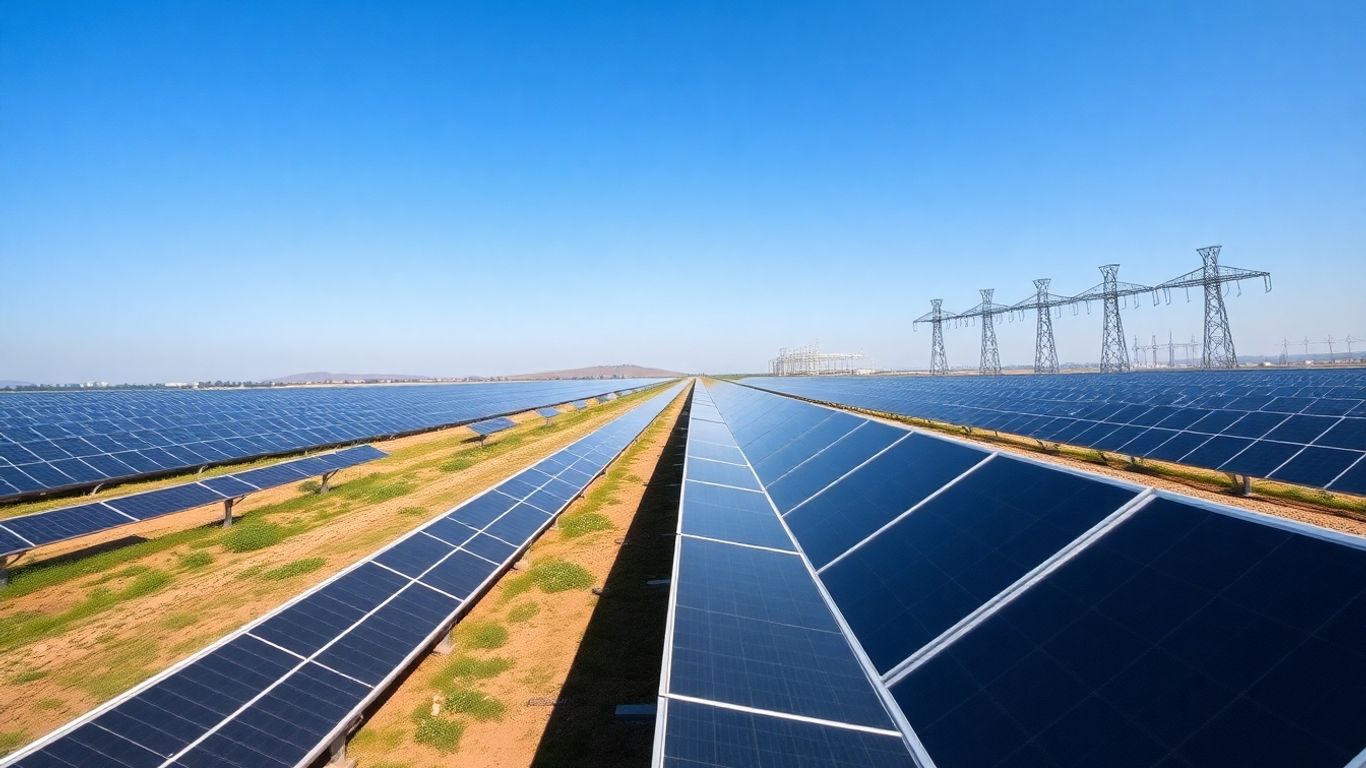
Grid operators play a central role in the integration of photovoltaic projects. They are responsible for the infrastructure that transports electricity produced by solar installations to consumers. Their interaction with project developers is therefore an essential step for the implementation of any grid-connected installation.
Role in Connecting Installations
Connecting a photovoltaic installation to the electricity grid is a technical and administrative procedure managed by the grid operator. This involves several stages, from the connection request to the actual commissioning of the installation. Grid operators assess the local grid’s capacity to accommodate additional production and define the technical conditions to be met to ensure the stability and security of the electricity supply. It is important to note that administrative procedures vary according to the installation’s power and location, with simplified procedures for small self-consumption projects and stricter requirements for larger installations. A good understanding of these connection procedures is therefore essential.
Management of Injected Electricity Flows
Once the installation is connected, the grid operator manages the electricity flows injected into it. This includes monitoring production, regulating voltages and frequencies, and balancing electricity supply and demand. For photovoltaic projects, this means that the grid operator must be able to integrate intermittent and variable production, which may require adjustments in overall grid management. The integration of energy storage systems can help smooth these flows and improve grid flexibility, thereby contributing to better energy management.
Coordination with Project Stakeholders
Collaboration between grid operators and other photovoltaic project stakeholders, such as installers, consulting firms, and energy suppliers, is paramount. This coordination ensures that all parties are aligned on technical and regulatory objectives. It facilitates the resolution of potential problems and optimises project progress, from design to operation. Fluid and transparent communication is key to the successful integration of renewable energies into the electricity grid. The study of hybrid system integration, combining for example solar and wind power, highlights the importance of this coordination for the stability of electrical grids.
Inspection Bodies and their Validation Mission
In the photovoltaic sector, inspection bodies play a discreet but absolutely necessary role. Their main mission is to ensure that everything installed complies with the rules, both technically and regulatorily. Without them, it would be difficult to trust the quality and safety of solar installations.
Assurance of Technical and Regulatory Compliance
These entities verify that solar panels, inverters, wiring, and all other components meet current standards. This includes aspects such as weather resistance, electrical safety, and expected performance. They also ensure that administrative procedures have been correctly carried out, which is an important point for the smooth running of projects. For example, the French regulatory framework encourages the development of solar energy, and it is important to stay informed of these rules so that installations are profitable and compliant. It should be noted that the full resale of produced electricity is an option, as is self-consumption, and inspection bodies ensure that the chosen option is applied according to established rules.
Site Monitoring and Performance Validation
Beyond initial compliance, inspection bodies often intervene during the construction phase. They can carry out site inspections to verify that work is performed according to best practices. Once the installation is complete, they may also be required to validate actual performance against forecasts. This can involve tests or data analysis. This step provides an additional guarantee for owners and investors, assuring them that the installation will function as expected in the long term.
Contribution to the Quality and Safety of Installations
In summary, the actions of these bodies directly contribute to the overall reliability of the photovoltaic sector. By validating compliance and performance, they help build the trust necessary for more individuals and businesses to invest in solar. They act as a quality guarantee, thereby protecting consumers and the integrity of the electricity grid. It’s a bit like a quality stamp that ensures everything is in order before the installation starts producing electricity, for example for installations that sell their surplus to entities like EDF OA.
Here are some key points of their intervention:
- Verification of equipment compliance with standards.
- Control of adherence to administrative and regulatory procedures.
- Validation of technical performance after installation.
- Participation in securing projects in the long term.
Insurers and Risk Coverage in the PV Sector
Protection against Technical and Financial Hazards
The installation of photovoltaic panels, while promising, is not without risks. Insurers play an important role in helping to manage these uncertainties. They offer contracts that cover various potential problems, whether technical or financial. It is therefore essential to fully understand what these policies cover to protect your investment.
Assessment of Risks Associated with Solar Installations
Each solar project presents specific risks. Insurers assess these risks to offer tailored coverage. This can include damage caused by natural events such as hail or strong winds, material failures, or even problems related to grid connection. A good assessment ensures that you have the right protection.
Partnership for Project Longevity
Beyond simple coverage, insurers can become true partners for the longevity of your photovoltaic installations. They can offer advice on preventive maintenance or help find solutions in the event of a claim. For example, some insurance policies can cover the costs of repairing or replacing defective components, such as inverters. It is important to check the details of the coverage to ensure that your solar installation is well protected, for example by consulting Cardif’s offers for solar panels.
- Material Damage Guarantee: Covers damage caused by external events (bad weather, vandalism).
- Equipment Failure Guarantee: Covers breakdowns of panels or inverters.
- Public Liability: Covers damage that the installation could cause to third parties.
- Loss of Operation: Compensates for loss of income if the installation can no longer produce electricity following a covered claim.
Insurance is a key element for securing a photovoltaic project. It allows for dealing with unforeseen events and guaranteeing the long-term profitability of the installation. It is advisable to compare offers to find the one that best suits the specific needs of each project, whether it is a small residential installation or a large-scale solar farm. Remember to carefully study the guarantees for businesses investing in solar.
In the field of solar energy, insurance plays a key role in protecting against unforeseen events. It covers various risks related to the installation and operation of photovoltaic panels, thereby providing peace of mind for owners and professionals. Understanding these coverages is essential to secure your investment in the PV sector. To learn more about how we can help you navigate this landscape, visit our website today.
Conclusion: A Dynamic Ecosystem of Stakeholders
Ultimately, the photovoltaic sector is a bit like a large team where everyone has their role. We have the project developers, who are somewhat like the conductors, and then there are all those who supply the equipment or handle the installation. Not forgetting the banks that finance it all, and the experts who help us understand the technical and legal aspects. It’s a real team effort, with people from different backgrounds, but all with a common goal: to advance solar energy. It’s by working together that we manage to make things happen and develop new installations. It’s a rapidly evolving field, and it’s important to pay attention to all these stakeholders to fully understand how it works.
Frequently Asked Questions
Who are the main stakeholders in the solar photovoltaic sector?
In the solar sector, there are several types of stakeholders. There are those who initiate projects, such as local councils or groups of people. There are also companies that manufacture panels or install them. Banks and insurance companies play a role in financing projects and covering risks. Grid operators are important for connecting installations. Finally, experts help design projects and legal professionals ensure everything is in order.
What is the role of local authorities in solar development?
Local councils and regions have an important role. They can help plan where to install solar panels in their territory. They can also support projects by granting authorisations or facilitating procedures. Sometimes, they participate in projects themselves to encourage solar energy.
Why are financial organisations important for solar projects?
Solar projects, especially large ones, are expensive to start. Banks and other financial institutions lend the necessary money to build the installations. They often offer loans with advantageous conditions for renewable energy projects, which greatly helps project developers.
What do companies that manufacture and install solar panels do?
These companies are at the heart of building solar power plants. Manufacturers produce the panels and necessary equipment. Installers, for their part, are responsible for mounting the panels on roofs or on the ground, and for making the electrical connections. They are often organised into associations to defend their interests.
What is the role of grid operators in the photovoltaic sector?
Grid operators, like Enedis in France, are essential. They ensure that electricity produced by solar panels can be sent to the public electricity grid. They manage connections and ensure that everything works well so that electricity reaches consumers.
Why use technical experts for a solar project?
For a solar project to work well, it must be well designed. Experts, often in consulting firms, help calculate the correct panel size, estimate the amount of electricity that will be produced, and verify that the installation complies with all technical and safety rules. This is important for the project to be profitable and safe.
How do energy suppliers integrate into solar projects?
Even with solar panels, electricity from the grid is sometimes needed, especially when there is no sun. Energy suppliers sell this supplementary electricity. They also manage billing, taking into account the electricity you have produced yourself with your panels.
What is the role of insurers in the photovoltaic sector?
Solar installations can encounter problems, such as technical failures or weather damage. Insurers help cover these risks. They offer insurance to financially protect installation owners in the event of an accident, which secures the investment.
