
The following article discusses Ma Prime Rénov’ solar panel grants for the year 2026. It covers the conditions to be met to be eligible, the amounts that can be obtained, and the procedure for applying. This is a government aid scheme aimed at encouraging the installation of solar thermal and hybrid panels to produce heat for your home.
Key Takeaways
- To benefit from Ma Prime Rénov’ solar panel grants in 2026, your home must be over 15 years old and be your primary residence. Furthermore, only homes classified E, F, or G on the Energy Performance Certificate (EPC) are eligible.
- Financial aid varies according to your income: up to €4,000 for very low-income households for an individual solar water heater (CESI) and up to €10,000 for a combined solar system (SSC).
- Only solar thermal (CESI, SSC) and hybrid panels are eligible for Ma Prime Rénov’ solar panel grants. Pure photovoltaic panels are not covered by this aid.
- The steps to obtain Ma Prime Rénov’ solar panel grants include creating an online account, compiling a file with quotes and supporting documents, and submitting the documents to ANAH.
- After the work is completed, you must request payment of the grant via your personal space, providing the paid invoice and a certificate of conformity. Payment is usually made within 15 days of validation.
Eligibility Conditions for Ma Prime Rénov’ Solar Panel Grants in 2026
To benefit from MaPrimeRénov’ for the installation of solar thermal or hybrid panels in 2026, several conditions must be met. These criteria aim to ensure that the work genuinely contributes to the energy performance of the home and that the beneficiaries are indeed those the scheme intends to support.
Criteria Relating to the Primary Residence
The property concerned by the installation must be your primary residence. This means you must live there for at least 8 months of the year. Furthermore, the building must have been constructed more than 15 years prior to the start date of the work. This age requirement is a prerequisite for most energy renovation grants, as it targets the most energy-consuming homes and therefore those most likely to benefit from improvements.
Requirements Concerning the Energy Performance Certificate (EPC)
A notable change for 2026 concerns the Energy Performance Certificate (EPC). From now on, only homes classified E, F, or G are eligible for MaPrimeRénov’ for solar thermal or hybrid installations. Previously, all EPC classes were accepted. This measure aims to focus aid on energy-inefficient homes (« passoires thermiques ») to encourage the most impactful renovations. It is therefore essential to obtain an EPC before starting the work to confirm your eligibility.
Obligations Regarding the Qualified Installer
The quality of the installation is paramount to ensure the efficiency and safety of your solar system. This is why the work must be carried out by a professional qualified as RGE (Reconnu Garant de l’Environnement – Recognized Guarantor of the Environment) or holding an equivalent certification recognised by the State. This qualification attests that the installer meets strict criteria regarding expertise and the quality of the equipment used. Without this qualification, your grant application file cannot be validated. It is advisable to check the company’s qualification before signing any quote. You can find certified professionals on the France Rénov’ website.
It is important to note that pure photovoltaic solar panels, intended solely for electricity production, are not eligible for MaPrimeRénov’. This aid is specifically designed for equipment that produces heat, such as individual solar water heaters (CESI) or combined solar systems (SSC).
Income conditions are also a determining factor for the amount of aid. Income ceilings are set by the government and vary according to household composition and geographical location. This information is available on the official MaPrimeRénov’ website.
Amounts of Financial Aid for Ma Prime Rénov’ Solar Panel Grants
The amount of MaPrimeRénov’ for solar panel installation varies considerably depending on several factors, including your household income and the type of solar equipment chosen. It is important to understand these distinctions to anticipate the financial support you may receive.
Aid for Very Low-Income Households
For households considered very low-income, MaPrimeRénov’ offers more substantial support. The installation of an individual solar water heater (CESI) can be subsidised up to €3,000. If your project involves a combined solar system (SSC), which produces both domestic hot water and heating, the aid can reach €8,000. These amounts represent a significant portion of eligible expenses, allowing for a substantial reduction in your out-of-pocket costs.
Financial Support for Low-Income Households
Low-income households also benefit from substantial aid, although slightly less than for very low-income households. For an individual solar water heater, the grant amounts to €2,400. In the case of a combined solar system, the aid can be up to €6,000. These sums are intended to encourage the adoption of solar thermal solutions for these households.
Subsidies for Middle-Income Households
Middle-income households will see the amount of MaPrimeRénov’ decrease. For an individual solar water heater, the subsidy is €1,600. If you opt for a combined solar system, you can receive up to €4,000. It should be noted that for higher incomes, MaPrimeRénov’ is generally not applicable for the isolated installation of solar thermal panels.
It is possible to supplement these grants with other schemes. For example, the photovoltaic self-consumption bonus can be added if your installation produces electricity. In addition, the zero-interest eco-loan can help you finance the remainder of your work, offering an advantageous financing solution for energy renovation projects. Don’t forget to check local aid schemes, which can vary depending on your region or municipality, to maximise your financial support. You can use the official France Rénov’ simulators to get a personalised estimate of your potential aid.
Focus on Solar Technologies Eligible for Ma Prime Rénov’
MaPrimeRénov’ supports several types of solar thermal and hybrid installations, aimed at reducing your energy consumption. It is important to understand the specifics of each technology to choose the one that best suits your needs.
Individual Solar Water Heater (CESI)
The CESI is a solution dedicated to producing domestic hot water using solar energy. It consists of solar thermal collectors installed on your roof, which heat a heat transfer fluid. This fluid then circulates to a storage tank where it transfers its heat to the water intended for domestic use. This system covers a significant portion of your hot water needs, thereby reducing your dependence on fossil fuels or electricity. Its thermal efficiency is generally between 50% and 70%, and it can lead to savings on your hot water bill of up to 70%.
Combined Solar System (SSC)
The SSC goes further than the CESI by simultaneously producing domestic hot water and contributing to the heating of your home. It also uses solar thermal collectors, but the system is designed to meet both these energy needs. Its overall efficiency is between 40% and 60%. The main advantage of the SSC is its ability to cover both your hot water needs and part of your heating, which can be particularly interesting in colder regions. It also allows for a reduced tax on solar panels.
Hybrid Solar Panels
Hybrid solar panels represent a more recent and efficient technology. They combine two functions: photovoltaic electricity production and thermal heat recovery. These 2-in-1 panels maximise the use of solar energy by producing both electricity that you can consume or sell, and heat that can be used for domestic hot water or heating. Their combined efficiency can reach 75% to 95%. Installing hybrid panels allows for optimisation of the footprint and versatile energy production.
It is essential to note that MaPrimeRénov’ focuses on solar thermal and hybrid technologies. Pure photovoltaic panels, intended solely for electricity production, are generally not eligible for this specific aid, although they may benefit from other schemes such as the self-consumption bonus.
Administrative Procedures to Obtain Ma Prime Rénov’ Solar Panel Grants
To benefit from MaPrimeRénov’ for solar panel installation, a well-defined administrative procedure must be followed. This is a key step to ensure that your application is processed correctly and that you receive the intended financial aid. Thorough preparation of your application is therefore essential.
Create Your Personal Account on the Official Portal
The first step is to go to the official MaPrimeRénov’ website (maprimerenov.gouv.fr). You will need to create your personal account there. To do this, have your latest tax notice and information about your tax household members ready. This portal is your single point of contact for all procedures related to your application. It will allow you to track the progress of your application in real time. It is also where you can get an estimate of your aid by entering the characteristics of your home and your solar project.
Compile the Application File
Once your account is created, you need to gather the necessary supporting documents. The detailed quote, provided by a qualified and RGE-certified professional, is the central document. It must precisely state the nature of the work, the equipment used, and the total cost of the installation. Your latest tax notice is also required to justify your income and determine your eligibility for the different aid tiers. Other documents may be requested depending on your situation (landlord, co-ownership, etc.).
Submit the Required Supporting Documents
After gathering all the documents, you will need to upload them to your personal account on the MaPrimeRénov’ portal. It is important to check that all documents are legible and complete before submitting them. Once your file has been sent, the National Housing Agency (ANAH) will review it. You will receive a notification confirming receipt of your application and, if everything is in order, confirmation of your application’s acceptance. It is advisable to keep a copy of all submitted documents for your personal records. Assistance from a France Rénov’ advisor can help you check the completeness of your file before submission, to avoid any potential delays. This scheme aims to make energy renovation work more accessible, as highlighted by the general principle of MaPrimeRénov’.
The clarity and accuracy of the information provided in your application are essential. Any omission or error could lead to delays in processing your application, or even its rejection. Take the time to carefully check each item before submitting.
Carrying Out the Work and Tracking Your Application
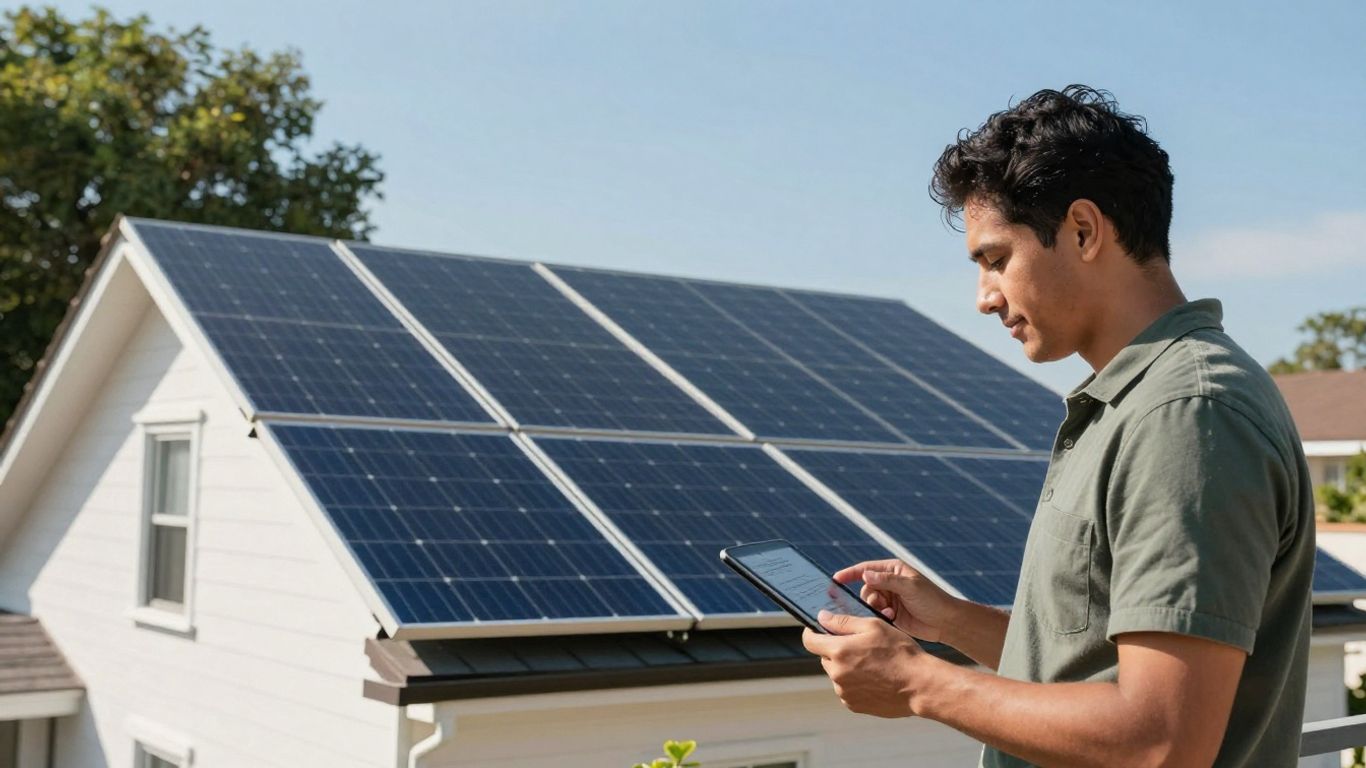
Once your application has been approved by ANAH, the next step is to bring your project to fruition. It’s time to sign the quote with the qualified installer you have selected. This quote must be detailed and precisely match the planned work. The professional then has three years to complete the installation, ensuring compliance with current technical standards. It is important to note that work cannot begin until you have received confirmation of receipt of your application by ANAH, except in specific emergency cases or natural disasters.
Signing the Quote and Starting the Project
After obtaining preliminary approval for your grant, signing the quote marks the official start of your project. Ensure that this document clearly states the nature of the work, the equipment installed, the total cost, and the company’s RGE certifications. This quote will serve as a reference for tracking and final validation of your application.
Keeping Documents During the Work
Throughout the duration of the work, it is imperative to carefully keep all supporting documents. This includes detailed invoices, completion certificates, equipment technical data sheets, and ideally, before-and-after photos of the installation. These items are essential to prove the conformity of your installation and to obtain payment of your grant. The installer must provide you with a certificate of conformity that validates compliance with the technical criteria required by MaPrimeRénov’.
Validation of Installation Conformity
At the end of the work, the qualified installer must provide you with a certificate of conformity. This document certifies that the installation complies with current standards and the specific technical requirements of MaPrimeRénov’. This validation is a key step before you can request payment of your grant. It ensures that your solar installation is not only efficient but also safe.
Obtaining Payment of Your Ma Prime Rénov’ Solar Panel Grant
Payment Request Procedure After Work
Once the installation of your solar panels is complete, it’s time to request payment of your grant. This is done directly from your personal account on the official MaPrimeRénov’ portal. It is important not to delay, as there is usually a deadline after the completion of the work to submit your request. You will need to upload the paid invoice, which must clearly state the installer’s certification and the precise technical specifications of your solar installation. The paid invoice is the key document to trigger payment.
Checking Amounts and Additional Documents
When requesting payment, ensure that the amount indicated on the invoice matches what was agreed in the initial quote. If adjustments were necessary during the work, a detailed explanatory note must be attached. Photos of the completed installation may also be requested to supplement your application. It is advisable to gather all documents related to the installation, such as invoices and certificates of conformity, from the start of the work to avoid any unpleasant surprises. A France Rénov’ advisor can help you check that your application is complete before submission.
Processing and Payment Times for the Grant
After submitting your payment request, it will be reviewed by the competent authority. Processing times can vary, but generally, once your application is validated and compliant, payment of the grant will be made within a reasonable timeframe, often within a few weeks. It is therefore recommended to monitor the progress of your application via your personal account. For very low-income households, the aid can reach up to €10,500 [f3e1], which represents significant financial support for your solar project.
Simulation and Estimation of Your Ma Prime Rénov’ Aid
Before embarking on solar panel installation work, it is wise to accurately estimate the amount of MaPrimeRénov’ aid you could receive. This allows you to adjust your budget and better plan the financing of your project.
Using Official France Rénov’ Simulators
The most reliable way to get a personalised estimate is to use the simulation tools provided by official bodies. The France Rénov’ website offers a free simulator that takes into account your situation and the specifics of your project. It is strongly recommended to go through this step before taking any action.
Information Needed for Aid Calculation
For the simulation to be as accurate as possible, you will need to provide several pieces of information. These generally include:
- Your reference tax income (tax notice).
- The composition of your tax household.
- The nature of the planned work (e.g., installation of an individual solar water heater or a combined solar system).
- The location of your home.
- The type of dwelling (house, apartment).
These elements help determine your income category (very modest, modest, intermediate) and, consequently, the rate of coverage for your work. For example, for an individual solar water heater (CESI), the amounts can vary significantly depending on your financial profile.
Assistance from a France Rénov’ Advisor
If you have any doubts or if your project is complex, do not hesitate to seek assistance from a France Rénov’ advisor. These professionals can guide you free of charge through your application process, help you compile your file, and optimise the calculation of your aid. They can also direct you to other complementary financing schemes, such as the zero-interest eco-loan.
Estimating your MaPrimeRénov’ aid is a key step. It gives you a clear overview of the available financial support and helps you make informed decisions for your solar project.
Other Financing Schemes for Solar Panels
MaPrimeRénov’ is not the only aid available for installing solar panels. Other schemes can supplement your project, thereby reducing your out-of-pocket expenses. It is important to gather information to optimise your investment.
Photovoltaic Self-Consumption Bonus
This bonus is specifically for photovoltaic panel installations intended for self-consumption, meaning when you consume part of the electricity you produce. The amount of this bonus depends on the power of your installation. For example, for systems up to 9 kWp, the aid is €80/kWp, which amounts to €240 for a 3 kWp installation. For more powerful systems, the rate can increase to €140/kWp. There is also a potential bonus of up to €180/kWp, depending on the conditions in effect in 2026.
Zero-Interest Eco-Loan
The zero-interest eco-loan (éco-PTZ) is an interest-free loan that can finance your solar thermal or hybrid panel installation work. It can cover up to €50,000 and be repaid over a maximum period of 20 years. It is an interesting solution for spreading the cost of your project over the long term without paying interest. The éco-PTZ can be combined with MaPrimeRénov’, which greatly simplifies administrative procedures once you have received your approval notification from ANAH.
Local Aid and Energy Saving Certificates
In addition to national aid, many local authorities (regions, departments, municipalities) offer their own subsidies for solar panel installation. These local aids can vary considerably from one geographical area to another, often ranging from €1,500 to €3,000. It is therefore advisable to inquire with your local council or departmental council. In parallel, Energy Saving Certificates (CEE), also known as energy bonuses, can provide additional financial support. For example, for a combined solar system (SSC) producing both hot water and heating, a bonus of €5,560 can be paid, regardless of your income level. These bonuses are issued by energy suppliers and can be combined with other aid to maximise your support.
Here is an overview of complementary schemes:
- Self-consumption bonus: Direct aid for photovoltaic installations.
- Zero-interest eco-loan: Interest-free financing for solar thermal and hybrid.
- Local aid: Subsidies specific to your region.
- Energy Saving Certificates (CEE): Bonuses paid by energy suppliers.
It is essential to check the eligibility of each scheme and to fully understand the conditions for combining them to avoid exceeding authorised limits and thus benefit from the maximum possible aid for your solar project.
Regulations and Technical Standards for Solar Installations
For your solar installation to be compliant and eligible for grants, it must meet a certain number of rules. This is an important step to ensure everything works correctly and safely.
Certification of Solar Collectors
The solar collectors used in your system, whether it is an individual solar water heater (CESI) or a combined solar system (SSC), must be certified. The recognised labels are CSTBat or Solar Keymark. These certifications attest that the collectors meet quality and performance standards defined at the European level.
Minimum Productivity Requirements
Beyond certification, a minimum performance is required. For solar thermal collectors, productivity must be at least 600 W/m². This value guarantees that your installation will be capable of producing a sufficient amount of energy to be truly effective and profitable in the long term.
Safety and Performance Standards
The complete installation must be designed for safety and efficiency. This includes several elements:
- Appropriate sizing: A qualified professional must conduct a technical study to determine the ideal size of your installation based on your home and energy needs. They will take into account your roof’s exposure and your consumption specifics.
- Control system: Intelligent control is necessary to optimise heat production and adapt it to your actual needs, thus avoiding energy waste.
- Safety equipment: Devices such as the expansion vessel and the sanitary safety group are mandatory to prevent overpressure and ensure the quality of hot water.
- Regulatory compliance: The entire installation must comply with current building thermal regulations.
Compliance with these technical standards is not just a condition for obtaining financial aid. It is above all a guarantee of an efficient, durable, and safe installation for your home. A well-designed installation contributes to the overall energy efficiency of your home.
For photovoltaic installations, it is important to note that regulatory changes are planned, particularly concerning European component supply and the introduction of bonuses for low-carbon panels from June 2026. If you are considering an installation for self-consumption, it is advisable to stay informed of these changes, which could influence the financing of your solar project.
Specific Cases and Exclusions from MaPrimeRénov’
Exclusion of Pure Photovoltaic Panels
It is important to note that MaPrimeRénov’ does not directly finance photovoltaic panel installations whose sole purpose is electricity production for self-consumption or sale. The aid is targeted at work that improves the overall energy performance of the home. Photovoltaic panels, in their purely electrical use, do not fall within this scope. If you wish to install this type of panel, other schemes, such as the self-consumption bonus, may be more suitable. It is important to distinguish between solar thermal panels, which heat water, and photovoltaic panels, which produce electricity.
Non-Eligibility of Solar Pergolas
Solar pergolas, although interesting for their dual function of shading and energy production, are generally not eligible for MaPrimeRénov’. The main reason is that these structures are often considered external amenities or extensions, rather than energy improvement work on the main building. The aid targets structural improvements to existing buildings. It is always advisable to check the specific details of the project with a France Rénov’ advisor to ensure eligibility.
Conditions for the MaPrimeRénov’ Accompanied Scheme
The MaPrimeRénov’ Accompanied scheme is intended for major renovation projects aiming for significant energy savings (at least two classes on the Energy Performance Certificate – EPC). From 1 January 2026, this scheme is specifically reserved for homes classified F or G before renovation. Furthermore, it requires a prior energy audit and the involvement of an RGE-certified professional. Assistance from a Mon Accompagnateur Rénov’ advisor is also mandatory for this type of ambitious project. Individual houses classified F or G in mainland France can benefit from the per-gesture scheme until 31 December 2026, but will have to switch to major renovation from 2027. It is therefore essential to fully understand the specific conditions for each scheme to optimise your application.
It is crucial to accurately identify the exact nature of your project and the equipment you wish to install. MaPrimeRénov’ has precise criteria and does not cover all solar installations. Prior verification with official bodies is always the best approach to avoid any disappointment.
Here is a summary of the key points regarding exclusions:
- Pure photovoltaic panels: Not eligible, as the aid focuses on thermal energy performance.
- Solar pergolas: Generally excluded, considered external amenities.
- Accompanied Scheme: Reserved for major renovations on F or G rated homes (before work) with mandatory audit and support.
Certain situations do not allow you to benefit from MaPrimeRénov’. For example, if you have already received aid for the same work, or if your home is not your primary residence. It is important to check the conditions carefully to avoid any unpleasant surprises. To find out all specific cases and exclusions, consult our website.
In Summary: Towards More Accessible Solar Renovation in 2026
In 2026, MaPrimeRénov’ continues to support solar thermal and hybrid panel installation projects, particularly targeting lower-income households and the most energy-inefficient homes. Although photovoltaic panels are excluded from this scheme, other aids exist for them. It is therefore essential to accurately identify your situation and the type of installation envisaged to build a solid application. Remember that assistance from a qualified professional and thorough preparation of supporting documents are key to a successful process. Take advantage of these aids to take a concrete step towards a more ecological home and reduced energy bills.
Frequently Asked Questions about MaPrimeRénov’ Solar Panel Grants in 2026
What types of solar panels are accepted by MaPrimeRénov’ in 2026?
In 2026, MaPrimeRénov’ primarily supports panels that produce heat. This includes individual solar water heaters (CESI) for hot water, and combined solar systems (SSC) that also heat the home. Hybrid panels, which do both (electricity and heat), are also accepted.
Are photovoltaic panels for electricity production eligible?
No, panels that produce only electricity (photovoltaic) are not covered by MaPrimeRénov’. This aid is reserved for systems that generate heat. For electricity, there are other aids such as the self-consumption bonus.
What are the conditions for my house to be accepted for MaPrimeRénov’?
Your house must be over 15 years old. An important new feature for 2026: only homes with a poor energy rating (letters E, F, or G on the Energy Performance Certificate) can benefit from aid for solar thermal or hybrid panels.
How much can I receive with MaPrimeRénov’ in 2026?
The amount depends on your income. Families with very low incomes can receive up to €10,000 for a combined system (SSC). Low-income households can get up to €8,000, and middle-income households up to €4,000. For a solar water heater alone (CESI), the amounts are lower.
Who can install the solar panels to ensure I get the grant?
It is mandatory to use a professional who has a qualification recognised by the State. This is known as a qualified or certified installer. This guarantees that the work is done correctly and complies with regulations.
How do I apply to get MaPrimeRénov’?
First, you need to create an account on the official MaPrimeRénov’ website. Then, you fill out an online application with information about yourself, your home, and the planned work. You will also need to attach important documents such as the installer’s quote.
Once the work is completed, how do I receive the money?
After completing the work, you return to your MaPrimeRénov’ personal account to request payment. You will need to submit the final, paid invoice. The organisation will check everything, and you will receive the money in your bank account.
Can I use other aids in addition to MaPrimeRénov’?
Yes, it is often possible! You can look into the self-consumption bonus if you produce electricity, the zero-interest eco-loan to finance part of the work, or even aid offered by your region or city. You need to gather information to make the most of it.
