
Are you planning to install solar panels in 2026 and wondering what aid is still available? The landscape of photovoltaic subsidies has evolved, and it’s easy to get lost. This article provides an overview of the aid schemes still accessible to help you finance your solar project with clarity.
Key Takeaways
- The self-consumption bonus remains a major financial support for residential solar installations in 2026.
- A reduced VAT rate of 5.5% applies to solar installations under certain conditions, lowering the total cost.
- The feed-in tariff allows you to sell surplus electricity not consumed, with guaranteed rates for a 20-year period.
- Local and regional aid can supplement national schemes, offering additional financing opportunities depending on your area.
- It is essential to be wary of abusive cold-calling and promises of aid that are too good to be true, as ‘plug and play’ solar kits are generally not eligible for national aid.
Photovoltaic Aid Schemes in 2026
In 2026, the landscape of financial aid for installing photovoltaic solar panels continues to evolve, aiming to encourage the energy transition. Several key schemes are being renewed or adjusted to support individuals and professionals in their projects. The main objective remains to make the initial investment more accessible and to value the solar energy produced.
The Self-Consumption Bonus: Major Financial Support
The self-consumption bonus remains one of the pillars of government support. It is intended for installations that produce electricity for local consumption, while also allowing the sale of surplus energy. This bonus is paid in a single instalment, after the installation is commissioned, and its amount is calculated based on the power of the photovoltaic installation. The rates are revised quarterly by the Energy Regulatory Commission (CRE), which means there may be slight fluctuations in potential amounts at the beginning of the year.
Reduced VAT Rate for Solar Installations
To reduce the acquisition cost, a reduced VAT rate applies to solar installations. Currently, this rate is set at 10% for energy efficiency improvement works on homes over two years old. It is important to check the precise eligibility conditions, particularly the maximum power of the installation, to benefit from this tax advantage. This scheme directly contributes to lowering the total amount invested in your solar project.
Feed-in Tariff for Surplus Electricity
The feed-in tariff (Obligation d’Achat – OA) is an essential mechanism that guarantees the purchase of your surplus electricity by a designated buyer, usually EDF OA. This contract, valid for 20 years, ensures a stable and predictable long-term income, thus valuing the energy you do not consume directly. The purchase tariffs are also set by the CRE and can be adjusted, but the contract guarantees a purchase price for the entire period. This is a key element for calculating the profitability of your installation and gaining a clear view of the return on investment. You can find more information on the aid available for your photovoltaic project.
Understanding the Self-Consumption Bonus
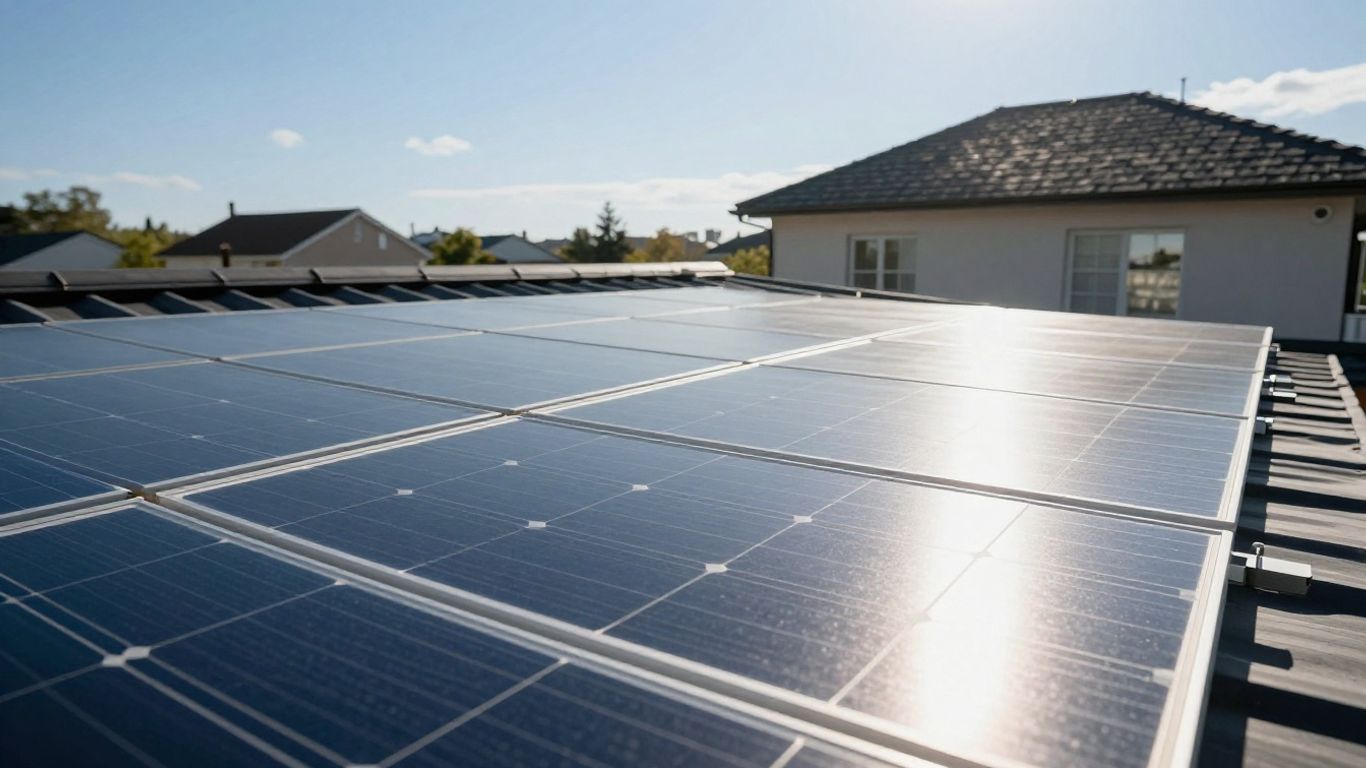
The self-consumption bonus is a key scheme to encourage the installation of solar panels. It aims to reduce the initial cost of your project by paying you a lump sum. This financial aid is particularly attractive because it is paid in a single instalment, which can significantly ease your budget.
How the Bonus Works and Eligibility
To be eligible for this bonus, several conditions must be met. The installation must be carried out by a certified RGE (Reconnu Garant de l’Environnement – Recognised Guarantor of the Environment) professional. Furthermore, the solar panels must be installed on a roof, whether as a superimposed installation or integrated into the building. Ground-mounted installations are not covered by this scheme. It is also necessary to opt for self-consumption with sale of surplus, which involves signing a feed-in tariff contract with an approved buyer, such as EDF OA. Finally, the property must be over two years old at the time of the works.
It is important to note that the amount of the bonus is fixed at the date of your complete connection application. It is therefore advisable not to delay once your project has been decided.
Bonus Amounts for the First Quarter of 2026
The bonus amounts are degressive and are updated each quarter. For the first quarter of 2026 (valid from 1 January to 1 April 2026), here are the applicable rates:
| Installation Power | Bonus Amount per kWp |
|---|---|
| Up to 3 kWp | €80/kWp |
| From 3 kWp to 9 kWp | €80/kWp |
| From 9 kWp to 36 kWp | €140/kWp |
| From 36 kWp to 100 kWp | €70/kWp |
For example, for a 6 kWp installation, the bonus would be 6 kWp * €80/kWp = €480.
Bonus Payment Terms
The self-consumption bonus is paid to you in a single instalment. This payment generally occurs one year after your installation is commissioned, at the same time as the first invoice for your surplus electricity sold. The approved buyer (EDF OA or another) is responsible for this payment. This single payment method provides clear visibility of the financial support received for your solar project. You can consult the bonus amounts for 2026 for more details.
Benefiting from the Reduced VAT Rate
The purchase and installation of photovoltaic solar panels represent an investment. Fortunately, tax schemes aim to reduce the cost. Among these, the reduced VAT rate is a particularly attractive measure for individuals. However, it is important to understand the conditions for benefiting from it.
Conditions for Applying the Reduced Rate
Since 1 January 2026, the VAT landscape for photovoltaics has evolved. The intermediate rate of 10%, which previously applied to small installations, has been abolished. From now on, two rates are in effect:
- The reduced rate of 5.5%: This rate applies to photovoltaic installations with a maximum power of 9 kWp. However, to benefit from it, specific criteria must be met. These include the use of certified solar panels (PPE2 V2) and the integration of an energy management system (EMS) to optimise self-consumption. Furthermore, the installation must be carried out by a qualified RGE professional in a property completed more than two years ago. These conditions, while aiming to encourage high-performance and sustainable installations, make the application of this rate quite restrictive in practice. It is therefore important to get detailed information from your installer to know if your project meets these specific requirements.
- The standard rate of 20%: All installations that do not meet the strict conditions mentioned above are subject to the standard VAT rate of 20%. This particularly concerns larger installations or those that do not use the required certified equipment.
It should be noted that the availability of PPE2 V2 certified panels remains limited on the market, which can make access to the 5.5% rate difficult for many projects. It is therefore advisable not to base your investment decision solely on this potential saving, but rather on the overall profitability of your solar project by consulting the available aid.
Impact on the Total Installation Cost
The difference between a VAT rate of 20% and a rate of 5.5% can seem substantial. For an installation with a pre-tax cost of €10,000, VAT at 20% amounts to €2,000 (total cost: €12,000), whereas VAT at 5.5% amounts to only €550 (total cost: €10,550). The direct saving is therefore €1,450.
Although the 5.5% rate is a welcome financial incentive, it is essential to consider the overall profitability of your project. Savings on your electricity bills and potential income from selling surplus electricity, combined with other aid such as the self-consumption bonus, significantly contribute to the return on investment, even with 20% VAT.
It is therefore crucial to request detailed quotes from qualified professionals who can inform you precisely about the VAT rate applicable to your situation and all the financial aid available for your photovoltaic project now.
Valuing Your Surplus Electricity
Once your photovoltaic installation is commissioned, you will consume part of the electricity produced directly. But what about the surplus, i.e., the electricity your panels generate and you don’t use immediately? The Feed-in Tariff (Obligation d’Achat – OA) scheme is there to allow you to sell it. This is a 20-year contract that guarantees you a purchase price for this electricity injected into the public grid.
The Role of the Feed-in Tariff
The Feed-in Tariff, managed by EDF OA or another obligated buyer, is a cornerstone of support for solar energy. It offers financial security by guaranteeing a purchase price for your surplus electricity for two decades. This mechanism is essential for making your project profitable in the long term, even if prices tend to decrease.
Purchase Tariffs for kWh in 2026
The purchase tariffs for surplus electricity change quarterly. For the first quarter of 2026 (from 1 January to 1 April), here are the applicable tariffs according to your installation’s power:
| Installation Power | Surplus Purchase Tariff (c€/kWh) |
|---|---|
| ≤ 9 kWp | 4.00 c€/kWh |
| > 9 to 100 kWp | 5.36 c€/kWh |
It is important to note that these tariffs are lower than those of previous years. For example, the tariff for installations over 9 kWp is 5.36 c€/kWh, a decrease compared to previous years. It is therefore wise to carefully calculate your return on investment. To find out the exact tariffs and update dates, consult the official decrees.
Duration of the Guaranteed Purchase Contract
One of the major advantages of the Feed-in Tariff is the contract duration. You benefit from a guaranteed purchase price for 20 years. This contractual stability allows you to plan the financing of your installation with peace of mind and have visibility on your income from selling your surplus electricity. This is a significant security for a long-term investment, even if purchase tariffs tend to decrease gradually. Remember to carefully check the specific conditions of your contract with the obligated buyer. The purchase of your surplus is a key component for the profitability of your solar project, over two decades. You can find information on purchase tariffs on the website of the reference organisation.
It is increasingly recommended to maximise self-consumption, for example by coupling your installation with a storage system, rather than relying solely on selling the surplus. Purchase tariffs are decreasing, making direct consumption of your production more advantageous.
Local and Regional Aid for Photovoltaics
Beyond national schemes, it is important to consider the financial aid offered by local and regional authorities. This support can vary considerably from one territory to another, but it often represents an additional opportunity to reduce the cost of your solar installation.
Specific Schemes by Territory
Many regions, departments, and municipalities have implemented their own programmes to encourage the development of renewable energies. For example, some regions may offer direct subsidies, low-interest loans, or energy cheque-based aid. It is therefore essential to inquire with your local council, departmental, or regional council to find out about the schemes in force in your geographical area. Sometimes, this aid is targeted at specific projects, such as collective installations or those aimed at improving the overall energy performance of a building.
For example, the Grand Est region offers the Climaxion scheme, which can provide significant financial support for certain photovoltaic projects. Similarly, metropolitan areas like Toulouse may offer aid covering a substantial part of the ex-VAT cost of the installation. This aid is regularly updated, so it is advisable to consult official websites or seek advice from your qualified installer.
Combining Local Aid with National Subsidies
A major point of attention concerns the possibility of combining local aid with national schemes, such as the self-consumption bonus. In most cases, regional or local aid is not combinable with the self-consumption bonus. You will therefore need to assess which aid is most advantageous for your specific situation. Often, for individuals, national aid remains more attractive, but it is always best to check. Local aid can sometimes be more relevant for business projects or large-scale installations. Do not hesitate to consult the information available on solar aid available in 2026 for a comprehensive overview.
It is crucial to fully understand the conditions for combining aid before committing. Local aid may seem attractive, but if it prevents you from benefiting from a more substantial national bonus, the overall outcome could be less favourable. A personalised analysis of your project is therefore recommended.
Other Potential Financial Aid
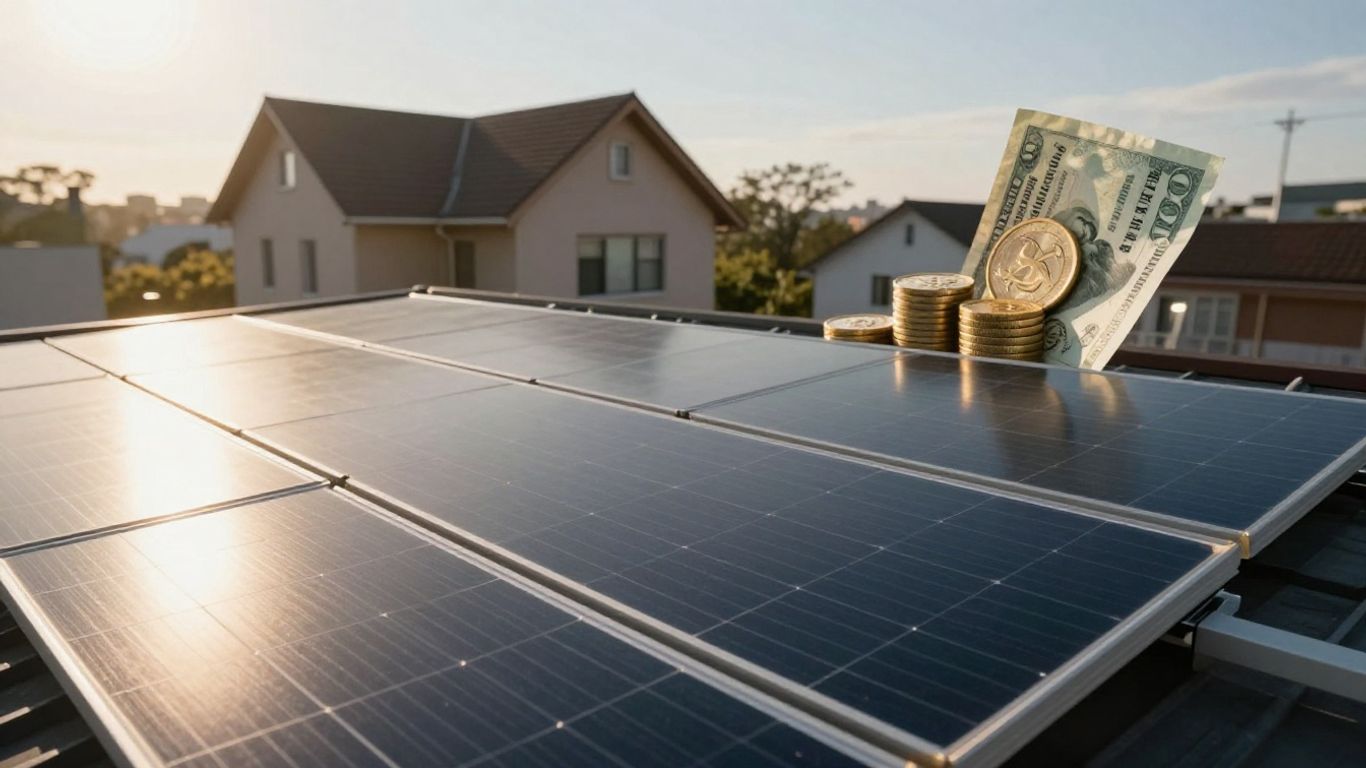
The Eco-Friendly Zero-Interest Loan for Solar Installations
The Eco-friendly Zero-Interest Loan (Éco-PTZ) is a financing scheme that allows you to carry out energy renovation work without paying interest. Although photovoltaic panels alone are generally not directly eligible for the Éco-PTZ, this loan can be used to finance related essential work for solar installation, such as improving your roof insulation or replacing less efficient heating systems. It is often necessary to carry out a package of works to be eligible. Eligibility criteria and amounts vary, so it is advisable to inquire with your bank or a France Rénov’ advisor.
ANAH Aid for Low-Income Households
The National Housing Agency (Anah) offers targeted aid for low-income and very low-income households, particularly through the MaPrimeRénov’ scheme. It is important to note that in 2026, MaPrimeRénov’ does not directly finance photovoltaic solar panels alone. The aid is mainly intended for thermal or hybrid solar panels, which produce heat. If your project includes these types of panels as part of a global renovation or by gesture, you may be eligible. Income ceilings are determined based on your household composition and your place of residence (Île-de-France or other region). Properties over 15 years old are generally concerned, and an energy saving of at least 25% after works is often required.
Property Tax Exemption
An interesting incentive for homeowners is the exemption from property tax on built properties (TFPB) for installations producing electricity from solar energy. This exemption can be total or partial and is generally granted for a period of 5 years from the year following the completion of the works. It applies to installations with a peak power of 100 kilowatts or less. This is an automatic tax advantage, but it is always good to check the specific terms with your property tax office, as local conditions or regulatory changes may exist.
It is essential to be well-informed about the specific eligibility criteria for each aid, as they can evolve and depend on many factors, such as your income, the nature of the works, and the location of your property. Proactive engagement with the relevant organisations will allow you to maximise the financial support available for your solar project.
Eligibility Criteria and Exclusions
To benefit from the various financial aids for installing photovoltaic solar panels in 2026, it is essential to meet certain conditions. These criteria aim to ensure that subsidies support projects that comply with energy transition objectives and are carried out professionally.
Installation-Related Conditions
Eligibility for national aid, such as the self-consumption bonus, is primarily conditional on the nature of the installation and how it is carried out. Solar panels must be installed by a certified RGE (Reconnu Garant de l’Environnement) professional. This certification attests to the installer’s expertise and compliance with current standards. Furthermore, aid is generally reserved for roof-mounted installations, whether they are superimposed (panels installed on the existing roof covering) or integrated into the building (panels replacing the roof covering elements). Ground-mounted installations, although technically possible, are not eligible for these national financial support schemes.
Exclusion of Plug-and-Play Solar Kits
So-called ‘plug and play’ solar kits, designed to be easily plugged in by the user without specific professional intervention, are not eligible for national aid. Their non-professional nature and simplified connection exclude them from schemes that require certified installation and proper grid integration. It should be noted, however, that some local authorities may offer specific aid for these devices, often accessible even to tenants.
Importance of a Qualified Installer
Using an RGE-qualified installer is a cornerstone for accessing most subsidies. This requirement not only ensures the quality and safety of the installation but is also a prerequisite for benefiting from the self-consumption bonus and the feed-in tariff for surplus electricity. Without this qualification, your project may be excluded from aid schemes, even if the panels themselves are efficient. It is therefore advisable to systematically check the company’s RGE certification before signing a contract.
Here is a summary of the key eligibility points:
- Installation by an RGE-certified professional.
- Solar panels fixed to the roof (superimposed or integrated into the building).
- Self-consumption with sale of surplus (feed-in tariff contract).
- Property completed more than 2 years ago.
‘Plug and play’ kits and ground-mounted installations are generally excluded from national aid.
Regulatory Changes to Watch in 2026
The year 2026 marks a period of transition for the photovoltaic sector, with regulatory adjustments that deserve particular attention. These changes aim to adapt the national framework to European directives and refine existing support schemes.
A notable novelty from July 2026 concerns the progressive integration of European resilience criteria. To benefit from certain advantages, solar panels will need to meet specific requirements regarding their assembly within the European Union. Eventually, these criteria will even extend to the manufacturing of the photovoltaic cells themselves, with the aim of strengthening the European solar production sector against international competition. It is therefore advisable to inquire about the origin and manufacturing conditions of the equipment considered.
As every year, the purchase tariffs for surplus electricity and the amounts of the self-consumption bonus are subject to quarterly revisions. The Energy Regulatory Commission (CRE) adjusts these rates based on market conditions. Historically, a downward trend has been observed in these tariffs. For project developers, this highlights the benefit of not delaying their installation too much in order to benefit from the most advantageous tariff conditions at the time of commissioning. The tariffs for the first quarter of 2026, for example, are already published and serve as a reference for new installations.
It is important to note that Law No. 2025-127 of 14 February 2025, relating to the finance law for 2025, laid the groundwork for these developments. Although no specific regulatory text for 2026 has been identified to date, these legislative orientations shape the current framework for photovoltaic aid.
Key Points to Monitor:
- Origin of Components: Check if your installation meets future European assembly criteria.
- Purchase Tariffs: Follow the quarterly publications of the CRE to anticipate changes.
- Aid Eligibility: Ensure your project meets the updated eligibility conditions.
These regulatory changes, while potentially complex, aim to structure the market and support more sustainable solar energy production integrated into the European economic fabric. Staying informed about the latest legislative news is therefore a relevant step to optimise your solar project in 2026.
Optimising the Financing of Your Solar Project
Investing in photovoltaics is a thoughtful decision, both for the environment and for your budget. To make your project as profitable as possible, it is important to calculate its return on investment well and take advantage of all available aid. We explain how to do it.
Calculating the Return on Investment
The return on investment (ROI) of a solar installation is calculated by comparing the total cost of the installation (equipment, installation, administrative procedures) to the savings generated and potential income (sale of surplus). The lifespan of the panels, generally estimated at 25-30 years, and any maintenance costs must also be taken into account. Good financial planning is the key to a successful solar project.
Here are the elements to consider when estimating your ROI:
- Initial Installation Cost: Including panels, inverter, mounting structure, labour, and administrative procedures.
- Savings on Electricity Bill: Calculated based on your current consumption and the portion of electricity you will produce and consume.
- Income from Selling Surplus: Based on guaranteed purchase tariffs from the state.
- Aid and Subsidies: Self-consumption bonus, reduced VAT, local aid, etc.
- Lifespan and Performance of Panels: Take into account the natural degradation of production over the years.
Concrete Example of Calculating Combined Aid
Let’s imagine a 3 kWp installation for a detached house. The total cost before aid is estimated at €9,000. National aid available for this project could include:
- Self-Consumption Bonus: The amount depends on the installation’s power and is paid over 5 years. For 3 kWp, this could represent approximately €1,200 in the first year, followed by degressive amounts.
- Reduced VAT Rate: A rate of 5.5% applies to installations under 9 kWp, reducing the initial cost.
- Feed-in Tariff: Surplus electricity sold at a guaranteed tariff (e.g., €0.13/kWh in 2026) generates annual income.
By combining these different aids, the initial investment can be significantly reduced, and the payback period shortened. It is advisable to seek assistance from a professional to obtain an accurate estimate of the aid applicable to your situation.
Protecting Against Electricity Price Volatility
One of the major advantages of solar self-consumption is the protection it offers against future increases in electricity prices. By producing part of your own energy, you reduce your dependence on suppliers and market fluctuations. This energy independence is a significant financial asset in the long term.
Installing solar panels helps to smooth out the cost of your energy over the lifespan of the installation. Even if electricity prices rise, your bill will be less affected because a significant portion of your consumption will be covered by your local production. This provides better budgetary predictability for your household.
Precautions Against Abusive Cold-Calling
Given the enthusiasm for renewable energies, it is unfortunately common to encounter aggressive or misleading commercial cold-calling regarding photovoltaic installations. It is therefore essential to remain vigilant to avoid falling into the trap of offers that are too good to be true.
Identifying False Promises
Some callers may make arguments that seem advantageous at first glance but do not stand up to scrutiny. Be wary of claims such as « zero investment cost » without a clear explanation of how this is made possible, or guarantees of astronomical and unrealistic profits. It is essential to understand that any installation has a cost, and that aid, while substantial, generally does not cover the entire expense. The purchase tariffs for surplus electricity, for example, are regulated and change quarterly, making promises of fixed long-term income unlikely. Do not hesitate to ask for detailed explanations on the calculation of savings and potential income, and compare them with available official information.
Vigilance Against Offers That Are Too Good to Be True
Offers that pressure you to sign immediately, without giving you time to reflect or compare, should raise particular suspicion. A reputable professional will provide you with a detailed quote, explain the different stages of the project, and give you time to consult other companies. So-called « plug and play » solar kits, although sometimes presented as a simple and economical solution, are generally not eligible for national aid because they are not installed by a qualified RGE professional and are not always connected to the grid. If an offer seems exceptionally advantageous, always ask yourself why. It is advisable to check reviews of the company, verify its certifications, and request multiple quotes before making a decision. If in doubt, or if you believe you have been a victim of an abusive commercial practice, you can report these actions to the DGCCRF. It is also possible to find out about withdrawal and contract cancellation procedures if you signed under duress or without complete information.
When faced with cold-calling that bothers you, it is important to know how to react. Do not be fooled by offers that are too good to be true. If you have any doubts, seek advice. To learn more about best practices and protect yourself, visit our website.
Conclusion: 2026, Still a Favourable Year for Solar
In summary, even though some schemes have seen their amounts adjusted, 2026 remains an interesting period to consider installing solar panels. The self-consumption bonus, combined with the sale of surplus electricity over 20 years, offers a clear financial prospect. Furthermore, in a context where energy prices fluctuate, producing your own electricity is a way to gain autonomy and protect yourself from future increases. It is advisable to be well-informed about local aid that can supplement national schemes. Do not forget to be wary of offers that are too good to be true, as free solar panels do not exist. A personalised study remains the best approach to assess the profitability of your project.
Frequently Asked Questions
What is the self-consumption bonus and how does it work?
The self-consumption bonus is a financial boost from the government to encourage you to install solar panels. It is paid if you consume part of the electricity your panels produce. It’s like getting a little money for every kilowatt-hour you use yourself. This bonus is paid in a single instalment, usually one year after your installation is commissioned.
Is the VAT rate really reduced for solar panels in 2026?
Yes, for solar installations under 9 kilowatts-peak, you can benefit from a reduced VAT rate. Instead of paying 20%, you only pay 5.5%. This is an aid that significantly reduces the total cost of your installation, making the project more affordable.
What happens to the electricity my panels produce in excess of what I consume?
The electricity you don’t consume immediately, you can sell! EDF or another company commits to buying it back from you for 20 years, at a pre-determined price. This is called the feed-in tariff. It allows you to earn a little money from your surplus electricity.
Are there specific aids in my region or city?
Absolutely! In addition to national aid, many regions and cities offer their own aid for installing solar panels. This local aid can be combined with state aid, but you need to check the conditions carefully. It’s best to inquire with your local council or region.
Are there other financial aids possible for my solar project?
Yes, there are other avenues. For example, you can look into the eco-friendly zero-interest loan, which is an interest-free loan to finance energy improvement works, including solar panels. Low-income families can also look into aid from Anah. And in some cases, you may be exempt from property tax for a few years.
Who can benefit from these aids and are there any exclusions?
Generally, these aids are intended to encourage the installation of solar panels by qualified professionals, which are connected to the grid. Easy-to-install DIY kits (‘plug and play’) are often not eligible for national aid because they are not installed by a qualified RGE professional and are not always connected to the grid. The important thing is that the installation is done properly by a recognised professional.
Will the rules for obtaining aid change in 2026?
There are always adjustments. For example, Europe may impose new rules on panel manufacturing. Furthermore, aid tariffs are reviewed every three months. It is therefore advisable to stay informed of the latest developments to not miss an opportunity or be surprised by a change.
How do I know if my solar project is profitable with all these aids?
To know if your project is profitable, you need to calculate your total expenses, taking into account the aid, and compare it to what you will save on your electricity bills and what you will earn by selling your surplus. There are online simulators, and a professional can help you make an accurate calculation to see the return on investment.
