
The development of photovoltaics by local authorities is an increasingly common approach to address energy and climate challenges. This article explores the key steps to successfully carry out a local project, from defining the strategy to optimising local benefits. It is a structured approach to integrate solar energy at the heart of local policies.
Key Takeaways for Local Authorities
- Clearly define the local authority’s photovoltaic strategy by analysing solar potential, choosing installation sites, and determining the authority’s role.
- Inventory and evaluate communal assets, including buildings, land, and car park canopies, to identify opportunities for photovoltaic installation.
- Master regulatory and fiscal frameworks, particularly solarisation obligations, urban planning rules, and specific taxation for photovoltaic installations.
- Structure the legal and financial setup of the project by choosing the appropriate ownership model, management model, and financing options.
- Promote the growth of photovoltaics in the area by identifying suitable zones, planning the development of ground-mounted power plants, and encouraging installations on buildings, while supporting citizen initiatives.
Defining the local authority’s photovoltaic strategy
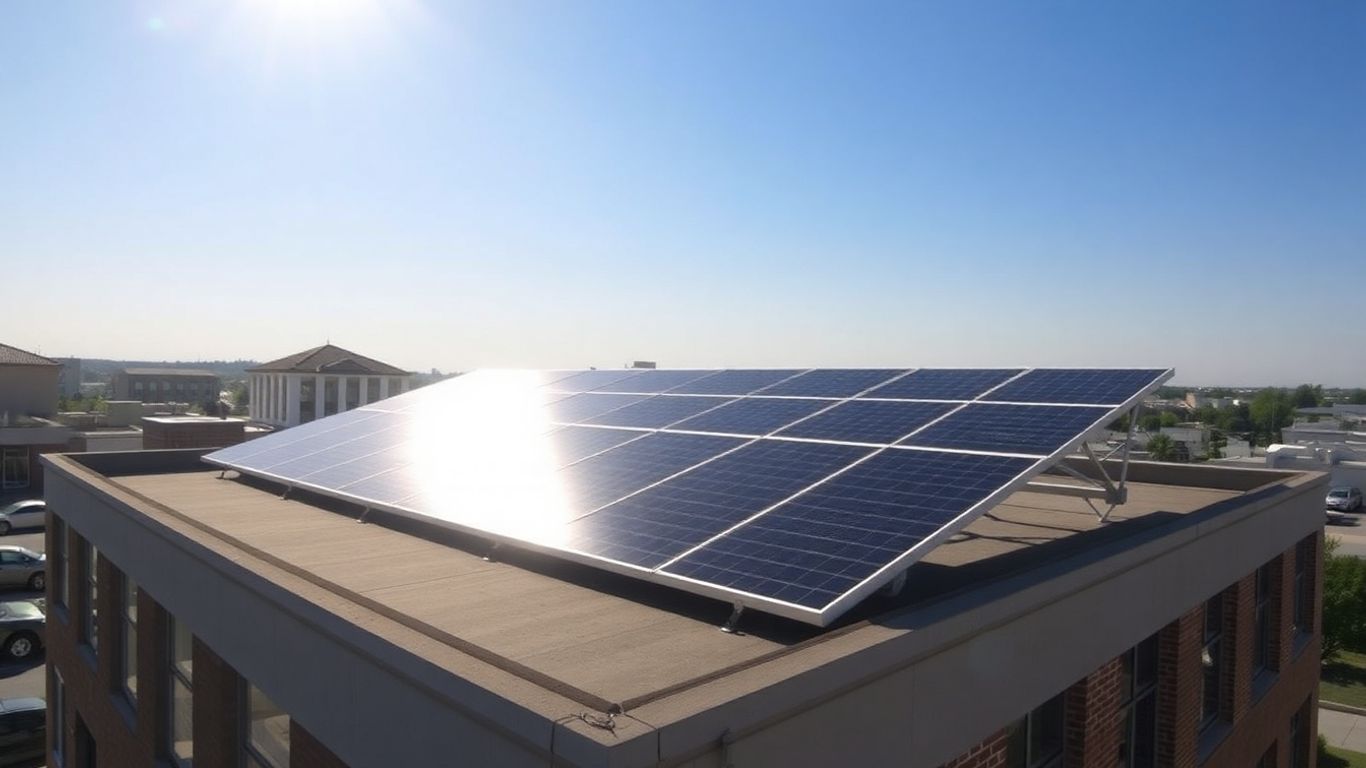
For a local authority, approaching photovoltaic development begins with clear strategic thinking. This involves determining the long-term vision of the commune or inter-municipal body regarding renewable energies and positioning the authority in future projects. This approach ensures that photovoltaic initiatives align with the overall energy transition objectives of the area, taking into account aspects of energy sobriety and efficiency.
The first step is to assess the available solar resources in the area. This involves mapping the sunniest areas and identifying the most suitable types of installations, whether on public building rooftops, car park canopies, or land potentially available for ground-mounted power plants. A preliminary analysis helps to understand the real opportunities and potential constraints.
Following the potential analysis, it is necessary to select the sites that offer the most advantages for installing photovoltaic panels. This selection considers technical criteria such as orientation, inclination, the quality of the supporting structure (for rooftops) or the nature of the soil (for ground-mounted installations), as well as economic and regulatory aspects. The objective is to maximise energy production while minimising costs and impacts.
The local authority must define its own involvement in photovoltaic projects. Several options are available: acting as a simple urban planning authority, becoming a project owner, an investor, or delegating management to third parties. The choice of ownership model and electricity valorisation (self-consumption, full sale, sale of surplus) will have a direct impact on the economic benefits and project governance. It is recommended to rely on specialised support structures to inform these decisions, such as the Les Générateurs network, which offers advice to elected officials for the emergence of renewable energy projects in their areas.
Defining a clear strategy is the foundation of any successful photovoltaic project for a local authority. It allows for anticipating challenges, mobilising the right partners, and ensuring that installations contribute effectively to the local energy transition.
Identifying and evaluating communal assets
For a local authority, built heritage represents a concrete opportunity to develop photovoltaic projects. The first step is to make a precise inventory of the buildings it owns or manages. The objective is to identify those most suitable for installing rooftop solar panels. Key criteria include available surface area, orientation, the condition of the roof structure, and the absence of significant shading. It is also relevant to analyse the potential of open land, such as car parks, which can accommodate photovoltaic canopies. These structures offer a dual advantage: energy production and vehicle protection.
Several approaches are possible to valorise these assets:
- Asset provision: The local authority can lease its rooftops or land to a third-party investor. This involves a transparent selection process, often via a Call for Expressions of Interest (AMI). Contracts such as the Emphyteutic Lease (BE) or Temporary Occupation Authorisation (AOT) are commonly used to frame these provisions. This is a way to generate income without direct involvement in operations. You can find examples of contracts and AMIs on websites dedicated to renewable energy such as that of CRER.
- Direct project ownership: The local authority can choose to manage the creation and operation of the installations itself. This can be done in-house, with a dedicated ancillary budget, or via delegated management, for example through a concession. This option requires more investment and internal skills but allows for increased control over the project and more direct valorisation of benefits.
It is also important to consider unbuilt spaces, such as roadside verges or degraded land, which may be suitable for ground-mounted power plants. The evaluation must also cover the relevance of car park canopies, which combine several benefits.
Precise identification of communal assets is the first step to concretising photovoltaic projects. It allows for targeting the most promising sites and choosing the valorisation strategy best suited to the local authority’s capabilities and ambitions. Good knowledge of its assets is therefore essential to optimise the development of local solar energy production.
The sale of surplus electricity produced is a potential source of income. It offers financial stability through guaranteed long-term purchase tariffs, acting as protection against energy inflation for building installations. The analysis of local taxation, particularly the Flat-Rate Tax on Network Companies (IFER), must also be included in the overall evaluation of economic benefits.
Understanding regulatory and fiscal frameworks
It is essential for a local authority to fully understand all the rules governing photovoltaic projects. This includes legal obligations, urban planning rules, and fiscal implications. A good grasp of these aspects helps to avoid pitfalls and secure the project in the long term.
Mastering solarisation obligations
Legislation now imposes solarisation obligations for certain types of new or renovated buildings, as well as for car parks. These measures aim to integrate solar energy production as close as possible to consumption sites. Local authorities play a key role in processing building permits and ensuring compliance with these obligations. It is therefore necessary to adapt urban planning departments to integrate this new dimension and verify the conformity of submitted projects. The internal organisation of the local authority may require adjustments to support land rights authorisation services and ensure compliance with these new standards. Large-scale ground-mounted power plant projects are also subject to specific consultations, particularly within project committees and public inquiries, where the local authority’s opinion is sought. Staying informed about regulatory developments is a necessity for good management of these files [afdf].
Anticipating urban planning implications
Photovoltaic projects, whether rooftop or ground-mounted, must integrate harmoniously into the landscape and urban fabric. Local urban planning documents, such as the inter-municipal Local Urban Plan (PLU(i)) or the Territorial Climate-Air-Energy Plan (PCAET), define areas suitable for solar panel installation and may impose specific constraints. It is important to consult these documents to ensure the compatibility of planned projects with territorial development guidelines. Educational tools exist to help answer questions and common misconceptions about renewable energies, both for internal services and for the general public.
Understanding the taxation of photovoltaic installations
Beyond classic tax revenues such as property tax or the territorial economic contribution, local authorities can benefit from a specific tax related to energy production installations: the Flat-Rate Tax on Network Companies (IFER). The calculation and distribution methods for this tax are specified by legislation. It is important to note that the presence of photovoltaic panels does not alter the property tax exemption for public buildings that do not generate income. The 2025 finance law also introduces new exemptions for collective self-consumption projects, which can positively impact the profitability of local projects [460f].
The taxation of a photovoltaic project is a determining factor in its profitability. It is necessary to anticipate the various applicable taxes and duties, as well as any exemptions or support schemes. A precise simulation allows for establishing a reliable economic model and convincing financial partners of the project’s viability.
Structuring the legal and financial setup
Once the potential has been identified and the regulatory framework understood, it becomes essential to build a solid structure to realise your photovoltaic project. This involves making clear choices regarding how the project will be owned, managed, and financed. These decisions will have a direct impact on the longevity and profitability of the installation.
Choosing the project ownership model
The way the local authority chooses to own its photovoltaic project is a decisive step. Several options are available, each with its advantages and constraints.
- Direct ownership: The local authority assumes full project management and administration. This offers total autonomy but requires significant internal resources.
- Indirect ownership (via a SEM, SPL, etc.): The local authority delegates management to a dedicated structure, often a Mixed Economy Company (SEM) or a Local Public Company (SPL). This allows for pooling risks and benefiting from specialised expertise.
- Third-party investment: A private investor takes charge of financing and constructing the installation. The local authority provides the land or building and benefits in return from the electricity produced, often at a preferential rate. This is a solution that limits the local authority’s initial financial commitment.
The choice will depend on the financial capacity, available human resources, and the local authority’s willingness to get involved in operational management. It is important to thoroughly analyse the implications of each model, particularly in terms of governance and risk distribution. For example, third-party investment can be an interesting option to limit financial exposure.
Selecting the management and operator model
Beyond ownership, it is necessary to define who will concretely manage the installation on a daily basis. The local authority can choose to manage the operation itself or entrust this task to a third party.
- In-house management: The local authority itself handles maintenance, production monitoring, and relations with the network operator. This requires technical and administrative skills.
- Public service delegation (DSP) or operating contract: A specialised operator is selected to manage the installation. This operator ensures maintenance, monitoring, and valorisation of the energy produced.
- Lease or tenancy agreement: The installation is leased to a third party who manages it.
The choice of operator is crucial. They must possess the necessary technical skills, a good knowledge of the energy market, and financial stability. It is often necessary to set up a preventive and curative maintenance contract to guarantee the longevity of the installation. Connection conditions to the grid, for example with Enedis, must also be well anticipated.
Exploring financing and contractualisation options
Financing is often the sinews of war for large-scale projects. Several avenues can be explored to secure the necessary funds.
- Self-financing: Use of the local authority’s own funds. This is the simplest option but often limited by available budgets.
- Bank loan: Recourse to loans from financial institutions. A solid application with clear profitability forecasts must be presented.
- Crowdfunding: Involving citizens or local stakeholders in financing the project. This strengthens social acceptability and local integration.
- Grants and public aid: Mobilisation of national or regional aid schemes.
- Leasing or hire purchase: A solution to limit indebtedness, where the supplier remains the owner of the installation for a defined period.
Contractualisation is also a key step. This involves defining the terms of agreements with the various partners: electricity purchase agreement (PPA – Power Purchase Agreement), lease agreement, maintenance contract, etc. A rigorous analysis of viability indicators such as IRR (Internal Rate of Return), ROI (Return on Investment), and DSCR (Debt Service Coverage Ratio) is essential to convince financiers. Financing for photovoltaic projects in 2025 offers various legal solutions to secure investments.
Developing photovoltaic projects on communal buildings
Public buildings and facilities represent a major opportunity for renewable energy production. By equipping these structures with photovoltaic panels, local authorities can not only increase their share of local green electricity but also achieve savings or generate income through self-consumption or the sale of surplus. The Grenelle II law, particularly Article 88, explicitly authorises public actors to operate photovoltaic installations on buildings they own. This opens the way for several approaches to valorise communal built heritage.
Valorising assets through provision
A first option for the local authority is to make its rooftops or other suitable surfaces available. This approach generally involves a transparent selection process, such as a Call for Expressions of Interest, to choose a partner. Once the rooftop is leased, the local authority’s involvement in the daily management of the project is often limited. It is important to clearly define the terms of this provision to ensure it meets the local authority’s expectations in terms of benefits and governance.
Getting involved in building-based project ownership
Alternatively, the local authority can choose to be more actively involved by owning the photovoltaic project itself. This can range from financial investment to operational management. This stronger involvement allows the local authority to maintain more direct control over the project and maximise its local benefits. It is possible to develop projects on communal assets, but also to extend these initiatives to neighbouring areas by structuring appropriate legal and financial arrangements. The installation of 100 kWp on the roof of a municipal gymnasium, for example, can cover a significant portion of its lighting needs [9e10].
Optimising self-consumption on public buildings
Self-consumption, whether individual or collective, is a key strategy to maximise the use of locally produced electricity. This involves directly consuming the energy generated by solar panels, thereby reducing dependence on traditional energy suppliers and associated bills. The choice between total, partial self-consumption, or sale of surplus will depend on several factors, including the match between production and consumption profiles, project size, and electricity costs. Tools and guides exist to help assess the relevance of each model, thus optimising the economic and environmental benefits for the local authority.
Promoting the growth of photovoltaics in the area
To encourage the development of solar photovoltaic energy at the scale of a commune or inter-municipal body, several actions can be implemented. This involves intelligently planning the location of installations to optimise their impact and acceptance.
Identifying suitable artificialised areas
The use of already artificialised land is a priority for the development of ground-mounted power plants. This includes industrial wasteland, derelict land, or car park areas. These spaces, often less sensitive from an environmental and agricultural perspective, offer significant potential for installing solar panels. The evaluation of this potential can rely on online tools dedicated to analysing solar resources in a given area. It is essential to prioritise these areas to limit land-use conflicts and preserve agricultural land.
Planning the development of ground-mounted power plants
Territorial planning plays a key role. Documents such as the Regional Planning, Sustainable Development and Territorial Equality Scheme (SRADDET) or the Territorial Climate-Air-Energy Plan (PCAET) allow for integrating photovoltaic development into a global strategy. Local Urban Plans (PLU) can also incorporate provisions favouring the installation of panels, for example by imposing their presence on new constructions or large car park areas. France is experiencing rapid growth in its photovoltaic market, particularly thanks to these regulatory frameworks [4b7f].
Encouraging installations on buildings
The rooftops of public and private buildings, and car park canopies represent a considerable surface area for solar electricity production. These installations are often simpler to implement and benefit from better acceptability. It is relevant to support projects that valorise existing built heritage. Self-consumption, where electricity produced is consumed locally, is a particularly interesting model for local authorities and their residents, strengthening local energy sovereignty [d668].
Here are some examples of voluntary initiatives that local authorities can undertake:
- Setting up solar cadastres to identify the potential of each rooftop.
- Organising public debates and awareness campaigns to inform and involve citizens.
- Facilitating connections between project developers and potential site owners.
Integrating photovoltaics into local planning, by prioritising artificialised areas and buildings, maximises the deployment of this renewable energy while minimising negative impacts. A proactive approach from local authorities is necessary to structure this development.
Supporting citizen and participatory initiatives
For the development of photovoltaics in your area to be a shared success, it is essential to actively involve residents and local stakeholders. This requires transparent communication and accessible tools for everyone.
Setting up solar cadastres
A solar cadastre is a mapping tool that identifies the potential for solar electricity production on each building in a commune or inter-municipal area. By making this data public, you give every citizen, business, or association the opportunity to quickly visualise where and how they could install photovoltaic panels. This is a concrete first step to democratise access to solar energy.
- Identify the most favourable rooftops.
- Estimate production potential.
- Facilitate action for individual projects.
Many local authorities have already implemented these tools, such as Grenoble Alpes Métropole with its Metrosoleil project, or the department of Corrèze. These examples demonstrate the feasibility and usefulness of such schemes for animating the area.
Organising public debate and awareness
Beyond technical tools, it is important to create spaces for dialogue. Organising workshops, information meetings, or conferences helps explain the benefits of photovoltaics, answer questions, and address concerns. These exchange opportunities are also a chance to present the local authority’s projects and gather residents’ opinions. A good understanding of the issues by all fosters project acceptance and can even spark new local initiatives.
Involving citizens from the early stages of a project strengthens its legitimacy and community ownership.
Facilitating connections between local stakeholders
Photovoltaic development can take various forms, ranging from installations for individuals to large ground-mounted power plants, including collective self-consumption projects. For these different initiatives to emerge and develop, it is useful to create synergies. The local authority can play a facilitating role by connecting landowners, project developers, installers, citizens interested in investing, or even local authorities wishing to engage in collective self-consumption initiatives.
- Create a networking platform.
- Organise thematic meeting days.
- Support the creation of purchasing groups for solar installations.
Controlling costs and evaluating profitability
For a photovoltaic project to be viable in the long term, a rigorous financial analysis is essential. This involves thoroughly understanding and anticipating all expenses, whether initial or recurring, and knowing how the electricity produced will be valorised. Good control of these elements ensures that the investment will be profitable and that the project can meet its financial commitments throughout its lifespan.
Conducting technical pre-feasibility studies
Before making a financial commitment, it is necessary to ensure the technical feasibility of the project. This involves preliminary studies that will assess the site’s solar potential, the quality of sunlight, and technical constraints related to the location (topography, shading, etc.). These studies provide a first estimate of the expected electricity production and identify any potential technical obstacles. It is often useful to rely on specialised engineering firms to obtain precise and reliable analyses.
Anticipating grid connection costs
Connecting photovoltaic installations to the public electricity grid represents a significant cost. This cost varies depending on the installation’s power, the distance to the nearest connection point, and the necessary grid works. It is important to request quotes from the grid operator (such as Enedis in France) as early as possible in the project development process. These costs must be included in the provisional budget from the outset to avoid unpleasant surprises.
Analysing electricity valorisation methods
The way the electricity produced will be sold or consumed has a direct impact on the project’s profitability. Several options exist: full sale to a single buyer via a purchase contract (regulated tariff or PPA), self-consumption (sale of surplus), or participation in collective self-consumption projects. Each valorisation method has its own pricing mechanisms and financial implications. It is therefore essential to compare these different options to choose the one that maximises revenue and ensures the best profitability. For example, for an agricultural operation, installing photovoltaic canopies can allow the farm to transform into an energy producer.
Evaluating key profitability indicators
To measure the economic viability of a photovoltaic project, several financial indicators are commonly used. The Internal Rate of Return (IRR) gives an idea of the annual return on investment. The Return on Investment (ROI) indicates how long it will take to recover the initial investment. The LCOE (Levelized Cost of Energy) calculates the cost of producing a kilowatt-hour over the entire lifespan of the project, and the DSCR (Debt Service Coverage Ratio) is an important indicator for banks that measures the project’s ability to repay its debts.
| Indicator | Definition | Indicative target value |
|---|---|---|
| IRR | Annual return on investment | 7-8% |
| ROI | Investment recovery time | ~12 years |
| LCOE | Cost of kWh production | 60-100 €/MWh |
| DSCR | Debt repayment capacity | > 1.25 |
Anticipating operating costs (OPEX)
Beyond initial expenses (CAPEX), recurring costs related to the operation and maintenance of the installation must also be considered. These costs include preventive and curative maintenance, insurance, administrative management, and potentially the replacement of certain components such as inverters during the project’s lifespan. Although less significant than CAPEX, these operating costs must be precisely estimated to establish a realistic provisional income statement and ensure long-term profitability.
Training and upskilling in photovoltaics
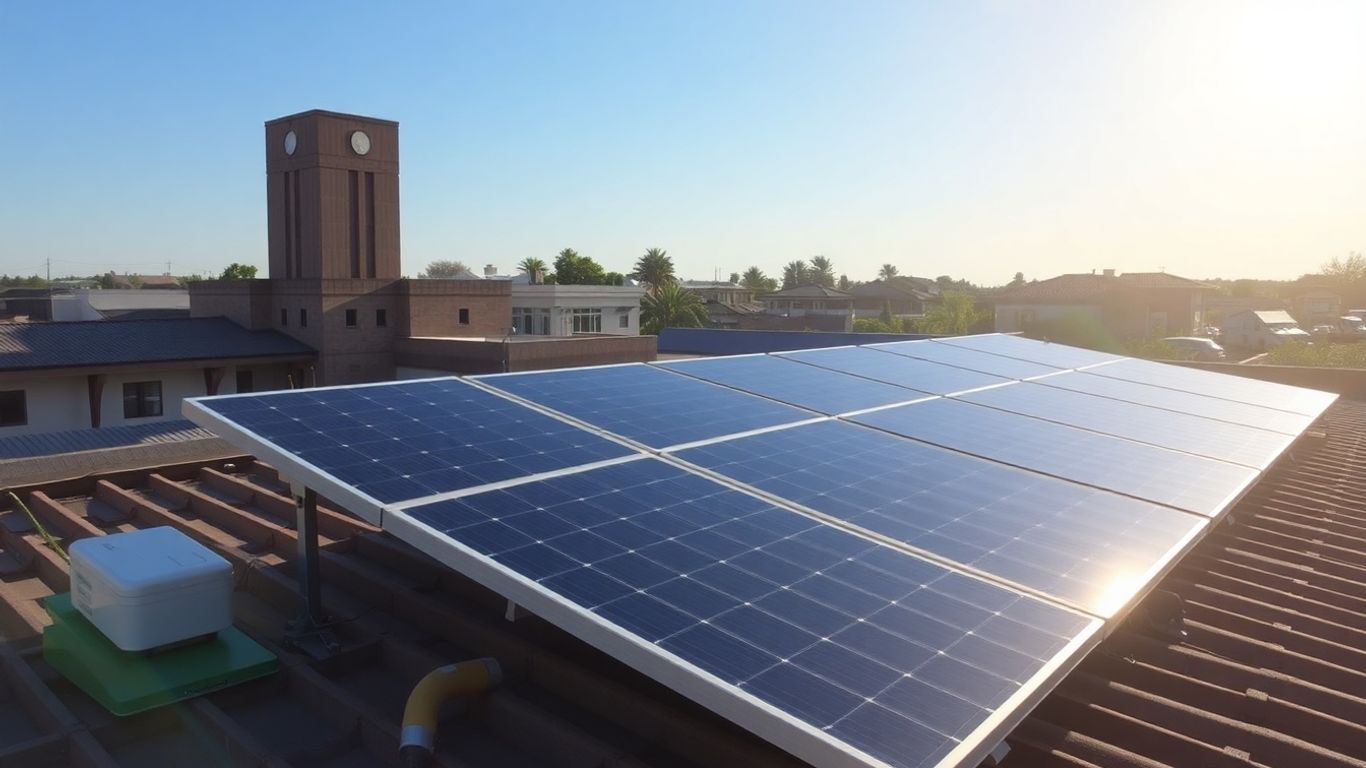
For a local authority to successfully carry out a photovoltaic project, it is essential that its teams acquire the necessary knowledge. This concerns both technical and regulatory aspects, as well as the ability to develop an adapted territorial strategy. Relying on specialised resources is a key step to ensure success.
Acquiring regulatory and technical knowledge
It is important to understand how solar installations work, the different technologies available, and the standards governing their deployment. This includes mastering urban planning rules, grid connection obligations, and financial support schemes. A good understanding of the regulatory framework helps anticipate constraints and secure the project.
- Understand the principles of converting sunlight into electricity.
- Identify different types of photovoltaic panels and their performance.
- Master safety rules and construction standards.
- Familiarise oneself with administrative procedures and necessary authorisations.
Adequate training helps avoid costly mistakes and optimises the profitability of installations.
Developing an adapted territorial strategy
Each territory has its specificities. It is therefore necessary to develop a strategy that takes into account the local solar potential, the local authority’s energy needs, and implantation opportunities. This can involve creating a solar cadastre, identifying the most suitable areas, and defining methods for valorising the electricity produced. A personalised approach is key.
- Analyse the territory’s solar potential (sunlight, available surfaces).
- Define the local authority’s objectives (self-consumption, electricity sales, energy mix).
- Identify preferred installation sites (buildings, brownfields, agricultural areas).
- Choose the most suitable governance and financing model.
Relying on specialised resources
Many organisations offer training and support for local authorities wishing to embark on photovoltaics. ADEME, for example, provides guides and tools to aid decision-making. It is also possible to call upon specialised engineering firms to conduct pre-feasibility studies and secure the legal and financial setup of projects. The website Photovoltaïque.info is an excellent resource to get started.
| Type of training | Indicative duration | Modalities |
|---|---|---|
| Regulation and technical | 14 hours | In-person |
| Territorial strategy | Variable | Workshops, support |
| Legal and financial setup | Variable | Seminars, personalised studies |
Optimising local economic benefits
To maximise the benefits of a photovoltaic project in your area, it is essential to consider local economic spin-offs. This goes beyond mere energy production. It’s about ensuring that the project directly benefits the community and local stakeholders.
Encouraging participatory and local projects
Fostering initiatives where citizens or local authorities play an active role in project development and governance helps keep added value within the area. This can take the form of energy cooperatives or citizen projects. These development models, often supported by structures like Energie Partagée, contribute to a better distribution of benefits and strengthen the local roots of installations.
Promoting synergy with agricultural activity
Agrivoltaics, which combines agricultural production and solar electricity production, offers a dual opportunity. Installations can improve crop or livestock comfort while generating additional income for farmers. These systems allow for better water management and protection against climatic hazards, while producing clean energy. Installing panels above crops or pastures is an intelligent way to optimise the use of agricultural land. Benefits include reduced electricity bills for farms and the sale of surplus energy, as shown by the example of the benefits of agricultural canopies.
Ensuring competitive electricity tariffs
Negotiating advantageous electricity purchase contracts, whether for self-consumption by the local authority or for resale to the grid, is an important economic lever. By structuring the project optimally, it is possible to obtain guaranteed long-term purchase tariffs, thus ensuring predictable profitability. The study of different support mechanisms and purchase tariffs is therefore crucial to secure project revenues. Online tools exist to help evaluate the potential profitability of installations, taking into account investment costs and expected revenues.
Local economic benefits can manifest in several ways:
- Local taxation: Photovoltaic installations generate taxes that go back to local authorities.
- Local jobs: The installation and maintenance phase of power plants can create non-relocatable jobs.
- Investment income: The involvement of citizens or local stakeholders in project financing allows for capturing a portion of the generated income.
- Reduced energy costs: Self-consumption by public buildings or citizens reduces their electricity expenses.
The integration of photovoltaic projects into the area must be seen as a lever for local economic development. By prioritising short circuits, citizen involvement, and synergies with existing activities, local authorities can maximise benefits for their area. It is important to rely on specialised resources to properly structure these financial and economic aspects, as offered by the Photovoltaïque.info website, which references many initiatives.
For your solar project to benefit everyone, it’s essential to think about the local economy. By choosing solutions that support businesses in your region, you help create jobs and keep money circulating close to home. It’s a simple way to do good for the planet and for your community. To learn more about how we can help you maximise these benefits, visit our website today!
Conclusion: Towards a local and sustainable energy future
In summary, the deployment of photovoltaics within local authorities represents a concrete step towards a successful energy transition. Each stage, from potential assessment to project implementation, requires rigorous planning and a good understanding of technical, financial, and regulatory issues. By leveraging available resources, collaborating with the right partners, and involving citizens, areas can truly accelerate their local renewable energy production. This is a journey that, although sometimes complex, paves the way for greater energy autonomy and lasting environmental and economic benefits for all.
Frequently Asked Questions
What is photovoltaics and why should local councils be interested in it?
Photovoltaics is the idea of converting sunlight into electricity using special panels. Local councils should be interested because it allows them to produce their own clean energy, save money, and contribute to environmental protection. It’s a modern way to manage energy in their area.
How can a local council know if it has enough sun to install panels?
There are tools, such as ‘solar cadastres’, which show the solar potential of each roof or plot of land in a local council area. It’s like a map that indicates where the sun shines strongest and where it would be most beneficial to install panels.
What types of communal buildings are best suited for installing solar panels?
Buildings with large roof areas well exposed to the sun are the most suitable. These can include schools, gymnasiums, town halls, or even hangars. You need to look at the roof size, its orientation, and whether it’s not too shaded.
Can a local council install panels on car parks?
Yes, that’s absolutely possible! These are called ‘car park canopies’. These are structures that shelter cars from the sun and rain, and have solar panels on their roof. This allows for electricity production while protecting vehicles.
Who decides where to install the panels and how does it work?
The local council first decides on its strategy: does it want to undertake the projects itself, or let other companies do it? Then, it chooses the best locations. For large installations, there are urban planning rules to respect and sometimes public consultations.
How can a local council finance the installation of solar panels?
There are several financial aids from the government or other organisations. The local council can also choose to form partnerships with private companies, or apply for loans. Sometimes, it can even lease its rooftops to companies that will install the panels.
Can residents participate in these solar projects?
Absolutely! Local councils can encourage projects where residents participate, for example by creating solar energy cooperatives. This allows everyone to benefit from locally produced energy and share the profits.
What are the advantages for a local council of having solar panels?
The advantages are numerous: the local council can reduce its electricity bills by consuming its own production (this is called self-consumption), it can sell unused electricity, it strengthens its energy independence, and it demonstrates its commitment to a greener future.
