
The photovoltaic panel, a key player in the energy transition, converts sunlight into electricity. Although its technology may seem technical, its operation is based on simple principles. This article aims to demystify the functioning of photovoltaic panels, clearly explaining the steps of electricity production, from the cell to the domestic connection, and addressing the practical aspects of their use and maintenance.
Key Takeaways
- The photovoltaic panel transforms sunlight into electricity thanks to the photovoltaic effect, a process where photons release electrons in semiconductor cells.
- These cells, often made of silicon, are assembled to form a panel. The direct current produced is then converted into alternating current by an inverter to be usable at home.
- Solar panels only produce electricity when there is light; therefore, they do not work at night and their performance depends on sunshine.
- For increased autonomy, it is possible to combine panels with storage batteries to use the electricity produced even in the absence of sun.
- Regular maintenance and production monitoring are recommended to ensure the optimal performance of your photovoltaic installation.
Understanding the Principle of the Photovoltaic Panel
Definition of Photovoltaic Energy
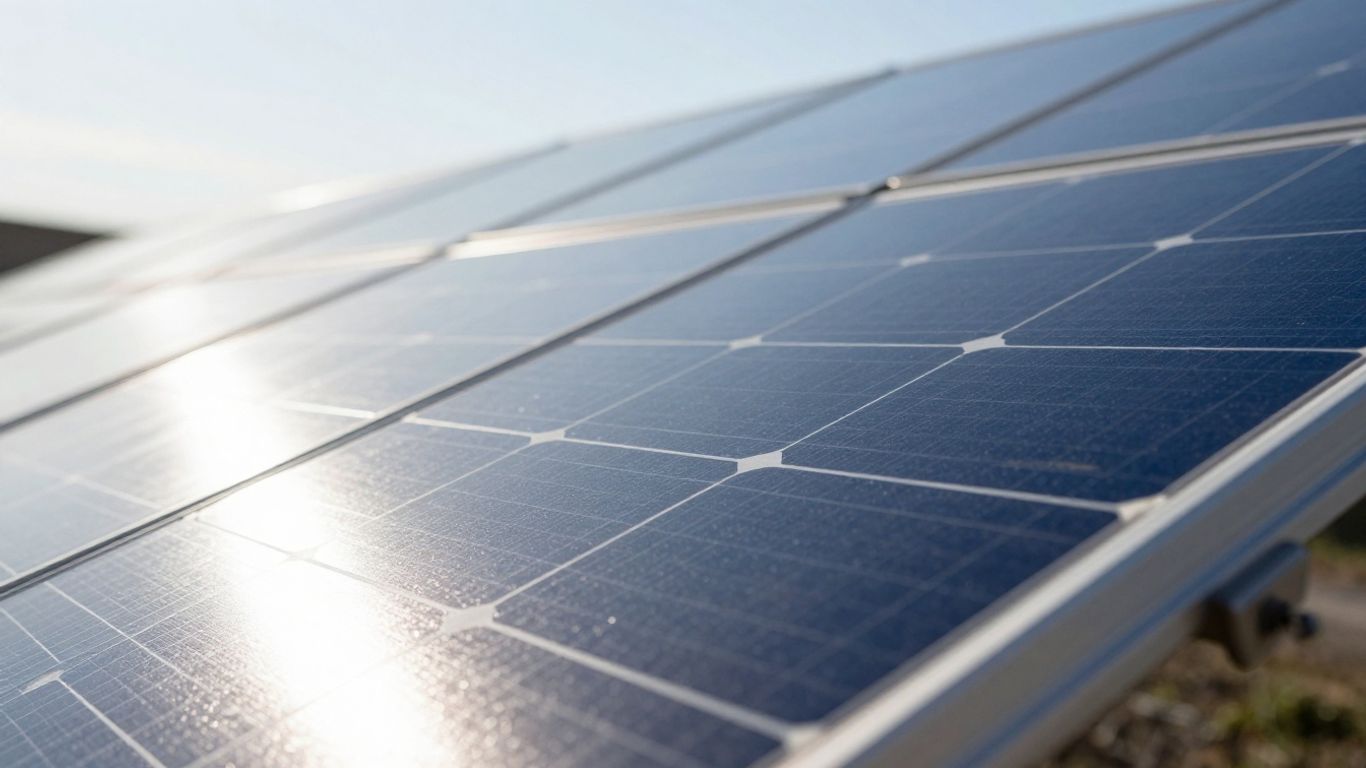
Photovoltaic energy is essentially the ability to directly transform sunlight into electricity. The term itself comes from the Greek « photo » (light) and the name of the physicist Volta, a pioneer of electricity. It is a technology that uses solar panels to capture solar radiation. This produced electricity can then be used to power our homes, our appliances, or even be fed back into the electrical grid. It is a way of producing clean and renewable energy, directly from an abundant resource: the sun. The basic principle is quite simple: specific components in the panels react to light to generate an electric current. It is a key technology in the current energy transition.
The Role of Photons in Electricity Production
At the heart of a solar panel’s operation are photons. These are tiny particles of light that come from the sun. When these photons strike the special cells that make up the panel, they transfer their energy. Imagine them as tiny energy marbles hitting the atoms in the cell. This impact releases electrons, which are the carriers of electric charge. The more photons there are, the more electrons are released, and therefore the more electricity is produced. It is this interaction between sunlight and the semiconductor materials of the cells that makes electricity production possible. It’s a bit like a chain reaction triggered by light.
Distinction Between Thermal and Photovoltaic Solar Panels
It is important not to confuse photovoltaic solar panels with thermal solar panels, as they have different functions. Photovoltaic solar panels are the ones we are discussing here: they transform sunlight into electricity. On the other hand, thermal solar panels use the sun’s heat to heat a fluid. This heated fluid is then used to produce domestic hot water or to supply a heating system. There are also hybrid panels that combine both functions. So, if you are looking to produce electricity, you need photovoltaic panels. If your goal is to heat water, then thermal panels are what you need. Understanding this difference is the first step in choosing the right solution for your energy needs.
Here is a table to clarify the differences:
| Panel Type | Energy Source | Product |
|---|---|---|
| Photovoltaic | Sunlight | Electricity |
| Thermal | Sun’s heat | Hot water / Heat |
| Hybrid | Sunlight and Heat | Electricity and Hot water |
The Internal Operation of Photovoltaic Cells
Composition of Photovoltaic Cells
A photovoltaic cell, the heart of your solar panel, is an ingenious assembly of semiconductor materials. Most often, silicon is used, an abundant element with interesting electrical properties. This silicon is treated, or « doped, » by adding small amounts of other elements to create two distinct layers: an « n-type » (negative) layer and a « p-type » (positive) layer. These two layers, when brought into contact, form what is called a p-n junction. It is within this junction that the magic happens.
The Photovoltaic Effect Explained
The photovoltaic effect is the physical phenomenon that allows these cells to transform light into electricity. Imagine sunlight as a stream of tiny particles called photons. When these photons strike the photovoltaic cell, they give up their energy. This energy is sufficient to release electrons, negatively charged particles, from their atoms in the semiconductor material. It’s as if the photons give the electrons a boost to get them moving.
Electron Release and Direct Current Creation
Once the electrons are released by the impact of photons, the p-n junction plays its role. It creates an internal electric field that forces these electrons to move in a specific direction, towards the « n-type » layer. Simultaneously, « holes » (electron vacancies, positively charged) are created in the « p-type » layer and move in the opposite direction. This ordered movement of electrons, channelled by metallic contacts on the cell, constitutes an electric current. This is a direct current (DC), similar to that of a battery, which will then be processed to be usable in our homes. This process is the basis of solar energy production, enabling, for example, photovoltaic self-consumption.
Silicon, thanks to its ability to be doped and its stability, is the material of choice for the majority of solar cells. Its structure allows for efficient separation of electrical charges generated by light, which is essential for current production.
Here are the key steps in electricity production within a cell:
- Photon Absorption: Sunlight strikes the cell.
- Electron Release: The energy of photons dislodges electrons from the semiconductor atoms.
- Electron-Hole Pair Creation: Each photon releases a pair of electrons and holes.
- Charge Separation: The p-n junction directs electrons to the negative zone and holes to the positive zone.
- Current Collection: Metallic contacts collect the electrons to form a direct current.
From Cell to Panel: Assembly for Electricity Production
Once we understand how an individual photovoltaic cell captures light to generate an electric current, the next question is how these small units are assembled to form a functional solar panel. It’s a bit like building a wall with bricks: each cell is a brick, and together they form a structure capable of producing a significant amount of energy.
Construction of a Photovoltaic Solar Panel
A photovoltaic solar panel is much more than just a collection of cells. It is a complex assembly designed to protect the cells and optimise their performance. Typically, a panel consists of several layers:
- Top Layer: Usually made of tempered glass, it protects the cells from the elements (rain, hail, dust) while allowing sunlight to pass through. It is often treated to reduce reflections.
- Photovoltaic Cells: This is the heart of the panel. They are interconnected by conductive wires (busbars) to form a string.
- Encapsulation Layer: A transparent resin (often EVA – Ethylene Vinyl Acetate) that holds the cells in place and protects them from moisture and impact.
- Backsheet: A protective layer that provides electrical insulation and protects the panel from moisture from the rear.
- Frame: Often made of aluminium, it stiffens the structure, facilitates mounting, and protects the edges of the panel.
These components are carefully assembled to ensure the durability and efficiency of the whole. The goal is to create a robust device capable of withstanding outdoor conditions for many years.
The Importance of Silicon as a Semiconductor
The most commonly used material for manufacturing photovoltaic cells is silicon. Why this choice? Silicon is an exceptional semiconductor. This means it has the ability to conduct electricity under certain conditions, but not others. Its atomic structure allows it to release electrons when exposed to light, a key phenomenon of the photovoltaic effect. To improve its properties, silicon is often treated, a process called « doping, » which involves introducing small amounts of other elements to modify its electrical conductivity. It is this precise manipulation that makes silicon so effective for solar electricity production.
Difference Between Monocrystalline and Polycrystalline Cells
When discussing solar panels, we often encounter two main types of cells, based on the structure of the silicon used:
- Monocrystalline Cells: They are made from a single crystal of high-purity silicon. They are often recognisable by their uniform black colour and slightly rounded corners. They generally offer better efficiency and a longer lifespan, but are also more expensive to produce.
- Polycrystalline Cells: They are made up of multiple silicon crystals melted together. Their appearance is more heterogeneous, with bluish reflections and a visible fragmented structure. They are cheaper to manufacture and offer good value for money, although their efficiency is slightly lower than that of monocrystalline cells.
The choice between these two types of cells will depend on the priorities of the installation: budget, available space, and the desired performance level. Each photovoltaic solar panel is thus designed to meet specific needs, combining these cells to maximise solar energy capture.
Current Conversion for Domestic Use
Once your solar panels have captured sunlight and generated electricity, this energy is not yet ready to power your appliances. The current produced by photovoltaic cells is direct current (DC), much like that from a battery. However, the majority of our household appliances and the electrical grid operate on alternating current (AC). This is where a key piece of equipment comes in: the inverter.
The Essential Role of the Inverter
The inverter is truly the brain of your photovoltaic installation. Its job is to take the raw direct current from the panels and convert it into usable alternating current. Without this device, the electricity produced would remain unusable for your home. It also performs other important functions such as voltage stabilisation and system safety.
Conversion of Direct Current to Alternating Current
The conversion process is quite technical, but the main idea is to repeatedly change the direction of the electron flow to simulate alternating current. The inverter takes the DC current and chops it up, then reassembles it to create a sine wave that matches the alternating current of the electrical grid. The quality of this conversion directly impacts the overall efficiency of your installation.
Integration of Current into the Domestic Grid
Once converted to alternating current, the electricity can be used in several ways. The first, and most common, is self-consumption: the energy produced directly powers your appliances in real-time. If you produce more electricity than you consume at a given moment, the surplus can be fed into the public grid, or stored in batteries for later use. This flexibility allows for maximum utilisation of your solar production and reduces your dependence on the grid. For those looking to reduce their electricity bill, self-consumption is an excellent avenue to explore to reduce your electricity bill.
Here is a simplified overview of the energy flow:
- Sun: Light energy strikes the panels.
- Solar Panels: Generation of direct current (DC).
- Inverter: Conversion of DC to alternating current (AC).
- Home: Direct use of electricity, storage, or grid injection.
The performance of the inverter is a determining factor for the efficiency of your system. A well-chosen and correctly sized device ensures that the captured solar energy is converted in the most optimal way possible for your daily consumption.
Operating Conditions of Solar Panels
Impact of Sunlight on Production
Photovoltaic solar panels depend directly on sunlight to operate. It is the energy of photons, these light particles, that excites the electrons in the silicon cells, thus creating the direct electric current. Without light, there is no electricity production. It is important to note that panels do not capture heat, but rather light. Thus, even on cloudy days, as long as there is light, production is possible, although reduced compared to a sunny day. Furthermore, it is often observed that panels work more efficiently when temperatures are cool rather than during heatwaves, as excessive heat can slightly decrease their performance. For more information on installation and operation, you can consult reliable information.
Why Panels Don’t Work at Night
At night, the absence of solar radiation means there are no more photons to interact with the photovoltaic cells. Consequently, the electricity generation process stops. This is why solar systems are often coupled with storage batteries or connected to the electrical grid to compensate for this lack of production during dark hours. The basic principle is the conversion of light into electricity, a process that requires an active light source.
Behaviour of Panels During a Grid Outage
In the vast majority of cases, photovoltaic solar panels are designed to shut down automatically in the event of a public electricity grid outage. This safety measure is crucial to protect technicians who may be working on the lines. The inverter, which converts the direct current produced by the panels into usable alternating current, is generally synchronised with the grid. If the grid disappears, the inverter ceases its activity, and consequently, the panels’ production also stops. Installations equipped with battery storage systems can, in some cases, continue to supply the home autonomously during such an interruption.
It is essential to understand that safety is paramount during interventions on the electrical grid. The automatic shutdown of grid-connected solar installations is a standard measure to ensure the safety of personnel working to restore power.
Optimising Solar Energy Production
Influence of Sunshine on Yield
The amount of sunlight that reaches your panels is the most important factor for electricity production. The more sun there is, the more energy your panels produce. It’s quite logical, isn’t it? Geographical location plays a major role: a sunny region like the south of France will naturally produce more than a region further north. The orientation and tilt of your panels are also to be considered. Ideally, they should face south and have a tilt that maximises the capture of solar rays throughout the year. Even a slight shadow caused by a nearby tree or building can significantly reduce production.
Peak Power of a Photovoltaic Panel
Peak power, often expressed in Watt-peak (Wp), represents the maximum power a panel can deliver under standardised test conditions. These conditions include a temperature of 25°C and an irradiance of 1000 W/m². It is important to understand that this value is a reference. In reality, the power produced varies constantly depending on the weather, ambient temperature (panels heat up and produce less when it’s very hot), and the cleanliness of the panels. Higher peak power does not always guarantee better annual production if the installation conditions are not optimal.
Yield of a Solar Installation
The yield of a solar installation is a bit like the percentage of solar energy received by your panels that is effectively converted into usable electricity. It is influenced by several factors:
- Cell Technology: Monocrystalline cells generally have a higher yield than polycrystalline ones.
- Installation Quality: Proper sizing, careful installation, and the absence of shading are paramount.
- Maintenance: Clean and well-maintained panels maintain better performance.
- Temperature: As mentioned, excessive heat can reduce yield.
The average yield of a modern solar panel is generally between 17% and 22%. While this may seem low, consider the amount of solar energy available and the longevity of the installations, which can produce for over 25 years.
Solutions for Increased Energy Autonomy
The Principle of Photovoltaic Self-Consumption
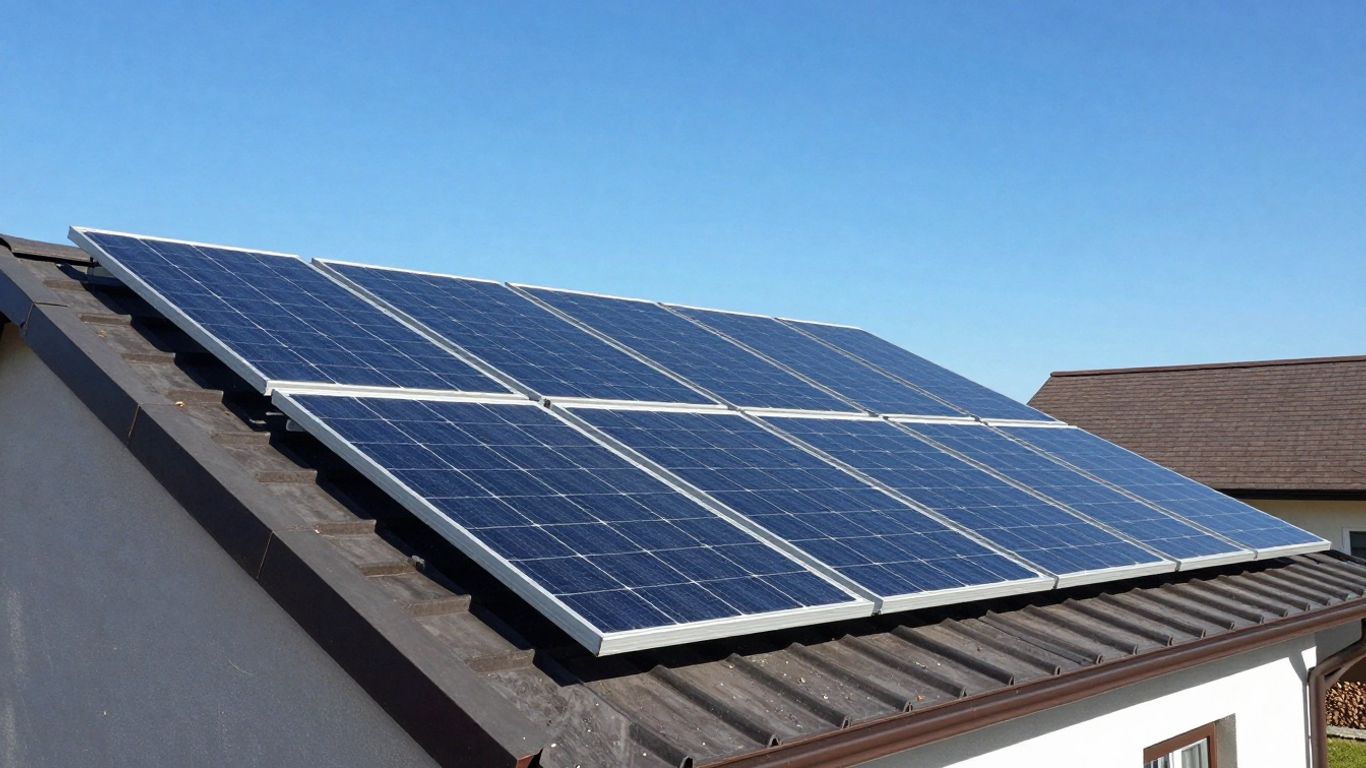
Self-consumption is the idea of directly consuming the electricity that your solar panels produce. Instead of systematically sending it back to the public grid, you use it to power your everyday appliances. This significantly reduces your electricity bill, as you buy less energy from your usual supplier. On average, a household can cover between 30% and 50% of its needs through self-consumption. This rate can even climb above 70% if you manage your consumption well or add a storage system.
The Role of Storage Batteries
Batteries complement the self-consumption system. They are used to store excess electricity produced during the day, when your consumption is low, so you can use it in the evening or at night. This is where autonomy truly comes into its own: you are no longer dependent on the grid at all times. Lithium iron phosphate (LFP) batteries are very popular today because they are safer, have a long lifespan, and better withstand temperature variations. They allow for maximum utilisation of your own solar production.
Valuing Surplus Electricity Produced
What do you do with the electricity you produce but do not consume immediately and have not stored? You have the option to feed it back into the public grid. In this case, it is purchased by a specialised organisation, such as EDF OA in France, at a defined rate. There are two main models: selling all your production, or self-consumption with sale of surplus. The latter model is the most common because it combines savings on your bill with additional income. It is a smart way to make every kilowatt-hour produced by your installation profitable.
The goal is to create an energy ecosystem where your home produces, consumes, stores, and possibly sells its electricity. This requires good planning to adapt the installation to your consumption habits and budget.
Checking and Maintaining the Performance of Your Installation
Monitoring Production Data
To ensure your photovoltaic installation is working as expected, it is important to track its electricity production. Most modern systems include a monitoring module, often accessible via a mobile app or a web portal. These tools allow you to view the amount of energy produced in real-time, consult your production history, and detect any anomalies. An unexplained drop in production may indicate a problem requiring investigation. It is recommended to check this data regularly, for example, once a week, to get a good idea of the overall performance.
Visual Inspection of Panels
Beyond digital monitoring, a periodic visual inspection of your solar panels is a simple yet effective step to maintain their efficiency. Look for obvious signs of damage such as cracks in the glass, discolouration, or traces of moisture under the surface. Accumulated debris, such as dead leaves, dust, or bird droppings, can also obstruct sunlight and reduce yield. Gentle cleaning, if necessary, can often resolve this issue. Also, remember to check that nothing is obstructing the panels, such as tree growth or new constructions nearby.
When to Call a Professional
While routine maintenance can often be handled by the owner, some situations require the intervention of an expert. If you observe a significant and persistent drop in production that cannot be explained by the weather, or if you notice physical damage to the panels or mounting structure, it is time to contact a professional. Qualified professionals have the tools and knowledge necessary to diagnose complex problems, perform repairs safely, and ensure your installation remains compliant with standards. Annual maintenance by a specialist is strongly recommended to prevent any performance drop and extend the lifespan of your photovoltaic installation annual maintenance.
Regular maintenance of your solar system, whether it involves monitoring production data or visual inspections, is key to ensuring optimal long-term performance. Do not underestimate the impact of these simple actions on the profitability and durability of your investment.
Understanding Technologies Associated with Photovoltaics
What is Aerovoltaic Energy?
Aerovoltaic energy represents an interesting evolution of the classic photovoltaic system. It doesn’t just produce electricity from the sun. Its principle is to integrate an additional ventilation or heating function. How? By recovering the heat that accumulates under the solar panels. This heat, often lost in traditional installations, is channelled here to be used. This allows for heating the ambient air of a building or contributing to its ventilation. The goal is to improve the overall efficiency of the installation by utilising two forms of energy: electricity and heat.
Hybrid Solar Panels
Hybrid solar panels, sometimes called aerovoltaic panels, take the concept a step further. They combine photovoltaic electricity production and solar thermal heat production on the same surface. Imagine a panel that, under the sun’s effect, generates both electrons for electricity and heat for a water circuit. These panels are designed with specific layers to capture both light and heat. They are particularly interesting for buildings that have significant needs for electricity and domestic hot water or heating. The idea is to maximise energy production from a single installation surface, thus optimising space and solar potential. The development of these technologies aims to make solar installations even more efficient and versatile.
Evolution of Storage Technologies
Solar electricity production, being intermittent by nature, makes the storage of produced energy particularly important. Storage batteries have seen significant advancements in recent years. Increasingly efficient and affordable solutions are now available. Lithium-ion batteries dominate the residential market, offering good energy density and a respectable lifespan. But research does not stop there. New chemistries are being explored, such as solid-state batteries or compressed air storage systems, which could offer advantages in terms of safety, cost, or capacity. The goal is to be able to store excess electricity produced during daylight hours for use when the sun is not shining, thereby increasing the energy autonomy of homes and businesses. This storage capacity is key to better integration of photovoltaics into the overall energy mix. Advances in this field are essential for better energy management.
The world of solar may seem complicated, but it’s simpler than you think! We help you understand how solar panels and their associated technologies work. Curious to learn more? Visit our website to discover all the secrets of solar energy.
In Summary: The Sun at the Service of Your Electricity
There you have it, we’ve covered the functioning of a photovoltaic panel. Basically, it captures sunlight, transforms it into electricity using special cells, and a device called an inverter makes this electricity usable in your home. It’s a way to produce your own energy, and it’s clean energy too. If you thought it was complicated, I hope these explanations have shed some light. It’s a technology that has evolved a lot and offers great opportunities to reduce your bills and do your bit for the planet. Don’t hesitate to find out more if the subject interests you.
Frequently Asked Questions
How does a solar panel turn light into electricity?
A solar panel is made of small parts called photovoltaic cells. When sunlight, which is made of tiny particles called photons, hits these cells, it makes electrons move. This movement of electrons creates an electric current, much like in a battery.
What is the photovoltaic effect?
It’s the phenomenon that happens in solar cells. Basically, it’s the ability of certain materials to produce electricity when they are illuminated by sunlight. Photons give their energy to electrons, which then start to move.
Why is silicon used in solar panels?
Silicon is a special material called a semiconductor. It has the property of releasing electrons when it is struck by light. This reaction is essential for generating electricity from the sun.
What is the difference between a thermal solar panel and a photovoltaic panel?
A thermal solar panel is used to heat water, much like a solar water heater. A photovoltaic panel, on the other hand, produces electricity directly from sunlight.
Does a solar panel work at night?
No, solar panels need light to work. They do not produce electricity at night because there are no photons to ‘activate’ the cells.
What does the inverter do in a solar installation?
The electricity produced by the panels is direct current (like from batteries). Our homes use alternating current. The inverter is a device that transforms direct current into alternating current so you can use the electricity in your home.
What is photovoltaic self-consumption?
It’s when you produce your own electricity with solar panels and consume it directly in your home. This helps reduce your electricity bill and makes you less dependent on the grid.
Can the electricity produced by solar panels be stored?
Yes, it’s possible thanks to storage batteries. They allow you to keep the electricity produced during the day to use it in the evening or when there is less sun. This increases your energy autonomy.
