
Wondering how much electricity a solar panel can produce each day? It’s a valid question when considering installing panels at home. The answer isn’t straightforward, as several factors come into play. You don’t produce the same amount of energy on a sunny day as you do on a cloudy one, and where you live also matters. This article will shed light on daily photovoltaic production, explaining the factors that influence it and how to estimate what your panels might generate.
Key Takeaways
- The daily production of a solar panel varies greatly. A 500 Wp panel produces an average of 1.25 to 1.9 kWh per day, but this changes depending on the weather and season.
- A panel’s nominal power (in Watt-peak or Wp) indicates its maximum capacity under ideal conditions. The higher it is, the more productive the panel potentially is.
- Sunlight, weather, as well as the orientation and tilt of the panels, play an important role in the amount of electricity produced each day.
- Real operating conditions (temperature, variable sunlight) mean that production is often lower than that measured in a laboratory (Standard Test Conditions).
- To get an accurate idea of production, all these factors must be considered. Using a simulator or seeking advice from a professional can help obtain a personalised estimate.
Understanding Daily Photovoltaic Production
When we talk about solar panels, we often hear about their power in Watt-peak (Wp). But concretely, what does this mean for daily electricity production? It’s important to know that the amount of energy produced by a solar panel is not fixed. It constantly varies depending on several elements.
Definition of Solar Panel Production
Solar panel production is simply the amount of electricity it manages to generate over a given period, usually measured in kilowatt-hours (kWh). This production directly depends on the panel’s nominal power, expressed in Watt-peak (Wp). Wp represents the maximum power a panel can deliver under ideal laboratory conditions, known as Standard Test Conditions (STC). These conditions include an irradiance of 1000 W/m², a cell temperature of 25°C, and an air mass of 1.5. This is a useful value for comparing different panel models.
Factors Influencing Daily Production
Several factors disrupt this ideal production. Firstly, there’s the panel’s immediate environment: the region where it’s installed, the local level of sunlight, the season, the time of day, the current weather, and even the temperature of the panels themselves. The installation also plays a role: the orientation of your panels (south is generally best), their tilt, and any potential shading. Finally, the equipment itself, its technology, its efficiency, its power, and even its age, all come into play. Regular maintenance is also a point not to be overlooked to maintain good performance.
Units of Energy Production Measurement
To talk about production, we mainly use the kilowatt-hour (kWh). This is the unit that measures the amount of energy consumed or produced. For example, a 500 Wp solar panel can produce an average of 1.25 to 1.9 kWh per day over the entire year, but this average hides significant variations. To get a more precise idea, you need to consider the panel’s actual power under normal operating conditions, often indicated by NMOT (Nominal Module Operating Temperature) or NOCT (Nominal Operating Cell Temperature) values on the datasheet. These values give a more realistic estimate than Wp alone. A reduction factor, between 75% and 90% of the peak power, is often applied to obtain a more realistic estimate of daily production. For example, a 300 Wp panel could produce between 225 and 240 W in real conditions. For a more refined estimate, it is recommended to use online simulators or consult a professional who can take into account all the specific aspects of your situation, such as analysing your electricity consumption.
It is important to understand that the daily production of a solar panel is an estimate that can vary. The figures announced are often based on averages and ideal conditions. The reality on the ground is influenced by numerous environmental and technical factors.
Estimating Solar Panel Production Per Day
It’s natural to want to know how much electricity a solar panel can produce each day. This estimate depends on several factors, but we can still identify averages to get a better idea.
Average Daily Production of a 500 Wp Panel
A 500 Wp solar panel, under good sunlight conditions, can produce an average of 1 to 1.3 kWh per day. Of course, this figure varies enormously depending on the weather and season. To get a more precise idea, you need to consider the installation as a whole.
Daily Production for a 3 kWp Installation
A 3 kWp photovoltaic installation, which generally corresponds to 8 panels of 375 Wp, can produce an average of around 8 to 9.5 kWh per day. If we consider a 3 kWp installation with 425 Wp panels, about 7 panels will be needed, but the daily production will remain similar. The important thing is the total power of the installation, not just the number of panels.
Daily Production for a 9 kWp Installation
For a larger 9 kWp installation, the average daily production can reach approximately 24 to 25 kWh. This clearly shows how the total power of your system directly impacts the amount of energy produced daily. It is important to note that these figures are averages and that actual production may be lower or higher depending on the actual usage conditions and the environment. For a more precise estimate, it is advisable to consult online simulators that take into account many parameters specific to your situation.
It is essential to understand that the nominal power (Wp) of a panel is measured under ideal laboratory conditions (STC). Actual production is influenced by factors such as temperature, actual sunlight, and the orientation of your panels.
Impact of Conditions on Daily Production
Influence of Sunlight and Weather
The production of a solar panel is directly linked to the amount of light it receives. Therefore, sunlight plays a major role. Sunny and clear days allow the panels to operate at their full potential, thus generating maximum electricity. Conversely, cloudy, rainy, or foggy days significantly reduce production. Even if panels can produce some energy in overcast weather, the yield is much lower. It is therefore normal to observe significant variations in daily production depending on the weather. A well-designed solar installation takes these variations into account, and solutions like energy storage can help compensate for less productive days.
Role of Panel Orientation and Tilt
The orientation and tilt of your solar panels are crucial parameters for optimising their production. Ideally, panels should face South to capture the most sunlight throughout the day and year. However, other orientations such as South-East or South-West remain very efficient. The tilt is also important; a tilt of about 30 to 35 degrees is often recommended to maximise solar capture throughout the year, as it adapts to the sun’s path which changes with the seasons. Incorrect orientation or tilt can reduce the yield of your installation, even in a very sunny region. It is therefore advisable to carefully study these aspects before installation to maximise your solar yield.
Effect of Temperature Variations on Production
Contrary to what one might think, excessive heat can harm the performance of solar panels. Most solar panels are designed to operate optimally at a temperature of around 25°C. Above this temperature, their efficiency decreases. For every additional degree Celsius, production can drop by about 0.5%. For example, on a particularly hot summer day, where panel temperatures can exceed 50°C, the loss in efficiency can become significant. It is therefore important to choose panels that manage heat well and to ensure good ventilation around the panels, for example by installing them with sufficient space from the roof. This helps to limit production losses due to overheating and maintain more stable performance.
Seasonal Variations in Photovoltaic Production
Increased Production During Summer Months
Summer is undoubtedly the most favourable period for solar electricity production. Days are longer, and sunlight is at its peak. This means your solar panels capture more light for longer hours each day. Consequently, the amount of energy produced can be significantly higher than in other seasons. For example, a 3 kWp installation can see its monthly production soar during June, July, and August, far exceeding winter figures. This increase is directly related to the angle of incidence of solar rays, which is more direct and therefore more efficient.
Reduced Production in Winter
Conversely, winter presents challenges for photovoltaic production. Days are shorter, the sun is lower on the horizon, and the weather is often overcast. These combined factors significantly reduce the amount of solar light reaching the panels. Even in cloudy weather, panels continue to produce, but at a lower yield. It is therefore normal to observe a noticeable drop in production during December, January, and February. For a 3 kWp installation, production in January can be up to 3.5 times lower than in July. To compensate for this shortfall, adding a storage system, such as batteries, becomes particularly relevant in order to store energy produced during more favourable periods. The use of monocrystalline solar panels can also help maintain more stable production even in low light conditions.
Adapting Production to Annual Cycles
The production of a photovoltaic solar system follows a predictable annual cycle, dictated by variations in sunlight. Understanding these variations is essential for optimised management of your energy consumption. Summer production peaks allow for the generation of surplus electricity, which can be used to recharge batteries or, if the system allows, be fed into the grid. Low winter production periods, on the other hand, often require drawing from this stored energy or resorting to conventional grid electricity. Analysing production over a full year, taking into account your installation’s data, allows you to refine your self-consumption rate and adjust your consumption habits to maximise the benefits of your solar investment. It is important to note that even if installation can be done in winter, it will be ready to take full advantage of spring and summer sunlight, thus maximising benefits quickly.
Photovoltaic Production Per Square Metre
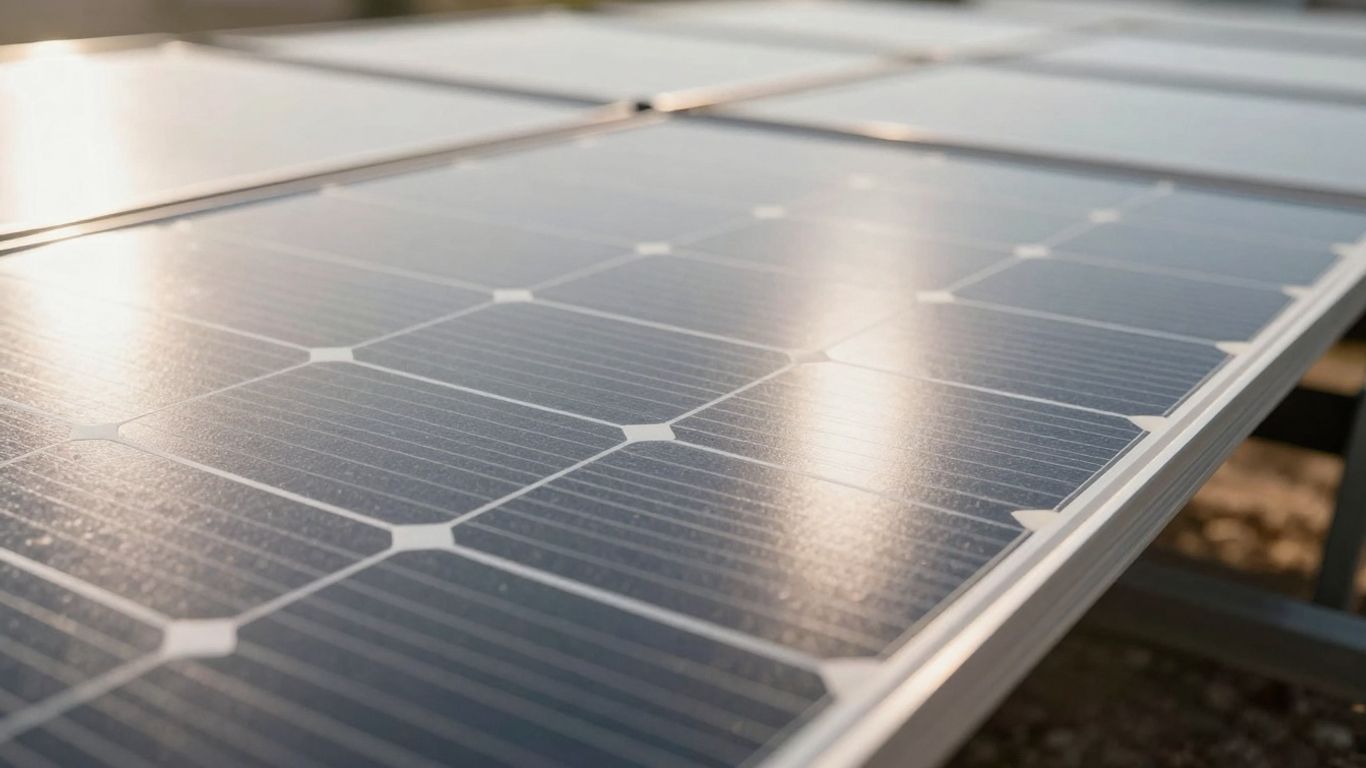
When we talk about solar panels, we often hear about their power in Watt-peak (Wp). But to truly understand the efficiency of an installation, it’s useful to look at production based on the area occupied. This is known as surface yield.
Surface Yield of Solar Panels
Surface yield is essentially the amount of electricity a square metre of panel can produce. This depends on several things, such as the panel technology (monocrystalline, polycrystalline, etc.) and, of course, the manufacturing quality. The most efficient panels today can convert between 18% and 22% of the solar energy they receive into electricity. A 500 Wp panel, for example, which is about 1.75 m², can have a surface yield of around 28.57%. This is a measure that helps compare panels, especially if you have limited space for your installation.
Estimated Annual Production Per Square Metre
In practice, it is estimated that one square metre of solar panel produces an average of 150 to 300 kWh per year. Of course, this figure varies quite a bit depending on where you live and how the panels are installed. For example, in the south of France, with more sunshine, you will produce more than in the north. A 3 kWp installation, which uses about 15 m² of panels, could therefore produce between 2700 and 4200 kWh per year. This is a good range to get an idea of what you can expect.
Optimising Production Per Unit Area
To make the most of each square metre, several points need to be considered. Firstly, the orientation and tilt of the panels are very important. A south-facing orientation with a tilt of about 30 degrees is often ideal, but this can vary depending on your location. Secondly, you need to think about shading: a tree, a neighbouring building, or even a chimney can reduce production. You also have to accept that there will be losses, for example due to heat or dust on the panels. A reduction factor, say 10%, is often applied to get a more realistic estimate of annual production. If your installation is not perfect (orientation, tilt), this factor can be higher. Regular maintenance, such as cleaning, also helps maintain good production in the long term. To get a more precise idea of what you could produce, there are online simulators that take all these factors into account. A 100 m² installation, for example, can generate an estimated annual income between €553 and €4,112 in 2025, depending on the conditions [d025].
The Role of Nominal Power in Production
Understanding Watt-peak (Wp)
The nominal power of a solar panel, often expressed in Watt-peak (Wp), is a key piece of information for estimating its production capacity. It represents the maximum power a panel can generate under ideal laboratory conditions, known as Standard Test Conditions (STC). These conditions include solar irradiation of 1000 W/m², a cell temperature of 25°C, and an air mass of 1.5. It is important to understand that this value is a theoretical reference, useful for comparing different panel models, but rarely achieved in real conditions.
Influence of Panel Power on the Number of Units
The nominal power of a panel directly impacts the number of units needed to achieve a desired installation power. For example, if you aim for a 3 kWp (kilowatt-peak) installation, you could use ten 300 Wp panels or eight 375 Wp panels. Choosing panels with higher nominal power allows for a reduction in the total number of panels, which can simplify installation and potentially reduce labour costs, while occupying a similar area. This can be particularly relevant for roofs with limited space.
Comparing Production Between Different Panel Powers
Comparing production between panels of different nominal powers requires taking into account real-world operating conditions. A 400 Wp panel will not necessarily produce 33% more than a 300 Wp panel in all situations. Actual production depends on many factors such as sunlight, temperature, orientation, and tilt. However, with the same technology and conditions, a panel with higher nominal power will have a higher production potential. It is therefore wise to consult datasheets for real-world power (NMOT/NOCT) and use simulators to obtain a more accurate estimate of annual production, taking into account your location and the specifics of your installation. The goal is often to maximise energy autonomy.
It is essential not to rely solely on nominal power (Wp) to assess the performance of a solar panel. Real-world power, measured under conditions closer to reality (NMOT/NOCT), provides a more reliable indication of expected energy production. Applying a reduction factor, generally between 10% and 20%, allows for the adjustment of nominal power to obtain a more realistic estimate of daily or annual production.
Here is a simplified comparison table:
| Nominal Power (Wp) | Number of Panels for 3 kWp | Estimated Annual Production (kWh/year) for 3 kWp* |
|---|---|---|
| 300 | 10 | 2550 – 2700 |
| 375 | 8 | 2550 – 2700 |
| 400 | 7.5 (i.e. 8 panels) | 2550 – 2700 |
*These estimates are based on a national average and can vary significantly depending on the region and installation conditions. For a personalised estimate, it is recommended to consult a professional or use a solar production simulator.
Analysis of Photovoltaic Production by Region
Average Annual Production Per kWp Installed
The amount of electricity your solar panels can produce each year is not the same everywhere in France. It depends heavily on where you live. Southern regions, which benefit from more sunshine, naturally generate more energy than northern regions. For example, a 1 kWp installation in the South-East could produce up to 1,600 kWh per year, while the same installation in the Grand Est might only produce around 1,100 kWh. This is a significant difference that directly influences the return on investment of your solar project.
Differences in Solar Yield by Geographical Area
These variations in yield are explained by climatic and geographical factors. The average annual sunlight is not uniform across the territory. Data shows that the South of France benefits from more intense and longer sunlight throughout the year, which translates into higher solar energy production. Conversely, regions further north or those subject to more frequent cloud cover will see their production decrease. It is therefore important to consider your precise location to best estimate the performance of your installation. For example, an installation in Montpellier will produce more than an identical installation in Lille.
Impact of Regional Sunlight on Production
Sunlight is the main driver of photovoltaic production. The more solar light your panels receive, the more electricity they produce. Ideal conditions, often found in the sunniest regions, include high irradiance (around 1,000 W/m²) and controlled ambient temperature (around 25°C). However, even in less favourable areas, technological advancements and good installation design can help optimise production. It is possible to consult maps of France that detail the average sunlight by department to get a more precise idea. For a personalised estimate, using a free solar simulator is strongly recommended, as it takes into account your exact address and the specifics of your roof to calculate the production potential of your installation.
Here is an overview of estimated average annual productions for different installation powers by region:
| City | Estimated Annual Production for 3 kWp | Estimated Annual Production for 6 kWp | Estimated Annual Production for 9 kWp |
|---|---|---|---|
| Lille | 2,400 to 3,000 kWh | 4,800 to 6,000 kWh | 7,200 to 9,000 kWh |
| Rennes | 3,000 to 3,300 kWh | 6,000 to 6,600 kWh | 9,000 to 9,900 kWh |
| Bordeaux | 3,300 to 3,600 kWh | 6,600 to 7,200 kWh | 9,900 to 10,800 kWh |
| Montpellier | 3,600 to 4,200 kWh | 7,200 to 8,400 kWh | 10,800 to 12,600 kWh |
Real Performance vs. Ideal Conditions
When we talk about solar panel production, we often hear about ideal conditions. It’s a bit like talking about a car’s top speed in a perfect world, with no traffic jams or speed limits. In the field of photovoltaics, these ideal conditions are called Standard Test Conditions (STC).
Standard Test Conditions (STC)
STC is like the laboratory where panels are tested. It involves very specific conditions: a cell temperature of 25°C, a light irradiance of 1000 W/m², and a standardised light spectrum (AM 1.5). These conditions allow for easy comparison of different panels on a common basis. It’s useful for getting an idea of the maximum theoretical power a panel can deliver. However, in real life, these conditions are rarely met.
Real-World Power (NMOT/NOCT)
Reality is often a bit different. Solar panels heat up in the sun, and a higher temperature reduces their efficiency. This is where NMOT (Nominal Module Operating Temperature) or NOCT (Nominal Operating Cell Temperature) conditions come into play. These values give a more realistic idea of the panel’s performance under common operating conditions. For example, a panel might show 100% of its nominal power in STC, but drop to 80-90% when its temperature rises.
It’s important to understand that ambient temperature isn’t the only factor. Sunlight, panel orientation and tilt, and the cleanliness of their surface directly influence actual production. A good solar potential study will take these variations into account to estimate annual production.
Applying a Reduction Factor for Accurate Estimation
To get a more accurate estimate of your installation’s production, you need to apply a correction factor to the theoretical STC figures. This factor, often called
Evolution of Production Over Time
Annual Degradation of Panel Efficiency
Solar panels, although designed to last, do not maintain their maximum performance indefinitely. Over time, a slight decrease in their production capacity is observed. This degradation is a natural phenomenon linked to prolonged exposure to the elements and wear and tear of components. Generally, it is estimated that a solar panel loses about 0.5% to 1% of its efficiency each year. This means that a panel installed today will produce slightly less electricity in 10 or 20 years. It is important to take this gradual decrease into account when planning an installation, especially if you aim for energy independence in the very long term. Manufacturers also offer performance guarantees that take this degradation into account.
Long-Term Production Guarantee
To reassure you about the longevity of your investment, most solar panel manufacturers offer production guarantees. These guarantees ensure that after a certain number of years (often 25 years), your panels will still produce a significant percentage of their initial power. For example, a guarantee might state that the panel will produce at least 85% of its nominal power after 25 years. This is an essential point to check before purchasing, as it gives you a clear idea of the expected performance over the installation’s lifespan. Photovoltaic installations are designed to be durable, and these guarantees are proof of that.
Choosing High-End Panels for Better Durability
Given the natural degradation of panels, it may be wise to opt for more efficient and robust models. Solar panels considered « high-end » often incorporate more advanced technologies that slow down this efficiency loss phenomenon. They may offer better resistance to harsh weather conditions and better heat management, two factors that can accelerate degradation. Although their initial cost may be higher, their more stable long-term performance can justify the investment, especially if you are looking for reliable energy production over several decades. It should be noted that solar panels are becoming increasingly efficient, and higher quality models show better resilience.
Strategies for Optimising Solar Production
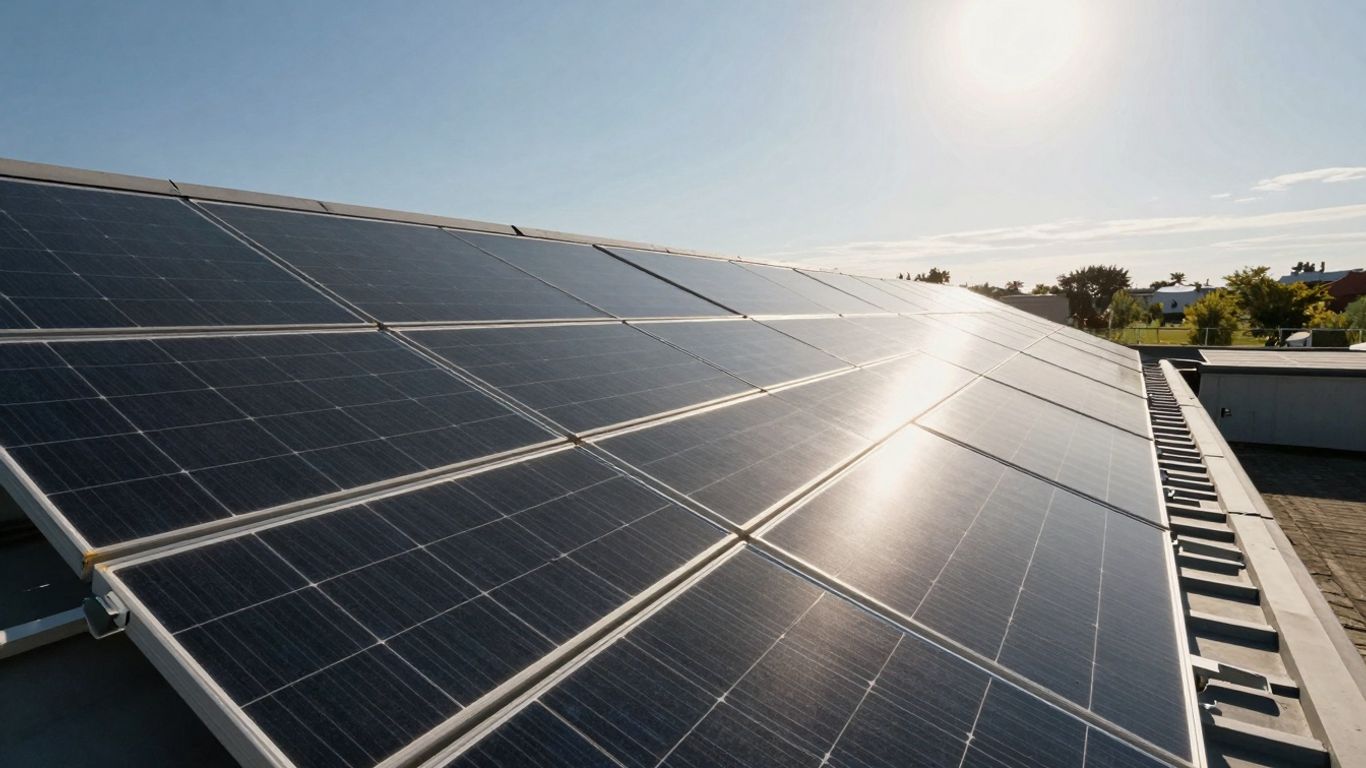
To make the most of your photovoltaic installation, several actions can be taken. It’s not just about installing the panels and forgetting about them; regular monitoring and maintenance make a real difference.
Importance of Panel Maintenance
The accumulation of dust, leaves, pollen, or even bird droppings on the surface of your panels can reduce their efficiency. It is estimated that this fouling can lead to a production loss of 5% to 15%. Simple cleaning with clean water, once a year, is generally sufficient to restore full performance. If access to your panels is difficult or poses a risk, it is best to call a professional. Think of it like car maintenance: it prevents breakdowns and keeps the vehicle in good condition.
Using Simulators for a Personalised Estimate
Even before installation, or to assess the performance of an existing system, using simulation tools is very useful. These simulators take into account numerous parameters: the power of your panels, their orientation, their tilt, your geographical location, and even potential shading. They give you a fairly accurate estimate of the expected production, helping you adjust your project. For example, a simulator can show you how a slight change in tilt can impact your annual production. It’s a bit like planning a trip: you check the weather, choose the best route to get to your destination efficiently.
Expert Advice for Maximising Energy Autonomy
Industry professionals recommend several best practices. Firstly, choosing quality panels from the outset is an investment for the future; they are designed to last and maintain good efficiency over the long term. Secondly, location is paramount: a south-facing orientation and a tilt of around 30° are often ideal, but each situation is unique. Micro-inverters should also be considered, as they can improve overall production, especially if some panels are subject to shading. Finally, staying attentive to your installation’s performance, for example via a monitoring app, allows for quick detection of any anomalies. A well-designed and maintained installation is the key to optimal solar production.
The efficiency of a solar installation depends not only on the quality of the components but also on how it is installed and maintained. A proactive approach can prevent drops in yield and ensure consistent energy production for many years.
For your solar installation to produce maximum energy, it needs to be well planned. Consider the orientation of your panels and their tilt. Good maintenance is also essential to maintain optimal performance. Want to know more about how to make your solar production more efficient? Visit our website to discover all our tips and personalised advice.
In Summary: What to Remember About Solar Production
So, to put it simply, the amount of electricity a solar panel produces each day is a bit variable. It depends on many things, like the sunshine it received, the type of panel, and even where it’s installed. We’ve seen that it can range from 1.3 kWh for a 400 Wp panel, up to higher figures for larger installations. The important thing is to understand that it’s not an exact science, but rather an estimate. If you really want to know what it could be like at your place, the best thing is to ask for advice from professionals. They can look at your situation and tell you what’s possible, without too much technical jargon.
Frequently Asked Questions
How much electricity does a solar panel produce in a day?
The amount of electricity produced by a solar panel each day varies greatly. On average, a 500 Watt-peak (Wp) panel can produce between 1.25 and 1.9 kilowatt-hours (kWh) over an entire year. However, this production depends heavily on the sunlight it receives that day, the weather, and the season.
What is Watt-peak (Wp)?
Watt-peak (Wp) is a unit that measures the maximum power a solar panel can deliver under perfect conditions, such as in a laboratory. It’s a bit like a car’s maximum power when starting. It helps compare different panels, but actual production will often be slightly lower.
Does the orientation of the panels change their production?
Absolutely! The orientation and tilt of the panels are very important. To get the most sunlight in France, it’s best to face them South. Incorrect orientation can reduce the amount of electricity produced.
Does the weather have an impact on solar production?
Yes, the weather plays a major role. A sunny day allows panels to produce much more electricity than a cloudy or rainy day. Even though panels continue to produce a little when it’s cloudy, the yield is much better when the sun shines brightly.
Does a solar panel produce the same amount of electricity all year round?
No, production is not the same all year round. Generally, panels produce more electricity during the summer months because there are more hours of sunlight and the sun is stronger. In winter, production is lower due to shorter days and less intense sunlight.
What is the difference between laboratory production and real-world production?
The ideal laboratory conditions (called STC) allow for the measurement of maximum power (Wp). But in real life, things like heat, shade, or even dirt on the panels can reduce this power. Real-world power, measured under conditions closer to reality (NMOT/NOCT), is therefore often lower than peak power.
Do solar panels wear out over time?
Yes, like many things, solar panels lose a little of their ability to produce electricity each year. This is called degradation. However, good quality panels are designed to withstand this well and generally guarantee to retain a good portion of their initial power, even after 25 years.
How do I know how many solar panels I need?
To know how many panels you need, you need to look at your usual electricity consumption, the available space on your roof, and the level of sunlight in your region. Using an online simulator or seeking advice from a professional can help you get an accurate estimate for your situation.
