
Embarking on renting out your roof for solar panel installation is an idea gaining traction. In 2025, the photovoltaic roof rental market is evolving, and it’s natural to want to understand it better. Let’s look together at what influences prices, how it works, and what you can gain from it. It might seem complex at first glance, but with the right information, everything becomes simpler. We’ll break it all down for you.
Key Takeaways
- The photovoltaic roof rental market in 2025 is marked by a continuous decrease in solar electricity production costs, making installation more accessible.
- The rental rate for your roof depends on several factors such as its surface area, condition, orientation, and ease of access for installation.
- Installation and connection costs vary depending on the type of roof, the fixing systems used, and the proximity to electrical grids.
- The profitability of a photovoltaic installation is improving, with solar energy production costs often lower than grid costs, especially for large installations.
- Financial aid and subsidy schemes exist in 2025 to reduce the initial cost and optimise the profitability of your photovoltaic roof rental project.
Understanding the Photovoltaic Roof Rental Market in 2025
Evolution of Photovoltaic Electricity Production Costs
The solar energy market is evolving rapidly, with a general trend towards decreasing production costs. This reduction is due to several factors, including technological improvements and increased global production volumes. In 2025, these costs are expected to continue to fall, making photovoltaics even more competitive compared to traditional energy sources. This evolution directly impacts the roof rental business model, as it influences the profitability of installations for investors and, consequently, the potential rent for property owners.
Current Trends in the European Market
In Europe, the solar energy market is experiencing sustained growth. Favourable government policies, energy transition goals, and growing environmental awareness are driving more and more property owners and businesses to invest in solar. Roof rental fits into this dynamic, offering an accessible solution to enhance property value while contributing to renewable energy production. Small and medium-sized projects are gaining popularity, although minimum surface area requirements are often necessary to ensure the economic viability of installations. It is important to note that, as of 22 September 2025, only photovoltaic installations with a combined capacity of 100 kWp or less are eligible for the S21 tariff order, which modifies the eligibility criteria for certain solar projects.
Impact of Falling Equipment Prices
The continuous decrease in the prices of photovoltaic equipment, such as solar panels and inverters, has a direct effect on the overall cost of installations. For investors who rent your roof, this means a potentially lower initial investment. This cost reduction can translate into more advantageous rental terms for the property owner, or an increased profit margin for the investor. In 2025, this trend is expected to continue, making roof rental an even more attractive option.
The photovoltaic roof rental market in 2025 is characterised by growing maturity, driven by falling technological costs and an increasingly favourable regulatory framework for renewable energies. Property owners can expect increasingly competitive offers, while actively contributing to the energy transition.
Factors Influencing Your Roof Rental Rate
The amount you can expect to receive for renting out your roof for a photovoltaic installation is not a fixed sum. It depends on several concrete elements that will directly impact the economic calculation made by the solar investor. Understanding these factors will help you better assess the offers you might receive.
Minimum Surface Area and Project Size
There is a starting surface area below which roof rental projects are generally not considered by third-party investors. This minimum surface area, often around 600 m², represents the break-even point for installing and managing a solar farm. Beyond this minimum, the larger the surface area available for panels, the more advantageous the rental rate per square metre tends to be. This is due to the distribution of fixed costs: administrative or study fees, for example, weigh proportionally less on a large area than on a small one.
Technical Characteristics of the Roof
The condition and type of your roof play a significant role. A roof in good condition, ideally recent and with a structure designed to support additional weight (approximately 14 kg/m² for panels), is an asset. Fixing systems also vary in cost depending on the roofing material: corrugated metal is often the simplest and most economical to equip, while flat roofs or fibre cement sheets may require more expensive fixing solutions.
Complexity of Intervention and Accessibility
The ease of access and the configuration of your roof also influence installation costs. A roof with multiple slopes, a steep pitch, or access constraints for handling equipment can complicate the worksite. Similarly, the presence of other activities on the site requiring traffic management can slow down work and increase costs. Finally, the proximity of existing electrical infrastructure is a key factor: simpler and less costly connection to the public grid will result in a better rental rate.
The rental rate is the result of a complex calculation where the investor assesses their installation, maintenance, and financing costs over the contract period against the projected revenue from electricity sales. What you receive is the financial surplus once these charges are covered.
Here are some examples of annual rental rates per square metre, which vary depending on the region and specific characteristics:
| City | Surface Area (m²) | Roof Type | Annual Rent (€/m²) | Notes |
|---|---|---|---|---|
| Valence (26) | 2000 | Corrugated metal | 6.8 – 7.0 | Ground-mounted 50m away |
| Bordeaux (33) | 800 | Corrugated metal | 4.3 – 5.6 | |
| Montpellier (34) | 2500 | Flat roof | 7.0 – 7.2 | Medium voltage line 20m away |
| Clermont-Ferrand (63) | 1000 | Corrugated metal | 7.0 – 7.5 | |
| Rouen (76) | 2500 | Corrugated metal | 5.1 – 5.9 | Transformer distance 30m (further = less) |
These figures are indicative and each project is subject to a personalised study.
Analysis of Installation and Connection Costs
Cost of Panel Support and Condition of the Covering
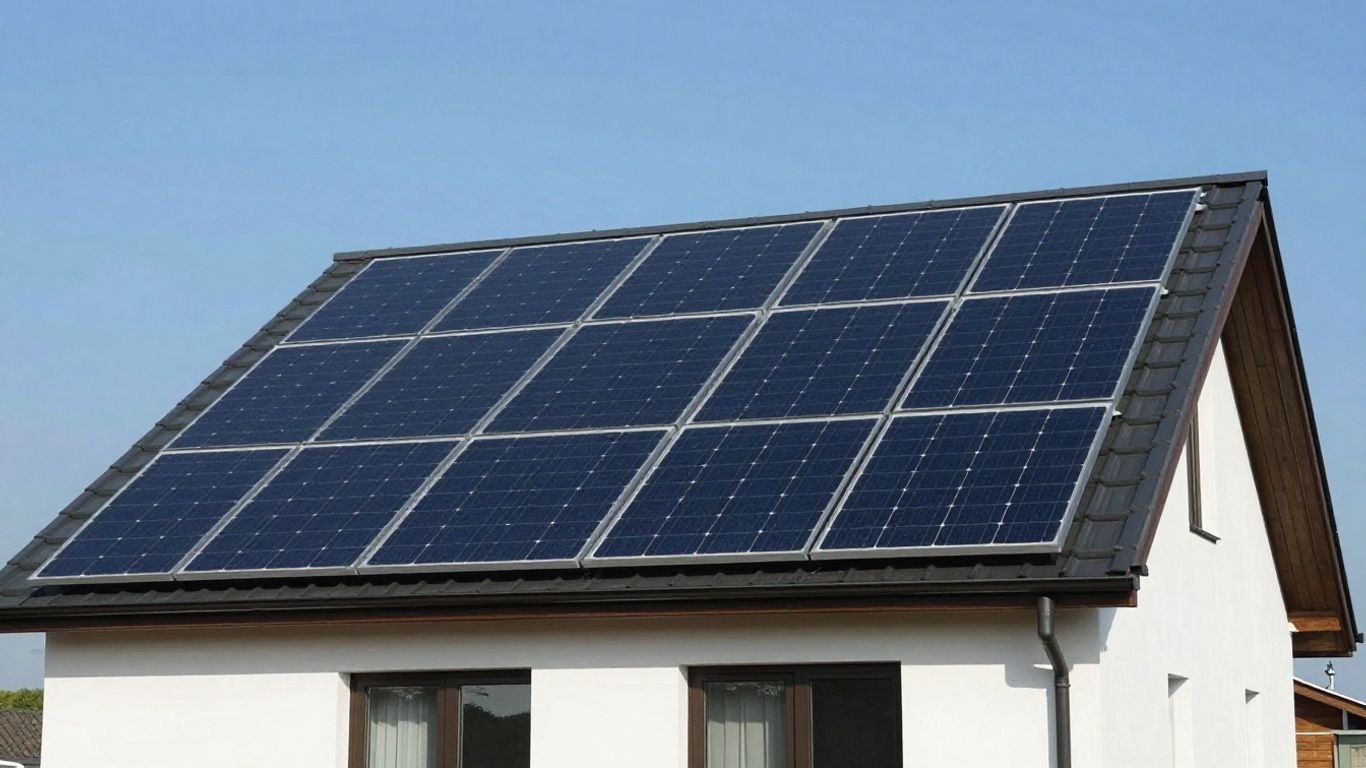
The general condition of your roof is an essential starting point. Old roofing or a weakened frame may require renovation work even before solar panel installation. These additional costs directly impact the overall profitability of the project. Ideally, a new roof, whose structure was designed to support the weight of the panels (approximately 14 kg/m²), represents the most favourable situation. The type of roofing material also plays a role. Corrugated metal, for example, facilitates fixing. Flat roofs require slightly more elaborate systems, while fibre cement sheets can incur higher implementation costs.
Fixing Systems According to Roof Type
The choice of fixing system will depend directly on your roof’s material. Each type of covering (tiles, slates, corrugated metal, waterproofing membrane) requires a specific approach to ensure the safety and durability of the installation. For example, fixing panels to a tiled roof will require suitable hooks, while on corrugated metal, specific screws will be used. The complexity of these systems, as well as the time required for their installation, is reflected in the total cost.
Impact of Proximity to Electrical Infrastructure
Connection to the public electricity grid is a key step. The costs associated with this connection, managed by Enedis, vary depending on the distance between your installation and existing infrastructure. The closer your roof is to medium-voltage lines (overhead or underground) or a transformer station, the lower the connection costs will be. This proximity is therefore a determining factor in optimising the rental rate offered for your roof.
The assessment of installation and connection costs is not limited to the equipment. It includes the condition of the supporting structure, the nature of the roofing materials, the complexity of the fixing systems, and the distance to the grid connection points. These often underestimated elements are crucial for the final rate.
Here is an estimate of potential costs related to these aspects:
- Roof preparation work: Can range from a few hundred to several thousand euros depending on the extent of renovations needed.
- Fixing systems: The cost can range from €10 to €30 per square metre, depending on the complexity and type of roof.
- Grid connection fees: Generally a fixed fee, but can increase significantly if network upgrade work is required nearby.
Estimating Potential Income from Roof Rental
Calculating the Annual Rent per Square Metre
The amount of rent you can receive for renting out your photovoltaic roof is not a fixed sum. It depends on several key elements. The surface area of your roof is a determining factor; a larger area generally allows for higher rent. The orientation of the roof, its general condition, and the potential presence of obstacles also influence solar production potential, and therefore the rent.
Proximity to electrical infrastructure is a major criterion that can significantly impact the rate. The simpler and closer the grid connection, the more attractive the project is for the investor, which can translate into more substantial rent.
Concrete Examples of Rental Rates by Region
To give you a more precise idea, here are some examples of estimated annual rents, based on real projects:
- Valence (26): For a 2000 m² corrugated metal roof, south-facing, the annual rent could be between €13,700 and €15,000, or approximately €6.8 to €7/m².
- Montpellier (34): On a 2500 m² flat roof, south-east/north-west facing, the estimated annual rent is €17,500 to €18,000, or €7 to €7.2/m².
- Clermont-Ferrand (63): For 1000 m² of corrugated metal, south-east facing, the annual rent could range between €7,000 and €7,500, or €7 to €7.5/m².
These figures are indicative and may vary. It is important to note that agricultural projects may benefit from specific rates, for example, a rate of €140/kWp for installations under 36 kWp see agricultural rates.
Simulating Potential Income with Dedicated Tools
To obtain a personalised and precise estimate of your potential income, using online simulation tools is highly recommended. These tools take into account the exact location of your property, its specific characteristics (surface area, roof type, orientation), and proximity to the electrical grid. They allow you to calculate the annual rent you could receive, thus offering you a clear view of your roof’s financial potential. This is an essential step before committing to a photovoltaic roof rental project.
The Role of the Third-Party Investor in the Business Model
Consideration of Initial Investments
The photovoltaic roof rental model relies heavily on the involvement of a third-party investor. This investor covers all costs related to the acquisition and installation of solar panels, as well as ancillary expenses such as feasibility studies, administrative procedures, and grid connection. This absence of initial investment for the property owner is a major advantage. The calculation of the rental rate is therefore directly influenced by the amount of these expenses. The more substantial the third party’s investment, the more the rent needs to be structured to allow for a return on investment within a reasonable timeframe, generally over a period of 20 to 30 years.
Forecasting Revenue and Costs Over the Contract Duration
Beyond the initial investment, the third-party investor assesses the potential revenue generated from the sale of electricity produced and the operating costs over the entire contract duration. This includes installation maintenance, insurance, potential repairs, and management fees. Rigorous forecasting allows for the determination of the project’s expected profitability. Fluctuations in electricity prices on the market, technological advancements, and weather conditions are all factors taken into account in these forecasts. The objective is to ensure stable profitability for the investor while offering an advantageous rate to the roof owner.
Determining the Rental Rate as Financial Surplus
The rental rate offered to the roof owner is not arbitrary. It represents the financial surplus generated by the project once projected revenues cover the initial investment and operating costs over the contract duration. In other words, the property owner benefits from remuneration for the use of their roof, calculated based on the overall economic performance of the solar installation. This model thus allows for the valorisation of an often underutilised space, while contributing to renewable energy production. It is important to note that this rate can vary significantly depending on several factors, such as available surface area, roof quality, regional sunshine, and installation complexity. A personalised study is therefore essential for each project to define a fair and equitable rate for all stakeholders. This type of partnership is an excellent way to diversify income without having to worry about the technical management of the panels, an aspect entirely handled by the third-party investor.
- Rent calculation: Projected revenue – Operating costs – Return on investment = Rent for the owner.
- Contract duration: Generally between 20 and 30 years, ensuring income stability.
- Flexibility: Rent can be adjusted based on changes in costs and revenues, within the terms of the contract.
Profitability of Photovoltaic Installations in 2025
Comparison of Solar Energy Cost and Grid Electricity
In 2025, the cost of producing solar electricity continues its downward trend. Recent data shows that for medium-sized installations (9 kWp), the cost per megawatt-hour (MWh) is already significantly lower than that of electricity purchased from the grid. For large installations, this difference becomes even more pronounced, making solar a very economically attractive option.
Competitiveness Levels of Different Installation Sizes
The competitiveness of photovoltaic installations varies according to their size. Small residential installations (3 kWp) are now at the same cost level as conventional energy sources. However, as soon as you exceed 9 kWp, photovoltaics become significantly more advantageous. Large-scale installations, over 36 kWp, are even twice as cheap as traditional gas power plants. This opens up interesting prospects for businesses and local authorities.
Levelised Cost of Energy (LCOE) Observed
The LCOE, which represents the average cost of electricity production over the entire lifespan of an installation, confirms this trend. In 2025, the average figures observed for rooftop self-consumption installations are around €134/MWh for 9 kWp. For larger installations feeding all their production into the grid, this cost can drop to €76/MWh for very large installations (> 500 kWp). These values are particularly encouraging for assessing the financial viability of projects.
Here is an overview of the average LCOE observed in 2025:
| Installation Size | Injection Type | Average LCOE (€/MWh) |
|---|---|---|
| 3 kWp (rooftop) | Self-consumption | ~ 202 |
| 9 kWp (rooftop) | Self-consumption | ~ 134 |
| 36 to 100 kWp | Full injection | ~ 91 |
| > 500 kWp (rooftop) | Full injection | ~ 76 |
The LCOE analysis demonstrates that investing in photovoltaics is increasingly profitable, especially for large-scale projects. The continuous decrease in equipment costs and the optimisation of installations make solar energy increasingly competitive against traditional energy sources.
Integration of Energy Storage Solutions
Evolution of Solar Battery Prices
The integration of storage systems, particularly batteries, is transforming how solar energy is used. In recent years, there has been a notable decrease in battery manufacturing costs. This trend is due to increased large-scale production and technological advancements. For roof rental projects, this means that adding storage capacity is becoming increasingly affordable. Prices continue to fall, making the investment more attractive for property owners and businesses.
Profitability of Batteries According to Consumption Habits
The profitability of a solar battery depends heavily on how electricity is consumed. If a large part of the energy produced by the panels is consumed on-site, the impact is direct. Batteries allow for storing excess energy produced during the day for use in the evening or at night, thus reducing reliance on the grid and purchases of high-priced electricity. Consumption profiles with evening peaks or significant use of electrical appliances during non-solar hours will see a faster return on investment.
Here are some typical scenarios:
- Regular consumption: Constant use of electricity throughout the day maximises self-consumption and thus the benefit of storage.
- Evening consumption peaks: Ideal for using stored energy after sunset, thus avoiding buying electricity from the grid.
- Professional use: Businesses with significant daytime energy needs can store excess for periods of low production or peak demand.
Impact of Storage on Roof Rental Value
Adding a storage solution can positively influence the rental value of a photovoltaic roof. An installation equipped with batteries offers greater flexibility and better energy management. This can translate into higher rent, as the tenant benefits from increased energy independence and better protection against electricity price volatility. Furthermore, the ability to store locally produced energy enhances the site’s attractiveness for specific uses or to meet growing environmental requirements.
The integration of storage systems is no longer a futuristic option but an increasingly standard component in photovoltaic projects. It optimises self-consumption, improves energy resilience, and can increase the overall profitability of the installation, for both the owner and the operator.
Aid Schemes and Available Subsidies
Presentation of Financial Aid in 2025
To encourage the adoption of photovoltaic installations, several aid schemes and subsidies are generally put in place by public authorities. These measures aim to reduce the initial investment cost and improve project profitability, thus making solar energy more accessible to individuals and businesses. It is important to find out about the specific aid available in 2025, as it may evolve.
Eligibility Conditions for Premiums and Tax Credits
Access to various financial aids is often subject to specific conditions. These may concern the power of the installation, the type of use (total self-consumption, surplus sale), the applicant’s status (individual, professional), or the installer’s qualification. An installation carried out by an RGE (Reconnu Garant de l’Environnement) certified professional is frequently a prerequisite for benefiting from this aid.
Here are some examples of schemes that may be renewed or adapted in 2025:
- Self-consumption bonus: Paid by EDF OA (Obligation d’Achat), it rewards the electricity production that you consume directly.
- Guaranteed purchase tariff: For the surplus electricity you sell to the grid, a fixed purchase tariff is guaranteed over a long period.
- Reduced VAT: A reduced VAT rate (often 10%) may apply to equipment and installation for residential installations under certain conditions of power and property age.
- Local aid: Some regions, departments, or municipalities offer additional subsidies.
It is advisable to consult the official websites of government agencies and platforms dedicated to renewable energies for the most up-to-date information on eligibility conditions.
Simulating Aid to Optimise the Project
Before you start, a personalised simulation of the financial aid you are entitled to is highly recommended. This allows you to adjust your budget and better understand the return on investment of your photovoltaic roof rental project. Online tools, often offered by qualified installers or specialised organisations, can help you with this process. For example, programmes like the Canadian Greener Homes Initiative offer advantageous loans for energy-efficient renovations, and equivalents exist in other jurisdictions.
Optimising financial aid is a key step to maximising the profitability of your photovoltaic installation. A good understanding of the current schemes and an accurate simulation will allow you to make informed decisions and secure your project in the long term.
Criteria for Selecting a Qualified Professional
Choosing the right installer for your photovoltaic roof rental project is a crucial step. It’s not just about finding someone to install panels, but about ensuring a reliable long-term partnership. A reputable company must be able to justify several key points to provide you with the necessary peace of mind.
Importance of RGE QualiPV Certification
RGE (Reconnu Garant de l’Environnement) certification, and more specifically QualiPV qualification, is a guarantee of quality and professionalism. It attests that the installer adheres to strict standards for the design, installation, and maintenance of photovoltaic systems. Obtaining this certification is no small feat; it involves regular checks and ongoing training for teams. For you, this means the company is recognised by the state for its expertise and you may be eligible for public financial aid. Without this qualification, access to certain subsidies or tax credits becomes impossible.
Support Offered by Installers
Beyond simple installation, a good professional will support you at every stage. This begins with a personalised feasibility study, where the potential of your roof, its condition, and your energy needs are assessed. Quality support also includes:
- A clear and detailed project proposal, including costs, expected revenue, and contract duration.
- Management of administrative procedures (building permits, grid connection).
- Follow-up after installation to ensure the system’s proper functioning and performance.
- Advice on optimising your energy consumption.
It is important to check if the installer offers responsive *technical assistance* if needed. For example, a company like Zest, led by engineers, makes a point of mastering the entire intervention chain, without subcontracting, to ensure consistent quality. They can carry out a preliminary technical study to best size your installation.
Guarantee of a Compliant and Efficient Installation
The longevity of your installation depends on the quality of the materials used and the rigour of the installation. Inquire about the warranties offered:
- Ten-year warranty (Garantie décennale): Covers significant damage that may occur to the installation structure for 10 years.
- Material warranty: Panels and inverters generally have manufacturer warranties of 10 to 25 years.
- Work completion and after-sales service guarantee: Ensure the installer offers reliable after-sales service, with a clear warranty period (e.g., 2 years for after-sales service).
A well-executed photovoltaic installation, compliant with standards and properly insured, is a safe investment that enhances your property value. It also protects you against technical risks thanks to solid insurance such as the ten-year warranty.
Future Prospects for Photovoltaic Roof Rental
Trends of Continuous Decrease in Equipment Costs
There is a clear trend: the cost of materials needed for solar panel installation, such as the panels themselves and inverters, continues to decrease. This reduction is due to several factors, including increased global production and technological advancements that make manufacturing more efficient. For property owners considering renting out their roof, this means projects are becoming more accessible and potentially more profitable for investors, which can translate into more favourable rental terms.
Development of New Solar Technologies
The photovoltaic sector is constantly innovating. More efficient solar panels are emerging, capable of producing more electricity from the same surface area, even in less optimal sunlight conditions. There is also active research into lighter and more flexible materials, which could pave the way for installation on roofs previously deemed unsuitable. The integration of these new technologies into rental models could well change the game in the coming years.
Growth Potential of the Roof Rental Market
The photovoltaic roof rental market still has significant room for growth. Many buildings, whether residential, commercial, or agricultural, have large roof surfaces that are not yet utilised for solar energy production. With growing environmental awareness and the need to accelerate the energy transition, demand for this type of solution is expected to continue to increase. Roof rental is establishing itself as a key solution for decentralising energy production and valorising built heritage.
- Property valorisation: Owners can generate passive income without initial investment.
- Environmental contribution: Direct participation in renewable energy production.
- Operational simplicity: The installation manager handles everything (installation, maintenance, insurance).
The roof rental model is set to expand, supported by policies favourable to solar energy and growing demand for sustainable and profitable energy solutions.
The future of roof rental for solar looks bright! More and more people are thinking about installing solar panels on their roofs to produce their own electricity. It’s an excellent idea to save money and help the planet. If you want to know more about how it works and what it can bring you, visit our website today!
In Summary: Solar Investment, an Increasingly Accessible Affair
We can clearly see that the price of solar electricity has fallen significantly in recent years. In 2025, installing panels on your roof costs less than before, especially when looking at the price per watt. Financial aid, such as MaPrimeRénov’ or CEE, also helps reduce the bill. Even though the exact price depends on your situation, such as the size of your roof or its location, it is clear that solar energy is no longer a luxury reserved for a few. It is an increasingly realistic option for producing your own energy and saving money. Remember to use simulators to get a more precise idea of what you can achieve.
Frequently Asked Questions
How much does it cost to rent my roof for solar panels?
The price for renting your roof is not fixed. It depends on several things: the size of your roof, its condition, the ease of installing panels, and its proximity to electrical wires. The larger and better located your roof is, the more interesting the rent can be.
What roof surface area is needed to rent out my roof?
Generally, you need at least 600 m² of free roof space for a professional to be interested. Some prefer even larger roofs. The larger the surface area, the more advantageous the rent per square metre can be.
What makes my roof more or less attractive for rental?
Several points matter: the condition of your roof (if it’s recent and solid, it’s better), the type of covering (corrugated metal is easier to work with), the ease of access for installers and equipment, and the distance to electrical poles. An easily accessible roof close to the grid is more attractive.
Does the type of my roof covering change the rental price?
Yes, it can influence the cost. Corrugated metal is often the simplest and cheapest to equip. Flat roofs with a membrane or fibre cement roofs may require slightly more expensive fixing systems, which can be reflected in the rent.
How is the rent I will receive calculated?
The rent is what remains for the investor after they have paid all their expenses (installation, maintenance, etc.) and recovered their investment through the sale of the electricity produced. It’s a bit like a profit they share with you.
Can I earn more money if I add a storage battery?
Batteries help store electricity produced during the day for use in the evening. If you consume a lot of electricity when there is no sun, a battery can make your installation more profitable. This can potentially increase the rental value of your roof.
What financial aid is available for installing solar panels on my roof?
In 2025, there are several possible aids such as MaPrimeRénov’ (for heating and hot water), Energy Saving Certificates (CEE), and sometimes local aid from your region. It is important that the installation is carried out by an RGE QualiPV certified professional.
Have solar panel prices dropped significantly?
Absolutely! The price of solar panels has dropped significantly in recent years. In 2025, they cost much less than before, making solar energy more accessible and economically more attractive.
