
Launching a photovoltaic tender may seem complex, but it is an essential step to select the ideal partner for your solar projects. This article guides you through the different stages, from preparing the tender document to analysing bids, including drafting precise specifications. We will also provide practical advice for submitting effective bids and maximising your chances of success in this growing field.
Key Points for a Successful Photovoltaic Tender
- Understand the procedure: A photovoltaic tender is a competitive process for service providers for a given project, aiming to obtain the best technical and financial proposals. It is important to know the different types of tenders and their objectives.
- Carefully prepare the specifications: The specifications are the core of the document. They must precisely describe the technical needs, integration constraints, and volume expectations, while allowing room for innovation from bidders.
- Prepare a complete bid: The response to a tender must include a compliant administrative file, a detailed technical offer presenting the methodology and team expertise, as well as a clear and structured financial offer.
- Rigorously analyse bids: The evaluation of received bids involves verifying administrative compliance, an in-depth technical analysis of the proposed solutions, and a comparison of prices to select the most economically advantageous offer.
- Tips for bidding: To successfully bid for a photovoltaic tender, thoroughly understand the project, ensure all documents comply, adapt your technical solution to the expressed needs, and present a competitive financial offer.
Understanding the Photovoltaic Tender Process
Launching a tender for a photovoltaic project means embarking on a structured approach aimed at selecting the most suitable partner to meet a specific need. This procedure, far from being a mere formality, constitutes a key step in ensuring the success and profitability of your solar installation. It allows several potential service providers to compete, thereby ensuring transparency and fairness in the choice of supplier or installer. The main objective is to obtain the best offer, both technically and financially, while minimising the risks associated with the project. By clearly defining your expectations and the project constraints, you make the task easier for bidders and increase your chances of finding the ideal provider. This is a proven method for optimising costs and ensuring the quality of the work carried out, whether for rooftop, ground-mounted installations, or large-scale projects. The tender procedure is particularly relevant in the context of developing photovoltaic projects for local authorities, where rigour and justification of choices are paramount. It offers a guarantee of good fund management and a solid basis for the future contractual relationship, which can extend over a long period, for example, a supply contract duration of 20 to 25 years.
Definition and objectives of a tender
A tender is a formal procedure by which an entity (the buyer) invites potential service providers to submit proposals for the supply of goods, the execution of works, or the provision of services. In the photovoltaic context, it involves selecting a company to design, install, and sometimes operate a solar power plant. The objectives are multiple: to obtain the best price, guarantee the technical quality of the installation, ensure the reliability of the service provider, and comply with regulatory and budgetary constraints. It is about finding a solution that precisely meets an expressed need, ensuring that the contract is awarded transparently and fairly.
The advantages of the tender procedure
Using a tender offers several notable benefits. Firstly, it promotes competition among bidders, which tends to lower prices and improve the quality of proposals. Secondly, it ensures transparency in the selection process, reducing the risk of favouritism or corruption. Thirdly, it allows for cost optimisation by objectively comparing different offers. Finally, it offers increased legal certainty, as the procedure is regulated and documented, which is particularly important for projects of such magnitude. It also ensures that the chosen service provider has the necessary skills and references to successfully complete the project.
Types of tenders relevant to photovoltaics
There are several types of tenders, each with its specific characteristics. An open tender allows any interested candidate to submit a bid. This is the most inclusive procedure. A restricted tender (or negotiated procedure) limits competition to a predefined number of candidates, pre-selected based on their qualifications. This method is often used when the project is complex or requires very specific skills. For photovoltaics, the choice between these procedures will depend on the project’s size, its innovative nature, and the buyer’s requirements. It is also possible to encounter tenders with negotiation, where the buyer can discuss certain aspects of the offer with bidders after an initial selection. The important thing is to choose the procedure that will best achieve the objectives set for the solar installation.
Preparation and drafting of the tender document
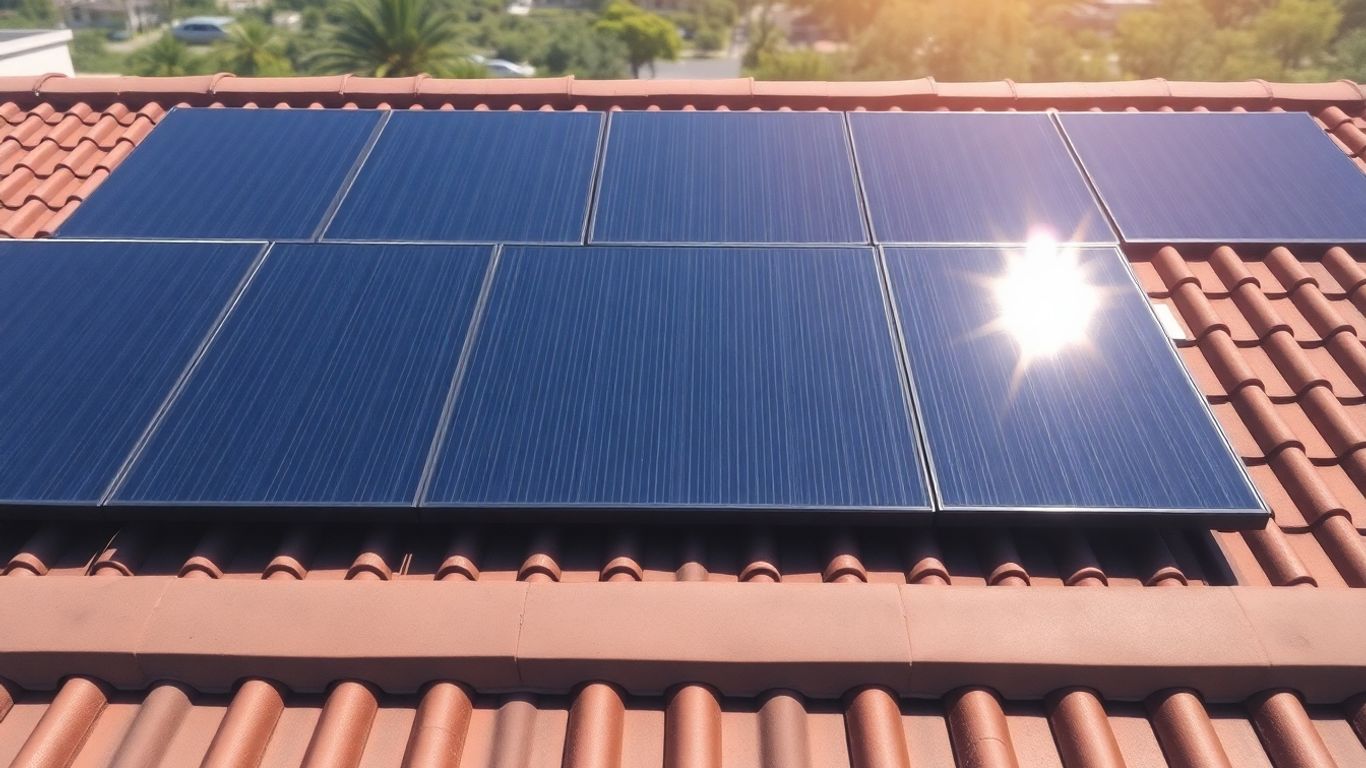
Even before thinking about the response, the preparation and drafting phase of the tender document is a key step. This is where the foundations of the entire process are laid. Good preparation ensures that the photovoltaic project will be well-defined and that expectations will be clearly communicated to future bidders. This avoids many misunderstandings later on.
In-depth analysis of the photovoltaic project
It is absolutely necessary to clearly define the project before drafting anything. This involves looking in detail at the objectives to be achieved with this solar installation. Is it to reduce electricity bills, to meet environmental obligations, or to resell the energy produced? Specific constraints must also be identified: available space, site orientation, local regulations, and, of course, the allocated budget. A good understanding of current and future energy needs is also essential for correctly sizing the system. Remember to examine your past consumption to get a precise idea of your energy needs.
Clear presentation of the contracting company
For companies responding to the tender to understand who they are addressing, it is necessary to present yourself transparently. This involves providing information about the company: its size, its areas of activity, its technical and human resources. Mentioning some past achievements can also help establish credibility. If possible, a small organisational chart with contact details of key people involved in the project can facilitate future exchanges. The idea is to show that you are a serious and well-organised partner.
Detailed description of the problem to be solved
It is not enough to say ‘we want solar panels’. You must clearly explain what problem you are trying to solve or what need you want to meet. For example, if the goal is to reduce the carbon footprint, this must be specified. If it is to ensure energy autonomy, this must be stated. This description must be precise enough for bidders to fully understand the context and propose suitable solutions. The expected results, target performance, and any integration or environmental constraints must also be indicated. A precise description of the problem guarantees relevant offers.
Here are the key elements to consider during this phase:
- Project objectives: What are we trying to achieve? (Cost reduction, sustainable development, energy autonomy, etc.)
- Technical constraints: Available space, type of roof or land, access, grid connection.
- Regulatory constraints: Planning permission, local standards, available subsidies.
- Budget: What is the maximum amount allocated to the project?
- Timeline: What are the important deadlines?
A clear definition of the project and its challenges helps guide the search for technical solutions and ensures that the proposals received will match the actual expectations. This avoids wasting time with unsuitable offers.
Development of the technical specifications
The specifications are the central document of your tender. They detail precisely what you expect from the photovoltaic project. Careful drafting here avoids many misunderstandings later on.
Technical and functional specifications of the installations
Here, you need to describe the expected performance of the solar panels, inverters, and any other equipment. Think about the desired peak power (in kWp), the expected efficiency, and the product warranties. It is important not to be too restrictive to allow for innovation from bidders. For example, for a rooftop installation, specify the type of roofing and the available surface area. For ground-mounted installations, indicate the nature of the land and any orientation constraints.
Definition of integration and environmental constraints
Here, we are talking about the environment in which the solar panels will need to be integrated. This may include local urban planning rules, specific aesthetic constraints (for example, in a listed site), or specific climatic conditions (strong wind, high humidity, etc.). You also need to consider access for maintenance and any potential interference with other existing installations. The connection to the electricity grid is also a major constraint; you need to fully understand your connection quote.
Precision of volume and recurrence needs
For a photovoltaic project, volume often translates into the total installed power (in MWp or kWp) and the number of installations if multiple sites are involved. Recurrence can concern maintenance, performance monitoring, or equipment replacement over the project’s lifespan. If you envisage several phases for your project, you must mention it here. A simplified procedure exists for projects between 100 kWp and 500 kWp, for example, as part of a simplified tender.
Clarity in describing technical and functional needs is paramount. It allows candidates to propose suitable solutions and provide accurate quotes, while giving you a solid basis for comparing the offers received.
Application procedures and selection criteria
For a photovoltaic tender to result in the selection of the most suitable partner, it is essential to clearly define the application conditions and the criteria that will guide the choice. These elements form the backbone of the procedure, ensuring both transparency for bidders and efficiency for the entity launching the tender.
Selection criteria for the ideal partner
The buyer must first ask what type of partner they are looking for. Is it a company focused on innovation, sustainability, or very specific technical expertise? Defining these expectations helps target the most relevant candidates. For example, a local authority seeking to reduce its carbon footprint might favour companies demonstrating a strong commitment to CSR. It is also possible to define quantitative criteria, such as minimum turnover or the number of years of experience in the photovoltaic field.
Requirements for application procedures
The application procedures specify how interested companies should present themselves. This generally includes a list of documents to be provided, such as company articles of association, tax and social security certificates, and references for similar projects. It is important to specify whether a site visit is mandatory before submission, which can influence deadlines.
- Administrative file: Supporting documents for the company’s identity and legal capacity.
- Technical file: Proof of expertise and previous achievements.
- Financial file: Guarantees of solvency and financial stability.
Clarity in application requirements avoids unnecessary rejections and allows for easier comparison of proposals. A well-defined file structure helps bidders organise their information logically.
Specific general terms and conditions of purchase
Beyond technical and administrative aspects, the tender may include specific purchasing conditions. These may concern intellectual property, confidentiality clauses, long-term performance guarantees, or payment terms. These conditions often reflect the buyer’s strategic priorities and aim to secure the contractual relationship. For example, for large-scale installations, specific clauses on maintenance and performance monitoring will be detailed. Understanding these conditions is paramount for bidders to assess the overall viability of their offer. It is often useful to consult the general terms and conditions of purchase to anticipate expectations.
Dissemination of the photovoltaic tender
Once the tender document is finalised and the specifications are clearly defined, the next step is to disseminate it to potential market players. This phase is crucial for attracting qualified bidders and obtaining relevant proposals. The way the tender is communicated can influence the number and quality of responses received.
Identification of potential bidders
Before launching the dissemination, it is important to identify companies likely to meet your needs. This may include companies you have already worked with, recognised companies in the photovoltaic sector, or those identified during a preliminary market study. A targeted list helps optimise dissemination and ensures that the information reaches the right people.
Appropriate dissemination channels
Several channels can be used to disseminate a photovoltaic tender. The choice will depend on the project’s size, its public or private nature, and applicable regulations. Common options include:
- The Official Bulletin of Public Procurement Announcements (BOAMP): Essential for public contracts in France.
- The Official Journal of the European Union (OJEU): For large-scale tenders exceeding certain European thresholds.
- Dematerialisation platforms: Many public and private entities have their own platforms where they publish their consultations.
- Specialised websites and professional associations: These platforms can reach a targeted audience of solar energy sector players.
- Direct dissemination: Sending the document to a list of pre-selected companies, particularly relevant for restricted tenders.
Adequate publicity is essential to guarantee competition and transparency of the procedure.
Communication of the timeline and deadlines
It is imperative to clearly communicate the procedure’s timeline. This includes the deadline for receiving applications and bids, the expected date for selecting the service provider, and key project implementation dates. A precise and realistic timeline allows bidders to organise themselves and prepare their proposals accordingly. Adherence to deadlines is a key factor in the success of the tender, both for the contracting authority and for the candidates. It is also advisable to specify the procedures for asking questions or requesting clarifications on the document, to ensure that all bidders have the same information. You can consult the different types of tenders to better adapt your dissemination strategy.
Responding to the tender: compiling the bid document
Once you have received the tender document, the next step is to prepare a structured and comprehensive response. The way you present your bid can make a significant difference in the client’s perception. It is therefore essential to meticulously follow the instructions provided and ensure that each section is handled with the utmost care. A well-organised bid demonstrates your professionalism and seriousness.
The typical structure of a tender response generally consists of three main parts, although the order may sometimes vary depending on the client’s specific requirements:
Compilation of the administrative file
This first part is fundamental because it proves the legal existence and compliance of your company. Failure to provide the required documents here can lead to the immediate rejection of your bid, even if your technical proposal is excellent. The documents generally requested include:
- Company registration certificate (Kbis extract or equivalent)
- Company articles of association
- Tax and social security certificates (URSSAF, taxes)
- Professional insurance policies
- Sworn statement of non-bankruptcy
It is important to carefully check the list of documents requested in the specifications and ensure that all supporting documents are up-to-date and compliant.
Structure of the detailed technical offer
This is where you demonstrate your ability to meet the expressed need. A well-drafted technical offer must be clear, precise, and detailed. It should include:
- The methodological approach for project implementation: Explain how you intend to carry out the project, step by step, specifying the expected deliverables at each phase. This shows your organisation and planning.
- The composition of the technical team: Present the key team members who will work on the project, highlighting their skills and experience. CVs can be attached as an appendix.
- References for similar photovoltaic projects: Providing concrete examples of past achievements strengthens your credibility and proves your expertise in the field. Certificates of good execution or acceptance reports can support these references.
It is advisable to adapt your proposal to the specificities of the project, showing that you have fully understood the challenges and constraints.
Presentation of the price offer
The financial proposal is the last major component of your bid. It must be presented transparently and in detail. It is often recommended to structure costs by project segment (for example, equipment cost, installation cost, ancillary costs). This allows the client to better understand the breakdown of expenses and facilitates potential negotiations. Ensure that your quotation is consistent with the proposed technical solution and that it respects the submission deadlines. Once your installation is operational, you can submit your electricity purchase request to Enedis to sell your electricity.
Details of the technical offer for photovoltaics
The technical offer forms the core of your response to a photovoltaic tender. It demonstrates your understanding of the project and the relevance of the solution you propose. A solid technical proposal is one that addresses the requirements set out in the specifications point by point, while highlighting your specific expertise.
Methodological approach for project implementation
It is essential to describe how you intend to carry out the project. This includes presenting your project management plan, the different phases planned, important milestones, and expected deliverables at each stage. A clear and structured approach demonstrates your professionalism and reassures the client about your ability to meet deadlines and objectives.
- Design and engineering phase
- Procurement and logistics phase
- Installation and commissioning phase
- Monitoring and maintenance phase
Composition of the technical team and expertise
Present the key team members who will be dedicated to your project. Highlight their qualifications, experience, and specific skills in the photovoltaic field. Attaching the CVs of the main contributors as an appendix can strengthen the credibility of your proposal. It is important to show that you have adequate human resources to carry out this type of project.
References for similar photovoltaic projects
To support your application, it is highly recommended to provide references for photovoltaic projects you have already completed. These concrete examples demonstrate your experience and your ability to deliver installations that meet expectations. Certificates of good execution or site acceptance reports are probative elements to include in your offer. This helps reassure the client about your track record and the quality of your achievements. For example, similar projects can be found by consulting photovoltaic solar farms.
The clarity of your technical solution description, the robustness of your methodology, and the strength of your references are the pillars of a winning technical offer. They must convince the client that you are the ideal partner to realise their photovoltaic installation project.
Structure of the financial offer
The financial proposal is a decisive element in the selection process. It must reflect a precise understanding of the technical needs and objectives of the project, while being clearly structured to facilitate evaluation. It is essential that the proposed price is commensurate with the quality and scope of the expected services.
Detailed presentation of the cost structure
A transparent presentation of costs allows the client to understand the breakdown of expenses. We recommend detailing costs according to the following items:
- Equipment acquisition costs: Including solar panels, inverters, mounting structures, cabling, etc.
- Installation and commissioning costs: Labour, engineering, grid connection.
- Maintenance and operating costs: For the period defined in the contract (e.g., 10 or 20 years).
- Ancillary costs: Permits, insurance, specific studies.
It is also relevant to distinguish between the ex-VAT cost and the inclusive-VAT cost, specifying the applicable VAT rate. A clear breakdown helps identify the most significant expenditure items and anticipate potential negotiations.
Quotation related to the technical response
The financial quotation must be directly linked to the proposed technical solution. Each element of the technical solution must be reflected in the overall cost. For example, if your technical offer proposes panels of a specific brand or a particular technology, the cost of these elements must be clearly indicated. This ensures that the requested price corresponds to the described service and that there is no discrepancy between the technical proposal and the financial proposal. A good correlation between these two aspects demonstrates the seriousness and professionalism of the bidder.
Management of discounts and potential negotiations
The cost structure can serve as a basis for potential negotiations. It is wise to allow for a margin of manoeuvre to be able to grant discounts if necessary, without compromising the project’s profitability. The way discounts are applied must be transparent. For example, a global discount on the total amount, or targeted discounts on certain expenditure items. It is important to remain open to dialogue and seek a mutually beneficial agreement, while preserving the economic viability of your photovoltaic offer.
Clarity in financial presentation is as important as technical quality. It builds trust and facilitates decision-making for the client. A well-reasoned and transparent financial offer strengthens your credibility as a potential partner for large-scale projects such as those launched by this type of initiative.
It is also advisable to mention payment terms, such as schedules and invoicing methods, to avoid any future ambiguity. Good management of these financial aspects contributes to the overall success of the project and client satisfaction, particularly in the context of local authority projects.
Analysis and evaluation of received bids
Once all proposals have been submitted, the next step is to examine them carefully. This phase is crucial for identifying the bidder who best meets the expectations of the photovoltaic project. It is broken down into several key points to ensure a fair and informed selection.
Opening and review of bid documents
The first action is to open all received bid documents. The objective is to verify the presence of all required administrative documents. This is a formal step to ensure that each candidate has complied with the initial instructions. Incomplete or non-compliant administrative documents may be rejected at this stage, unless minor rectifications are possible. It is therefore essential to carefully prepare your administrative file so as not to jeopardise your chances from the outset. This phase can sometimes take place in the presence of bidders for greater transparency.
Analysis of administrative compliance
Beyond the mere presence of documents, this sub-section focuses on the validity and compliance of each document. It involves ensuring that all certificates, declarations, and attestations are up-to-date and correspond to the requirements specified in the specifications. Particular attention is paid to the tax and social situation of the candidates. Non-compliance on these aspects can lead to the elimination of the bid, even if the technical offer is promising. Rigour in the preparation of these elements is therefore essential to pass this stage.
Technical evaluation of proposals
This is the core of the analysis. Here, technical proposals are examined in detail. The relevance of the proposed photovoltaic solution is evaluated against the problem submitted. Evaluation criteria are based on technical specifications, the implementation methodology, the quality of the suggested equipment, and the expertise of the project team. References for similar projects are also an important factor. The objective is to determine which offer presents the most suitable, reliable, and high-performing solution for the project. It is important to fully understand the expressed needs to respond precisely.
The technical evaluation should not only judge feasibility but also the bidder’s ability to anticipate potential challenges and propose innovative solutions while respecting constraints.
Here is an example of a simplified evaluation grid that could be used:
| Technical Evaluation Criterion | Weighting | Score (out of 5) | Comment |
|---|---|---|---|
| Suitability of the technical solution | 40% | ||
| Quality of proposed equipment | 25% | ||
| Implementation methodology | 20% | ||
| References and experience | 15% |
This analysis allows for an objective comparison of different technical approaches and highlights the strengths and weaknesses of each proposal. It is often complemented by a financial analysis to arrive at the final selection. The clarity of your technical proposal, in conjunction with the technical specifications of the project, is a major asset.
Selection of the most economically advantageous offer

Once all proposals have been examined and their compliance verified, the next step is to identify the offer that represents the best value for money. This is not just about choosing the cheapest proposal, but the one that best meets the project’s needs while respecting the allocated budget. This process requires rigorous analysis to ensure that the final choice is justified and beneficial in the long term.
Ranking of admissible offers
After discarding non-compliant offers, the remaining proposals are ranked according to predefined criteria in the specifications. This ranking can be based on a combination of technical, financial, and qualitative factors. The objective is to gain a clear overview of the different available options and their relative positioning.
- Comparative analysis of technical performance: Evaluation of the proposed solutions’ ability to meet the specific requirements of the photovoltaic project.
- Assessment of financial viability: Examination of the cost structure, expected profitability, and available financing options, such as those proposed for solar installations.
- Appreciation of service quality and support: Consideration of the bidder’s reputation, references, and the quality of their customer support.
Verification of candidates’ capacity and suitability
Before making a final decision, it is essential to ensure that the selected bidder possesses the necessary resources and skills to successfully complete the project. This may involve verifying licences, certifications, financial stability, and past experience.
It is essential to ensure that the chosen service provider not only has the required technical skills but also the organisational and financial capacity to meet the commitments made in their offer. Due diligence at this stage can prevent many future problems.
Notification of the contract to the successful tenderer
Once the choice has been made, the successful bidder is officially informed of the contract award. Other candidates are also informed of the decision, usually with a brief explanation of why their offer was not selected. This transparent communication is good practice that maintains a professional relationship with all participants. The finalisation of the contract and the planning of the next steps, such as the project start-up, can then begin.
Tips for a successful submission
To maximise your chances of success when responding to a photovoltaic tender, a structured approach and meticulous attention to detail are paramount. It’s not just about proposing a technical and financial offer, but about demonstrating a thorough understanding of the project and a proven ability to deliver it.
Even before you start drafting your proposal, take the time to dissect the tender. It is essential to fully grasp the problem the client is trying to solve and the objectives they are aiming for. This involves carefully reading each section, understanding the specific challenges of the photovoltaic project, and identifying the success criteria. A good understanding will allow you to tailor your offer appropriately, rather than proposing a generic solution.
- Analyse the request: What is driving this tender? Is it a new installation, an extension, a renovation? What are the objectives in terms of energy production, cost reduction, or ecological transition?
- Identify constraints: Note the technical requirements, deadlines, allocated budget, and site specificities. For example, for a rooftop installation, the condition of the structure and solar exposure are key points. For a ground-mounted solar farm, the nature of the land and proximity to a connection point are crucial [8dee].
- Clarify ambiguous points: Do not hesitate to ask the client questions if certain aspects of the tender are unclear. Early clarification can prevent costly misunderstandings later on.
A proposal that demonstrates a keen understanding of the client’s needs and addresses them in a targeted manner will always carry more weight than a standardised offer.
Administrative aspects are often the first filter. A technically brilliant offer can be rejected if the required documents are incomplete, poorly filled out, or non-compliant. Rigour in this step is therefore non-negotiable.
- Check the document list: Make sure you have ticked all the boxes and provided all the requested supporting documents (company registration certificate, tax and social security certificates, insurance, etc.).
- Respect formats and deadlines: Documents often need to be presented in a specific format (PDF, scanned) and submitted before the deadline. Failure to comply with these instructions is a common cause of elimination.
- Update your information: Ensure that all information about you (contact details, articles of association, certifications) is up-to-date and accurate.
Your technical proposal must directly reflect the requirements set out in the specifications. It is not about proposing your most efficient solution in general, but the one that best meets the specificities of the project.
- Detail your methodology: Clearly explain how you intend to carry out the project, step by step. Present your project management plan, the tools you will use, and how you plan to manage risks.
- Present your team: Highlight the skills and experience of the team members who will be dedicated to the project. Attaching their CVs can be an asset.
- Provide relevant references: Illustrate your ability to carry out similar projects by presenting past achievements. Certificates of good execution or acceptance reports strengthen your credibility [4c9b].
- Be precise about equipment: If the tender requests it, detail the brands and models of panels, inverters, and other components you propose, justifying your choices in relation to performance and durability objectives.
For your solar panel project to run smoothly, follow our practical advice. We guide you step-by-step for a successful installation. Ready to take the plunge into solar energy? Visit our website to discover how we can help you realise your project today!
To conclude: the photovoltaic tender, a structured approach
Responding to a tender, whether in the photovoltaic sector or elsewhere, requires serious preparation. It’s not just about sending a quote, but about building a complete file that shows you have a good understanding of the client’s needs. By following the steps, carefully preparing the specifications, and presenting a clear offer, you put all the chances on your side to win the contract. Remember that transparency and precision are your best allies. If you have any feedback or questions, please share them, it helps everyone improve.
Frequently Asked Questions
What is a photovoltaic tender?
It’s like a competition organised by a company or administration to choose the best company capable of installing solar panels. Several companies are asked to propose their project, and the one that seems the most competent and interesting is chosen.
Why use a tender for solar projects?
It ensures that the best possible offer is chosen, both in terms of technical quality and price. It’s also a way to guarantee that everything happens fairly and transparently for everyone.
What information should my tender response contain?
Your bid document must clearly explain how you will carry out the project (your plan), who will work on it, and how much it will cost. You must also provide documents that prove your company is serious and has done this kind of work before.
How do I know if my response is complete?
You need to read the tender document very carefully. It tells you exactly which documents to provide. If you forget something important, your bid could be rejected, even if your project is good.
Can I negotiate the price after submitting my response?
Generally, no. Once you have submitted your offer, the price is fixed. That’s why it’s very important to carefully consider your price before submitting it. Sometimes there may be a small margin for discussion, but this is not always the case.
How long does it take to find out if I’ve won the tender?
It depends. The company that launched the tender needs to review all responses. This can take a few weeks, or even a few months, especially if the project is complex. They will inform you of their decision.
What is a ‘cahier des charges’ (specifications)?
It’s a bit like the detailed recipe for the project. It explains precisely what the company expects: the type of equipment, desired performance, deadlines, etc. It’s the basis for preparing your proposal.
What are the criteria for choosing the best offer?
Companies look at several things: the technical quality of your solution (will it work well?), your experience (have you done this before?), the price, and sometimes also things like your commitment to the environment or your ability to meet deadlines.
