
Producing your own electricity from the sun has become an accessible reality. Solar self-consumption not only allows you to reduce your energy bills and protect yourself against price increases, but also to actively participate in the ecological transition. For your solar panel self-consumption project to be a success, it is important to understand the basics, choose the right equipment, and follow the installation steps. This comprehensive guide will accompany you through the process of clean and economical energy production.
Key Takeaways
- Solar self-consumption involves producing and consuming your own electricity, thereby reducing reliance on the grid and energy costs.
- The sizing of your solar panel self-consumption installation must be adapted to your actual energy needs to optimise production.
- A self-consumption system includes photovoltaic panels, an inverter (or micro-inverters), and potentially batteries for storage.
- Administrative procedures, such as declaration to the town hall and the CACSI agreement, are necessary for compliant installation.
- Regular maintenance and performance monitoring ensure the longevity and efficiency of your solar panel self-consumption system.
Understanding the Fundamentals of Solar Self-Consumption
Solar self-consumption is the idea of producing your own electricity from the sun and consuming it directly. Imagine your solar panels as a small personal power plant on your roof. They capture sunlight and transform it into electricity that your home can use. This is a practice that is gaining popularity, and for good reason: it offers significant economic and ecological advantages.
Definition and Principles of Self-Consumption
At the heart of self-consumption is the consumption of the energy you produce. The main objective is to reduce your dependence on the traditional electricity grid. When your panels produce more electricity than you consume at a given moment (for example, in the middle of the day when you are away), this surplus, called excess, can be managed in different ways depending on your setup. Conversely, if your needs exceed your production (at night, for example), you continue to be supplied by the public grid. The self-consumption rate, which measures the proportion of your solar production that you consume directly, is a key indicator for assessing the efficiency of your installation. A high rate means less electricity purchased from the supplier.
Different Types of Self-Consumption
There are mainly two broad categories of self-consumption:
- Self-consumption with sale of surplus: This is the most common option. The electricity you do not consume immediately is fed into the public grid and purchased by an authorised body. This allows you to generate additional income.
- Self-consumption without injection (or with storage): Here, the unconsumed electricity is either stored in batteries for later use (at night, during cloudy weather) or simply lost if no storage solution is provided. This option aims for maximum energy independence.
There are also more advanced systems such as hybrid self-consumption, which combines electricity and heat production using specific panels, thereby maximising energy savings.
Economic and Ecological Advantages
The benefits of self-consumption are numerous. Economically, the significant reduction in your electricity bill is the most immediate gain. By producing your own energy, you protect yourself from future increases in electricity prices. The initial investment, although real, generally pays for itself over several years, especially since the cost of solar panels has considerably decreased in recent years. Furthermore, financial aid is available to reduce the cost of installing solar panels.
Ecologically, self-consumption is fully integrated into the energy transition. By using clean and renewable energy, you contribute to reducing greenhouse gas emissions and your carbon footprint. It is a concrete action for the environment, allowing you to actively participate in green energy production. The idea of projects like covering the roof of the Bordeaux submarine base with solar panels, although sometimes suspended, illustrates this desire to develop solar energy on a large scale in various contexts.
Sizing Your Solar Panel Self-Consumption Installation
For your solar self-consumption project to be successful, it is essential to accurately calculate the size of your installation. It’s not about installing as many panels as possible, but rather finding the right balance between your electricity production and consumption.
Assessing Your Annual Energy Needs
The first step is to take a close look at your electricity consumption over a full year. Review your past bills to get a precise idea of your consumption in kilowatt-hours (kWh). This will give you a solid basis for estimating the power you will need. You need to consider everything: heating, hot water, household appliances, lighting, and even the small devices you use daily.
- Analyse your electricity bills from the last 12 months.
- Identify the most energy-intensive appliances in your home.
- Take into account seasonal variations in your consumption.
Calculating the Required Photovoltaic Power
Once you have an idea of your annual consumption, you can start calculating the power of your solar installation. This power is expressed in peak kilowatts (kWp). An average-sized house consuming around 4,500 kWh per year might require an installation of about 3 kWp to cover a significant portion of its needs. To aim for greater autonomy, say 80%, an installation of 6 kWp would be more appropriate.
| Annual Consumption (kWh) | Estimated Installed Power (kWp) | Target Autonomy Percentage |
|---|---|---|
| 3000 | 2 | ~ 50% |
| 4500 | 3 | ~ 60% |
| 6000 | 4 | ~ 70% |
| 7500 | 5 | ~ 80% |
It is important to note that these figures are estimates. The sunshine in your region, the orientation and tilt of your roof play a major role in actual production.
Adapting Power to Consumption Profiles
Your consumption profile is unique. If you are often at home during the day, you will consume more solar electricity directly. If you work outside and your consumption is more concentrated in the evening, a storage battery will become more interesting for storing energy produced during the day. Also, consider the evolution of your needs: a growing family or the addition of an electric car can change your future consumption. It is therefore wise to plan for an installation that can be extended if necessary.
The sizing of your system must be an exercise in balance. Too small, and it won’t cover your needs. Too large, and it could be costly and less profitable, especially if you don’t have a solution to manage the surplus electricity produced.
It is often recommended to call on a professional for this sizing study. They will be able to take into account all the specific parameters of your situation and propose the most suitable solution.
Essential Components of a Self-Consumption System
To set up a solar self-consumption installation, several key elements must be brought together. Each plays a specific role in transforming sunlight into usable electricity in your home.
The Role of Photovoltaic Panels
Photovoltaic panels are the heart of your system. They capture solar radiation and convert it into direct current (DC). The performance of these panels depends on their technology, their efficiency, and the sunshine conditions. It is important to choose panels adapted to your environment and your energy needs. A good choice of panels is the first step towards efficient energy production.
The Importance of the Inverter and Micro-inverters
The electricity produced by the panels is direct current, but your electrical appliances run on alternating current (AC). This is where the inverter comes in. It transforms DC current into AC current. There are two main types: the central inverter, which manages the production of all panels, and the micro-inverter, installed under each panel. Micro-inverters allow for finer optimisation of production, especially if some panels are shaded. The choice between these two options will depend on the configuration of your roof and your budget. The inverter is therefore an essential component for making solar energy usable in your home.
Storage Solutions: Solar Batteries
Self-consumption is not limited to consuming electricity produced instantly. To maximise your independence and use solar energy even when the sun is not shining (at night, during cloudy weather), storage is a solution. Solar batteries allow you to store the surplus electricity produced during the day for later use. This reduces your reliance on the electricity grid and optimises the return on investment of your installation. The sizing of the battery must be considered based on your consumption habits and the amount of energy you wish to store. Adding batteries can transform your installation and bring you closer to total energy independence.
Here is an overview of the main components:
- Photovoltaic panels: Capture sunlight.
- Inverter (or micro-inverters): Convert direct current to alternating current.
- Solar batteries: Store surplus energy for later use.
- Mounting system: Fixes the panels to your roof or on the ground.
- Cabling and electrical protection: Ensure secure connection of components.
The proper functioning and profitability of your installation depend on the quality and compatibility of each component. Precise sizing, taking into account your needs and the characteristics of each element, is the key to successful self-consumption. Make sure to research the different types of solar panels available on the market.
Administrative Procedures for Your Solar Project
Before you can fully enjoy your solar self-consumption installation, it is essential to go through several administrative steps. These formalities, although sometimes perceived as complex, are essential to ensure the compliance of your project and allow you to benefit from any support schemes. It is important to note that all these procedures can take up to six months, so you need to start in advance for your system to be operational as soon as possible.
The first step generally consists of submitting a prior declaration of works to your town hall. This procedure is mandatory for any photovoltaic panel installation fixed to the roof, regardless of the power of your system. If your installation is planned for a balcony with a removable kit, it is advisable to check with your town hall, as this formality is not always required, but prior verification is always preferable to avoid any misunderstandings.
If your goal is to consume all of your production without injecting the surplus into the public grid, you will need to sign a Convention for Self-Consumption Without Injection (CACSI) with Enedis. This procedure is free and requires the provision of some information, including the power of your installation, a connection diagram, and your contact details. It formalises your commitment not to resell excess energy.
If you wish to sell the surplus electricity produced, the procedures are slightly more extensive. You will then need to apply for connection to Enedis (Access and Operation Contract – CAE) and subscribe to a Purchase Obligation Contract (CoA) with an authorised body, such as EDF OA, for a period of 20 years. This contract guarantees the purchase of your surplus at a defined rate. The installation of a Linky meter is also necessary to accurately measure the energy you inject into the grid. It is important to ensure that your installer is RGE QualiPV certified, a condition often required to benefit from these schemes. To resolve any disputes related to your installation, clear communication and adherence to administrative procedures are key to prevent conflicts.
It is strongly recommended to seek professional assistance to ensure that all administrative procedures are carried out correctly and within the allotted time. An error or omission can delay the commissioning of your installation or cause you to lose the benefit of certain aids.
Electrical Installation and Compliance
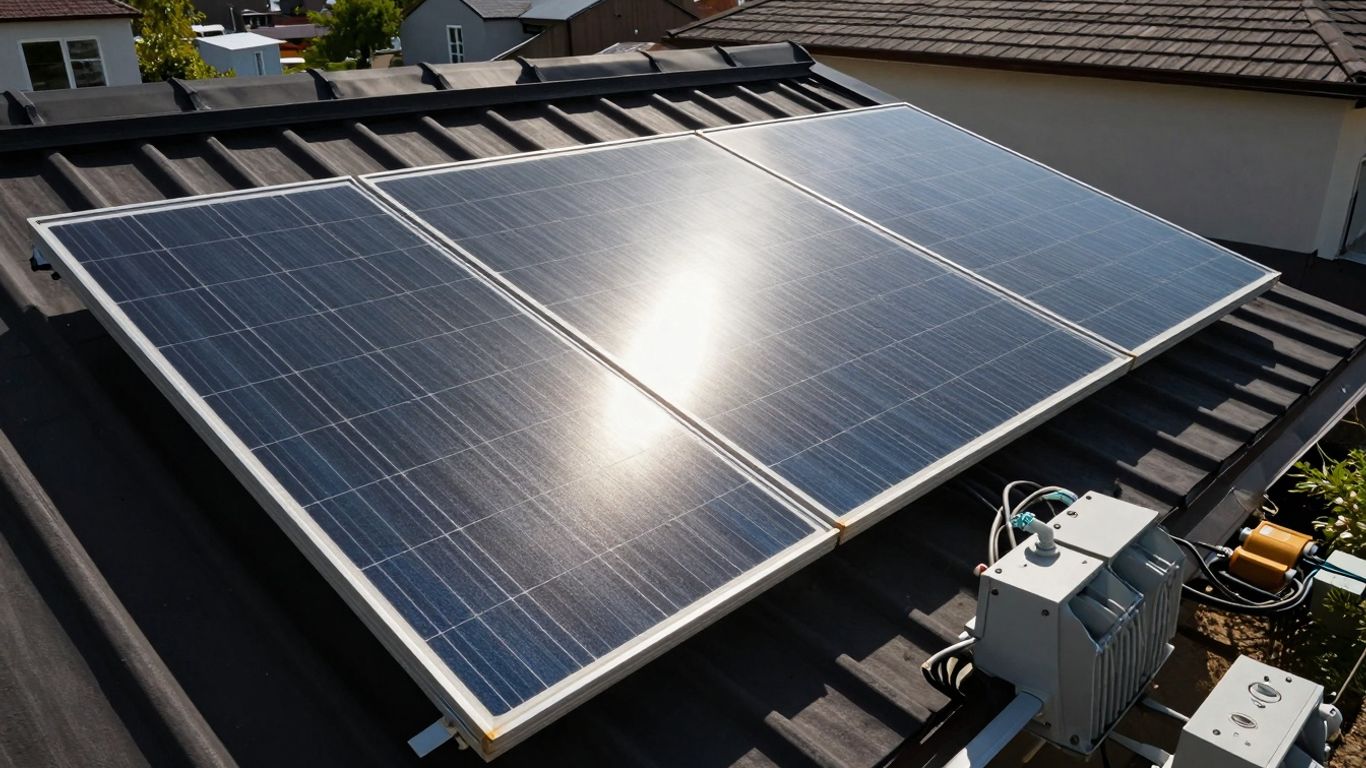
Once your project is well-defined and the components are chosen, the installation and electrical compliance stage takes over. This is a critical phase that guarantees the safety of your home and the longevity of your photovoltaic system. It is imperative to comply with current standards to avoid any risks and to ensure your installation is properly recognised and insured.
Complying with Standard NF C15-100
The NF C 15-100 standard is the reference in France for all low-voltage electrical installations. For self-consumption systems, it dictates precise rules regarding wiring, circuit protection, earthing, and equipment placement. The objective is to prevent risks of electric shock, fire, and to ensure the proper functioning of the installation. The update of this standard in September 2025 [688e] incorporates the specificities of modern solar installations, making its application even more relevant for recent projects.
- Differential protection: A differential protection device (30 mA) is mandatory for all circuits of your installation. It cuts off the power in case of an insulation fault.
- Earthing: Effective equipotential bonding and earthing are essential to dissipate fault currents and protect against electric shocks.
- Isolation: Isolation devices must allow for easy disconnection of the solar installation from the general electrical grid in case of intervention or emergency.
Essential Safety Devices
Beyond the NF C 15-100 standard, specific safety devices must be provided. This includes protection against surges, especially if you are in an area prone to thunderstorms. Modern inverters often include these protections, but it is good to check. For installations not connected to the grid, safety is even more paramount, as there is no safety net from the electricity provider. The evaluation of technical aspects, including component selection and production simulation, is a key step for a well-sized solar project [cb41].
The installation of solar panels, while beneficial, requires absolute rigor in terms of electrical safety. Never neglect safety aspects; they are the guarantee of serene and sustainable use of your system.
The CONSUEL Compliance Certificate
For many installations, and particularly if you plan to sell surplus electricity, the CONSUEL compliance certificate is a mandatory step. This document, issued by the Consuel organisation, certifies that your electrical installation complies with current safety standards. Without this certificate, your grid connection application may be rejected, and your installation will not be covered by your insurance in case of a claim. The installation must be carried out by a qualified professional, which is also a condition for benefiting from certain financial support schemes [d3c4].
Optimising Energy Production and Consumption
Panel Orientation and Tilt
The placement of your solar panels is a determining factor in maximising their yield. A south-facing orientation is generally ideal in the northern hemisphere, as it captures the maximum amount of solar radiation throughout the day. However, a south-east or south-west orientation can also be very effective, especially if it better matches your consumption periods. The tilt of the panels is also important. A tilt between 30 and 35 degrees is often recommended for optimal annual production, but it can be adjusted according to latitude and the seasonality of your consumption. For example, a steeper tilt can favour winter production, while a shallower tilt will be more effective in summer.
Managing Electricity Surplus
When your solar production exceeds your immediate consumption, you generate a surplus of electricity. Several options are available to manage this excess. The first is to feed it back into the public electricity grid. In this case, you generally benefit from a guaranteed purchase rate from an organisation like EDF OA (Purchase Obligation), which provides an additional source of income. Another increasingly popular solution is to store excess energy in solar batteries. This stored energy can then be used when your production is insufficient, for example at night or during cloudy weather, thus increasing your self-consumption rate and your energy independence. Finally, it is possible to control certain electrical appliances (water heater, electric vehicle charging station) to operate automatically when the surplus is significant, thus transforming this excess into comfort or savings.
Adapting Consumption to Production Periods
To make the most of your solar installation, it is wise to align your consumption habits with the times when your panels produce the most electricity. This means favouring the use of energy-intensive appliances during daylight hours, typically between 10 am and 4 pm. Here are some concrete examples:
- Run your washing machine or dishwasher during the day.
- Schedule the charging of your electric vehicle during daylight hours.
- Use the oven or other energy-intensive cooking appliances during the day.
- If you have an electric heating system, run it more during solar production hours.
Adapting your consumption habits is a proactive approach that, combined with good installation sizing and possibly storage solutions, can significantly optimise your self-consumption rate and reduce your electricity bill.
Financial Aid for Solar Installation
National Support Schemes
To encourage the adoption of solar energy, several national schemes are in place. It is important to note that these aids evolve and that you should stay informed of the latest regulations. For example, in 2025, a self-consumption bonus system is available for installations that include the sale of surplus energy. This aid aims to support the initial investment in energy independence solutions. In addition, an investment premium, also known as a self-consumption bonus, is available to everyone, regardless of income, to encourage the installation of photovoltaic panels. These measures aim to make self-consumption more accessible and profitable.
Local and Regional Aid
Beyond national schemes, many local authorities offer their own aid. These can take various forms: direct subsidies, zero-interest loans, or specific support schemes. It is therefore strongly recommended to inquire with your town hall, your department, or your region to find out about locally available aid. Sometimes, this aid can complement national schemes, but be careful, cumulation is not always permitted. You must check the specific conditions for each aid. For example, some local aid may be intended for collective projects or home improvements including solar installations.
Reduced VAT Rate for Self-Consumption
A significant tax advantage concerns the VAT rate. For photovoltaic installations intended for self-consumption, a reduced VAT rate may apply. From 1 October 2025, this rate will be set at 5.5% for installations up to 9 kWp, provided they are coupled with energy management or storage systems. For installations with a power of 3 kWp or less, the rate is 10%. This tax measure makes the initial investment more affordable and improves the return on investment of your solar project. It is essential to check the precise eligibility conditions to benefit from this reduced rate, particularly regarding the power of the installation and its association with storage or intelligent energy management solutions. The installation of solar panels is an investment that can be significantly reduced thanks to these various aids and tax advantages, making the transition to solar energy more attractive for many homes and businesses. For an estimate of costs and potential savings, it is advisable to consult online simulators or seek advice from professionals who can guide you in choosing the most suitable aids for your situation and project. Installation costs, which now include more than just the panels, can vary, but the aids aim to offset part of this initial investment. Self-consumption with good management of your consumption is the surest strategy for achieving significant financial gains.
Maintenance and Lifespan of Your System
Once your solar installation is in place, it is important to consider its maintenance to ensure its longevity and performance. Like any equipment, solar panels and associated components require regular attention.
Regular Cleaning of Panels
Dust, fallen leaves, or bird droppings can accumulate on the surface of your photovoltaic panels. This soiling reduces the amount of sunlight reaching the cells, which directly decreases electricity production. Periodic cleaning is therefore essential to maintain optimal performance. It is generally recommended to clean them once or twice a year. For safety reasons, use a telescopic brush to work from the ground. If cleaning at height is unavoidable, call on qualified professionals. Damage caused by an accidental intervention may not be covered by your insurance.
Performance Monitoring
Most modern self-consumption systems are equipped with an online monitoring system, often accessible via a mobile app or a web portal. This tool allows you to view your installation’s production, your consumption, and the charge level of your batteries in real time. An abnormal and persistent drop in production, not explained by adverse weather conditions, may indicate a technical problem. Careful monitoring allows you to detect these anomalies quickly and contact your installer for preventive action. This helps you anticipate breakdowns and maintain stable energy production.
Estimated Lifespan of Installations
Photovoltaic panels are designed to last. Most manufacturers guarantee at least 80% of their initial power output after 25 years of operation. The total lifespan of a solar panel is often estimated at over 30 years, provided it is installed correctly and receives adequate maintenance. Inverters, on the other hand, have a shorter lifespan, generally between 10 and 15 years, and may need to be replaced during the installation’s lifetime. Storage batteries also have a limited lifespan, which varies depending on their technology and use, but they are designed for many charge and discharge cycles. Regular maintenance and careful monitoring greatly contribute to maximising the lifespan of your entire solar system, thus ensuring years of savings and energy independence. For more information on panel longevity, consult your equipment’s warranties.
Investing in quality equipment and adhering to maintenance recommendations are the keys to ensuring the profitability and sustainability of your solar project in the long term.
Self-Consumption for Off-Grid Sites
For those living far from the electricity grid, solar self-consumption offers a path to energy independence. This involves producing your own electricity using solar panels, without being connected to the public grid. This primarily concerns homes located in remote areas such as islands, mountains, or forests, where connection would be too costly or simply impossible.
Specifics of Off-Grid Installations
In the case of an off-grid site, the operation is similar to total self-consumption, but with a major difference: there is no grid to compensate for production shortfalls. This imposes greater constraints. Therefore, you must carefully assess your annual energy needs and anticipate them precisely. The installation must be sized to cover your entire consumption, even during periods of low sunshine or high demand. This often involves adding storage systems, such as batteries, to store energy produced during the day and use it at night or during cloudy weather. Choosing the right solar kit is therefore essential for these installations. selecting the right kit
Solutions for Total Energy Independence
To achieve complete energy independence, several elements must be considered:
- Precise Sizing: It is essential to calculate the required photovoltaic power, taking into account all your electrical appliances and consumption habits. A detailed analysis of your needs is the first step.
- Energy Storage: Solar batteries are essential for storing surplus electricity produced and delivering it when the panels are not producing. Storage capacity must be adapted to your consumption and sunshine duration.
- Energy Management: Smart management systems can help optimise the use of electricity produced and stored, by prioritising certain appliances or shifting their operation.
- Equipment Reliability: Choosing quality solar panels and batteries, designed to withstand the often harsh climatic conditions of off-grid sites, is a guarantee of long-term performance.
Advantages and Disadvantages for Off-Grid Sites
Self-consumption for off-grid sites offers undeniable advantages, notably total independence from energy suppliers and reduced electricity bills (which can be very high in these areas). It also contributes to the energy transition by using a clean energy source.
However, the disadvantages are also notable:
- High Initial Cost: The investment in a complete system (panels, batteries, inverter, charge controller) is significant.
- Technical Complexity: Sizing and installation require specific expertise to ensure the reliability and performance of the system.
- Maintenance: Although solar systems are generally robust, regular maintenance is necessary to ensure their proper functioning, which can be more complicated in hard-to-reach areas.
Energy independence through solar power is a viable solution for off-grid sites, but it requires rigorous planning, a substantial investment, and a good understanding of the technical constraints. It is often recommended to call on professionals to design and install a system tailored to your specific needs.
Collective Self-Consumption: A Shared Approach
Self-consumption is not limited to an individual approach. There is a form of self-consumption that allows for the pooling of solar energy production and consumption on a larger scale: collective self-consumption. This model opens the way for shared energy management, thereby strengthening the energy independence of a group of local consumers and producers.
Principles of Collective Self-Consumption
Collective self-consumption is based on the principle of sharing locally produced electricity among several stakeholders. Producers, whether individuals, businesses, or local authorities, install photovoltaic panels, often on the roofs of buildings or in car park canopies. The electricity generated is then consumed by a group of consumers connected to the same public distribution network and located in close geographical proximity. This system allows producers to monetise their production and consumers to benefit from local green energy. It does not require specific equipment for consumers, making participation more accessible.
Role of the Organising Legal Entity (PMO)
To implement a collective self-consumption operation, participants must form an organising legal entity (PMO). This entity plays a central role in the management and coordination of the project. Its main missions include:
- Administrative and technical management of the operation.
- Establishment of the collective self-consumption agreement with the distribution network operator (usually ENEDIS).
- Definition and application of rules for distributing the electricity produced among the various members.
- Transmission of necessary information for the smooth operation of consumption sharing.
The PMO ensures the smooth flow of exchanges and the compliance of the operation with current regulations. The establishment of such a structure is a key step for the success of collective self-consumption.
Benefits for Producers and Consumers
Collective self-consumption offers significant advantages for all stakeholders. For producers, it is a way to make their solar investment profitable by monetising their surplus energy. For consumers, the main advantage lies in consuming green electricity produced nearby, thereby reducing their dependence on traditional suppliers and potentially their bills. The purchase price for surplus energy has been revised, making direct consumption of the produced electricity even more attractive. For example, the purchase price for surplus is now 4 euro cents per kWh for small installations. It is therefore more judicious to maximise your own consumption of solar energy. This model also promotes the development of renewable energies at the local level and strengthens the resilience of the electricity grid. To learn more about the different forms of self-consumption, consult this guide to self-consumption.
Collective self-consumption transforms how we conceive of energy production and consumption. It promotes local cooperation and allows for better control of energy costs while contributing to the ecological transition. The absence of specific equipment for consumers greatly simplifies the adoption of this model, making it accessible to a wide audience eager to actively participate in renewable energy production.
It is important to note that the self-consumption rate, which measures the proportion of produced energy directly consumed, can be optimised through good flow management and, if necessary, by adding storage solutions. Understanding this self-consumption rate is essential to maximise the benefits of your solar installation, whether individual or collective.
Collective self-consumption is when several people share electricity produced by solar panels. Imagine an entire neighbourhood producing and consuming its own green energy! It’s a great idea for saving money and helping the planet. Want to know more about this smart way of consuming energy? Visit our website to discover how it works and how you can benefit from it.
To Conclude: Your Energy Future is in Your Hands
There you have it, we’ve covered the key steps for installing your solar panels for self-consumption. It’s a project that requires a bit of preparation, it’s true, but the benefits, both for your wallet and for the planet, are definitely there. Think about it, producing your own electricity means gaining autonomy and taking concrete action for the environment. Technologies are evolving, aid is available, and more and more solutions, like plug-and-play kits, are making installation simpler than ever. So, don’t hesitate, get started and take control of your energy consumption. It’s a smart investment for today and for tomorrow.
Frequently Asked Questions
What is solar self-consumption and how does it work?
Solar self-consumption is when you produce your own electricity using solar panels and use it directly in your home. The electricity made by your panels powers your appliances. If you produce more than you consume, the surplus can be stored in a battery or sold. If you produce less, the electricity grid takes over.
How many solar panels do I need to be self-sufficient?
This depends on your electricity consumption. For an average house, you often need between 8 and 10 panels to cover part of your needs. To be almost entirely self-sufficient, you need more, often between 16 and 24 panels, and you also need to plan for batteries to store energy.
Can I install solar panels myself?
Some systems, like ‘plug and play’ kits, are designed to be easy to install, even without being an expert. You just need to plug them in. However, for larger installations, it is often recommended to use a professional to ensure safety and compliance.
What are the administrative procedures for installing solar panels?
Generally, you need to submit a works declaration to your town hall. If you are not selling your surplus electricity, you also need to complete a declaration with Enedis (the CACSI). If you sell the surplus, the procedures are a bit more complex and involve a contract with an electricity buyer.
What is a solar battery and why is it useful?
A solar battery is like a large battery for your home. It stores the electricity produced by your solar panels during the day. This allows you to use that energy in the evening or when there is no sun, making you less dependent on the electricity grid and saving you more money.
What financial aid is available for solar panel installation?
There are several aids. The government offers VAT reductions, and sometimes bonuses. Some regions or departments may also offer local aid. It is advisable to inquire about the schemes in effect at the time of your project.
How do I maintain my solar panels and how long do they last?
You need to clean your panels from time to time so they produce well. It’s best to do it from the ground with suitable equipment or to call on professionals. Solar panels are designed to last a long time, often more than 25 years, while retaining a good part of their production capacity.
What is collective self-consumption?
Collective self-consumption is when several people (neighbours, a business, residents of the same building) share electricity produced by jointly installed solar panels. This allows for local production and consumption of green energy, and for the benefits to be shared among everyone.
