
Installing solar panels at home is an idea that’s gaining traction, especially with electricity prices constantly rising. But realistically, is it worth it in 2026? Let’s take a look together at how it works, how much it costs, and if it’s truly a good deal for your wallet. We’ll break it all down so you have the information you need to make the best decision for your home.
Key Takeaways
- The profitability of a home solar panel system in 2026 will largely depend on your energy consumption and how you use the electricity you generate. Aiming for high self-consumption is key to shortening the return on investment period. Consider analysing your electricity bills from the past 12 months to best estimate your needs.
- For a 3 kWp installation, expect to pay between €6,000 and €10,000 on average, including installation. For 6 kWp, the budget rises to between €10,000 and €16,000. These prices generally include equipment, labour, and initial administrative procedures.
- In 2026, the main financial aids for a home solar panel system are the self-consumption bonus, paid in the first year, and the purchase of surplus electricity by EDF Obligation d’Achat (EDF OA) over a 20-year period. It’s important to check if local grants are available, but they are not always combinable.
- The administrative procedures for installing home solar panels are important. You’ll need to consider the declaration at the town hall, connection to the grid with Enedis, and obtaining the Consuel certificate. Your installer often handles most of these steps to simplify your project.
- The choice of equipment, such as solar panels and the inverter, as well as the quality of the installation (orientation, tilt, absence of shading) are crucial for maximising production and therefore profitability. A qualified professional will help you make the right choices for your home.
Understanding the Profitability of a Home Solar Panel System in 2026
Installing solar panels for your home represents a significant investment. In 2026, with evolving technologies and energy tariffs, it’s more relevant than ever to understand how to assess its profitability. It’s not just about producing green electricity, but also about achieving substantial long-term savings. The main objective is to recoup the invested sum through savings on your electricity bill and income generated from selling surplus energy.
Calculating the Return on Investment Period
The return on investment (ROI) for a solar installation is measured by the time it takes for the generated gains to equal the initial cost of the installation. This period varies depending on several factors, including the installation cost, energy production, your consumption, and the price of electricity. On average, for a residential installation, this period is generally between 8 and 15 years. It’s important to note that the lifespan of solar panels far exceeds this period, often thirty years or more, which guarantees long-term profitability once the initial investment is recovered. To maximise the return on investment of your solar panels, it’s important to implement strategies that improve the profitability of your project.
Factors Influencing Profitability: Production and Consumption
Solar energy production directly depends on the sunshine in your region, the power of your installation, its orientation, and its tilt. For example, a house located in the south of France will benefit from more sunshine than a house in the north, resulting in higher production. At the same time, your consumption profile plays a major role. The more you consume the electricity produced by your solar panels at the moment it’s generated (self-consumption), the more direct savings you make on your bill. Appliances whose consumption can be shifted, such as water heaters or washing machines, are particularly useful for increasing this self-consumption rate.
The Importance of Self-Consumption for Optimising ROI
Self-consumption is the most powerful lever for improving the profitability of your solar installation. Consuming the electricity you produce directly allows you to avoid buying this energy back from your supplier at a often higher price. Aiming for a self-consumption rate of 50% to 70% is a realistic goal for many households, especially if you adopt smart consumption habits. For example, programming your household appliances to run during peak sunshine hours, or using your electric vehicle to charge during the day, significantly contributes to increasing the proportion of your production that you consume directly. The surplus energy not consumed is then sold to an entity like EDF OA, generating additional income that complements the savings made.
Estimating the Budget for a Home Solar Panel Installation
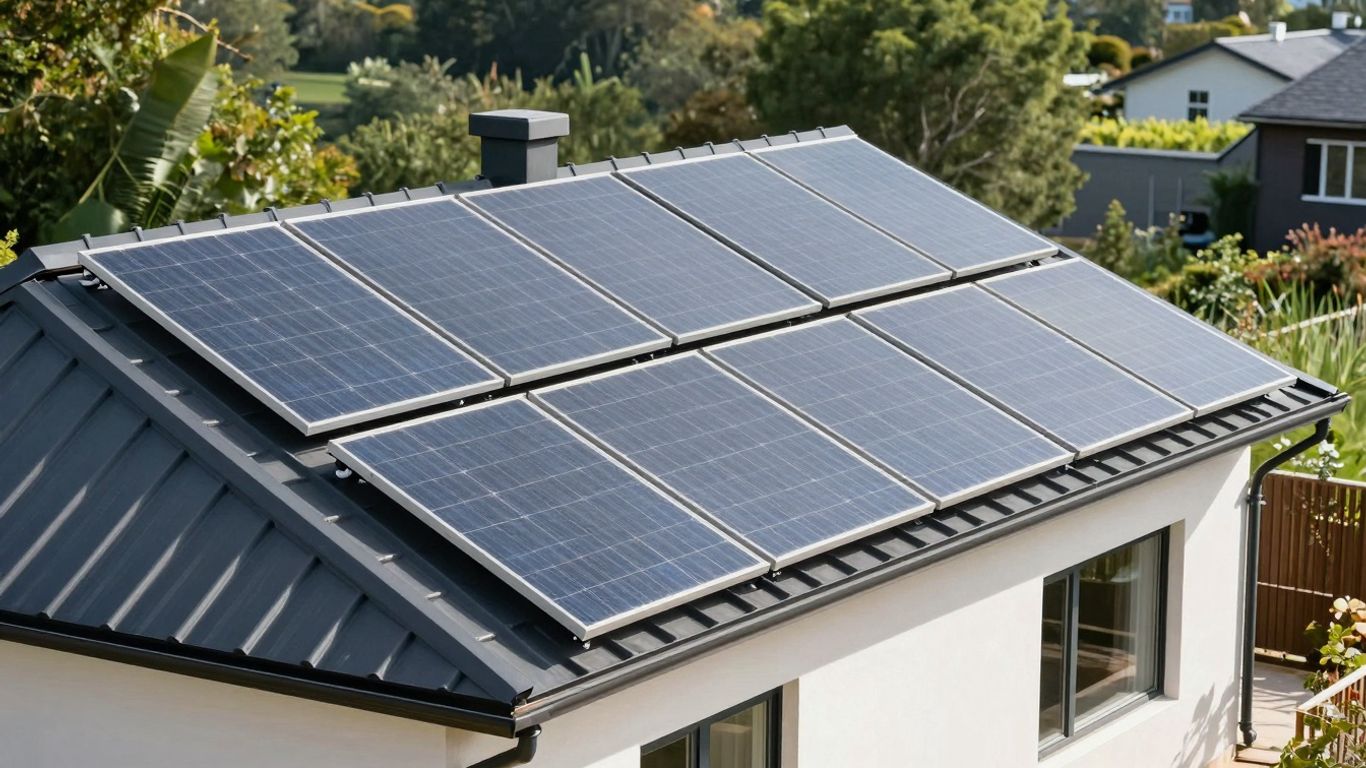
Embarking on the installation of solar panels for your home represents an investment. It is therefore natural to want to know the precise cost. Several elements come into play in determining the final budget, ranging from the chosen equipment to the complexity of the installation.
Costs of Components: Panels, Inverters, and Structure
The heart of your installation is, of course, the solar panels themselves. Their price varies depending on their brand, technology (monocrystalline, polycrystalline), and power. Added to this are the inverters (or micro-inverters), which convert the direct current produced by the panels into alternating current usable by your home. The mounting structure, which ensures the panels are fixed to your roof, as well as the wiring and electrical protection, constitute the other material expense items. The cost of the equipment generally represents the largest part of the total budget.
Impact of Labour and Installation Complexity
Beyond the equipment, the installation of the system has a significant cost. Qualified labour is essential to ensure a safe and efficient installation. The price can vary depending on the difficulty of accessing your roof, its configuration (slope, surface area, presence of obstacles), and the region. An installer will take into account the time spent, the necessary safety measures, and the complexity of integration to establish their quote.
Indicative Budgets for Different Power Outputs (3 kWp, 6 kWp)
To give you a more concrete idea, here are budget estimates for common installations in 2026. These figures generally include equipment, installation, and basic administrative procedures.
| Installation Power | Estimated Cost Including VAT (Installation Included) |
|---|---|
| 3 kWp | €7,000 to €10,000 |
| 6 kWp | €10,000 to €16,000 |
It is important to note that these amounts are indicative. They can fluctuate depending on the brands chosen, the specificities of your home, and any options such as adding a storage battery. Don’t forget to request several detailed quotes to compare offers.
The price per Watt-peak (Wp) tends to decrease as the total power of the installation increases. Thus, a 6 kWp installation will be proportionally less expensive than a 3 kWp installation.
Financial Aid Available for Your Home Solar Panels in 2026
Investing in solar panels for your home is a step that may seem costly at first glance. Fortunately, several financial aid schemes are in place to make this energy transition more accessible in 2026. These measures aim to encourage the adoption of renewable energies and reduce the return on investment period.
The Self-Consumption Bonus and its Payment
The self-consumption bonus is one of the pillars of financial support for residential solar installations. It is paid in a single instalment, usually the year following the commissioning of your installation. Its amount is calculated based on the power of your photovoltaic installation. This bonus is direct aid that significantly reduces the initial cost of your project. It is particularly advantageous for installations intended for self-consumption with sale of surplus.
The Surplus Buy-back Mechanism by EDF OA
Beyond the initial bonus, the surplus electricity that you do not consume can be sold to a dedicated entity, EDF Obligation d’Achat (EDF OA). This mechanism guarantees a fixed and guaranteed buy-back rate over a period of 20 years. This ensures a regular and predictable additional income, thus contributing to the overall profitability of your installation. The buy-back rate is revised annually, but it remains advantageous to encourage green energy production. It is important to fully understand this contract to optimise the valuation of your production. You can find information on current rates on the EDF OA website.
Combining Aid: National and Local
It is possible to benefit from several aids, although the conditions for combining them may vary. The self-consumption bonus and the buy-back rate by EDF OA are the main national schemes. However, some local authorities (regions, departments, municipalities) may offer additional aid. It is essential to inquire with your town hall or regional council to find out about potentially available local schemes. Be aware that local aid is often not combinable with the national bonus and the EDF OA buy-back rate. A qualified installer can guide you on the most advantageous combinations of aid for your specific situation and assist you with the administrative procedures to obtain this aid.
Here is an overview of the main schemes:
- Self-consumption bonus: Paid once, calculated on the installation’s power.
- Surplus buy-back rate: Guaranteed sale to EDF OA over 20 years.
- Local aid: One-off subsidies offered by certain local authorities (to be verified).
It is advisable to contact a RGE (Reconnu Garant de l’Environnement) certified professional who can assist you in preparing your application and ensure you benefit from all the aid you are entitled to. This aid makes the investment in a solar installation more affordable and speeds up the return on investment, making the project even more attractive in 2026.
Administrative Procedures for Solar Panel Installation
Once you have chosen your equipment and installer, it’s time to tackle the administrative formalities. These steps are necessary for your installation to be compliant and to be able to benefit from financial aid. Although sometimes perceived as complex, they are essential for legal commissioning.
Declaration at the Town Hall and Enedis Connection
The first step generally involves submitting a prior declaration of works to the town hall. This procedure is required for any modification of the external appearance of a dwelling, which includes the installation of solar panels on the roof. The town hall has a period to review your application. In parallel, you must submit a connection request to Enedis, the electricity distribution network operator. This request ensures that your installation can be connected to the grid, whether for injecting surplus production or simply for the safety of the installation. It is strongly recommended not to start work before obtaining the necessary authorisations.
Obtaining the Consuel Certificate
The Consuel conformity certificate is an essential document that attests that your electrical installation complies with current safety standards. It is issued by the National Committee for the Safety of Electricity Users (Consuel). To obtain it, an inspector will visit your site to verify the correct installation of the solar panels, inverter, wiring, and protection systems. There are different types of Consuel certificates, including the Consuel Bleu for self-consumption installations without batteries, and the Consuel Violet for those with batteries. The cost of this certificate is generally included in the installer’s quote, but it’s good to verify.
Surplus Electricity Sale Contract
If your installation produces more electricity than you consume, the surplus can be sold. To do this, you must sign a purchase contract with EDF Obligation d’Achat (EDF OA). This contract guarantees that the electricity not consumed by your household will be bought back at a fixed rate for a period of 20 years. This surplus sale mechanism significantly contributes to the overall profitability of your solar project. The procedures for this contract are often handled by your installer, who will assist you in preparing the file. It is important to fully understand the terms of this contract to optimise your return on investment.
Here is an overview of the key administrative steps:
- Prior declaration at the town hall: Often necessary, check with your municipality.
- Enedis connection request: Essential for grid connection.
- Obtaining the Consuel certificate: Guarantees the safety and compliance of the installation.
- Signing the EDF OA contract: For the sale of surplus electricity.
Managing these procedures can be time-consuming. Many installers offer to handle all these administrative formalities, which represents a significant saving in time and peace of mind for the individual.
Choosing the Right Equipment for Your Home Solar Panels
For your domestic solar installation to function optimally and lastingly, it’s important to select each component carefully. It’s not just a matter of price, but primarily of performance and durability.
Selection Criteria for Solar Panels
Choosing solar panels is the first step. You need to consider several factors: efficiency, warranty, and technology type. High-efficiency panels are useful if you have limited roof space. Brands like SunPower are known for this. Others, like DualSun, offer hybrid options that can also produce hot water. Glass-glass panels, like those from Solarwatt, are renowned for their robustness and long lifespan. It is essential to choose panels that match your geographical location and your energy needs.
Differences Between Inverters and Micro-inverters
The inverter is the brain of your installation. It converts the direct current produced by the panels into alternating current usable by your home. There are two main types: central inverters and micro-inverters. Central inverters are generally less expensive, but if one panel is shaded or has an issue, the entire production chain can be affected. Micro-inverters, installed under each panel, allow for finer management. They optimise the production of each panel individually. This is a good option if your roof has shading or a complex orientation. Systems with optimisers, like those from SolarEdge, also offer advanced per-panel management, coupled with a central inverter. They allow for precise production monitoring and more advanced energy management.
Importance of the Mounting Structure
The structure that supports your solar panels is as important as it looks. It must be strong to withstand bad weather (wind, snow) and suitable for your roof type (tiles, slates, metal sheeting). A good structure ensures that the panels are securely fixed and correctly oriented to capture maximum sunlight. A well-designed installation, even with quality panels, can lose efficiency if the structure is not optimal. Consider the durability of the structure as much as that of the panels themselves. A 1740 Wp installation, for example, can be quickly mounted with specific kits for quick installation.
Here are some points to consider for the structure:
- Compatibility with your roof: Ensure the fixing system is suitable for your roof material.
- Weather resistance: Check certifications and resistance to wind and snow.
- Ease of installation and maintenance: A well-designed structure simplifies work and potential future interventions.
- Materials: Opt for corrosion-resistant materials such as aluminium or stainless steel.
Optimising the Production of Your Home Solar Panels
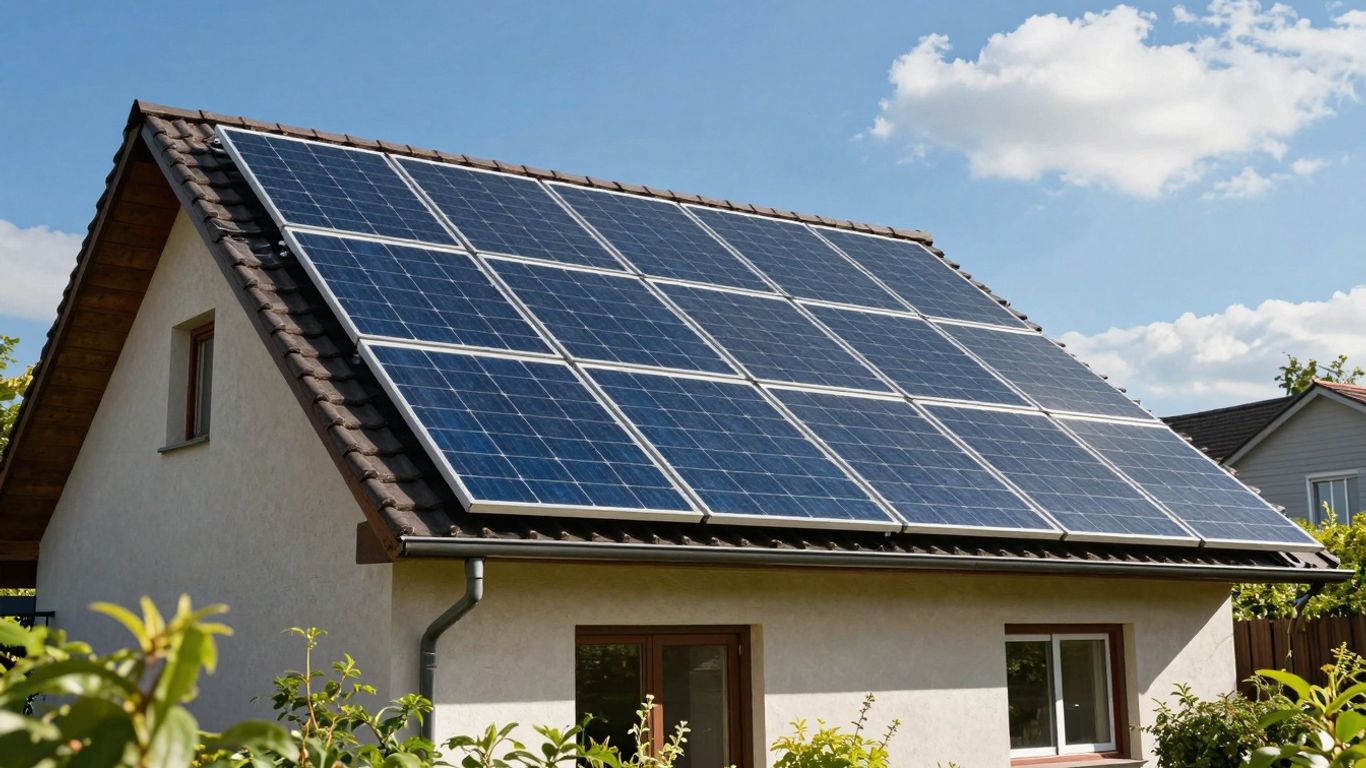
To get the most out of your solar panel investment, it’s essential to think about how they produce electricity. It’s not just a matter of installing them and forgetting about them. Several factors come into play to maximise the yield of your installation.
The Impact of Orientation and Tilt
Where you place your panels on your roof is critically important. In France, a south-facing orientation is generally ideal for capturing maximum sunlight throughout the day. However, a southeast or southwest orientation can also be very beneficial, especially if it allows for spreading production over a longer part of the day, which is good for self-consumption. The tilt also matters. A slope of around 30 to 35 degrees is often recommended for a good balance between summer and winter production.
Here is an overview of the influence of these factors on the estimated annual production for a 1 kWp installation:
| Orientation | Tilt 0° | Tilt 35° | Tilt 45° | Tilt 60° | Tilt 90° |
|---|---|---|---|---|---|
| South | 87% | 100% | 98% | 92% | 67% |
| Southeast | 87% | 94% | 92% | 86% | 63% |
| East | 87% | 79% | 75% | 68% | 51% |
Of course, these recommendations must be adapted to the specific configuration of your roof.
Managing Shading on the Roof
Shading, whether from trees, chimneys, neighbouring buildings, or even dormer windows, can significantly reduce the production of your panels. If one panel is in shadow, it can affect not only its own production but also that of other panels connected in series, especially with a centralised inverter. To counteract this effect, using power optimisers or micro-inverters is a solution. These technologies allow for individual management of each panel’s production, thus limiting losses due to shading.
Precise Sizing to Maximise Useful Production
Choosing the right size for your installation is a key step. A system that is too small will not meet your needs, while a system that is too large could lead to excess production that is difficult to valorise. The right balance must be found, taking into account your current electricity consumption and your future projections. Well-thought-out sizing allows you to maximise the amount of electricity you will consume directly (self-consumption), which is the most profitable. It also avoids selling too much surplus at a potentially less advantageous rate than the price of electricity from the grid.
The calculation of the return on investment directly depends on the amount of electricity you produce and consume. Adapted sizing, combined with good orientation and shading management, is therefore the basis for a profitable installation.
It is important to note that even simple annual maintenance, such as cleaning the panels if they are dirty, can improve production by a few percent. Rain and wind already do a cleaning job, but a telescopic brush once a year can make a difference.
The Role of Batteries in the Profitability of Home Solar Panels
When is Adding a Battery Relevant?
The idea of adding a battery to your solar installation may seem complex, but it is becoming increasingly relevant for optimising your return on investment. If you produce more electricity than you immediately consume during the day, this excess energy can be stored for later use, for example, in the evening. This is where the battery makes perfect sense: it allows you to increase your self-consumption rate. Without storage, the surplus is often sold at a rate that, compared to the purchase price of grid electricity, makes the operation less attractive. A battery is therefore particularly relevant if your consumption is not perfectly aligned with solar production hours, or if you want to reduce your dependence on the traditional electricity supplier as much as possible.
Impact of Storage on Autonomy and ROI
Adding a battery transforms your solar installation. Instead of simply feeding the surplus into the grid, you keep it. This means you can power your appliances in the evening or during periods when the sun isn’t shining, using your own production. This increased autonomy directly translates into a reduction in your electricity bill, as you buy less energy from the grid. The return on investment (ROI) of your entire installation, including the panels, is therefore improved. Although purchasing a battery represents an additional cost, the savings generated by increased self-consumption can amortise this investment over a reasonable period, often between 5 and 12 years for the entire system, including panels and battery.
Here is an idea of potential savings:
| Type of Installation | Average Annual Cost (without battery) | Annual Savings (with battery) | ROI Improvement |
|---|---|---|---|
| 3 kWp Installation | €400 | €625 | Significant |
| 6 kWp Installation | €700 | €1100 | Significant |
These figures are indicative and depend on many factors such as your actual consumption and the price of electricity.
Pre-wiring for a Future Decision
It is not always necessary to install a battery from the outset. If your budget is limited or if you want to first assess your production and consumption, you can opt for pre-wiring your installation. This means your system is already prepared to accommodate a battery later on, without needing to undertake major work. You then simply add the storage module when you decide. This is a flexible approach that allows you to adapt to evolving needs and technologies. It gives you time to thoroughly research the battery market and choose the model best suited to your situation, without compromising the possibility of optimising your solar installation in the future.
Managing Your Consumption to Improve Solar Panel Yield
To get the most out of your solar installation, it’s not enough to install it and wait. You also need to adapt your consumption habits. The idea is to match your electricity production with your needs as much as possible. This reduces the amount of energy you buy from the grid, and therefore speeds up the return on investment of your panels.
Daily Energy Management Techniques
The first step is to observe when your installation produces the most. Generally, this is in the middle of the day, when the sun is at its highest. It then becomes relevant to shift some of your energy-intensive activities to these times. Think about appliances like washing machines, dishwashers, or even charging your electronic devices. The goal is to consume the electricity you produce directly, rather than feeding it back into the grid only to buy it back later at a potentially higher price.
Controlling Household Appliances and Water Heaters
Home automation offers interesting solutions for automating this management. Smart systems can schedule the start-up of your appliances during peak solar production hours. For example, your water heater can be programmed to heat water between 11 am and 3 pm, thus taking advantage of free solar energy. Similarly, smart plugs allow you to remotely control the operation of your equipment. This requires a bit of organisation at first, but the benefits on your bill are quickly noticeable. Using an energy management system can improve the profitability of your self-consumption intelligent energy management systems.
Integration with Electric Vehicles
If you own an electric vehicle, it’s a major asset for optimising your self-consumption. Charging an electric car represents a significant energy consumption. By scheduling it during peak sunshine hours, you can cover a large part of its needs with your solar production. Some systems even allow you to adjust the charging power based on the available production, so you never draw from the grid when the sun is shining. This transforms your car into a sort of mobile battery, which consumes solar energy when it’s available.
Adapting your consumption to your solar production is not a constraint, but an opportunity. It is a proactive approach that allows you to maximise the benefits of your investment in solar panels and reduce your dependence on the traditional electricity grid.
Anticipating Future Changes to Your Solar Installation
Forecasting Future Household Energy Needs
When considering the installation of solar panels, it is wise to look beyond your current needs. Lifestyles evolve, and with them, a household’s energy consumption. Think about potential changes in the coming years. For example, acquiring an electric vehicle, installing a heat pump, or even the arrival of a new family member can significantly increase your electricity demand. An installation well-planned today must be able to adapt to these new realities. It is therefore advisable to size your system with some leeway, or to choose equipment that allows for future expansion. This avoids having to undertake costly work later on. For instance, a 3 kWp system might be sufficient today, but if you plan to buy an electric car within two years, it might be more sensible to consider a slightly higher power from the outset, such as 4.5 or 6 kWp, to cover this additional demand. This allows you to maximise the self-consumption of your own production and reduce your dependence on the grid. Technological advancements in solar panels, with efficiency rates that continue to improve, such as those already exceeding 20% conversion [787d], offer interesting prospects for more efficient future expansions.
System Flexibility in the Face of Changing Usage
The flexibility of your solar installation is a major asset for its long-term profitability. This means choosing components and a configuration that do not lock you into a single scheme. For example, using micro-inverters rather than a central inverter offers better shading management and allows for easy replacement or addition of individual panels. Similarly, if you opt for a system that does not include a battery from the start, ensure it is pre-wired to accommodate one later. This greatly simplifies the addition of storage if your needs or market conditions (such as more variable electricity prices) justify it. Smart management of your consumption, for example by shifting the use of energy-intensive appliances to hours of peak solar production, also contributes to this flexibility. Adapting your habits can considerably increase the self-consumption rate without modifying the installation itself.
Lifespan and Maintenance of Solar Panels
Solar panels are designed to last. Most manufacturers guarantee their modules for a period of 25 to 30 years, or even longer. However, to maintain optimal production throughout this period, regular maintenance is necessary, although often minimal. Annual cleaning, for example, can be enough to remove dust, pollen, or bird droppings that could reduce panel efficiency by a few percent. It is also important to check the condition of the inverter and connections. Preventive maintenance, often offered by installers, helps anticipate problems and ensure the longevity of the entire system. Don’t forget that the cost of a 3 kWp installation, for example, is generally between €7,000 and €9,000 [bcdb], so it is in your interest to preserve this investment in the long term. A well-maintained installation ensures stable and profitable production for many years.
Finding the Right Installer for Your Home Solar Panels
Choosing the right professional to install your solar panels is a crucial step for the success of your project. A qualified installer doesn’t just fit panels; they support you, advise you, and ensure your installation complies with standards and is optimised for your situation.
Essential Criteria for Choosing a Partner
To make the right choice, several points need to be considered. First, you must verify that the installer has the necessary qualifications, such as RGE (Reconnu Garant de l’Environnement) and QualiPV certifications. These labels attest to their expertise and are often essential for benefiting from financial aid. Ask for references for similar projects to yours, ideally in your region. A reputable installer will be transparent about intervention times and offer responsive after-sales service. Don’t hesitate to request multiple quotes to compare offers, but don’t focus solely on the lowest price. The quality of the proposed materials and the clarity of the warranties (product, performance, labour) are just as important.
Checking Certifications and References
The presence of certifications like RGE or QualiPV is a guarantee of quality and professionalism. These qualifications are awarded by independent bodies and ensure that the installer meets strict criteria for installation quality and advice. You can easily find certified installers near you by consulting online directories dedicated to solar professionals. Ask to see examples of previous work and, if possible, contact former clients to gather their feedback. A company with a good local reputation and positive reviews is generally a sign of trust.
Administrative and Technical Support
A good installer should be able to guide you through all the administrative procedures, which can be complex. This includes the declaration at the town hall, the connection to the electricity grid via Enedis (or your local ELD), obtaining the Consuel certificate, and setting up the surplus electricity sale contract with EDF OA. Some installers offer ‘turnkey’ solutions that include managing these formalities, saving you time and hassle. They should also be able to advise you on the optimal sizing of your installation based on your consumption and roof configuration, and explain the different technical options (type of panels, inverters, etc.).
Finding the right installer for your home solar panels is a super important step to ensure everything works well. You need to choose someone trustworthy who will do a clean job. Don’t worry, we’re here to help you find the perfect professional for your solar project. Visit our website to discover how we can support you in this process.
In Summary: Solar, a Relevant Investment in 2026
At the end of this exploration, it is clear that installing solar panels for your home is a wise move in 2026. Technological advancements and evolving costs make this option more accessible and profitable than ever. Although the initial investment may seem substantial, the profitability calculation, based on self-consumption and surplus sales, demonstrates an attractive return on investment, often between 7 and 12 years. It is essential to size your installation correctly based on your actual consumption and to be supported by professionals to navigate the administrative procedures. By anticipating your future needs and optimising your consumption, you will maximise the benefits of your solar installation, thus contributing to both your savings and the energy transition.
Frequently Asked Questions about Home Solar Panels in 2026
Is installing solar panels still worthwhile in 2026?
Yes, installing solar panels remains a good idea in 2026. Equipment prices have decreased in recent years, and electricity prices have increased. This means your investment will be recouped more quickly, especially if you use a large portion of the electricity you generate yourself.
How do I know if my installation will be profitable?
Profitability depends on several factors: the amount of electricity your panels produce (depending on sunshine, their orientation, and their power), the amount of electricity you consume at home, and how you value the surplus electricity (by using it or selling it). A simple calculation can estimate how long it will take to get your money back.
What is the budget to consider for installing solar panels?
The total cost depends on the total power of your panels (expressed in kWp), the type of equipment chosen (panels, inverter), and the complexity of the installation. For a standard house, generally expect between €6,000 and €10,000 for a 3 kWp installation, and between €10,000 and €16,000 for 6 kWp. These prices often include installation.
Are there any financial aids to help me pay for my installation?
Yes, there are aids. The most common is the self-consumption bonus, which is paid once at the beginning. You can also sell the surplus electricity you don’t consume to EDF Obligation d’Achat (EDF OA) for 20 years. There may also be local aids, but they are not always combinable with national aids.
Do I absolutely need to install a battery with my solar panels?
It’s not always necessary. Often, consuming your own electricity (self-consumption) and selling the surplus is already very profitable. A battery becomes interesting if you consume a lot of electricity at night, if you want to be even more independent from the grid, or if electricity prices fluctuate significantly during the day. It is sometimes possible to pre-wire to add one later.
How long does it take for the installation to pay for itself?
Generally, it is estimated that it takes between 7 and 12 years for the investment to be fully reimbursed by the savings made and the revenue from selling surplus. This period can vary depending on your region, how you use your electricity, and the aid you receive.
What roof area is needed to install solar panels?
For a 3 kWp installation, which is quite common, about 8 panels are needed. Each panel measures approximately 1.7 m². Therefore, you need to plan for about 13 to 15 m² of clear roof space, without shading, to install them correctly.
How do I choose the right professional to install my solar panels?
It is important to choose a trustworthy installer. Check that they have the necessary certifications and look at reviews from other customers. A good professional will clearly explain all the procedures, help you with the paperwork, and advise you on the most suitable equipment for your home and your needs.
