
Solar energy continues to evolve, offering innovative solutions for those whose roofs are not suitable for traditional installations. The vertical wall solar panel, for example, presents itself as an interesting alternative. But is it really a profitable and efficient option? Let’s take a closer look.
Key Takeaways
- The vertical wall solar panel is a viable solution when roofs are unsuitable, offering an alternative for harnessing solar energy.
- Although generally less efficient than a traditional installation, its performance can be improved by techniques such as using bifacial panels or increasing the surface area.
- Optimising the location, particularly on a well-exposed facade, is essential to maximise energy production.
- Wall installations generally do not benefit from government grants, which can impact their initial profitability compared to subsidised options.
- This solution represents a contribution to the energy transition and can lead to a reduction in electricity bills, especially in dense areas or with architectural constraints.
Understanding How Vertical Wall Solar Panels Work
Definition and Technical Specifics
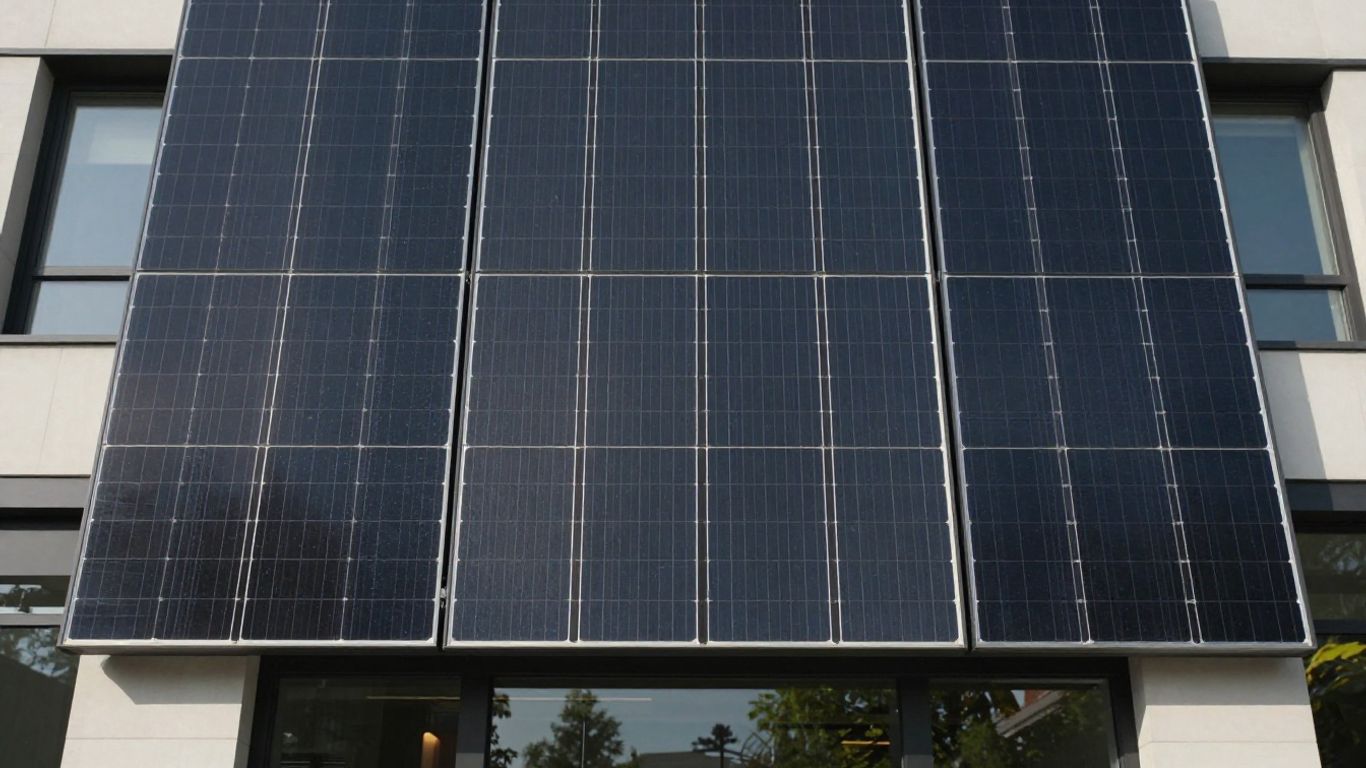
Vertical solar panels, also known as wall solar panels, represent an innovative approach in the field of photovoltaic energy. Unlike traditional installations that favour rooftops, these panels are designed to be fixed directly onto building facades. Their peculiarity lies in their 90-degree orientation relative to the ground. This configuration makes them particularly suitable for environments where roof space is limited, unsuitable, or when architectural aesthetics are paramount. They thus utilise surfaces often overlooked for energy production.
Energy Conversion Principles
The operation of a vertical solar panel is based on the same fundamental principles as any other photovoltaic panel. The cells that make up the panel, usually made of silicon, absorb photons from sunlight. This absorption triggers the movement of electrons, thereby creating a direct electric current. This current is then channelled to an inverter, which converts it into alternating current, usable by the household’s electrical appliances or fed back into the grid. The main difference lies in the angle of incidence of the sun’s rays. Although less optimised for maximum capture during the day compared to a tilted installation, the vertical positioning can offer specific advantages, particularly in winter or for capturing reflected light.
Adaptability to Urban Environments
The integration of solar panels on vertical walls offers a particularly relevant solution for dense urban areas. In these contexts, rooftops can be complex, shaded by neighbouring buildings, or simply insufficient to meet energy needs. Facades, on the other hand, represent a potentially extensive and often well-exposed surface. This flexibility democratises access to solar energy, even in challenging architectural configurations. Wall installations can thus contribute to self-consumption and reduce the carbon footprint of urban buildings, where space is a scarce commodity.
Assessing the Energy Performance of Wall Installations
Impact of Orientation and Tilt
Orientation and tilt are determining factors for solar energy production. For panels installed on a vertical wall, a south orientation is generally the most favourable, as it maximises sun exposure throughout the day. However, a southeast or southwest orientation can also be beneficial, allowing for solar energy capture in the morning or late afternoon. The tilt, on the other hand, is fixed at 90° for a wall installation. While this is not the optimal angle for maximum annual production (which is typically between 30° and 35° for a conventional installation), this vertical configuration offers specific advantages, particularly in winter when the sun is lower in the sky. A personalised assessment of your facade is therefore essential to determine the real production potential.
Comparative Yield vs. Traditional Installations
It is important to note that solar panels installed vertically on a wall tend to produce less energy than a rooftop or ground-mounted installation under ideal conditions. Indeed, the 90° angle limits direct sunlight capture, especially during the summer months when the sun is at its zenith. However, this difference in yield can be compensated for in certain cases. For example, if the wall is perfectly south-facing and benefits from constant sunshine, while the roof is poorly oriented or shaded by obstacles. A 10 kWp installation on a vertical wall could produce between 9,000 and 11,000 kWh per year, whereas an optimal rooftop installation could reach 14,000 kWh. Therefore, the pros and cons must be carefully weighed according to your specific situation. The objective is often to maximise the use of available space, even if it involves a slight sacrifice in gross yield. It is possible to produce around 10,000 kWh per year with solar panels, but this will depend heavily on the installation and its location.
Influence of Weather and Seasonal Conditions
Weather conditions have a direct impact on the performance of solar panels, whether they are installed on a wall or a roof. Cloudy or rainy days significantly reduce electricity production. Similarly, seasonality plays a role. In winter, sunlight is weaker and days are shorter, leading to a drop in production. Vertical panels can, however, take advantage of the low angle of the winter sun. Snow, if it accumulates, can also block light and halt production. Regular cleaning can help minimise these effects. It is also interesting to consider the impact of temperature: overheating of the panels, more likely with poor air circulation behind a wall installation, can slightly decrease their efficiency. Self-consumption can be a good strategy to use the energy produced when it is available, and energy storage can help smooth production over the day or week.
The performance assessment of a wall-mounted solar installation must take into account not only direct sunlight but also the specificities of the built environment and seasonal variations for a realistic estimate of energy production.
Distinct Advantages of Facade Solar Installation
Optimising Available Space
Installing solar panels on facades represents a particularly clever solution for utilising often-overlooked surfaces. In dense urban areas or on properties where ground or roof space is limited, vertical walls offer a valuable opportunity. They allow for an increase in energy production surface area without encroaching on other uses. It’s an intelligent way to integrate solar power into environments where one might think it impossible. This approach is an excellent alternative when roofs are not suitable for accommodating solar panels, whether due to their condition, configuration, or the presence of obstacles [0a03].
Simplifying Maintenance Operations
A significant advantage of solar panels installed on walls is their ease of access for maintenance. Unlike rooftop installations, which may require specific equipment and increased precautions, wall panels are generally more accessible. Regular cleaning, essential for maintaining optimal performance, can often be carried out with a simple ladder. This makes maintenance operations less costly and less burdensome, thus contributing to the overall profitability of the system.
Excluding Risks Related to Roof Waterproofing
Opting for a facade solar installation avoids potential complications related to roof waterproofing. Work on a roof can sometimes compromise its integrity, leading to risks of leaks and costly water damage. By installing the panels on a wall, these concerns are eliminated, simplifying the installation process and offering additional peace of mind regarding the preservation of the building’s structure [d84e].
Vertical installation, while sometimes less efficient in terms of pure production compared to optimal rooftop orientation, offers concrete benefits in terms of space utilisation and logistical simplification. It opens the way for solar energy production in contexts where it was previously difficult to envisage.
Disadvantages and Limitations of Vertical Solar Panels
While installing solar panels on vertical walls offers undeniable advantages, particularly in terms of space optimisation and architectural integration, it is important to consider their limitations.
Potential Reduction in Energy Yield
One of the main drawbacks lies in the installation angle. Unlike panels mounted on pitched roofs, vertical panels are fixed at 90 degrees to the ground. This orientation limits the duration and intensity of direct exposure to sunlight, especially during the summer months when the sun is higher in the sky. Although south-facing walls can partially compensate for this disadvantage, the overall yield is often lower than that of traditional installations. In winter, when the sun is low, this configuration can be more advantageous, but the average annual production remains generally lower.
Challenges Related to Airflow and Overheating
Solar panels operate more efficiently when they are well-ventilated. Vertical installations, being closer to the wall, may suffer from reduced rear airflow. This limitation can lead to heat build-up behind the panels. Excessive temperature of photovoltaic cells can reduce their ability to produce electricity. It is therefore crucial to provide a mounting system that ensures a minimum of space for ventilation, in order to limit this overheating phenomenon.
Ineligibility for Government Grants
In many cases, vertical solar installations are not eligible for the same financial support schemes as rooftop or ground-mounted installations. Subsidies, tax credits, or preferential feed-in tariffs are often designed to encourage more conventional technologies. It is therefore essential to obtain precise information on locally available grants, as this ineligibility can significantly impact the overall profitability of the project. This means that the initial cost may be more difficult to amortise without these financial incentives.
Optimising Location for Maximum Yield
Choosing the right wall to install your vertical solar panels is a bit like choosing the best seat in a stadium to watch a match: it makes all the difference. Let’s be honest, not all walls are created equal when it comes to capturing the sun. You need to be a bit strategic for your installation to be truly effective.
Identifying the Sunniest Facade
The first, and arguably most important, step is to find the wall that receives the most sun. In the Northern Hemisphere, it’s generally the south-facing facade that comes out on top. It benefits from direct sunlight for a good part of the day, which is perfect for electricity production. But be careful, you also need to check if there are any obstacles that could cast shadows, such as overgrown trees or neighbouring buildings. A quick look at different times of the day can help give a precise idea. Sometimes, a southeast or southwest facade can also be a good option, especially if it offers longer sunshine throughout the day, even if it’s less intense.
Importance of Support Surface Flatness and Regularity
Once you’ve found the ideal wall, you need to make sure it’s ready to host the panels. A wall that isn’t flat, with bumps or hollows, can cause problems. Panels need a regular surface to be properly fixed. If the wall is too uneven, it can create stress on the mounting structure, or even damage the panels themselves. In some cases, it may be necessary to carry out some preparatory work to level the surface. This is a detail that may seem minor, but it is really important for the longevity and performance of your installation. Think of it like the foundation of a house: if it’s not solid, everything else might collapse.
Considerations for East-West Orientation
We often tend to think that only the south matters, but east and west facades also have their interest. An installation on an east-facing wall can start producing electricity from the morning, which can be useful for morning consumption. Similarly, a west-facing facade can capture the sun’s rays in the late afternoon, a period when electricity demand can be high. Of course, the overall yield will generally be lower than that of a south-facing installation, but combining multiple orientations can allow for energy production to be spread throughout the day. This is a strategy to consider, especially if south-facing facade space is limited or if you are looking to optimise your self-consumption by covering as much of your daily needs as possible.
It is essential to carry out a personalised study for each project. Sunshine conditions vary enormously from one location to another, and what works perfectly for a neighbour will not necessarily be optimal for you. Take the time to evaluate all options before making a decision.
Here are some points to check for each potential facade:
- Sunlight: Assess the duration and intensity of solar exposure throughout the day and across the seasons.
- Shading: Identify potential sources of shade (trees, buildings, chimneys) and their impact.
- Accessibility: Ensure the wall is accessible for installation and future maintenance.
- Wall structure: Check the solidity and the wall’s capacity to support the weight of the panels and the mounting structure.
Innovative Solutions to Improve Production
The Potential of Bifacial Solar Panels
Bifacial solar panels represent an interesting advancement for increasing energy production. Unlike traditional panels that only capture light on one side, bifacial panels can absorb sunlight on both sides. This means they can capture direct sunlight, as well as light reflected from the ground or surrounding surfaces. For a wall installation, this can translate into increased production, especially if the wall is located near a light or reflective surface.
Increasing the Installation Surface Area
While it may seem obvious, one of the most direct ways to improve production is to increase the total surface area of installed panels. For walls, this may involve using structures that allow panels to be stacked or utilising less conventional facades. It’s about thinking beyond the simple flat surface and imagining configurations that maximise coverage, while taking into account architectural constraints and sunlight.
Using Reflective Surfaces
To make the most of solar panels, including those installed vertically, adding reflective surfaces nearby can make a noticeable difference. Materials such as light gravel, white paint, or special coatings can be used on the ground or on adjacent structures to bounce some of the sun’s rays back towards the panels. This technique allows for more light to be captured, thereby increasing the overall yield of the installation.
Innovation in the solar field is not limited to the cells themselves. Ingenuity in how panels are installed and how the surrounding environment is optimised plays an equally important role in maximising renewable energy production.
Economic Profitability Analysis
Initial Cost of Wall Installations
The initial investment for solar panels installed on a vertical wall may seem substantial. This includes not only the price of the panels themselves but also the specific mounting system, inverter, wiring, and of course, the skilled labour required for a safe and compliant installation. Systems integrated directly into the facade, replacing building materials, may have a higher initial cost but offer dual functionality. It is therefore essential to request several detailed quotes to get a clear picture of the expenses to anticipate. Profitability will strongly depend on these initial costs compared to the expected energy production.
Calculating the Profitability of an Extended Surface Area
To assess the profitability of an installation on an extended surface area, such as the facade of a commercial or residential building, several factors come into play. The payback period, which generally ranges from 3 to 20 years depending on the region and the chosen business model [9cda], is a key indicator. A larger surface area means greater energy production, which can accelerate this payback. However, the impact of orientation and tilt (even if fixed at 90° for a wall) must be considered, as well as local weather conditions. The analysis must also include the lifespan of the panels, often estimated at 25-30 years, to calculate the net long-term profit.
Impact of Self-Consumption and Energy Storage
Self-consumption, i.e., the direct use of electricity produced by your panels, is a major lever for improving profitability. By consuming your own energy, you reduce your dependence on the grid and lower your electricity bills. Energy storage, via batteries, allows you to store surplus production for use when the sun is not shining, thus maximising self-consumption, especially if you have variable electricity tariffs depending on the time of day. This represents an additional investment, but can significantly increase the savings achieved and the value of your solar installation.
The economic analysis of a wall-mounted solar installation must be personalised. It depends on your electricity consumption, energy tariffs, available grants, and the specificities of your building. A thorough study is therefore essential before any decision is made.
- Equipment costs: Panels, inverter, mounting system, wiring.
- Installation costs: Skilled labour, technical studies.
- Maintenance costs: Cleaning, periodic checks.
- Potential revenue: Savings on electricity bills, sale of surplus.
- Installation lifespan: Long-term amortisation.
Financial Aspects and Available Aid
Eligibility for Financial Support Schemes
When considering the installation of solar panels on a vertical wall, the question of financing quickly arises. Fortunately, several schemes exist to help alleviate the initial cost. It is important to inquire about available grants, as they can make a significant difference in the overall profitability of your project. Most grants are conditional on the eligibility of the installation and the quality of the chosen equipment.
Here are the main types of support you might encounter:
- MaPrimeRénov’: This government grant, managed by the Anah, aims to finance energy renovation work, including the installation of solar panels in certain cases. Eligibility conditions depend on your income.
- Zero-interest loan (PTZ): Intended to finance the purchase of new or old primary residences with renovation work, the PTZ can cover part of the expenses related to the installation of solar panels if it is part of a comprehensive renovation project.
- Energy Savings Certificates (CEE): Energy suppliers offer premiums for work that leads to energy savings. The installation of solar panels may qualify for these certificates.
- Local aid: Some regions, departments, or municipalities offer specific subsidies to encourage the development of renewable energies. It is therefore advisable to inquire with your local authority.
Alternative Financing Options
Beyond public grants, other solutions can be considered to finance your project. The use of a tax credit for energy transition (CITE) is no longer current, but similar schemes may emerge. It is also possible to turn to banks offering green loans or specific financing for renewable energy projects. The idea is to find the formula that best suits your financial situation and the size of your installation. Also consider the possibility of financing part of the installation through medium-term savings.
Access to Selling Surplus Energy
Once your installation is in place, you may produce more electricity than you consume. In this case, the surplus can be sold to an electricity supplier. Feed-in tariffs are set by decree and can vary. It is essential to fully understand the terms of this sales contract, which can significantly contribute to the profitability of your installation. The administrative procedures for selling surplus energy are generally simplified by accredited installers. Don’t forget to consult the self-consumption support schemes which may include mechanisms for supporting sales.
The profitability analysis of a wall-mounted solar installation must necessarily include the cost of financial aid and potential revenue from selling surplus electricity. These elements can transform an initially costly project into a quickly amortised investment.
Aesthetic and Architectural Considerations
Visual Integration into the Built Environment
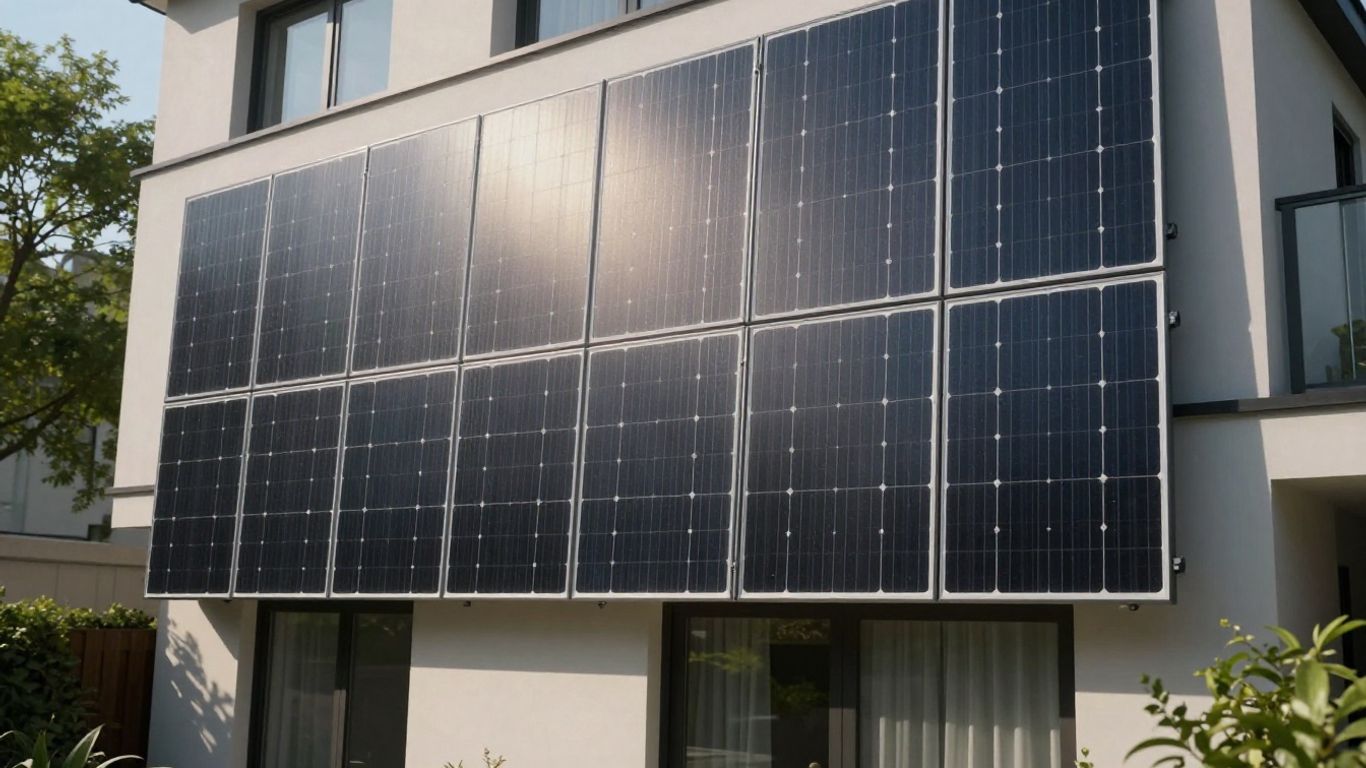
The installation of solar panels on a vertical facade raises important questions regarding their integration into the existing built landscape. Unlike rooftop panels, wall-mounted modules are more visible and can influence the overall appearance of a building. It is therefore essential to consider how these elements harmonise with the surrounding architecture. Choosing panels with suitable colours and finishes can greatly improve their visual acceptance. Solutions exist to ensure that panels are not perceived as mere technical additions, but as architectural elements in their own right, contributing to the overall aesthetics. The goal is to achieve a successful fusion between energy functionality and design.
Subjective Perception of Design
The way vertical solar panels are perceived depends heavily on individual preferences and local aesthetic standards. What may be considered a modern improvement by some may be seen as an undesirable alteration by others. It is important to note that visual aspect is subjective. A thoughtful approach, which takes into account the architectural context and the expectations of occupants or neighbours, is therefore paramount. Successful integration relies on a balance between technology and the environment in which it is deployed. The objective is to make solar energy discreet and even enhance the building’s value.
Neatly Designed Solar Panel Solutions
Fortunately, the market today offers solar panel solutions that go beyond mere technical performance. Many manufacturers are developing products designed for advanced architectural integration. These panels can come in various shapes and colours, for example, mimicking traditional building materials like stone or wood, or adopting elegant metallic finishes. Some systems are even designed to directly replace facade elements, such as cladding or roofing components, thus offering a *perfect* integration. These innovations make it possible to reconcile renewable energy production with respect for and improvement of the aesthetics of buildings, whether new or undergoing renovation. The idea is to transform a technical constraint into a visual asset, by relying on solar integration technologies.
Here are some ideas for a successful design:
- Variety of formats and colours: Choose panels that match the colour palette and materials of the facade.
- Integration replacing materials: Opt for panels that can replace existing cladding or covering elements.
- Discreet systems: Prefer systems where fixings are hidden and the module forms a continuous surface.
- Decorative panels: Explore options for printed or textured solar panels for a more artistic finish.
Installation and Maintenance of Wall Solar Panels
Checking the Solidity of the Support Wall
First and foremost, it is imperative to ensure that the wall chosen to host your solar panels is sufficiently robust. A wall that is not in good condition can not only compromise the safety of the installation but also lead to unforeseen repair costs. You need to check for the absence of significant cracks, the condition of the render or plaster, and ensure that the masonry is sound. In some cases, an assessment by a professional may be necessary, especially for old walls or if there is any doubt about their ability to support the additional weight of the panels and fixings.
Mounting Bracket Installation Methodology
Fixing solar panels to a facade requires a methodical approach. The use of adapted mounting brackets is generally recommended. These supports are designed to provide optimal stability and safety for the panels, even in strong winds. The installation involves several key steps:
- Wall preparation: Cleaning the surface and precise marking of fixing points.
- Bracket installation: Securely fixing the brackets to the wall, using plugs and screws suitable for the wall material (concrete, brick, etc.). It is important to respect the spacing recommended by the manufacturer of the panels and brackets.
- Panel mounting: Once the brackets are securely anchored, the solar panels are fixed to them using the provided clamping systems. It is important to ensure that the panels are properly aligned and secured.
It is essential to strictly follow the manufacturer’s instructions for each component to ensure a safe and durable installation. Improper fixing can not only damage the panels but also pose a risk to people nearby.
Cleaning and Maintenance Procedures
Regular maintenance of wall-mounted solar panels is an often-overlooked step, yet it is *crucial* for maintaining their performance. Dust, pollution, bird droppings, or leaves can accumulate on the panel surface and reduce their ability to capture sunlight. It is advisable to clean them every two to three months, or more often if the environment is particularly dusty. Using a simple water hose and a soft brush is usually sufficient. For stubborn dirt, diluted soapy water can be used, followed by thorough rinsing. It is important not to use abrasive products or high-pressure cleaners that could damage the panel surface. If you encounter problems with your installation, such as a drop in production, it is recommended to call a professional for a diagnosis. The addition of solar optimisers can also help manage the production of each panel independently, thereby improving the overall performance of the system [191a].
The Vertical Solar Panel as a Viable Alternative
Specific Use Cases (Unsuitable Roofs, Dense Areas)
Faced with architectural constraints or particularly dense urban environments, installing solar panels on a vertical wall emerges as a relevant solution. When rooftops do not allow for optimal installation, whether due to lack of space, unfavourable orientation, or inadequate tilt, facades become usable surfaces. This approach is particularly interesting for older buildings or those whose roof structure cannot support the weight of the panels. Walls, often less utilised for solar integration, thus offer a new opportunity for renewable energy production.
Contribution to the Ecological Transition
The adoption of vertical solar panels, even if they have a slightly lower yield than traditional installations, actively contributes to the energy transition. Every installation, regardless of its configuration, helps reduce dependence on fossil fuels and lower the carbon footprint. By utilising surfaces that would otherwise remain unused, these systems increase the capacity for local and decentralised solar energy production. It is a concrete step towards a more sustainable future.
Potential for Reducing Electricity Bills
Despite the challenges related to their orientation, wall-mounted solar panels can significantly reduce your energy expenses. The energy produced is directly consumed by the household, thus reducing the amount of electricity purchased from the supplier. Although the saving may not be as spectacular as with a perfectly oriented rooftop installation, it remains significant, especially when self-consumption is optimised. The initial investment, although present, is justified in the long term by the savings realised.
Installing solar panels on a vertical facade represents a smart strategy for diversifying renewable energy sources, particularly in contexts where conventional solutions are not feasible. It allows for the valorisation of built space while contributing to ecological objectives.
Did you know? Installing vertical solar panels is a stroke of genius that really works. It’s a great alternative for producing your own electricity, even if you don’t have much roof space. Think about it, it’s a smart way to save money and help the planet. To learn more about this clever method, visit our website today!
In Summary: An Option to Consider
So, is it worth installing solar panels on a vertical wall? Well, it depends. If your roof isn’t an option, or if you’re looking to use every square inch of your property, it’s a solution that can work. Let’s be honest, the yield will be a bit lower than with a traditional installation on a well-oriented roof. But, with advancements, especially bifacial panels, and by choosing the location carefully, you can still achieve interesting results. You just need to calculate the cost against the expected savings, especially since government grants are not always available for this type of installation. It’s an alternative, a way to participate in the energy transition, but it must be approached realistically and with thorough research before diving in.
Frequently Asked Questions
What is a solar panel installed on a vertical wall?
A vertical solar panel is a panel that is fixed directly to a wall, vertically, as if it were part of the facade. Unlike conventional panels placed on roofs, this solution uses building walls to produce electricity. It’s a good idea when the roof isn’t suitable.
Do vertical wall solar panels produce as much electricity as roof panels?
Generally, they produce a little less electricity. This is because the sun hits a vertical wall less directly than a well-inclined roof. However, in winter, when the sun is low, they can be more efficient. Also, you can install more of them to compensate.
What are the advantages of installing solar panels on a wall?
Installing panels on a wall allows you to use spaces that are otherwise unused. It’s perfect for cities where there’s little space. Also, it avoids touching the roof’s waterproofing, which can cause leaks. Cleaning the panels is also often simpler.
What are the disadvantages of wall solar panels?
The main issue is that the yield is often lower than with roof panels. There’s also a risk that the panels overheat because air circulates less well behind them. Finally, it’s important to know that these installations generally do not qualify for government grants.
Where is the best place to install a solar panel on a wall?
You should choose the wall that receives the most sun, often the one facing south. The wall must also be flat and solid to fix the panels without problems. Sometimes, installing panels on east and west walls can also be interesting to capture the sun in the morning and evening.
Are there special solar panels for walls?
Yes, there are innovations like bifacial solar panels. These panels can capture light from both sides, which helps produce more electricity, especially if light reflects off the ground or the wall behind. There are also easier-to-install systems, like plug-and-play ones.
Is it financially worthwhile to install solar panels on a wall?
Even if the initial cost can be a bit higher and there are no grants, it can be profitable in the long run. If you consume the electricity produced yourself (self-consumption) and store the surplus in a battery, you can make significant savings on your bills. You need to calculate carefully.
How do I know if my wall is strong enough for solar panels?
It is very important to have the strength of your wall checked by a professional. They will be able to tell if the wall can support the weight of the panels and fixings. This is an essential step for the installation to be safe and last a long time.
