
You are considering installing solar panels for your 100m² home in 2026 and want to understand the cost? This is an excellent step towards managing your budget and anticipating expenses. The price of solar panels for a 100m² house can vary considerably depending on several factors, from the required power output based on your actual consumption to available financial aid. This article guides you through the key elements for obtaining an accurate estimate.
Key Takeaways
- The price of a solar installation for a 100m² house primarily depends on the required power output (kWp), which is determined by your annual electricity consumption, the number of occupants, the type of heating and hot water system, and the insulation of the property.
- You will need a roof area of between 17.1 m² and 36.1 m² to cover the needs of a 100m² house, depending on the location and consumption. An installation of less than 3 kWp will require approximately 13.3 m².
- In 2026, several financial aids can reduce the initial cost: the self-consumption bonus (up to €80/kWp for installations ≤ 9 kWp), guaranteed purchase tariffs from EDF OA, and a reduced VAT rate of 10% for houses over 2 years old and installations ≤ 3 kWp.
- The choice of panels (monocrystalline panels are preferred for their efficiency), the power of the modules (over 400 Wp recommended), the quality of the manufacturer, and installation costs (by an RGE professional) directly influence the final price.
- Additional technologies such as storage systems (batteries) or energy managers can increase the initial cost but optimise self-consumption and long-term profitability, with a return on investment generally estimated between 10 and 15 years.
Estimating the Cost of Solar Panels for a 100m² House
The cost of a solar installation for a 100m² house can vary significantly. It is difficult to give a precise figure without knowing the specifics of your property and your energy needs. However, we can explore the main elements that influence this budget.
Factors Influencing the Overall Cost of an Installation
Several elements come into play when calculating the total price of your photovoltaic installation. It’s not just about the cost of the panels themselves. You also need to consider:
- The total desired power output of the installation (expressed in kilowatt-peak, kWp).
- The type of solar panels chosen (monocrystalline, polycrystalline, etc.).
- The complexity of the installation (type of roof, pitch, presence of obstacles).
- The labour costs of the qualified installer.
- The addition of complementary equipment such as storage batteries or an energy management system.
- Administrative and grid connection fees.
The price of photovoltaic solar panels generally ranges between €300 and €800 per square metre. Other types of panels, such as thermal or hybrid panels, have different prices. It is therefore essential to obtain several personalised quotes to get a clear idea of the budget to plan for.
Understanding the Power Needed for Your Home
The power you need depends directly on your annual electricity consumption. For a 100m² house, this consumption is influenced by several factors: the number of occupants, their lifestyle habits (presence at home, use of electrical appliances), the type of heating and hot water production, as well as the insulation quality of your home. An estimate of your consumption will allow you to determine the ideal power output for your solar installation. For example, a well-insulated house with low-energy appliances will require less power than an old, poorly insulated house equipped with energy-hungry appliances.
Impact of Roof Surface Area on the Budget
The surface area of your roof available for panel installation is a determining factor. The more usable surface area you have, the more panels you can install, and therefore potentially a higher power output. For a 100m² house, the required roof surface area can vary. For example, for a 3 kWp installation, you need to allow for approximately 13.3 m² of surface area. If your needs are greater, the required surface area will increase proportionally. It is important to note that the orientation and pitch of your roof, as well as the presence of shadows, can also affect the number of panels needed and therefore the surface area to be covered. A roof well-oriented to the south and without obstacles will optimise energy production and potentially reduce the surface area needed to achieve the desired power output. It is advisable to have a solar assessment carried out by a professional to accurately evaluate the surface area and power output suitable for your situation.
Analysis of Different Types of Solar Panels
Differences Between Monocrystalline and Polycrystalline Panels
When we talk about solar panels for a house, we often think of two main categories: monocrystalline and polycrystalline. The main difference lies in the purity of the silicon used to manufacture the cells. Monocrystalline panels are made from a single silicon crystal, which gives them their uniform black colour and better efficiency. They are generally more efficient, especially in low-light conditions. Polycrystalline panels, on the other hand, are made from several silicon crystals melted together. They have a more speckled, often bluish appearance, and their efficiency is slightly lower. For a 100m² house, choosing monocrystalline panels can be a good investment if you are looking to maximise energy production on a given surface area.
Importance of Photovoltaic Module Power
The power of a solar panel, measured in Watt-peak (Wp), is a key indicator of its ability to produce electricity. The higher the power, the more energy the panel can generate. For a 100m² house, it is often recommended to aim for modules with a power output of at least 400 Wp. This helps to reduce the total number of panels needed to achieve the desired total power output for your installation, which can impact the occupied surface area and the overall cost. Of course, this power output must be adapted to your actual electricity consumption needs.
Criteria for Selecting a Solar Panel Manufacturer
Choosing the right manufacturer is as important as choosing the right type of panel. A price that is too low can be a sign of poor quality. High-quality panels, even if they cost a bit more to purchase, tend to last longer and offer better performance over time. It is therefore wise to consider this as a long-term investment. Look for reputable manufacturers who offer good warranties on their products (often 25 years of guaranteed performance) and who have a good market reputation. Also consider whether the manufacturer offers technologies such as aerovoltaics, which produce both electricity and heat, with an efficiency between 6% and 9% Aerovoltaic panels offer a dual benefit, generating both electricity and heat through integrated sensors. Their efficiency ranges between 6% and 9%.
Here are some points to consider when selecting a manufacturer:
- Product and performance warranty: Check the duration and conditions of the warranties offered.
- Reputation and certifications: Look for customer reviews and recognised certifications.
- Origin and manufacturing quality: Prefer manufacturers who are transparent about their production processes.
- Technical support and after-sales service: Ensure reliable support is available when needed.
The choice of photovoltaic equipment is a crucial step for the performance and durability of your solar installation. Do not focus solely on the price, but evaluate the quality-price ratio and the manufacturer’s long-term reliability.
Installation Costs and Additional Technologies
Variability of Installation Fees Depending on the Project
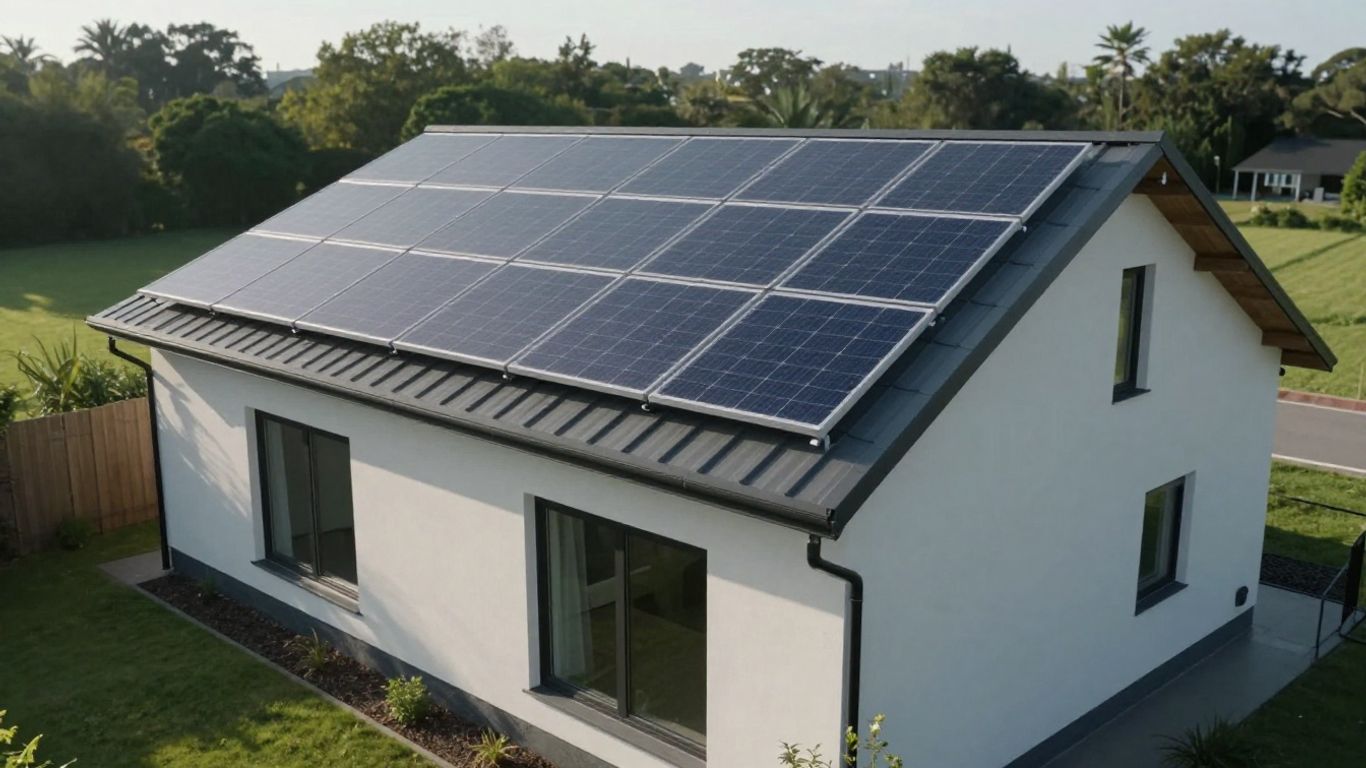
The cost of a solar installation is not limited to the price of the panels themselves. Installation fees represent a significant portion of the total budget. They vary considerably depending on several factors specific to each project. The complexity of the site, the accessibility of the roof, or the type of installation (on-roof, building-integrated, ground-mounted) are all factors that influence the quote. It is therefore essential to request several detailed quotes to compare offers. A qualified RGE (Reconnu Garant de l’Environnement) installer is essential to benefit from financial aid.
Investment in Energy Storage Systems
To maximise self-consumption, adding a storage system, such as a battery, is an increasingly popular option. Although this represents an additional initial investment, batteries allow you to store excess electricity produced during the day for use in the evening or during periods of low sunlight. This further reduces dependence on the electricity grid and electricity bills. The cost of a battery depends on its capacity (expressed in kWh) and its technology. For example, a 6 kWp installation with a 5 kWh battery can cost around €13,200 before deductions for aid.
Role of Energy Managers for Self-Consumption
Energy managers, often in the form of home automation boxes, play a key role in optimising your consumption. They allow you to intelligently control your electrical appliances (water heater, washing machine, etc.) so that they operate when your solar production is at its maximum. This increases your self-consumption rate, which is the proportion of solar electricity you consume directly. Integrating such a system, like YUZE offered by some providers, can significantly improve the overall profitability of your photovoltaic installation. The price of a complete solar installation, including equipment and labour, can start at around €5,990 for 3 kWp, excluding aid.
The addition of technologies such as storage or intelligent energy management, although increasing the initial cost, is a profitable strategy for improving long-term profitability and achieving greater energy independence.
Financial Aid and Incentive Schemes in 2026
Installing solar panels represents an initial investment, but several aid schemes are available in 2026 to reduce the cost. These measures aim to encourage the adoption of renewable energy and make your project more accessible.
The Self-Consumption Bonus and its Conditions
The self-consumption bonus is financial aid intended for photovoltaic installations that produce electricity for your own consumption, while injecting any unused surplus into the public grid. To be eligible, your installation must be roof-mounted. The amount of this bonus is calculated based on the power of your installation, expressed in kilowatt-peak (kWp).
Here are the indicative amounts for installations where the connection request is submitted in the first quarter of 2026:
| Installation Power | Bonus Amount per kWp |
|---|---|
| ≤ 3 kWp | €80/kWp |
| Between 3 and 9 kWp | €80/kWp |
| Between 9 and 36 kWp | €185/kWp |
| Between 36 and 100 kWp | €97/kWp |
For installations with a power output of 9 kWp or less, this bonus is generally paid in a single instalment. For larger installations, a portion is paid initially and the balance is spread over four years.
Guaranteed Purchase Tariffs from EDF OA
If you choose to sell all or part of your solar electricity production, you can benefit from the Obligation to Purchase (OA) scheme. This system guarantees you a fixed purchase price for your electricity for 20 years. This tariff is set by EDF OA and depends on the power of your installation.
The indicative purchase tariffs for 2026 are as follows:
- For selling surplus:
- ≤ 9 kWp: €0.04/kWh
- Between 9 and 100 kWp: €0.07306/kWh
- For total sale:
- ≤ 3 kWp: €0/kWh (as total self-consumption does not involve selling)
- ≤ 9 kWp: €0.1269/kWh
- Between 9 and 36 kWp: €0.12429/kWh
- ≤ 100 kWp: €0.1126/kWh
It is important to note that these tariffs are revised periodically. It is advisable to check the current rates at the time of your application.
Benefit from Reduced VAT on Your Installation
For houses completed more than two years ago, a reduced VAT rate may apply to the cost of your photovoltaic installation. This rate is generally 10% for installations with a power output of 3 kWp or less. For solar thermal systems (solar water heaters) or hybrid systems, the rate can even be as low as 5.5%.
The main condition for benefiting from these reduced rates is that the work must be carried out by an RGE certified professional (Reconnu Garant de l’Environnement).
In addition to these national aids, inquire with your local council or regional council, as additional local aid may be available in your geographical area. Please note that these local aids are generally not cumulative with national schemes.
Calculating Your Household’s Electricity Consumption
Before thinking about solar panels, it’s important to understand exactly how much electricity your home consumes. This is the basis for correctly sizing your future photovoltaic installation. Without this step, you risk either having an undersized installation that won’t cover your needs, or an oversized installation that represents an unnecessary investment.
Assessing Energy Needs Based on Occupants
The number of people living in your household has a direct impact on your consumption. The more occupants there are, the more appliances are used simultaneously, and the higher the electricity needs. Consider everyone’s habits: time spent in front of screens, use of comfort appliances like fans or auxiliary heaters, and even the frequency of washing or drying cycles.
- Number of occupants: A single person consumes less than a large family.
- Presence at home: On weekdays, consumption may be lower if the house is empty during the day, but it increases in the evening and on weekends.
- Consumption habits: The use of energy-hungry appliances (computers, game consoles, televisions) impacts overall consumption.
Influence of Heating and Hot Water Production Methods
These two items often represent a significant portion of a household’s total electricity consumption. If you use an electric heating system (radiators, underfloor heating) or an electric water heater, your annual consumption will naturally be higher than if you use energy sources like gas or a heat pump. It is therefore essential to take these elements into account for an accurate estimate. For example, a well-insulated house with an efficient heating system will consume less than a poorly insulated house with old electric heating.
Impact of Insulation and Electrical Equipment
The quality of your home’s insulation plays a major role. Good insulation helps retain heat in winter and coolness in summer, thus reducing the need for heating and air conditioning. Similarly, your household’s inventory of electrical equipment is a determining factor. Old or low-energy-class appliances consume more than recent, more efficient models. Also consider multimedia devices, electric gardening tools, and especially, a potential electric car which can represent a significant consumption. To get a more precise idea of your appliances’ consumption, you can consult your appliances’ consumption.
To get a reliable estimate of your consumption, it is recommended to consult your old electricity bills. They will give you a concrete overview of your annual usage. If you have a Linky meter, the consumption history available in your Enedis customer account is also a valuable source of information.
Sizing the Photovoltaic Installation
Determining the Ideal Power Output by a Professional
For a solar installation to be truly effective, it must be correctly sized. This is not something to be taken lightly. The ideal power output for your home depends on several factors, such as your annual electricity consumption, the number of people living in your home, and even your roof surface area. A photovoltaic professional is the best person to carry out this assessment. They will look at all these details to propose the most suitable power output for you. It’s a bit like choosing the right shoe size: too small, it won’t fit; too big, it’s uncomfortable. For a solar installation, a poorly calculated power output can mean less savings than expected, or even an installation that doesn’t meet your needs. The goal is to have an installation that produces just enough for your household, without excess or shortage. Make sure to choose your installer carefully, as they will be the one carrying out this technical study. It is important to use an RGE certified professional to be eligible for financial aid.
Comparing Needs Between Homes of Similar Sizes
One might think that two houses of the same size, say 100m², would have the same electricity needs. But this is not always the case. One house may be better insulated than another, or its occupants may use more electrical appliances. For example, a family that uses many connected devices or has an energy-hungry electric heating system will have different needs than a more economical family. Even if the floor area is the same, electricity consumption can vary significantly. This is why a personalised study is always necessary. You should not rely solely on the size of the house to estimate the power of the solar panels to be installed. You really need to look at the actual consumption.
Advantages of Small Solar Installations
Small solar installations, often under 3 kWp, also have their advantages. They can be an excellent entry point into the world of solar energy, especially if your budget is more limited or your roof space is restricted. These installations can already cover part of your electricity needs, thus reducing your bill. They are also quicker to install and require less space. Furthermore, they are often eligible for specific financial aid, such as the self-consumption bonus, which can make the investment even more attractive. Even if they don’t cover 100% of your consumption, they represent an important step towards energy independence and reducing your carbon footprint. It’s a flexible solution that adapts to many situations.
Correctly sizing a photovoltaic installation is a key step to maximise the benefits of your solar project. It involves a balance between energy production and your actual needs, in order to optimise the return on investment and reduce your dependence on the traditional electricity grid. An in-depth study by a professional is therefore essential.
Here is a table that gives an idea of the costs for different power outputs, although the final price depends on many factors:
| Power (kWp) | Minimum Price | Maximum Price |
|---|---|---|
| 3 | €6,000 | €10,500 |
| 4.5 | €8,000 | €13,000 |
| 6 | €9,500 | €17,000 |
| 9 | €13,000 | €24,000 |
It is important to note that these prices are indicative and do not include financial aid. To obtain an accurate quote, it is recommended to request several offers from qualified installers. Optimising a solar installation for self-consumption requires advanced technical expertise, and the installer plays a decisive role in the correct sizing of your project.
Profitability and Return on Investment of a Solar Installation
Investing in photovoltaic solar panels represents a significant financial commitment, but it is essential to consider the long-term profitability. The main objective is to recover the initial investment through savings on electricity bills and, potentially, through income generated by selling surplus energy.
Estimating the Payback Period for Solar Panels
The time required for your solar installation to become profitable, i.e., when cumulative gains equal the initial cost, varies. On average, this return on investment is generally between 7 and 12 years. Several factors influence this duration:
- The total cost of the installation: A lower initial investment speeds up the return.
- The level of self-consumption: The more electricity you consume from your panels, the less electricity you buy from the grid, which increases your savings.
- Financial aid: Bonuses and reduced tariffs can significantly shorten the payback period.
- The price of grid electricity: An increase in the cost of conventional electricity makes your solar production more attractive.
It is important to note that the lifespan of solar panels far exceeds this payback period, often more than 30 years, thus ensuring benefits over a very long period.
Potential Annual Savings on Electricity Bills
Annual savings depend directly on the amount of solar electricity you manage to consume. A well-sized installation and judicious use of electrical appliances, particularly with an energy manager, allow for maximising this self-consumption rate. For example, a 3 kWp installation can lead to annual savings of up to 37% under certain conditions. For larger installations, such as 6 kWp with storage, savings can reach 54%.
| Installed Power | Estimated Annual Consumption | Self-Consumption Rate | Potential Annual Savings |
|---|---|---|---|
| 3 kWp | 6,000 kWh | 39% | Up to 37% of the bill |
| 6 kWp + battery | 7,100 kWh | 58% | Up to 54% of the bill |
Achieving a High Self-Consumption Rate
Maximising self-consumption is key to improving the profitability of your solar installation. This involves consuming the electricity produced at the time it is generated. Using an energy manager is an effective strategy. This intelligent device can schedule the operation of certain energy-intensive appliances (such as the water heater or heat pump) during optimal sunlight hours. By directly consuming your production, you reduce your purchases from your electricity provider, which has a direct impact on the return on investment of your solar project.
Understanding Current Purchase Tariffs and Bonuses
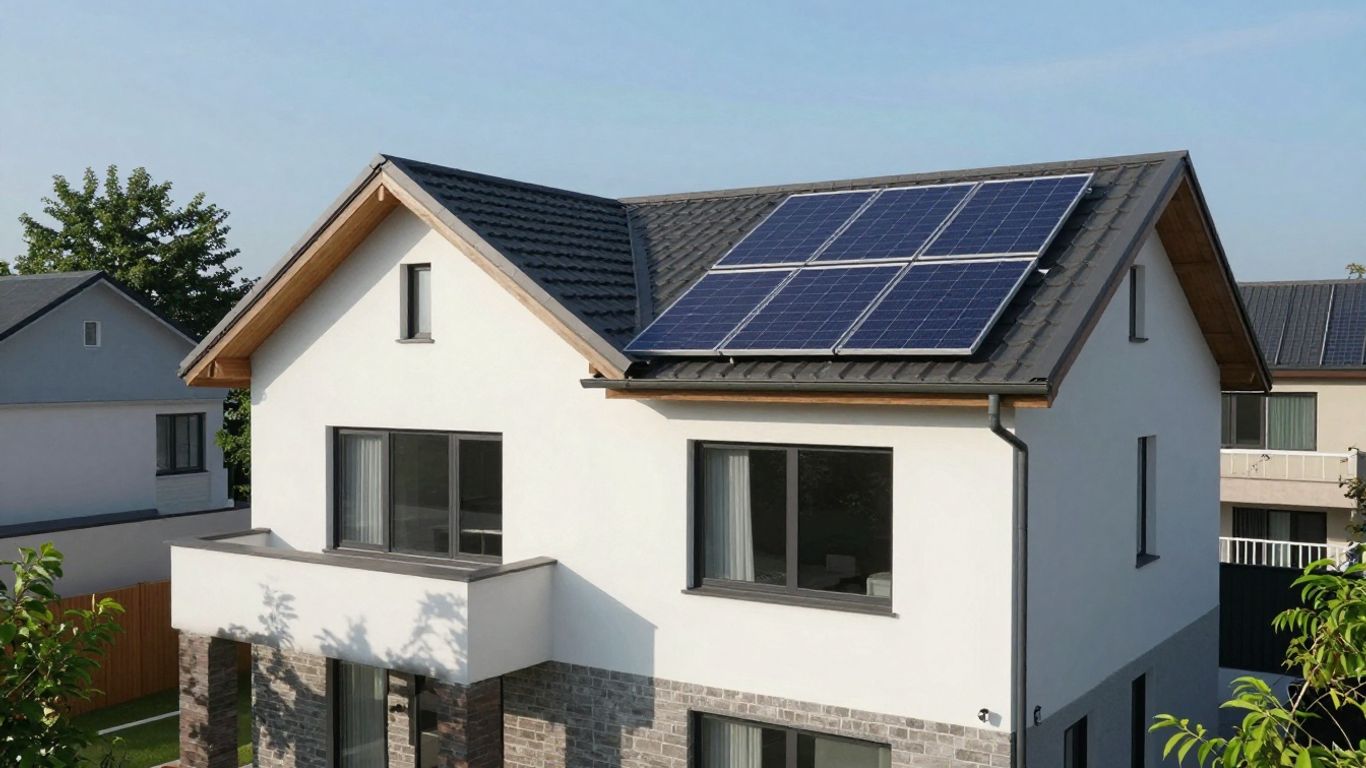
To fully understand the cost of a solar installation, it is essential to be aware of the financial schemes that can reduce your investment. In 2026, several aids are available for individuals wishing to produce their own electricity.
When you sell the surplus of your solar electricity production, a guaranteed purchase tariff applies. This tariff is set by decree and remains the same for 20 years. It is important to note that these tariffs are revised every quarter. Here are the rates in effect for the first quarter of 2026:
| Installation Power | kWh Purchase Tariff (selling surplus) |
|---|---|
| ≤ 3 kWp | €0.04 |
| 3 kWp < Power ≤ 9 kWp | €0.04 |
| 9 kWp < Power ≤ 36 kWp | €0.0536 |
| 36 kWp < Power ≤ 100 kWp | €0.0536 |
These tariffs are for installations that feed their surplus electricity into the public grid. If you opt for the total sale of your production, the tariffs are different and generally less advantageous.
The self-consumption bonus is financial aid paid to encourage the installation of solar panels for personal consumption, with the sale of surplus. Its amount depends on the power of your installation:
- For installations with a power output of 9 kWp or less, the bonus is paid in a single instalment. For example, for a 3 kWp installation, the amount is €80/kWp, for a total of €240.
- For installations over 9 kWp, the bonus is paid in several instalments. Generally, 80% is paid upon commissioning, and the remaining 20% is spread over the following 4 years.
It is essential to fully understand these conditions to anticipate the financial flows related to your solar project. The bonus is calculated based on the peak power of your installation.
Purchase tariffs and self-consumption bonus amounts are not fixed. They are adjusted quarterly by the public authorities. This means that the amounts indicated for Q1 2026 could change during the year. It is therefore recommended to stay informed of the latest official publications to know the exact tariffs at the time of your connection request. This dynamic allows for adapting aid to market conditions and renewable energy development objectives. For a 3 kWp installation, you can, for example, benefit from a self-consumption bonus of €80/kWp, i.e., €240 in total, and sell your surplus electricity at €0.04 per kWh.
Choosing a Qualified Installer for Your Project
Finding the right professional to install your solar panels is a step that should not be taken lightly. It is a guarantee of safety, performance, and longevity for your installation. A qualified installer ensures that the work will be carried out according to best practices, respecting current standards.
Importance of an RGE Certified Professional
To be eligible for financial aid, such as the self-consumption bonus or reduced VAT, it is essential to use an RGE certified installer (Reconnu Garant de l’Environnement). This certification attests that the company meets strict quality criteria for energy efficiency work. It protects you from unpleasant surprises and ensures work that complies with ecological and technical requirements. It is a mark of trust for your solar project.
How to Compare Installation Quotes
When you receive quotes, it is essential not to stop at the displayed price. Carefully compare several proposals to get a clear view of the market. Here are some points to examine:
- The proposed equipment: Check the brand, power (in Wp), and technology of the solar panels, as well as the inverter. Ask for details about the warranties offered.
- Services included: Does the installation include connection, commissioning, and handling of administrative procedures? Comprehensive support is a plus.
- Installer’s references: Find out about the company’s experience, check customer reviews, and ask for examples of similar projects.
- Clarity of the quote: All costs must be detailed: equipment, labour, ancillary fees. An opaque quote may hide hidden costs.
Requesting at least three separate quotes is a recommended practice to get the best value for money and ensure you make the right choice.
Beware of Offers That Are Too Good to Be True
Be vigilant about offers that seem too good to be true. An abnormally low price may hide poor quality materials, shoddy installation, or non-existent warranties. It is important to prioritise the quality and professionalism of a tradesperson rather than being seduced by an unbeatable price. A reputable installer will take the time to conduct a personalised study of your home and your energy needs, as offered by companies specialising in solar solutions.
It is also wise to check if the installer has specific certifications, for example, if they are a member of the CMEQ or RBQ certified, especially if you are in regions like Quebec, where companies like Wattsun Innovations specialise in electrical and solar installations.
Roof Surface Area Required for a 100m² House
When we talk about a 100m² house, we often think about the living space. But for a solar installation, it’s the roof surface area that really counts. It’s not just a matter of doubling the needs if you have a larger house; each household’s electricity consumption is unique.
Estimating the Surface Area to Cover Based on Location
The amount of sunshine in your region plays an important role. For example, a house in Rouen will not have the same panel surface area needs as a house in Perpignan to produce the same amount of energy. Here is a general idea:
| Location | Annual Consumption (kWh) | Power Required (kWp) | Surface Area to Cover (m²) |
|---|---|---|---|
| Rouen | 17,100 | 8.2 | 27.8 |
| Tours | 3,950 | 3.75 | 17.1 |
| Perpignan | 10,900 | 8.1 | 36.1 |
These figures are based on 425 Wp panels and a surface area of 1.9 m² per panel. It is therefore essential to carry out a personalised study for your situation.
Number of Solar Panels Required for a Given Power Output
For a 100m² house, a common installation is around 4.2 kWp. This corresponds to approximately 7 solar panels, if each panel is 425 Wp. The surface area required for these 7 panels would be around 13.3 m². This is a reasonable size that can often be installed on part of the roof, or even on a ground-mounted structure or a carport.
Minimum Surface Area for an Installation Under 3 kWp
If your goal is to stay below the 3 kWp threshold, for example, to benefit from a reduced VAT of 10%, the number of panels will be even more limited. For a power output of 3 kWp, with 425 Wp panels, you would need about 7 panels. This represents a surface area of approximately 13.3 m². This is a configuration that can be adapted to smaller roofs or for lower energy needs.
It is important to note that complete energy autonomy is difficult to achieve without a storage system. Solar panels do not produce electricity at night, so you often need to remain connected to the electricity grid to compensate.
The choice of surface area will therefore depend on your actual consumption, your geographical location, and the power output you wish to install. Don’t forget that professionals can help you determine the ideal configuration for your home.
Are you wondering what roof surface area is needed for a 100m² house? This is an important question for installing solar panels. We have the answers to help you see more clearly. Come and discover on our site how to calculate the necessary surface area and how to optimise your solar installation. Don’t wait any longer to take the first step towards solar energy!
In Summary: Your Solar Project in 2026
So, we’ve covered the topic of the price of solar panels for a 100m² house in 2026. As you’ve seen, it’s not an exact science; it depends on many things. Your household’s consumption is the most important factor. Then there’s the type of panels, the installer, and of course, the financial aid, which can really change things. Don’t forget to compare quotes carefully and find out about available bonuses. Investing in solar is a good step for your wallet and for the planet, but it requires some preparation. Remember to get personalised assessments to have a precise idea of what awaits you.
Frequently Asked Questions
What is the average cost of a solar panel installation for a 100 m² house?
The price of a solar installation for a 100 m² house varies greatly. It depends on the power of the panels, their brand, and the installation costs. Generally, for a complete installation, you should expect to pay between €6,000 and €17,000 for a power output ranging from 3 kWp to 9 kWp. Don’t forget that financial aid can reduce this cost.
How many solar panels are needed for a 100 m² house?
The number of solar panels needed for a 100 m² house depends mainly on your electricity consumption. Taking the example of a house in Tours consuming 3950 kWh per year, you would need about 9 panels of 425 Wp, covering approximately 17.1 m².
What roof surface area is needed to install solar panels?
For a 100 m² house, the roof surface area to be covered can vary. For example, for an annual consumption of 10,900 kWh in Perpignan, you would need about 19 solar panels, occupying nearly 36.1 m² of your roof. If you aim for a power output of less than 3 kWp, 7 panels will suffice, covering about 13.3 m².
What financial aid is available in 2026 for installing solar panels?
In 2026, several aids are available to help you: the self-consumption bonus, which depends on the power of your installation (e.g., €80/kWp for installations up to 9 kWp), guaranteed purchase tariffs from EDF OA to sell your surplus electricity, and a reduced VAT of 10% if your house is over 2 years old and the installation is less than 3 kWp.
What is the efficiency of a solar installation?
The efficiency of a solar installation depends on several factors such as the type of panels (monocrystalline or polycrystalline) and their power. On average, a well-designed installation can save you up to 60% on your electricity bill each year. The annual gain can range from €3,000 to €4,200.
What is the difference between monocrystalline and polycrystalline panels?
Monocrystalline panels are generally more efficient and have better performance, especially in low sunlight conditions. Polycrystalline panels are slightly cheaper but produce slightly less electricity. For a house, monocrystalline panels are often recommended for their efficiency.
Is it possible to be completely self-sufficient in electricity thanks to solar panels?
Achieving complete self-sufficiency is very difficult. Solar panels do not produce electricity at night. To compensate, you need either a storage system (batteries) or to continue buying electricity from a supplier for times when your panels are not producing enough.
How do I choose a good solar panel installer?
It is crucial to choose a professional certified RGE (Reconnu Garant de l’Environnement). Request multiple quotes to compare prices and services. Beware of offers that are too good to be true, such as free panels or panels for €1, which often hide hidden costs.
