
Considering installing solar panels for your 150 m² home in 2026? It’s an excellent idea to reduce your electricity bills and contribute to the energy transition. However, the price of such an installation can vary considerably. This article guides you through the different aspects to consider to accurately estimate the cost and profitability of your solar panel project for a 150 m² home.
Key Takeaways
- The cost of a solar installation for a 150 m² home depends primarily on your actual electricity consumption, not just the size of your home. Therefore, you must first assess your energy needs.
- Several factors influence the total price: the power and type of panels chosen (monocrystalline, polycrystalline), the quality of ancillary equipment such as the inverter, and the installation costs by the installer.
- The number of panels required varies depending on their individual power output. More powerful panels mean fewer panels need to be installed, optimising roof space.
- It is important to be wary of offers that seem too good to be true. A personalised quote, established after a technical visit, is essential to obtain a fair price tailored to your needs.
- The final budget can be reduced thanks to government aid and reduced VAT (under certain conditions). Long-term profitability will depend on your consumption, the price of electricity, and your installation’s production.
Assessing Electricity Consumption for a 150m² Home
Before considering the price of solar panels for a 150m² home, it is essential to understand your current electricity consumption. It is not the size of your home that directly dictates your needs, but rather how you live in it.
Analysing Factors Influencing Energy Consumption
Several elements come into play to determine how much electricity you use each year. Consider your household composition: a couple will not have the same needs as a large family. Everyone’s habits also play a role: long showers, frequent use of air conditioning in summer, or leaving appliances on standby can drive up the bill. The type of heating is also a major point; a house heated by electricity will consume much more than a house heated by gas or a heat pump. Don’t forget the appliances you own: an old, energy-hungry television or a large refrigerator do not consume as much as a recent, energy-efficient model.
Determining the Required Solar Installation Power
Once you have an idea of your annual consumption, you can estimate the power of the solar installation you will need. In France, an average installation for a household is often between 3 and 9 kWp. For a 150m² home, if your consumption is average, a 3 kWp installation might suffice, which corresponds to about 7 panels of 425 Wp. However, if you have higher needs, such as charging an electric car or numerous appliances, you may need to aim higher, for example, 6 kWp or 9 kWp. It is important to correctly size your system so that it matches your actual needs and to optimise your self-consumption.
Impact of Lifestyle Habits and Equipment on Needs
Your daily habits have a direct impact on your consumption. For example, if you work from home, your electricity consumption during the day will be higher than if you were away. The use of energy-intensive appliances such as a tumble dryer, an oven, or even an aquarium adds to the basic consumption. It is useful to take stock of all your electrical appliances and their estimated consumption. This will help you better understand the power needed for your solar installation. Sometimes, a smaller house with high consumption habits may require a larger solar installation than a larger house with more modest habits.
It is often advised not to oversize your solar installation. Too much power can lead to unnecessary costs and energy production that exceeds your actual needs, which is not always the most profitable in the long run.
Understanding the Price of Solar Panels for a 150m² Home
The cost of a solar installation for a 150m² home is not a fixed figure. It varies considerably depending on several elements. Thinking that the size of the house is the only determining factor would be a mistake. What really matters is your annual electricity consumption. A 150m² house in the north of France, heated by electricity, will not have the same needs as a house of the same size in the south, heated by gas. Therefore, you must first accurately assess your energy needs.
Factors Determining the Overall Cost of an Installation
Several elements come into play in setting the total price of your photovoltaic system. There is, of course, the cost of the solar panels themselves, but also that of ancillary equipment such as the inverter, cabling, and mounting systems. Let’s not forget the installation costs by the installer, which can vary. The complexity of your roof, its orientation, and its pitch can also influence the working time and therefore the cost. You also need to consider administrative procedures, which can sometimes incur additional costs, particularly for grid connection, the price of which is calculated by Enedis based on the distance to the grid.
Price Variability According to Panel Power and Technology
The power of the installation, expressed in kilowatt-peak (kWp), is a major factor. For a 150m² home, a 3 kWp installation is often sufficient to cover a good portion of the needs, but if you have many electrical appliances or a charging station, you might consider 6 kWp, or even 9 kWp. A 9 kWp installation for a 150m² home can cost up to €18,000 depending on the total desired power. The type of panel technology (monocrystalline, polycrystalline) also plays a role, with monocrystalline panels generally being more efficient and more expensive. The individual power of the panels also influences the total number of modules required and thus the occupied surface area.
Importance of the Quality of Ancillary Components (Inverter, Cabling)
The quality of the other elements of your installation should not be overlooked. The inverter, for example, is the heart of your system, converting the direct current produced by the panels into alternating current usable by your home. A low-quality inverter can reduce the overall efficiency of your installation and have a shorter lifespan. Similarly, quality cabling, suitable for outdoor conditions, is essential for safety and long-term performance. Choosing reliable components, even if they represent a slightly higher initial cost, is a guarantee of peace of mind and long-term profitability.
Sizing and Number of Solar Panels Required
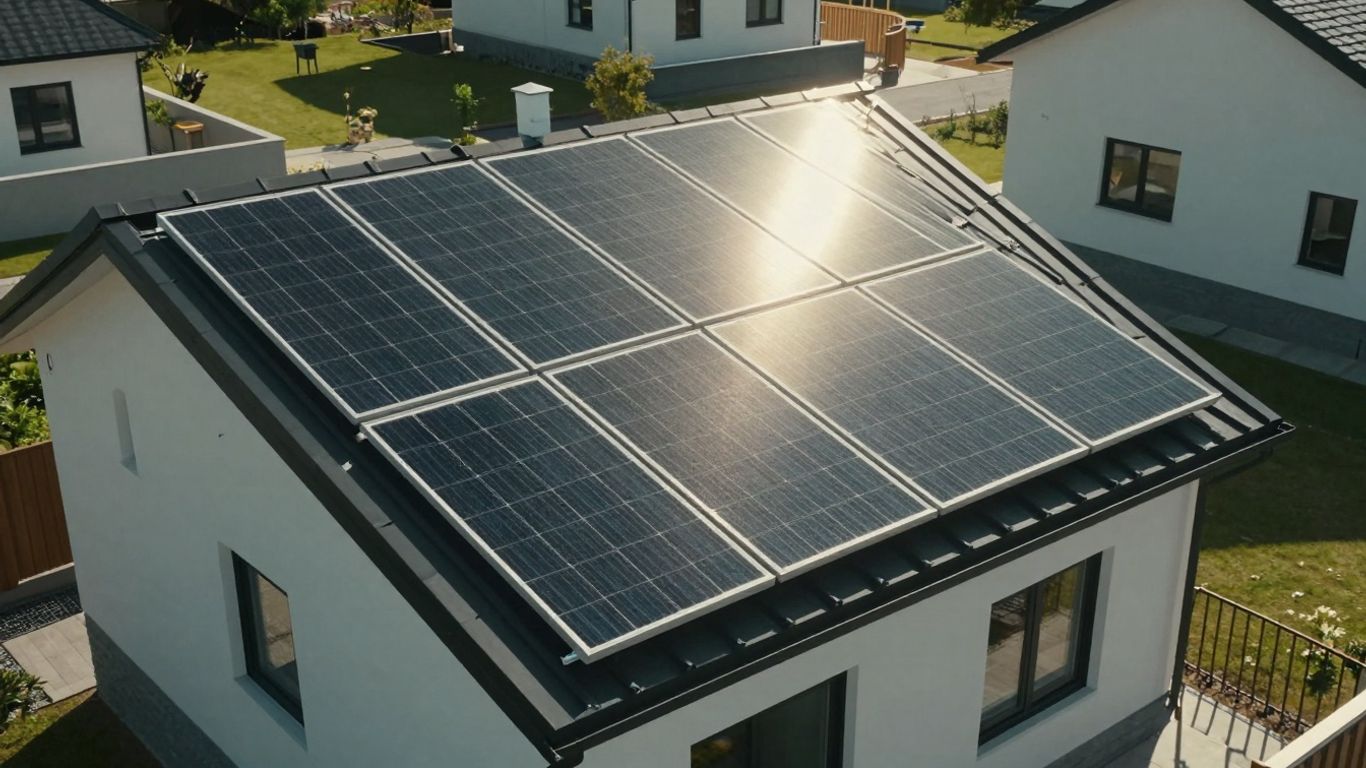
For a 150m² home, determining the right number of solar panels is a key step. It’s not just a simple formula, as several elements are involved. You first need a clear idea of your annual electricity consumption. If the goal is total self-consumption, you’ll need to aim higher than if you simply want to reduce some of your bills. The sunshine in your region also plays a role, as does the available space on your roof.
Calculating the Required Roof Area
The roof area required depends directly on the total power you wish to install and the power of each panel. On average, a solar panel measures about 1.65 m². For a 3 kWp installation, for example, you would need about 8 panels, or approximately 13.3 m² of surface area. If you are aiming for a 6 kWp installation, this increases to 14 panels and about 26.6 m². For 9 kWp, you would need 28 panels, occupying about 53.2 m². It is therefore important to accurately measure the surface area of your roof and check for any obstacles such as chimneys or skylights that could reduce the usable space. Good planning of available space is therefore essential.
Relationship Between Rated Power and Number of Panels
The rated power of a panel, expressed in Watt-peak (Wp), indicates its maximum production capacity under ideal conditions. Current standard panels are often around 375 Wp or 425 Wp. To calculate the number of panels needed, divide the desired total power (in Wp) by the individual power of the chosen panel. For example, for a 6 kWp installation (i.e., 6000 Wp) with 400 Wp panels, you would need 6000 / 400 = 15 panels. It is important to note that the actual power produced will always be less than the rated power due to weather conditions and other factors. A conversion factor of 0.85 is often used to estimate actual annual production.
Considerations on the Size and Power of Photovoltaic Modules
Photovoltaic modules come in different sizes and power outputs. Smaller panels (approx. 1.58 m x 0.81 m) generally deliver between 190 and 215 Wp. Standard sizes (approx. 1.65 m x 1 m) range from 245 to 270 Wp. Larger ones (approx. 2 m x 1 m) can reach 270 to 300 Wp. There are also high-power panels, which, although more expensive to purchase, generate more energy from a given area. This can be an interesting solution if your roof space is limited. Choosing high-power panels can reduce the total number of units required, potentially simplifying installation and maintenance. A well-conducted photovoltaic impact study will take these aspects into account to optimise yield.
It is essential not to rely solely on theoretical figures. The actual performance of your installation will depend on many factors, including the orientation of your roof, its pitch, and the absence of shading. An accurate assessment by a professional is therefore essential for correct sizing and reliable simulation.
Budget Estimation for a Photovoltaic Installation
Cost of Solar Panels and Associated Equipment
The budget for a solar installation is not limited to the panels alone. You also need to include the inverter (or micro-inverters), the mounting system, cabling, and any energy manager. These elements, although less visible, are essential for the proper functioning of the whole system. The price of the panels themselves varies according to their technology (monocrystalline, polycrystalline) and their individual power. For a 150m² home, the required power will depend on your consumption. For example, a 3 kWp installation, often sufficient for moderate consumption, could cost between €6,000 and €10,500 before aid in 2025. It is important to request a detailed quote to get a precise idea of the costs. It is difficult to give an exact figure without knowing your specific needs.
Installer Fees and Installation Costs
Beyond the equipment, labour represents a significant part of the total budget. The fees of qualified installers can vary. It is therefore advisable to request several quotes to compare offers. These quotes should clearly detail the services included: personalised study, panel installation, grid connection, and commissioning. Don’t forget to check if additional fees such as obtaining the CONSUEL certificate are included. A certified installer is essential to benefit from certain government aid and to guarantee the quality and safety of the installation.
Influence of Government Aid on the Final Budget
Government aid can significantly reduce the cost of your solar project. The self-consumption bonus, for example, is paid in a single instalment for installations under 9 kWp and its amount depends on the chosen power. Furthermore, for installations of 3 kWp or less, you can benefit from a reduced VAT rate of 10% instead of the normal rate of 20%. These schemes aim to make solar energy more accessible. It is therefore crucial to be well-informed about the available aid at the time of your project to optimise your budget. You can consult the scales updated quarterly by the government to get an idea of the amounts. The goal is to make the investment more profitable and to accelerate the return on investment.
It is essential to be wary of offers that seem too good to be true. Derisory prices or unrealistic profit promises are often warning signs. Focus on your actual consumption needs to avoid costly and unprofitable oversizing.
Optimising Solar Panel Surface Area for a 150m² Home
When we talk about a 150m² house, we often think of a certain energy consumption. To meet these needs, the surface area occupied by solar panels must be carefully considered. It’s not just a matter of putting as many panels as possible, but rather choosing those that best suit your situation.
Surface Area Required Based on Desired Power
The number of solar panels needed depends directly on the total power you wish to install. For a 150m² home, you can aim for different power outputs, for example 3 kWp, 6 kWp, or even 9 kWp, depending on your actual consumption. The higher the desired power, the larger the total surface area occupied by the panels. For example, a 3 kWp installation might require about 13.3 m² of panels, while a 9 kWp installation might require up to 53.2 m², using 425 Wp panels. It is therefore essential to accurately assess your energy needs before determining the surface area to dedicate to your solar project. A good estimate of your needs is the first step towards a successful project, and you can use a simulator to help you.
Advantages of High-Power Panels to Reduce Unit Count
To optimise available space, especially if your roof is not very large, it is wise to opt for high-power solar panels. These modules, often around 425 Wp, allow you to achieve the desired total power with fewer units. Fewer panels mean less weight on the roof structure and a potentially simpler installation. For example, for a 6 kWp installation, switching from 375 Wp panels (16 units) to 425 Wp panels (14 units) reduces the number of panels and thus the total occupied surface area. This approach aims to maximise energy production without overloading your roof.
Impact of Module Size on Total Occupied Surface Area
The physical size of solar panels plays a significant role in the total surface area required. Standard panels generally measure around 1.65 m x 1 m, which is about 1.65 m² per unit. However, modules of different dimensions are available. If you have limited roof space, choosing larger or more powerful panels may be a solution. However, you must take into account the configuration of your roof, any obstacles such as chimneys or skylights, to calculate the number of solar panels that can be installed. Good layout planning is therefore essential.
It is important not to focus solely on the size of the house (here 150m²) to estimate the size of the solar installation. The actual consumption of the household, lifestyle habits, and the type of equipment used are much more decisive factors for correctly sizing your photovoltaic project.
Here is an overview of the required surface areas according to power and panel type:
| Total Power | 375 Wp Panels (approx. 1.9m²/panel) | 425 Wp Panels (approx. 1.9m²/panel) |
|---|---|---|
| 3 kWp | 8 panels / 15.2 m² | 7 panels / 13.3 m² |
| 6 kWp | 16 panels / 30.4 m² | 14 panels / 26.6 m² |
| 9 kWp | 32 panels / 60.8 m² | 28 panels / 53.2 m² |
This table clearly shows how using more powerful panels reduces the total surface area required for the same installed power. This can be a major advantage for roofs that do not have a very large usable area. Considering the integration of the inverter and other components is also an integral part of the planning.
Criteria Influencing the Price of Solar Panels
Cost Differences Between Monocrystalline and Polycrystalline Panels
When looking at the prices of solar panels, you quickly notice differences. Monocrystalline panels, for example, generally cost more. We’re talking about a price that can range from €150 to €300 per panel. They are made from a single silicon crystal, which gives them better efficiency and a longer lifespan. Polycrystalline panels, on the other hand, are slightly cheaper. They are made from several silicon crystals melted together. For a 150m² home, if you opt for 10 monocrystalline panels, the total budget for these elements alone could range from €1,500 to €3,000.
Impact of Individual Power on Overall Price
The power of a panel, measured in Watts-peak (Wp), has a direct impact on its price. A more powerful panel will cost more to purchase, but it will produce more electricity. Therefore, you need to find the right balance. For example, for a 3 kWp installation, you will not have the same number of panels or the same total cost as for a 9 kWp installation. It is important to clearly define your energy needs to choose the appropriate power. A 3 kWp installation, for example, could benefit from a reduced VAT of 10%.
Importance of Manufacturing Origin and Brand
The origin of the panel and the brand that manufactures it also play a role in the price. Panels manufactured in Europe or the United States are often more expensive than those from Asia, but they may offer stronger quality and durability guarantees. Major recognised brands tend to have higher prices, but this can be justified by their reputation and the reliability of their products. You also need to consider the other components of the installation, such as the inverter, which must be of good quality to ensure the overall performance of the system. Solar installation prices are influenced by several factors, including purchase volume and material quality. Larger orders can allow for lower unit prices.
It is essential not to focus solely on the initial purchase price. The quality of the components, the rated power, and the brand are important indicators for evaluating the long-term profitability of a solar installation. A detailed quote, including all ancillary costs such as connection and installation, is essential for a clear view of the total budget.
Technical and Regulatory Aspects to Consider
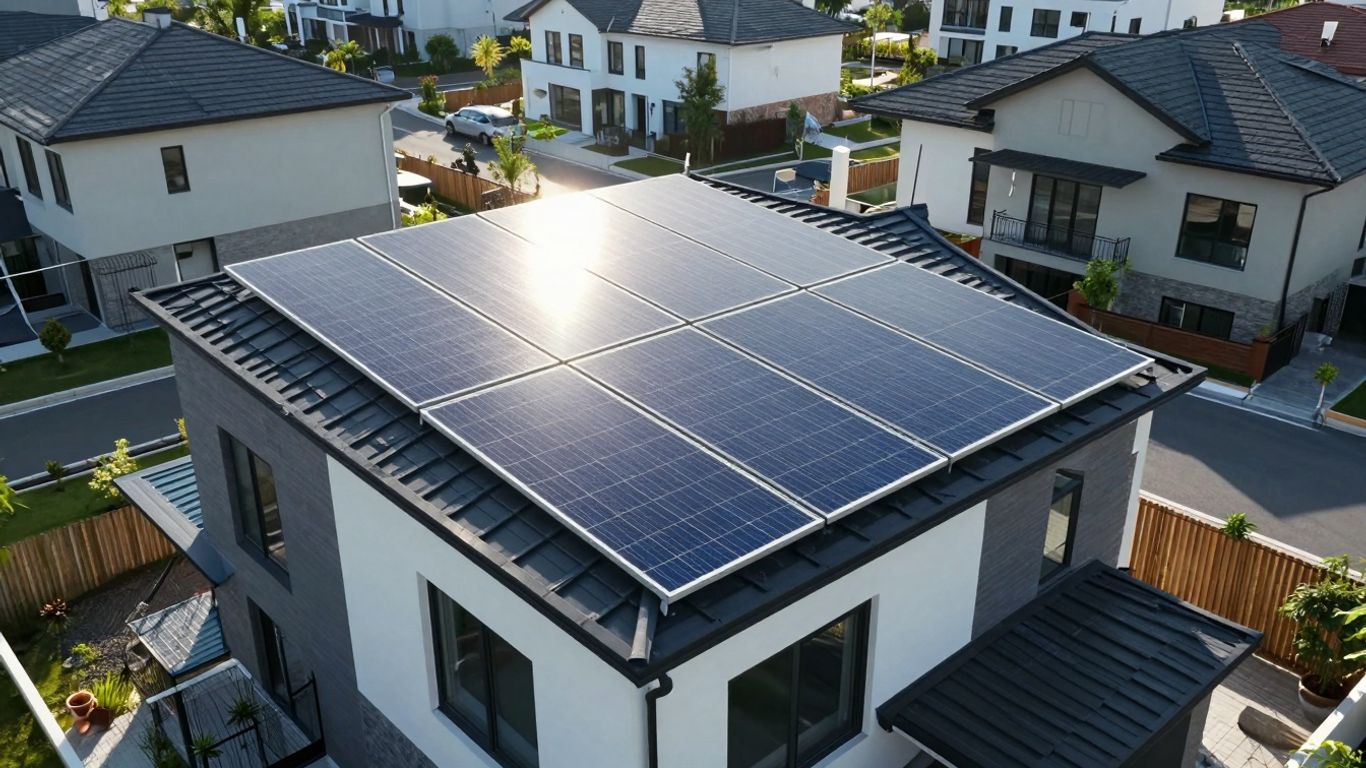
Before embarking on the installation of solar panels for your 150m² home, it is important to look closely at certain technical points and the regulations in force. These elements can impact the feasibility, performance, and cost of your project.
Roof Adaptability for Solar Installation
The first thing to check is the structure of your roof. Is it strong enough to support the weight of the solar panels? Most modern roofs are designed for this, but for older constructions, an inspection by a professional may be necessary. You also need to consider the available space. Solar panels require a certain clear area, without shading, to function optimally. The general condition of your roof is also a factor: if it needs to be redone soon, it is more sensible to do it before installing the panels. There are different ways to install panels, either by integrating them directly into the roof, which is more aesthetically pleasing but can cause waterproofing issues if not done correctly, or by installing them on top (overlay), which is often simpler and allows for better performance. The choice will depend on your house and your preferences.
Optimal Orientation and Tilt for Maximum Yield
The placement of your solar panels is crucial for the amount of electricity they will produce. In mainland France, a south-facing orientation is generally the most advantageous. However, a southeast or southwest orientation can also yield good results. The ideal tilt depends on your latitude, but it is often around 30 to 35 degrees. If your roof does not have this pitch, don’t worry! Overlay systems often allow you to adjust the angle of the panels to optimise their exposure to the sun throughout the year. It is even possible to install panels on facades or awnings, although the yield may be slightly lower than a well-oriented roof installation. A good study of your roof and its exposure is therefore a key step.
Impact of Reduced VAT on Installation Costs
Good news for your budget: in some cases, you can benefit from a reduced VAT rate on the purchase and installation of your solar panels. Currently, for installations with a power of 3 kWp or less, the applicable VAT rate is 10%. If your installation exceeds this power, the standard VAT rate of 20% applies. This is a significant advantage that can reduce the total cost of your project. It is important to carefully check the eligibility conditions for this reduced rate and ensure that your installer takes this measure into account in their quote. This can represent substantial savings on the overall amount of your investment.
Profitability and Return on Investment of a Solar Installation
Once your photovoltaic installation is in place, the question of its profitability becomes central. It’s about understanding how long it will take for the savings made and the income generated to offset the initial investment. This is a calculation that requires some attention, but it is essential for evaluating the relevance of your project.
Calculating Potential Annual Gain
To estimate the annual gain, several elements come into play. First, you need to consider the actual production of your solar panels. This depends on their power, the sunshine in your region, the orientation and tilt of your roof. A 400 Wp panel will not produce 400 kWh per year in practice; a conversion factor, often around 0.85, is generally applied to account for yield losses due to weather conditions and installation. Thus, a 4800 Wp installation (i.e., 12 panels of 400 Wp) could produce approximately 4080 kWh per year (4800 x 0.85). The annual gain is then calculated by multiplying this production by the current price of electricity. If the kWh costs €0.30, the annual gain would be €1224 (4080 kWh x €0.30/kWh).
It is important to note that the price of electricity can vary, which directly impacts the calculation of your annual gain. Anticipating these fluctuations is part of the planning.
Average Payback Period for Investment
The return on investment period, also called the payback period, is the time required for the cumulative gains to equal the initial cost of the installation. This period is influenced by the total cost of your system, including the panels, inverter, professional installation, and any administrative fees. It is also directly linked to the annual gain we have just calculated. In France, with well-sized installations and government aid, this period is generally between 5 and 10 years. Factors such as the self-consumption bonus, which reduces the acquisition cost, or a reduced VAT of 10% for installations of 3 kWp or less, can significantly shorten this period. The goal is to achieve an annual rate of return of at least 10%.
Factors Affecting Long-Term Profitability
Several elements can influence the profitability of your installation over time. The durability of the components is paramount; quality panels and a reliable inverter will minimise maintenance costs and breakdowns. The evolution of electricity prices is a key factor: if tariffs increase, your annual gain will be greater. Maintenance, although limited for solar panels, must be taken into account; simple cleaning can sometimes be enough to maintain optimal performance. You also need to consider the evolution of your consumption: if it increases, your self-consumption will be higher, but if it decreases, you may become more dependent on the grid. Finally, regulatory changes and available aid may change, so it is advisable to stay informed. Good management of your production and consumption, potentially aided by storage solutions, also contributes to maximising the benefits of your solar project. Consider checking the lifetime warranty conditions offered by some installers for long-term peace of mind.
Precautions When Purchasing Solar Panels
Purchasing solar panels represents a significant investment for your home. It is therefore essential to remain vigilant to avoid unpleasant surprises and ensure you acquire a high-performance and reliable installation. Given the enthusiasm for renewable energy, some commercial practices can be misleading. It is essential to rely on recognised professionals and compare several quotes before making a decision.
Identifying Overly Attractive and Potentially Fraudulent Offers
Be particularly attentive to proposals that seem too good to be true. Derisory prices for the entire installation, or the promise of free solar panels, are often indicators of dubious practices. These offers may hide consumer loans with high interest rates, or less efficient systems that will not meet your actual needs. Similarly, a power plant capacity announced as exceptionally high, with guarantees of total autonomy or astronomical financial gains, should alert you. Oversizing is rarely profitable in the long run and represents an unnecessary cost. It is important to focus on your actual electricity consumption needs for a balanced project.
Importance of a Personalised and Realistic Quote
A quality quote should be detailed and tailored to your specific situation. It should clearly indicate the cost of the solar panels, but also that of ancillary components such as the inverter, cabling, and any energy management systems. The installer’s fee, including installation and associated costs, should also be included. Do not hesitate to ask for clarification on each item. A realistic quote will take into account the configuration of your roof, its orientation, and your annual consumption to propose an adapted power output. The omission of even one panel can have an impact on the overall cost of the installation [d4e4].
Verifying Announced Power Against Actual Needs
It is crucial to ensure that the total power of the proposed solar installation corresponds to your electricity consumption. Too little power will not allow you to achieve your self-consumption goals, while excessive power will lead to unnecessary costs and lower profitability. Reputable professionals will help you determine the ideal power by analysing your electricity bills and assessing your site’s potential. Also consider the possibility of opting for high-power panels, which can reduce the number of units required and optimise the available roof space [77ff].
Here are some points to check in your quote:
- Component Details: Precise list of panels, inverter(s), mounting structure, cabling, etc.
- Total Power: Clear indication of the peak power (kWp) of the installation.
- Warranties: Duration and scope of warranties on panels (product and performance) and on the inverter.
- Installation Costs: Installation, connection, and commissioning fees.
- Deadlines: Estimated installation schedule.
Before signing, ensure that the quote is clear, complete, and meets your expectations. Do not hesitate to ask for explanations on any point you do not understand. Good communication with your installer is key to a successful and conflict-free project [17d6].
Financing Solutions for Your Solar Project
Lease with Option to Buy (LOA) Options
Lease with option to buy (LOA) for solar panels is an increasingly popular approach. It allows you to install a photovoltaic system without having to bear the full initial cost. In practice, you lease the equipment for a defined period, with the option to purchase it at a pre-agreed price at the end of the contract. This makes the investment more accessible, as the monthly payments are often calculated to be lower than what you would pay for a direct purchase. The amount of these monthly payments will, of course, depend on the power of the installation and the complexity of its setup.
Impact of Government Aid on Acquisition Costs
Several schemes implemented by public authorities aim to reduce the remaining cost for individuals wishing to equip themselves with solar power. The self-consumption bonus, for example, is a financial aid paid in a single instalment for installations up to 9 kWp. Its amount is degressive and depends on the total power of your installation. It is important to note that the scales are revised quarterly by the government. Furthermore, for installations of 3 kWp or less, a reduced VAT rate of 10% applies, compared to 20% for more powerful systems. This aid can significantly reduce the overall budget of your project.
Simulation of Potential Savings Through Self-Consumption
Self-consumption is the idea of directly consuming the electricity you produce. This reduces your dependence on the electricity grid and, consequently, lowers your energy bills. The potential annual saving can be substantial, often estimated between 30% and 60% of your usual consumption, depending on your consumption profile and the performance of your installation. To get a precise idea, it is recommended to carry out a personalised solar assessment. This will take into account your current consumption, the available roof space, and the characteristics of your home to best estimate the achievable savings and the return on investment period.
It is always wise to compare several quotes from qualified installers. Ensure that each quote clearly details the cost of the panels, inverter, cabling, installation, as well as the administrative procedures included. An offer that seems too good to be true deserves particular attention to avoid any unpleasant surprises.
Do you have a project to install solar panels and are looking for ways to finance it? There are several options to help you make your ecological project a reality. We will guide you to find the best solution tailored to your needs. Discover how to make your solar project accessible today!
In Summary: Your Solar Project for a 150m² Home in 2026
So, we’ve covered the ins and outs of solar panels for a 150m² home. As you’ve seen, it’s not that simple to give an exact figure; it really depends on your own consumption, your habits, in short, on many things. We’ve seen that the size of the house isn’t the only thing that matters. You need to look closely at how much you consume, what type of panels you choose, and of course, the cost of the installation. Don’t forget to be wary of offers that seem too good to be true, as they can hide surprises. The best approach is really to request personalised quotes. This will give you a precise idea of the budget and allow you to compare them at your leisure. Switching to solar is an investment, but it can be very beneficial for your wallet and for the planet. Think about it seriously!
Frequently Asked Questions
What is the typical electricity consumption of a 150m² house?
The consumption of a 150m² house varies greatly. It depends on the number of people living there, their electricity consumption habits (heating, hot water, appliances used), and the insulation of the house. A well-insulated house with economical habits will consume less than a poorly insulated house with many electrical appliances.
How many solar panels are needed for a 150m² house?
The number of panels needed is not directly related to the size of the house, but rather to its electricity consumption. For a 150m² house, between 7 and 14 panels are often installed, depending on the power of each panel and the household’s consumption. A 3 to 9 kWp installation is common.
What is the average price of a solar installation for a 150m² house?
It is difficult to give an exact price without knowing your consumption. The cost includes the panels, the inverter, the cabling, and the installation by a professional. For a 150m² house, the budget can range from a few thousand to over ten thousand euros, depending on the chosen power and available aid.
What roof area is needed to install solar panels?
The required area depends on the number and power of the panels. Generally, a solar panel measures between 1.5 and 2 m². For a 3 kWp installation (about 7 panels), you need to allow for about 13 to 15 m² of available roof space. More powerful panels mean fewer panels need to be installed, thus occupying less space.
What are the different types of solar panels and their prices?
There are mainly monocrystalline and polycrystalline panels. Monocrystalline panels are slightly more expensive but more efficient, which can be beneficial for optimising space. The price also varies according to the brand and the power of the panel. Generally, you can expect between 300 and 425 Wp per panel.
How can government aid reduce the cost of a solar installation?
The government offers several aids, such as reduced VAT (10% for installations of 3 kWp or less) and sometimes self-consumption bonuses. These schemes can significantly reduce the total budget of your solar project.
How long does it take to recoup the investment in a solar installation?
The time required to recover the invested money, known as the payback period, is generally 5 to 10 years. This depends on the electricity production, the price of the electricity you no longer purchase, and any aid received.
What precautions should be taken before buying solar panels?
Be wary of offers that seem too good to be true, such as free or very cheap panels, which often hide costly loans. Always ask for a detailed and personalised quote after a technical visit. Ensure that the proposed power accurately matches your real needs to avoid paying too much for an unnecessarily powerful installation.
