
Embarking on the installation of solar panels for a 150m² house represents a significant investment, but one whose cost can be managed through a good understanding of the various expense categories and available support. This article guides you through the budgetary details, types of panels, necessary power output, financial support schemes in 2026, as well as the practical aspects of installation and maintenance. The aim is to provide you with all the information needed to estimate the solar panel price for a 150m² house and plan your solar project with peace of mind.
Key Takeaways
- The price of a solar installation for a 150m² house generally ranges between €6,000 and €30,000, depending on the power output, type of panels, and applied subsidies.
- Monocrystalline panels offer the best performance but are more expensive, while polycrystalline panels represent a good compromise between cost and efficiency.
- The power output required for a 150m² house is often between 3 and 9 kWp, to be adjusted according to your actual energy consumption.
- In 2026, several financial aids such as the self-consumption bonus, reduced VAT (5.5% or 10%), and guaranteed purchase tariffs from EDF OA can significantly reduce the initial budget.
- Installation by an RGE-certified professional is mandatory to benefit from most aids, and panel maintenance remains minimal throughout their long lifespan.
Understanding the Cost of a Solar Installation for a 150m² House
When considering installing solar panels for a 150m² house, the first instinct is to want to know the budget required. This is a perfectly normal step, as the initial investment can seem substantial. However, it’s important to know that this cost is not fixed. It varies according to several key elements specific to each project.
Factors Influencing the Price of Solar Panels
Several elements will directly impact the final price of your solar installation. It’s not just about the number of panels, but also their technology, the complexity of the installation, and even the brand chosen. Here are the main factors to consider:
- The type of solar panels: Monocrystalline, polycrystalline, or amorphous, each has a different cost and efficiency.
- The total power output of the installation: Measured in kilowatt-peak (kWp), it depends on your annual electricity consumption.
- The complexity of the installation: A roof that is difficult to access or has a particular shape can increase the time and therefore the cost of installation.
- Warranties and brand: Reputable brands and longer warranties may result in a higher price, but also better reliability.
- Ancillary equipment: Adding a storage system (battery) or a specific inverter can alter the budget.
It is essential to request several detailed quotes to compare offers and understand precisely what is included in each proposal. Do not focus solely on the lowest price, but on the overall value for money.
Overall Budget Estimate for a 150m² House
For a 150m² house, annual electricity consumption is generally between 15,000 and 25,000 kWh. Depending on this consumption and the factors mentioned above, the cost of a solar installation can vary considerably. As an indication, here is a price range commonly observed for a complete installation, before deducting subsidies:
| Installation Power Output | Estimated Cost (in €) |
|---|---|
| 3 kWp | 7,000 – 10,000 |
| 6 kWp | 11,000 – 15,000 |
| 9 kWp | 14,000 – 19,000 |
These figures are averages. A personalised study of your home and your consumption habits is essential to obtain an accurate budget. Remember that these amounts can be significantly reduced thanks to the various financial aids available in 2026.
Analysis of Different Types of Solar Panels and Their Financial Impact
Monocrystalline Panels: Performance and Cost
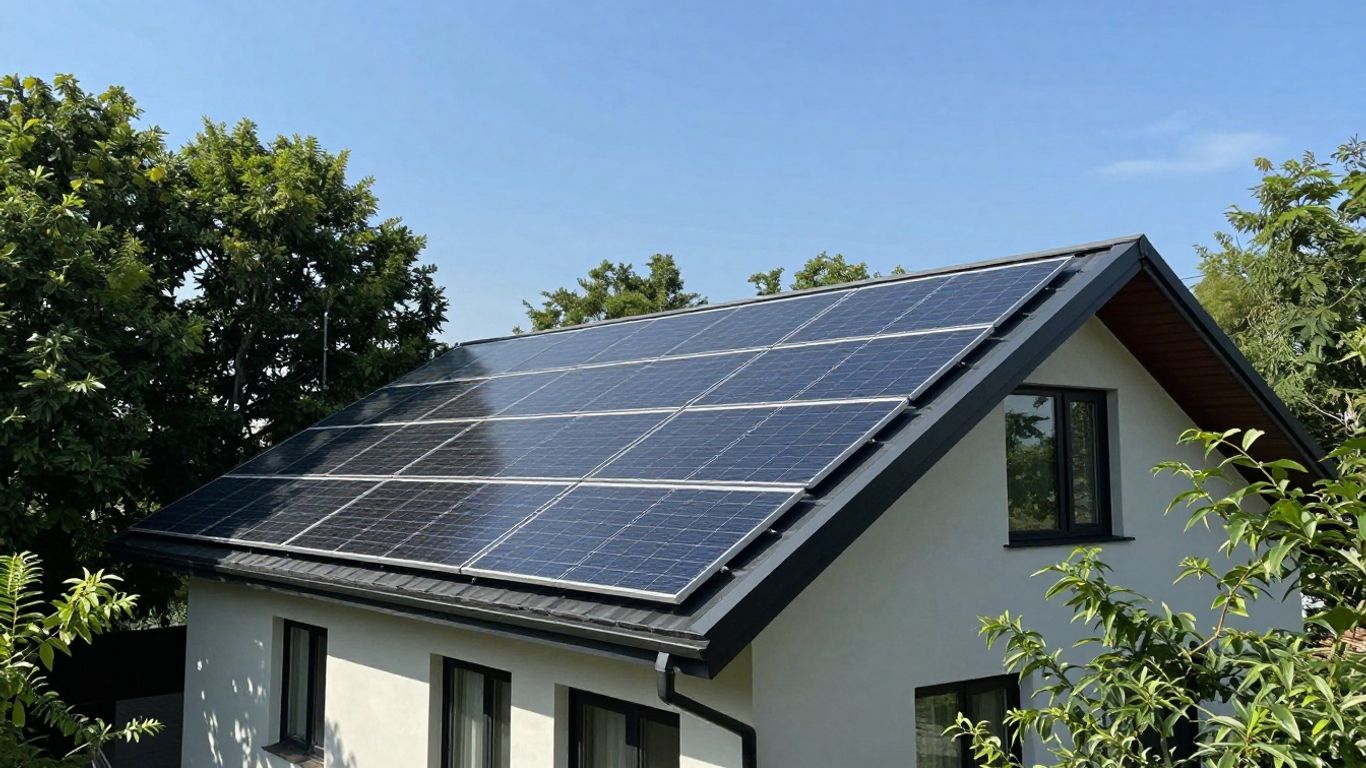
Monocrystalline panels are made from a single silicon crystal. This gives them a uniform structure that optimises electron flow, resulting in better efficiency in converting sunlight into electricity. Their efficiency is generally higher than other types of panels, making them particularly effective, even in cloudy weather or low light conditions. However, this performance gain comes at a cost: monocrystalline panels are often more expensive to purchase. For a 150m² house, if roof space is limited or if you aim for maximum production, they can represent a wise long-term investment.
Polycrystalline Panels: A Balance Between Cost and Efficiency
Unlike monocrystalline panels, polycrystalline panels are made up of multiple silicon crystal fragments. This less homogeneous structure leads to slightly lower efficiency. In return, their manufacturing process is simpler and less expensive. They therefore represent a more affordable option, offering a good compromise between purchase price and energy production. For a 150m² home, if your budget is a major concern and you have sufficient roof space, polycrystalline panels can be a very attractive solution. They are often considered the best value for money on the market.
Amorphous Panels: Flexibility and Efficiency
Amorphous panels, also known as thin-film panels, are distinguished by their flexibility and lightness. They are made by depositing a thin layer of semiconductor material onto a substrate. Their main advantage lies in their ability to function even when the light is diffuse or indirect. However, their efficiency is the lowest of the three types, meaning they require a larger surface area to produce the same amount of electricity as a monocrystalline or polycrystalline panel. They are therefore less common for traditional residential roof installations, but can be useful in specific configurations or for less energy-intensive needs.
Here is a simplified comparison table:
| Panel Type | Efficiency | Cost | Advantages |
|---|---|---|---|
| Monocrystalline | High | More expensive | Performance, low light, durability |
| Polycrystalline | Medium | Moderate | Good value for money, affordable cost |
| Amorphous (thin-film) | Low | Affordable | Flexibility, lightness, good light diffusion |
The choice of solar panel type should be carefully considered based on your priorities: maximising production, controlling the budget, or adapting to space or sunlight constraints. It is often recommended to request a detailed quote to compare the offers and performance of different technologies available on the market, taking into account the financial aids for 2026.
Determining the Necessary Power Output for Your Home
To know what power output of solar panels to install, you first need to understand your current electricity consumption. This is the basis for making the right choice.
Understanding the Kilowatt-Peak (kWp) Measurement
When we talk about power output for solar panels, we use kilowatt-peak, or kWp. This is a unit that measures the maximum power a panel can produce under ideal conditions, such as direct sunlight at a specific temperature. Essentially, the higher the kWp figure, the more efficient the panel. It is essential to understand this measurement to choose the right installation.
Recommended Power Output for a 150m² House
For a 150m² house, the required power output can vary quite a bit. It depends on your consumption, but generally, it falls between 4.5 and 9 kWp. For example, a 4.5 kWp installation could cost between €8,000 and €13,000. This is an estimate, of course, as each project is different. You need to look at your specific situation.
Link Between Energy Consumption and Installation Power Output
Your annual electricity consumption is the most important factor. For a 150m² house, this consumption can range from 3,500 kWh to over 20,000 kWh per year, depending on whether you use electricity for heating, the number of people living there, and your lifestyle. To get a precise idea, look at your old electricity bills. If you consume a lot, you will need a more powerful installation. For example, if your annual consumption is 20,000 kWh, you will need about 48 solar panels to cover your needs, assuming each panel produces 420 kWh per year. You also need to consider that production varies by season and that a storage system is needed for nighttime or sunless days. A good analysis of your consumption will help you choose the right power output, and therefore the right number of panels, for your 150m² house.
Here is a table that gives an idea of the needs:
| Annual Consumption (kWh) | Recommended Solar Power Output (kWp) |
|---|---|
| 3,500 – 8,000 | 3 – 4.5 |
| 8,000 – 15,000 | 4.5 – 6 |
| 15,000 – 25,000 | 6 – 9 |
It is always advisable to use an RGE-certified professional to validate these calculations and ensure that the installation will be suitable for your home and your actual needs. They can also help you understand the various available aids to reduce the cost of your project.
Financial Aids Available to Reduce the Solar Panel Price for a 150m² House in 2026
The Self-Consumption Bonus: How it Works and Amounts
Installing solar panels represents an investment, but several support schemes help reduce the budget. The self-consumption bonus is one of the main levers for reducing the initial cost. It is specifically designed for photovoltaic or hybrid installations that feed surplus electricity not consumed into the public grid. To be eligible, your installation must be roof-mounted.
The amount of this bonus is directly linked to the power output of your installation, measured in kilowatt-peak (kWp). Here are the indicative rates for 2026:
| Installation Power Output | Bonus Amount per kWp |
|---|---|
| Up to 3 kWp | €80 |
| Between 3 and 9 kWp | €80 |
| Between 9 and 36 kWp | €185 |
| Between 36 and 100 kWp | €97 |
For installations with a power output of 9 kWp or less, this bonus is paid in a single instalment. For larger installations, 80% is paid initially, and the remaining 20% is spread over four years.
Guaranteed Purchase Tariffs from EDF OA
Once your installation is in place, you have the option to sell the electricity you do not consume directly. This is where EDF Obligation d’Achat (EDF OA) comes in. This scheme allows you to benefit from guaranteed purchase tariffs for your surplus electricity, for a period of 20 years. These tariffs are set by decree and periodically revised. For installations under 9 kWp, the current tariff is approximately €0.04 per kilowatt-hour (kWh). This represents a complementary source of income that contributes to the amortisation of your installation.
Reduced VAT and Tax Exemption
Beyond bonuses and purchase tariffs, other tax advantages are available to you. Value Added Tax (VAT) can be reduced. For photovoltaic installations with a power output of up to 3 kWp, VAT is reduced to 10%. If your building is more than two years old, you can even benefit from a VAT rate of 5.5%. Furthermore, if your annual income from selling solar electricity remains below €305, you are exempt from tax on this income. These combined measures make investing in solar more accessible than ever. It is important to note that to benefit from most of these aids, it is essential to use an RGE-certified professional. RGE.
All these financial aids aim to encourage the development of solar energy among individuals. It is advisable to thoroughly research the eligibility criteria specific to your situation and region, as local aids may also supplement these national schemes. Do not forget that the self-consumption bonus is an investment aid for the installation of photovoltaic solar panels.
Installation Methods and Their Influence on the Budget
The choice of installation method for your solar panels has a direct impact on the overall cost of your project. There are primarily two approaches: overlay and building integration. Each has financial advantages and disadvantages that are important to consider.
Overlay: An Economical Solution
Overlay involves installing solar panels on a structure fixed directly onto your existing roof. This method is generally more affordable as it does not require modifying your roof covering. It is a preferred option if your roof is in good condition and does not require major renovation work. It often represents the most economical choice for a 150m² house, especially if you are looking to limit the initial investment. The cost of a photovoltaic installation for a 150m² house can vary, but overlay tends to keep it within the lower range of this budget.
Building Integration: Aesthetics and Performance
Building integration, on the other hand, involves making solar panels an integral part of the building’s structure. They replace traditional roofing materials. This technique is particularly appreciated for its aesthetic appeal and its potential to improve the thermal insulation of your home. However, it involves more complex work and therefore a higher installation cost. It is often considered during the construction of a new house or during a complete roof renovation.
The Importance of an RGE-Certified Installer
Regardless of the installation method chosen, it is crucial to use an RGE (Reconnu Garant de l’Environnement) certified professional. This certification attests to the quality of the work carried out and is often a prerequisite for benefiting from state financial aid. An RGE installer guarantees an installation that complies with safety and performance standards, which is essential for the longevity and efficiency of your solar system. The installation cost, including fitting by a qualified professional, is a significant expense to budget for.
Here is a simplified comparison table of the two methods:
| Installation Method | Indicative Cost | Advantages | Disadvantages |
|---|---|---|---|
| Overlay | Lower | Quick installation, less work | Less integrated aesthetics |
| Building Integration | Higher | Neat aesthetics, improved insulation | More complex work, higher cost |
It is also important to note that additional expenses may be added to the budget, such as the Consuel certificate, which is mandatory for commissioning the installation. This certificate, which verifies that your installation complies with electrical standards, is generally included in the installer’s quote, but its cost may vary. For a 150m² house, the required power output is often between 4.5 and 9 kWp, which directly influences the total price of the installation between €8,000 and €24,000. Finally, remember to inform your home insurance of the addition of solar panels, as this could impact your insurance premium.
Optimising Your Investment Through Energy Storage
To make the most of your solar installation, especially for a 150m² house, it is wise to consider energy storage. Without it, some of the electricity you produce during the day may not be used, as your consumption needs do not always coincide with peak solar production. This is where batteries come in.
The Role of Portable Power Stations
While portable power stations are not a large-scale storage solution for an entire house, they can be useful for occasional needs or for powering specific devices outside of solar production hours. They offer valuable flexibility for mobile use or as a backup solution.
Self-Consumption with Storage: An All-in-One Solution
Adding batteries to your photovoltaic installation allows you to store surplus electricity produced during the day. This stored energy can then be used in the evening, at night, or during less sunny days. This significantly increases your self-consumption rate and reduces your dependence on the traditional electricity grid. Without storage, it is difficult to use more than 40% of the energy produced, as a large part of our consumption occurs when the sun is not shining.
Here are the main advantages of storage:
- Increased energy autonomy: Less reliance on the grid.
- Reduced electricity bills: Maximum use of your free production.
- Better management of consumption peaks: Stored energy can compensate for times of high demand.
- Contribution to grid stability: By using energy when it is produced.
Benefits of Storage for Night-time Use
One of the most obvious benefits of storage is the ability to use solar energy at night. Given that a significant portion of a household’s electricity consumption occurs after sunset (lighting, electronic devices, night-time heating), having a battery allows you to cover these needs with your own production. This translates into substantial savings on your annual electricity bill, as you purchase less energy from the supplier.
The investment in a storage system should be evaluated based on your consumption profile and the size of your installation. It aims to maximise the profitability of your solar project by making you more energy independent.
Profitability and Return on Investment of a Solar Installation
Investing in solar panels for your 150m² house is a decision that warrants in-depth analysis of its profitability. It is not just an ecological gesture, but also a sound long-term financial strategy. The return on investment (ROI) is a key indicator for evaluating the relevance of this project.
Lifespan of Solar Panels
The longevity of photovoltaic panels is a major asset. Most manufacturers guarantee their panels for 25 to 30 years, or even longer. This warranty period generally covers production performance, ensuring they will continue to generate electricity efficiently for many years. This reliability directly contributes to the overall profitability of the installation, as it allows costs to be spread over a very long period.
Average Amortisation of a Photovoltaic Installation
Amortisation is the time it takes for the savings made and the income generated by your solar installation to cover its initial cost. In France, for a typical residential installation, this period is generally between 10 and 15 years. Several factors influence this duration: the initial cost of the installation, the financial aids obtained, the purchase price of surplus electricity, and above all, your own energy consumption. The more you consume the electricity you produce (self-consumption), the faster the return on investment. It is therefore advisable to size your installation correctly based on your actual needs. A good self-consumption strategy can significantly reduce this amortisation period, making your project even more attractive. For example, a 3 kWp installation can see its return on investment achieved in about 10 years, generating substantial savings in the following years.
Potential Annual Gains from Solar Production
Annual gains come from two main sources: direct savings on your electricity bill through self-consumption, and income from selling surplus electricity not consumed to an organisation like EDF OA. The exact amount varies considerably depending on the power output of your installation, your geographical location (sunlight), your consumption, and the purchase tariffs in effect. For a 150m² house, a well-designed installation can lead to annual savings of up to 50% on your electricity bill, and generate additional income. For example, a 6 kWp installation with storage can potentially generate over €41,000 in gains over 25 years, combining savings and sales revenue. It is important to note that these gains are net, after deducting any subsidies and bonuses. The goal is to maximise your energy independence while benefiting from guaranteed purchase tariffs.
Cost of Installation and Maintenance of Solar Panels
Variability of Installation Prices
The cost of installing photovoltaic solar panels is not fixed; it fluctuates depending on several factors. The installer you choose will have a direct impact on the final price. To benefit from state aid, it is imperative to use an RGE (Reconnu Garant de l’Environnement) certified professional. This certification attests to the installer’s qualifications and compliance with current standards. Quotes can therefore vary significantly from one company to another, even for installations of similar power output. It is advisable to request several quotes to compare offers and ensure you get a fair price. Remember that the price of a residential solar installation is generally between €2.50 and €3.50 per watt-peak, which for a 10 kWp system, represents a budget of €25,000 to €35,000 [3995].
Minimal Maintenance Required for Panels
Once installed, solar panels require very little maintenance. Their robust design allows them to withstand bad weather. However, periodic cleaning can be beneficial to maintain optimal performance. The frequency of this cleaning will depend on your environment: a dusty area or one prone to atmospheric pollution will require more regular maintenance than a clear rural area. Generally, once or twice a year is sufficient. Rainwater already takes care of a large part of the cleaning. It is important to check for obstructions, such as leaves or debris, which could create shaded areas on the panels and reduce their production.
Costs Associated with Preventive Maintenance
Beyond cleaning, preventive maintenance may include regular technical checks. These aim to ensure the proper functioning of the entire installation, including the inverter, wiring, and fixings. Although solar panels have a lifespan of over 30 years, the inverter, a key component that converts direct current to alternating current, has a shorter lifespan, often around 10 to 15 years. Its replacement represents a cost to anticipate in the overall budget of the installation. The Consuel certificate, mandatory for commissioning, is generally included in the installer’s quote, but it is good to check. For a blue Consuel certificate, expect around €40 excluding VAT, and for a violet one, a little over €180 excluding VAT [5034]. Home insurance must also be updated to cover the installation, which may slightly increase your annual premium.
Specific Considerations for a 150m² House
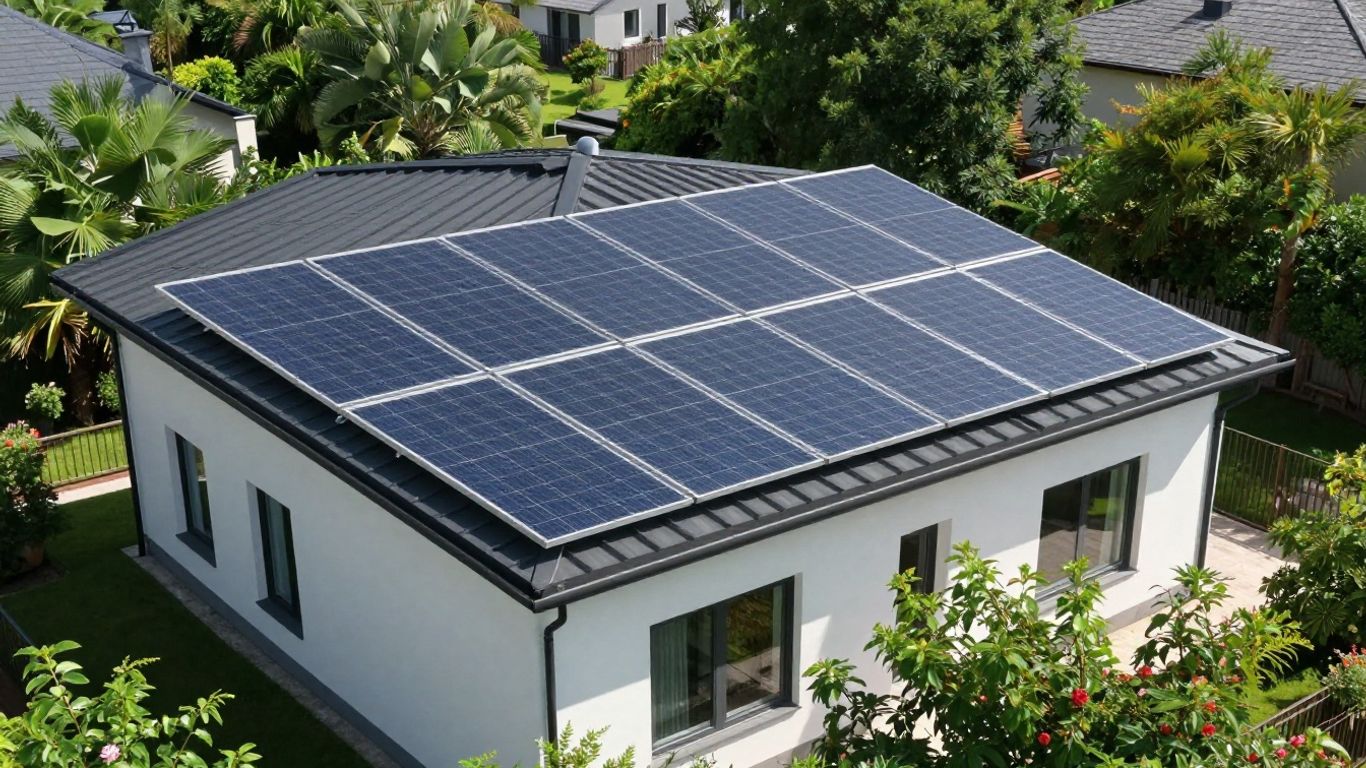
For a 150m² home, installing solar panels requires particular attention to several aspects to ensure optimal performance and successful integration. It’s not just about covering a surface, but about adapting the technology to your actual needs and the constraints of your building.
Roof Space Required for Installation
The first question that arises is that of available space. A 150m² house generally requires a significant installation power output to cover a substantial portion of its consumption. On average, for an annual consumption between 15,000 and 25,000 kWh (variable depending on insulation and heating type), it can be estimated that around 48 solar panels of 400Wp are needed. Each panel measuring between 1.7m² and 2m², this represents a total roof area required between 82 and 96m². It is therefore essential to ensure that your roof has this free space, without major shading, to accommodate the installation. A thorough study of your roof by an RGE-certified professional is essential to confirm this feasibility.
Impact of Roof Orientation and Pitch
The efficiency of your solar installation will largely depend on the orientation and pitch of your roof. Ideally, a south-facing orientation is preferred to maximise sun exposure throughout the day. However, south-east or south-west orientations can also be very efficient. The pitch also plays a role: an angle between 30° and 35° is often considered optimal in the northern hemisphere for capturing maximum solar energy over the year. If your roof has a different pitch, technical solutions exist to adjust the panel angle, although this may incur additional costs. It is important to note that even with a less favourable orientation, a solar installation can remain profitable, but its efficiency will be adjusted.
Adapting the Installation to the Specific Needs of the Household
Beyond the surface area and orientation, it is crucial to adapt the installation’s power output to your household’s actual consumption. A 150m² house can accommodate a large family with high energy needs, or conversely, a couple with more moderate consumption habits. To determine the required power output, consult your electricity bills from previous years. Calculate the annual kWh consumption of your main appliances (heating, hot water, appliances, lighting, electronics). For example, a 1 kWh heater running for 8 hours a day consumes 8 kWh daily. By adding up the consumption of all your equipment, you will get an accurate estimate of your needs. This process will allow you to correctly size your installation and avoid costly oversizing or inefficient undersizing. Remember that solar panels only produce electricity during the day; a storage solution, such as a portable power station, can be considered to use the energy produced in the evening or at night. You can find useful information on the number of solar panels for a 150m² house on this site.
The precise assessment of your annual electricity consumption is the first essential step before defining the size and power output of your future solar installation. It directly determines the number of panels needed and, consequently, the overall budget of your project.
Administrative Procedures and Current Regulations
Before you can fully enjoy your solar installation, it is essential to go through certain administrative steps and comply with the regulations in place. These formalities ensure the compliance of your project and allow you to benefit from associated financial aids.
Certifications Required for Panels and Installation
For your installation to be eligible for support schemes, particularly the self-consumption bonus and guaranteed purchase tariffs, the solar panels and the installer must meet strict criteria. The panels must be PPE2-V2 certified, attesting to their performance and safety. Furthermore, their carbon footprint must be less than 530 kgCO₂eq per kWp, and their composition must respect low thresholds for heavy metals (less than 14 mg per watt for silver, less than 0.1% lead, and less than 0.01% cadmium). The installer, on the other hand, must be RGE (Reconnu Garant de l’Environnement) certified. This certification attests to the quality of the work carried out and the expertise of the company. Without these certifications, you risk not being able to claim state aid.
Eligibility Conditions for State Aid
Financial aids, such as the self-consumption bonus and reduced VAT, are subject to several conditions. To benefit from the self-consumption bonus, your installation must be for self-consumption with surplus sale. This means you consume part of the electricity produced and sell the rest to the grid. The installation must be carried out at your place of residence by an RGE-certified professional. The power output of your installation also plays a role in the bonus amount. For example, for installations under 9 kWp, the bonus is paid in a single instalment. For larger installations, it is spread over five years. Reduced VAT at 5.5% generally applies to low-power installations, while larger installations may be subject to a rate of 10% or 20% depending on the case. It is therefore important to carefully check the specific conditions for your project to benefit from the aids.
Obligations Related to Selling Surplus Electricity
When you opt for self-consumption with surplus sale, you agree to sell the electricity not consumed to an obligated buyer, generally EDF OA (Obligation d’Achat). A contract is established for a period of 20 years, guaranteeing a fixed purchase tariff for the entire duration. This tariff is revised quarterly, but the price set at the time of signing your contract remains unchanged for you. The purchase tariffs in effect at the beginning of 2026 are, for example, €0.04/kWh for installations up to 9 kWp and €0.07306/kWh for those between 9 and 100 kWp. It is also important to note that if your installation is less than 3 kWp, the income from selling your surplus is exempt from income tax, which represents a significant tax advantage. The grid connection procedure, managed by Enedis, is a mandatory step to inject your surplus.
The commissioning of your photovoltaic installation requires obtaining a Consuel certificate. This document, issued after verification that your installation complies with electrical safety standards, is essential to activate your system. Its cost varies depending on the type of certificate required, but it is generally included in the quote from your RGE installer.
Navigating the rules and paperwork may seem complicated, but it is an important step. We are here to help you understand everything concerning administrative procedures and current laws. To learn more about the applicable rules, visit our website where we explain everything simply.
Conclusion: A Profitable and Ecological Investment
Installing solar panels for a 150m² house is a significant project, both financially and environmentally. We have seen that the budget can vary, but it is possible to manage it thanks to the various aids available in 2026, such as the self-consumption bonus or reduced VAT. Do not forget that the choice of panel type, their power output, and the installation method will have a direct impact on the final cost. However, the return on investment, estimated at around twelve years, and the lifespan of the panels, often exceeding 30 years, make this step a wise choice to reduce your energy bills and participate in the ecological transition. Remember to get well-informed and request personalised quotes to find the solution best suited to your situation.
Frequently Asked Questions about the Price of Solar Panels for a 150m² House
What is the average cost to install solar panels on a 150m² house?
The price to equip a 150m² house with solar panels can vary, but it generally ranges between €6,000 and €30,000. This amount depends heavily on the type of panels chosen, the power output needed to cover your electricity needs, and the financial aids you can obtain.
What factors influence the price of a solar installation?
Several elements affect the final price. There is the type of panels (monocrystalline, polycrystalline, amorphous), their quality and brand. The total power output of the installation, measured in kilowatt-peak (kWp), is also a key factor. Finally, installation costs and available subsidies modify the budget.
What is the price difference between different types of solar panels?
Monocrystalline panels are often more expensive because they are more efficient, especially when there is little sun. Polycrystalline panels offer a good compromise between cost and efficiency. Amorphous panels, although cheaper, have lower efficiency and are more suited to specific uses.
How do I determine the necessary power output for my 150m² house?
For a 150m² house, the recommended power output is often between 3 and 9 kWp. You need to look at your usual electricity consumption. The more you consume, the more powerful an installation you will need to cover your needs.
What financial aids can reduce the cost of my solar installation in 2026?
Several aids are available to help you. You can benefit from the self-consumption bonus, guaranteed purchase tariffs to sell your surplus electricity to EDF OA, reduced VAT (often at 5.5% or 10%), and sometimes tax exemptions if your income is modest.
What is the cost of installing solar panels?
The installation price varies depending on the installers. It is essential to choose an RGE (Reconnu Garant de l’Environnement) certified professional to be eligible for state aid. The installation cost is included in the overall equipment budget.
Does solar panel maintenance cost a lot?
Solar panel maintenance is generally very simple and inexpensive. It often only requires occasional cleaning with water to remove dust or snow. There are no significant maintenance costs to anticipate.
How long does it take to recoup the cost of a solar installation?
In France, a photovoltaic solar installation is generally amortised in about 12 years. Given that solar panels have a lifespan exceeding 30 years, it is a profitable long-term investment.
