
Installing solar panels at home is a decision that sparks a lot of interest, especially with fluctuating energy prices. But concretely, is it a good financial plan? Let’s look together at how to estimate the profitability of a photovoltaic installation. It’s not that complicated when you have the right information. The idea is to understand how long it takes for the investment to pay for itself and what it yields in the long term.
Key Takeaways
- The profitability of a solar installation is calculated by comparing the initial cost with the savings made on the electricity bill over the lifespan of the panels, which is 30 to 40 years.
- Generally, you can expect to recoup your investment within 10 to 15 years, but this figure depends on several factors such as the installed capacity and the self-consumption rate.
- The annual yield of solar panels is estimated between 8 and 12% over 30 years, which is often more attractive than traditional bank investments like the Livret A.
- To optimise profitability, it is advisable to correctly size your installation, consume as much of the electricity produced as possible (self-consumption), and pay attention to the orientation and tilt of the panels.
- Online simulators and personalised quotes from RGE-certified professionals are essential tools for obtaining an accurate estimate of your solar project’s profitability.
Understanding the Profitability of Solar Panels
Investing in photovoltaic solar panels represents a significant financial decision. To ensure this investment is wise, it is crucial to fully understand what profitability entails in this context. It’s not just about producing green electricity, but also about generating savings and potentially long-term income. Several elements come into play to determine if your solar installation will be profitable.
Definition of Photovoltaic Profitability
The profitability of a solar installation is primarily measured by the time it takes for the generated benefits (savings on electricity bills, income from selling surplus electricity) to equal the initial installation cost. In other words, it’s the point at which your system starts making you net money. The shorter this period, the more profitable the investment is considered. Therefore, it’s important to look beyond the simple purchase price to assess the earning potential over the equipment’s lifespan, which generally extends from 30 to 40 years.
Factors Influencing Overall Profitability
Several elements will play a role in calculating this profitability. The amount of electricity your panels will produce is a key factor. This depends, of course, on the power of your installation, but also on the sunshine in your region and the absence of shading on your panels. Your own electricity consumption is also crucial: the more you consume the electricity you produce (self-consumption), the greater your savings will be. Finally, available financial aid and the feed-in tariffs for surplus electricity from suppliers play a significant role in accelerating the return on investment. A good understanding of these factors allows for better anticipation of expected benefits.
Lifespan of Solar Installations
The longevity of solar panels is a major asset for their profitability. Most manufacturers guarantee their panels for 25 years, but their useful lifespan can extend to 30 or even 40 years. During this period, they will continue to produce electricity, albeit with a slight decline in performance over the years. This long lifespan allows the initial cost to be spread over many years, making the profitability calculation more favourable. It is important to note that other components, such as the inverter, have a shorter lifespan and may need to be replaced once during the installation’s life, which must be taken into account in the overall cost calculation. Regular maintenance is also a way to ensure the installation operates at its best capacity throughout its lifespan, which directly contributes to profitability. Solar panel prices tend to fall, which can help with financial planning and adjusting orders based on financing opportunities. This decrease in costs accelerates the return on investment, making solar energy even more accessible see financial aid.
The assessment of profitability should not be limited to the purchase cost. The overall benefits over the installation’s lifespan, including direct savings, potential income, and property valuation, must be considered.
Calculating the Return on Investment for Your Installation
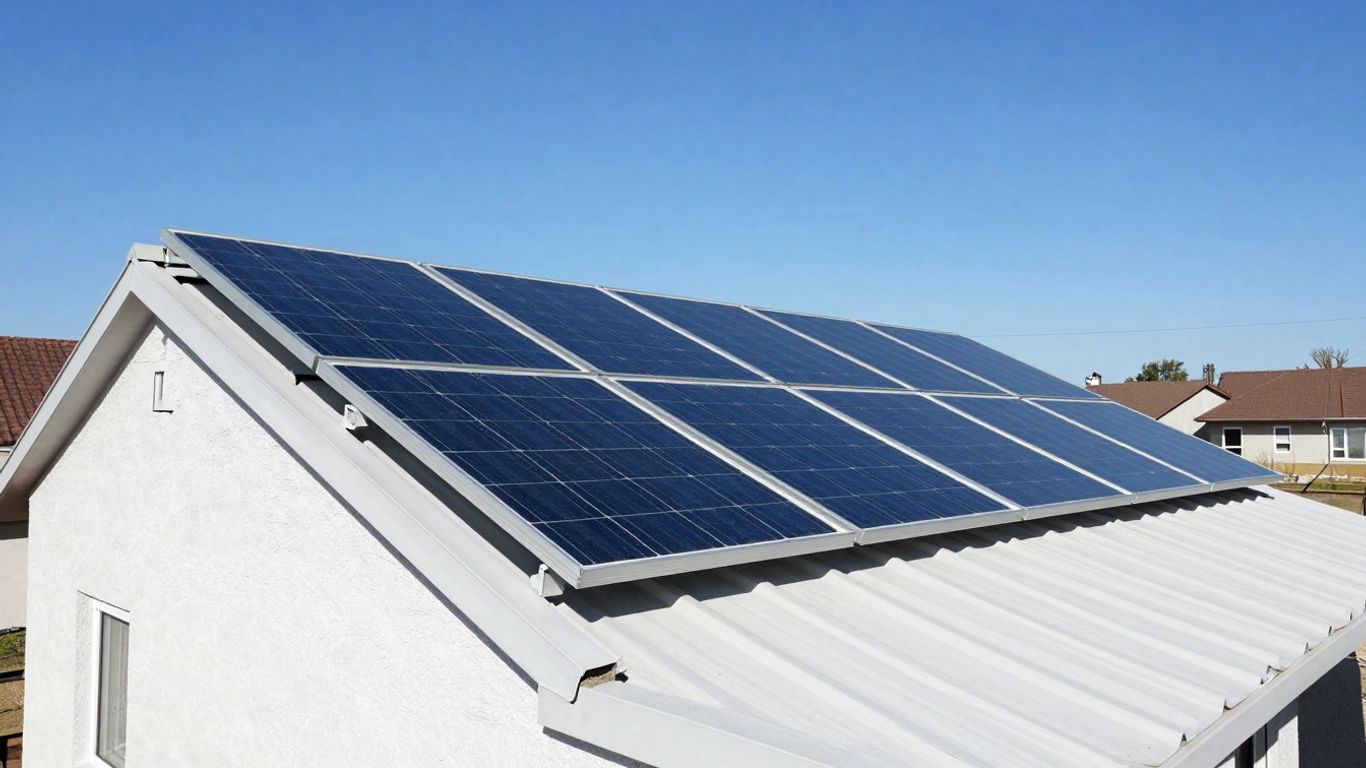
To fully understand the profitability of your solar project, it is essential to calculate the return on investment (ROI). This gives you a precise idea of the time needed for the savings and income generated to cover the initial expense. This is a key step before you commit.
Assessing Initial Costs and Future Expenses
The first element to consider is the total cost of your installation. This includes not only the price of the solar panels and inverter, but also the installation fees by a qualified professional, any grid connection costs, and the Consuel certificate which attests to the installation’s compliance. Don’t forget to budget for annual maintenance costs, which, although generally low, do exist. You also need to consider the lifespan of certain components, such as the inverter, which might need replacement after 10 to 15 years.
The initial cost can vary considerably depending on the installation’s power and the quality of the chosen equipment. Therefore, it is important to obtain multiple quotes to compare and make an informed choice.
Estimating Solar Electricity Production
The amount of electricity your panels will produce depends on several factors: the peak power of your installation (expressed in kWp), the sunshine in your region, the orientation and tilt of your panels, and the absence of shading. A good estimate of this production is essential for calculating potential savings. For example, a 3 kWp installation in the south of France will not produce the same amount of energy as an identical installation in the north.
It is possible to estimate this production using online simulators or by consulting production data from similar installations in your geographical area. The goal is to obtain a realistic estimate of the amount of electricity you can consume or sell.
Taking into Account Available Aid and Subsidies
To make your project even more profitable, you need to consider the financial aid you may be entitled to. This can take the form of direct subsidies, favourable feed-in tariffs for the electricity you sell back to the grid, or tax credits. These schemes aim to reduce the initial installation cost and, consequently, shorten the time needed to reach profitability. It is therefore crucial to find out about the schemes in place at the time of your project, as they can make a significant difference in your return on investment calculation. For example, the feed-in tariff for electricity injected into the grid is a key element for calculating the revenue generated from selling surplus electricity. You can find information on available aid on government websites or from qualified installers, who are familiar with these schemes. The objective is to maximise the self-consumption rate [4180] to reduce your electricity bill as much as possible.
Here are the main elements to consider for your calculation:
- Total installation cost: Panels, inverter, installation, connection, etc.
- Estimated annual production: In kWh, based on power and sunshine.
- Annual consumption: Your current consumption and what you plan to self-consume.
- Electricity feed-in tariff: The price at which you sell surplus electricity.
- Aid and subsidies: Amount of aid received.
- Annual maintenance costs.
The return on investment calculation should not be a mere formality. It is a financial projection that must be as accurate as possible to assess the economic viability of your solar project. In-depth analysis will allow you to make an informed decision and ensure your investment will be profitable in the long term, typically within an average timeframe of 12 years [5583].
The Financial Benefits of Photovoltaic Panels
Installing solar panels is a bit like putting money aside for the future, but with immediate advantages. We’re talking about very concrete benefits that directly impact your wallet. Let’s look at this more closely.
Significant Reduction in Electricity Bills
The first, and often most anticipated, benefit is the reduction in your energy expenses. The electricity your panels produce is consumed directly by your household. The less electricity you buy from the grid, the lower your bill. This is a direct saving that accumulates month after month. Think about it: every ray of sunshine that hits your panels is a small victory against ever-increasing electricity prices. It’s a smart way to regain control over a portion of your current expenses.
Income Generation Through Surplus Sales
It happens that your panels produce more electricity than you consume, especially during sunny days or when you are away. Don’t worry, this surplus is not lost. It can be sold. Thanks to schemes like the obligation to purchase, an operator is required to buy back this excess electricity at a defined rate. This turns your installation into a small source of passive income. In 2025, a 28 kWp installation could generate between €553 and €4,112 per year through surplus sales, depending on the conditions estimate of income from surplus sales.
Increase in Property Value
Beyond direct savings and income generated, having solar panels on your roof can also increase the value of your property. A home equipped with photovoltaic panels is often perceived as more modern, more ecological, and more economical to run. This can translate into a higher selling price if you decide to move. It’s an investment that benefits both your current budget and the value of your real estate assets.
Installing solar panels represents an initial investment, but the financial benefits manifest on several fronts: reduced expenses, additional income, and property valuation. The profitability calculation takes these different aspects into account to assess the relevance of your project.
Here’s an overview of potential benefits:
- Direct Savings: Reduced electricity bill thanks to self-consumption.
- Additional Income: Sale of surplus unused electricity.
- Asset Appreciation: Increased value of your property.
- Energy Independence: Less reliance on fluctuating energy prices.
It is important to note that the overall profitability of a solar installation is a complex subject that depends on many factors, but the cost-benefit ratio is generally favourable.
Payback Period for a Solar Installation
Factors Determining the Return on Investment Period
The time it takes for your investment in solar panels to pay for itself, i.e., the payback period, depends on several key elements. It is not a fixed period, but rather an estimate that can vary considerably from one project to another. Understanding these factors helps you better anticipate the return on your investment.
- Initial installation cost: The purchase and installation price of the panels, inverter, mounting structures, and any storage systems. The higher this cost, the longer the payback period will be.
- Electricity production: The amount of energy your panels will generate each year. This is directly linked to the power of your installation, the quality of the panels, but also the sunshine in your region and the absence of shading.
- Electricity consumption: The portion of the electricity produced that you consume directly (self-consumption). The more you consume your own production, the less electricity you buy from the grid, which increases your savings and reduces the payback period.
- Electricity price: The evolution of the cost of electricity you buy from the grid. An increase in electricity prices makes your solar production more attractive and accelerates the return on investment.
- Aid and subsidies: Self-consumption bonuses or guaranteed feed-in tariffs for surplus electricity injected into the grid can significantly reduce the initial cost or increase your income, thereby shortening the payback period.
Average Payback Period Observed
In France, the average period to pay back a photovoltaic solar installation is generally between 8 and 15 years. This figure is an average and can be shorter or longer depending on the specifics of each project. For example, a well-exposed installation with a high self-consumption rate and benefiting from aid may reach its profitability threshold more quickly. Conversely, a less optimised installation or one in a less sunny region will take longer. It is important to note that the lifespan of solar panels is often over 30 years, meaning that after the payback period, the electricity produced becomes almost free for many years.
Impact of Self-Consumption on Payback
Self-consumption plays a major role in reducing the payback period for your solar installation. By directly consuming the electricity you produce, you reduce your dependence on the electricity grid and lower your bills. The higher your self-consumption rate, the greater the savings. For example, a family that consumes 60% of its solar production will see its return on investment accelerated compared to a family that consumes only 30%. Adding a battery storage system can further increase this self-consumption rate, making your project even more profitable. The goal is to maximise the use of solar energy produced on-site, thereby reducing the need to purchase electricity at often fluctuating prices. For a more precise estimate, it is advisable to use an online simulator or seek professional advice to assess your self-consumption potential.
The payback period is the time required for the savings and income generated to equal the initial installation cost. It is influenced by energy costs, solar production, and available aid.
Annual Profitability Rate of Solar Panels
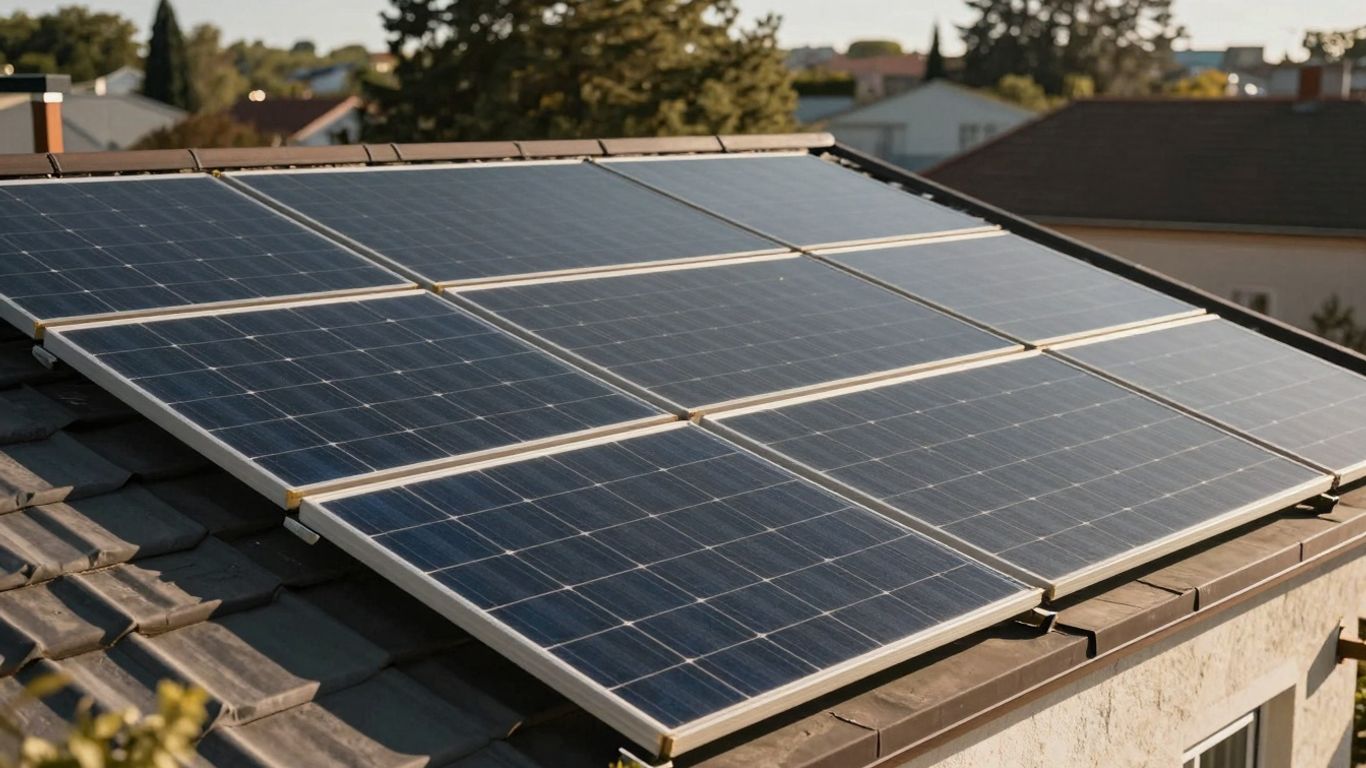
Once we have a good understanding of how solar installations work and their costs, the next question is: does it really pay off? Let’s talk about the annual profitability rate. It’s a bit like looking at the yield of a stock or a savings account, but for your roof.
Comparison with Other Financial Investments
It’s important to realise that solar panels, once installed, represent a fairly secure investment. We often talk about an annual profitability rate between 8 and 12% over the lifespan of the installation, say 30 years. To put that into perspective, the Livret A, which is a safe bet, generally yields around 3%. That’s a significant difference, especially when you consider that solar energy is a free resource once the equipment is paid for. It’s a bit like having your own small power plant on your roof, which earns you money while saving you on your bills. It’s an investment that has the merit of being tangible and producing a real benefit each month.
Long-Term Potential Yield
The real advantage of solar is its longevity. Panels are designed to last 30 to 40 years, or even more. This means that the initial return on investment, which averages between 9 and 15 years depending on the configuration, is just the beginning of the profit period. After you’ve paid back your investment, the electricity you produce is almost free. You continue to reduce your bills and, if you’ve chosen to sell the surplus, you continue to receive income. It’s a bit like planting a fruit tree: at first, you have to wait for it to grow and produce, but once it’s mature, it gives you fruit for many years. The long-term potential is therefore very attractive, especially in a context of rising energy prices. Make sure to choose your solar panels carefully to maximise this performance over time.
Analysis of Investment Risks and Security
Of course, no investment is entirely risk-free. However, photovoltaic solar is considered a relatively safe investment. The main risks are related to the installation’s performance (which depends heavily on the quality of the installation and sunshine) and regulatory changes regarding electricity feed-in tariffs. But overall, with a well-sized installation carried out by recognised professionals, the risks are managed. The government supports the development of renewable energies, which offers a certain security regarding support mechanisms. Furthermore, solar energy production is less subject to the vagaries of financial markets than other types of investments. It is an investment in a local and renewable resource, making it less dependent on global geopolitical or economic fluctuations. Self-consumption, in particular, reduces your dependence on traditional energy suppliers, which is an additional guarantee for your energy budget.
Optimising the Profitability of Your Solar Project
Once your solar installation is in place, several levers can be used to maximise its financial benefits. It’s not just about installing panels and waiting; active management can make a real difference in the long run.
Importance of Appropriate Sizing
The starting point for any profitable installation is accurate sizing. Too small, and it won’t cover your needs, leaving you dependent on the grid. Too large, and it represents an unnecessarily high initial investment, thereby extending the payback period. A qualified professional, ideally RGE certified, will be able to assess your current and future consumption to propose an appropriate power output. They will take into account factors such as the number of people in the household, the use of energy-intensive appliances, and even potential changes in your needs.
Tips for Maximising Self-Consumption
Self-consumption means directly using the electricity your panels produce. The higher this rate, the less electricity you buy from your supplier, and the lower your bill. To achieve this:
- Adapt your usage to production hours: Prioritise using the most energy-hungry appliances (washing machine, dishwasher, electric water heater) during peak sunshine hours.
- Use an energy management system: These smart devices can automatically control your appliances to run when solar production is at its maximum. They help optimise the consumption of electricity produced on your installation.
- Consider storage: A battery can store excess energy produced during the day for use in the evening or during cloudy weather. Although it represents an additional cost, it can significantly increase your self-consumption rate and thus your overall profitability.
Role of Panel Orientation and Tilt
The physical placement of your panels is crucial. Ideally, panels should face south for maximum sunshine throughout the day. However, a south-east or south-west orientation remains very efficient. The tilt of the panels also plays a key role: a slope of around 30 to 35 degrees is generally recommended to best capture the sun’s rays throughout the year, taking latitude into account.
A well-thought-out installation from the outset, with accurate sizing and optimised usage, is the key to maximum profitability and a quick return on investment. Do not neglect any step of this planning process.
Solar Potential and its Influence on Profitability
Impact of Geographical Sunshine
Where you live plays a significant role in the amount of energy your solar panels can produce. Regions with more sunshine, like the south of France, will see their panels produce more electricity annually than those installed in less sunny areas. This doesn’t mean panels aren’t profitable elsewhere, but production expectations need to be adjusted based on geographical location. A good feasibility study will take these climatic data into account to best estimate the yield.
Influence of Orientation and Shading
Your roof’s orientation is a key factor. Ideally, panels should face south to capture the maximum amount of sun throughout the day. A south-east or south-west orientation remains very efficient. The tilt of the panels is also important, generally around 30 to 35 degrees, to optimise solar capture according to latitude. You also need to be mindful of shading. A tree, a neighbouring building, or even a chimney can significantly reduce electricity production if the panels are shaded, even for part of the day. Therefore, it is essential to thoroughly analyse your installation’s environment before proceeding.
Role of Available Surface Area for Installation
The surface area of your roof or land available for installing solar panels directly determines the total power of your installation. The more surface area you have, the more panels you can install, and thus the more electricity you will produce. However, it’s not just about having a large surface area; it also needs to be well-exposed and clear. A smaller but perfectly oriented and unshaded surface can be more profitable than a large, poorly placed one. The sizing must be adapted to your needs and the usable surface area for optimal return on investment. A well-designed installation, even on a modest surface, can be very profitable.
It is important to note that even in less sunny regions, installing solar panels remains an interesting option, particularly thanks to technological advancements that improve panel efficiency and the decrease in installation costs. Self-consumption allows for direct reduction of your electricity bill, making the project profitable regardless of the pure sunshine rate.
Here are some elements to consider when evaluating solar potential:
- Local sunshine data: Find out the average annual sunshine hours in your department.
- Potential obstacles: Identify trees, buildings, or other elements that could cast shadows on your roof.
- Usable surface area: Measure the available roof space and check its condition (structure, covering).
Solar panels offer an annual profitability rate that can reach 8 to 12% over 30 years, far exceeding traditional investments like the Livret A. This potential long-term yield makes it an attractive investment.
Costs and Prices of a Photovoltaic Installation
Factors Influencing the Price of an Installation
The cost of a photovoltaic installation is a key element in assessing its profitability. Several factors contribute to the final price. It’s not just about the number of panels, but also their power, the quality of the chosen equipment, and the complexity of the installation. The price is generally expressed in euros per installed kilowatt-peak (kWp). Equipment accounts for about two-thirds of the total cost, while labour and associated services make up the other third.
Estimating Average Costs per Installed Power
To give you a more precise idea, here are average cost estimates for different installation powers, before deducting aid. These figures can vary depending on the installers and the region.
| Installed Power | Estimated Average Cost (equipment and installation included) |
|---|---|
| 3 kWp | Approximately €6,000 |
| 6 kWp | Approximately €9,700 |
| 9 kWp | Approximately €13,000 |
It is important to note that these prices have fallen considerably in recent years, making solar increasingly accessible. The evolution of energy costs makes these investments increasingly competitive compared to other energy sources.
Taking Into Account Bonuses and Feed-in Tariffs
To reduce the initial cost, several aid schemes exist. The self-consumption bonus is one of the most significant. Its amount depends on the power of your installation. For example, for a 3 kWp installation, the bonus can be around €240.
The most common financial aid is the self-consumption bonus, which reduces the net cost of your installation. There are also guaranteed feed-in tariffs for electricity you do not use and sell back to EDF OA, set at €0.04/kWh.
In addition to this aid, a reduced VAT rate of 10% may apply to equipment and installation for small power installations (under 3 kWp). Don’t forget to check the eligibility criteria for each aid to maximise savings.
Maintenance and Costs of Solar Panels
Although solar panels are designed to last and withstand the weather, regular maintenance is recommended to ensure their optimal performance and the longevity of the installation. This is not heavy maintenance, but rather periodic checks and cleaning.
Frequency and Cost of Panel Cleaning
Solar panels often benefit from the self-cleaning effect of rain, which removes some dust and debris. However, in less rainy areas, or if elements like leaves or bird droppings accumulate, manual cleaning may become necessary. It is advisable to use a professional for this task, at least once every two years. This service generally costs between €150 and €200 and ensures that nothing obstructs the surface of the panels, which could reduce their production capacity. A clean panel produces more electricity.
Lifespan and Replacement of the Inverter
Unlike the panels themselves, which can operate for 30 to 40 years, the inverter, a key component that converts the DC current from the panels into AC current usable by your home, has a more limited lifespan. String inverters have an average lifespan of 10 years, while micro-inverters, installed under each panel, can last up to 20 years. The cost of replacing an inverter varies considerably, from €600 for a string model to over €3,000, depending on the technology and power. Therefore, it is important to factor this cost into the long-term budget of your installation.
Annual Costs Related to Grid Usage
Beyond the direct maintenance of the panels and inverter, there are annual fees related to connecting your installation to the public electricity grid. This is the TURPE (Tariff for the Use of Public Electricity Grids). These fees cover the maintenance and management of electrical infrastructure. They are generally modest, ranging from €10 to €50 per year, depending on the power of your installation. Although low, they represent a recurring expense that should not be forgotten in the overall profitability calculation. The study of a photovoltaic project must take all these elements into account for a complete overview. Consult an impact study to better understand the different phases of a solar project.
The maintenance of solar panels should not be neglected. Although the panels themselves are very resistant, other components like the inverter have a shorter lifespan and require replacement. Planning for these future costs is a key step for sound financial management of your solar installation. The product warranty for panels, which covers their proper functioning, generally extends over 10 to 20 years, demonstrating their long-term reliability.
Simulation and Personalised Profitability Calculation
Using Online Simulators
To get a precise idea of what your solar installation can earn you, it is highly recommended to use the available simulation tools. These online platforms are designed to give you a quick and personalised estimate. By entering a few key pieces of information about your home, your electricity consumption, and your location, you will get a projection of energy production, potential savings, and the time needed to amortise your investment. This is a very useful first step to assess the viability of your project. For example, Groupe Roy Énergie offers a free solar simulator to estimate your photovoltaic project.
Concrete Example of Profitability Calculation
Let’s take the case of a family installing a 3 kWp system. This system could produce approximately 4,000 kWh per year. If this family consumes 8,892 kWh annually and manages to self-consume 53% of its solar production, this represents 2,120 kWh consumed directly. Considering an electricity price of €0.1740 per kWh, the saving on the bill amounts to approximately €368.88 for this self-consumed portion. By adding the savings on the portion not directly consumed but which reduces overall need, and deducting annual fees (like TURPE), we get a net annual saving. To find the return on investment period, simply divide the total installation cost by this net annual saving. It is important to note that this calculation is a simplification and that many factors can influence the final result.
Importance of Requesting Multiple Quotes
While online simulators offer an excellent first approach, they do not replace a personalised study carried out by professionals. Therefore, it is essential to request multiple quotes from qualified installers. Each quote should detail:
- The total cost of the installation, including equipment (panels, inverter, etc.) and labour.
- The total power of the proposed system and the estimated annual production.
- The warranties offered on equipment and installation.
- The administrative procedures handled.
Comparing these proposals will not only allow you to get the best price but also to choose the most competent installer best suited to your project. An in-depth study, such as a photovoltaic impact study, is often included in these quotes and helps validate the technical and economic feasibility of your project.
The analysis of initial costs, available aid, expected production, and future savings is key to anticipating the profitability of your solar installation. Do not rely solely on general estimates; a tailored assessment is essential for making an informed decision.
Are you wondering how much you could earn by installing solar panels? Our section "Simulation and Personalised Profitability Calculation" is here to help you see more clearly. We explain in a simple way how to estimate your potential earnings. Come and discover how the sun can work for you and reduce your bills. For a precise estimate tailored to your situation, visit our website today!
In Summary: Solar, an Investment That Makes Sense
Ultimately, installing solar panels is a bit like planting a tree: it requires an initial investment, but it bears fruit in the long term. We’ve seen that the profitability calculation, although dependent on many factors like your consumption or sunshine, shows that you can recoup your investment in about ten years on average. And after that, for 20 years or more, it’s a bonus: lower electricity bills, and even a small income if you sell the surplus. It’s not a miracle solution to get rich overnight, but it’s an intelligent approach to save money, gain autonomy, and do your bit for the planet. If you’re still hesitating, doing an online simulation or requesting quotes from professionals really helps to see things more clearly.
Frequently Asked Questions about Solar Panel Profitability
Are solar panels profitable everywhere in France?
Yes, solar panels can be profitable throughout France. For them to work well, the panels must be well-placed, ideally facing south with good tilt. A professional can help you check if it’s a good idea for your home.
How do I know if my solar installation will be profitable?
To know if your solar project will be profitable, you need to look at several things: how much the installation costs initially, how much you will save on your electricity bills, and how much you could earn by selling the electricity you don’t use. Getting multiple quotes from professionals will help you compare.
Is it still worthwhile to install solar panels in 2025?
Installing solar panels in 2025 remains a good idea. Electricity is becoming increasingly expensive, and solar panels help you reduce your expenses. Furthermore, they last a long time, so it’s a good long-term investment.
How long does it take for solar panels to become profitable?
Generally, it takes between 10 and 15 years for the money spent on solar panels to be recovered through savings. After this period, the electricity you produce is almost free for many years.
What are the advantages of having solar panels?
The main advantage is paying less for your electricity. You can also earn a little money by selling the electricity you don’t consume. In addition, your home can increase in value if you have solar panels.
How can I make my solar panels even more profitable?
To earn more money with your solar panels, try to use as much of the electricity they produce as possible when they are generating it. For example, run your washing machine or dishwasher during the day. Good maintenance also helps maintain good performance.
Does the sunshine in my region affect profitability?
Yes, sunshine is very important. The more sun there is in your region, the more electricity your panels will produce and the faster they will become profitable. The orientation of your roof and shadows from trees or buildings around also play a role.
How much does a solar panel installation cost and is it worth it?
The price of an installation depends on its size and the quality of the equipment. Even if the initial cost may seem high, the savings on electricity bills over 30 years or more often make the investment very worthwhile. It is advisable to request multiple quotes to get a precise idea.
