
Considering installing solar panels but don’t know where to start to get an estimate? Obtaining a reliable solar panel quote is an important step. Fortunately, there are online tools that can give you an initial idea of the cost and potential of your project. This article guides you through using these simulators and understanding how they work, so you can approach your solar project with full knowledge.
Key Takeaways
- A solar panel quote simulator uses your address and satellite data to estimate the solar potential of your roof, taking into account sunshine, orientation, and tilt.
- For an accurate estimate, the simulator will consider your annual electricity consumption, often provided via your electricity bill, to correctly size the installation.
- Simulators provide a projection of installation costs, potential annual savings, and payback period, often deducting available financial aid.
- While useful for an initial budgetary and technical approach, online simulations have limitations and do not replace a detailed study carried out by an RGE-certified professional.
- Using a simulator is a free and quick way to assess the feasibility of your project, compare initial estimates, and prepare to request personalised quotes from installers.
Understanding How a Solar Panel Quote Simulator Works
What is a Solar Simulator and What is it For?
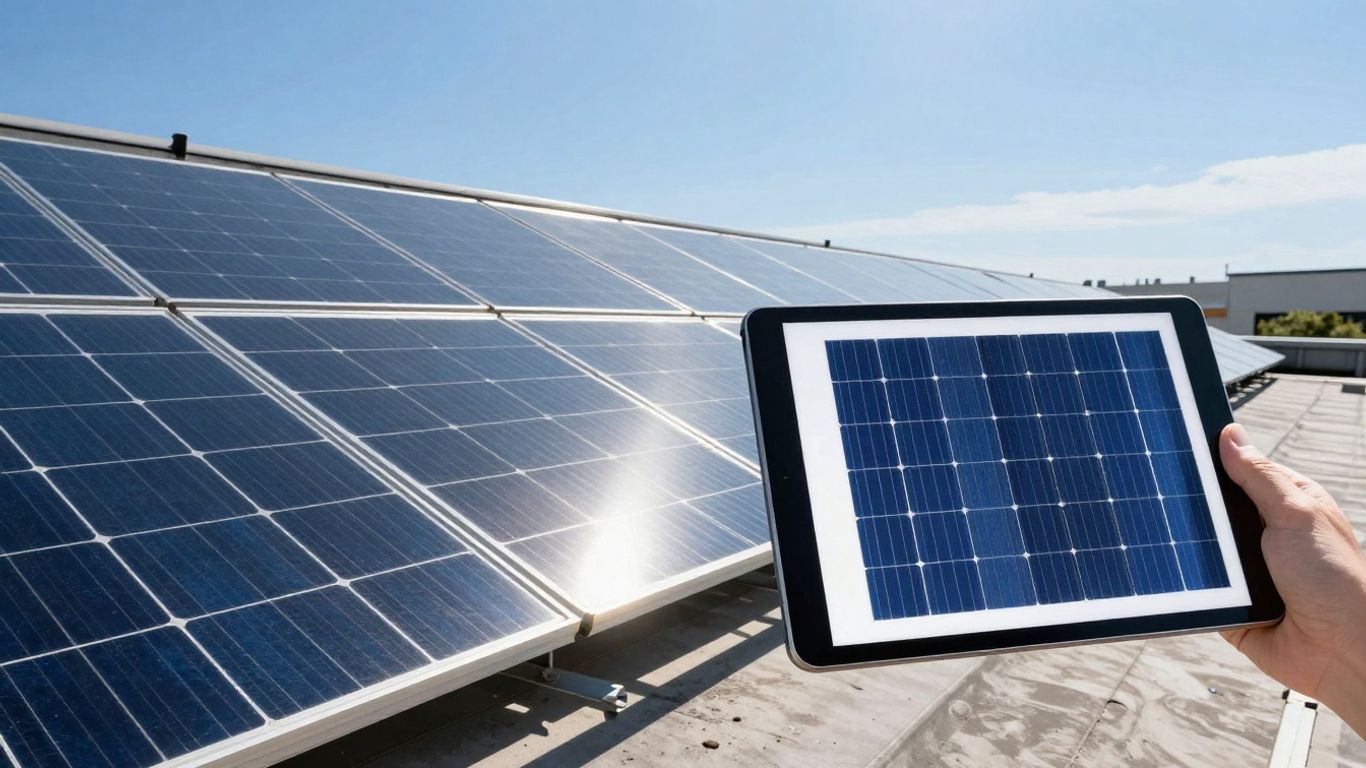
A solar simulator is an online tool designed to give you an initial idea of the potential of your photovoltaic panel installation project. It is an application that, in a few minutes and without obligation, allows you to obtain a quantified estimate of the performance and cost of a solar system adapted to your home. Its main purpose is to help you quickly assess the feasibility and relevance of such an installation, without having to contact several professionals directly. It is a preliminary step to budget your project and understand the potential benefits.
Information Provided by a Solar Panel Simulator
When you use a simulator, several key pieces of data are generally presented to you. You will receive an estimate of your future electricity bill, taking into account the electricity you will produce and consume (self-consumption) as well as the sale of surplus. The simulator also details your projected annual savings, distinguishing between those from self-consumption and those from selling surplus. The total installation cost, including equipment, installation, and deducted financial aid (such as the self-consumption bonus or reduced VAT), is also displayed. Finally, a 20-year profitability projection gives you an idea of the investment payback period and the overall expected profit. You can even visualise a proposed layout of the panels on your roof.
How a Simulator Estimates Your Roof’s Solar Potential
To assess your roof’s solar potential, the simulator uses several parameters analysed from satellite images and geographical data. The address you provide helps determine the average sunshine in your region. Then, the tool automatically analyses your roof’s characteristics: its orientation (ideally south-facing to maximise production) and its tilt (the optimal angle is generally between 30° and 35° in France). It also takes into account any shading caused by trees, chimneys, antennas, or neighbouring buildings, which can significantly reduce energy production. These combined elements allow for an estimate of the amount of energy your panels could produce annually. For example, in France, a 1 kWp system can produce between 800 and 1400 kWh per year, depending on these factors [19e1].
Essential Parameters for a Reliable Solar Panel Quote Estimate
To obtain a truly useful quote estimate for solar panels, you need to look beyond the simple figures. Several elements come into play and can make a difference to your project. Think of it like preparing a good meal: the basic ingredients are important, but it’s how you put them together that makes all the difference.
The Importance of Address for Sunshine Analysis
Where you live is the primary determining factor. The sun doesn’t shine the same everywhere in France. The south of the country benefits from much more generous sunshine than the north, which directly impacts the amount of electricity your panels can produce. A simulator uses your address to consult precise climate data and estimate your region’s solar potential. It’s a bit like knowing whether you need a winter coat or just a t-shirt before going out.
Automatic Analysis of Your Roof: Orientation, Tilt, and Shading
Once the address is known, the tool will take a close look at your roof. It will check which direction it faces (south is ideal, but east and west can also work), what angle it is tilted at (an angle between 30° and 35° is often optimal in France), and if there are any obstacles that could cause shade. Overgrown trees, a neighbouring building, a chimney… all of these can reduce energy production. The analysis is often done using satellite images, which provides a fairly accurate initial idea.
- Orientation: South > East/West > North
- Tilt: 30° to 35° ideal
- Shading: To be identified and minimised
Taking Your Electricity Consumption into Account for Sizing
What’s the point of producing electricity if you don’t use it? The simulator will also ask you for information about your current electricity consumption. Generally, this involves providing your annual bill. This allows for correct sizing of the installation: you need to produce enough to cover your needs, without unnecessary overproduction. The goal is to find the right balance so that your installation is profitable and meets your expectations.
Knowing how much you consume is as important as knowing how much sunshine you receive. It’s the combination of the two that allows you to define the perfect size for your solar installation.
Obtaining a Personalised Estimate for Your Solar Project
Once you have a general idea of your project, it’s time to move on to a more concrete evaluation. This is where the personalisation of your estimate comes in. To do this, several key pieces of information are necessary so that the simulator can provide you with figures that are as close as possible to your reality.
How to Enter Your Electricity Bill for an Accurate Simulation
Your electricity bill is a goldmine of information. It reflects your actual consumption, which is the starting point for correctly sizing your solar installation. By entering your annual consumption in kilowatt-hours (kWh) and, if possible, the total cost of your bill, the simulator can estimate the panel power needed to cover part, or even all, of your needs. It will also take into account the current price per kWh to project your future savings.
Visualisation of Panel Layout on Your Roof
Panel layout refers to how the solar panels will be arranged on your roof. The simulator offers an approximate visualisation of this layout. This allows you to picture it and check if the available space on your roof is sufficient and if the proposed configuration seems logical in relation to your house’s shape. This step is important for concretely visualising the installation. Of course, the final layout will be done by the professional installer.
Estimate of Installation Cost and Deducted Aid
The simulator will present you with an estimate of the total installation cost, including equipment and labour. But that’s not all. It will also take into account the various available financial aids, such as the self-consumption bonus or guaranteed feed-in tariffs. These schemes can significantly reduce the final cost of your project. Here is an example of what you might get:
| Installed Capacity | Estimated Excl. VAT Cost | Deducted Aid (Estimated) | Final Incl. VAT Cost (Estimated) |
|---|---|---|---|
| 3 kWp | €6,400 | €240 | €6,512 |
| 6 kWp | €10,300 | €480 | €10,387 |
| 9 kWp | €13,300 | €720 | €13,312 |
It is important to note that these figures are indicative. Prices can vary depending on installers and the specific characteristics of your roof. The simulation gives you an initial budgetary idea, but a detailed quote remains essential.
To obtain a personalised estimate, it is therefore essential to provide accurate information, particularly regarding your electricity consumption. The more accurate the data, the more representative the simulation will be of your solar project.
Analysing the Profitability of Your Photovoltaic Installation
Once you have an idea of the expected production and the cost of your project, it’s time to look closely at profitability. This is where the figures become really interesting and help you make an informed decision.
Calculating Potential Annual Savings
The savings you will make are not limited to just reducing your electricity bill. They come from two main sources: self-consumption and selling surplus. Self-consumption is the electricity you produce and consume directly. It’s like having your own small power plant at home. Selling surplus, on the other hand, allows you to earn a little money by selling unused electricity to a supplier.
- Self-consumption: Direct reduction of your electricity purchase bill. The self-consumption rate depends on your consumption habits and your panels’ production. Coordinating the use of your appliances with periods of high solar production can increase this rate. For maximum efficiency, a solar battery can be considered to store excess energy.
- Selling surplus: Additional income generated by unused electricity.
- Total savings: The sum of the two, resulting in a significant decrease in your annual energy expenses.
20-Year Profitability Projection
Investing in solar panels is a long-term project. It is therefore important to look beyond the first few years. A projection over 20 years, or even 30 years, gives you a clear vision of the overall return on investment. The lifespan of solar panels is generally 30 to 40 years, so you will benefit from their production long after you have recouped your initial investment. The payback period is often between 7 and 12 years, depending on the size of the installation and your consumption. The total profit over the lifespan of the panels can be very substantial.
It is important to note that profitability estimates take into account assumptions about the evolution of electricity prices. An increase in energy tariffs will make your solar installation even more profitable.
Understanding the Cost of Solar kWh vs. Grid kWh
One of the most striking aspects of profitability is the direct comparison between the cost of your solar electricity and that of electricity from the grid. Once your installation is paid for, the electricity you produce costs you almost nothing. This protects you from future increases in energy prices. The simulator can help you visualise this difference, showing you how much you save on each kilowatt-hour consumed thanks to your installation. It’s an excellent way to concretely measure the financial advantage of switching to solar energy.
| Expense Item | Average Cost (€/kWh) | Notes |
|---|---|---|
| Grid kWh (2026 estimate) | ~€0.25 | Varies by supplier and tariffs |
| Solar kWh (after depreciation) | ~€0.05 | Marginal production and maintenance cost |
This comparison highlights the economic benefit of a photovoltaic installation in the long term.
Benefits of a Simulation for Your Solar Panel Quote
Using an online simulator for your solar panel project offers several notable advantages, well before you receive a formal quote. It’s a first step that sheds light on the viability and potential of your installation.
Assessing the Technical Feasibility of Your Project
Before even thinking about the cost, it’s important to know if your home is suitable for installing photovoltaic panels. A simulator analyses key elements such as your roof’s orientation, its tilt, and especially any potential shading caused by neighbouring trees or buildings. These factors directly impact the amount of energy your panels can produce. A simulation gives you a preliminary idea of whether your roof is well-exposed to the sun. For example, a south-facing roof with a tilt of around 30 degrees is generally ideal, but different orientations can also be viable, albeit with potentially lower production.
Determining the Recommended Installation Power
The simulation also takes into account your current electricity consumption, often provided via your latest bill. By cross-referencing this data with your roof’s solar potential, the tool can suggest a suitable installation power for your needs. This is not a definitive recommendation, but an estimate that helps you understand what size of installation would be most relevant to cover part, or even all, of your consumption. This avoids oversizing or undersizing your system, both of which could prove costly in the long run.
Identifying Suitable Self-Consumption Solutions
Once feasibility and power are estimated, the simulator can guide you towards the most appropriate self-consumption methods. This could involve directly consuming the electricity produced, selling the surplus to a supplier, or even considering a storage solution with a battery. Understanding these different options from the outset allows you to better target your needs and anticipate potential benefits, such as reducing your electricity bill. Obtaining a free estimate for your solar project is a simple and quick process that allows you to budget your project in one minute.
Using a simulator is a preliminary step that provides valuable indications. It does not replace a personalised study by a professional, but it offers a solid basis for discussing with installers and comparing offers.
Refining Your Solar Panel Quote with Precise Data
Once you have a general idea of your project thanks to a simulator, it’s time to fine-tune the details to get a truly representative quote. Several factors directly influence the energy production of your solar panels and, consequently, the cost and profitability of your installation.
The Impact of Geographical Location on Solar Production
Sunshine varies considerably from one region to another in France. The south of the country benefits from more intense and longer daylight throughout the year, which translates into higher electricity production for the same installation. Simulators take this local climate data into account to estimate production potential. For example, an installation in the Pyrénées-Orientales will not produce the same amount of energy as a similar installation in Brittany.
The Role of Installation Power in Performance
The power of your installation, measured in kilowatt-peak (kWp), is a determining factor. The higher the power, the greater the electricity production. However, there’s no point in oversizing unnecessarily. The ideal power depends on your annual electricity consumption and the available roof space. A simulator helps you find this balance. It is therefore essential to accurately enter your consumption for the sizing to be appropriate.
Choosing the Type of Solar Panels for Optimal Performance
There are different types of solar panels on the market, each with its own characteristics and efficiency. Monocrystalline panels, for example, are generally more efficient and better suited for roofs with limited space, although they can be more expensive. Polycrystalline panels offer good value for money. The choice of panel type, as well as the quality of the materials used, will have a direct impact on long-term energy production. It is important to research the different technologies available to make an informed choice.
A precise simulation is the first step towards a successful solar project. It allows you to anticipate real performance and adjust the budget accordingly, taking into account the specificities of your location and your energy needs.
Limitations of a Simulation and the Importance of Professional Expertise
An online simulation is an excellent starting point for getting a general idea of your solar project. It gives you an initial estimate of potential savings and helps you understand the basics of how it works. However, it is important to recognise that these tools have their limitations. A simulation cannot replace a detailed solar study carried out by a professional.
Why a Simulation Does Not Replace a Detailed Solar Study
Online simulators are based on average data and algorithms. They cannot take into account all the specificities of your situation. For example, a simulator can estimate the sunshine in your region, but it will struggle to precisely assess the impact of shading caused by growing neighbouring trees or by adjacent buildings that might be built in the future. Similarly, a household’s actual electricity consumption can vary considerably depending on lifestyle habits, appliances used, and their energy efficiency, factors that are difficult to model accurately without an on-site analysis. The PVGIS tool, while very accurate for irradiation data, remains a calculation tool and not a complete project study.
The Intervention of an RGE Craftsman for an Accurate Quote
To obtain a truly reliable quote tailored to your situation, the intervention of an RGE (Reconnu Garant de l’Environnement – Recognised Environmental Guarantor) certified craftsman is essential. This professional will visit your home to carry out an in-depth technical study. They will assess:
- The condition and structure of your roof.
- The exact orientation and tilt of your roof slopes.
- The presence and impact of potential shading throughout the day and seasons.
- Your actual electricity consumption by analysing your bills and, if possible, with the help of an energy audit.
- Specific technical constraints of your home.
This visit allows for precise sizing of the installation, selection of the most suitable equipment for your needs and budget, and identification of the financial aid you are entitled to. An RGE craftsman will provide you with a detailed quote that reflects the reality of your project, giving you a clear picture of the investment and the expected profitability. This process will allow you to choose the right type of solar panels for your self-consumption.
Factors That Can Influence Actual Production
Several factors can affect the actual production of your solar installation, beyond what a simulation can predict:
- Panel wear: Although solar panels are designed to last, their efficiency may slightly decrease over time.
- Unforeseen weather conditions: Prolonged periods of low sunshine or extreme weather events can impact production.
- Installation maintenance: Regular cleaning of the panels and checking the inverter’s proper functioning are necessary to maintain optimal performance.
- Changes in your consumption: Adding new energy-intensive electrical appliances or a change in your lifestyle can alter the self-consumption rate.
It is therefore advisable to consider the simulation as a preliminary estimate and always prioritise a personalised study by a qualified professional for precise planning of your photovoltaic project.
Using a Simulator to Compare Solar Panel Quote Offers
Once you have a clearer idea of your installation’s potential thanks to an initial simulation, the next step is to compare the different proposals you might receive. This is where the simulation tool becomes truly valuable in helping you budget your project realistically.
How a Simulator Helps Budget Your Project
A solar simulator gives you an initial estimate of the overall cost of your installation, taking into account the required power, the type of panels, and sometimes even the financial aid you might be eligible for. It allows you to set an initial budget and know what to expect. For example, a simulation might indicate that a 6 kWp installation in your region will cost approximately between €12,000 and €18,000 before aid deductions. This range gives you a solid basis for your research.
The Need to Request Multiple Quotes for a Fair Price
It is strongly recommended to request at least three quotes from different installers. Prices can vary considerably from one company to another for similar services. A simulator helps you identify if an offer seems unusually low or too high compared to general estimates.
- Compare prices: The differences can be significant, sometimes doubling.
- Evaluate included services: Check what each quote includes (equipment, installation, warranties, administrative procedures).
- Analyse deadlines: Installation and commissioning times can also vary.
Understanding Price Variations Between Installers
Several factors explain the price differences between installers. The quality and brand of solar panels, the complexity of your roof, the company’s reputation, and additional services offered (such as maintenance) all play a role. A simulator gives you a basic estimate, but a professional’s detailed quote will take all these specificities into account. It is therefore important not to rely solely on the simulation, but to use it as a tool for comparison and negotiation.
Using a simulator beforehand allows you to approach discussions with installers with more confidence and discernment, having already an idea of the market and potential costs.
Solar Simulators: A Free and Accessible Tool
Embarking on a solar panel installation project may seem complex, but fortunately, simple tools exist to help you see more clearly. Solar simulators represent a valuable first step, offering a quick and no-obligation estimate of the potential feasibility and profitability of your project. They are designed to be used by everyone, without requiring in-depth technical knowledge.
Instant and Registration-Free Simulators
One of the great advantages of these tools is their accessibility. Most online simulators are designed to provide an *instant* estimate. You generally do not need to create an account or provide a long list of personal information to get an initial idea. Often, you just need to enter a few key pieces of data, such as your address, for the tool to begin its analysis. This simplicity allows you to quickly obtain results without any constraints.
Ease of Use for an Initial Estimate
The interface of simulators is designed to be intuitive. With just a few clicks, you can enter the necessary information. For example, the tool may ask you for:
- Your address to analyse your region’s sunshine.
- Information about your roof (orientation, tilt, available surface area), often determined automatically via satellite images.
- The amount of your last electricity bill to assess your consumption.
These steps are generally guided by visuals or clear explanations, making the process smooth even for beginners. The goal is to give you a clear projection of potential annual savings and the approximate cost of the installation.
Data Privacy During Simulation
It is natural to be concerned about how your information is used. Reputable platforms make it a priority to ensure the privacy of your data. The information collected is used solely to perform the requested simulation. You can therefore explore the possibilities offered by solar energy with complete peace of mind. Remember that this simulation is a first approach; for an accurate quote, a technical visit by an RGE-certified professional remains essential. You can use these tools to compare offers and get an idea of the potential of your solar installation.
Solar simulators are super handy tools for understanding how much energy you could produce with solar panels. It’s like a game to see how the sun can help you save money. They are easy to use and cost nothing!
Want to know how much you could save? Try our solar simulator now on our website and discover the potential of the sun for your home.
In Conclusion: Your Solar Project Takes Shape
There you have it, we’ve gone through the steps to get a free and reliable estimate for your solar panel project. Using an online simulator is a really practical first step. It gives you a fairly clear idea of what you can expect, whether in terms of energy production or savings on your bills. But be careful, this is just the beginning. To get a complete and personalised view, nothing beats the advice of a qualified professional. They will be able to accurately assess your situation on-site and offer you a tailor-made quote. So don’t hesitate to take the plunge, solar energy has a lot to offer!
Frequently Asked Questions
What is a solar panel simulator and how does it work?
A solar panel simulator is an online tool, often free and without registration, that helps you get an idea of your solar project’s potential. It uses information like your address to determine your region’s sunshine, analyses your roof (orientation, slope, shading) using satellite images, and considers your electricity consumption (often via your bill) to estimate energy production, possible savings, installation costs, and profitability. It’s a first step to understanding your project well.
What information is needed to use a simulator?
To get a reliable estimate, the simulator will need your address to assess sunshine and analyse your roof. It will also ask for details about your consumption, usually by having you enter the amount of your last bill. Sometimes, it may also ask for information about your roof such as its material or shape, but often it determines this automatically.
Can the simulator give me an exact price for installing solar panels?
The simulator provides an estimated cost, but not an exact price. It takes into account equipment, installation, and available financial aid (such as the self-consumption bonus or reduced VAT) to give you an idea of the budget. However, to get a precise quote, you need to get an expert opinion who will visit your home.
How does the simulator estimate the production of my solar panels?
The simulator uses data on your geographical location’s sunshine and analyses your roof’s characteristics (surface area, orientation, tilt, shading from trees or neighbouring buildings). By combining this information, it calculates the amount of solar energy your panels could produce each year.
Are the results of a simulator always reliable?
Simulators provide a realistic estimate and are an excellent starting point. They are based on technical data and averages. However, actual production can vary depending on unforeseen factors or specific conditions at your home. For a precise evaluation, an expert visit is always recommended.
How long does it take to make a solar installation profitable?
Thanks to savings on your electricity bills and potential aid, a solar installation generally becomes profitable between 7 and 12 years. The exact time depends on the size of your installation, your consumption, the price of electricity, and the amount of sunshine you receive.
Why is it important to compare multiple quotes despite the simulation?
Even though the simulation gives you a good idea, each installer has their own prices and offers different equipment. Comparing multiple quotes ensures you get the best price for equivalent quality of service and allows you to choose the offer that best suits your budget and needs.
What are the advantages of using a simulator before contacting a professional?
Using a simulator allows you to better understand the basics of your solar project: its technical feasibility, the required power, potential savings, and the budget to plan for. This makes you more informed and confident when discussing with installers, helping you ask the right questions and evaluate their proposals more serenely.
