
In a world where the energy efficiency of buildings is becoming a priority, the solar window emerges as a promising solution. This innovative concept goes beyond a simple opening; it involves integrating energy production directly into our homes and workplaces. This article explores how the solar window fits into a sustainable construction approach, the technologies that make it possible, and the benefits it brings, both economically and ecologically.
Key Takeaways
- The solar window, by integrating energy production into building components, actively participates in the design of sustainable and energy-efficient buildings. It aligns with the principles of bioclimatic design to optimise passive solar gain and reduce carbon footprint.
- Various technologies, such as Building-Integrated Photovoltaics (BIPV) and transparent or semi-transparent solar glass, make the solar window a reality, combining aesthetics and energy functionality.
- Economic advantages include a significant reduction in energy bills, while ecological benefits contribute to the overall energy transition. Solar windows can also enhance property value.
- Building energy efficiency is improved through optimised thermal and lighting comfort. Smart energy management and self-consumption are key aspects of this technology.
- Despite challenges such as initial cost and installation complexity, continuous innovation and regulatory support pave the way for significant growth in the solar window market, positioning them as an important element of future smart cities.
The Integration of Solar Windows in Sustainable Construction
The integration of solar windows into sustainable construction marks a significant turning point towards more self-sufficient and environmentally friendly buildings. It is no longer just about building structures, but about designing ecosystems capable of producing their own energy. This approach is fully in line with the principles of bioclimatic design, which aims to optimise the use of natural resources to reduce energy consumption.
Principles of Bioclimatic Design
Bioclimatic design is based on a thorough understanding of the site and its environment. It involves adapting architecture to local climatic conditions to minimise the need for heating, cooling, and artificial lighting. This is achieved through thoughtful building orientation, intelligent room layout, and the judicious use of vegetation to create shaded areas or protection from the wind. The goal is to make the most of free solar gain while limiting heat loss. The use of building materials with low embodied energy, meaning those with a reduced environmental impact throughout their lifecycle, is also a cornerstone of this approach.
Optimising Passive Solar Gain
Solar windows play a key role in optimising passive solar gain. They are designed to allow sunlight and heat to enter during cold periods, while limiting overheating in summer. Technologies such as smart glass allow for active regulation of heat entry. The orientation of facades and the choice of glazing are therefore crucial for maximising free solar gains in winter and minimising heating needs. In summer, solar shading, whether natural or technical, complements this system to prevent heat build-up.
Reducing the Carbon Footprint of Buildings
The integration of solar windows directly contributes to reducing the carbon footprint of buildings. By producing renewable electricity on-site, they decrease reliance on fossil fuels, which are responsible for a significant portion of greenhouse gas emissions. Buildings are major energy consumers, accounting for a significant share of global carbon emissions. Building-Integrated Photovoltaics (BIPV), which includes solar windows, offers a concrete solution for transforming these structures into clean energy producers. This not only helps to comply with increasingly strict environmental regulations but also improves the overall sustainability of urban development. The adoption of technologies like transparent solar panels opens up new possibilities for truly ecological construction.
Solar Window Technologies and Their Operation
Building-Integrated Photovoltaics (BIPV)
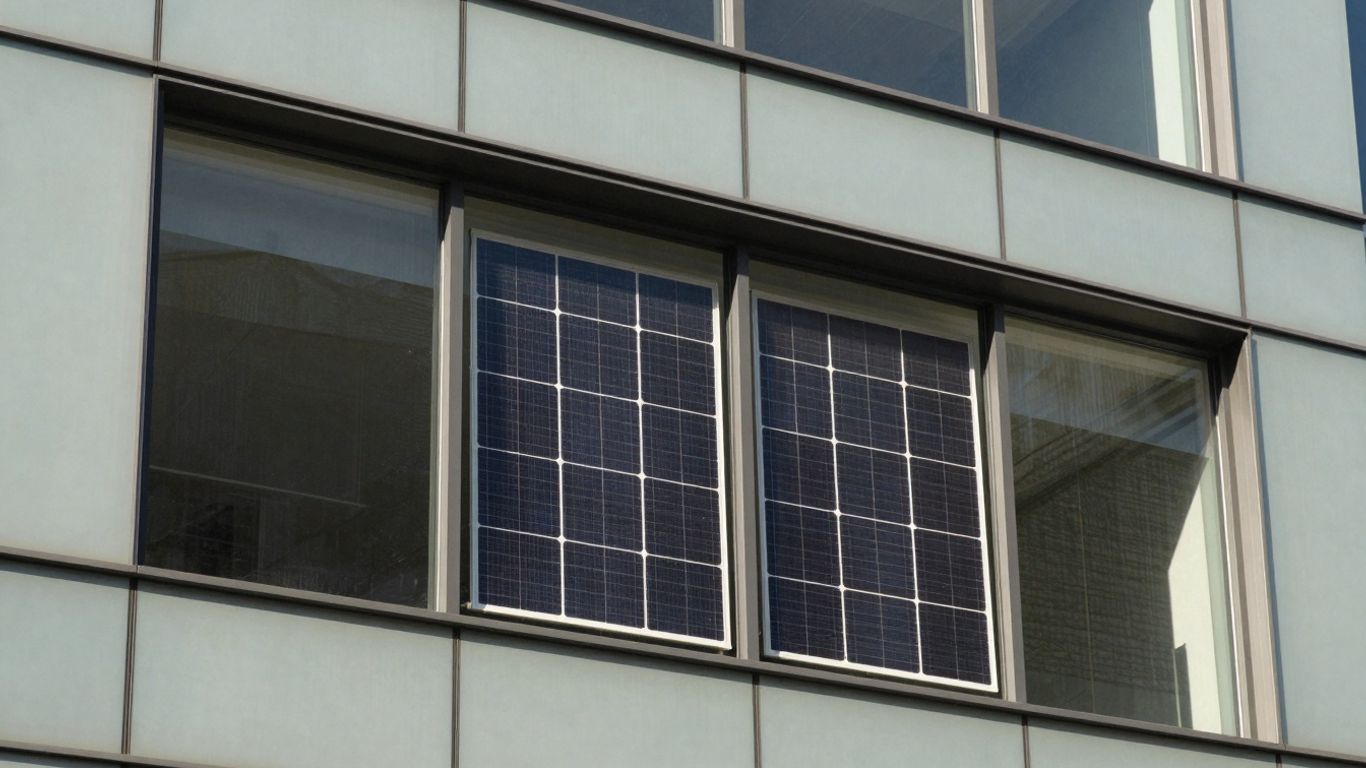
Building-Integrated Photovoltaics, or BIPV, represents an approach where solar components are not simply added to a structure but are an integral part of it. This means that solar panels replace traditional building materials, such as roof tiles, facades, or, of course, windows. The idea is to produce energy while fulfilling an architectural function. The main advantage is a much more successful aesthetic integration than with added-on panels.
BIPV technologies are evolving rapidly. We find panels that mimic the appearance of classic materials, or more modern solutions like solar glass. These systems are designed to be durable and efficient, fitting into a sustainable construction approach.
Transparent and Semi-Transparent Solar Glass
Solar glass is a particularly interesting innovation for windows. It consists of glazing that incorporates photovoltaic cells, capable of converting sunlight into electricity. There are several levels of transparency:
- Transparent solar glass: Allows a large portion of light to pass through while producing electricity. It is ideal for large glazed areas where light input is important.
- Semi-transparent solar glass: Offers a compromise between energy production and light diffusion. It can be used to create visual effects or for applications where partial shading is desired.
These glasses can be used in various types of buildings, from individual homes to office buildings and industrial structures. Their ability to produce energy without sacrificing natural light makes them an attractive solution.
Flexible Solar Panels and Thin Films
Beyond glass, other technologies allow for more discreet and versatile solar integration. Flexible solar panels, often based on thin-film technologies (such as cadmium telluride – CdTe, or copper indium gallium selenide – CIGS), offer great adaptability.
Unlike traditional rigid panels, these panels are lightweight and can be curved. This opens up possibilities for applications where surfaces are not flat, such as certain curved roofs or specific architectural elements. Their integration can be more discreet, sometimes without being immediately identifiable as a solar panel.
These technologies are often less efficient in terms of yield than classic crystalline silicon panels, but their flexibility and reduced weight can compensate for this aspect in certain architectural applications. Their development aims to make solar integration possible in a wider range of construction contexts.
Economic and Ecological Benefits of Solar Windows
Significant Reduction in Energy Bills
The installation of solar windows represents an initial investment, certainly, but the long-term economic benefits are considerable. By capturing solar energy, these windows produce electricity that can be used to power the building, thus reducing reliance on the traditional electricity grid. This translates directly into a noticeable decrease in electricity and heating bills. Furthermore, surplus energy produced can sometimes be sold, providing an additional source of income.
Contribution to the Energy Transition
Solar windows play an important role in the transition to cleaner energy sources. They enable buildings to become producers of renewable energy, thereby reducing their carbon footprint. By adopting this technology, homeowners and businesses actively participate in reducing fossil fuel consumption and combating climate change. It is a concrete step towards a more sustainable energy future.
Property Valuation and Brand Image
A building equipped with solar windows gains attractiveness on the property market. These modern and ecological installations are increasingly sought after by buyers concerned about their environmental impact and energy savings. They enhance the value of the property and strengthen the brand image of a company or owner, positioning them as innovative and responsible. This is a significant asset.
Here are some key points illustrating these benefits:
- On-site renewable energy production: Reduced reliance on non-renewable energy sources.
- Lower operating costs: Less monthly energy expenditure.
- Improved thermal comfort: Contribution to better insulation and temperature regulation.
- Positive and modern image: Association with innovation and environmental responsibility.
The integration of solar technologies into windows transforms buildings into energy producers. This approach is not limited to a simple cost reduction; it actively contributes to the creation of a more self-sufficient and planet-friendly built environment.
Performance and Efficiency of Solar Window Solutions
Optimising Building Energy Efficiency
Solar windows are not just about aesthetics or new technology; they play a direct role in how a building consumes and produces energy. By integrating photovoltaic cells or heat-absorbing layers, these windows transform an often-overlooked surface into an energy generator. The main objective is to reduce the building’s overall energy demand. This is achieved through better management of solar gain: letting heat in when it’s cold and blocking it when it’s hot. A well-designed solar window can thus reduce the load on heating and cooling systems. A building’s energy efficiency is therefore directly improved by its windows’ ability to produce energy and regulate indoor temperature.
Improving Thermal and Lighting Comfort
Beyond electricity production, solar windows contribute to a more pleasant indoor environment. They can be designed to filter certain types of light, thereby reducing glare while allowing necessary natural light to pass through. This creates a more comfortable living or working space, reducing the need for artificial lighting during the day. In terms of thermal comfort, some technologies can capture solar heat to release it indoors during cooler periods, or conversely, reflect excessive radiation in summer. This is a *smart* approach to maintaining a stable temperature without overconsuming energy.
Smart Energy Management and Self-Consumption
One of the most interesting aspects of solar windows is their potential for self-consumption. The electricity produced can be used directly on-site to power the building’s electrical appliances. This reduces dependence on the public electricity grid and allows for substantial savings on energy bills. In some cases, surplus energy can even be sold back to the grid. The management of this locally produced energy can be optimised through home automation systems that control consumption based on production and needs. This paves the way for more autonomous and resilient buildings.
Here is an overview of potential gains:
- Reduction in grid electricity consumption: up to 30%.
- Decrease in heating needs: up to 15% thanks to heat recovery.
- Improvement of the building’s energy performance index, bringing it closer to standards like BBC (Low-Energy Building) which should not exceed 50 kWh/m²/year of primary energy consumption [facc].
The integration of solar windows represents a significant advancement in making buildings more efficient. They act as both renewable energy producers and thermal regulators, actively contributing to reducing the ecological footprint of constructions.
Architectural and Aesthetic Applications of Solar Windows
Harmonious Integration into Facades and Roofs
Solar windows are no longer just functional elements; they are becoming true partners in architectural design. Their ability to integrate discreetly, or even enhance structures, opens up unprecedented possibilities. We can imagine facades adorned with transparent solar glass, generating electricity while allowing natural light to pass through. This is a way of combining the useful with the pleasant, transforming every glazed surface into a potential energy producer. Aesthetics are far from being neglected, with options that adapt to all architectural styles. For example, transparent and semi-transparent solar glasses can be used to create unique visual effects while ensuring energy production. Roofs are not left out, with solutions that harmonise perfectly with traditional or modern roofing materials.
Solutions for Residential, Commercial, and Industrial Buildings
The adaptability of solar windows is one of their great strengths. They find their place in individual homes, office buildings, and warehouses alike. For residential use, they offer increased energy autonomy and reduced bills. In the commercial sector, they contribute to the image of an environmentally conscious company and can even become a selling point. For industries, they represent an opportunity to reduce operating costs and meet increasingly strict environmental standards. Installation can vary, from simple windows to more complex systems integrated into the building envelope.
Modern and Customisable Aesthetics
The aesthetics of solar windows have taken a leap forward. Gone are the days when design had to be sacrificed for performance. Today, manufacturers offer a wide range of finishes, colours, and textures. Black glass windows, for example, add a touch of contemporary elegance and blend beautifully with light-coloured facades. Customisation is also available, allowing architects and homeowners to choose solutions that perfectly match their vision. Whether seeking a discreet and integrated look or a bold architectural element, there is a suitable solar window solution. Technology is evolving to offer not only efficient energy production but also undeniable aesthetic added value to constructions.
Recent Innovations in Solar Windows
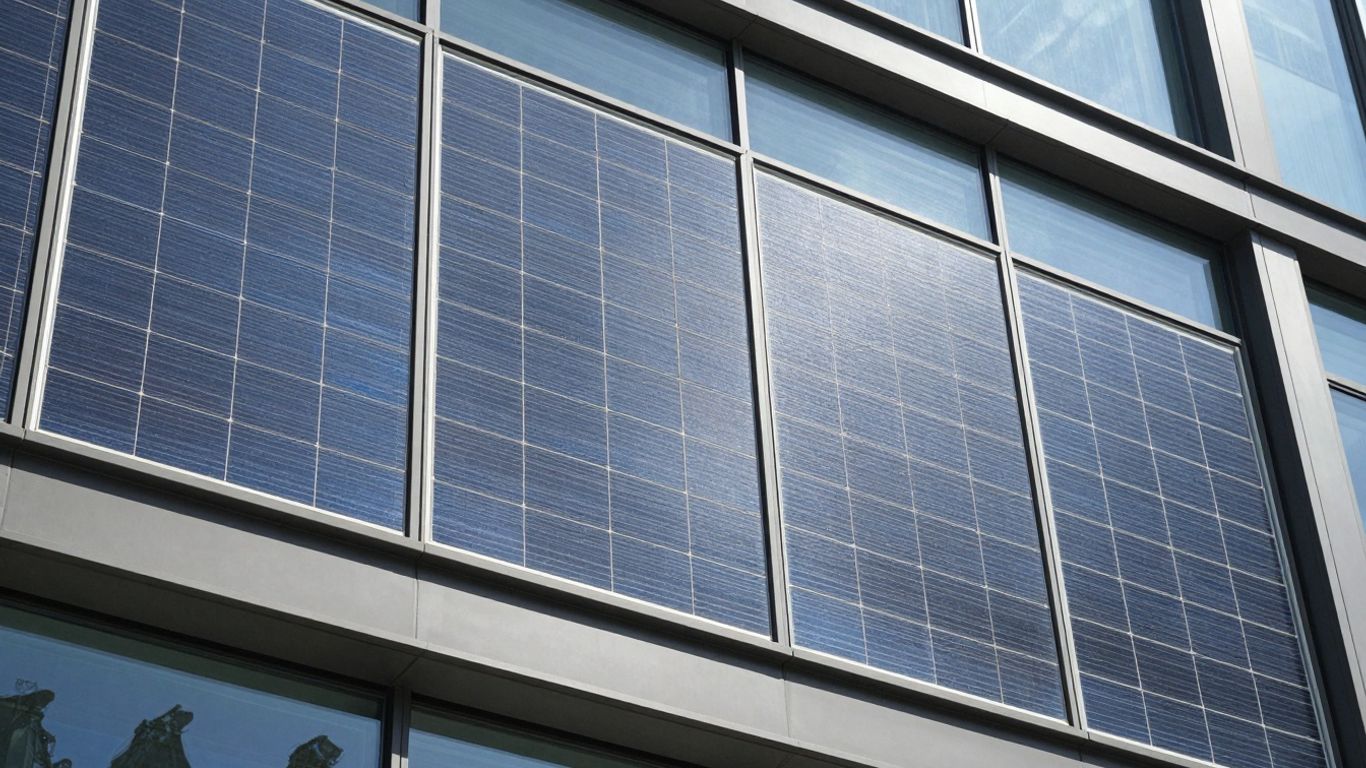
The solar window sector is constantly evolving, driven by a constant pursuit of efficiency and architectural integration. Technological advances are opening up new possibilities for these dual-function building components.
Development of Perovskite Solar Cells
Perovskite solar cells represent a major breakthrough. They promise increased energy conversion efficiency and potentially lower production costs compared to traditional silicon technologies. Their flexibility and lightness open the door to unprecedented applications, particularly for curved surfaces or lightweight structures. Companies like YKK AP Inc. and Kandenko Co., Ltd. are actively exploring their integration into building facades as part of carbon neutrality initiatives.
Improvement of Manufacturing Processes and Materials
Research is also focused on optimising manufacturing processes to make solar windows more affordable and easier to integrate. The AluPV project, launched by the Fraunhofer Institute for Solar Energy Systems (Fraunhofer ISE), aims to explore advanced production methods and the use of new materials for Building-Integrated Photovoltaics (BIPV). The goal is to improve efficiency while facilitating more transparent architectural integration. Companies like Solarstone have already inaugurated state-of-the-art BIPV production plants capable of manufacturing a large number of integrated solar panels each month, thus accelerating the transition to energy-producing homes.
Advanced Mounting and Integration Systems
The physical integration of solar windows into buildings is the subject of significant innovation. Specialised mounting systems now allow for easier installation and a more refined aesthetic. For example, Climacy has presented semi-transparent glass-on-glass panels designed for roofs and facades, offering an efficiency of 17.25% while allowing natural light to pass through. Onyx Solar, a key player in BIPV, is developing solutions such as walkable photovoltaic tiles, designed for roofs and urban spaces, capable of withstanding significant loads and being integrated into high-traffic pedestrian areas. These advances make photovoltaics more discreet and versatile, adapting to a wider variety of architectural projects, including those requiring robust solutions like glass-on-glass modules.
The evolution of solar window technologies is not limited to improving their energy performance. It also encompasses deep consideration of their aesthetic and structural integration, thereby transforming the building into a discreet and functional energy generator. These innovations are essential for achieving ambitious emission reduction targets in the construction sector.
Regulatory Framework and Incentives for Solar Window Adoption
Building Codes and Emission Reduction Targets
Environmental regulations play an increasingly important role in the adoption of building-integrated solar technologies. Governments worldwide are implementing stricter building codes and setting ambitious carbon emission reduction targets. These measures aim to combat climate change and encourage the use of renewable energy. For example, significant investments are being made to increase solar energy production capacity.
These advancements aim to accelerate the decarbonisation of buildings and support the goal of a net-zero carbon economy by 2050. Current policies are pushing developers and owners to integrate sustainable solutions like solar windows to meet energy efficiency and emission standards.
Tax Credits, Subsidies, and Green Certifications
To stimulate the market, various financial incentives and support programmes are offered. These include tax credits, direct subsidies, and green certification programmes that reward energy-efficient buildings. These schemes make investing in solar windows more attractive.
- Tax credits: Tax reductions for the installation of renewable energy systems.
- Subsidies: Direct financial aid to cover part of the acquisition and installation costs.
- Green certifications: Labels (such as LEED or HQE) that recognise and value sustainable buildings, often including criteria related to solar energy.
Government Support for Energy Renovation
Governments actively support the energy renovation of existing buildings. This includes specific aid for improving insulation, replacing heating systems, and installing renewable energy production technologies, such as solar windows. The goal is to make buildings more efficient and less energy-intensive, thus contributing to the overall energy transition. These policies create a favourable environment for innovation and the adoption of solutions like solar windows.
Challenges and Prospects for the Solar Window Market
Initial Cost and Installation Complexity
One of the main barriers to the widespread adoption of solar windows lies in their initial cost. Although prices tend to fall with technological improvements and increased production, the initial investment remains higher than for traditional windows. Furthermore, installation can be more complex, sometimes requiring specific skills to ensure optimal integration and adequate electrical connection. This can lead to higher labour costs and longer project timelines. It is therefore essential to carefully evaluate the long-term return on investment, taking into account energy savings and potential subsidies.
Continuous Research and Development
The field of solar windows is constantly evolving. Research is focusing on several areas: improving energy conversion efficiency, increasing the transparency of photovoltaic cells, the durability of materials, and reducing manufacturing costs. Technologies like perovskite solar cells, while promising, are still in the development phase to achieve the reliability and longevity required for widespread application. Innovation in manufacturing processes and materials is necessary to make these solutions more competitive and easier to integrate. The global perovskite solar cell market is expected to experience significant growth, rising from $101.02 million in 2025 to $1,255.92 million by 2032. This expansion reflects the growing interest in this emerging solar technology. Technological advancements are therefore a key driver for the future.
Growth Potential and Role in Smart Cities
Despite the challenges, the prospects for solar windows are very positive. Growing environmental awareness, stricter energy efficiency regulations, and government incentives are driving demand. Solar windows fit perfectly into the vision of smart and sustainable cities, where every building element contributes to renewable energy production. They offer an aesthetic and functional solution for increasing local energy production, reducing reliance on traditional electricity grids, and improving occupant comfort. The integration of these technologies into new constructions and renovations represents considerable market potential. The management of solar energy supplies will become increasingly important in this context.
The Importance of Insulation and Renovation for Energy Efficiency
Even before considering installing solar windows, it is absolutely essential to ensure that your building is well insulated and structurally sound. It’s a bit like wanting to put new tyres on a car with worn-out brakes: it’s not very useful. Good insulation is the foundation of any energy-efficient building. Without it, some of the heat you produce escapes through poorly insulated walls, roofs, or windows, and the energy produced by your future solar windows could be wasted.
Identifying and Insulating Heat Leaks
The first step is to identify where energy is escaping. We are talking about thermal bridges, those areas where insulation is less effective, often at the junctions between walls and roofs, or around windows and doors. A visual inspection can sometimes suffice, but for a more in-depth analysis, professionals can be called in who use thermal cameras. These devices allow for the visualisation of temperature differences and highlight problem areas. Once these leaks are identified, action must be taken. This can involve adding insulation in the attic, lining walls from the inside or outside, or insulating the floors. The goal is to create a continuous and efficient envelope around the building.
Modernising Glazing and Replacing Windows
Windows are often a weak point in terms of insulation. Old windows, with single glazing or inefficient frames, let a lot of heat escape in winter and let heat in during summer. It is therefore often wise to replace them with more modern models. Double or triple glazing, with inert gases between the panes to improve insulation, should be preferred. The choice of materials for the frames (PVC, wood, aluminium with thermal break) is also important. For solar windows, a balance must be struck: they must be thermally efficient while allowing light to pass through to power the photovoltaic cells. A specific study is necessary to choose the right type of solar glazing adapted to your climate and the orientation of your building. This type of work can have a significant impact on your home’s energy consumption, as shown by a study on insulation.
Renovating Heating and Hot Water Systems
Insulation and windows are not everything. The systems that consume energy must also be considered. An old, inefficient heating system can negate the benefits of good insulation. It is therefore advisable to modernise your installations. This could mean replacing an old boiler with a heat pump, installing underfloor heating, or opting for more efficient domestic hot water production solutions, such as thermodynamic or solar water heaters. The idea is to minimise the building’s overall energy demand as much as possible. A well-insulated house equipped with efficient systems is a house ready to accommodate technologies like solar windows, thus maximising the benefits in terms of savings and comfort.
A well-insulated building envelope is the essential first step for any energy efficiency initiative. It reduces needs before even considering energy production. It is a long-term investment that pays off by reducing heating and cooling expenses while improving indoor comfort.
Improving your home’s insulation and renovating it is like giving it a new lease of life so it consumes less energy. Think about it: a well-insulated house keeps heat in during winter and coolness in during summer, meaning less heating and less air conditioning. It’s good for your wallet and for the planet!
Want to know how to make your home more energy-efficient? Visit our website to discover simple and effective tips. We help you make the right choices for a greener future.
Towards a Greener Energy Future
In summary, the integration of solutions like solar windows represents an important step towards more self-sufficient and environmentally friendly buildings. These technologies, combined with good insulation and smart energy management, bring us closer to a future where our homes consume less and produce their own energy. It is a journey that requires effort, but the benefits for our planet and our wallets are undeniable. Continuing to explore and adopt these innovations is therefore essential for building a more sustainable future.
Frequently Asked Questions
What is a solar window and how does it work?
A solar window is a special window that can produce electricity from the sun, much like a solar panel, but integrated directly into the glass. It uses technologies like photovoltaics to convert sunlight into usable energy for the home.
Are solar windows as efficient as traditional solar panels?
They are designed to be efficient, but their performance can vary. Solar windows are often less visible and integrate better with architecture. They are an excellent solution for producing energy while enjoying natural light, even if their yield may be slightly lower than that of large panels installed on roofs.
What are the benefits of installing solar windows?
Installing solar windows allows you to reduce your electricity bills, as you produce your own energy. It’s also a gesture for the environment, as you use clean energy. Furthermore, it can make your home more modern and increase its value.
Do solar windows always let light in?
Yes, many solar windows are designed to be transparent or semi-transparent. They allow natural light to pass through while producing electricity. There are different levels of transparency to suit the needs of each room.
Is installing solar windows expensive?
The initial investment for solar windows can be higher than for traditional windows. However, the savings made on energy bills in the long term often offset this cost. There are also financial aids to encourage their installation.
Can solar windows be installed on all types of buildings?
Absolutely! Solar windows can be installed on various types of buildings, whether they are houses, office buildings, or factories. They adapt to many architectures, whether for new constructions or renovations.
What are the recent innovations in this field?
Researchers are working on new technologies, such as even more efficient and discreet solar glasses, or materials that produce electricity even with little sun. The idea is to make these windows even more efficient and affordable.
Are solar windows a good solution for home insulation?
Modern solar windows are designed to be efficient in terms of insulation, just like good quality traditional windows. They help keep heat inside in winter and outside in summer, which helps reduce energy consumption for heating and cooling.
