
In the realm of residential solar energy, aesthetics have long been a barrier to mass adoption. Photovoltaic panels, while efficient, often detract from traditional rooftops. Tesla has attempted to change the game with its solar tile, promising discreet integration and a refined design. But does this innovation truly meet expectations in terms of performance and cost? This article explores the concept of the Tesla solar tile and its potential impact.
Key Points
- The Tesla solar tile aims to combine electricity production with architectural integration, resembling classic tiles to preserve the aesthetics of rooftops.
- It comes in several styles (textured, smooth, Tuscan, slate) to adapt to various types of homes and environments.
- Tesla solar tiles are advertised as more resistant than traditional tiles, capable of withstanding difficult climatic conditions.
- Despite their attractive design, their geographical availability is limited, mainly to the United States, and their installation is more complex and costly than that of classic solar panels.
- European alternatives exist, offering similar solutions with varied approaches in terms of design, cost, and performance for the local market.
Aesthetics Redefined by the Tesla Solar Tile
Harmonious Architectural Integration
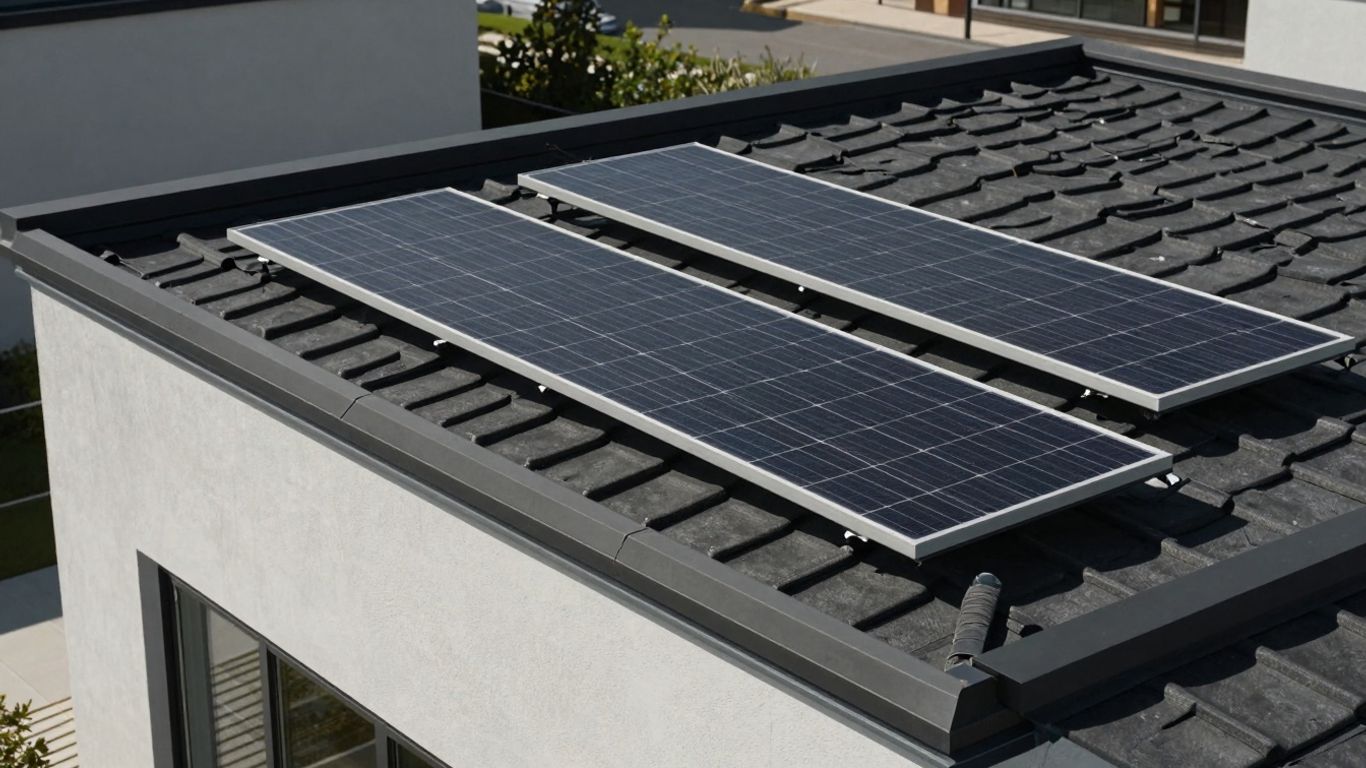
One of the most striking aspects of Tesla’s Solar Roof lies in its ability to merge energy production with architectural aesthetics. Unlike traditional solar panels, often perceived as bulky additions, Tesla solar tiles are designed to integrate almost invisibly into existing rooftops. The objective was to offer a solution that does not sacrifice a home’s appearance for the sake of green energy production. This approach aims to make solar more acceptable to homeowners concerned with their property’s design.
Diversity of Styles to Suit Every Roof
Tesla understood that a home’s aesthetics are personal and vary greatly by region and architectural style. That’s why the Solar Roof comes in several finishes to mimic traditional roofing. You’ll find styles such as:
- Slate: Perfect for classically inspired homes or those in regions where slate is common.
- Tuscan: Offers a more wavy appearance, reminiscent of Mediterranean roofs.
- Textured: A finish that adds relief and a more rustic look.
- Smooth: For a modern and clean finish.
This variety allows homeowners to choose the tile that best harmonises with their home’s architecture, thereby preserving the visual integrity of their property. The idea is to be able to potentially replicate the appearance of any type of roofing, even the most prestigious.
The Art of Concealing Technology Under a Traditional Appearance
The technological feat of the Solar Roof lies in its ability to integrate photovoltaic cells beneath a surface that perfectly imitates classic tiles. Each tile is designed to be unique, with a computer-generated pattern, much like natural slate. This approach, which could be described as « geo-mimicry, » completely masks the solar technology. Tesla claims the efficiency loss due to this imitation layer is minimal, around -2%, a figure that, if confirmed by independent tests, demonstrates advanced engineering. The company thus seeks to make solar energy more attractive by making it visually indistinguishable from conventional roofing materials. This discretion is a major asset for homeowners who wish to adopt an ecological approach without compromising the aesthetics of their home. Research in photovoltaic materials also aims to continuously improve efficiency while maintaining this visual integration in more sustainable solutions.
The main objective is to make solar desirable, transforming it from an aesthetic constraint into a design element in its own right. It’s about proving that a home can be beautiful, energy-independent, and environmentally friendly all at once.
Exceptional Performance and Durability of Tesla Solar Tiles
Tesla solar tiles don’t just offer a refined design; they are also built to withstand the test of time and the elements. The goal was to create a roof covering that is both aesthetically pleasing and functional, capable of producing energy while protecting your home.
Increased Resistance to the Elements
Tesla has focused on the robustness of its tiles. They are made from tempered glass, a material known for its strength. According to the information provided, these tiles are said to be three times more resistant than a conventional roof. They are designed to withstand hail impacts up to 4.4 cm in diameter and strong winds exceeding 200 km/h. Furthermore, their fire resistance is also a highlighted strength, offering additional safety compared to some traditional coverings.
Longer Lifespan Than Classic Coverings
Durability is another key aspect of the Solar Roof. Although the technology is newer than that of traditional photovoltaic panels, Tesla claims a lifespan comparable to, or even exceeding, that of classic coverings. The tiles come with a 25-year warranty, demonstrating the manufacturer’s confidence in the longevity of its product. This warranty covers both energy production and the physical integrity of the tiles.
The Impact of Shapes on Energy Yield
It is important to note that the design of the tiles, while aesthetically pleasing, can influence energy yield. Tuscan-style tiles, for example, with their wavy shape, can create slight shaded areas that reduce electricity production compared to flatter tiles. Each tile produces approximately 24 Wp, resulting in a power output of about 60 Wp per square metre. This is significantly less than classic monocrystalline photovoltaic panels, which can reach 130 to 160 Wp/m². This means a larger roof area is required with Tesla solar tiles to achieve the same power output as with traditional panels. For instance, for a 3 kWp installation, approximately 50 m² of solar tiles would be needed, compared to only 15 m² for classic panels. This difference in yield is a factor to consider when choosing your solar solution, especially if roof space is limited. To learn more about developments in the photovoltaic sector, consult information on the photovoltaic sector in 2025.
The design of Tesla solar tiles aims for a balance between aesthetics and energy production. While their yield per square metre is lower than that of traditional panels, their robustness and longevity offer a durable solution for integrated solar electricity production on the roof.
Functioning and Technology of the Tesla Solar Tile
Tesla solar tiles, also known as Solar Roof, represent an innovative approach to residential solar energy production. The core idea is to merge the aesthetics of a traditional roof with the functionality of a photovoltaic system. Unlike classic solar panels that are installed on top of the existing covering, Solar Roof tiles entirely replace conventional tiles, thus ensuring both waterproofing and electricity production.
Photovoltaic Integration at the Heart of the Tile
Each Solar Roof tile integrates photovoltaic cells directly beneath its surface. These cells are designed to capture sunlight and convert it into energy. The goal is to make the solar technology invisible, harmonising perfectly with the home’s architecture. Tesla offers several tile styles, such as slate, textured, Tuscan, and smooth, to suit various roof types and aesthetic preferences. This approach allows for the imitation of many traditional roofing appearances, offering remarkable flexibility to integrate into different architectural environments.
Conversion of Solar Energy into Electricity
Once the photovoltaic cells capture sunlight, they produce a direct current. This current is not directly usable by our household appliances. It must undergo a conversion process. This is where the inverter, an essential component of the Solar Roof system, comes into play. The inverter transforms the direct current generated by the tiles into alternating current, which is the type of electricity we use daily to power our homes. This conversion is a key step in making the solar energy produced by the roof usable.
The Role of the Inverter in the System
The inverter, often a centralised unit for the entire installation, is the brain of the energy conversion. It not only changes the nature of the current but also optimises energy production and ensures system safety. In the case of the Solar Roof, the inverter is specifically designed to work with the unique characteristics of Tesla solar tiles. It manages the electricity flow, allowing for immediate use, storage in a battery (like the Tesla Powerwall), or injection into the electrical grid. Without this device, the solar energy captured by the tiles would remain unusable for domestic consumption.
Performance Comparison: Tesla Solar Tile vs. Photovoltaic Panels
Power and Surface Area Required for a Given Installation
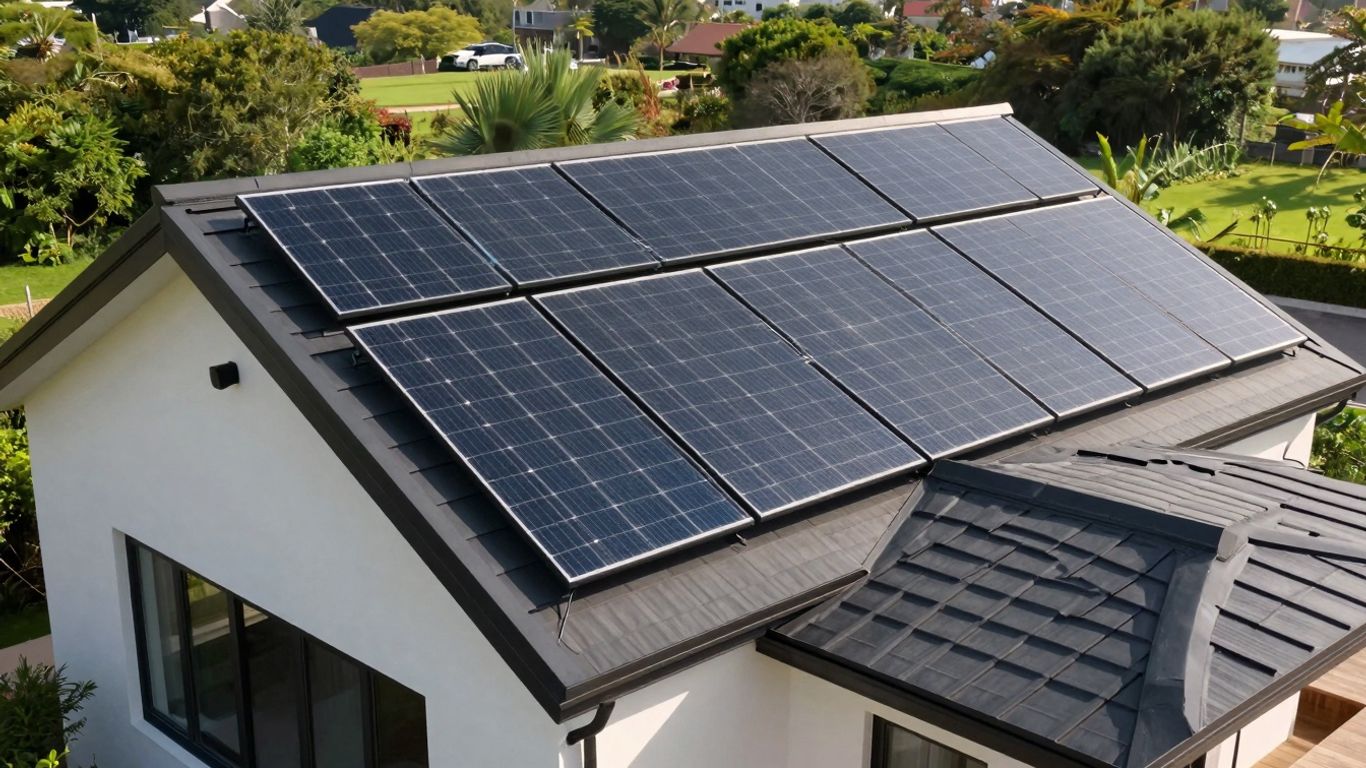
When we talk about performance, the first thing that comes to mind is the power a system can generate. Tesla solar tiles, despite their innovation, have a rather limited power output per unit. A single tile produces about 24 Wp, resulting in a power output of about 60 Wp per square metre. In comparison, more traditional photovoltaic panels, such as the Voltec Basalte 500 Wp model, can reach nearly 229 Wp per square metre. This means a classic panel produces more than four times more electricity per unit of surface area than a Tesla solar tile.
To illustrate concretely, let’s imagine a need for 3 kWp. With classic photovoltaic panels, approximately 14.5 m² of roofing would be required. To achieve the same power output with Tesla’s Solar Roof, a minimum area of 50 m² would be needed. This is a considerable difference, showing that for the same energy production, traditional solar panels require much less space. If your roof is small or has shaded areas, classic panels might be a more suitable solution to cover your energy needs, unlike solar tiles which could prove insufficient.
Compared Energy Yield
Energy yield is another key point. Tesla solar tiles, with their lower power per square metre, produce on average 50% less electricity compared to monocrystalline solar panels of the same surface area. This difference is explained by the very design of the tiles, which integrate photovoltaic technology more discreetly but less concentratedly. Solar panels, specifically designed to maximise energy capture, therefore offer a significant advantage in this regard. It is important to note that yield can vary depending on specific models and technologies, but the general trend favours traditional panels for higher raw energy production.
Implications for Required Roof Surface Area
The difference in yield and power per square metre has direct implications for the required roof surface area. As mentioned, to achieve a given power output, a much larger area is needed with solar tiles than with photovoltaic panels. This can be a decisive factor, especially for homeowners with limited roof space. In some cases, it may even be impossible to achieve the desired power output with solar tiles if the roof is not large enough. Solar panels thus offer greater flexibility to adapt to different roof sizes and configurations, allowing for more efficient installation even in confined spaces. This is an aspect to consider seriously when choosing between these two technologies, especially if the goal is to maximise green energy production for your home. To learn more about different solar roofing options, you can consult solar roofing solutions.
It is essential to carefully assess your energy needs and available roof space before choosing between solar tiles and traditional photovoltaic panels. The decision will depend on your priorities: aesthetics, available space, and desired production power.
Unique Advantages of the Tesla Solar Roof
Tesla’s Solar Roof stands out with several major advantages that position it as a cutting-edge solution for residential solar energy production. Beyond its primary function, it redefines the aesthetic integration and durability of photovoltaic systems.
Innovative and Discreet Design
One of the strengths of the Solar Roof lies in its ability to blend harmoniously with a home’s architecture. Unlike traditional solar panels, which are often perceived as unsightly additions, Tesla tiles are designed to mimic the appearance of classic rooftops. They are available in several styles, such as textured, smooth, Tuscan, or slate, thus preserving the original aesthetics of the home. This approach aims to make solar technology invisible, offering an attractive alternative for homeowners concerned with their property’s appearance while wishing to produce their own electricity. This harmonious architectural integration is a key element for wider solar adoption, as it addresses aesthetic concerns often overlooked by conventional solutions. For those looking to combine energy production with discretion, the Solar Roof represents a significant advancement, integrating seamlessly into the built environment without compromising style. It is a true revolution for the aesthetics of solar roofs.
Remarkable Robustness and Durability
Tesla has designed its solar tiles to offer exceptional resistance. Made from tempered glass, they are advertised as being three times more resistant than conventional tiles. They are capable of withstanding significant hail impacts (up to 4.4 cm in diameter) and strong winds (exceeding 200 km/h), while also offering fire protection. This increased robustness translates into superior longevity, with a 25-year warranty, ensuring long-term peace of mind for homeowners. This durability is a significant argument, as it reduces the frequency of replacements and the maintenance costs associated with traditional roofing.
The Ability to Melt Snow in Winter
A particularly interesting feature of the Solar Roof, especially for regions prone to heavy snowfall, is its ability to generate heat. This heat is sufficient to melt accumulated snow on the roof, allowing water to drain naturally. This ensures that the system continues to produce electricity even during the winter months, without requiring manual intervention to clear the snow. This feature ensures more consistent energy production throughout the year, thereby maximising the benefit of the solar installation. This is a significant advantage that contributes to the overall efficiency of the system, even in difficult climatic conditions, and can be particularly useful for maintaining stable energy production, an important aspect for solar self-consumption.
Challenges and Drawbacks of the Tesla Solar Tile
Despite its innovative potential, Tesla’s Solar Roof presents several obstacles that limit its widespread adoption. These challenges primarily concern its availability, installation complexity, and cost. It is therefore important to consider them before embarking on such a project.
Limited Geographical Availability
Currently, the Solar Roof is not available everywhere. Its commercialisation remains primarily concentrated in the United States. Although announcements have been made regarding expansion into Europe, the timelines are being delayed. This geographical limitation is a major hurdle for European homeowners interested in this technology. Therefore, one must be patient and follow Tesla’s announcements to know the effective deployment dates on the continent. This situation has led to significant delays for customers awaiting their installation.
Installation Complexity
Installing the Solar Roof is far from as simple as installing classic solar panels. It requires specific expertise, combining the skills of a traditional roofer and those of a photovoltaic specialist installer. The precise integration of the tiles into the roof structure demands advanced know-how. This more delicate process, requiring skilled labour, can extend the duration of the work and complicate planning.
A Significant Financial Investment
The Solar Roof is positioned as a high-end solution, and its price reflects this. The cost per square metre is significantly higher than that of traditional solar panels. This difference is explained by the integrated technology, the refined design, and the complexity of the installation. For many households, this initial investment represents a major financial obstacle, even if aid is available to offset the cost. It is essential to carefully compare the potential return on investment with more conventional alternatives, as profitability may be less optimal in some cases.
It is undeniable that Tesla’s Solar Roof offers a revolutionary aesthetic approach to solar energy production. However, the realities of the current market, particularly in terms of geographical deployment, installation technicality, and financial barriers, necessitate thorough consideration for prospective buyers. These aspects, while less publicised than the design, are crucial for the successful and sustainable adoption of this technology.
Here are some points to consider:
- High initial cost: The purchase and installation price is higher than classic photovoltaic solutions.
- Limited availability: The product is not yet widely distributed internationally, particularly in Europe.
- Specialised installation: Requires specific technical skills, which can impact the time and cost of fitting.
- Comparative yield: While performing well, the tiles may have a slightly lower energy yield compared to traditional solar panels of the same surface area, thus requiring a larger roof area for equivalent power. This can be a factor to consider for smaller roofs. You can consult performance comparisons to better understand these differences.
Tesla’s Innovation for Residential Solar Energy
Elon Musk’s Vision for Solar Roofs
When Elon Musk unveiled the Solar Roof, the idea was to offer a solution that not only produces electricity but does so with impeccable aesthetics. It was about transforming a technical constraint into a desirable architectural element. The goal was to make solar attractive to a broader audience by offering tiles that mimic the appearance of traditional roofing materials while integrating photovoltaic technology. This approach aims to overcome the aesthetic objection often raised by classic solar panels, which can detract from a home’s appearance. The ambition is to create a synergy between design, energy production, and housing.
Synergy Between Design, Batteries, and Vehicles
Tesla doesn’t stop at the solar tiles themselves. The company designs a complete energy ecosystem for the home. Solar tiles integrate seamlessly with home storage batteries, such as the Powerwall. This battery allows for the storage of energy produced during the day for use at night or during peak consumption, thereby increasing the home’s energy autonomy. Furthermore, this energy can power the brand’s electric vehicles, creating a virtuous cycle where solar energy produced at home can be used to charge your car. It’s a holistic vision of residential energy, where each component is designed to work in harmony.
The Importance of Aesthetics in Solar Adoption
The mass adoption of renewable energy depends not only on its performance and cost but also on public acceptance. Tesla understands that aesthetics play a major role. By offering a product that integrates discreetly and elegantly into homes, the company seeks to make solar more desirable. This approach, although positioned in the high-end segment, could eventually influence the entire market, pushing other manufacturers to innovate and offer more integrated solutions. The idea is that producing your own energy should no longer be synonymous with visual compromise. Home battery networks, for example, are transforming how we manage our energy consumption, and the Solar Roof fits into this logic of energy revolution.
Evolution of Solar Roof Cost and Availability
Significant Price Increase
Upon its launch, Tesla’s Solar Roof promised an aesthetic and energy revolution. However, the journey since 2018 has been marked by a notable evolution in costs. Initial estimates have been surpassed, and the total price of an installation has seen a substantial increase, sometimes reaching over 170% over a five-year period. This rise became particularly pronounced towards the end of 2023, pushing the cost per watt from more affordable levels to more significant figures. It has therefore become clear that the Solar Roof is positioned as a high-end solution.
Commercialisation Projections in Europe
Despite the enthusiasm generated by the concept, the availability of Tesla’s Solar Roof remains a major challenge, particularly in Europe. At present, the product is not yet widely commercialised on the continent. This absence from the European market limits consumer access to this technology, despite growing interest in integrated solar solutions. European homeowners seeking an aesthetic alternative to traditional photovoltaic panels must therefore turn to other manufacturers for the time being. It is important to follow Tesla’s official announcements for future deployment strategies in these markets.
The Product’s High-End Positioning
Tesla’s Solar Roof is distinguished by its integrated approach, where aesthetics are as important as performance. This philosophy is directly reflected in its price. Compared to classic photovoltaic installations, the initial cost of the Solar Roof is significantly higher. This difference is explained by the embedded technology, the quality of materials, and the refined design aimed at completely replacing a traditional roof. For those considering this option, it is essential to consider the potential long-term return on investment, which may include substantial savings on electricity bills and a longer lifespan compared to classic coverings. Available financial aid can alleviate the initial burden, but the investment remains substantial. For a more detailed view of costs and aid, consulting a complete guide to solar roofs is recommended.
The table below provides an idea of the costs associated with different installation capacities, including the price of tiles, battery, and the estimated total cost:
| Total installation capacity | Tile price (excluding installation) | Battery price | Total price |
|---|---|---|---|
| 3 kWp | €10,000 | €7,000 | €17,000 |
| 6 kWp | €20,000 | €7,000 | €27,000 |
| 9 kWp | €30,000 | €7,000 | €37,000 |
It should be noted that these figures are indicative and may vary. The amortisation of this type of installation may be longer than with traditional solar panels, but the long-term benefits, particularly in terms of savings on roof replacement, can be considerable, potentially between €15,000 and €20,000 over the installation’s lifespan, not including electricity savings which can reach €40,000 to €50,000 according to current trends.
The aesthetic integration taken to its extreme, combined with cutting-edge technology, justifies the premium positioning of the Solar Roof. Although its initial cost is high, it represents an investment in a sustainable energy solution visually integrated into the home.
European Alternatives to Tesla Solar Tiles
Although Tesla’s Solar Roof has generated significant interest, its unavailability in Europe and high cost limit its adoption. Fortunately, several European manufacturers offer innovative solutions that combine aesthetics and solar energy production, often at more accessible prices.
Solutions Offered by Edilians
The French manufacturer Edilians offers a range of terracotta solar tiles, designed to integrate harmoniously with traditional roofs. These tiles, such as the Max model, benefit from a 30-year waterproofing guarantee and are distinguished by their discretion. They are compatible with the brand’s classic tiles, thus offering the possibility of mixing the two types for a customised installation. Although their yield is moderate compared to classic photovoltaic panels, their sleek design and adaptation to local standards make them a serious option for homeowners concerned with aesthetics.
Dyaqua’s Approach to Invisible Integration
The Italian company Dyaqua has developed a particularly interesting technology: solar tiles that are, to the naked eye, indistinguishable from traditional tiles. Their secret lies in the integration of photovoltaic cells beneath a ceramic layer. This solution is ideal for historic buildings or protected areas where the installation of solar panels is often prohibited. The main advantage is the absence of visual difference, thus preserving architectural integrity. However, this unique manufacturing process makes these tiles more expensive, and their energy yield is about 30% lower than that of more classic solar tiles.
Sunstyle Innovations
The Swiss brand Sunstyle, manufactured in France, offers solar tiles with a distinctive design, particularly in a diamond shape. These tiles offer excellent visual integration and notable energy performance, approaching 150 Wp/m², which is higher than other solar tiles on the market but still lower than standard photovoltaic panels. The installation of these tiles may require a complete roof renovation, which can extend the duration of the work. The solar tile industry is evolving rapidly, with ongoing research to improve the efficiency and durability of products while maintaining an attractive visual appearance. Advances in this field aim to make solar energy more accessible and better integrated into our built environment, even though solar panel production in Europe faces strong international competition [fca1].
The European solar tile market is developing with players offering aesthetic and high-performance alternatives. These solutions aim to reconcile renewable energy production with respect for architectural heritage, thus offering options better suited to local constraints than the initial offerings of some major manufacturers. The evolution of prices and geographical availability remain key factors for the adoption of these technologies.
It is important to note that the choice of a solar solution must take into account several factors, such as energy yield, durability, installation cost, and available financial aid. In France, for example, installation by an RGE professional and self-consumption with surplus sales are conditions for benefiting from premiums and advantageous purchase tariffs [b290]. Warranties offered by manufacturers, often similar to those of traditional solar panels, generally cover the product, waterproofing, and performance over a period of 25 years.
Potential Impact of Solar Tiles on the Energy Landscape
The Potential of Rooftop Solar in France
In France, the potential for rooftop solar is considerable. Homes represent an immense surface area, often under-exploited in terms of energy production. Solar tiles, by offering an aesthetic solution, could well change the game. They allow for the transformation of classic roofs into miniature power plants, without distorting the architecture of homes. This is an opportunity to actively participate in the energy transition, especially in areas where traditional panels are less visually accepted.
Contribution to Future Energy Demand
As our electricity needs increase, particularly with the rise of electric vehicles and connected devices, local energy production becomes paramount. Solar tiles fit perfectly into this approach. They allow for decentralised production, reducing dependence on large power plants and losses associated with electricity transport. The integration of these discreet technologies on a large number of rooftops could significantly alleviate pressure on the national electricity grid.
The Association of Design, Performance, and Ecology
One of the most promising aspects of solar tiles is their ability to reconcile several often contradictory requirements. Historically, aesthetics and energy performance were difficult to combine on a roof. Solar tiles, like Tesla’s Solar Roof, show that it is possible to have both. They offer an ecological solution that does not sacrifice the charm of a home. This holistic approach is essential to encourage wider adoption of renewable energy by the general public, by making the technology more desirable and better integrated into our built environment.
Solar tiles could well change the way we produce energy. Imagine roofs that not only protect your home but also produce clean electricity! It’s a fascinating idea that could make our cities greener and our energy more accessible. Curious to learn more about this promising technology? Visit our website to discover how solar tiles are transforming the energy landscape.
A Look Towards the Future of Roofing
In summary, Tesla solar tiles represent a significant advancement in the aesthetic integration of solar energy production. They offer a solution that, while still presenting challenges in terms of availability and cost, paves the way for roofs that are both beautiful and functional. For design-conscious and environmentally aware homeowners, they constitute an option to consider seriously, especially for new constructions or major renovations. The evolution of this technology promises to make solar energy even more accessible and harmonious in our built environments.
Frequently Asked Questions
What is a Tesla solar tile?
A Tesla solar tile, also called Solar Roof, is a roofing tile that has the particularity of integrating photovoltaic cells. It looks like a classic tile but produces electricity thanks to solar energy, while also providing protection for your home like a normal tile.
Are Tesla solar tiles attractive?
Yes, one of the great advantages of Tesla solar tiles is their design. They are designed to mimic the appearance of traditional tiles, such as slate or Tuscan tile, which allows them to be discreetly and attractively integrated into all types of homes, without spoiling the aesthetics.
Are Tesla solar tiles durable?
Absolutely. Tesla claims its solar tiles are three times more resistant than classic tiles. They are made from robust materials like reinforced glass, capable of withstanding bad weather, strong winds, and even heavy hail.
How do Tesla solar tiles work?
Each tile contains solar cells that capture sunlight. This energy is then converted into electricity. A special system, called an inverter, converts this current so it can be used by your home to power your electrical appliances.
Do Tesla solar tiles produce as much electricity as classic solar panels?
In general, solar tiles produce slightly less electricity per square metre than traditional solar panels. However, their advantage is that they cover the entire roof surface and integrate perfectly, which can partially compensate for this difference.
Is it possible to buy Tesla solar tiles in Europe?
For now, Tesla solar tiles are mainly available in the United States. Their commercialisation in Europe has been delayed, and you should check the latest information from Tesla for availability dates.
How much do Tesla solar tiles cost?
Tesla’s Solar Roof represents a significant investment. Its cost is generally higher than that of an installation with classic solar panels, as it is a more integrated and aesthetic technology. The price can vary depending on the size and style of the roof.
Are there other brands of solar tiles in Europe?
Yes, several European companies offer alternatives to Tesla solar tiles. Manufacturers like Edilians, Dyaqua, or Sunstyle offer solutions that integrate well with roofs and comply with local standards, sometimes at more affordable prices.
