The idea of integrating solar panels into our homes without sacrificing aesthetics is gaining traction. Technology is evolving, and the transparent solar panel represents a fascinating advancement. But before you imagine yourself with windows that generate electricity, it’s good to know where this innovation stands, how it works, and what it concretely means for an individual. This article provides an overview of the transparent solar panel, its promises, and its current reality.
Key takeaways about transparent solar panels
- Transparent solar panels work on the same principle as conventional panels but allow light to pass through, resembling a pane of glass.
- Several technologies exist (American, Japanese, Greek) with different approaches to making the panel transparent while still capturing solar energy.
- Although promising for architectural integration and discreet energy production, transparent solar panels are not yet widely available to individuals.
- Bi-facial solar panels are a current alternative offering semi-transparency and better performance if aesthetics are a concern.
- Before any solar installation, it is essential to check technical feasibility, local regulations, available financial aid, and choose a qualified installer.
Understanding how transparent solar panels work
Transparent solar panels represent a fascinating technological advancement in the field of renewable energy. Unlike their opaque counterparts, these innovative devices allow light to pass through, opening up new possibilities for integration and use.
Basic principles of transparent technology
The operation of a transparent solar panel is based on the same fundamental principles as conventional solar panels: converting sunlight into electricity through the photovoltaic effect. The major difference lies in how this conversion is made possible while maintaining a degree of transparency. Instead of a surface entirely covered with opaque cells, transparent technologies aim to integrate photovoltaic elements more discreetly or use inherently transparent materials.
- Light capture: The semiconductor materials used, often organic compounds or specific metal oxides, are designed to absorb certain wavelengths of light while allowing others to pass through. Absorbed photons generate electrons that create an electric current.
- Energy collection: The photovoltaic cells are either positioned on the edges of the panel, integrated very finely across the entire surface, or replaced by organic molecules capable of directing light to collection areas.
- Light transmission: The part of the panel not actively involved in photovoltaic conversion allows visible light to pass through, enabling one to see through it.
The main objective is to reconcile solar energy production with light transmission, which was previously considered mutually exclusive.
Comparison with conventional solar panels
| Characteristic | Conventional Solar Panel | Transparent Solar Panel |
|---|---|---|
| Appearance | Opaque (blue/black) | Transparent/semi-transparent |
| Architectural integration | Visible, sometimes imposing | Discreet, integrated into glazed surfaces |
| Energy yield | Generally higher | Often lower (under development) |
| Applications | Roofs, solar farms | Windows, facades, skylights, screens |
The efficiency of transparent panels is a notable point of divergence. Conventional panels, optimised for maximum light capture across their entire surface, exhibit higher yields. Transparent panels, due to the constraints of light transmission, have historically had more modest yields, although research is progressing rapidly to close this gap.
Different technological approaches (American, Japanese, Greek)
Several research centres and companies worldwide are actively developing transparent solar panels, each with its own technical approach:
- American Approach (University of Michigan): This technology is distinguished by placing photovoltaic cells only on the edges of the panel. The majority of the surface remains transparent. Organic molecules are used to capture light and direct it to these peripheral cells.
- Japanese Approach (Tohoku University): Japanese researchers have developed photovoltaic cells based on transparent oxides (such as indium tin oxide) and tungsten disulfide. These materials, by nature, allow high light transmission while being semiconductors, enabling a more uniform distribution of cells across the surface.
- Greek Approach (Brite Hellas): This company uses luminescent solar concentrator (LSC) technology. It employs nanomaterials to absorb ultraviolet (UV) rays and re-emit them at wavelengths more useful for electricity generation, while allowing visible light to pass through. This technology is particularly being studied for agrivoltaic applications.
Each of these methods aims to overcome the inherent challenges of transparency while maximising electricity production, paving the way for unprecedented architectural and technological applications.
Potential applications and benefits of transparent solar panels
Improved architectural and aesthetic integration
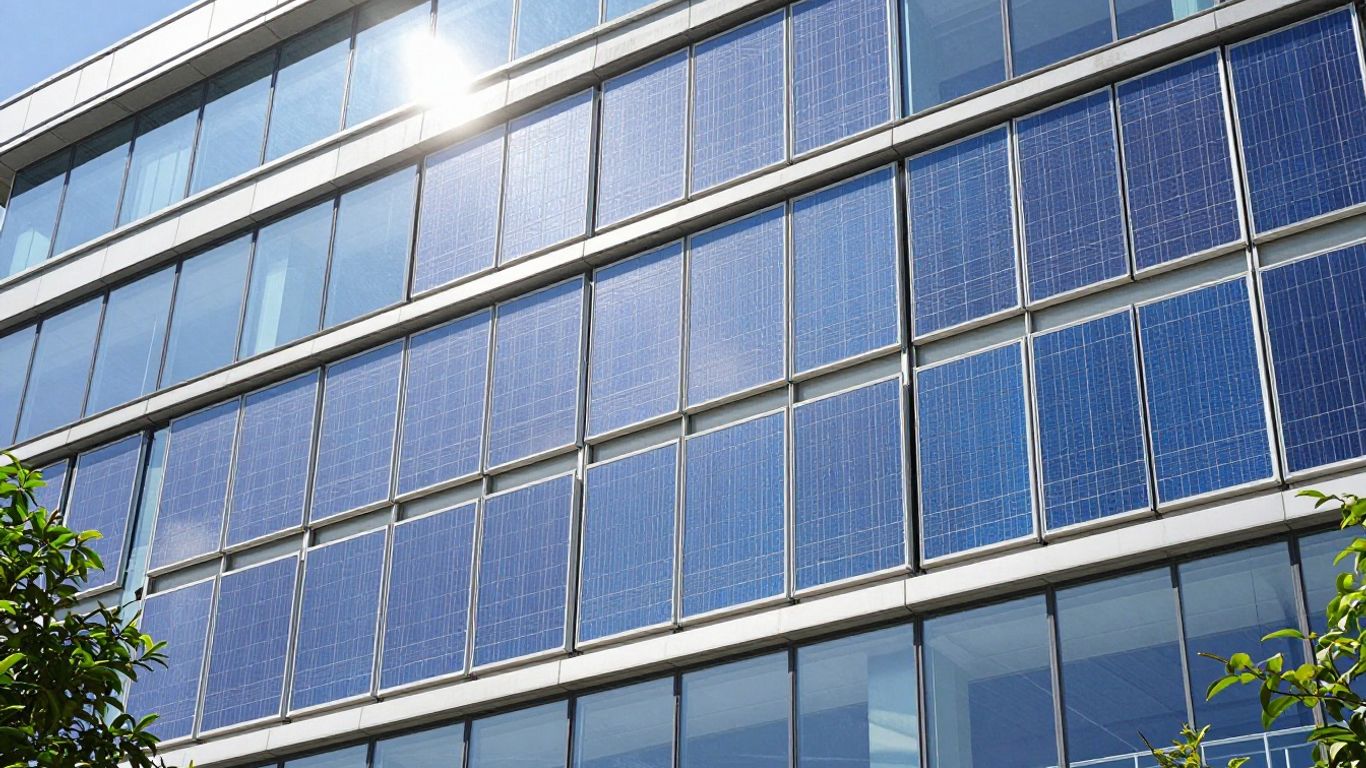
Transparent solar panels represent a significant advancement for those who prioritise the aesthetics of their home or building. Unlike conventional solar panels, often perceived as bulky and obtrusive, this technology offers a solution that blends into the surroundings. Imagine windows, skylights, or even balustrades that generate electricity while retaining their primary function: letting light through. This integration capability opens up new possibilities for architects and homeowners concerned with preserving the visual harmony of their constructions. The goal is to make solar energy less visible, or even invisible, thereby reconciling renewable energy production with architectural design.
Energy production without compromising on brightness
One of the major advantages of transparent solar panels is their ability to generate electricity without blocking natural light. This is made possible by specific technologies that allow a portion of the light spectrum to pass through the panel. For example, some approaches concentrate photovoltaic cells on the edges of the module, leaving the main surface transparent. Others use inherently transparent materials for the cells themselves. This feature is particularly interesting for applications where brightness is paramount, such as agricultural greenhouses, conservatories, or office glass facades. This allows surfaces that would otherwise be mere construction elements to be transformed into renewable energy sources, without sacrificing visual comfort or crop needs.
Prospects for use in various sectors
Beyond residential housing, the potential of transparent solar panels extends to many other fields. In the transport sector, their integration into car windscreens or sunroofs could contribute to the energy autonomy of electric vehicles. Agriculture could benefit from greenhouses with transparent roofs that generate electricity while protecting crops. The electronics industry could also leverage this technology to power portable devices or screens, transforming glass surfaces into energy sources. The possibilities are vast and continue to expand as the technology progresses, paving the way for more distributed energy production integrated into our daily environment. It is even possible to imagine applications in the field of electronic devices that require a glass surface.
Composition and manufacturing of transparent solar panels
Materials used for transparency
The manufacture of transparent solar panels relies on the use of innovative materials that allow light to pass through while capturing solar energy. Unlike conventional panels that use opaque silicon, transparent technologies explore various avenues. Some approaches employ organic molecules capable of directing light to the edges of the panel where the photovoltaic cells are located. Others rely on transparent semiconductor materials, such as certain metal oxides, which are integrated in a way that does not block visible light. The choice of materials is therefore crucial for achieving both the desired transparency and acceptable energy efficiency.
The role of photovoltaic cells in a transparent panel
In a transparent solar panel, the role of photovoltaic cells is fundamental, although their arrangement may vary. In some designs, the cells are placed on the edges of the panel, leaving most of the surface free to allow light to pass through. Other technologies integrate transparent cells distributed across the entire surface. These cells are often made of specific materials, such as indium or tungsten oxides, which have the intrinsic property of allowing light to pass through while being capable of converting photons into electricity. The aim is to minimise visual impact while maximising energy production.
Specific manufacturing process
The manufacturing process for transparent solar panels differs from that of traditional panels, particularly due to the materials used and the arrangement of the cells. It may involve thin-film deposition techniques to apply transparent semiconductor materials onto glass substrates. For approaches where cells are marginal, additional steps are required to integrate these components at the panel’s extremities. Research continues to optimise these processes to improve efficiency, durability, and reduce production costs, making this technology more accessible.
- Key steps include:
- Substrate preparation (often glass).
- Application of transparent semiconductor active layers or organic molecules.
- Integration of photovoltaic cells (on the edges or distributed).
- Electrical connection and encapsulation for protection.
- Performance and transparency testing.
Current availability and alternatives to transparent solar panels
Market status for individuals
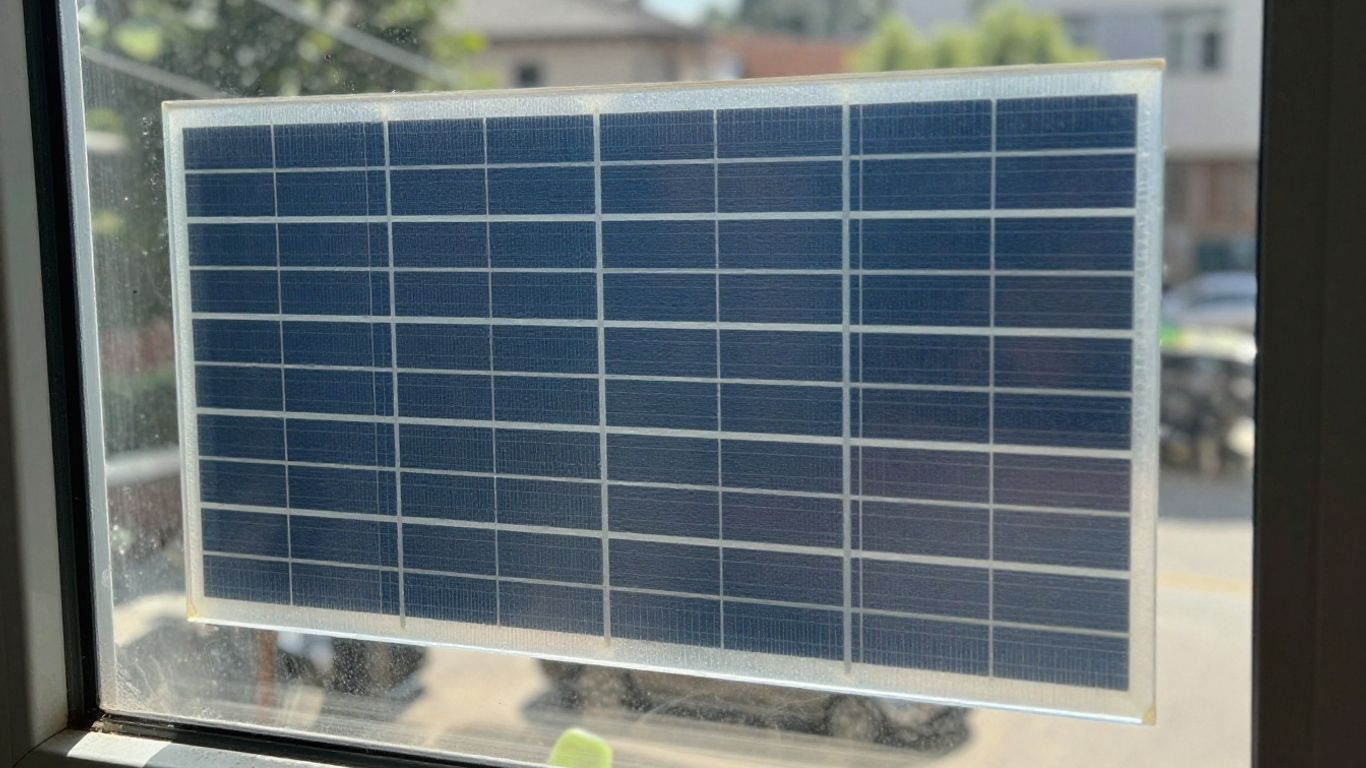
Currently, truly transparent solar panels, which are indistinguishable from conventional glass panes, are not yet available to the general public. The technology is still in the advanced development and research phase, primarily conducted by universities and specialised laboratories. Although promising prototypes exist, including those developed in the United States, Japan, and Greece, their large-scale commercialisation for individual homes is not yet a reality.
Bi-facial solar panels as an intermediate solution
For those seeking a more discreet alternative to traditional solar panels, bi-facial solar panels represent an excellent option. These panels are designed to capture light from both sides: the upper side functions like a conventional panel, while the lower side captures light reflected from the ground or surrounding surfaces. They are often made of two layers of glass, giving them a degree of translucency and allowing some light to pass through. Although not entirely transparent, they offer an interesting compromise between energy production and aesthetic integration.
Other options for discreet integration
Beyond bi-facial panels, other solutions exist to make solar installations less visible. It is possible to opt for solar panels whose colour harmonises with the roof, such as solar tiles or slate-coloured panels. Building-integrated photovoltaics (BIPV), where panels directly replace roofing elements (tiles, slates), is also an approach that significantly improves aesthetics. For projects where aesthetics are paramount, it is advisable to discuss these different options with a qualified installer to find the best solution for your home and your expectations.
- Building-integrated solar panels: They replace traditional tiles or slates.
- Coloured solar panels: Available in various shades to better blend into the landscape.
- Bi-facial solar panels: Capture light from both sides for better performance and improved aesthetics.
The wait for fully transparent solar panels continues, but performing and aesthetically pleasing alternatives are already available on the market for those who wish to produce their own green energy without compromising the appearance of their property.
Financial and tax considerations for your solar project
Before embarking on the installation of transparent solar panels, it is essential to fully understand the financial and tax aspects. This will allow you to assess the viability of your project and maximise potential benefits.
Estimating the initial budget for an installation
The cost of a transparent solar panel installation can vary considerably depending on several factors. The desired power output, the quality of materials, the complexity of the installation, and the brand of panels all influence the final price. The costs of installation by a qualified professional and any necessary structural adaptation work must also be taken into account. For a more precise idea, a 3 kWp installation can range from €7,000 to €10,500, while a 6 kWp installation could cost between €12,000 and €18,000. Don’t forget to add ancillary costs, which can range from €2,500 to €5,000.
Available financial aid and subsidies
Fortunately, several aid schemes exist to reduce the initial cost of your project. The self-consumption bonus is one of the flagship measures, encouraging the use of locally produced electricity. Additionally, depending on your situation and region, you may be eligible for local subsidies. For example, Hydro-Québec offers subsidies for solar installations, providing an amount per kilowatt installed, capped at a certain percentage of the panel costs. It is also possible to benefit from reduced VAT on materials and installation work, which represents valuable assistance for your energy transition. It is advisable to inquire with local and national organisations to find out about all the aid you may be eligible for.
Impact of financial criteria on technology choice
The budget you have available will have a direct impact on the type of solar technology you can choose. Transparent solar panels, being a newer technology, may have a higher initial cost than conventional panels. However, their unique architectural integration and ability to produce energy without obstructing the view may justify this investment. It is important to weigh the initial cost against the long-term benefits, such as energy savings and potential property value enhancement. Long-term profitability is a strong point of solar energy; by producing your own electricity, your bills decrease significantly. Furthermore, surplus energy can be sold, generating additional income. Product warranties, often extending over 25 years, ensure reliable performance for decades, making solar energy a sustainable investment.
Financial analysis must consider not only the acquisition cost but also the savings generated over the installation’s lifespan and any potential additional income. Rigorous budget planning is key to a successful and profitable solar project.
Regulatory and urban planning aspects to anticipate
Before undertaking any transparent solar panel installation project, it is essential to consider the regulatory framework and urban planning constraints. A well-prepared approach will limit unpleasant surprises and protect the viability of your investment.
Checking local urban planning regulations
Urban planning rules vary from one municipality to another, and some areas can be particularly restrictive. Buildings located in protected areas or near historical monuments are often subject to specific requirements. Even for an installation on a new building, mentioning solar panels in the building permit application does not always exempt you from further validation. In any case, contacting the local urban planning department remains essential.
- Consult your municipality’s Local Urban Plan (PLU).
- In classified zones, expect to have to submit your project to the Architecte des Bâtiments de France.
- Do not forget to check for any restrictions on external appearance (colours, finishes, locations).
It is best to prepare all requested documents in advance to avoid delays or administrative refusal.
To learn more about heritage protection while promoting solar energy, consult the summary of the Urban Planning Code on photovoltaic installations.
Obtaining necessary building permits
A transparent solar panel installation rarely requires a traditional building permit, especially for minor renovations. However, certain installations (particularly large ones or those integrated into facades) may require a prior declaration or a permit. This depends on:
- The surface area covered by the panels
- The nature of the building or its function
- The specific regulations of the area concerned
| Procedure | Type of installation | Authorisation required |
|---|---|---|
| Prior declaration | Roof panels (<20 m²) | Yes |
| Building permit | Facade installation or >20 m² | Sometimes |
| None | Garden shed installation (<1.80m height) | Generally no |
Keep a record of each step; the administration may request supporting documents at each stage of the project.
Project compliance with current standards
Ensuring technical and administrative compliance is imperative. Transparent solar panels must comply with electrical safety standards, architectural integration standards, and, in the case of energy resale, grid connection standards. Do not hesitate to request a certificate of conformity from your installer.
Also check:
- Compliance with French or European standards (NF EN, CE)
- Accessibility of panels for maintenance without compromising the structure
- Consistency with local environmental and energy requirements
Anticipating these obligations reduces the risk of disputes and facilitates the obtaining of public aid.
By taking these aspects into account from the beginning to the end of the solar project, you secure not only your investment but also its smooth administrative and legal progress. The legal environment surrounding solar is evolving rapidly; always stay informed of the latest provisions.
Maintenance, durability, and recycling of solar panels
Recommended maintenance procedures
For your transparent solar panels to continue functioning optimally, regular maintenance is necessary. Contrary to what one might think, cleaning is generally not very complicated. It is advisable to use clean water and, if necessary, mild soap. It is absolutely essential to avoid aggressive detergents or chemical products, as they could damage the surface of the panels and reduce their long-term efficiency. A soft cloth is sufficient for effective cleaning. The frequency will depend on your environment: in dusty or polluted areas, more frequent cleaning will be beneficial. For installations on roofs that are difficult to access, it is best to call on professionals.
Lifecycle and recycling challenges
Solar panels, whether transparent or conventional, have an estimated lifespan of 25-30 years. Once this period has passed, their recycling becomes a major concern. Fortunately, most of the materials that make up a solar panel are recyclable. Collection and treatment channels are actively developing to recover precious metals, glass, and silicon. In France, organisations like Soren play an important role in the recovery of these components. It is still a bit early to fully measure the impact of large-scale recycling, as a majority of installed panels have not yet reached the end of their useful life. However, technological advances in this area are promising, aiming to make the process more efficient and economical. Solar panels on recreational vehicles, for example, are increasingly designed for better integration and greater efficiency, contributing to the sector’s eco-responsibility [3dbd].
Product and performance warranties
When investing in transparent solar panels, it is essential to inquire about the warranties offered. There are generally two types of important warranties:
- Product warranty: This covers manufacturing defects of the panels. Its duration is often 10 to 15 years, but can sometimes extend up to 25 years with certain manufacturers.
- Performance warranty: This ensures that the panels will maintain a certain level of energy efficiency over a given period, usually 25 years. It guarantees, for example, that the power output will not drop below 80% of its initial value.
It is important to read the terms and conditions of these warranties carefully. They are an indicator of the manufacturer’s confidence in the durability of its products and offer you significant financial security for your solar project. The development of recycling methods for photovoltaic modules is a key issue for the future [34f9].
Technical criteria for installing solar panels
Installing solar panels is not just a matter of ecological will or budget: you also need to consider the technical and practical aspects. Several elements play a decisive role in the success of your solar project. Here, we will detail the essential points to examine before starting.
Roof assessment: material and structural stability
Before taking any action, it is recommended to precisely study the nature of your roof. Tiles, slate, or concrete offer a good base: they are robust and easily support the additional weight, often between 15 and 20 kg/m². However, for a roof made of steel, wood, or old fibre cement, it may be necessary to reinforce the structure, remove asbestos if present, or adapt the fixing techniques.
- Check for the possible presence of asbestos, especially on fibre cement roofs (asbestos removal is mandatory).
- Ensure the mechanical resistance of the frame.
- Diagnose the condition of the insulation (compatibility with specific fixings).
Even for simple work, neglecting roof stability can lead to heavy costs or disappointment during installation.
Available surface area and optimisation of placement
The usable surface area of your roof directly influences the installable power. On average, you need about 6 to 8 m² per kWp. But be careful: dormer windows, ventilation outlets, chimneys, or existing panels reduce the usable area. Have a precise diagnosis carried out by a professional to determine the actual capacity.
| Desired power (kWp) | Minimum surface area required (m²) |
|---|---|
| 3 | 15 to 20 |
| 6 | 30 to 40 |
| 9 | 45 to 60 |
In other words, a sufficiently large, obstacle-free space is needed to ensure optimal installation.
Influence of orientation and sunlight
Roof orientation and sunlight are two decisive factors for efficient production. A well-oriented roof, ideally south-facing, with an inclination of 30° to 35°, offers very good yields. Shading, caused by neighbouring trees or buildings, limits performance.
Here’s what to keep in mind:
- Ideal orientation: south-facing, but south-east or south-west are still effective.
- Inclination: between 30° and 35° to optimise exposure.
- Absence of prolonged shadows on the installation area.
- Take into account the geographical location (local sunlight level).
For more details on these fundamental criteria, feel free to consult the technical recommendations in this guide on key points for a successful installation.
Technically preparing your solar project well ensures a reliable and high-performing installation in the long term.
Finally, keep in mind that a professional upfront study will save you from unpleasant surprises and allow you to adjust all parameters to get the most out of your equipment, as explained in the advice on technical criteria for solar panels.
Choosing a qualified installer for your solar project
Once you have decided to install transparent solar panels, the next, and by no means least, step is to find the right person or company to carry out the work. This is not a decision to be taken lightly, as a poorly done installation can cause many problems, both in terms of performance and safety.
Importance of RGE certification
To begin with, it is strongly recommended to favour professionals who hold RGE (Reconnu Garant de l’Environnement) certification. This certification is not just a label; it attests that the installer adheres to strict criteria regarding the quality of work and respect for environmental standards. To obtain this label, companies must meet specific requirements, often linked to specific technical qualifications such as QUALIBAT or QUALIFELEC. In the photovoltaic field, QualiPV certification is particularly relevant. It shows that the installer is familiar with international standards and knows how to correctly install solar panels. Furthermore, having an RGE installer is often a prerequisite for benefiting from state financial aid. It is therefore a guarantee of seriousness and an entry point to additional savings.
Checking references and customer reviews
Beyond certifications, it is wise to check the installer’s reputation. Do not hesitate to ask for references for similar projects carried out by the company. Also, look at what former clients say. Online reviews, if numerous and detailed, can give a good idea of the professional’s reliability and seriousness. It’s a bit like asking for recommendations before buying a product: it helps avoid unpleasant surprises.
Clarity of warranties and proposed follow-up
When you receive a quote, look carefully at what is offered in terms of warranties. There are generally two important types of warranties: the product warranty, which covers manufacturing defects of the panels, and the performance warranty, which ensures that the panels will maintain a certain level of efficiency over time. These warranties must be clearly explained. You need to know how long they last and exactly what they cover. Also, consider what happens after installation. A good installer will offer follow-up for your installation and can intervene if necessary. This after-sales service is important to ensure that your system continues to function optimally for many years and to prevent a drop in energy production.
Finding the right tradesperson for your solar project is very important! You need someone trustworthy who knows what they are doing. To help you make the right choice, we have prepared a simple guide. Feel free to visit our website to discover how to find the ideal professional and launch your project with complete peace of mind.
To conclude
Transparent solar panels represent a promising technological advancement, offering interesting prospects for the aesthetic integration of solar energy production. Although this technology is not yet widely accessible to the general public, it opens the door to innovative future applications. While awaiting their availability, current solutions, such as bi-facial panels, already offer efficient and discreet alternatives. It is therefore advisable to stay informed about market developments and, if you are considering an installation, to carefully study your needs, local regulations, and to surround yourself with qualified professionals for a successful and sustainable solar project.
Frequently Asked Questions
What is a transparent solar panel and how does it work?
A transparent solar panel is a bit like a window that generates electricity. It lets light pass through while capturing solar energy. Unlike conventional blue or black panels, it looks like a window. Scientists use special materials, such as organic molecules or oxides, which direct light towards special cells often located on the edges or integrated invisibly. It’s a technology still under development, but it promises to make solar energy more discreet.
What are transparent solar panels used for?
The main idea is to produce electricity without spoiling the view or brightness. Imagine windows, skylights, or even phone screens that generate energy! This allows solar energy to be integrated into places where conventional panels would not be suitable, such as in modern buildings or on glazed surfaces. It’s a way to make solar energy more discreet and versatile.
Are they as efficient as conventional solar panels?
For now, transparent solar panels are generally a bit less efficient than conventional solar panels. They capture less light because some of it passes through. However, researchers are working hard to improve their efficiency. Furthermore, their advantage is that they can be installed on larger glazed areas, which can compensate for their lower efficiency per unit area. It’s a trade-off between aesthetics and performance.
When will I be able to buy transparent solar panels for my home?
Currently, transparent solar panels are not yet available to the general public and individuals. It is a technology that is still in the research and development phase. Companies are only just beginning to explore the possibilities of larger-scale production. We will have to wait a few more years before they are easily found on the market.
Are there alternatives to transparent solar panels today?
Yes, there are interesting alternatives! Bi-facial solar panels are a good option. They capture sunlight from both sides, which increases their production. They are also more discreet as they often have a glazed appearance. There are also coloured solar panels that blend better with roofs, or systems integrated directly into the building.
What is the cost of a solar installation and are there any grants?
The price of a solar installation varies greatly depending on its size and the chosen technology. Transparent panels, being a novelty, could be more expensive initially. Fortunately, there are government grants, such as bonuses or tax reductions, to help finance your solar project. It is advisable to request several quotes and inquire about available grants.
Are permits required to install solar panels?
Yes, permits are often required. Depending on where you live and the type of building, you may need a building permit. It is important to check your municipality’s urban planning rules before starting work to avoid any problems. A professional can help you with these procedures.
How do I maintain transparent solar panels?
Maintenance is generally simple. Just clean them with water and a little mild soap, avoiding chemical products that could damage them. As with conventional panels, regular cleaning ensures their proper functioning and efficiency. Durability and recycling are also important aspects to consider for these new technologies.

Journaliste spécialisée en transition énergétique et consultante RSE. À 42 ans, Claire combine une formation en journalisme (Master Sciences Po) et un diplôme d’ingénierie environnementale (École des Mines / INSA). Après 10 ans dans la presse économique et 7 ans en cabinet de conseil RSE, elle écrit pour aider les décideurs B2B à comprendre les réglementations, les enjeux climatiques et les innovations énergétiques.