Key points
The choice between compressed logs and traditional firewood depends mainly on your appliance, your storage space and how often you heat your home. To compare them without relying solely on the displayed price, you should also consider moisture content, the amount actually used and handling requirements.
- Compressed logs are made by compacting wood residues, while traditional firewood is sold as logs cut from trees.
- The moisture content and species affect the combustion quality of traditional firewood.
- The purchase price is not enough: compare the quantities used, transport and storage.
- Compressed logs generally take up little space, but must be kept away from moisture.
- The right fuel is the one that suits your appliance and heating habits.
Understanding the differences between compressed logs and traditional firewood
Both fuels come from wood, but their shape, manufacture and preparation before use differ. Compressed logs, also known as densified logs, are compact, uniform products, whereas traditional logs vary according to the species and drying process. These differences affect storage, lighting and the way the fire is managed. The term “compressed log” is often used to describe this densified fuel, although “compressed log” is the standard spelling.
Composition and manufacture of compressed logs
Compressed logs are generally made from sawdust and wood chips produced during wood processing, which are compacted to form a dense fuel. Their uniform appearance and high density set them apart from split logs, whose shape depends on the tree and how it is cut. Composition can vary by manufacturer, so it is useful to read the label and check the raw materials listed. For an example of how the product is presented, see SimplyFeu compressed logs.
Species, moisture and the quality of traditional firewood
Traditional firewood can come from different species, including broadleaved and coniferous trees, which do not all burn in the same way. Its moisture content matters greatly: insufficiently dry wood is harder to light and may burn less effectively. Quality also depends on storage after cutting, the absence of deterioration and dimensions that fit the firebox. It is therefore better to ask for precise information about the species and drying process than to rely solely on the volume delivered.
Day logs and night logs: different uses
Compressed day logs are designed to provide heat quickly, while so-called night logs are intended to burn more slowly. These labels alone do not guarantee the same duration or intensity from one product to another: composition, appliance and settings also play a part. Before buying, check the manufacturer’s information and your appliance’s instructions. This guide to day and night logs explains the differences in how these formats are used.
Comparing heat output and heating comfort
The amount of heat you feel cannot be determined solely by the size of a log. Moisture, fuel density, draught and fire management all affect the result in your home. It is therefore best to compare products under similar conditions and monitor actual consumption. Comfort also matters: how often you need to refuel, ease of lighting and consistency of heat can be just as important as the stated performance.
Calorific value and heat released
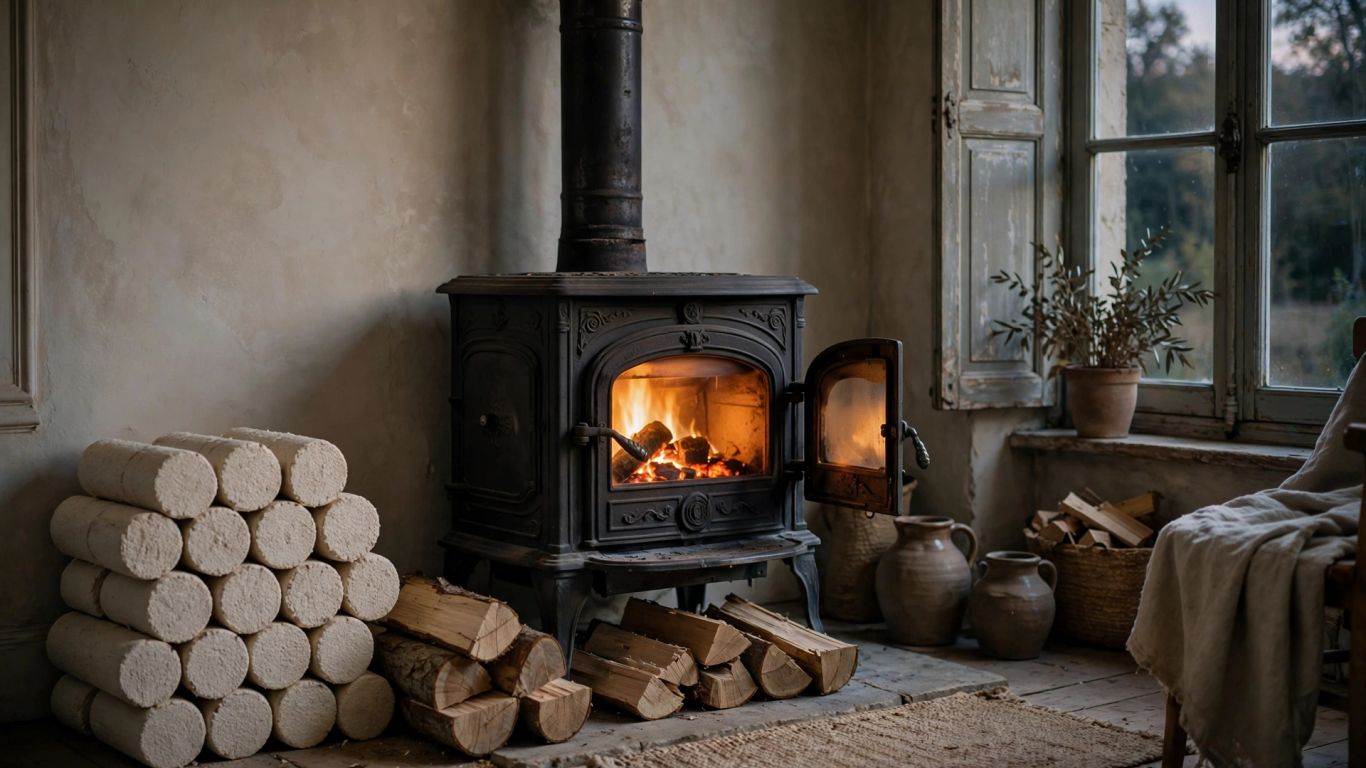
A compressed log contains a lot of wood in a small volume, but this does not mean that every appliance will release the same amount of heat from every product. Moisture content, fuel quality and air supply affect the energy actually released. To assess the results in your home, compare the supplier’s information with your usual consumption, without automatically equating a kilogram with a given volume of traditional firewood. Your appliance’s instructions remain the primary guide to using fuel appropriately.
Burning time and how often you need to refuel
How long a fire burns varies according to the log’s format and composition, as well as the appliance settings and heat required. A dense log may release its energy differently from a traditional log, but it does not remove the need to monitor the fire. It is useful to note how often you need to refuel during an evening or a day of heating. This real-world experience provides a more reliable guide than a general promise about burning time.
Lighting, consistent heat and ash quantity
Lighting depends in particular on kindling, draught and how the fuel is arranged. Once the fire is going, a steady load helps maintain a comfortable temperature and avoid excessive fluctuations. The amount of ash depends on fuel quality and combustion conditions; this does not remove the need for routine cleaning. For consistent results, follow the appliance instructions and do not reduce the air supply beyond what they allow.
Assessing the true cost of each fuel
Comparing the price of a bag with that of a stere does not provide a direct answer. Units, moisture content, packaging and delivery costs differ. To make a useful decision, calculate expenditure over a heating period and take into account the quantity actually used. A sound comparison therefore distinguishes the purchase price from the cost of use.
Purchase price per tonne, stere or kilogram
Compressed logs are often sold by weight or in batches, whereas traditional firewood is frequently sold by the stere or by volume. These units are not directly interchangeable: a stere is a measure of stacked volume, and weight varies according to species and moisture content. To avoid a misleading comparison, ask for the exact weight or volume, packaging details and any associated charges. The figures below indicate the factors to compare rather than a universal price.
| Factor to compare | Compressed logs | Traditional firewood |
|---|---|---|
| Unit of sale | Often by weight or in batches | Often by the stere or by volume |
| Moisture-related factor | Check the product information | Ask how dry it is |
| Additional costs | Delivery and packaging | Delivery, stacking and any preparation |
This table shows why a simple unit price can be misleading. The best basis for comparison is the total cost in relation to a useful amount of heat, with the same heating requirements over an identical period.
Comparing costs according to moisture content and efficiency
A wetter fuel contains more water that must be removed during combustion, which can reduce comfort and alter the amount needed. Well-dried traditional firewood can therefore be very different from a batch whose moisture content is unknown. Conversely, the higher price of a compact product is not enough to determine that it costs more to use: you need to consider the quantity required and losses during combustion. Comparing the differences between traditional and compressed firewood can help you assess these factors.
Taking transport and quantities used into account
Transport can add to the bill, especially if delivery is charged separately or the fuel has to be collected from a location far from home. The quantity ordered should also match the available space and rate of use, to avoid paying for stock that is difficult to protect. An estimate based on purchases from the previous season is a useful starting point, adjusted for the weather and any periods away from home. For any other energy-related project, the criteria depend on the project itself: for example, you can get in touch to discuss a regulatory assessment.
Considering storage and ease of use
Storage directly affects the quality of the fuel when it is used. Traditional firewood needs space suited to its volume and a storage arrangement that keeps it in good condition. Compressed logs are more compact, but they too must be protected from moisture. In everyday use, ease of handling also depends on moving loads, preparation and compatibility with the firebox.
Space required and storage conditions
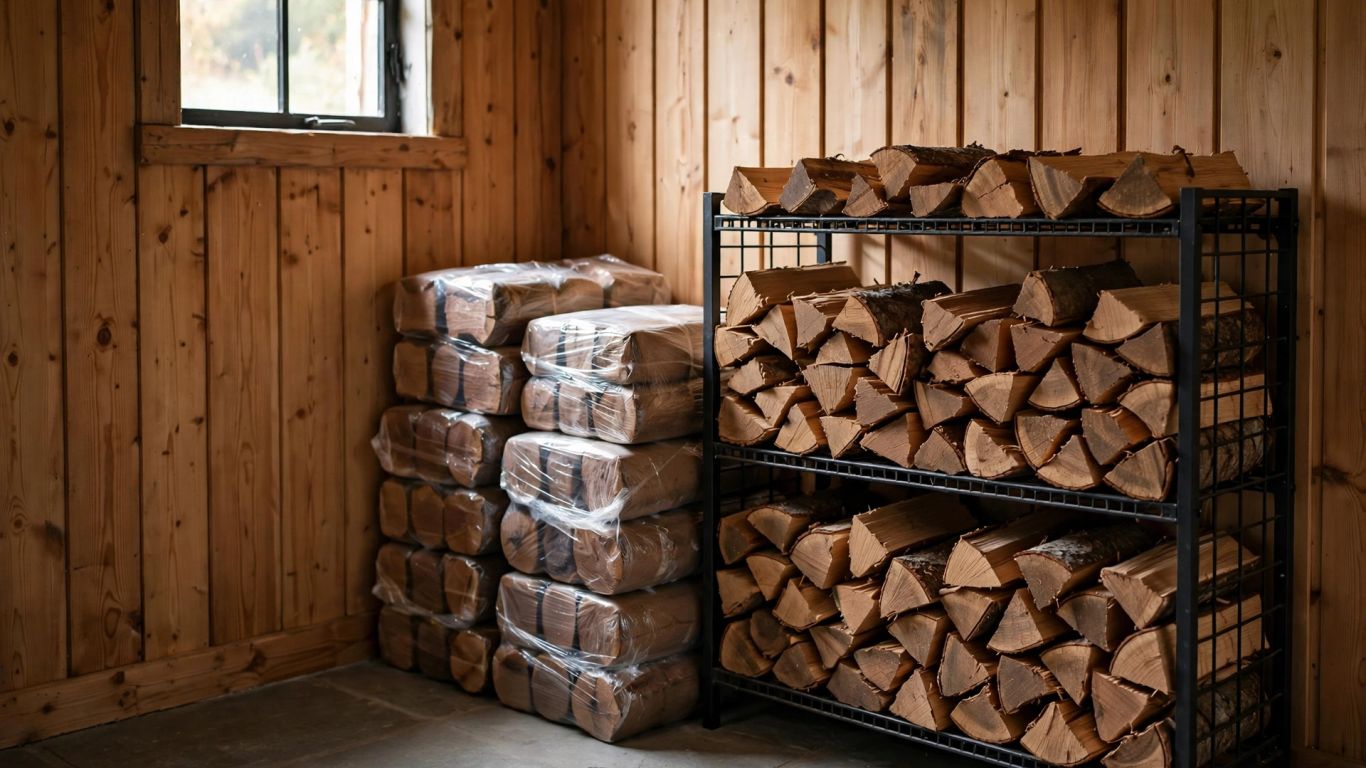
The regular shape of compressed logs generally makes it possible to store fuel neatly in a small space. This compactness should not detract from the need to keep them dry: moisture can affect their strength and combustion. Traditional firewood often requires more space, particularly to keep the logs accessible and allow air to circulate properly around the stack. In both cases, a dry shelter and protection from the weather help maintain good storage conditions.
Handling and preparation before burning
The tasks required before lighting vary according to the fuel and the layout of the home. Traditional firewood may need to be moved, stacked and cut to size to fit the appliance, whereas compressed logs are supplied in uniform formats. To make your heating routine straightforward, it is helpful to check the following:
- Measure the dry storage space actually available before placing an order.
- Check that the logs are the right length for the firebox.
- Keep the fuel nearby without obstructing movement or exposing the stock to water.
- Plan for regular cleaning and have the equipment needed for handling fuel.
These simple precautions help avoid inconvenience when refuelling and keep the fuel in good condition. They do not replace the appliance’s safety instructions, which should always take priority.
Compatibility with heating appliances
Not all wood-burning appliances necessarily accept the same dimensions, fuel types or loading methods. Before changing products, consult the instructions for your stove, insert or fireplace and follow the manufacturer’s recommendations. A vigorous burn may not suit every installation, just as an oversized log can make loading difficult. Portable heaters serve different purposes; this comparison of portable heaters distinguishes them from wood heating.
Comparing environmental effects and maintenance
Environmental impact depends on the source of the wood, resource management and combustion conditions. The fact that a raw material is renewable is not enough on its own to describe its overall impact: transport, drying and actual use also matter. As for maintenance, a well-managed fire helps limit unwanted residues, but does not eliminate the need for chimney sweeping or cleaning. It is therefore worth considering the fuel and how it is used together.
Raw material sources and resource management
Compressed logs can make use of sawdust and wood chips produced during wood processing, whereas traditional logs come from wood cut and prepared for heating. For both categories, it is worth checking their origin and forest management practices. Ask the seller for information about provenance and composition rather than inferring a fuel’s impact from its format alone. Local availability and transport distances may also influence your choice.
Emissions and the importance of controlled combustion
Emissions depend on fuel quality, moisture content, the appliance and how the fire is managed. Suitable wood, a correctly operated appliance and draught in line with the recommendations all contribute to controlled combustion. Avoid burning treated materials or anything not intended for this purpose, and do not operate the appliance outside its instructions. Regular maintenance also contributes to safety and the proper functioning of the installation.
Ash, deposits and flue maintenance
The amount of ash varies according to the fuel and heating conditions. The ash pan should be emptied according to the appliance instructions, and accessible surfaces should be cleaned regularly. Deposits in the flue depend in particular on combustion and the fuel; they cannot be assessed from a single fire. The chimney should be swept in accordance with the applicable regulations and the advice of a professional.
Choosing the right fuel for your needs
There is no answer that suits every household: the choice depends on available space, budget, appliance and frequency of use. Compressed logs can be convenient when compact storage is a priority, while traditional firewood may suit a household that uses it regularly and has adequate storage space. Some users alternate between the two, provided the appliance instructions allow this. The right decision is based on observable factors rather than a general preference.
Choosing compressed logs when storage space is limited
Limited space can make the compact format of compressed logs an appealing option. Their packaging makes them easy to store and makes it easier to see how much fuel is available. In return, the packs must be kept dry and the manufacturer’s instructions followed. This option may be worth considering if ease of handling matters more than buying a large stock of traditional firewood.
Choosing traditional firewood for regular use
A household that heats with wood frequently may prefer to buy traditional firewood in bulk, provided it has a suitable storage area. The total cost then depends on quality, drying, the volume delivered and the transport distance. You also need to plan for stacking and handling before each heating period. To compare options, the price of a compact radiator relates to a different type of heating, but is a reminder that the appliance and its intended use should be considered together.
Combining both fuels according to the appliance and heating habits
Using both fuels can meet different needs throughout the day: one fuel to get the fire going and another to maintain the heat, for example. This approach is only suitable if the fuels are compatible with the appliance and their use follows the manufacturer’s instructions. You should also avoid overloading the firebox or changing the settings without taking the instructions into account. To refine your decision, compare a period of actual use rather than relying on a single fire.
Key takeaways
The choice between traditional firewood and compressed logs comes down to weighing up the true cost, storage, fuel quality and the requirements of the appliance. A compact product can make storage easier, while a stock of traditional firewood may be better suited to regular use; in both cases, drying and controlled combustion remain essential.
Discuss your project
To explore a solar project or find out more about a regulatory assessment, you can view Solencia’s services and request a discussion tailored to your situation.
Frequently asked questions
Do compressed logs produce more heat than traditional firewood?
The result depends on the quality and moisture content of the fuel, the appliance and how the fire is managed. Compare products under similar conditions and follow the manufacturer’s instructions.
Can compressed logs be used in all stoves?
Compatibility varies according to the appliance and its manufacturer’s recommendations. Consult the instructions before using a new fuel.
Does traditional firewood need to be dry before it is burned?
Yes, sufficiently dry wood is preferable for effective combustion. Ask the seller for details about the drying process and store the wood in suitable conditions.
Do compressed logs take up less space?
Their regular, compact format generally makes them easier to store. However, they must be protected from moisture.
Do night logs last all night?
Burning time varies according to the composition, appliance and settings. The product name does not guarantee the same duration in every installation.
Which fuel is cheaper?
The displayed price alone is not enough to answer this. Compare the delivered cost, quantities used, moisture content and heating requirements over a given period.
Do chimneys need sweeping when using compressed logs?
Yes. Whatever fuel you use, maintenance and chimney sweeping must follow the applicable regulations and the appliance recommendations.

Thibault Mouillefarine est responsable éditorial de Solencia, une plateforme dédiée à la compréhension, à la qualification et à l’accélération des projets photovoltaïques professionnels. Fondateur de Millennium Digital, agence spécialisée en stratégie digitale B2B, il accompagne les entreprises dans la transformation de sujets complexes en parcours de décision clairs et orientés résultats. Les contenus publiés sur Solencia s’appuient sur des sources publiques et institutionnelles : textes réglementaires, documentation Enedis, données CRE, informations EDF OA, ressources ADEME et publications officielles liées à l’énergie.