Key takeaways
The choice of a charging station depends mainly on the vehicle, the available power, and parking habits. A well-sized installation avoids paying for unnecessary power while ensuring charging is suitable for daily use.
- A reinforced socket is suitable for some simple uses, while a dedicated charging station offers more safety and power.
- The actual power received depends on the charging station, the onboard charger, and the electrical installation.
- Alternating current is generally suitable for daily charging, while direct current is mainly for long journeys.
- The Type 2 connector is common for usual charging and the Combo CCS for fast charging.
- The final price includes the equipment, installation, electrical protection, and, if applicable, public network usage fees.
Understanding how an electric car charging station works
An electric car charging station transmits energy to the vehicle at a defined power and communication protocol. It controls the connection, the current delivered, and the charging stop. To make an informed choice, you need to distinguish between the type of current, the battery capacity, and the installation’s limitations.
Difference between a reinforced socket and a dedicated charging station
A reinforced socket is like an improved domestic socket and can be suitable for a vehicle that remains parked for several hours. It generally delivers moderate power and must be installed on an adapted circuit. A dedicated charging station, on the other hand, is designed for charging an electric vehicle, with better-suited protections and power management.
A reinforced socket can be a starting solution when needs are limited. A charging station becomes more interesting when the vehicle is used daily, when the battery is large, or when the driver wants to regain more range overnight.
AC and DC charging
With alternating current (AC), the conversion to current usable by the battery is carried out by the car’s onboard charger. The power therefore depends on the charging station, but also on the capacity of this charger. This is the most common mode at home, at work, and at many public charging stations.
With direct current (DC), the conversion is carried out by the station itself. Charging can then be much faster, provided the vehicle accepts this power and the battery is in a favourable range. This type of equipment is mainly found on major roads and at high-turnover stations.
Charging time based on battery capacity
The time required is approximately calculated by dividing the energy to be restored by the power actually received. A 50 kWh battery therefore does not recharge at the same speed with a 3.7 kW station, a 7.4 kW station, or a fast station. Losses, temperature, and the final charging phase also extend the theoretical duration.
It is more reasonable to compare the number of kilometres regained during a parking period than to look for an absolute time. A car parked all night can regain sufficient range with moderate power, whereas a motorway journey requires reducing stopping time.
Role of the cable, connector, and safety equipment
The cable ensures the passage of current between the charging station and the vehicle, while the connector guarantees mechanical and electrical compatibility. Some cables are attached to the charging station, while others must be stored in the vehicle. You must check the type of socket accepted before purchasing.
Safety devices monitor, in particular, the presence of the vehicle, earth continuity, and any electrical anomalies. Overall compatibility remains crucial: a powerful charging station does not allow exceeding the limit accepted by the car or the electrical panel.
Main types of charging stations
Charging stations are distinguished by their installation location, power, and access method. A residential solution does not meet the same constraints as a public station or a shared facility in a condominium. The right choice therefore begins with observing where the vehicle is actually parked.
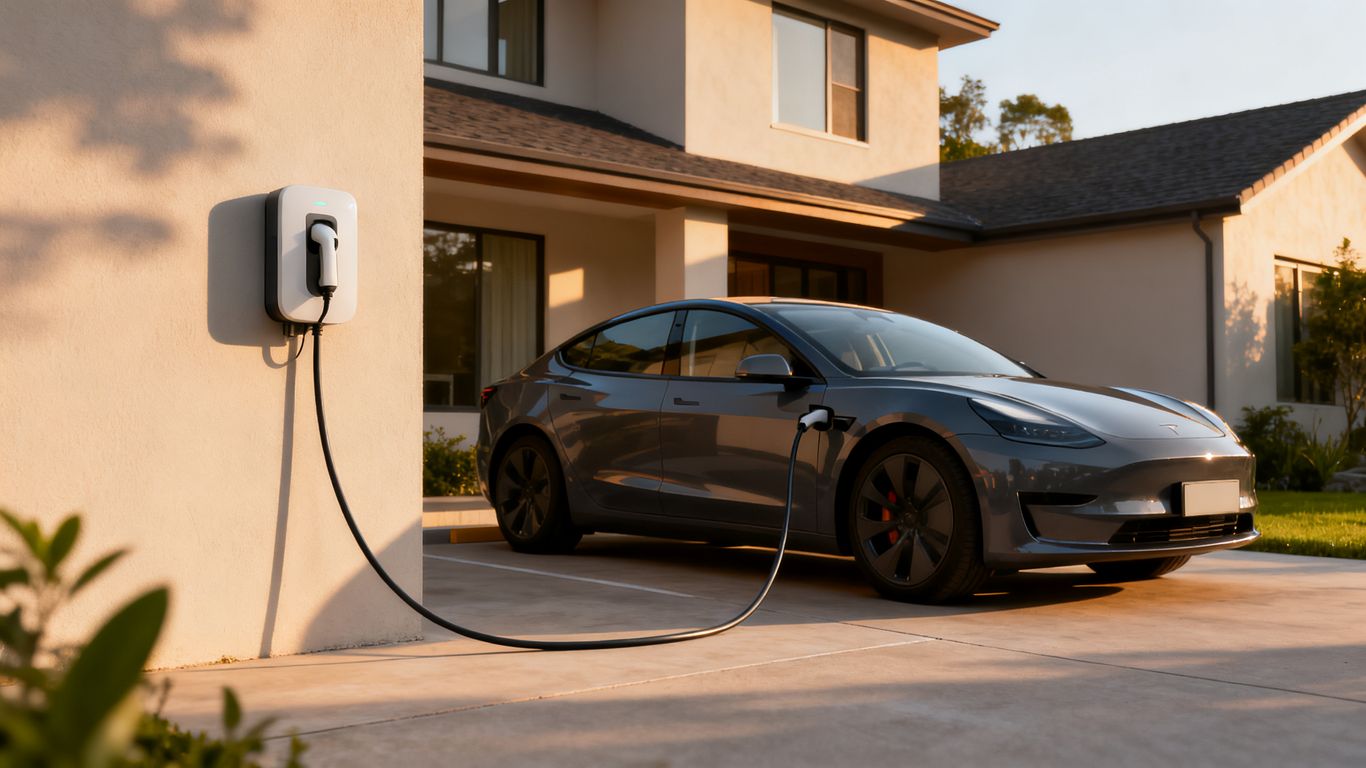
Home charging station for a detached house
In a detached house, the charging station is often installed near the parking space, in a garage or outdoors. It can be connected to the electrical panel located in the dwelling or in an outbuilding. The cable length, exposure to weather, and ease of access must be considered before installation.
Home charging allows you to plug in the vehicle when it is not in use, without depending on the opening hours of a public station. For daily use, the regularity of parking often counts more than a maximum power that is rarely used.
Charging station installed in a condominium or shared car park
In a condominium, the decision generally involves a common area, a connection, and a method for allocating consumption. The project must specify who finances the installation, how users are identified, and how costs are allocated. Distance constraints between the panel and the parking spaces can also affect the budget.
In a shared company car park, the charging station can serve multiple vehicles. In this case, you need to consider the availability of charging points, access rules, and possibly dynamic power limitation to avoid overloading the building’s network.
Public charging station and roaming charging
A public charging station can be located on the street, in a car park, at a petrol station, or near a shop. Power levels, payment methods, and pricing conditions vary greatly. Before a journey, it is useful to check the location, availability, and connector type.
A map of public charging stations can help plan a route and distinguish between slow, fast, and ultra-fast points. For Belgium, an interactive map of stations also provides a practical reference for locating charging stations and planning journey stages.
Fast charging station and high-power charging station
A fast station is intended for short stops, especially when the vehicle is travelling a long distance. It delivers direct current and can accommodate multiple vehicles, with sometimes very high power levels. However, the vehicle must be compatible with the proposed level.
The advertised speed is not a constant guarantee. It can decrease when the battery approaches its maximum level, when multiple points are in use, or when the temperature is unfavourable. Planning must therefore include a reasonable margin.
Choosing the right power for your vehicle and usage
The nominal power of a charging station is not enough to predict charging speed. It must be compared to the maximum power accepted in AC or DC by the vehicle. Daily use, parking duration, and the contracted power of the dwelling complete this analysis.
Common power levels from 3.7 to 7.4 kW
A power of 3.7 kW can be suitable for a vehicle parked for a long time, for example overnight or during a workday. A 7.4 kW charging station reduces the time required for the same amount of energy, but it puts more strain on the electrical circuit. The choice therefore also depends on the power available in the dwelling.
These levels meet many residential needs. They allow the battery to be recharged gradually without imposing the cost or constraints of a three-phase installation.
Three-phase charging stations from 11 to 22 kW
Charging stations from 11 to 22 kW generally use a three-phase power supply. They can be useful for vehicles capable of accepting this power in AC and for drivers who cover many kilometres. At 22 kW, the car must have a compatible onboard charger, otherwise the power will be limited.
Before opting for such a solution, you must check the building’s connection type and phase balancing. Higher power at the charging station does not compensate for a domestic installation that cannot supply it sustainably.
Fast charging stations of 50 kW and above
From 50 kW upwards, we generally enter the realm of fast DC charging. These stations are designed to recover a significant amount of energy during a relatively short break. They are particularly suitable for long journeys and for vehicles whose batteries accept this charging level.
The cost of use is often higher than that of home charging. You also need to consider the vehicle’s charging curve, which can make the last percentages much slower than the first.
Check the limits of the vehicle and the electrical installation
The actual available power is determined by the weakest link. The vehicle can cap the charge, as can the cable, the charging station, the circuit breaker, or the electricity contract. This check avoids choosing an oversized piece of equipment and causing spurious tripping.
To organise the comparison, the following benchmarks are useful:
- 3.7 kW for slow charging with prolonged parking;
- 7.4 kW for more comfortable daily residential use;
- 11 kW for a vehicle compatible with a three-phase supply;
- 22 kW when the vehicle and connection accept this power;
- 50 kW or more for quick stops on a long journey.
This guide remains indicative. The vehicle’s technical data sheet and professional advice should take precedence over a purely theoretical comparison.
Comparing connectors and useful features
The connector determines compatibility between the car and the charging station, but it does not summarise the entire charging experience. Cable length, access to the charging station, and programming functions can affect daily comfort. It is therefore preferable to consider the entire installation rather than just the shape of the plug.
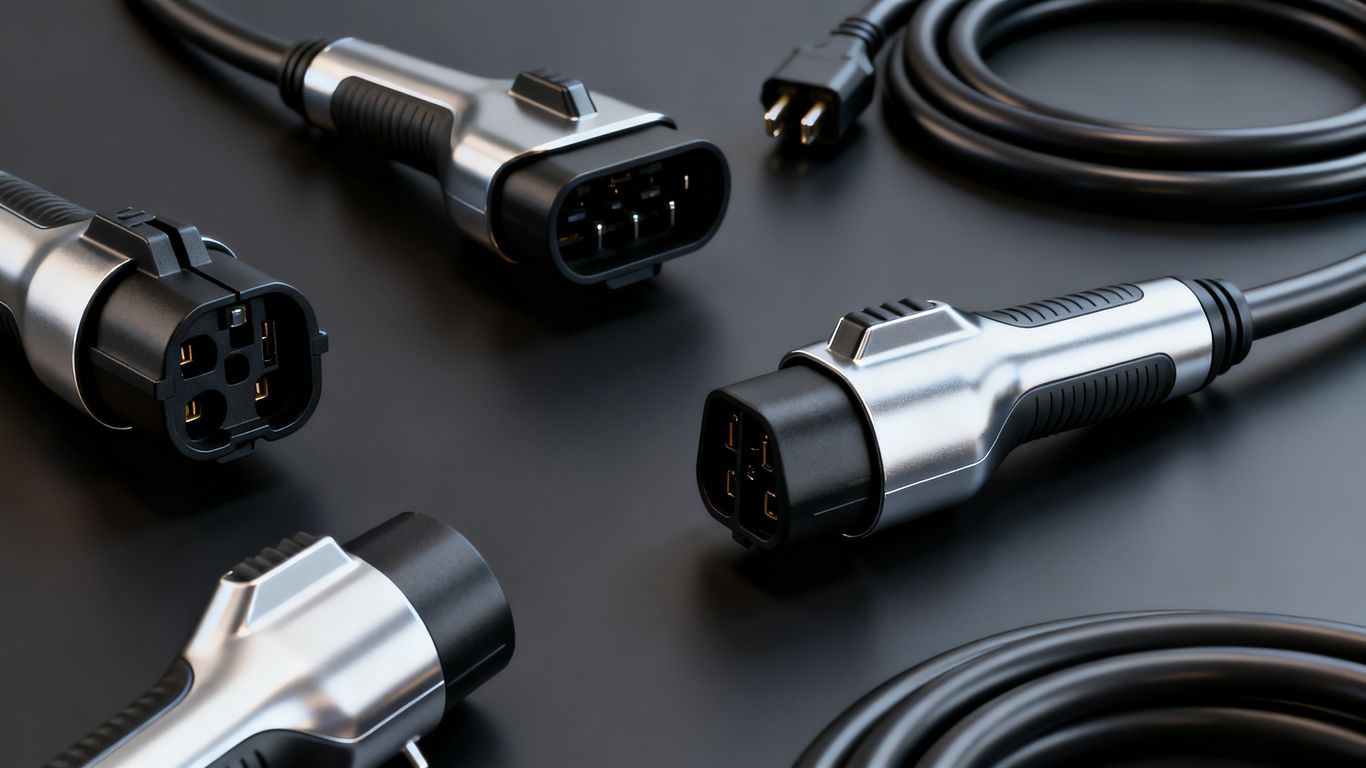
Type 2 connector for daily charging
The Type 2 is widely used for AC charging of electric vehicles. It can be found on residential charging stations, company charging stations, or public points. Depending on the equipment, the cable is supplied by the charging station or must be brought by the driver.
The power obtained depends on the car and the connection. A Type 2 connector therefore does not automatically mean that charging will be at 11 or 22 kW.
Combo CCS connector for fast charging
The Combo CCS combines the AC part with additional contacts for DC charging. It is common on fast stations and must be accepted by the vehicle to function. As the cable is usually attached to the station, it is thicker and heavier than a daily charging cable.
Before a long journey, it is advisable to check for a compatible CCS point, the advertised power, and the access conditions. This information can prevent a detour to a station that is not suitable for the vehicle.
Domestic socket and vehicle compatibility
A domestic socket can be a temporary solution or suitable for occasional use, but it does not offer the same conditions as a dedicated circuit. Charging time is longer, and the installation must be in good condition. Old sockets, extension cords, or poorly protected connections should be avoided.
The cable supplied with the vehicle should also be checked. Its capacity, connector type, and possible settings influence the charge. A simple solution remains acceptable when parking is long and regular, provided electrical safety is ensured.
Remote control, programming, and consumption monitoring
Connected features can allow you to program charging times, check the status of a session, or monitor consumption. They are useful when the vehicle remains parked for several hours or when the driver wants to better distribute the dwelling’s electrical usage.
These features are not essential for all users. You need to check the connection quality, the access methods for the application, and whether a subscription is required before including them in the budget.
Average prices of an electric car charging station
The price of an electric car charging station depends less on a single tariff than on several added costs. Power, connector type, distance to the electrical panel, and necessary work can significantly alter the quote. A serious comparison should therefore focus on the total installed cost.
Equipment price based on power and features
A simple AC unit generally costs less than a connected, three-phase, or feature-rich charging station. Models designed for outdoor use may also require a more robust casing and additional accessories. The price of the equipment should be compared with its protections, cable, and warranty.
It is preferable to request a detailed quote rather than just considering the displayed price of the charging station. Two models of similar power can have different costs depending on their control method and included accessories.
Cost of electrical installation and fitting
Installation includes connection, circuit protection, cable routing, and commissioning. An installation close to the electrical panel will often be simpler than a connection to a distant garage or a space in a courtyard. Wall drilling, trenching, and compliance work can also add to the budget.
The quote should specify the supply and installation, any preparatory work, and travel costs. This transparency facilitates comparison between different proposals.
Charging tariffs on public networks
On a public network, billing can depend on energy consumed, time spent, a flat fee, or a combination of these criteria. Tariffs also vary depending on the charging station’s power and the operator. Start-up fees or extended parking fees may also apply.
A planning app can facilitate comparison of available stations and their access conditions. However, the driver must check the tariff displayed at the time of charging, as conditions can change.
Additional expenses: subscription, maintenance, and potential repairs
A connected charging station may require an associated service, while a shared charging station may incur management fees. Preventive maintenance is generally limited, but the cable, connector, and protection components can wear out. An out-of-warranty failure may also require diagnosis and intervention.
The annual budget should therefore include recurring expenses, even if they are modest. For a residential project, it is also useful to evaluate your project before comparing specific models.
Preparing and securing the home installation
A successful installation begins with examining the building, not by choosing a commercial brand. The electrical panel, cable routing, parking space, and distance to be covered must be studied together. This preparation reduces unpleasant surprises and allows for a realistic quote.
Assessing available power at the electrical panel
You need to check the subscribed power, the panel’s capacity, and the circuits already in use. A dwelling heated by electricity or equipped with a heat pump may have less margin when several appliances are running simultaneously. The charging station must be integrated without compromising other uses.
A professional can determine if adaptation of the panel, load shedding, or an upgrade of the connection is necessary. The chosen power should correspond to actual consumption, not just the vehicle’s theoretical capacity.
Choosing a practical and compliant location
The location must allow the car to be plugged in without excessive strain on the cable or inconvenience to other users. You also need to consider rain, impacts, ventilation, and lighting. In a garage, the charging station must remain accessible while leaving a safe passage.
The distance between the charging station and the electrical panel influences the cable length and the complexity of the installation. A slightly different location can sometimes reduce the work without compromising user comfort.
Hiring a qualified installer
The intervention of a qualified installer allows for checking circuit compliance and choosing appropriate protections. It also provides traceability of the work, useful for maintenance or future upgrades of the installation. The professional must clearly explain the limitations of the proposed solution.
It is recommended to compare quotes that describe the same scope: equipment, protections, cabling, fixing, testing, and commissioning. A lower price may hide absent services rather than a genuine saving.
Planning for electrical protections and earthing
The charging station must be connected to a properly protected installation, with verified earthing. Residual current devices and overcurrent protections must be chosen according to the installed equipment. These elements are not mere accessories: they directly contribute to the safety of people and the building.
After installation, tests must confirm the correct functioning of the circuit and communication with the vehicle. The owner must keep the technical documents and protection references to facilitate any future intervention.
Determining the most suitable charging station for your profile
The best charging station is not necessarily the most powerful. It must primarily match the mileage, parking time, type of dwelling, and available budget. A simple analysis of driving habits often helps narrow down the choice to a few coherent solutions.
7.4 kW charging station for daily commutes
A 7.4 kW charging station is often suitable for a car used every day and parked for several hours at home. It offers a compromise between speed, simplicity, and installation cost. It is particularly relevant when the vehicle is mainly charged overnight.
However, you must confirm that the vehicle accepts this power in AC and that the single-phase supply can provide it. Otherwise, the charging station will operate at reduced power.
11 or 22 kW charging station for high-mileage drivers
Drivers who cover many kilometres may seek faster charging at their parking location. An 11 or 22 kW charging station makes sense when the vehicle, cable, and three-phase installation are compatible. Without this compatibility, the additional investment may be of little use.
The need should be assessed over a typical week. If the vehicle is regularly immobilised for ten hours, a lower power level may already cover the energy consumed between two days.
Fast charging for long journeys
Fast charging meets a different need: regaining significant range during a stop on the road. It does not necessarily replace a home charging station, as its cost of use and availability depend on the network. It complements daily charging when journeys exceed usual range.
To plan a route, it is useful to identify compatible stations, have a backup plan, and not wait until the battery is almost empty. Planning tools and specialised maps facilitate this organisation.
Decision criteria: budget, parking, and frequency of use
The final choice must balance the total price, parking duration, and charging frequency. A driver who drives little does not have the same priorities as a professional who makes back-to-back trips. The type of dwelling and the possibility of installing a charging station near the vehicle are just as important.
A simple decision-making method is to check: vehicle compatibility, actual available power, daily mileage, primary charging location, and installation budget. This approach generally leads to a more balanced solution than a search based solely on maximum power.
Taking action
To turn this analysis into a concrete project, start by gathering the vehicle’s specifications, the dwelling’s power, and the parking constraints. A discussion with a competent contact will then allow you to refine the solution and the necessary work.
How to choose your charging station
Choosing a charging station involves bringing together technology, an electrical installation, and driving habits. By prioritising compatibility, safety, and overall cost over advertised power, drivers can have reliable charging that is truly suited to their daily lives.
Frequently asked questions
What power should I choose to charge a car at home?
A power of 3.7 to 7.4 kW is often suitable for overnight charging. However, the choice depends on the battery capacity, the onboard charger, and the power available in the dwelling.
Is a domestic socket sufficient for an electric car?
It can be suitable for occasional use or for a vehicle parked for a very long time, if the installation is in good condition. A dedicated circuit or a charging station is preferable for regular and more controlled use.
What is the difference between alternating current and direct current?
In alternating current, the car’s onboard charger converts the electricity for the battery. In direct current, the conversion is carried out by the station, which generally allows for faster charging.
Is the Type 2 connector compatible with all electric vehicles?
The Type 2 is widely used for AC charging, but compatibility must be checked on the vehicle’s technical data sheet. The actual power received may also be limited by the onboard charger.
When should I use a fast charging station?
A fast charging station is mainly useful during a long journey, when the vehicle needs to regain a lot of range in a short time. It is less necessary for a car that parks all night at home.
What elements influence the price of an installation?
The price depends on the equipment, power, distance to the electrical panel, protections, cabling, and complexity of the installation. Any subscriptions and maintenance costs should also be considered.
Should the electrical installation be checked before installation?
Yes. The available power, earthing, protections, and the condition of the electrical panel must be checked to ensure a safe installation that is compatible with the chosen charging station.

Thibault Mouillefarine est responsable éditorial de Solencia, une plateforme dédiée à la compréhension, à la qualification et à l’accélération des projets photovoltaïques professionnels. Fondateur de Millennium Digital, agence spécialisée en stratégie digitale B2B, il accompagne les entreprises dans la transformation de sujets complexes en parcours de décision clairs et orientés résultats. Les contenus publiés sur Solencia s’appuient sur des sources publiques et institutionnelles : textes réglementaires, documentation Enedis, données CRE, informations EDF OA, ressources ADEME et publications officielles liées à l’énergie.