The solar energy sector is experiencing constant growth, and with it, interest in the Feed-in Tariff. Understanding the mechanisms that govern the profitability of your installation is essential to maximise your earnings. This article explores seven key aspects to help you get the most out of your solar investment.
Key Points
- The Feed-in Tariff is a key element for the profitability of your solar installation.
- Self-consumption of your production is often more advantageous than total sale.
- The Self-Consumption Premium reduces the initial cost of your project.
- The contract with EDF OA guarantees a stable purchase price for your surplus.
- Choosing an RGE certified installer is important to benefit from aid and ensure the quality of the installation.
1. Self-consumption
Self-consumption is the idea of directly consuming the electricity that your solar panels produce. It’s an increasingly popular approach, especially with the evolution of feed-in tariffs. Basically, instead of sending all your production back to the grid, you use it to power your own home or business. It’s a smart way to reduce your dependence on traditional energy suppliers and to control your costs.
There are several ways to practice self-consumption:
- Total self-consumption: You consume all the electricity produced by your panels. This is ideal if your consumption roughly corresponds to your solar production.
- Self-consumption with sale of surplus: You consume what you need and sell the rest to the grid. This is a good option if your production often exceeds your consumption.
- Self-consumption with storage: You use batteries to store the energy produced during the day and use it in the evening or on cloudy days. This maximises your autonomy.
Self-consumption is a winning strategy to reduce your electricity bill and increase your energy independence. It’s an investment that can be profitable in the long term, especially if you choose the right configuration for your needs.
Self-consumption is an effective way to reduce your electricity bill. Remember to properly size your installation so that it corresponds to your needs. Solar panels offer long-term budgetary visibility.
2. Sale of surplus
Self-consumption with sale of surplus is an interesting option to optimise your solar income. Instead of simply consuming the energy you produce, you can sell the excess to the grid. It’s an effective way to make your photovoltaic installation profitable.
How does it work?
The principle is simple: your solar installation produces electricity. You consume what you need to power your home. The remaining electricity, the one you don’t use immediately, is injected into the electricity grid. You are then paid for this electricity.
The advantages of selling the surplus
- Additional income: Selling the surplus allows you to generate additional income by selling the electricity you don’t consume. It’s a way to amortise your initial investment more quickly.
- Optimisation of the installation: You don’t have to worry about sizing your installation as accurately as possible in relation to your consumption. You can install more panels and sell the surplus.
- Contribution to the energy transition: By injecting your surplus of green electricity into the grid, you contribute to the energy transition and the reduction of greenhouse gas emissions.
The steps to follow
- Connection to the grid: You must have your installation connected to the electricity grid by Enedis.
- Purchase contract: You must take out a purchase contract with EDF Obligation d’Achat (OA) Solaire or another electricity supplier. This contract defines the price at which your surplus will be bought back.
- Monitoring of production: You must monitor your electricity production and the quantity injected into the grid for billing.
Purchase prices
The surplus purchase prices are set by law and vary depending on the power of your installation and the date of signature of the contract. It is important to find out about the current prices before starting.
Selling the surplus is an advantageous solution for most residential photovoltaic installations. It allows you to maximise solar income while contributing to the energy transition. However, it is important to study the purchase prices and the steps to follow to optimise your profitability.
Points of vigilance
- The purchase price: It is important to compare the offers of different suppliers to obtain the best possible purchase price.
- Connection costs: Connection to the grid may incur costs. It is important to take them into account in your profitability calculation.
- Taxation: Income from the sale of the surplus is taxable. It is important to find out about the applicable tax rules.
In conclusion, the sale of surplus is an option to consider seriously if you want to maximise your solar gains. Don’t hesitate to call on an RGE installer to support you in your project and advise you on the best options for your situation.
3. Self-consumption premium
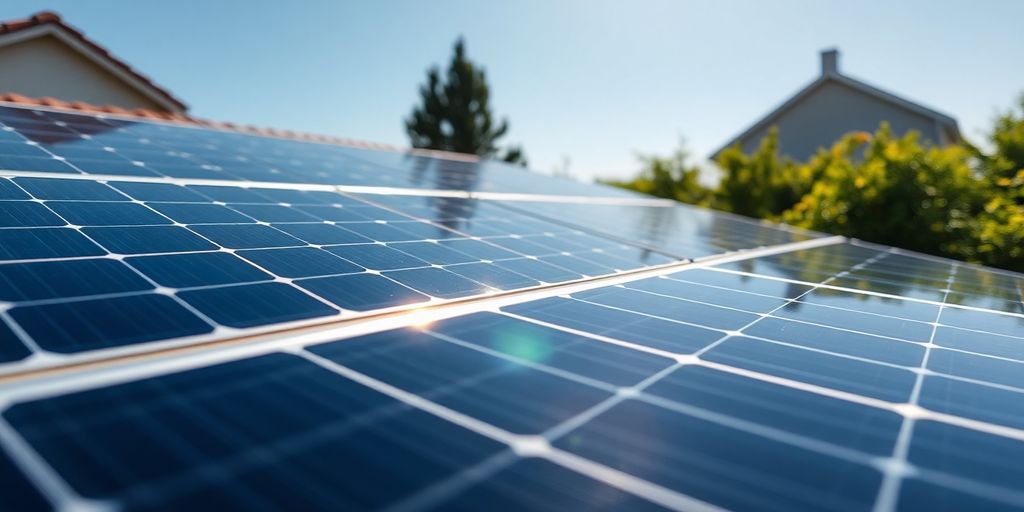
The self-consumption premium is a financial aid paid by the State to encourage individuals to invest in photovoltaic installations and consume their own electricity production. It’s a non-negligible boost to make your solar project more affordable. Basically, the idea is to encourage you to use the energy you produce rather than systematically reselling it.
This premium is degressive depending on the power of your installation. The more powerful your installation, the lower the premium per kilowatt-peak (kWp). It’s a bit confusing at first, but it’s understandable: the State wants to encourage as many people as possible to get started, even with more modest installations.
It is important to note that this premium is subject to certain conditions, including installation by an RGE (Recognised Guarantor of the Environment) certified professional. This is a guarantee of quality and seriousness for your installation.
Here are some important points to remember:
- The premium is paid in several instalments, usually over the first five years of operation of your installation.
- It can be combined with other aid, such as local aid or tax credits (if applicable).
- The amount of the premium is revised regularly, so it is important to keep informed of the latest developments. You can consult Solencia’s prices and premiums for more information.
In summary, the self-consumption premium is a major asset to make your photovoltaic installation profitable. It reduces the initial cost of the investment and accelerates the return on investment. Don’t hesitate to ask your RGE installer for information on how to obtain it and the amounts applicable to your project. The self-consumption premiums are an excellent way to maximise your solar gains. It is important to note that the self-consumption premium, effective until 31 January 2024, varies depending on the photovoltaic power.
4. Purchase obligation
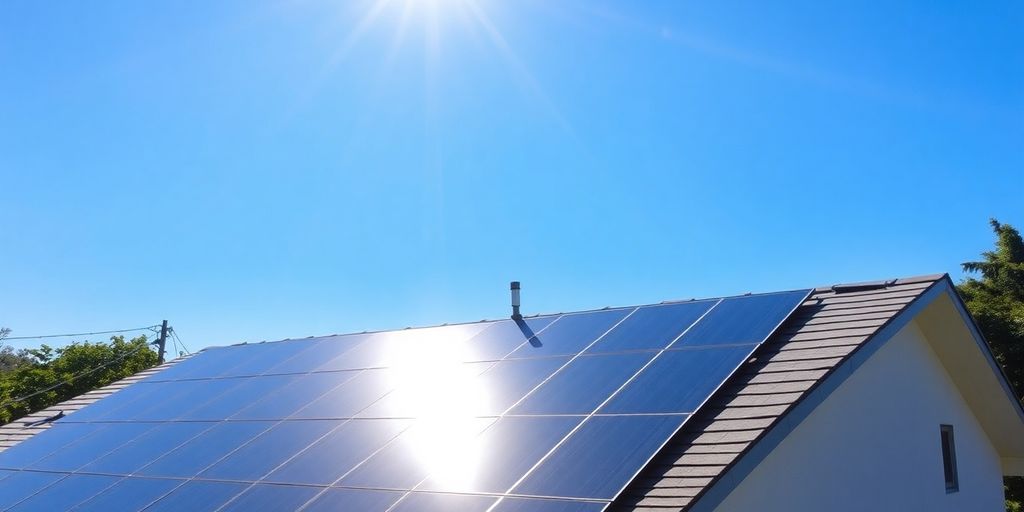
The Purchase Obligation (OA) is a scheme set up by the State to encourage the development of solar energy in France. It guarantees photovoltaic electricity producers a fixed purchase price for their production for a specified period, usually 20 years. It’s a bit like having a concrete contract with EDF, which is obliged to buy your electricity at a price fixed in advance. Not bad, is it?
This mechanism is particularly interesting if you produce more electricity than you consume, as it allows you to sell the surplus at an advantageous price. It’s a bit like your roof becoming a small power plant that earns you money.
Here are some important points to remember about the Purchase Obligation:
- The purchase price is set by ministerial decree and varies depending on the power of your installation and its date of commissioning. It is therefore important to keep informed of the prices in force. You can consult the EDF OA purchase prices for 2025 to get an idea of current prices.
- The Purchase Obligation contract is concluded with EDF Obligation d’Achat (EDF OA), an EDF subsidiary specially dedicated to this scheme. It is with them that you will sign your contract and invoice your production.
- To benefit from the Purchase Obligation, your installation must meet certain technical and administrative conditions, including being installed by an RGE (Recognised Guarantor of the Environment) certified professional. This is a guarantee of quality and seriousness for your installation.
The Purchase Obligation is a pillar of support for solar energy in France. It offers financial visibility to producers and contributes to the country’s energy transition. It’s a win-win scheme for individuals and for the environment.
Basically, the Purchase Obligation is the guarantee of being able to sell your surplus electricity at a fair price for 20 years. It’s a strong argument for investing in solar, especially if you live in a sunny region. And if you produce more than you consume, you can even earn money! Don’t hesitate to find out about the eligibility conditions and the prices in force to see if it’s an interesting option for you. You can even sell your solar electricity to EDF Obligation d’Achat for a few pence per kWh.
5. Contract with EDF OA
Taking out a contract with EDF Obligation d’Achat (OA) is a decisive step to secure your income from the sale of your solar electricity. This contract binds you to EDF OA for a period of 20 years, ensuring a fixed and guaranteed purchase price for the entire period. It’s a significant peace of mind, especially in an energy market that is sometimes fluctuating.
The contract with EDF OA is therefore a central pillar of the profitability of your photovoltaic installation.
It is important to fully understand the terms of the contract before committing. Here are some points to consider:
- The purchase prices applicable to your installation (they depend on the power of your installation).
- The invoicing and payment procedures.
- The obligations of each party (you and EDF OA).
It is advisable to read the contract carefully and not hesitate to ask EDF OA questions if certain points are not clear. A good understanding of the contract is essential to avoid unpleasant surprises and optimise your solar income.
For those considering the future of photovoltaics perspectives and innovations, understanding these contracts is essential. EDF OA contracts offer financial stability, especially with 20-year contracts details on the duration in 2025. These contracts are crucial for the long-term profitability of your installation, guaranteeing a fixed purchase price for the energy you sell. For the resale of photovoltaic energy, EDF OA offers energy purchase contracts over 20 years in 2025, ensuring a stable and predictable income.
6. Profitability study
It is crucial to carry out a profitability study before investing in solar panels. Why? Because each project is unique. A profitability study allows you to measure the economic efficiency of your installation and its feasibility. This will avoid potential financial losses.
The study takes into account several factors, such as the number of solar panels, the volume of annual electricity production, the consumption of your household and the choice between resale or self-consumption.
The return on investment (ROI) materialises when the savings made through self-consumption and/or the sale of electricity exceed the initial investment. To ensure the profitability of your project, it is important to fully understand all the financial aspects.
A well-conducted profitability study will give you a clear vision of the expected costs and benefits of your solar installation. It will help you make an informed decision and optimise your investment.
Here are some elements to consider for a complete profitability study:
- The initial cost of the installation (panels, inverter, installation, etc.).
- The financial aid available (self-consumption premium, tax credit, etc.).
- The income generated by the sale of surplus electricity.
- The savings made on your electricity bill thanks to self-consumption.
- The maintenance and insurance costs of the installation.
It is possible to improve the energy efficiency of your HVAC system and therefore the profitability of your installation by using a production monitoring application, intelligent control or a storage system.
Don’t forget that many parameters influence the profitability of a photovoltaic solar panel installation. Learn how to calculate the profitability of your project and discover tips to optimise your investment. Solar panel installations become profitable on average in 12 years.
7. RGE Installer
Choosing the right installer is crucial for the success of your solar project. But how do you make sure you make the right choice? This is where the RGE (Recognised Guarantor of the Environment) qualification comes in. Calling on an RGE professional means ensuring an installation that complies with standards, carried out by a qualified expert. And that changes everything, especially to benefit from financial aid.
Engaging an RGE installer is much more than a simple administrative formality. It’s a guarantee of quality, seriousness and professionalism. It’s the guarantee of a durable, efficient and environmentally friendly installation.
Why choose an RGE installer?
Opting for an RGE installer has several significant advantages:
- Access to financial aid: This is the most important point. Without an RGE installer, you will not be able to benefit from the self-consumption premium or the purchase obligation. It’s a bit like trying to play football without a ball: impossible!
- Quality of the installation: RGE installers are trained and qualified to carry out solar installations in accordance with the rules of the art. They know the standards, techniques and materials to use to guarantee a high-performance and durable installation. It’s a bit like entrusting your car to an expert mechanic rather than to your cousin who tinkers on Sundays.
- Ten-year guarantee: In the event of a problem with your installation, you are covered by the installer’s ten-year guarantee. This is an additional security that protects you in the event of defects or construction defects. It’s a bit like having comprehensive insurance for your home.
- Personalised advice: An RGE installer will be able to advise you on the solution best suited to your needs and your budget. They will take into account the specificities of your home, your energy consumption and your objectives to offer you a tailor-made installation. It’s a bit like having a personal sports coach to achieve your energy performance goals.
To find an RGE installer near you, you can consult the directory of RGE professionals on the France Rénov’ website. It’s simple, fast and efficient!
Don’t forget to ask for several quotes and compare the offers before making your choice. Take the time to carefully study the proposals and ask the installer all the necessary questions. A solar installation is a significant investment, so it’s best not to be mistaken!
And if you are hesitating about the power to choose, Hello Watt can support you in your solar project and help you maximise your self-consumption rate. They will put you in touch with RGE certified technicians for a detailed quote at the best price.
Finally, make sure that the installer you choose also has QualiPV certification, another guarantee of quality for photovoltaic installations. A successful solar panel installation is above all a matter of trust and professionalism.
For all your energy renovation work, choosing an RGE installer is a key step. This not only ensures quality work, but also access to financial aid. Don’t wait any longer to make your projects a reality! Visit our website to discover how we can support you.
In summary: solar, a choice that pays
As we have seen, buying back your solar electricity can be a really worthwhile business. To make the most of it, you need to think about several things. Choosing the right equipment is the basis. Then, you have to manage what you produce and what you consume. Financial aid should not be forgotten, it can make a big difference. And then, good maintenance helps everything last a long time. The energy market is moving, so staying informed is important. By following these tips, you put all the chances on your side so that your solar installation brings you the most possible. It’s a step towards more autonomy and a gesture for the planet, which is not nothing.
Frequently Asked Questions
What is photovoltaic self-consumption?
Self-consumption consists of directly using the electricity produced by your solar panels to cover your own energy needs. This reduces your dependence on the traditional electricity grid and lowers your electricity bills.
How does the sale of surplus production work?
Selling the surplus means that the electricity you produce and do not use immediately is reinjected into the public grid. You are paid for this unused energy, which adds a source of income to your installation.
What does the self-consumption premium correspond to?
The self-consumption premium is a financial aid from the State. It is paid to owners of solar installations who choose to consume part of their production. The amount of this premium depends on the power of your installation and is paid over several years.
What is the purchase obligation?
The purchase obligation is a legal mechanism that guarantees solar electricity producers a fixed price for the energy they sell to the grid. It is a long-term contract, often of 20 years, which secures your income and makes your project more financially predictable.
What is the role of EDF OA in the sale of solar electricity?
EDF OA (Obligation d’Achat) is the entity with which you sign a contract to sell your solar electricity. This contract sets the conditions and the purchase price of your surplus production, thus ensuring a regulated framework for the sale of your energy.
Why is it important to do a profitability study?
A profitability study assesses the economic viability of your solar project. It takes into account your consumption habits, the size of the installation, the costs, and the aid available to estimate how much you can save or earn in the long term.
What is the point of choosing an RGE installer?
An RGE (Recognised Guarantor of the Environment) installer is a professional qualified and certified for the installation of renewable energy systems, such as solar panels. Calling on an RGE installer is often a condition to benefit from financial aid from the State.
Are solar panels profitable everywhere in France?
Yes, solar panels are profitable everywhere in France. Although sunshine varies from one region to another, state aid, purchase prices and the reduction of your electricity bills make the investment worthwhile throughout the country.