Putting solar panels on your roof is a great idea for the environment and for saving money. But how do you make sure it doesn’t spoil the look of your house? That’s the question many people ask themselves. Fortunately, there are plenty of solutions to make your solar roof look good and be effective. We’ll look together at how to choose and install these systems properly so that they integrate perfectly with your home, without compromising on style.
Key Points to Remember
- Integrating solar modules into the roof goes beyond simply installing them. It includes aesthetics and performance.
- There are various solutions such as solar tiles or integrated panels, each with its advantages for appearance and efficiency.
- Choosing a solar roof should take into account local planning regulations, expected performance and budget.
- For proper installation and a long lifespan, you need to follow the standards and use professionals.
- A well-designed solar roof reduces your carbon footprint, lowers your bills and can even increase the value of your property.
Understanding the integration of solar modules into the roof
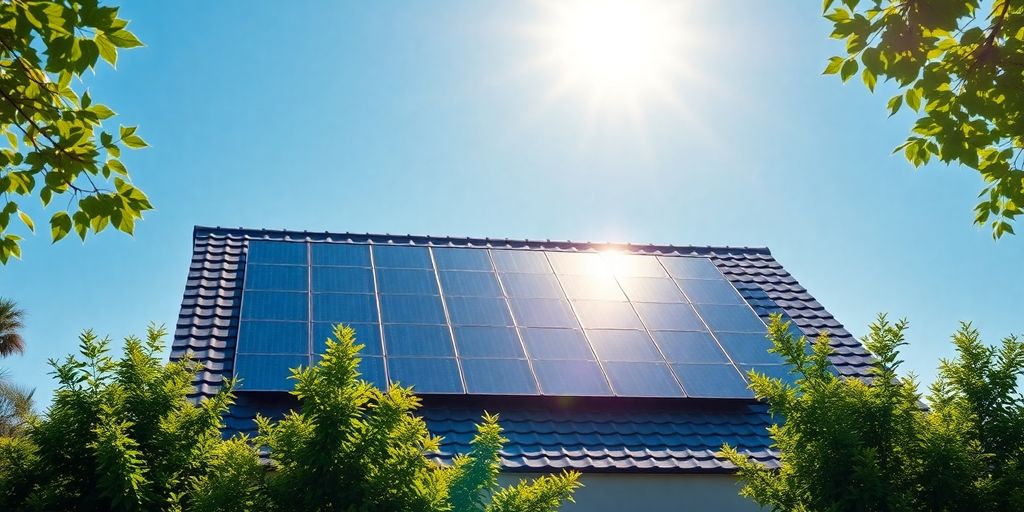
Integrating solar modules into the roof represents a significant advance in the field of solar energy. It offers an aesthetic and functional alternative to traditional installation methods. Let’s explore together the fundamental aspects of this approach.
Definition and principles of building integration
Building integration (IAB) is distinguished by the replacement of traditional roofing materials (tiles, slates) with solar modules. These modules are no longer simply placed on the roof, but are an integral part of it. The aim is to create a continuous and harmonious surface, where the solar panels fulfil both an energy production and a waterproofing function. This approach requires careful planning and rigorous execution to ensure the structural integrity and energy efficiency of the building. For a successful installation, it is important to understand the principle of integrating solar panels into the roof.
Aesthetic and functional advantages of solar roofing
Integrated solar roofs offer many advantages. Aesthetically, they allow for discreet and elegant integration of solar panels, preserving the appearance of the building. Functionally, they ensure the roof is watertight, contribute to thermal insulation and produce electricity. In addition, in the case of roof renovation, IAB can be an economically advantageous solution, as it reduces the costs associated with traditional roofing materials. Aerothermal energy, which uses the calories naturally present in the outside air, radically transforms the approach to heating and cooling professional buildings.
Distinction between integration and superimposition
It is essential to differentiate between building integration (IAB) and superimposition. IAB, as mentioned previously, involves replacing roofing materials with solar modules. Superimposition, on the other hand, consists of placing solar panels on an existing roof, without replacing it. This latter method is simpler and less expensive to install, but it may be less aesthetic and less efficient in terms of insulation. The choice between these two options will depend on budgetary constraints, aesthetic requirements and energy performance objectives. Semi-integration is an intermediate option that allows you to keep part of the existing roof while integrating solar panels.
The different aesthetic solar roofing solutions
The solar roofing market has evolved a lot in recent years. There are now several options for integrating solar modules aesthetically into your home. The aim is to combine renewable energy production with respect for the architecture of your building. Solutions can be found for all tastes and budgets, but it is important to understand the different technologies available to make the best choice.
Building-integrated solar panels (IAB)
Building-integrated solar panels (IAB) are designed to directly replace traditional roofing materials, such as tiles or slates. They ensure both the waterproofing of the roof and the production of electricity. Building integration solar roofing offers a more streamlined aesthetic than superimposition, as the panels are embedded in the roof and flush with its surface.
- They are particularly suitable for new builds or complete roof renovations.
- Installation must be carried out by a qualified professional to guarantee the system is watertight and safe.
- Although more expensive to purchase, they may be eligible for specific financial assistance.
Building integration represents a sustainable and aesthetic solution for producing solar energy. It allows you to enhance your heritage while contributing to the energy transition.
Photovoltaic and thermal solar tiles
Photovoltaic solar tiles are an alternative to traditional solar panels. They mimic the appearance of classic tiles while producing electricity. They are discreet and integrate harmoniously into the roof. Thermal solar tiles, on the other hand, capture the sun’s heat to heat domestic water or power a heating system. If your absolute priority is aesthetics and you have a comfortable budget, solar tiles may be suitable.
- They offer a neat aesthetic and discreet integration.
- Their efficiency is generally lower than that of conventional solar panels.
- They are more suitable for roofs with complex shapes.
Solar slates and other innovative materials
Beyond tiles, other innovative materials are appearing on the solar roofing market. Solar slates, for example, reproduce the appearance of natural slates while integrating photovoltaic cells. Other solutions, such as flexible solar films, can be glued to different types of supports. These materials offer great architectural freedom and can be adapted to the specific constraints of each project. The integration of these innovative materials offers new perspectives for optimising performance.
- They offer a unique aesthetic and great design flexibility.
- Their cost is often higher than that of traditional solutions.
- They require specific expertise for installation and maintenance.
Choice criteria for a harmonious solar roof
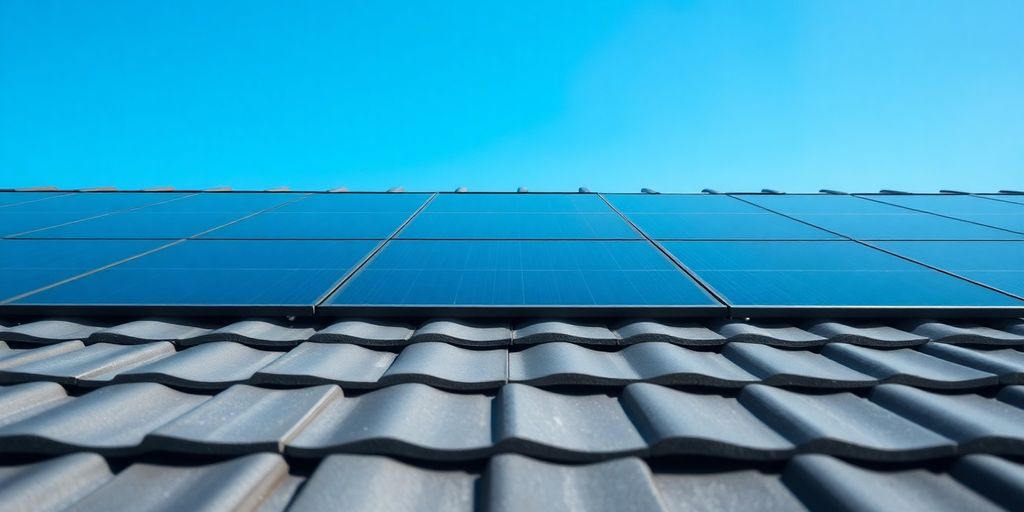
Integrating solar panels into your roof is an important investment that deserves careful consideration. Beyond energy production, the aesthetic aspect and the suitability for your home are paramount. Here are the essential criteria to consider for a solar roof that is both efficient and harmonious.
Aesthetics and local architectural constraints
The appearance of your solar roof is a determining factor. It is essential to choose solutions that integrate harmoniously with the architecture of your house and the style of your region. Solar tiles can offer a more discreet aesthetic, imitating the appearance of traditional tiles. However, building-integrated solar panels (IAB) solar panels also offer a sober and elegant look, suitable for many projects, including in protected areas. Local architectural constraints must also be taken into account, including planning regulations that may impose restrictions on the appearance of roofs.
Energy performance and system efficiency
Energy performance is a fundamental criterion. It is important to compare the efficiency of the different systems offered, taking into account the power of the modules, their efficiency and their resistance to temperature variations. A well-designed solar installation will maximise your electricity production. The orientation and inclination of the roof are key elements for optimising efficiency. A slope of 15° to 35° facing south is ideal, but a south-east or south-west orientation can also be interesting. It is crucial to choose certified modules and ensure their durability.
Initial cost and return on investment
The initial cost of a solar roof can be substantial. It is therefore important to assess the long-term return on investment. This calculation must take into account the purchase and installation price of the system, the energy savings made, the financial assistance available and the lifespan of the modules.
It is advisable to obtain several quotes from qualified professionals in order to compare offers and choose the solution that best suits your budget and needs. Don’t hesitate to simulate your solar project to estimate the power, production and potential savings.
Here are some elements to consider when evaluating the return on investment:
- The price of solar panels and installation accessories.
- Labour costs for installation.
- Savings on your electricity bill.
- Financial assistance and tax credits available.
- Estimated lifespan of solar panels.
By taking these criteria into account, you will be able to make an informed choice and fully enjoy the benefits of a harmonious and efficient solar roof. Consider the importance of roof orientation for the installation of your panels.
Regulations and administrative procedures
Integrating solar panels into your roof, although environmentally friendly and economical in the long term, requires compliance with a number of regulations and administrative procedures. It is important to understand these aspects before starting your project to avoid any inconvenience.
Planning permissions and building permits
Before installing your solar panels, it is imperative to check the planning rules applicable to your municipality. In general, a solar installation declaration is required, or even a building permit, depending on the scale of the work and the location of your home.
- A prior declaration of works is generally sufficient for the installation of solar panels on existing roofs. It allows the town hall to check the conformity of the project with the Local Urban Plan (PLU). The CERFA form must be completed and accompanied by the supporting documents requested.
- A building permit is required for new constructions incorporating solar panels or when the installation significantly alters the exterior appearance of the building.
- In some cases, especially if your home is located in a protected area or near a historical monument, the opinion of the Architect of the Buildings of France (ABF) is mandatory. The latter will ensure the proper aesthetic integration of the solar panels into their environment.
It is strongly advised to contact your town hall’s planning department at the beginning of your project. They will be able to inform you precisely about the procedures to follow and the documents to provide.
Technical and safety standards in force
The installation of solar panels must comply with strict technical and safety standards to ensure the proper functioning of the installation and the safety of people. These standards concern in particular the equipment used, the electrical installation and the resistance to wind and weather.
- The NF C 15-100 standard governs low-voltage electrical installations and applies to the connection of solar panels to the electricity grid.
- Solar panels must be CE certified and comply with European safety and performance standards.
- The installation must be carried out by a qualified and certified professional (QualiPV, RGE) to guarantee compliance with standards and quality of work.
Specifics for protected areas and listed buildings
If your home is located in a protected area (listed site, area for the protection of architectural, urban and landscape heritage – ZPPAUP) or if it is a building listed as a historical monument, specific rules apply to the installation of solar panels.
- The opinion of the Architect of the Buildings of France (ABF) is mandatory and decisive. It may impose significant aesthetic constraints, such as the type of solar panels, their colour or their location on the roof.
- It is possible that building integration is preferred, or even imposed, in order to minimise the visual impact of the solar panels. In some cases, the installation of solar panels may be purely and simply prohibited.
- It is therefore essential to enquire very early on with the town hall and the ABF in order to know the specific constraints applicable to your situation. You need to find out about solar panels in La Rochelle if you live in a coastal area.
Installation and maintenance of solar roofing systems
The installation and maintenance of solar roofing systems are critical steps in ensuring their performance and durability. Careful execution and regular monitoring are essential to optimise energy efficiency and ensure the longevity of your investment.
Installation process by qualified professionals
The installation of solar panels integrated into the roof (IAB) is a delicate operation that requires the intervention of qualified professionals. It is strongly discouraged to carry out this installation yourself, due to the safety risks and the complexity of the electrical connections. Using a certified Solencia installer ensures an installation that complies with current standards and a guarantee of proper functioning.
- Assessment of the existing roof: A preliminary diagnosis is essential to check the compatibility of the roof with the planned solar system.
- Surface preparation: The roof must be clean, in good condition and able to support the weight of the solar panels.
- Installation of supports and waterproofing system: This crucial step guarantees the impermeability of the roof and the secure fixing of the panels.
- Electrical connection: A qualified electrician must make the connection of the panels to the electrical grid, respecting safety standards.
Installation by a qualified professional is a guarantee of safety and performance for your solar installation. It is important to check the installer’s certifications and insurance before entrusting them with your project.
Maintenance and durability of solar modules
The maintenance of solar modules is relatively simple, but it is essential to maintain their optimal performance. Regular cleaning removes dirt, dead leaves and other debris that can reduce exposure to the sun. In general, a gentle cleaning twice a year is enough to maintain good efficiency. For the maintenance of solar systems, it is important to call on professionals.
- Cleaning the panels: Use soapy water and a soft brush to clean the solar panels. Avoid abrasive products that could damage the surface.
- Checking electrical connections: Regularly check the condition of cables and connectors to detect any anomalies.
- Performance monitoring: Monitor the electricity production of your installation to quickly detect any drop in performance.
The durability of solar modules is a major asset of this technology. Solar panels are designed to withstand weather and temperature variations. With proper maintenance, they can operate effectively for 25 years or more.
Guarantees and insurance associated with the installation
It is important to understand the guarantees and insurance associated with your solar roofing installation. These protections cover you in the event of a manufacturing defect, installation problem or damage caused by the weather. Make sure your installer offers a ten-year guarantee covering the installation work and the waterproofing of the roof. Also check that your home insurance covers the solar panels against risks such as theft, fire or water damage.
- Product warranty: It covers manufacturing defects in solar panels and other system components.
- Performance guarantee: It guarantees a certain level of electricity production for a given period.
- Liability insurance: It covers damage caused to third parties by the solar installation.
In the event of a breakdown, diagnosing and troubleshooting one (or more) solar tile(s) is often more tedious due to the number of components in the solar power plant. Conversely, it is easier to identify the origin of a malfunction and to intervene on an installation of conventional solar panels, even if they are integrated into the roof.
Optimising performance and integration
Optimising the performance and integration of solar roofing systems is essential to maximise the return on investment and energy efficiency of your installation. Several factors must be taken into account to ensure optimal energy production while preserving the aesthetics of your building. A thoughtful approach allows you to combine performance and harmonious integration.
Optimal orientation and inclination of the modules
The orientation and inclination of the solar panels play a determining role in the amount of solar energy they can capture. In France, a south-facing orientation is generally ideal, but adjustments may be necessary depending on the latitude and local conditions. The optimal inclination also varies depending on the region and aims to maximise exposure to the sun throughout the year. A thorough study of the sunshine on your site is therefore essential. You have to take into account the orientation and inclination of the panels for maximum efficiency.
Shading management solutions
Shading, whether caused by trees, neighbouring buildings or other elements, can significantly reduce the energy production of your solar panels. It is therefore crucial to identify and minimise potential sources of shading. Several solutions exist, such as pruning trees, moving panels or using power optimisers. These devices maximise energy production even in the event of partial shading. Shading can impact photovoltaic design.
Integration with other building energy systems
Integrating your solar roofing system with other building energy systems, such as heating, ventilation and air conditioning (HVAC), can improve the overall energy efficiency of your home. For example, the solar energy produced can be used to power a heat pump or a ventilation system, thus reducing your dependence on traditional energy sources. Intelligent energy management, via a home automation system, optimises consumption and maximises savings. Building integration offers aesthetic advantages.
Optimising the performance and integration of solar roofing systems requires a global and personalised approach. It is important to call on qualified professionals to assess your site, design a system adapted to your needs and ensure an installation that complies with current standards. A well-designed and optimised installation will allow you to fully enjoy the benefits of solar energy, both economically and environmentally.
Environmental impact and long-term benefits
Adopting solar roofing represents a significant commitment to sustainability and reducing the environmental impact of buildings. Beyond the aesthetic aspect, the long-term benefits are considerable, both ecologically and economically.
Reducing the building’s carbon footprint
One of the major advantages of solar roofing is its ability to reduce a building’s carbon footprint. By producing electricity from a renewable source, it reduces dependence on fossil fuels, thus contributing to the fight against climate change. Solar energy is a clean and inexhaustible resource, unlike coal, oil and natural gas, the extraction and combustion of which release greenhouse gases.
- Reduction of CO2 emissions.
- Reduction of air pollution.
- Preservation of natural resources.
Installing solar panels on your roof is a concrete gesture for the environment. By producing your own electricity, you are actively contributing to the reduction of greenhouse gas emissions and the preservation of our planet for future generations.
Contribution to the national energy transition
Solar roofing is fully in line with the national energy transition, which aims to develop renewable energies and reduce energy consumption. By producing electricity locally, it contributes to diversifying the energy mix and strengthening the country’s energy independence. In addition, it promotes job creation in the renewable energy sector and stimulates technological innovation.
- Support for national emission reduction targets.
- Development of renewable energies.
- Creation of green jobs.
Property valuation and energy savings
A solar roof can increase the value of a property. Buyers are increasingly sensitive to environmental issues and are looking for energy-efficient housing. A house equipped with solar panels is perceived as a sustainable and economical investment, which can translate into a higher selling price. In addition, the production of solar electricity allows for significant savings on energy bills, which is a significant financial advantage for homeowners. It is important to note that aerothermal energy approach to heating and cooling professional buildings.
- Increase in the value of the property.
- Reduction of electricity bills.
- Increased attractiveness for potential buyers.
In conclusion, investing in a solar roof represents a wise choice, both for the environment and for your wallet. It reduces the carbon footprint, contributes to the energy transition and enhances your property assets. It is a sustainable and profitable solution that is part of an environmental responsibility approach. It is important to note that environmentally friendly air conditioning systems significantly reduce energy consumption. In addition, the installation of intelligent HVAC systems improve the energy efficiency of buildings.
Practical cases and examples of successful integrations
Residential projects with discreet solar roofing
The discreet integration of solar panels in residential projects is increasingly sought after. The aim is to combine renewable energy production with a neat aesthetic. There is a preference for dark-coloured, even black, solar panels, which blend more easily with traditional roofing materials such as slate or tile.
- Use of extra-flat solar panels to minimise thickness.
- Choice of dark colours for optimal visual integration.
- Installation of invisible fixing systems.
Successful integration relies on careful planning and close collaboration between the architect, the installer and the owner. It is essential to take into account existing architectural constraints and the aesthetic preferences of the client.
Applications on tertiary and industrial buildings
Tertiary and industrial buildings offer significant surfaces for the installation of solar roofs. In this context, the emphasis is often placed on energy performance and return on investment, without neglecting the aesthetic aspect. Integration solutions vary depending on the type of building and technical constraints. It is possible to finance a photovoltaic building to commit the company to the energy transition.
- Installation of solar panels on flat roofs with adapted ballasting systems.
- Use of solar cladding to integrate the panels into the facades.
- Implementation of monitoring solutions to optimise energy production.
The integration of solar panels on tertiary and industrial buildings contributes to reducing the company’s carbon footprint and improving its brand image.
Innovations and future trends in solar roofing
The solar roofing sector is constantly evolving, with the emergence of new technologies and new materials. Solar tiles, for example, offer an aesthetic alternative to traditional solar panels. Research is also focusing on the development of more efficient and durable materials. It is important to check if your roof is suitable for the installation of solar panels.
- Development of photovoltaic and thermal solar tiles.
- Use of organic materials and perovskites to improve the efficiency of solar cells.
- Integration of energy storage systems to optimise self-consumption.
Innovations in solar roofing open up new perspectives for the integration of solar energy into the urban landscape. It is important to follow market developments and stay informed of the latest technologies available. Flexible solar panels are an interesting nomadic solution.
Financing and assistance available for solar roofing
Investing in a solar roof represents a significant financial commitment. Fortunately, various schemes are in place to alleviate this burden and encourage the adoption of this green technology. It is essential to be familiar with these aids to optimise your project and reduce your return on investment.
National and local aid schemes
The French State, as well as local authorities, offer a range of financial aid to support the installation of solar roofs. This aid aims to make solar energy more accessible and to accelerate the energy transition. Among the national schemes are:
- MaPrimeRénov’ : This aid, paid by the Agence Nationale de l’Habitat (ANAH), is accessible to owner-occupiers and landlords, subject to income conditions. It concerns work to improve energy performance, including the installation of solar panels.
- The zero-rate eco-loan (éco-PTZ) : This loan, without interest, allows you to finance energy renovation work, including the installation of solar panels. It is accessible without income conditions.
- VAT reduced to 5.5%: This VAT applies to work to improve energy performance carried out by professionals, including the installation of solar panels.
At the local level, regions, departments and municipalities may offer additional assistance. It is therefore important to check with your local authority to find out about the specific schemes to which you may be entitled. This aid may take the form of grants, subsidised loans or tax exemptions.
Tax credits and subsidies for energy renovation
Although the tax credit for energy transition (CITE) has been transformed into MaPrimeRénov’, certain situations still allow you to benefit from tax advantages. In addition, specific subsidies may be granted for ambitious energy renovation projects, particularly within the framework of territorial programmes. It is important to note that, contrary to certain allegations, there is no solution to redo your roof for free with solar panels by combining financial aid. If an offer of this type is proposed to you, it is imperative to be wary.
It is crucial to carefully study the eligibility criteria for each aid and to constitute a complete file to maximise your chances of obtaining funding. Do not hesitate to be accompanied by a professional to guide you in these steps.
Financing options and green loans
In addition to public aid, various financing options are available to facilitate investment in a solar roof. Banks offer green loans, often at advantageous rates, to finance work to improve energy performance. These loans can be combined with public aid, which considerably reduces the cost of installation. In addition, some companies specialising in solar energy offer tailor-made financing solutions, such as solar leasing, which allows you to rent solar panels rather than buy them. This option may be interesting for people who do not want to invest a large sum at the start. It is important to compare the different financing offers to choose the one that best suits your situation and your needs. Do not forget to take into account the total cost of financing, including interest and application fees. By exploring the various aids and financing options available, you can make your solar roofing project more affordable and accelerate your transition to clean and renewable energy. Do not hesitate to consult an advisor to assess the available aid in 2025 and the green loans adapted to your situation. There is also aid such as the heating boost to finance the installation of combined solar systems for heating and hot water production.
Choosing the right professional for your solar roofing project
The success of your solar roofing project depends largely on choosing a competent professional. It is therefore essential not to neglect this step. A qualified installer will not only provide you with an installation that complies with standards, but also personalised advice and rigorous monitoring.
Selection criteria for a qualified installer
Choosing the right installer is a crucial step. Several criteria must be taken into account to ensure you make the right choice. It is not just about comparing prices, but above all about assessing the skills and experience of the professional.
- Check qualifications and certifications: Make sure the installer has the necessary certifications, such as RGE QualiPV. These certifications attest to their competence and commitment to quality. It is possible to find certified professionals in your area.
- Consult references and customer reviews: Do not hesitate to ask for references and consult reviews from former customers. This will give you an idea of the quality of the installer’s work and their reliability.
- Assess the installer’s experience: Choose an installer with solid experience in the field of solar roofing. The more projects they have carried out similar to yours, the better they will be able to manage any difficulties.
It is important to remember that a solar installation is a long-term investment. Choosing a qualified professional is therefore a guarantee of quality and durability.
Importance of certifications and quality labels
Certifications and quality labels are reliable indicators of the competence and seriousness of an installer. They guarantee that the professional complies with the standards in force and that they have the technical skills necessary to carry out a quality installation. The RGE QualiPV certification is particularly important in the field of solar energy.
- RGE (Reconnu Garant de l’Environnement – Recognised Guarantor of the Environment): This certification attests that the installer is qualified to carry out energy improvement work and that they comply with the quality criteria defined by the State.
- QualiPV: This qualification specific to photovoltaics guarantees that the installer has the technical skills necessary to install solar panels in accordance with best practice.
- Other labels: Other labels can also be a guarantee of quality, such as Qualit’EnR or certifications issued by independent organisations.
Request quotes and compare offers
Before making a decision, it is essential to request several quotes and compare offers. This will allow you to get an idea of the prices charged on the market and to choose the offer that best suits your budget and your needs. Do not hesitate to request quotes from several installers to compare prices and services offered.
- Carefully analyse the quotes: Check that the quotes are clear, detailed and that they include all the necessary elements (equipment, labour, travel expenses, etc.).
- Compare prices, but also services: Do not just compare prices. Also take into account the quality of the equipment offered, the guarantees offered and the services included (site monitoring, administrative procedures, etc.).
- Negotiate prices: Do not hesitate to negotiate prices with installers. You can ask them to align with competing offers.
For your solar roof, choosing the right expert is crucial. A good professional ensures quality work and a long-lasting installation. Leave nothing to chance for your project. Visit our site to find the specialist you need and start your project with confidence.
In summary
Ultimately, integrating solar panels onto your roof is a bit like choosing the right outfit for a special occasion: it needs to go well with the whole thing, be practical and last. We’ve seen that there are several ways to do it, from panels that blend into the background to those that are placed on top. Each method has its strengths and weaknesses, whether it’s for the look, the price or the ease of installation. The important thing is to think carefully about what best suits your home, your budget and what you really want. Don’t forget to ask for the opinion of professionals, they can really help you see more clearly and make the right choice. It’s an important decision for the future of your home and for the planet, so take your time and do things right.
Frequently Asked Questions
What is building-integrated solar?
Integrating solar panels into the roof means that the panels replace part of the roofing materials (tiles, slates), thus becoming an integral part of the roof. This offers a more discreet and harmonious appearance, as the panels are not simply placed on top of the existing roof. It’s a very aesthetic solution.
What is the difference between solar tiles and integrated solar panels?
Solar tiles are tiles that integrate photovoltaic cells. They directly replace conventional tiles and are almost invisible. Building-integrated solar panels are larger modules that fit into the roof, forming a flat and uniform surface. Solar tiles are more discreet, but integrated panels are often more efficient at producing electricity.
How do I choose the best solution for my roof?
To choose the best solution, you need to think about several things: the appearance you want to give your house, the planning rules of your municipality (especially if you are in a protected area), and of course your budget. Solar tiles are more expensive but very discreet. Integrated panels offer a good balance between aesthetics and performance.
Do I need to obtain permission to install integrated solar panels?
Yes, it is almost always necessary to apply for planning permission before installing solar panels, whether integrated or not. You must file a