Are you considering installing solar panels on a 500 m² surface and wondering how much it can generate? This is an excellent question, as investing in solar can seem complex with all the information available. Between production estimates, feed-in tariffs, and potential aid, it’s normal to want to get a clearer picture. This article will guide you in understanding the potential income and profitability of such an installation, so you can make an informed decision.
Key Takeaways
- The production of a 500 m² installation depends heavily on sunshine, panel orientation and tilt, as well as system losses.
- Potential income comes from the total sale of electricity produced or from self-consumption with resale of surplus, with feed-in tariffs set by the CRE.
- The initial investment cost for 500 m² is significant, but the payback period can be reduced thanks to available aid and subsidies.
- Ancillary costs such as connection, annual maintenance, insurance, and future inverter replacement must be considered.
- Renting land for a photovoltaic project is an alternative with no initial investment, offering a stable annual rental income.
Understanding the Potential Yield of 500 m² of Solar Panels
To estimate what a 500 m² area dedicated to solar panels can generate, we first need to look at the amount of energy it can produce. An installation of this size, which corresponds to approximately 100 kWp (kilowatt-peak), can generate between 80,000 and 140,000 kWh per year. This is a substantial amount of electricity, which can significantly contribute to your energy needs or be sold.
Estimating Annual Energy Production
The annual production of a solar installation depends on several elements. The most obvious is the sunshine in the region where it is located. But other factors come into play, such as the quality of the panels themselves, their orientation, and their tilt. Even small losses, such as those due to heat or partial shading, can accumulate and reduce overall yield. It is therefore important to have a realistic estimate.
Factors Influencing Solar Production
Several elements will affect the amount of electricity produced by your 500 m² of solar panels:
- Sunshine: Of course, the more sun there is, the higher the production. However, the difference between the north and south of France is not as huge as one might think, often less than a 20% difference in production.
- Orientation and Tilt: Ideally, panels should face south with a tilt of about 30 to 35 degrees. But slightly different orientations can also yield good results.
- Equipment Quality: Solar panels have an annual degradation rate. Choosing good quality panels with a low degradation rate (e.g., 0.5% per year) is more profitable in the long run than cheaper panels that degrade faster.
- System Losses: Losses due to inverters, potential shading, panel temperature, and panel cleanliness must also be accounted for. These losses can represent between 10% and 25% of theoretical production.
It is often more sensible to focus on the quality of the installation and equipment rather than solely seeking the best sunshine, as differences can be offset by other factors.
Peak Power Installable on 500 m²
Peak power (kWp) is the measure of the maximum capacity of a solar installation under ideal conditions. For 500 m², a peak power of around 100 kWp can generally be installed. This, of course, depends on the power of each individual panel and how they are arranged. Higher peak power means potentially greater energy production. It is important to note that this surface area may also be eligible for aid, such as the self-consumption bonus, which can be €90/kWp for small installations [8597].
Calculating Potential Income from a 500 m² Installation
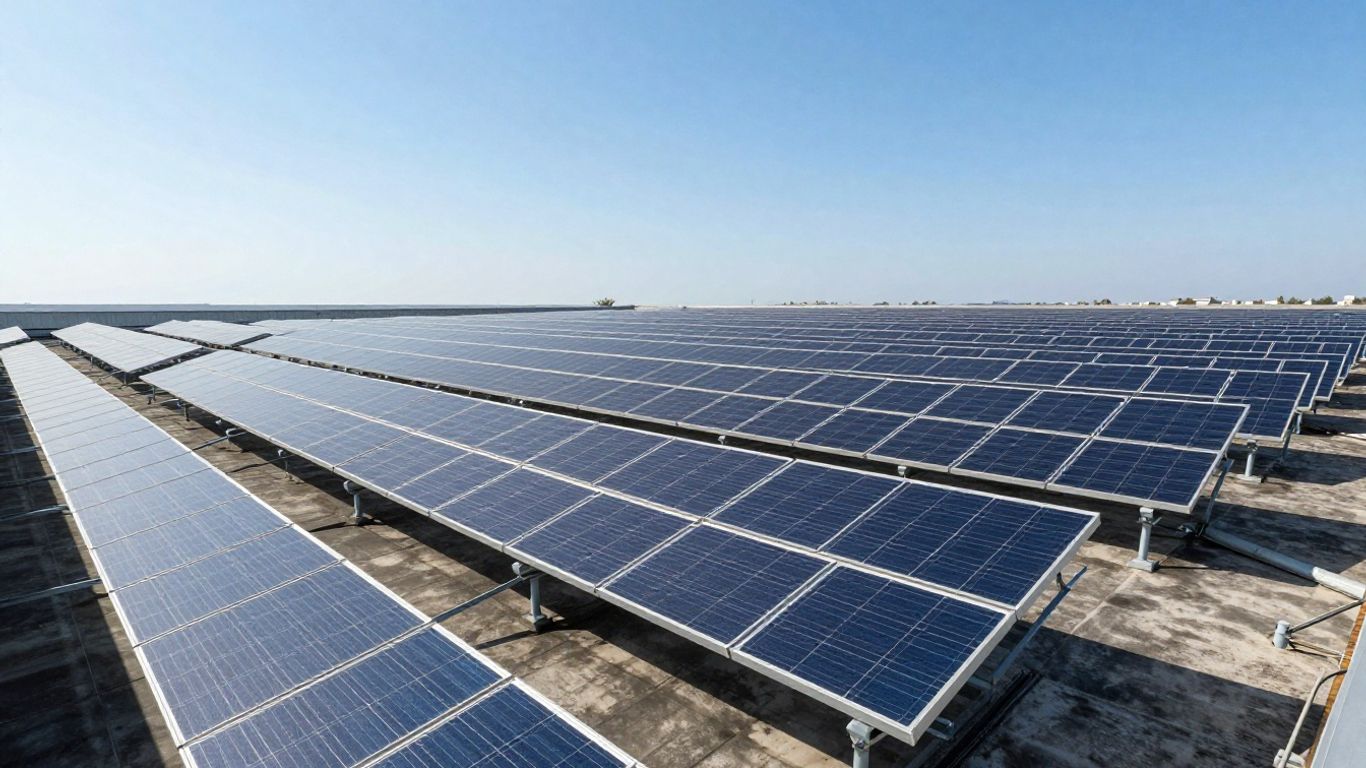
Once you have an idea of the energy production your 500 m² installation can generate, the next question is, of course: how much will it actually earn you? This is where feed-in tariffs and the different ways to value your production come into play.
Photovoltaic Electricity Feed-in Tariffs
For those who choose to sell all of their production, the government sets guaranteed purchase tariffs. These tariffs are degressive and depend on the power of your installation. They are revised periodically, generally each quarter. It is therefore important to find out about the tariffs in effect at the time of your project. For example, for small and medium-sized installations, the tariff can be around €0.0731/kWh for installations between 9 and 100 kWp, a figure that can change depending on the quarter.
Income from Selling Total Production
If you decide to sell all the electricity produced by your 500 m² of solar panels, your income will directly depend on the amount of energy produced and the feed-in tariff applied. An installation of this size can potentially generate between €8,648 and €15,134 per year, assuming you sell all of your production to a buyer like EDF OA. This amount is a gross estimate and does not take into account operating or maintenance costs.
Earnings from Self-Consumption with Surplus Sale
Self-consumption, i.e., consuming part of the electricity you produce, is another option. In this case, you reduce your own electricity bills. If your production exceeds your consumption, you can sell the surplus. The earnings are then composed of two elements: the savings made on your bill and the income from selling the surplus. Although the calculation is a bit more complex, this approach can be very financially attractive, as it combines reduced expenses with additional income generation.
Analysing the Profitability of a 500 m² Solar Project
Embarking on the installation of solar panels on a 500 m² surface represents a significant investment. It is therefore essential to thoroughly analyse the potential profitability before committing. This process ensures that the project will be financially viable in the long term and that the expected gains justify the initial effort.
Initial Investment Cost for 500 m²
The cost of a 500 m² solar installation varies depending on several factors, including the quality of the panels, the complexity of the installation, and professional rates. In 2025, it is estimated that the investment for such a surface area could range between €66,000 and €90,000. This amount covers the purchase of equipment, installation, and initial administrative procedures. It is important to note that this figure may vary depending on the technologies chosen and the specific site conditions. A detailed feasibility study by a professional will provide a more precise estimate. The goal is to produce a significant amount of energy, which is entirely achievable with 500 m² of solar panels.
Average Payback Period for the Installation
The payback period is the time required for the income generated by the solar installation (electricity savings, surplus sale) to cover the initial investment cost. For a 500 m² installation, this period is generally between 8 and 10 years. This calculation takes into account the estimated annual production, electricity feed-in tariffs, and any financial aid. Optimal sunshine and good consumption management can reduce this period. It is also important to consider the lifespan of the panels, which often exceeds 25 years, thus ensuring a period of net profitability after the payback.
Net Profitability After Deducting Expenses
Once the initial investment is paid back, the solar installation begins to generate net income. This income is the result of savings on electricity bills and the amounts received from selling unused electricity. However, annual maintenance costs, insurance, and the potential cost of replacing equipment such as inverters must be deducted. On average, over a lifespan of 25 years, a 500 m² installation can generate significant cumulative income, often two to two and a half times the initial investment. Net profitability will therefore depend on the continuous performance of the panels and rigorous management of ancillary costs. It is essential to evaluate all these elements to have a clear view of the final profit. For example, 100 m² of solar panels can already generate several thousand euros annually, and a larger surface area multiplies this potential.
Identifying Ancillary Costs of a Solar Installation
Beyond the initial investment for the purchase and installation of the panels, several less visible but equally important costs must be taken into account to assess the total cost of a solar installation. Ignoring these ancillary expenses could skew your profitability calculation.
Connection Costs to the Electricity Grid
Before your installation can feed electricity into the public grid, a connection must be made. This process, managed by the distribution network operator (Enedis in France), involves administrative procedures and physical work. The cost varies considerably depending on the complexity of the installation and the distance to the nearest connection point. It is therefore essential to request a precise quote for this stage, which can represent several hundred, or even thousands, of euros for larger projects.
Maintenance and Insurance Costs
Although solar panels are designed to be robust and require little routine maintenance, periodic checks by a professional are recommended. These checks aim to ensure the proper functioning of the entire system and to prevent potential malfunctions. Budget an average of €150 to €200 per service, often every two years. In parallel, taking out specific insurance for your photovoltaic installation is a wise precaution to protect yourself against unforeseen events (bad weather, theft, vandalism). The cost of this insurance will depend on the value of your installation and the guarantees chosen.
Replacement of Inverters and Other Equipment
The lifespan of solar panels is generally long, often estimated at 30 years or more. However, other components of the installation have a shorter life expectancy. The inverter, a key component that converts the direct current produced by the panels into alternating current usable by the grid or your appliances, has an average lifespan of 10 to 20 years depending on its technology (string inverter or micro-inverters). Its replacement represents a significant cost that must be anticipated in the long-term budget. Other elements, such as cabling or mounting systems, may also require inspection or replacement over the years.
It is important not to underestimate these recurring or deferred costs. Rigorous financial planning including these ancillary expenses provides a realistic view of the overall profitability of your solar project over its entire lifespan.
Exploring Available Aid and Subsidies
To make your solar project more accessible and improve its profitability, several financial aid schemes exist. These measures aim to encourage the adoption of renewable energy by reducing the initial installation cost.
Self-Consumption Bonuses for Small Installations
If you consume part of the electricity you produce, you can benefit from a self-consumption bonus. Its amount is calculated based on the power of your installation. For a 500 m² installation, which represents significant power, this bonus can be a considerable contribution. For example, a bonus of €90/kWp can be applied, thus helping to reduce your initial investment. It is important to inquire about the eligibility criteria specific to your project.
Guaranteed Purchase Tariffs for Large Installations
For installations whose production is mainly intended to be sold to the grid, guaranteed purchase tariffs are offered. These tariffs are set by decree and are valid for a specified period, providing visibility on future income. The electricity you do not use (surplus) can be sold to an approved buyer, such as EDF OA, at a predetermined price. This ensures stable remuneration for the energy fed into the grid, contributing to the overall profitability of your project.
Possible Financing for Photovoltaic Projects
Beyond bonuses and purchase tariffs, other forms of financial support can be considered. These include reduced VAT rates on equipment and installation for certain installation sizes, as well as specific financing schemes offered by banks or specialised organisations. A thorough study of your project will identify all opportunities for subsidies and tax credits available, thereby optimising your overall budget. It is advisable to consult local or regional aid that may supplement national schemes. For example, some regions offer targeted aid for the energy transition.
Obtaining this aid is often conditional on compliance with certain technical standards and timely completion of administrative procedures. It is therefore essential to gather information in advance and seek assistance from qualified professionals to prepare your application.
Here is an overview of the main schemes:
- Self-Consumption Bonus: Direct aid paid for the consumption of your own production.
- Feed-in Tariff (OA): Contract guaranteeing a purchase tariff for electricity fed into the grid.
- Reduced VAT: Application of a favourable VAT rate on equipment and installation.
- Local and Regional Aid: Specific schemes depending on your place of residence.
Assessing the Impact of Local Conditions on Production
Influence of Regional Sunshine
Sunshine is the main driver of any solar installation. It is obvious that the more sunshine a region benefits from, the greater the energy production will be. However, this idea needs to be nuanced. The production difference between the north and south of France is not as huge as one might think, often less than 20% according to recent data. More efficient technologies can further reduce this difference. It is therefore essential to rely on precise data for your region rather than generalisations.
Importance of Panel Orientation and Tilt
The orientation and tilt of solar panels are technical parameters that play a significant role in capturing solar energy. A south-facing orientation is generally ideal, but south-east or south-west orientations can also be very effective. The optimal tilt is often around 30 to 35 degrees, as it allows the panel to be as perpendicular as possible to the sun’s rays throughout the year. Incorrect tilt can significantly reduce production.
Here is an overview of potential gains depending on orientation:
| Orientation | Estimated Annual Production (compared to ideal South) |
|---|---|
| South | 100% |
| South-East / South-West | 90-95% |
| East / West | 75-85% |
| North | 40-50% |
Impact of Shading and System Losses
Shading, whether from trees, neighbouring buildings, or even elements on the roof itself, can significantly reduce the yield of an installation. Even partial shade on a single panel can affect the performance of an entire string of panels. System losses must also be taken into account, which include inverter efficiency, panel temperature (excessive heat reduces yield), and module cleanliness. These losses can represent between 10% and 25% of theoretical production. A thorough site survey is therefore necessary to identify and minimise these factors. It is important to note that new regulations, such as those requiring panels on car parks over 500 m², aim to integrate photovoltaic production into the built environment, which can sometimes pose shading challenges [824d].
The efficiency of a solar installation depends not only on its geographical location but also on how it is installed and maintained. A careful analysis of the specific site conditions is therefore an essential step before any financial commitment.
Considering the Lifespan and Performance of Panels
When thinking about a solar installation, one often imagines the immediate yield. But it is just as important to look at the long term. Solar panels don’t last forever, even though their lifespan is quite impressive these days.
Average Lifespan of Photovoltaic Modules
The solar panels installed today are designed to last. We generally talk about an average lifespan of between 25 and 40 years. This is a considerable period during which your installation will continue to produce electricity. Of course, this longevity depends on the quality of the materials used and the conditions in which they are installed and maintained. Manufacturers often offer 25-year performance warranties, which give a good indication of their reliability.
Annual Degradation Rate of Panels
Over time, solar panels lose some of their efficiency. This is known as degradation. This phenomenon is normal and expected. Generally, the annual degradation rate is quite low, often around 0.5% per year. This means that after 25 years, a solar panel should still operate at about 80-85% of its initial capacity. It is important to take this slight decrease in performance into account in your long-term profitability calculations. Modern technologies aim to minimise this degradation rate.
Performance of Modern Solar Technologies
The world of solar is evolving rapidly. Today’s panels are not the same as those from 10 or 15 years ago. New technologies are emerging that improve overall performance. For example, bifacial panels can capture light from both sides, increasing production, especially if the ground reflects light well. There are also power optimisers or micro-inverters that allow for better management of each panel’s production individually, thus reducing losses due to shading or differences between panels. These technological advancements help maintain good performance throughout the installation’s lifespan and can even accelerate the return on investment. It is therefore wise to inquire about the latest innovations when choosing your equipment. A well-chosen installation can remain profitable for many years, well beyond the initial payback period, which is often estimated between 8 and 15 years for an installation of this size [eea8].
It is essential not to overlook the importance of regular maintenance. A simple cleaning of the panels can sometimes be enough to maintain optimal performance and prevent premature degradation. Think of it like car maintenance: it costs a little, but it prevents much more expensive problems later on.
| Characteristic | Average Value |
|---|---|
| Lifespan | 25-40 years |
| Annual Degradation Rate | ~0.5% |
| Performance after 25 years | 80-85% of initial capacity |
| Inverter Replacement | Every 10-15 years |
Understanding the Installation Process of a Solar Farm
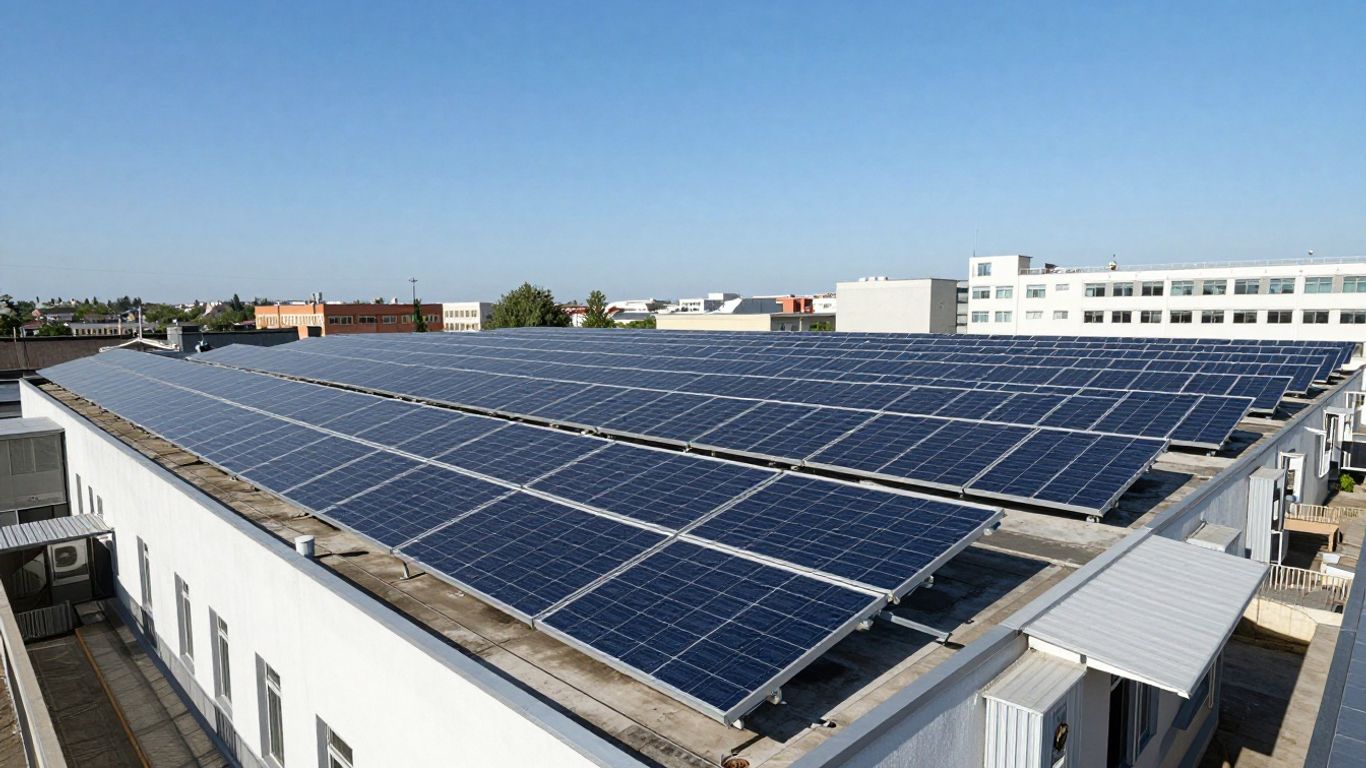
Setting up a solar farm, even a modest one like the one we are considering for 500 m², follows a well-defined path. It’s not just about installing panels; it’s a project that requires rigorous planning and adherence to several stages.
Technical and Economic Feasibility Study
Before anything else, it’s necessary to ensure the project is viable. This initial phase involves assessing whether the chosen location is suitable. We look at the sunshine in the region, of course, but also the topography of the land, the soil type, and whether there are any particular constraints, such as urban planning regulations or proximity to a protected site. It’s a bit like checking if your recipe has all the necessary ingredients before you start.
Administrative Procedures and Necessary Authorisations
Once it’s established that the project is feasible, you have to go through the paperwork. This involves submitting authorisation requests, often a building permit, and sometimes an environmental impact study. For larger installations, procedures such as a public inquiry may be necessary. You need to check with local authorities to know all the specific requirements for your situation. This is a stage that can take time, so it’s best to start early.
Average Commissioning Times
After obtaining all authorisations, construction work can begin. The duration of the work varies, but generally count several months. Once the panels are installed and connected, you still have to wait for official commissioning. The entire process, from the initial study to the actual electricity production, can take from a few months to over a year, depending on the project’s complexity and administrative delays. It is important to factor these timelines into your overall schedule. Connection to the electricity grid is a key phase that requires precise coordination with the network operator.
Exploring Alternatives to Direct Investment
Investing in a 500 m² solar farm represents a significant financial commitment. Fortunately, there are less demanding approaches for landowners who wish to leverage their land without bearing all the costs and risks. Renting your surface area to a specialised developer is an increasingly popular option.
Land Rental for a Photovoltaic Project
Instead of undertaking the purchase and management of an installation, you can simply rent your land to a company specialising in solar project development. This arrangement has the major advantage of requiring no investment from you. The developer will cover all costs: purchase of panels, installation, connection, maintenance, and operation. You thus position yourself as a landlord, receiving regular income for the use of your plot.
Potential Annual Rental Income
The income generated by renting your land depends on several factors, including the area, location, and sunshine potential. Generally, for a 500 m² area, an annual rent can be expected. Rates vary, but a common estimate is between €1,500 and €4,000 per hectare per year. For 500 m², this would therefore represent a sum between €750 and €2,000 annually. This income is generally guaranteed by a lease agreement, often for a long term (20 to 40 years), offering valuable financial visibility.
| Surface Area | Estimated Annual Rent (min) | Estimated Annual Rent (max) |
|---|---|---|
| 500 m² (0.05 ha) | €750 | €2,000 |
Advantages of Rental for Landowners
Opting to rent your land for a solar installation offers several notable benefits:
- No Initial Investment: You do not need to commit significant capital.
- Stable and Guaranteed Income: The rent is set by contract and paid regularly.
- No Technical or Administrative Management: The developer handles everything, from administrative procedures to maintenance.
- Valuing Unused Land: Your land becomes a source of income without you having to change its primary use, other than for the installation.
- Risk Transfer: Technical, regulatory, or market risks are borne by the developer.
This approach allows you to participate in the energy transition while securing passive income, without the complications associated with directly managing a photovoltaic installation. It is a particularly attractive alternative for those who do not have the funds or expertise for direct investment but still wish to benefit from the opportunities offered by the solar energy sector. For information on virtual storage offers, you can consult offer comparisons.
Renting land for solar panel installation represents a prudent and profitable strategy. It allows for passive income generation without the technical and financial constraints of a standalone project. The owner benefits from a stable annuity, while the developer assumes the operational complexity and risks inherent in energy production.
There are several ways to invest your money without going through direct purchase. These methods can be simpler and less risky. For example, you could consider mutual funds or shares in companies that focus on areas like renewable energy. These options allow you to diversify your investments more easily. To learn more about these different approaches and find the one that suits you best, visit our website today!
Conclusion: Solar, an Investment to Consider Seriously
So, we’ve covered what you can expect in terms of income with 500 m² of solar panels. As you’ve seen, it’s a project that requires good preparation, whether for the installation or for understanding the figures. We’re talking about an investment that can be profitable in the long term, but you need to look at all the details carefully before diving in. Make sure to consider the sunshine in your region, the actual installation costs, and any aid you might be eligible for. It’s not just about putting up panels; it’s a real undertaking that can bring you benefits, but you need to be well-informed for it to go as smoothly as possible.
Frequently Asked Questions
How much electricity can 500 m² of solar panels produce per year?
With 500 m² of solar panels, you can produce between 75,000 and 100,000 kWh per year. This depends heavily on where you live, as the sun shines more or less strongly depending on the region. The orientation and tilt of the panels also play a role.
What is the potential income if I sell all the electricity produced by 500 m² of solar panels?
If you sell all the electricity produced by 500 m² of solar panels, you could earn between €10,000 and €15,000 per year. The price of electricity changes slightly each year, which can cause this amount to vary.
Is self-consumption with surplus resale more profitable?
Self-consumption is when you use part of the electricity produced by your panels yourself. If you produce more than you need, you sell the surplus. This is often beneficial because you reduce your electricity bill in addition to earning a little money by selling the surplus.
What is the approximate cost to install 500 m² of solar panels?
Installing 500 m² of solar panels is expensive; you should expect to pay between €100,000 and €150,000. This price includes the panels, installation, and everything needed to connect them to the electricity grid.
How long does it take to recoup the money invested in 500 m² of solar panels?
It generally takes between 8 and 12 years for a 500 m² solar panel installation to pay for itself. This means that after this period, the money you initially spent is recovered through the generated income.
Are there any grants available for installing solar panels?
Yes, there are financial aids to encourage the installation of solar panels. For example, there may be self-consumption bonuses or guaranteed feed-in tariffs for electricity sold. It is advisable to inquire about the aid available in your region.
What is the lifespan of solar panels?
Solar panels are designed to last a long time, generally between 25 and 40 years. Even after these years, they continue to produce electricity, but with slightly less efficiency.
What are the costs to consider in addition to the installation?
You need to consider the costs of connecting the panels to the electricity grid, which can be significant. There are also regular maintenance costs (cleaning, checks) and insurance to protect your installation. Don’t forget that inverters, which convert the current, will need to be replaced every 10 to 15 years.

Journaliste spécialisée en transition énergétique et consultante RSE. À 42 ans, Claire combine une formation en journalisme (Master Sciences Po) et un diplôme d’ingénierie environnementale (École des Mines / INSA). Après 10 ans dans la presse économique et 7 ans en cabinet de conseil RSE, elle écrit pour aider les décideurs B2B à comprendre les réglementations, les enjeux climatiques et les innovations énergétiques.