Key takeaways
Mega-reservoirs are artificial reservoirs designed to store water for irrigation, often during dry periods. Their benefits and effects, however, depend on local resources, filling rules, and how the water is shared.
- They are generally filled by pumping when withdrawals are authorised.
- Their proponents see them as a way to shift some irrigation away from the summer months.
- Their opponents question the renewal of resources, evaporation, and effects on ecosystems.
- Impacts vary depending on the soils, groundwater, and watercourses concerned.
- Reservoirs are one option among others, to be compared with water savings and changes in agricultural practices.
What does the term « mega-reservoir » mean?
The term « mega-reservoir » generally refers to a large artificial reservoir built to store water for agricultural irrigation. It does not correspond to a single legal category: the characteristics of the structures and the rules governing them can vary. To understand a project, it is therefore necessary to look beyond its name, particularly at its filling method and intended uses.
Open-air artificial water reservoirs
These structures take the form of landscaped basins, often waterproofed, which store water in the open air. Their size and configuration differ depending on the project; the term « mega-reservoir » is mainly used in public debate to refer to the largest reservoirs. The term is therefore not sufficient to precisely describe the structure or the resources that supply it.
How to distinguish them from other water reservoirs
A reservoir can store rainwater, collect runoff, or be supplied by withdrawals from groundwater or watercourses. The distinction therefore lies more in the origin of the water, the filling schedule, and the intended use than in the appearance of the basin. The French debate often focuses on reservoirs intended for irrigation, filled by pumping outside the summer period.
Why the term « substitution reservoir » is also used
Developers often use the term « substitution reservoir » to describe a structure intended to partially replace withdrawals made directly in the summer. The idea is to store water at another time and then distribute it when crops need it. The actual extent of this substitution, however, depends on the rules for accessing the reservoir and the withdrawals that are effectively reduced.
What are they used for and how do they work?
These reservoirs are designed to supply water to connected farms, primarily when irrigation needs arise. Their operation is based on a cycle: filling, storage, and distribution. The withdrawal period and access conditions are therefore as important as the basin’s capacity.
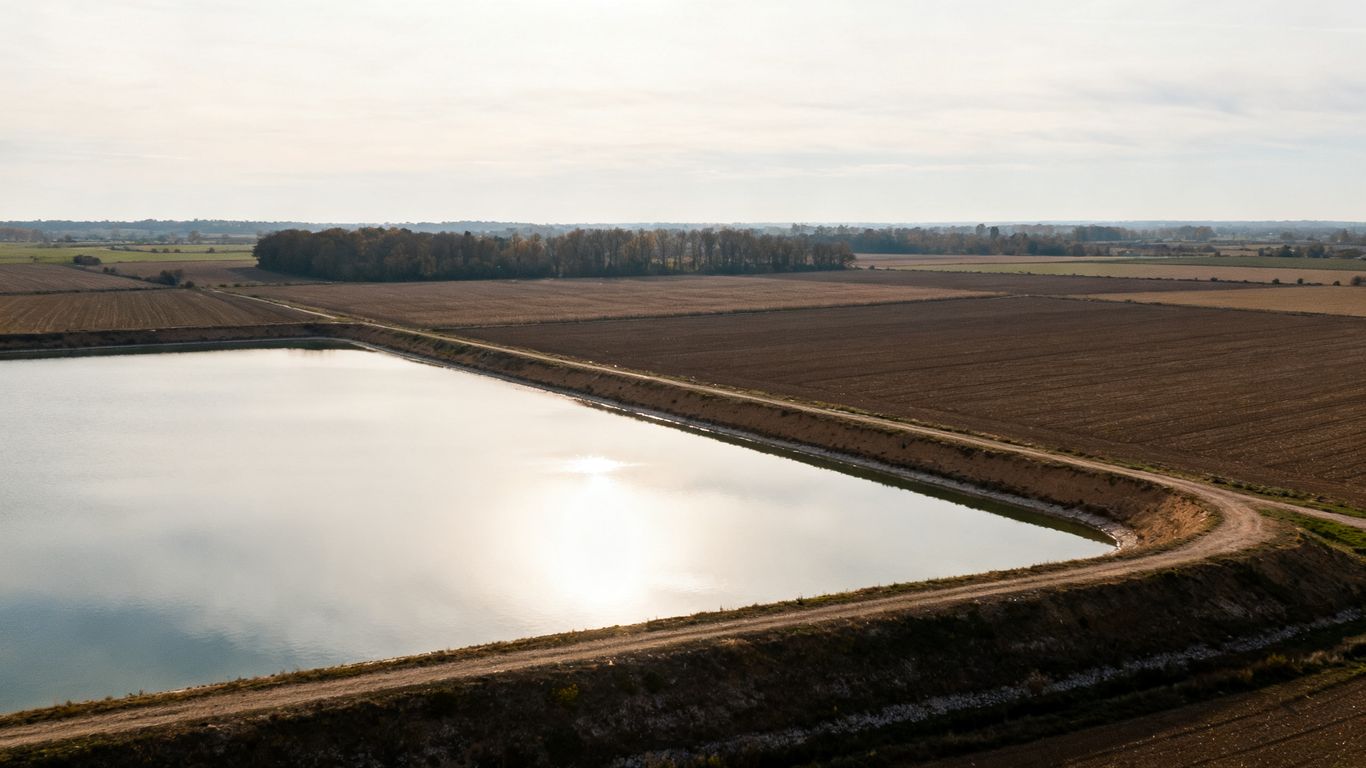
Storing water to irrigate crops during dry periods
The aim is to have a reserve that can be mobilised when rainfall is low or crop needs increase. Connected farmers can then use the stored water for irrigation, rather than relying solely on direct withdrawals at a time when watercourses and groundwater are sometimes under strain. This does not eliminate water needs: it changes the schedule and, depending on the project’s rules, the access conditions.
Filling reservoirs when the resource is available
Filling is generally planned during a period when hydrological conditions and authorisations permit. It is not enough for the season to be called « winter » for water to be automatically available: groundwater levels, watercourse flow rates, and regulatory thresholds are important. The broad outlines of the cycle are as follows, even if the precise details vary from one territory to another:
- a resource is withdrawn within authorised limits;
- the water is transported and stored in the reservoir;
- connected farms can use it for irrigation;
- direct withdrawals may be regulated differently depending on the project.
This diagram describes an intended operation, not a guarantee of the volume actually available each year. Authorisations and local conditions determine what can be withdrawn and when.
Distributing water to connected farms
A collective reservoir is not necessarily accessible to all farms in the area. Distribution depends on the area served, connection arrangements, and the rules established for beneficiaries. This is why the project also raises a governance issue: who can use the stored water, under what conditions, and with what oversight?
Where does the water stored in these reservoirs come from?
The origin of the water is a central element in evaluating a reservoir. Projects may involve withdrawals from groundwater or watercourses, depending on the available resources and the permits issued. Availability is not judged solely on rainfall: it also depends on water circulation in the catchment area and its condition at the time of pumping.
Withdrawals from groundwater and watercourses
In many projects, water is pumped from groundwater and, in some cases, from a watercourse. These resources are linked to their environment: a withdrawal can influence water levels and associated ecosystems, but its effect depends on the hydrological situation and the volume concerned. This is one of the reasons why debates focus on local data rather than a single answer for all reservoirs.
Pumping periods and authorisation rules
Pumping periods, authorised volumes, and conditions to be met are defined within the framework of decisions applicable to the project. To make these parameters more understandable, the main stages of examination can be distinguished:
| Point examined | Question to ask | Why it matters |
|---|---|---|
| Resource withdrawn | Groundwater, watercourse, or other origin? | Effects differ depending on the environment concerned. |
| Schedule | At what time is pumping permitted? | Availability varies throughout the seasons. |
| Authorised volume | How much can be withdrawn? | The volume governs the potential pressure on the resource. |
| Monitoring | How are withdrawals measured? | Monitoring allows verification of the set conditions. |
These points must be examined together: an authorised schedule does not, on its own, indicate the actual state of the resource. Observed hydrological conditions and compliance with regulations complete the analysis.
The role of local hydrological conditions
Soils, geology, exchanges between groundwater and watercourses, as well as rainfall, influence water availability. Two catchment areas can therefore react differently to similar withdrawals. A robust assessment relies on local observations and resource trends, rather than generalising from another territory.
Why do their proponents support them?
Those in favour of reservoirs highlight the possibility of shifting some withdrawals to a period considered less sensitive, and then using the stored water in the summer. They also emphasise the difficulties faced by farms dealing with dry spells and irrigation needs. These arguments, however, depend on specific conditions: resource availability, authorisations, sharing, and agricultural practices.
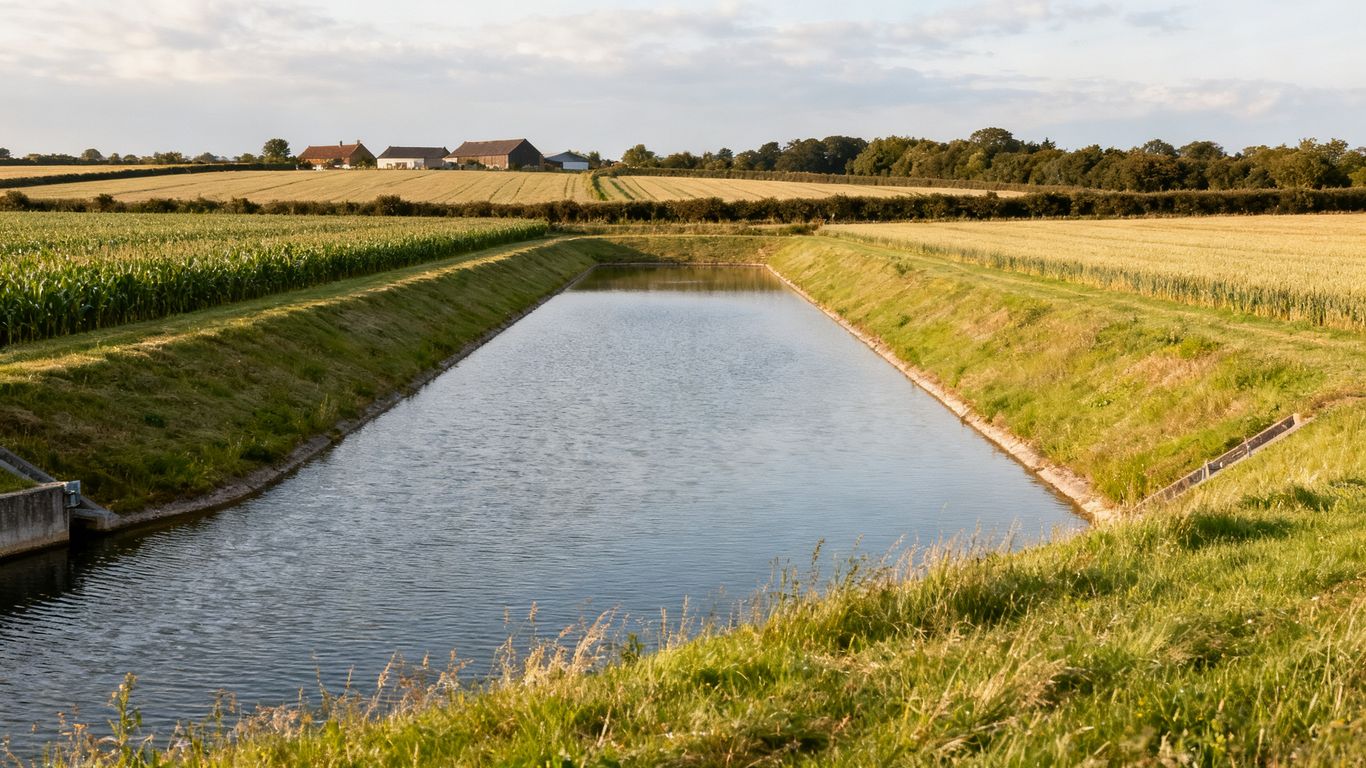
Reducing summer water withdrawals
For proponents of the system, storage can limit direct withdrawals during the summer, when watercourses or groundwater may be weakened. This effect depends on the actual substitution achieved: the stored water must replace withdrawals that would otherwise have occurred in the summer. The balance sheet must therefore take into account the volumes pumped to fill the reservoir as well as those subsequently used.
Securing harvests against drought
A reservoir can provide a safety margin for farms whose crops require water at certain growth stages. Its supporters believe that this availability helps to limit losses in the event of drought. However, it does not guarantee a given harvest: results also depend on the crops, weather conditions, soils, and available volumes.
Preserving agricultural activity and income
Proponents also present irrigation as a way to maintain the activity of certain farms and the income that depends on it. This argument is part of a broader discussion on production choices and agricultural adaptation. It does not, on its own, address issues of water allocation or potential effects on other users and natural environments.
Why are mega-reservoirs controversial?
Criticism primarily focuses on the fact that a withdrawal made at a given time does not guarantee that the resource will be sufficiently replenished. It also highlights potential losses through evaporation and possible effects on ecosystems. Finally, the debate concerns the beneficiaries of the reservoirs and the type of agriculture that their funding or use may promote.
Uncertainty about groundwater replenishment
Groundwater recharges under conditions that vary from place to place and from year to year. Opponents fear that withdrawals for filling may exceed the resource’s replenishment capacity, or contribute to its weakening during dry periods. Proponents respond that pumping can be regulated: the assessment therefore relies on hydrological data, authorisations, and actual monitoring of volumes.
Evaporation and possible effects on natural environments
An open-air reservoir can lose some of its water through evaporation, especially when temperatures are high. The extent of these losses varies depending on weather conditions and the structure’s configuration. Critics are also concerned about the potential consequences of withdrawals on watercourses, groundwater, and the habitats that depend on them; these effects must be assessed on a case-by-case basis.
Water sharing and the favoured agricultural model
The controversy also concerns the distribution of benefits: reservoirs are generally connected to specific farms, while water resources concern the entire territory. Some opponents believe that these structures may favour agricultural systems heavily dependent on irrigation. This discussion joins broader reflections on the ecological transition and the storage of renewable energies, although the issues of water and electricity are not the same.
What effects can they have on territories?
The consequences of a reservoir are not the same everywhere. They depend on local resources, the functioning of the catchment area, how the project is designed, and the rules governing its use. The structure can also become a point of disagreement between stakeholders who have neither the same needs nor the same interpretation of water sharing.
Consequences that vary depending on soils and local resources
The possible effects are due to both the characteristics of the site and the state of water resources. A soil, a groundwater, or a watercourse reacts according to its own functioning, and the available data are not always the same from one project to another. A territorial analysis must therefore specify the assumptions made and the uncertainties, rather than mechanically transposing the results from another basin.
Tensions between farmers, residents, and associations
Debates can pit farmers, residents, associations, and public representatives against each other, particularly on expected benefits, risks, and access to water. To read this dossier without confusing distinct issues, it is useful to separate the evaluation of a hydraulic project from other local matters, such as non-resident property income tax, summer activities for teenagers, professional transport in Rotterdam, bed bug treatment, or the choice between SaaS and installed software. These topics do not resolve a reservoir project, but they remind us how varied territorial issues can be.
Debates on authorisations and court decisions
Projects may be subject to administrative procedures and legal challenges. The decisions made concern authorisations and elements specific to each case; they therefore do not replace the examination of local hydrological and environmental conditions. To understand a given situation, it is necessary to distinguish the general debate on reservoirs from the decision applicable to a specific project.
What solutions are being considered for better water management?
Water management strategies are not limited to building reservoirs. They include changes in crops and irrigation, preservation of water-retaining environments, and evaluation of planned infrastructure. Each option has its conditions and limitations; their comparison should be based on the territory’s needs and resources.
Adapting crops and irrigation practices
The choice of crops, their timing, and irrigation techniques can influence water needs. Possible adjustments depend, in particular, on soils, climate, and farm objectives. Reducing or better targeting water inputs can complement other measures, but is not a one-size-fits-all solution for all productions.
Restoring soils, wetlands, and hedges
Healthy soils, preserved wetlands, and hedges can contribute to the water cycle in landscapes. These elements influence infiltration, runoff, and natural habitats, with effects that depend on the context. Preserving them is part of broader environmental management, without negating the need to examine irrigation needs and withdrawals.
Comparing reservoirs with other options based on their local impact
A reservoir must be evaluated against available solutions and pursued objectives: what resource does it mobilise, what uses does it serve, and what consequences are expected? The comparison benefits from clarifying data, uncertainties, and the beneficiaries concerned. Resources on mega-reservoirs and their issues can shed light on the arguments in the debate, while the analysis of a specific project always depends on its local characteristics.
In a nutshell
A mega-reservoir is an agricultural storage tool whose overall impact depends on its water source, filling method, uses, and local effects. Placing it in perspective with evolving practices and environmental preservation allows for a balanced debate, rather than reducing water management to a single solution. For a distinct energy project, you can also discuss your solar project with a specialised service.
Frequently asked questions
Is a mega-reservoir always filled in winter?
Filling is often planned during a period when withdrawals are authorised and the resource is deemed available. Schedules and conditions vary depending on the projects and the local hydrological situation.
Where does the water stored in a mega-reservoir come from?
It can come from withdrawals from groundwater or, depending on the projects, from a watercourse. The exact origin is specified in the documents and authorisations of the project concerned.
What is the purpose of a substitution reservoir?
It is designed to store water for later use in irrigation. The term « substitution » refers to the idea of replacing some of the direct withdrawals made during the summer.
Do mega-reservoirs reduce summer withdrawals?
This is the objective put forward by their proponents, but the effect depends on the volumes withdrawn to fill the reservoir and the actual reduction in summer pumping. The rules and data specific to each project must be examined.
Why are these reservoirs controversial?
Criticism focuses particularly on groundwater replenishment, evaporation, possible effects on natural environments, and the allocation of water between users. They also discuss the agricultural model associated with irrigation.
Are the effects the same everywhere?
No. They depend on soils, local resources, weather conditions, and the functioning of each structure. A local analysis is necessary to assess the possible effects.
What solutions exist besides reservoirs?
Options include adapting crops and irrigation practices, restoring soils and natural environments, and comparing options based on their local effects. They can be studied jointly rather than considered in isolation.

Thibault Mouillefarine est responsable éditorial de Solencia, une plateforme dédiée à la compréhension, à la qualification et à l’accélération des projets photovoltaïques professionnels. Fondateur de Millennium Digital, agence spécialisée en stratégie digitale B2B, il accompagne les entreprises dans la transformation de sujets complexes en parcours de décision clairs et orientés résultats. Les contenus publiés sur Solencia s’appuient sur des sources publiques et institutionnelles : textes réglementaires, documentation Enedis, données CRE, informations EDF OA, ressources ADEME et publications officielles liées à l’énergie.