Installing solar panels on a car park is an idea that is gaining traction. These structures are increasingly seen covering parking spaces. But is it really a good deal? When is the right time to get started, and above all, does it pay off? We’ll take a closer look, because solar energy can be a game-changer for a business, but you need to understand how it works before putting money on the table.
Key Takeaways
- The profitability of a photovoltaic car park depends on several factors such as installed capacity, equipment costs, electricity sale price, and available aid. On average, the return on investment is between 8 and 12 years.
- The right time to launch a project depends on regulatory changes, electricity purchase prices, and aid schemes. Economic cycles must also be taken into account to optimise installation costs.
- Several economic models exist: self-consumption to reduce your own bills, total sale to generate revenue, or third-party investment for a launch without initial capital.
- Properly sizing your installation is paramount. This includes choosing the necessary peak power, selecting the right solar panels (monocrystalline, bifacial), and adapting to the available surface area.
- Beyond financial aspects, a solar car park improves the company’s image, reduces energy dependence, and protects parked vehicles.
Assessing the Profitability of a Photovoltaic Car Park Project
Understanding the Factors Influencing Return on Investment
To determine if a photovoltaic car park project is a good financial idea, several things need to be considered. The initial cost, of course, but also how much electricity you will produce and at what price you can sell or use it. Available aid also plays an important role. You need to do the calculations to see how long it will take before the installation starts to generate money.
- Installation Cost: This is the biggest chunk at the beginning. It includes the panels, the structure (canopies), professional installation, and administrative procedures.
- Energy Production: The amount of electricity produced depends on the size of the installation, the sunshine in your region, and the orientation of the panels.
- Electricity Sale or Purchase Price: If you sell your surplus, the purchase price is fixed. If you consume your own electricity, you save on your bill.
- Aid and Subsidies: These schemes can reduce the initial cost and thus accelerate the return on investment.
Analysing Energy Production Potential
The amount of electricity an installation can generate is a key point. A 100 kWp installation, for example, can produce between 80,000 and 140,000 kWh per year. This production depends on several factors, such as local weather and the quality of the equipment. It is therefore important to estimate this potential accurately before starting.
Consider the following:
- The peak power of the installation (in kWp).
- The average sunshine in the geographical area.
- The tilt and orientation of the panels.
- Any potential shading (trees, neighbouring buildings).
A good estimate of production allows for more accurate forecasting of future revenue or savings.
Determining the Amortisation Period of an Installation
The amortisation period is the time it takes for the gains generated by the installation (savings on bills, revenue from electricity sales) to repay the initial cost. For a photovoltaic car park, this period is often estimated between 8 and 12 years. This can vary depending on the installation cost and the actual revenue generated. A well-thought-out project, with aid, can reduce this period. It is important to do your calculations carefully to know when the investment will truly become profitable. The cost of photovoltaic canopies for a 100 kWp installation generally ranges between €100,000 and €150,000 excluding tax, which directly influences this amortisation period.
Identifying the Right Time to Launch a Photovoltaic Project
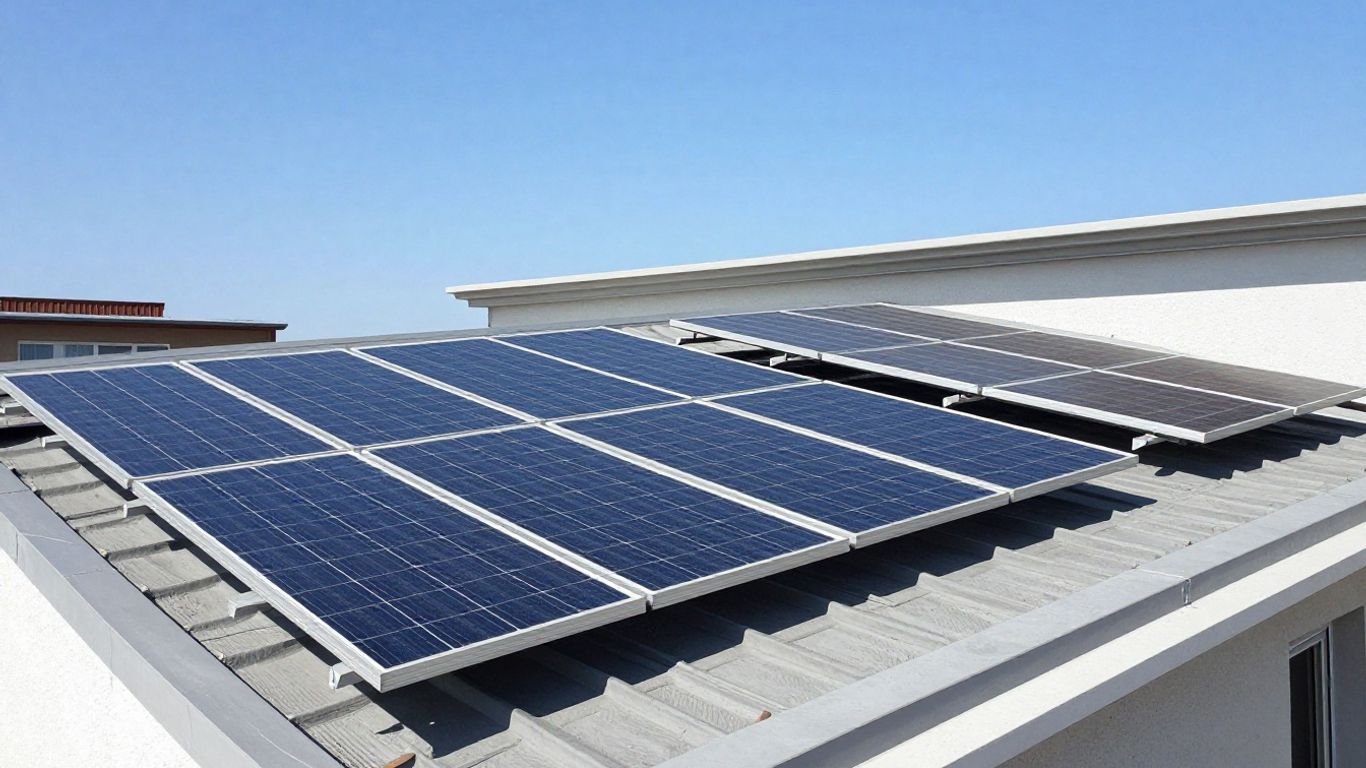
Embarking on a photovoltaic project is a bit like choosing the right time to plant a tree: you need to consider the seasons, weather conditions, and future growth. For a solar car park, this planning is just as important. It’s not just about installing panels, but about doing it at the most opportune moment to maximise benefits and minimise risks.
Anticipating Regulatory and Pricing Changes
The solar energy sector is constantly evolving, particularly regarding regulations and electricity purchase prices. Government policies can change, directly affecting the profitability of your project. It is therefore essential to stay informed of the latest news. For example, support mechanisms like the self-consumption bonus are regularly adjusted. You also need to monitor changes in purchase prices, which determine the potential revenue from selling the electricity produced. Active monitoring allows you to seize opportunities before they disappear.
Seizing Opportunities Related to Aid and Subsidies
Financial aid and subsidies can significantly improve the profitability of a photovoltaic project. These schemes, whether national or local, aim to encourage the development of renewable energy. However, their availability and eligibility criteria can vary. It is therefore wise to find out about the aid in force at the time you are considering launching your project. Sometimes, specific aid can make a project more financially attractive, or conversely, their disappearance can make the investment less attractive without good planning. For example, for larger ground-mounted power plants, the PTZ remains insufficient compared to construction costs of around €1M/ha, making direct investment complex for an owner. Leasing land to a photovoltaic developer appears to be a much more accessible alternative: with no upfront costs, no financial risk, and guaranteed income from the first year, this solution avoids the uncertainties of subsidies while sustainably valuing your land. Landlords benefit from stable remuneration without having to manage the technical or regulatory risks of the sector. Do you own land and want to know its solar leasing potential? ☀️ Simulate the rent for a solar farm.
Adapting the Launch to Economic Cycles
The general economic context also plays a role. Interest rates, availability of financing, and the cost of materials can influence the overall budget of your project. Launching a project when financing conditions are favourable can significantly reduce the total investment cost. Furthermore, the price of photovoltaic equipment, such as solar panels, tends to decrease in the long term, but fluctuations can occur. It is therefore relevant to analyse the equipment market and credit conditions before making a decision. Solar installations typically have a lifespan of 25 to 30 years, making them a secure and potentially profitable investment for businesses. Solar panel installations typically pay for themselves within 7 to 12 years, depending on their power output and location.
The right time to launch a photovoltaic project is when the combination of regulatory, financial, and economic factors is most favourable. A thorough analysis of these elements before committing is key to a successful and profitable long-term project.
Choosing the Right Economic Model for Your Photovoltaic Car Park
Once you’ve decided that a photovoltaic car park is a good idea for your business, you need to think about how you will use the electricity produced. There isn’t one single right answer, as it depends on your needs and objectives. The three main options are self-consumption, total sale of electricity, and third-party investment.
Self-Consumption: Optimising Energy Use
Self-consumption is when you use the electricity you produce directly on-site. This is particularly interesting if your business consumes a lot of electricity during the day, for example, to run offices, machinery, or charge electric vehicles. By using your own solar energy, you reduce your electricity bill and your dependence on traditional suppliers. It’s a concrete way to control your energy costs in the long term. Installing charging stations for electric vehicles in the car park, powered by this solar energy, adds extra value to this model.
- The electricity produced is consumed directly on-site.
- Significant reduction in electricity bills.
- Contribution to the energy transition and the company’s ecological image.
- Possibility of benefiting from aid such as the self-consumption bonus.
Self-consumption helps to smooth out energy costs over the lifespan of the installation, offering welcome budget predictability in the face of energy market fluctuations.
Total Sale: Valuing Electricity Production
With the total sale model, all the electricity you produce is sold to a buyer, often the public grid or a specialised company. This model is interesting if your daytime electricity consumption is low, or if you have a very large production capacity. You receive remuneration for each kilowatt-hour (kWh) fed into the grid, often through a long-term contract that guarantees a fixed rate. This can represent a stable source of income for your business. The cost of a 100 kWp installation, for example, can be in the region of €100,000 to €150,000.
- Guaranteed income through an electricity sales contract.
- Ideal for sites with low daytime consumption.
- Allows for full valuation of solar production potential.
| Installed Capacity | Estimated Cost (Excl. Tax/Wp) | Estimated Annual Revenue (Indicative) |
|---|---|---|
| 100 kWp | €1.30 – €1.60 | Varies according to purchase price |
Third-Party Investment: A Solution with No Initial Capital
Third-party investment is an option where an external investor finances the entire photovoltaic installation on your car park. In return, you provide the space and agree to purchase the electricity produced at a preferential rate for a specified period. The main advantage is that you have no initial investment to make, which preserves your cash flow. This is an interesting solution for companies that want to benefit from solar energy without bearing the installation cost. Installation costs can vary, for example, between €7,000 and €180,000 depending on the power output.
- No initial investment required.
- The company benefits from the electricity produced at an advantageous cost.
- The investor covers the maintenance and operation of the installation.
- Allows for reduced electricity bills while improving environmental image.
Correctly Sizing Your Photovoltaic Car Park Installation
Choosing the right size for your photovoltaic canopy project is a key step. It’s not just about covering parking spaces, but about maximising energy production while respecting your site’s constraints. A well-sized installation means better profitability and increased efficiency.
Estimating the Required Peak Power
Peak power, expressed in kilowatts-peak (kWp), determines the maximum production capacity of your installation. To estimate it, several factors come into play. First, consider your current electricity consumption. If the goal is self-consumption, you should aim for a power output that covers a significant portion of your needs. Also, think about the available space for the panels. A larger area allows for more panels to be installed and thus a higher power output. Don’t forget that regulations impose minimum surface areas to be covered for new large car parks. For example, since the APER law, outdoor car parks larger than 1500 m² must be equipped with photovoltaic canopies covering at least 50% of their surface area [d1e4].
Selecting Suitable Equipment
The choice of equipment is as important as the sizing. Solar panels are the heart of the installation. There are different types, with varying efficiencies and costs. Bifacial panels, for example, capture light on both sides, which can increase production, especially if the ground reflects light well. The inverter, which converts the direct current produced by the panels into usable alternating current, must be chosen based on the total power of the installation. The canopy structure itself must be robust to withstand bad weather and adapted to your car park’s configuration. It is often wiser to use professionals to select and install these components, as a poor choice can impact the performance and lifespan of the installation.
Taking into Account Available Surface Area
The surface area of your car park is a determining factor for the number of panels you can install and, consequently, for the total power of your installation. You need to consider both the area occupied by the parking spaces themselves and the space required for the panel support structures. It is possible to calculate the surface area of a canopy by multiplying its length by its width. To give you an idea, here are some surface area estimates based on the number of cars:
| Type of Use / Business | Number of Cars | Approximate Surface Area |
|---|---|---|
| SME with small employee car park | 4 cars | 50 to 60 m² |
| Restaurant, hotel, or shop | 6 to 8 cars | 80 to 120 m² |
| SME with larger employee car park | 20 cars | 300 to 400 m² |
It is important to note that the cost of a photovoltaic installation varies depending on its power output. For example, for installations under 100 kWp, the price generally ranges between €1.2 and €1.4 excluding tax per Watt-peak [3772].
A thorough feasibility study is essential before starting. It allows for validation of the technical and economic viability of your project, taking all these elements into account.
Understanding the Taxation of a Photovoltaic Project
Impact of the Project Holder’s Legal Status
The way you structure your project has a direct impact on taxation. Whether you are an individual, a sole proprietorship, an SCI (Société Civile Immobilière), or a commercial company, the tax rules will not be the same. For example, an SCI can allow for the separation of property assets from commercial activity, which can have interesting tax implications, particularly regarding inheritance or rental income management if the car park is rented out. It is therefore important to choose your legal structure carefully before even thinking about installing the panels.
Tax Regimes Applicable to Sales or Self-Consumption
Two main economic models are available: the total sale of electricity produced or self-consumption (with or without selling the surplus). Each model has its own tax implications.
- Total Sale: Revenue from electricity sales is generally taxed in the category of Industrial and Commercial Profits (BIC) or Agricultural Profits (BA) if the activity is related to agricultural operations. The tax regime (micro-enterprise or actual) will depend on your turnover and status.
- Self-Consumption with Surplus Sale: The portion of electricity you consume allows you to save on your bill, which is not directly taxable but reduces your expenses. The sale of the surplus, on the other hand, is subject to tax, often under the same conditions as total sale, but with generally lower amounts.
There are purchase prices set by the installation’s power output, which change quarterly. For example, for an installation under 100 kWp, the surplus sale price can be €0.0473 / kWh in the 2nd quarter of 2026. For larger installations, prices are subject to tenders.
It is essential to find out about the purchase prices in force at the time of signing your contract, as they are crucial for calculating the profitability of your project.
VAT Recovery and Amortisation Mechanisms
VAT (Value Added Tax) recovery is a significant tax advantage. If you are VAT registered (which is often the case for companies or SCIs subject to corporate tax), you can recover the VAT on the purchase and installation of solar panels, under certain conditions. This considerably reduces your initial investment. For example, since 1 October 2025, a reduced VAT rate of 5.5% applies to individuals installing solar panels. For professionals, VAT recovery is more systematic if the installation is intended for an economic activity that generates VAT.
Furthermore, photovoltaic equipment can be amortised for tax purposes. Amortisation allows you to deduct a portion of the installation’s value from your taxable income each year. The amortisation period will depend on the estimated lifespan of the equipment and the tax rules in force. Accounting and tax amortisation is an important lever for reducing your corporate or income tax.
Here is an overview of the purchase prices for self-consumption surplus in the 2nd quarter of 2026:
| Installation Power | Regulated Prices – 2nd Quarter 2026 | Investment Bonus |
|---|---|---|
| P ≤ 9 kWp | €0.04 / kWh | €70 / kWp |
| P ≤ 36 kWp | €0.0473 / kWh | €140 / kWp |
| P ≤ 100 kWp | €0.0473 / kWh | €60 / kWp |
It should also be noted that for projects over 100 kWp, a deposit may be required, such as a €10,000 deposit since March 2025 for installations over 100 kWp.
Exploring Financing Options for Your Solar Car Park
Launching a photovoltaic car park project represents a significant investment. Fortunately, several avenues are available to businesses to bring their projects to fruition without necessarily mobilising all of their own funds. The choice of financing method will depend on your financial situation, your risk appetite, and your long-term objectives.
Self-Financing: Total Project Control
Opting for self-financing means using your own funds to cover all installation costs. This approach guarantees you complete independence: you control every aspect of the project, from equipment selection to managing the revenue generated. Furthermore, you avoid the interest charges associated with a loan. However, this method ties up a significant portion of your cash flow, which could limit your ability to invest in other business areas or to meet unforeseen expenses. It is therefore essential to carry out a thorough financial analysis to ensure that this option is viable without compromising the financial health of your company. For projects of a certain scale, such as those eligible for the « canopy » aid in Île-de-France, a minimum investment of €10,000 is required, which can represent a substantial sum to mobilise in equity [3312].
Bank Loan: Preserving Liquidity
Taking out a bank loan is a common solution for financing large-scale projects. It allows you to spread the cost of the installation over several years, thus preserving your cash flow for other operational needs. Current interest rates can make this option attractive. However, the application process can be long and demanding, requiring the submission of a solid file and a detailed financing plan. You also need to take into account the cost of interest, which will be added to the borrowed amount. This financing method is often preferred to maintain financial flexibility.
| Financing Method | Advantages | Disadvantages |
|---|---|---|
| Self-Financing | Total control, no interest | Ties up cash flow, less flexibility |
| Bank Loan | Preserves liquidity, spreads costs | Interest to pay, potentially long process |
Third-Party Investment: A Collaborative Solution
Third-party investment is an approach where an external investor takes charge of financing the installation. In return, they receive a portion of the revenue generated from electricity sales or a rental fee. This arrangement has the major advantage of allowing you to launch your project without any initial capital outlay from your side. It also gives you access to the investor’s expertise, who may have significant experience in the photovoltaic field. The main drawback is the sharing of profits, thus reducing your direct return on investment. It’s an excellent option if you want to get started quickly and minimise your initial financial risk [e9e6].
The choice of financing must be carefully considered. It impacts not only the ability to launch the project but also its overall profitability and the company’s long-term financial flexibility. An accurate cash flow simulation for each scenario is essential.
Analysing the Cost of a Photovoltaic Car Park
Embarking on a photovoltaic car park project requires serious financial analysis. It’s not just about the initial installation, but also about maintenance costs and long-term profitability. Understanding these elements is key to making an informed decision.
Estimating the Budget per kWp Installed
The average cost to install one kilowatt-peak (kWp) of solar panels on a car park is generally around €1,000. This figure is an average and can vary depending on several factors, such as the complexity of the installation, the quality of the chosen equipment, and the site’s specificities. It is therefore essential to request personalised quotes to obtain an accurate estimate.
Cost of Photovoltaic Canopies
Solar canopies, which serve as the structure for the panels while protecting vehicles, represent a significant portion of the budget. The cost per square metre for such an installation, including the structure, panels, inverters, and labour, is often between €110 and €160 per m². This price can fluctuate depending on the materials used and the canopy’s design.
Investment for a 100 kWp Installation
For a 100 kWp project, the initial investment can reach approximately €100,000. This sum covers the installation of the panels, the canopy structure, the inverter, cabling, and fitting. Such an installation can typically cover about forty parking spaces and an area of approximately 500 m². It is important to note that this amount can vary. For example, a 3 kWp project will cost between €3,000 and €4,500.
Cost analysis must be conducted rigorously, considering not only the initial investment but also the operating and maintenance costs over the installation’s lifespan. Good financial planning maximises return on investment.
The main expenditure items to consider are:
- The cost of solar panels and inverters.
- The canopy structure and its installation.
- Civil engineering and grid connection works.
- Study, design, and permit acquisition costs.
- Maintenance and insurance costs over the project’s lifespan.
It is also possible to benefit from aid and subsidies that can reduce the net cost of the investment, such as the self-consumption bonus for installations up to 100 kWp.
The Benefits of a Photovoltaic Car Park Beyond Profitability
Beyond purely financial aspects, installing a photovoltaic car park offers a range of significant advantages for businesses and local authorities. These benefits relate to energy management, brand image, and asset protection.
Reducing Energy Dependence
One of the first tangible benefits is reduced dependence on traditional electricity suppliers. By producing your own energy, you are better protected against market price fluctuations. The solar electricity produced can be used to power your buildings, your electric vehicle charging stations, or be resold, thus stabilising your energy costs in the long term. This increased energy autonomy is a major asset in an uncertain economic climate.
Improving the Company’s Brand Image
Adopting an ecological approach and investing in renewable energy sends a strong message. It demonstrates a concrete commitment to sustainable development and the energy transition. Such an initiative can significantly improve the perception of your company among your customers, partners, and employees. It’s an effective way to achieve your CSR (Corporate Social Responsibility) objectives and strengthen your image as a responsible and innovative player.
Protecting Parked Vehicles
Photovoltaic canopies, which support the solar panels, offer valuable protection to the vehicles parked underneath. They shelter them from bad weather such as rain, hail, and protect them from the sun’s UV rays, which can degrade paint and plastics over time. This protection function, although secondary to energy production, adds tangible value to the installation.
Here is a summary of the additional benefits:
- Energy Autonomy: Less dependence on suppliers and price increases.
- Positive Image: Enhanced reputation through environmental commitment.
- User Comfort: Protection of vehicles from the elements.
- Space Utilisation: Transformation of a simple car park into a productive infrastructure.
Integrating electric vehicle charging stations under these solar canopies further maximises the benefits, creating a complete and sustainable energy ecosystem. This not only meets current needs for clean mobility but also positions the company as a pioneer in adopting innovative energy solutions.
It is important to note that the design of these installations must take into account the local environment to avoid any negative impact on biodiversity or landscape, as highlighted by the need for careful planning [f052]. The structures themselves can improve the site’s aesthetics [bd20].
Administrative Procedures for a Photovoltaic Project
Setting up a photovoltaic installation on a car park involves following a precise administrative process. It’s not just about installing panels, but about ensuring everything complies with current regulations.
Understanding the Legislative Framework and the PPE
The Multiannual Energy Programme (PPE) sets out the broad orientations for the development of renewable energies in France. It aims to accelerate the energy transition. Recent laws, such as the ENR law, encourage the integration of photovoltaics in urban areas, including car parks. It is therefore important to familiarise yourself with these texts to understand the objectives and constraints related to your project. Compliance with this framework is the first step towards validating your installation.
Obtaining Necessary Urban Planning Authorisations
A photovoltaic canopy is considered a construction. Depending on its size, you will need to submit either a prior declaration of works (for areas under 20 m²) or a building permit (for areas over 20 m²). This procedure is carried out at your local town hall. Your municipality’s Local Urban Plan (PLU) may impose specific rules. If your project is located in a protected area, consultation with the Architecte des Bâtiments de France (ABF) will be necessary. For large-scale projects, other authorisations may be required, particularly if the land is agricultural, in which case you must contact the SAFER. It is advisable to contact your town hall from the outset to find out about local requirements. Contacting your town hall is a key step.
Certification of Commissioning by Consuel
Once the physical installation is complete, a crucial step follows: the conformity certification. Consuel (National Committee for the Safety of Electricity Users) is the body responsible for verifying that your installation complies with current electrical safety standards. Without this certificate, your installation cannot be connected to the electricity grid or benefit from electricity sales schemes. The grid connection application, usually made to Enedis, is an integral part of this process. This technical file includes the installation’s characteristics and the electrical diagram. Once validated, Enedis will provide you with a technical and financial proposal for the connection. If you plan to sell your production, a purchase contract with EDF Obligation d’Achat (EDF OA) will also be necessary. Organisations like EDF Solutions Solaires can assist you with these complex administrative procedures.
Optimising Solar Energy Production
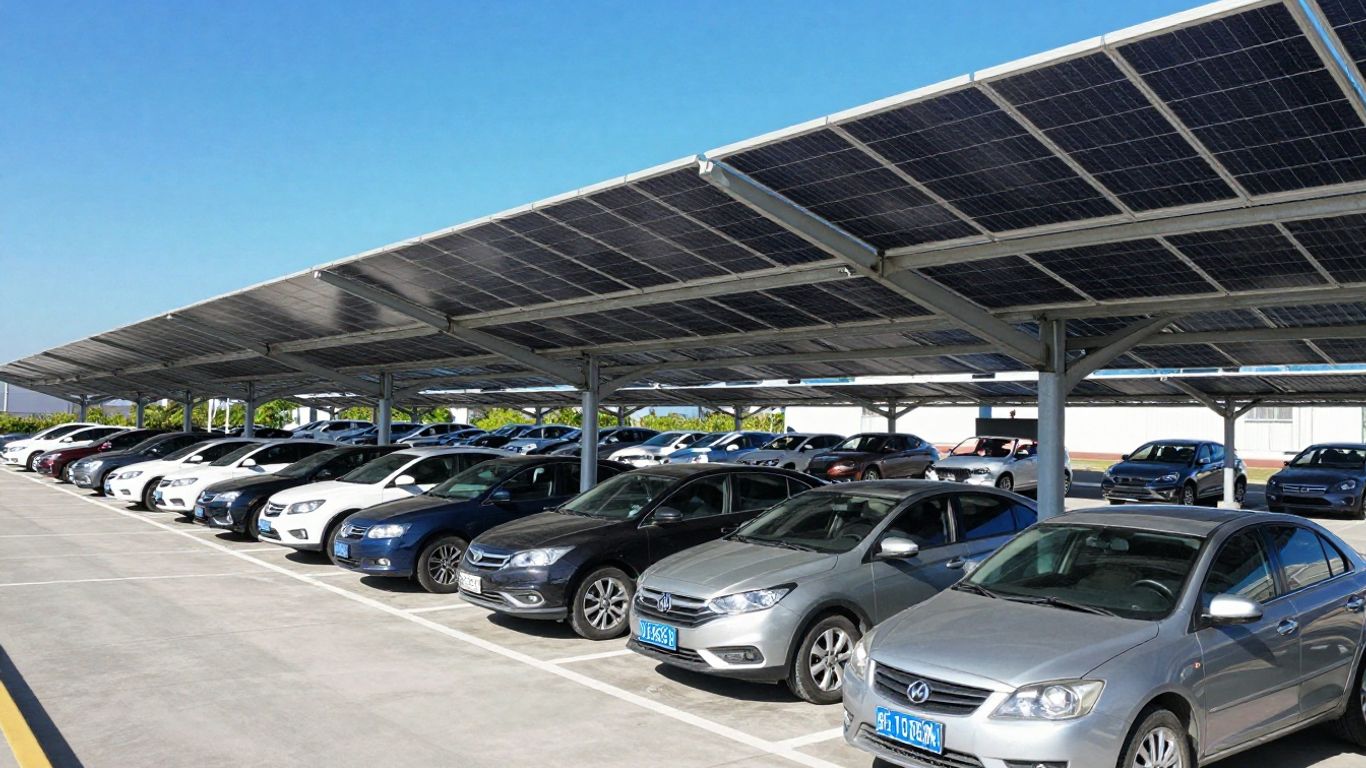
For a photovoltaic installation on a car park to be truly profitable, you need to ensure it produces the maximum amount of electricity possible. Several factors come into play to achieve this.
The Impact of Geographical Sunshine
The location where you install your solar panels plays a major role. Southern France benefits from more and longer sunshine than, for example, the Paris region. This means that the same surface area of panels will produce more energy in the south. Therefore, the local production potential must be carefully studied. For instance, one hectare of solar panels can produce between 1000 and 1500 MWh per year, with a significant difference between the north and south of the country.
Choosing the Most Efficient Solar Panels
Not all solar panels are created equal. There are different technologies, such as monocrystalline panels, which are generally more efficient than polycrystalline ones, although more expensive. A panel’s efficiency is measured in watts-peak (Wp) relative to its surface area. Choosing panels with high efficiency is a key decision for maximising production on a given surface. It is also important to check the compatibility of the panels with other equipment, such as optimisers, which can help improve production in cases of partial shading [30c7].
The Role of Bifacial Panels
An interesting technology for car parks is bifacial panels. Unlike conventional panels that only capture light on their front side, bifacial panels can capture light reflected by the ground or the car park structure on their rear side. This can increase electricity production by 5 to 15%, or even more, depending on the reflectivity of the surface below. This is an option to seriously consider to make the most of your installation.
To maintain optimal production over the long term, regular maintenance is essential. This includes cleaning the panels to remove dust and debris, as well as frequent inspections to check the condition of connections and structures. Preventive maintenance helps avoid drops in performance and costly breakdowns.
For your home to produce maximum green electricity, it needs to be well prepared. Consider optimising your solar energy production! This is a key step to fully benefit from the sun.
Want to know more about how to make your installation more efficient? Visit our website to discover our personalised tips and advice.
In Summary: Photovoltaic Car Park, an Opportunity to Seize?
At the end of this exploration, it is clear that installing photovoltaic panels on car parks represents a promising strategy for many businesses. The benefits, whether economic through reduced energy costs and revenue generation, or environmental through contribution to the energy transition, are significant. Profitability, although variable depending on the project, is confirmed in the medium and long term, with reasonable amortisation periods, often between 8 and 12 years. However, it is crucial not to overlook the importance of a thorough feasibility study, precise sizing, and a good understanding of administrative procedures and available aid. By considering these elements, the photovoltaic car park stands out as a wise and sustainable investment.
Frequently Asked Questions
When does a solar project become profitable?
A solar project becomes profitable when it generates more money than it costs. This depends on several things: the amount of sunshine it receives, the price of the electricity you sell or don’t have to buy, and the cost of the installation. Generally, it takes between 8 and 12 years to recoup the money invested, but it can be faster or slower.
How long does it take for a solar installation to pay for itself?
The time it takes for a solar installation to pay for itself, meaning to have repaid its initial cost, is most often between 8 and 12 years. This duration can vary depending on the economic model chosen (selling electricity or self-consumption), the aid received, and the price of electricity. Given that an installation can operate for 25 to 30 years, it is an investment that can pay off in the long term.
Is it still worthwhile to install solar panels today?
Yes, installing solar panels can be very worthwhile, provided the project is well thought out. You need to ensure that the chosen location receives enough sunshine and that the installation is well-sized. Solar panels allow for savings on electricity bills and earning money by selling surplus energy. Furthermore, they help protect the environment.
What are the costs to consider for a solar car park?
The main cost for a solar car park is the installation of the canopies and panels. You should budget around €1,000 for each kilowatt-peak (kWp) installed. For example, a 100 kWp project could cost around €100,000. This price includes the structures that support the panels and the panels themselves, as well as the electrical connection.
How to choose between selling all the electricity produced or keeping some for yourself (self-consumption)?
The choice between selling all the electricity or consuming part of it depends on your needs. If you consume a lot of electricity, self-consumption can lead to significant savings on your bills. If you don’t consume much, or if you want to maximise your income, selling all production may be more advantageous. It is possible to combine both.
What are the benefits of a solar car park, beyond the money it generates?
A solar car park offers several benefits. It allows for the production of clean electricity, which reduces dependence on fossil fuels and helps combat climate change. It also improves the company’s image by showing that it is environmentally conscious. Furthermore, the canopies protect parked cars from the sun and rain.
How are taxes calculated for a solar project?
Taxes for a solar project depend on how you are legally structured (whether you are a company, an association, etc.) and what you do with the electricity produced (you sell it entirely or consume part of it). There are specific rules for VAT and for the income you earn from your solar installation.
How to finance a solar car park project?
To finance a solar car park, you have several options. You can use your own money (self-financing), which gives you complete control but uses your cash. You can also get a loan from the bank to spread payments over several years. Another solution is third-party investment, where someone else pays for the installation and you share the profits.

Journaliste spécialisée en transition énergétique et consultante RSE. À 42 ans, Claire combine une formation en journalisme (Master Sciences Po) et un diplôme d’ingénierie environnementale (École des Mines / INSA). Après 10 ans dans la presse économique et 7 ans en cabinet de conseil RSE, elle écrit pour aider les décideurs B2B à comprendre les réglementations, les enjeux climatiques et les innovations énergétiques.