To know if your solar project is a good idea, here are the important points to remember. By carefully analysing these aspects, you can be sure of your choice.
Key Points to Remember
- A good profitability study takes into account all costs (purchase, installation, maintenance) and all gains (savings, resale).
- The location of your home, the orientation and inclination of your roof greatly influence the amount of electricity you will produce.
- You must consider available financial aid, such as grants or premiums, which can reduce the cost of your installation.
- Simulating production and savings over 25 to 30 years gives you a more precise idea of the long-term benefit.
- Choosing a qualified professional to carry out the study ensures a serious analysis with no unpleasant surprises.
Assessing the Photovoltaic Profitability of Your Project
Before embarking on the installation of solar panels, it is essential to ensure that your project will be profitable. This goes far beyond a simple estimate of savings on your bills. A thorough analysis is necessary to understand all the financial and technical aspects.
Understanding the Basics of Solar Profitability Calculation
The profitability calculation for a photovoltaic installation is based on several pillars. It’s not just about looking at how much you will save on your electricity bill, but also about considering potential income from selling surplus electricity, initial costs, and available aid. A realistic assessment is key to a successful investment. The lifespan of the installation, generally between 25 and 30 years, must be taken into account, and gains projected over this period.
The Importance of a Personalised Analysis for Photovoltaic Profitability
Every solar project is unique. Geographical location, roof orientation, your energy consumption profile, and even the absence of shading on your panels are all factors that directly influence production and therefore profitability. This is why a generic study is not enough. A tailor-made analysis that takes into account all these specificities is needed to give you a clear picture of the return on investment. Professional tools, such as those offered by specialised organisations, can help refine this analysis.
Key Indicators for Measuring Financial Viability
To assess the viability of your project, several financial indicators must be carefully examined. The return on investment (ROI) indicates the percentage of gain relative to the money invested. The payback period is the time required for the generated savings and income to cover the initial installation cost. Finally, the net gain over the lifespan of the installation provides an overall projection of expected profits. These figures, often calculated using a solar profitability calculator, allow for the comparison of different options and informed decision-making.
Analysing the Factors Influencing Photovoltaic Profitability
For a solar project to be profitable, you need to look beyond the simple cost of the panels. Several elements come into play and can significantly alter the return on investment. It is therefore essential to understand them well before starting.
The Impact of Geographical Location and Sunshine
The location where you install your solar panels plays a major role. A region with high annual sunshine, such as the south of France, will allow for greater energy production than a region further north. However, this does not make installations in less sunny areas unviable. Panels also work in cloudy weather, although their efficiency is lower. The important thing is to consider the average long-term sunshine to estimate production.
You also need to consider how you will use the electricity produced. Someone who consumes a large part of their solar energy at home (self-consumption) will see their project pay for itself more quickly, regardless of their location, than someone who sells almost all of their production. Analysing weather conditions helps identify the amount of solar energy that can be produced on site.
Optimising Orientation and Inclination for Maximum Production
Beyond location, how your panels are installed is crucial. The ideal orientation is south, but south-east, south-west, or even east or west can also be very efficient. Inclination also matters: a slope of around 30 to 35 degrees from the horizontal is often recommended to best capture the sun’s rays throughout the year. These adjustments maximise energy production.
It is also important to ensure that the installation is well-designed to optimise the power of your system.
The Importance of Available Surface Area and Absence of Shading
The surface area of your roof or available land will determine the size of your installation and therefore its maximum power. The more space you have, the more panels you can install, and thus produce more electricity. But be careful, you also need to ensure that nothing casts a shadow on your panels. A tree, a neighbouring building, or even a chimney can significantly reduce energy production. The absence of shading is therefore a key factor in ensuring optimal performance and good profitability. You also need to consider elements that can accumulate on the panels, such as leaves or dust, which can reduce their efficiency. These external factors must be considered in the study.
Here are the points to check for optimal installation:
- Orientation: South, South-East, South-West, East, West.
- Inclination: Generally between 30 and 35 degrees.
- Shading: Complete absence of shade on the panels.
- Surface area: Sufficient for the desired power.
A serious profitability study will take all these aspects into account to give you a realistic estimate of the expected production and gains. Do not neglect any of these variables, as they have a direct impact on the return on investment of your solar project.
Calculating the Potential Savings of Your Solar Installation
Once you have an idea of the technical feasibility of your project, it’s time to move on to the financial aspect. Calculating the potential savings of your solar installation is a key step in assessing its profitability. It’s not just about looking at what you’ll save on your bills, but also about considering additional income and the impact on your property’s value.
Quantifying Direct Savings on Electricity Bills
The most immediate benefit of a photovoltaic installation is the reduction of your dependence on the electricity grid. By producing your own electricity, you decrease the amount of energy you need to buy from your supplier. The amount of this saving will depend directly on your consumption and the proportion of that consumption covered by your solar production. The more your solar production coincides with your consumption times, the more significant the saving will be. For example, if you are home during the day and your solar production is at its peak then, you will directly consume a large part of this energy, thus reducing your purchases from the grid. Annual savings can vary considerably, from a few hundred to over a thousand euros, depending on your consumption profile and the size of your installation. It is therefore important to analyse your habits carefully to best estimate this gain. An estimate of savings can give you a more precise idea.
Estimating Income from Selling Surplus Electricity
It is rare for a solar installation to produce exactly the amount of electricity you consume. If your system generates more energy than needed at a given moment, this surplus can be sold. Sales contracts, often guaranteed by purchase prices over a long period, provide an additional source of income. This income, although variable depending on the quantity of surplus electricity produced and the current purchase price, contributes positively to the overall financial balance of your project. It is essential to find out about the sales conditions and applicable prices in your region to include this financial flow in your profitability calculation. This resale allows every kilowatt-hour produced beyond your immediate needs to be valued.
Valuing the Increase in Property Value
Beyond direct savings and resale income, an efficient solar installation can also increase the value of your property. In a context where the energy transition is becoming increasingly important, properties equipped with renewable energy solutions are often perceived as more attractive and modern. This property appreciation, although more difficult to quantify precisely, represents a significant long-term financial advantage, especially in the event of a property sale. It demonstrates a commitment to sustainable solutions and can translate into a higher selling price compared to similar properties without such equipment.
The assessment of potential savings must be realistic. It is advisable to adopt a slightly pessimistic approach in your projections to protect yourself against potential disappointments and ensure the reliability of your profitability study. An accurate simulation can be carried out using specialised tools, such as those offered by SuisseEnergie.
Here is a summary table of the elements to consider for calculating savings:
| Saving/Income Item | Description | Influencing Factors |
|---|---|---|
| Bill Savings | Reduction in electricity consumption purchased from the grid | Self-consumption rate, consumption profile, electricity price |
| Resale Income | Sale of surplus electricity produced | Solar production, purchase price, sales contract |
| Property Valuation | Increase in property value | Installation performance, market appeal for eco-friendly properties |
Simulating the Long-Term Performance of Your Photovoltaic Project
Once the basics are understood and the factors analysed, it’s time to look ahead. To assess the real viability of your solar installation, it is essential to simulate its performance over a long period. This allows you to go beyond a simple estimate of immediate savings to grasp the potential gains over the entire lifespan of the panels, generally between 25 and 30 years.
Projecting Gains Over a 25 to 30 Year Lifespan
Long-term simulation goes far beyond a simple calculation. It integrates dynamic data to anticipate the evolution of your production and income. We are no longer just talking about what the installation can produce today, but what it will represent in 10, 20, or even 30 years. This includes taking into account the natural degradation of the panels, which is generally low but must be considered for a realistic projection. The objective is to give you a clear vision of the overall return on investment and the net profit you can expect over the complete lifecycle of your system.
Using Professional Tools and Up-to-Date Data
To obtain a reliable simulation, it is essential to rely on powerful modelling tools and up-to-date databases. These tools take into account various elements such as historical weather data specific to your region, the precise technical characteristics of your installation (power, orientation, inclination), and projected changes in electricity purchase prices or grid energy prices. A serious simulation relies on concrete data to avoid unpleasant surprises. This is why calling on experts is often recommended for a performance study precise.
Comparing Different Self-Consumption and Resale Scenarios
How you consume or sell the electricity produced has a major impact on profitability. A relevant simulation should allow for the comparison of several scenarios:
- Total self-consumption: Maximise the use of your own production to minimise your electricity bill as much as possible.
- Self-consumption with surplus sale: Consume part of the electricity produced and sell the rest at a defined price.
- Total sale: Sell all of your production.
Each scenario has financial advantages and disadvantages. The simulation helps you visualise which model is best suited to your consumption profile and your objectives, taking into account local climatic conditions.
A realistic long-term projection is key to making an informed decision. It allows you to understand not only potential gains but also to prepare for possible fluctuations in the energy market.
Taking into Account Investment and Operating Costs
To assess the viability of your photovoltaic project, it is essential to look beyond potential gains and carefully consider all associated costs. A rigorous financial analysis must include both initial expenses and recurring fees.
Detailing Material and Installation Costs
The initial investment often represents the largest part of the expenses. It includes the purchase of the solar panels themselves, but also inverters, mounting structures, cabling, and electrical protection. The cost of labour for installation is also a significant expense. It is important to request several quotes to compare offers and ensure the quality of the proposed equipment. Do not forget to include grid connection fees, if they apply to your project.
Here is an idea of the elements to consider:
- Solar panels (number, power, technology)
- Inverter(s) (centralised, micro-inverters)
- Mounting and fixing system
- Cabling and electrical protection
- Qualified labour for installation
- Connection fees and administrative procedures
Anticipating Maintenance and Operating Costs
Once your installation is in place, operating and maintenance costs must be anticipated to ensure its performance and longevity. These costs are generally lower than the initial investment, but they are recurring and must be included in the long-term profitability calculation. This includes regular maintenance visits, cleaning of the panels, and potential repairs or replacements of components (such as the inverter, whose lifespan is often shorter than that of the panels). Good maintenance optimises yields and prevents costly breakdowns.
The main recurring expense items include:
- Cleaning of solar panels
- Annual or biennial technical inspection
- Inverter replacement (plan for 15-20 years)
- Installation insurance
- Production monitoring
Establishing a Business Plan Adapted to the Investment Model
To have a clear view of financial viability, it is advisable to build a detailed business plan. This document should summarise all costs (investment, operation, maintenance) and expected income (bill savings, surplus resale). It allows for the calculation of key indicators such as return on investment (ROI) and payback period. This business plan is particularly useful if you plan to finance your project with a bank loan or if you are looking for investors. It will help you present your project in a structured and professional manner. Consider integrating available financial aid to optimise your investment plan.
The development of a solid business plan is a non-negotiable step to secure your project. It must reflect a realistic projection of financial flows, taking into account unforeseen events and potential changes in the energy market. Proactive management of operating costs is also a determining factor for the overall profitability of your photovoltaic power plant, as shown by the importance of optimising operating costs.
| Expense Item | Estimated Cost (indicative) |
|---|---|
| Equipment (panels, inverter, etc.) | €8,000 – €15,000 |
| Installation | €2,000 – €5,000 |
| Annual Maintenance | €100 – €300 |
| Inverter Replacement (over 20 years) | €1,000 – €2,500 |
| Annual Insurance | €50 – €150 |
Identifying Applicable Financial Aid and Regulations
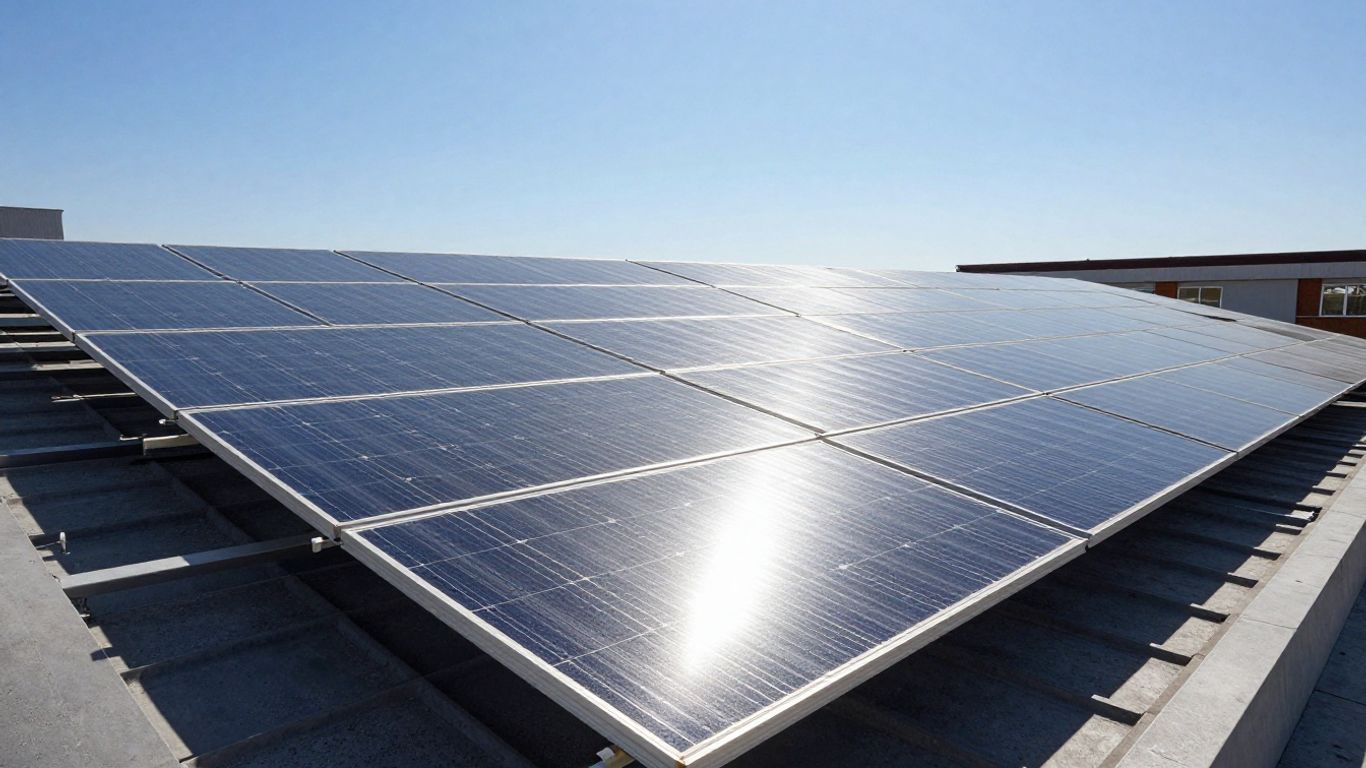
For a photovoltaic project to be truly profitable, it is not enough to calculate energy production and savings. It is also essential to look into financial support schemes and the legal framework. These elements can significantly improve the economic viability of your installation.
Exploring Available Local and National Subsidies
Numerous aids exist to encourage the installation of solar panels. These schemes vary by region and municipality, as well as at the national level. They can include direct subsidies, tax credits, or advantageous purchase prices for the electricity you sell back. It is therefore crucial to inquire with local authorities (town hall, regional council) and organisations dedicated to energy transition to find out about specific aid for your situation. For example, some regions offer targeted aid for farmers or owners of old buildings.
Understanding Eligibility Conditions for Premiums (e.g., self-consumption premium)
In addition to subsidies, specific premiums can help reduce the initial cost of your installation. The self-consumption premium, for example, is paid to individuals and businesses who produce their own electricity and consume it on-site. This premium is calculated based on the power of your installation. It is important to understand the conditions for benefiting from it: type of installation, maximum power, administrative procedure to follow. All individuals can receive a bonus for self-consumption, without income conditions [5153].
Here are the main types of aid you might encounter:
- Local subsidies: Often offered by regions or departments.
- Self-consumption premium: To encourage the production and consumption of solar energy.
- Guaranteed purchase tariffs: For the resale of surplus electricity to the grid.
- Tax credits: Although less common today, some schemes may still exist.
Checking the Legal and Regulatory Compliance of the Project
Before starting, ensure that your project complies with all current standards. This includes urban planning rules (building permits, prior declarations depending on the size of the installation), electrical safety standards, and any constraints related to the Local Urban Plan (PLU). A non-compliant installation could not only fail to benefit from aid but also lead to penalties. It is also necessary to check the rules concerning the installation of solar panels, which can vary by area [53c2].
A complete feasibility study must include an analysis of legal and administrative aspects. This ensures that the project complies with local and national laws and regulations, including safety rules and urban planning constraints.
Assessing the Economic and Technical Viability of Your Project
Before embarking on the installation of solar panels, it is essential to ensure that your project is not only technically feasible but also economically relevant. This step lays the foundation for a safe and profitable investment.
Determining the Optimal Size and Power of the Plant
The first thing to do is to define the capacity of your future installation. This depends on several factors: your current and future energy needs, the available surface area for the panels, and of course, your budget. An installation that is too small will not meet your expectations, while an oversized installation could be an unnecessary investment. The right balance must be found to optimise production and return on investment. A photovoltaic feasibility study will help you target the ideal peak power, which is the maximum power your system can generate under optimal conditions.
Analysing Production Potential Based on Climatic Conditions
The sunshine in your region is a determining factor. You need to study the amount of solar energy you can reasonably expect throughout the year. This includes analysing local climate data, such as average sunshine duration, but also taking into account potential obstacles like shadows cast by trees or neighbouring buildings. A good understanding of these elements allows for a more precise estimation of your installation’s annual production.
Calculating Overall Economic Profitability
To assess economic viability, you need to look beyond simple bill savings. This involves considering all costs: purchase of equipment, installation, connection, but also long-term maintenance costs. You then need to estimate potential income, whether through reduced consumption (self-consumption) or by selling surplus electricity. A comprehensive analysis will take into account available financial aid and different options for valuing the energy produced. The goal is to get a clear picture of the expected return on investment.
An in-depth feasibility study is key to avoiding unpleasant surprises. It ensures that the project is not only technically feasible but also meets your financial and regulatory objectives.
Understanding the Financial Indicators of Photovoltaic Profitability
Analysing the Return on Investment (ROI)
The return on investment, or ROI, is a fundamental measure for evaluating the financial performance of your solar project. It tells you the net profit you can expect relative to the money you have invested. To calculate it, you divide the total net profit generated by the installation over its lifespan by the total initial investment cost, then multiply by 100 to get a percentage. A positive ROI means your project is profitable. It is important to note that this calculation takes into account all expenses, from the panels themselves to installation and maintenance.
Determining the Payback Period
The payback period is the time required for the savings realised and income generated by your solar installation to cover the initial investment cost. It is a key indicator for those who want to know when their project will become truly profitable. It is obtained by dividing the total installation cost by the average annual gains (bill savings + resale income). A shorter payback period is generally more attractive. For example, a 6 kWp self-consumption installation with surplus sale can see its investment amortised in less than 10 years, depending on specific conditions.
Calculating Net Gain Over the Installation’s Lifespan
Beyond the simple return on investment, it is relevant to calculate the total net gain your solar installation will bring you over its entire lifespan, generally estimated between 25 and 30 years. This calculation involves adding up all savings on electricity bills and all income from selling surplus electricity, then subtracting the total initial investment cost and operating expenses over the period. This is an overall view that measures the real value of your solar project in the long term. A well-conducted profitability study includes these projections to give you an accurate picture of the expected performance. It is also interesting to consider the potential increase in your property’s value thanks to an efficient installation, an aspect that contributes to the overall profitability of the project [a8a4].
The financial analysis of a photovoltaic project is not limited to a single figure. It requires cross-referencing several indicators to obtain a complete and reliable picture of economic viability. Each indicator provides a different perspective on the expected performance of your solar investment.
Anticipating Risks for Sustainable Profitability
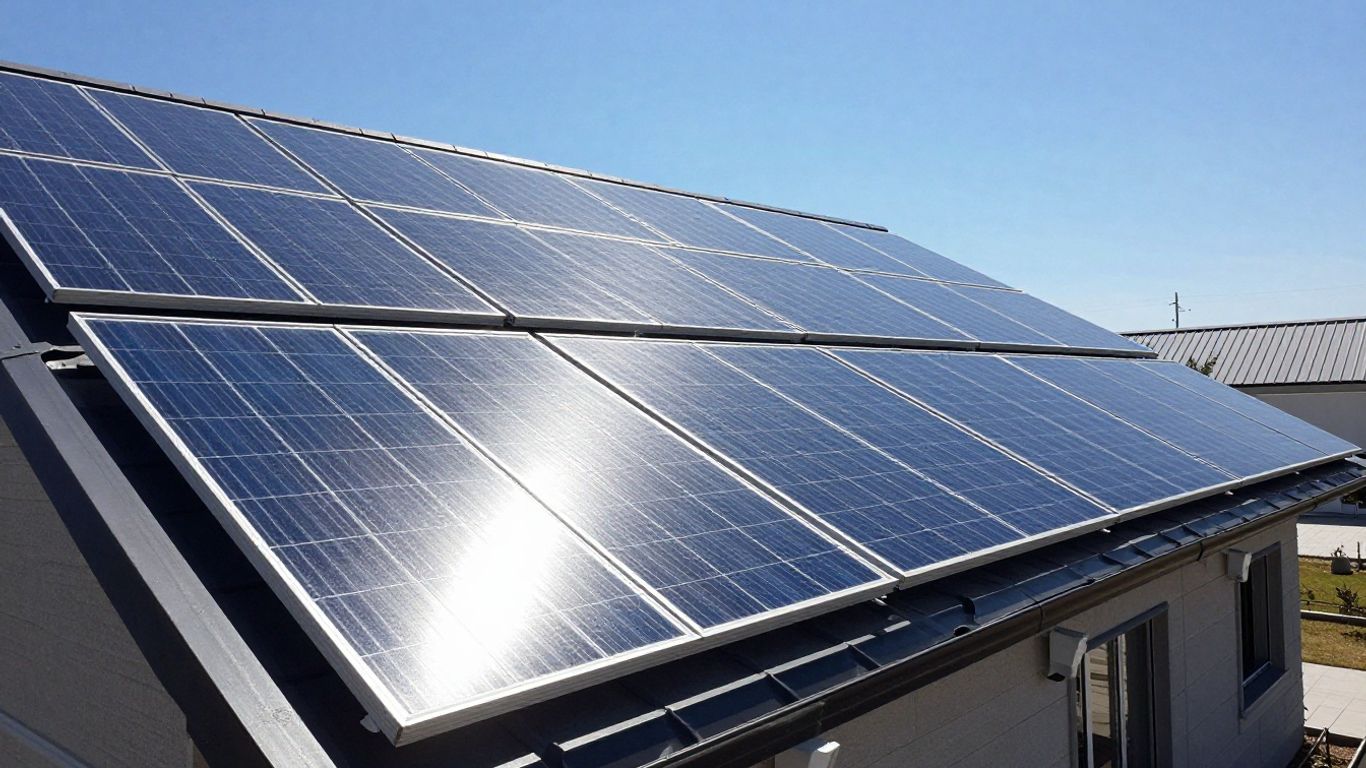
Even with careful planning, unforeseen events can occur and affect the performance of your solar installation. It is therefore wise to plan for these scenarios to ensure your investment remains profitable in the long term.
Modelling the Impact of Lower-Than-Expected Sunshine
Sunshine is the main driver of your solar electricity production. Although climate data provides a solid basis, annual variations are possible. A realistic profitability study should include a safety margin. For example, you can simulate what the installation would yield if the annual production were 5% or 10% lower than the expected average. This allows you to see if the return on investment remains acceptable even in less favourable conditions. It is important to base this analysis on precise local data, as sunshine varies considerably from one region to another. A well-conducted preliminary analysis helps avoid designing an ill-suited installation [4fcb].
Assessing the Consequences of Evolving Consumption Patterns
Your electricity needs are not fixed. A change in your consumption habits, the addition of electrical appliances (such as an electric car or a heat pump), or a change in your family situation can alter how you use the electricity produced. These changes must therefore be anticipated. For example, if you plan to install an electric vehicle charging station in the coming years, it would be wise to size your solar installation accordingly from the start, or to plan for a future expansion. A simulation that takes these potential changes into account will give you a more accurate picture of future savings.
Ensuring the Longevity of Your Solar Investment
To ensure the sustainability of your project, several points should be considered:
- Preventive maintenance: Regular maintenance of panels and equipment (inverter, cabling) is essential to maintain optimal performance and prevent costly breakdowns.
- Warranties: Carefully check the warranties offered by manufacturers on panels (often 25 years on performance) and on the inverter (usually 10 to 15 years). These warranties are a guarantee of security.
- Insurance: Taking out specific insurance for your photovoltaic installation will protect you against accidental damage (hail, storm, fire).
- Technological evolution: Although current panels are very efficient, technology is evolving. It’s good to know that your installation, even if it becomes less efficient compared to new technologies, will remain profitable throughout its lifespan.
Anticipating risks is not about predicting the unpredictable, but about building a robust enough project to absorb uncertainties. This requires an in-depth feasibility study and planning that incorporates various scenarios, in order to secure the return on investment over the entire lifespan of the installation.
Choosing the Right Partner for Your Profitability Study
Engaging Experts in Techno-Economic Studies
Undertaking a photovoltaic project represents a significant investment. To ensure that this investment will be profitable, it is essential to carry out an in-depth techno-economic study. This is not a mere formality, but a key step that determines the success of your solar installation. Engaging professionals specialised in this field allows you to obtain a precise and reliable analysis, based on concrete data and realistic simulations. These experts have the necessary knowledge to evaluate all parameters, from potential energy production to the impact of available financial aid, including installation and maintenance costs. They help you understand market subtleties and anticipate future developments.
Prioritising a Transparent Approach and Concrete Data
When you engage a partner to study the profitability of your photovoltaic project, favour those who demonstrate transparency. A serious study must clearly detail the assumptions used, whether it’s the expected sunshine, your consumption profile, electricity purchase prices, or maintenance costs. The data must be verifiable and based on recognised simulation tools. Beware of overly optimistic or vague estimates. A profitability study should provide you with a clear and honest view of the expected return on investment, including key financial indicators such as ROI or payback period. This allows you to make an informed decision, without unpleasant surprises.
Obtaining a Free Quote and a Personalised Study
Most specialised engineering firms offer a free initial consultation, often in the form of a preliminary simulation or feasibility study. This is an excellent opportunity to test their approach and see if it meets your expectations. A personalised study will take into account the specificities of your site: available surface area, orientation, roof inclination, your current electricity consumption, and any potential shading. It will also include the financial aid you may be eligible for, such as the self-consumption premium [06df]. Do not hesitate to compare several proposals before committing. A well-conducted study is the first step towards a successful and profitable solar project, allowing you to better estimate your future savings [614c].
Here are the key elements to expect from a profitability study:
- Detailed analysis of your site (sunshine, surface area, shading).
- Projection of energy production over the installation’s lifespan.
- Calculation of direct savings and potential income (surplus resale).
- Consideration of investment and operating costs.
- Integration of financial aid and regulatory schemes.
- Presentation of key financial indicators (ROI, payback, IRR).
Finding the right partner for your profitability study is like choosing the right teammate for an important project. You need someone reliable who understands your goals. A good partner will help you see clearly and make the best decisions for your project. Feel free to visit our website to discover how we can assist you in this process.
Conclusion
Assessing the photovoltaic profitability of your project is an essential step for a successful investment. By considering all factors, from initial costs to financial aid, expected performance, and potential risks, you empower yourself to make an informed decision. Do not hesitate to seek professional support for a personalised and reliable analysis. A good profitability study is the first step towards a high-performing and sustainable solar installation.
Frequently Asked Questions
How do I know if my solar panels will save me money?
To know this, you need to look at the cost of the installation and how much you will earn each year from the electricity you produce yourself and sell. If the gain is greater than the cost over time, it is profitable.
Is the sunshine where I live sufficient for it to work well?
Yes, sunshine is important. The more there is, the better. But even in less sunny regions, it can work. The orientation of your roof (south is best) and whether there are any shadows on the panels also play a role.
How long does it take for my installation to pay for itself?
It depends on many things: the price of the installation, the amount of electricity you produce, and the price at which you sell it. Often, it takes between 8 and 15 years to recover all the money invested.
What financial aid is available for installing solar panels?
There are several types of aid. For example, there can be premiums when you consume your own electricity, or aid if you undertake work to improve your home’s energy performance. You need to inquire with local and national organisations.
Can I sell the electricity I don’t consume?
Absolutely! If your panels produce more electricity than you need at that moment, you can sell this surplus to companies that buy electricity, such as EDF OA. This provides you with additional income.
Does installing solar panels increase the value of my home?
Yes, that is often the case. A house with solar panels that produce electricity can be more attractive to buyers and therefore worth more on the property market.
What costs should I anticipate in addition to the price of the panels?
You need to consider the cost of installation by a professional, any grid connection fees, and also a bit of maintenance over the lifespan of the panels, although this is generally quite limited.
How can I be sure that the profitability study I am offered is reliable?
You need to choose a reputable company that uses professional tools and up-to-date data. Ask them to show you how they calculate things and if they take all aspects into account, including risks. A personalised study is always better than a general estimate.

Journaliste spécialisée en transition énergétique et consultante RSE. À 42 ans, Claire combine une formation en journalisme (Master Sciences Po) et un diplôme d’ingénierie environnementale (École des Mines / INSA). Après 10 ans dans la presse économique et 7 ans en cabinet de conseil RSE, elle écrit pour aider les décideurs B2B à comprendre les réglementations, les enjeux climatiques et les innovations énergétiques.