Key points
The right disposal method depends mainly on how the polystyrene is used: as packaging or an object, in a small format or as building waste. If in doubt, your local council’s guidance is the definitive source.
- Polystyrene packaging generally goes in the yellow bin.
- Items that are not packaging, particularly insulation materials, follow a different route.
- Simply empty the packaging; there is generally no need to wash it.
- Large volumes and building waste should be directed according to local guidance.
- Sorting makes collection easier, but recycling also depends on the quality of the waste and available outlets.
Polystyrene: which bin should you use for each type of waste?
To find out where to dispose of polystyrene, start by distinguishing packaging from an object or material used in the home. French sorting guidance generally directs packaging to the yellow bin, even when it is made of lightweight or expanded plastic. An insulation panel, however, is not packaging and does not automatically belong in this collection. Your local council may also specify arrangements for bulky items.
Polystyrene packaging generally goes in the yellow bin
A tray, tub or piece of protective packaging from a parcel is packaging: it generally goes in the yellow bin. Depending on local guidance, you may be able to put it in with other packaging without separating different types of plastic. For advice specific to where you live, check your local authority’s sorting guide; a guide to where to dispose of polystyrene can also help you identify the main categories.
Polystyrene items that are not packaging follow a different route
An item made of polystyrene is not necessarily packaging. Insulation boards, building materials and broken rigid objects should therefore not automatically be sorted like a food tray. Materials from building work must be taken to the route specified by the recycling centre or local waste service.
Local guidance may specify how to sort large items
A large piece of protective packaging or a substantial quantity of polystyrene can take up a lot of room in a bin. Collection rules and available options vary by area, so it is best to check before putting it out for collection. This table shows the first sorting criterion, but does not replace your local council’s instructions.
| Waste | First option | What to check |
|---|---|---|
| Tray or tub | Yellow bin, generally | Local guidance for packaging |
| Protective packaging from a parcel | Yellow bin, generally | Size and collection arrangements |
| Insulation panel | Recycling centre or dedicated route | Category accepted on site |
| Bulky item | Route specified locally | Drop-off or collection arrangements |
So the material alone is not enough to determine which bin to use: the purpose of the item and local rules also matter. For large items, a quick check can help you avoid your waste being rejected.
Which polystyrene packaging can go in the yellow bin?
Polystyrene comes in several forms, but the first thing to consider is what the item is for: is it packaging? Sorting guidance generally allows plastic packaging to go in the yellow bin, including some lightweight and bulky items. However, there may be local rules for very large pieces or particular types of packaging. So check the item before throwing it away rather than relying on its appearance alone.
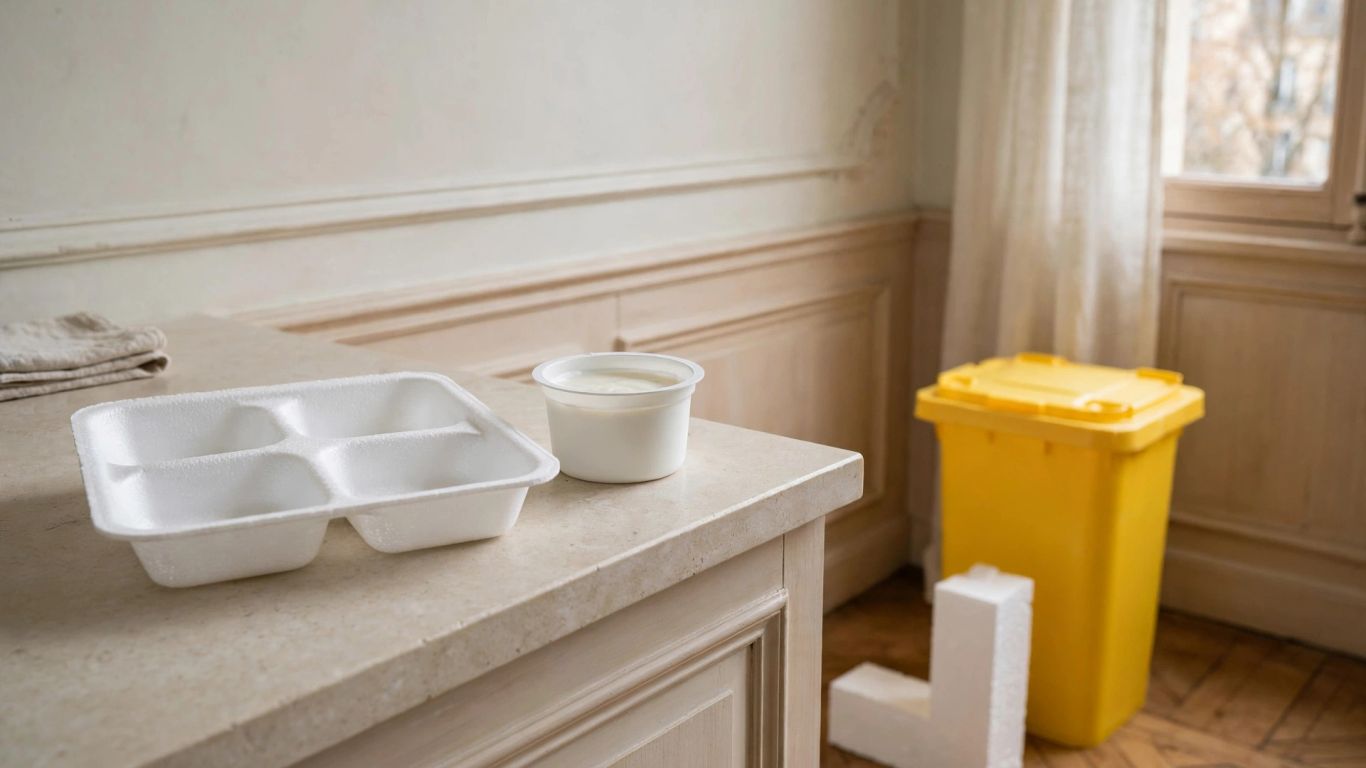
Food trays and polystyrene tubs
Trays that have held food and polystyrene tubs are packaging. They can generally go in the yellow bin once emptied. A light trace of food does not necessarily mean they need washing, but any remaining contents must be removed. Follow your local council’s guidance if it specifies an exception.
Protective packaging for parcels and appliances
Protective blocks or moulded pieces placed inside a parcel or around an appliance are also packaging. Their size may make them seem unsuitable for the bin, but the main things to check are the collection rules and the container’s capacity. A piece that does not fit in the bin should not be left beside it: check what can be taken locally.
Soiled packaging or packaging made of several materials
Packaging should be emptied sufficiently so that it contains no leftovers. If it consists of several parts, separate any that come away easily, then follow local guidance for each part. Sorting waste can raise more general questions too: good sorting practices can help you avoid common mistakes, even though the precise rules vary by area.
The aim is not to make the packaging spotless, but to remove its contents. If a part is still attached and does not come away easily, do not tear it off and risk scattering fragments; check your local sorting guidance instead.
How should you prepare polystyrene before throwing it away?
In most cases, a little preparation is all that is needed. It helps limit leftovers in the bin and prevents pieces from scattering as you handle them. There is no need to spend a long time cleaning packaging intended for recycling. A few simple steps are enough to dispose of it properly.
Empty the packaging without trying to wash it
Remove any food or products left in the tray, then dispose of them in the appropriate waste stream. Empty packaging can generally go straight into the yellow bin. Washing is not necessary unless required by local guidance: in most cases, simply draining it or removing any leftovers is enough.
Separate parts that come away easily
Some packaging combines a polystyrene piece with a film, label or other component. If the parts come apart easily, without tools or effort, separate them so they can go in the appropriate bins. To keep things simple, follow these steps:
- Empty the packaging.
- Remove any parts that come away easily.
- Put each part in the locally designated waste stream.
- Set aside large volumes until you have checked the collection rules.
This preparation avoids mixing different types of waste without requiring careful dismantling. If a component is firmly attached, it is best not to force it; check the guidance that applies to the packaging instead.
Do not nest or compact the packaging
Stacking or nesting several pieces of packaging can make them harder to separate during sorting. It is therefore best to put them in the bin without enclosing them in other waste or excessively compacting them. Handle small broken pieces carefully too, as they can scatter easily.
Reasonable preparation is the most effective approach: empty the packaging, separate anything that comes away easily, then put it in the right container. Local rules always take precedence if they specify particular instructions.
Where should you dispose of polystyrene that cannot go in the yellow bin?
Building materials and items that are not packaging are not necessarily accepted in household packaging collections. A recycling centre may provide a suitable option, but the categories accepted vary from site to site. Before loading your vehicle, check the drop-off arrangements and any quantity limits. This is particularly useful for bulky boards or blocks.
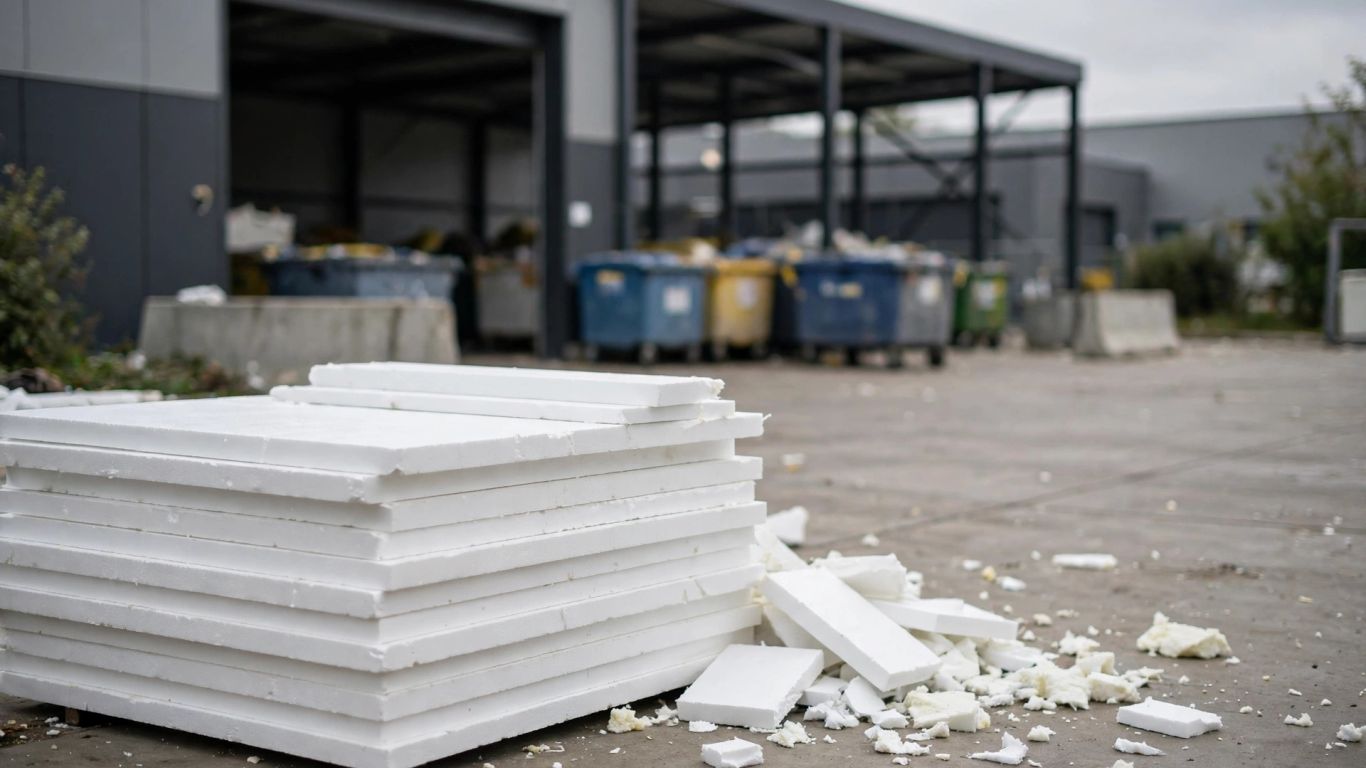
Take insulation materials to a recycling centre
Polystyrene boards and offcuts used for insulation generally follow a different route from household packaging. Contact your local recycling centre to find out whether it accepts them and which category they belong in. For large projects, the contractor carrying out the work may also be able to tell you how the waste will be disposed of.
Direct bulky items to the route specified locally
A large piece of polystyrene or an item that does not fit in the yellow bin should not be left beside the container. Check your local guidance: it may specify a recycling centre drop-off, a special collection or another option. The answer depends as much on the type of item as on its size.
Ask the waste service for advice if in doubt
A photograph or clear description of the waste can help your local council’s waste service advise you. State whether it is packaging, a building material or an object, and how much you need to dispose of. Guidance for one area does not necessarily apply in another; for other ways to reduce environmental impact, information on the environmental impact of solar panels is a separate topic, but also shows the value of consulting sources suited to each material.
The best approach is to avoid leaving waste loose and to check which route to use before moving a large quantity. A recycling centre can explain its acceptance conditions, particularly for waste from building work.
What happens to sorted polystyrene?
After collection, packaging goes to a sorting centre, where it is separated from other waste according to the equipment and processing instructions available. Its light weight and large volume can make it more difficult to transport: bulking or compacting it makes it easier to move. Sorting is an important step, but it does not by itself guarantee that every item will be recycled. The quality of the material and the availability of outlets also matter.
The sorting centre separates packaging by material
Waste put in the yellow bin goes through sorting processes that separate different material categories. Polystyrene is then directed according to the facilities available and the treatment options. Packaging containing a lot of residue or mixed with other materials can be harder to recover; emptying it and separating any detachable parts therefore helps it on its way.
Polystyrene is compacted to make it easier to transport
Expanded polystyrene takes up a lot of space for its weight. Compaction reduces its volume and makes it easier to transport to the next stages. The exact process depends on the equipment and route used; this preparation step should not be confused with recycling itself.
Recycling depends on quality and available outlets
Whether a material can be recycled depends, among other things, on its cleanliness, composition and the facilities able to process it. Options may change over time and vary from one area to another. An article on polystyrene recycling provides further information about the processes and their limitations, without replacing the practical guidance from your local authority.
Sorting remains useful even when the next steps vary: it directs waste to the facilities provided for it rather than mixing it in with the rest of the rubbish. Your local collection service is the most direct source of information about what happens to waste in your area.
What mistakes should you avoid when sorting polystyrene?
Mistakes often come from confusing the material with the purpose of the item. A polystyrene package and an insulation board may look similar, but they do not necessarily follow the same route. Leaving waste beside a bin also makes collection more difficult and can leave it exposed. A few checks can help you avoid these simple mistakes.
Do not confuse packaging with building waste
A tray or protective packaging is packaging; an offcut from an insulation board usually comes from building work. Putting them together in the yellow bin may disrupt sorting or go against local guidance. If you are unsure, first identify what the polystyrene was originally used for, then check the relevant route.
Do not leave waste loose beside the bin
Packaging that is too large for the bin should not be left on the ground next to the container. It can obstruct access, blow away or be missed by the collection service. Instead, ask your local service whether there is a suitable option, or take the waste to a recycling centre that accepts it.
Check your local council’s guidance for large volumes
Collection arrangements for large items and substantial quantities vary locally. Before putting out several pieces or making a trip, check opening times and the categories accepted. Practical information pages may also cover very different topics, such as voice searches in 2025, quarantine protocols, BAT.TAXI, wool slippers or LED strip lights; for polystyrene, however, follow your local council’s waste guidance.
Finally, questions about a solar project are unrelated to sorting packaging. If you would like to discuss a solar project, you can contact Solencia using the details available online. For polystyrene, remember this practical rule: packaging generally goes in the yellow bin, while other waste follows the route specified locally.
The right approach, in brief
To answer the question “which bin should polystyrene go in?”, first check whether the waste is packaging: if it is, the yellow bin is generally the right place. Insulation materials, objects and large volumes may follow a different route; checking your local council’s guidance or giving them a call can help you avoid disposing of them incorrectly.
Your questions about polystyrene
Can a polystyrene tray go in the yellow bin?
Yes, polystyrene trays are packaging and generally go in the yellow bin. Check your local council’s guidance, which is the definitive source for your area.
Should I wash a tray before throwing it away?
No, you generally just need to empty it. Washing is not necessary unless your local authority says otherwise.
Where should I dispose of polystyrene insulation boards?
Insulation boards are not household packaging. Contact your recycling centre or waste service to find out which route accepts them.
What should I do with a large block of polystyrene?
Check local guidance before disposing of it. Depending on its size and source, it may be accepted at a recycling centre or require another collection option.
Can I nest several pieces of polystyrene packaging?
It is better to put them in the bin without nesting or compacting them. This makes them easier to handle and separate during sorting.
Where should I dispose of polystyrene that does not fit in the bin?
Do not leave it beside the container. Check the options provided by your local council or take it to a recycling centre that accepts this type of waste.
Is all polystyrene waste recycled?
Sorting directs waste to the designated routes, but recycling depends on its quality, the facilities available and existing outlets.

Thibault Mouillefarine est responsable éditorial de Solencia, une plateforme dédiée à la compréhension, à la qualification et à l’accélération des projets photovoltaïques professionnels. Fondateur de Millennium Digital, agence spécialisée en stratégie digitale B2B, il accompagne les entreprises dans la transformation de sujets complexes en parcours de décision clairs et orientés résultats. Les contenus publiés sur Solencia s’appuient sur des sources publiques et institutionnelles : textes réglementaires, documentation Enedis, données CRE, informations EDF OA, ressources ADEME et publications officielles liées à l’énergie.