Here are the key points to remember regarding the new regulation on car park canopies:
Key Points
- The obligation to install canopies on outdoor car parks applies to those with a surface area exceeding 1,500 m².
- At least 50% of the car park’s surface must be covered by these installations.
- Compliance deadlines vary: immediately for new projects, and gradually for existing car parks until 2028.
- Exemptions are possible, particularly if the car park is already well-shaded by trees or if there are serious technical or economic constraints.
- The responsibility for implementation lies with the car park operator, not necessarily the owner.
Scope of the Car Park Canopy Obligation
The APER law, specifically Article 40, introduces a new obligation concerning the installation of canopies on outdoor car parks. This measure aims to promote renewable energy production, particularly solar energy. It is important to understand who this regulation applies to and which types of car parks are concerned in order to anticipate the necessary work.
Definition of Concerned Car Parks
The obligation applies to outdoor car parks. This means that underground car parks or multi-storey car parks are not directly targeted by this law. The minimum surface area to trigger this obligation is 1,500 m². Existing car parks as of 1 July 2023, with a surface area exceeding this threshold, are concerned. Similarly, new car park projects for which the urban planning authorisation application was submitted after 10 March 2023 fall within the scope of the APER law [d78e].
Application to Architectural Projects and Associated Parking
It should be noted that this obligation is not limited to projects creating standalone car parks. It also extends to parking facilities linked to larger architectural projects, such as a school complex or a commercial building. If the surface area of the car park associated with such a project exceeds the 1,500 m² threshold, it must comply with the regulation, even if the main project is not the car park itself. A modified building permit that includes a modification to the car park concerned may also trigger this obligation [0dc3].
Exclusion of Underground and Multi-Storey Car Parks
As mentioned previously, the APER law specifically targets outdoor car parks. Underground car parks, by their nature, are not exposed to the elements and therefore cannot accommodate photovoltaic canopies. Similarly, multi-storey car parks, although outdoors, are generally not designed to support this type of installation and are therefore excluded from the scope of this obligation.
Minimum Surface Area and Area to be Covered
To determine if your car park is subject to the APER law, you first need to consider its size. The obligation to install photovoltaic canopies applies to outdoor car parks with a surface area greater than 1,500 m². This is a fairly clear threshold, but it is important to define precisely what constitutes this surface area.
Surface Area Threshold for Canopy Obligation
The starting point is therefore simple: if your car park is larger than 1,500 square metres, you are potentially concerned. This measure aims to transform vast, often underutilised spaces into sources of renewable energy production. It is not about small areas, but rather large complexes.
Minimum Percentage of Surface Area to be Covered by Canopies
Once the surface area threshold is exceeded, the law requires a significant portion of this space to be covered. At least 50% of the total car park surface area must be equipped with solar canopy devices. This coverage must enable effective renewable electricity production. It is possible to combine photovoltaic panels with vegetation, but vegetation alone is not sufficient to meet this obligation. The primary objective remains the production of green energy, as recalled by Article 40 of the APER law.
Inclusion of Circulation Routes in Surface Area Calculation
The definition of the surface area to be considered is quite precise. It includes not only marked parking spaces but also circulation routes and areas for vehicle manoeuvring. Pedestrian or cycle paths serving the car park are also included in this calculation. However, roads that cross the car park or adjacent green spaces are excluded. This approach provides a realistic view of the total surface area actually usable for canopy installation.
Compliance Deadlines under the APER Law
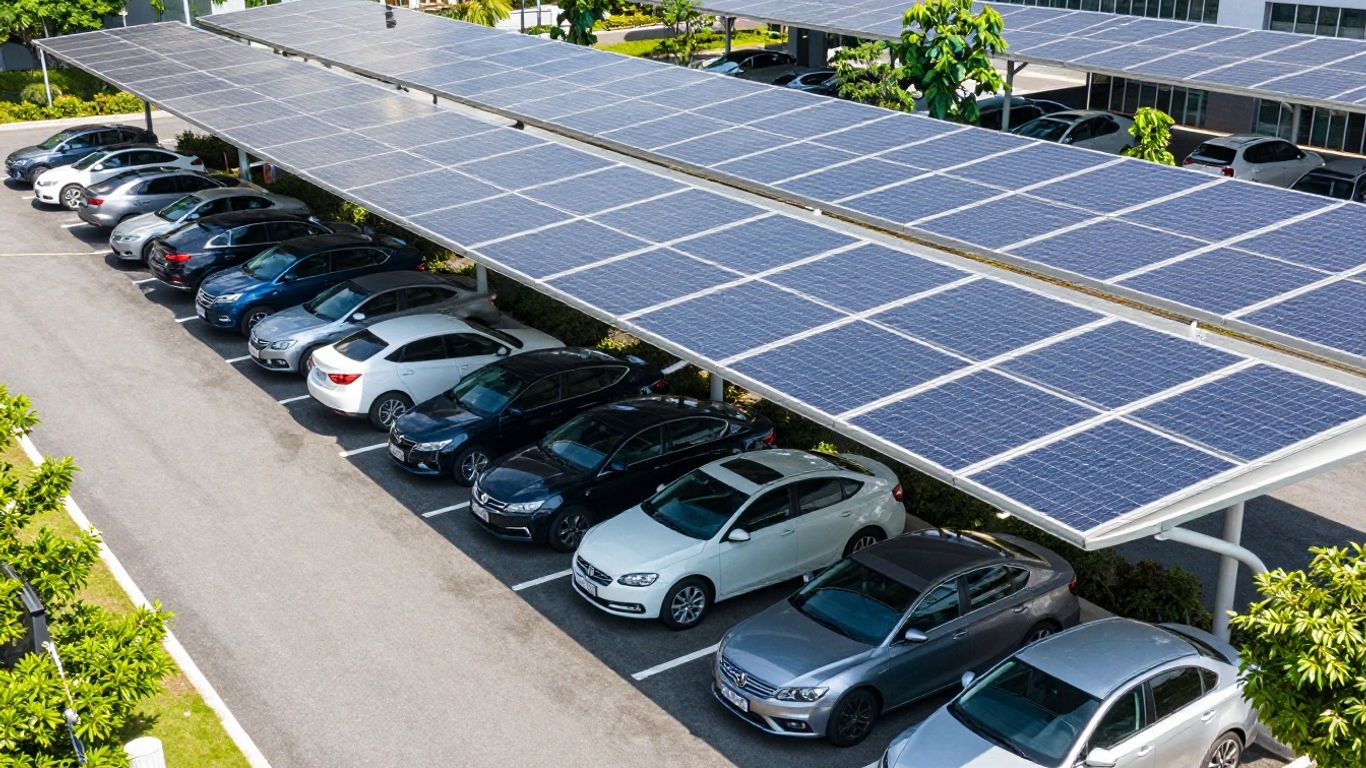
The APER law, aimed at accelerating the deployment of renewable energies, sets precise deadlines for the installation of photovoltaic canopies on car parks. These deadlines vary depending on the car park’s surface area and its date of creation or modification.
Deadlines for Existing Large Car Parks
For outdoor car parks existing as of 1 July 2023 and with a surface area exceeding 1,500 m², the obligation to install photovoltaic canopies must be met. The deadline for compliance is set at 1 July 2026 for car parks over 10,000 m². For those with a surface area between 1,500 m² and 10,000 m², the deadline is 1 July 2028. It is important to note that these deadlines apply to car parks not subject to a concession or public service delegation.
Application to New Car Parks and Modified Permits
Regarding new car parks, the APER law applies from the submission of the urban planning authorisation application, provided that this application was submitted from 10 March 2023 onwards. This also includes modified building permits if the modification concerns the car park and its surface area exceeds 500 m². In such cases, the installation obligation must be taken into account from the project’s design stage or during its substantial modification.
Specific Deadlines for Medium-Sized Car Parks
Special provisions apply to existing car parks with a surface area between 500 m² and 1,500 m². For these, the compliance obligation arises during a major renovation of the car park or upon renewal or conclusion of a new contract concerning the management of the car park. These situations trigger the application of the APER law, requiring the installation of photovoltaic canopies for better energy management.
It is essential to accurately identify the exact surface area of your car park and its date of commissioning or major modification to determine the precise compliance schedule. Anticipation helps to avoid potential penalties related to non-compliance with the APER law regulations.
Conditions for Exemption from Canopy Obligation
The APER law, while mandating the installation of photovoltaic canopies on car parks, provides for cases where this obligation may be waived. These exemptions aim to adapt the regulation to on-the-ground realities and to avoid situations where installation would be technically impossible, economically disproportionate, or contrary to other imperatives.
Exemption in Case of Sufficient Natural Shading by Trees
One of the primary reasons for exemption concerns natural shading. If your car park already benefits from sufficient vegetation cover, you may be exempt from installing canopies. The existing trees must cover at least half of the car park’s surface area. The idea is not to impose work that would lead to the removal of trees, especially if they already provide shading. It is important to note that the mere presence of trees is not enough; it is their ability to shade a significant portion of the car park that is taken into account. Vegetation alone does not satisfy the obligation to produce renewable electricity, but it can contribute to the overall shading assessment.
Derogations for Technical, Architectural, or Heritage Constraints
Derogations may also be granted if the installation of canopies encounters major obstacles. This can include site-specific technical constraints, particular architectural requirements related to the aesthetics of the building or site, or imperatives related to heritage protection. For example, a listed site or a historic building might present integration difficulties for photovoltaic structures. These situations require solid and documented justification to be recognised by the competent authorities.
Possibility of Exemption for Economic Impossibility
Finally, the APER law recognises that the obligation may sometimes be economically unfeasible. If the cost of installing photovoltaic canopies represents a manifestly disproportionate burden compared to the expected benefits or the financial capacity of the car park owner or operator, an exemption may be requested. This economic impossibility must be proven by concrete evidence, demonstrating that implementing the obligation would not be economically acceptable. Car park operators can inquire about available aid to facilitate the energy transition.
It is essential to refer to the precise regulatory texts to know the exact procedures for requesting and justifying these exemptions. The objective is to find a balance between the development of renewable energies and consideration of the specificities of each situation, as stipulated by the APER law.
Responsibility for Compliance
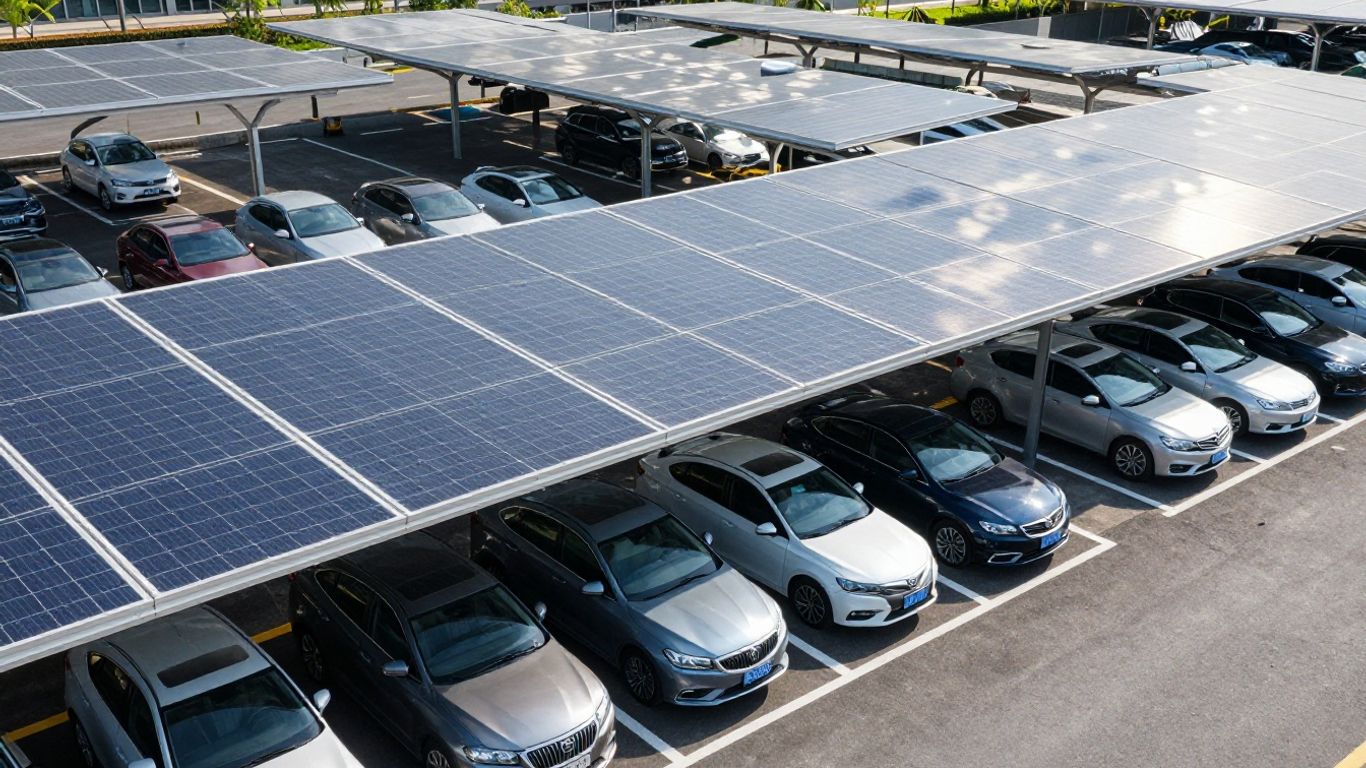
Obligation Rests with the Car Park Operator
The APER law, in Article 40, clearly establishes who must ensure that car parks comply with the new photovoltaic canopy requirements. It is the car park operator who bears the primary responsibility for this compliance. This is not a burden that automatically falls on the landowner if they are not the one operating the car park. Therefore, it is crucial to identify who has control over the daily management and operation of the parking facility.
Clarification of Responsibility Between Owner and Tenant
Where the landowner and the car park operator are two distinct entities, the APER law specifies that the obligation rests with the party responsible for operation. For example, if an owner leases their car park to a company that operates it, it is this tenant company that will have to comply. It is therefore essential to clearly define the contractual terms, particularly in commercial leases or concession agreements, to avoid any ambiguity. Good communication between the parties is key to the successful implementation of photovoltaic installations on car parks.
Pooling of Works Between Adjacent Car Park Operators
The APER law also provides for possibilities of pooling efforts. If several car park operators are located side-by-side, they can agree to carry out the work jointly. This can lead to economies of scale and simplify administrative procedures. The objective is to cover the required surface area, and the law does not preclude collaborative solutions to achieve this goal. It is important to note that the effective production of renewable electricity is the main criterion, and vegetation alone is not sufficient to meet the obligation.
It is paramount to consult the official texts and, if necessary, seek professional advice to correctly interpret responsibilities in each specific situation. The APER law aims to promote green energy production and increase solar energy production capacity in France, by requiring car parks to cover at least 17.5% of their surface area with canopies.
The key points to remember are:
- The obligation rests with the car park operator.
- In case of a lease, the responsibility lies with the operator.
- Pooling of works between neighbouring operators is an option.
- Renewable energy production is the desired outcome.
Nature of Authorised Photovoltaic Installations
The APER law mandates the installation of photovoltaic devices on car park canopies, but it is not limited to a simple panel installation. The objective is to promote effective renewable energy production. This means that the installations must be designed to generate electricity.
Integration of Processes Combining Photovoltaics and Vegetation
The law encourages innovative solutions that combine solar energy production and environmental preservation. Thus, canopies can integrate vegetation systems, such as green roofs or green walls, provided that the photovoltaic function remains predominant. These mixed installations help to improve thermal comfort, promote biodiversity, and enhance the aesthetic appeal of the space, while producing electricity. It is important to note that the design must allow for good sun exposure of the panels for optimal production.
Effective Renewable Electricity Production as a Criterion
The primary criterion for meeting the obligation is the actual production of renewable electricity. Installations must therefore be sized and installed to ensure significant production. This excludes purely decorative devices or those with negligible production capacity. The idea is to transform these parking spaces into actual solar power plants, even on a small scale. For car park operators, this represents an opportunity to enhance their land value while contributing to the energy transition. Operators of adjacent car parks can even consider pooling of works to optimise costs and efficiency.
Vegetation Alone Insufficient to Meet the Obligation
It is essential to understand that the mere presence of vegetation on a canopy-type structure is not sufficient to meet the requirements of the APER law. A vegetated canopy without photovoltaic panels does not fulfil the obligation to produce renewable energy. Vegetation can be a complement, an asset for aesthetics and comfort, but it does not replace the primary function of solar electricity production. Authorities will verify that the installation is properly designed to capture solar energy and convert it into electricity. Projects must therefore clearly define the portion dedicated to photovoltaic production and ensure it complies with the rules for calculating the surface area to be covered.
Penalties for Non-Compliance with Regulations
Failure to comply with the APER law’s requirements regarding the installation of photovoltaic canopies on car parks can lead to significant financial consequences. Car park operators must pay attention to deadlines and obligations to avoid these penalties.
Financial Penalties Incurred
Car park operators who fail to comply with the obligation to install photovoltaic canopies are liable to administrative fines. The amount of these penalties may vary depending on the surface area of the car park concerned. For car parks over 10,000 m², the fine can reach €40,000 per year. For those with a surface area between 1,500 m² and 10,000 m², the fine is €20,000 per year. These amounts are significant and are intended to encourage compliance. It is important to note that these penalties do not apply to new car parks under 1,500 m² or to car parks already covered by a suitable structure.
Obligation to Comply Under Penalty of Sanctions
Beyond financial penalties, authorities may impose an obligation to comply. This means that the car park operator will be forced to carry out the canopy installation work within a specified timeframe. If this compliance is not achieved, additional penalties or more significant enforcement measures may be applied. It is therefore essential to anticipate and plan these installations to avoid a formal notice.
Potential Amount of Administrative Fines
The exact amount of administrative fines is specified by the regulatory texts. As mentioned, there is a clear distinction based on the size of the car park:
- Car parks over 10,000 m²: up to €40,000 per year.
- Car parks between 1,500 m² and 10,000 m²: up to €20,000 per year.
These sums are calculated annually as long as non-compliance persists. It is therefore in the economic interest of owners and operators to comply quickly with the APER law to avoid additional costs.
It is important to consult the implementing decrees that will specify the exact calculation and application methods for these penalties, particularly concerning cases of exemption or possible derogations.
Definition of Surfaces Considered for the Obligation
Inclusion of Marked Parking Spaces
To determine whether a car park is subject to the obligation to install photovoltaic canopies, it is essential to define the surface area to be considered. The APER law states that marked parking spaces are an integral part of the calculation. This means that each clearly demarcated space, whether for cars, motorcycles, or other vehicles, contributes to the total surface area of the car park. It is not just the areas where cars are parked, but the entire footprint of the car park as designed for parking.
Consideration of Circulation and Manoeuvring Routes
Beyond simple parking spaces, the regulation also includes circulation routes and areas for vehicle manoeuvring. This includes main aisles, access ramps, turning areas, and any space necessary for traffic flow within the car park. The objective is to have a comprehensive view of the space actually used by vehicles. It is important to note that these areas, although not fixed parking spaces, are considered part of the surface area subject to the coverage obligation, particularly for car parks over 500 square metres.
Exclusion of Through Roads and Green Spaces
Certain areas are not included in the calculation of the surface area subject to the obligation. Through roads, such as a street or avenue that physically separates the car park, are excluded. Similarly, green spaces intended for walking, relaxation, or simply not developed for parking or vehicle circulation are not included. The idea is to focus on the area dedicated to parking use and vehicle circulation within the car park itself. Projects that combine photovoltaics and vegetation may be permitted, but vegetation alone is not sufficient to meet the obligation to produce renewable electricity.
Here is a summary table of included and excluded areas:
| Included Surfaces |
|---|
| Marked parking spaces |
| Circulation and manoeuvring routes |
| Excluded Surfaces |
|---|
| Through roads (separating the car park) |
| Green spaces not dedicated to parking or circulation |
| Underground or multi-storey parking |
Specific Cases and Regulatory Interpretations
The APER law, while aiming to clarify the obligation for car park canopies, sometimes raises specific questions regarding its application in particular situations. It is therefore useful to examine certain cases that fall outside the norm.
Application to Car Dealerships
A frequent question concerns car dealerships. Are they considered car parks within the meaning of the law, or rather storage areas for vehicles? The regulation tends to include them if they meet the criteria for surface area and use. It is therefore important to verify the exact nature of the space and its primary function. Dealerships that have large marked parking areas open to the public, exceeding the required surface area threshold, are likely to be subject to the obligation to install photovoltaic canopies. However, these areas must be distinguished from those strictly dedicated to vehicle display or sale, which might fall under a different interpretation. For a thorough understanding, it is advisable to consult the official texts concerning car parks and the APER law.
Consideration of Major Renovations or Contract Renewals
The APER law sets precise deadlines for the compliance of existing car parks. What happens when significant work is carried out on an existing car park, or when a concession or delegation contract is renewed? In the case of a modified building permit that includes a substantial modification of the car park, if the latter’s surface area exceeds 500 m², the obligation applies from the submission of the modified application. For contracts, the deadlines may vary. For example, a new concession contract occurring before 1 July 2026 may require compliance by that date. If the renewal occurs after 1 July 2028, compliance must be effective by that date at the latest. These provisions aim to ensure that infrastructure evolves in line with renewable energy development objectives.
Clarification on Buildings Associated with Car Parks
The APER law applies to outdoor car parks. But what about the buildings directly associated with them? It is specified that car parks linked to buildings for commercial, industrial, or artisanal use, as well as warehouses, hangars, and offices over 1,000 m², are covered by this regulation, provided they are open to the public. This includes, for example, electric bus depots and their adjacent staff car parks. The objective is to integrate renewable energy production as close as possible to places of consumption or activity.
It is important to note that the APER law encourages the installation of solar panels on various infrastructures, including car parks. Operators of these spaces must therefore anticipate these changes to comply with regulatory requirements and contribute to the energy transition. The procedures for renewable energy production are not modified by this law, meaning that project review stages remain the same, as recalled by texts on renewable energy projects.
Sometimes, the rules for solar can be a bit complicated. We are here to help you understand them better, even when it comes to specific cases or what the laws say. If you have specific questions about the regulations, do not hesitate to contact us on our website for clear answers.
Conclusion
The APER law imposes a new reality for large outdoor car parks. The installation of canopies, often combined with solar panels, is becoming an obligation for operators. It is essential to fully understand the rules, deadlines, and exemption possibilities to achieve compliance and, perhaps, see it as an opportunity for green energy production. Do not hesitate to consult the official texts and, if necessary, seek assistance to successfully complete your project.
Frequently Asked Questions
Which car parks are concerned by this new law?
Basically, it concerns car parks that are outdoors, not those that are underground or inside a building. And the car park must be over 1500 square metres for the rule to apply.
Do I have to cover my entire car park?
No, not entirely. Only half, or 50%, of the car park’s surface needs to be covered by these new installations, such as canopies with solar panels.
When do I have to do this work?
It depends. If it’s a new car park or a project that significantly modifies an old one, it’s often immediate. For existing car parks, there are deadlines: 2026 for very large ones and 2028 for those between 1500 and 10000 m², if I remember correctly.
My car park already has a lot of trees, am I obliged?
If the trees already provide shade over at least half of your car park, you may be exempt. This is one of the reasons why you might not have to install the canopies.
Who has to pay and take care of all this?
It is the car park operator who is responsible. It’s not necessarily the owner; it could be someone who rents or manages the car park’s operation.
Is just putting plants in the car park enough?
No, just putting plants or trees is not enough if you want to comply with the law. It needs to produce electricity, so you need solar panels or a similar system.
What happens if I do nothing?
If you don’t comply with the law, you can face fines. In addition, you can be forced to do the work anyway, and it can be expensive.
Are car parks for shops or businesses concerned?
Yes, if these car parks are outdoors, are over 1500 m², and are linked to commercial or industrial buildings, or if they are open to the public, they are indeed concerned by this rule.

Journaliste spécialisée en transition énergétique et consultante RSE. À 42 ans, Claire combine une formation en journalisme (Master Sciences Po) et un diplôme d’ingénierie environnementale (École des Mines / INSA). Après 10 ans dans la presse économique et 7 ans en cabinet de conseil RSE, elle écrit pour aider les décideurs B2B à comprendre les réglementations, les enjeux climatiques et les innovations énergétiques.