Considering installing 3000W solar panels and wondering which battery would be most suitable? That’s an excellent question, as storing the energy produced is a key factor in maximising your independence and achieving savings. This article will guide you through the essential aspects to consider before choosing the ideal battery for your 3000W solar installation. We will break down the different types of batteries, explain how to calculate the necessary capacity, and cover the important technical elements for making the right choice.
Key Takeaways
- For a 3000W solar installation, the choice of battery will depend on your energy consumption and your desired level of independence. It is essential to accurately calculate the usable capacity required.
- Lithium-ion batteries, particularly Lithium Iron Phosphate (LFP) models, are generally recommended for their lifespan and low maintenance, despite a higher initial cost than lead-acid batteries.
- The hybrid inverter plays a central role in managing energy flow between the solar panels, the battery, and the electricity grid. The ‘Offgrid’ option can be considered for complete independence in the event of a power cut.
- It is important to understand the battery’s depth of discharge (DoD). Using only a portion of its total capacity (usable capacity) extends its lifespan.
- Investing in excessive storage capacity is not always cost-effective. It is better to match the battery to your actual needs and consider selling surplus energy.
Understanding the Benefits of a Battery for a 3000W Solar Panel System
Installing solar panels is a good start. But to truly get the most out of them, especially with a 3000W system, you need to think about storage. A solar battery isn’t just a gadget; it’s a game-changer for your energy consumption.
Advantages of a Solar Installation with Storage
When we talk about a 3000W solar installation, we often think about electricity production. It’s true, a panel of this power can produce a significant amount of energy, capable of powering a large portion of your daily appliances. But what do you do with that energy when the sun isn’t shining? That’s where the battery comes in. It allows you to store the excess electricity produced during the day for use in the evening, at night, or on less sunny days. This means less reliance on the electricity grid and, potentially, reduced electricity bills. It’s a way to make your home more self-sufficient and better manage your energy consumption.
Self-Consumption: With or Without a Battery?
Self-consumption is the idea of using the electricity you produce yourself. With a 3000W installation, you can cover a significant portion of your needs. If you don’t have a battery, the surplus electricity produced is generally fed back into the grid. This is an option, but you don’t fully benefit from that energy. Adding a battery allows you to increase your self-consumption rate. You store the energy produced and use it when you need it, rather than letting it go. This requires an additional investment, but it can be profitable in the long run, especially if you aim to maximise your energy independence.
The Role of Surplus Solar Energy
Surplus solar energy is the electricity your panels produce that you don’t consume immediately. Without a storage system, this surplus is often lost or sold at an unfavourable rate. A battery changes this: it acts as a reservoir for this excess energy. Instead of letting it escape, you keep it for later use. This allows you to smooth out your consumption throughout the day and reduce your reliance on the public grid, especially during peak hours when electricity is more expensive. Storage transforms potentially wasted surplus into a valuable resource for your home.
Adding a battery to your 3000W solar installation is not mandatory, but it is an optimisation. It gives you more control over your energy and can significantly improve your independence, especially if you live in an area where power outages are frequent or if you want to minimise your carbon footprint.
Determining the Necessary Storage Capacity for Your Installation
Before you embark on purchasing a battery for your 3000Wp solar installation, it is crucial to clearly understand your needs. A battery that is too small will not store all your surplus, while an oversized battery represents an unnecessary investment and potentially less profitability. The goal is to find the right balance to maximise your energy independence.
Assessing Your Daily Energy Consumption
The first step is to understand how much electricity you actually consume each day. If you already have electricity bills, this is the simplest method. Look at your annual consumption in kWh and divide it by 365 to get a daily average. If you don’t have bills yet or if your needs will change (e.g., with the arrival of an electric car), you can inventory all your electrical appliances. Note their power (in Watts) and estimate how many hours a day they are used. Multiply these two figures to get the Wh consumption for each appliance, then add them up to get your total daily consumption.
- List all your electrical appliances.
- Estimate their daily usage time.
- Calculate the consumption of each appliance in Wh (Power x Time).
- Add up all consumptions to get your daily requirement.
Calculating the Self-Production and Self-Consumption Rates
Once your consumption is known, you need to assess the production of your solar panels. The self-production rate represents the proportion of your total consumption covered by your solar production. It is calculated as: (Self-consumed production / Total production) x 100. This is different from the self-consumption rate, which measures the proportion of your solar production that you consume directly on-site: (Self-consumed energy / Energy produced by panels) x 100. These two rates help you understand how much energy you produce relative to what you consume, and what proportion of that production is actually used by your household.
Understanding these rates is key to knowing how much energy you could potentially store.
Sizing the Usable Battery Capacity
For a 3000Wp installation, a battery capacity generally between 5 and 10 kWh is often recommended. For example, a 5 kWh battery may be sufficient to cover evening needs. If your consumption is higher or if you want greater independence, a larger capacity, such as 10 kWh, might be more suitable. It is important to look at the usable capacity of the battery, not its total capacity, as not all batteries can be discharged 100% without reducing their lifespan. A battery with a usable capacity of 8 kWh, for instance, will allow you to store and use that amount of energy. For a more precise idea, you can consult the recommendations for a 3000 Wc installation.
| Season | Daily Production (kWh) | Average Consumption (kWh) |
|---|---|---|
| Summer | 10 – 12 kWh | 10 kWh |
| Winter | 2 – 4 kWh | 12 kWh |
These figures clearly show the importance of storage, especially in winter when consumption often exceeds production. Therefore, the storage capacity must be adapted to your habits and the seasonal variations in your solar production. For a 3000Wc installation, a 5 kWh capacity is a good starting point, but this can vary.
Different Types of Batteries for Solar Panels
Lead-Acid Batteries: Advantages and Disadvantages
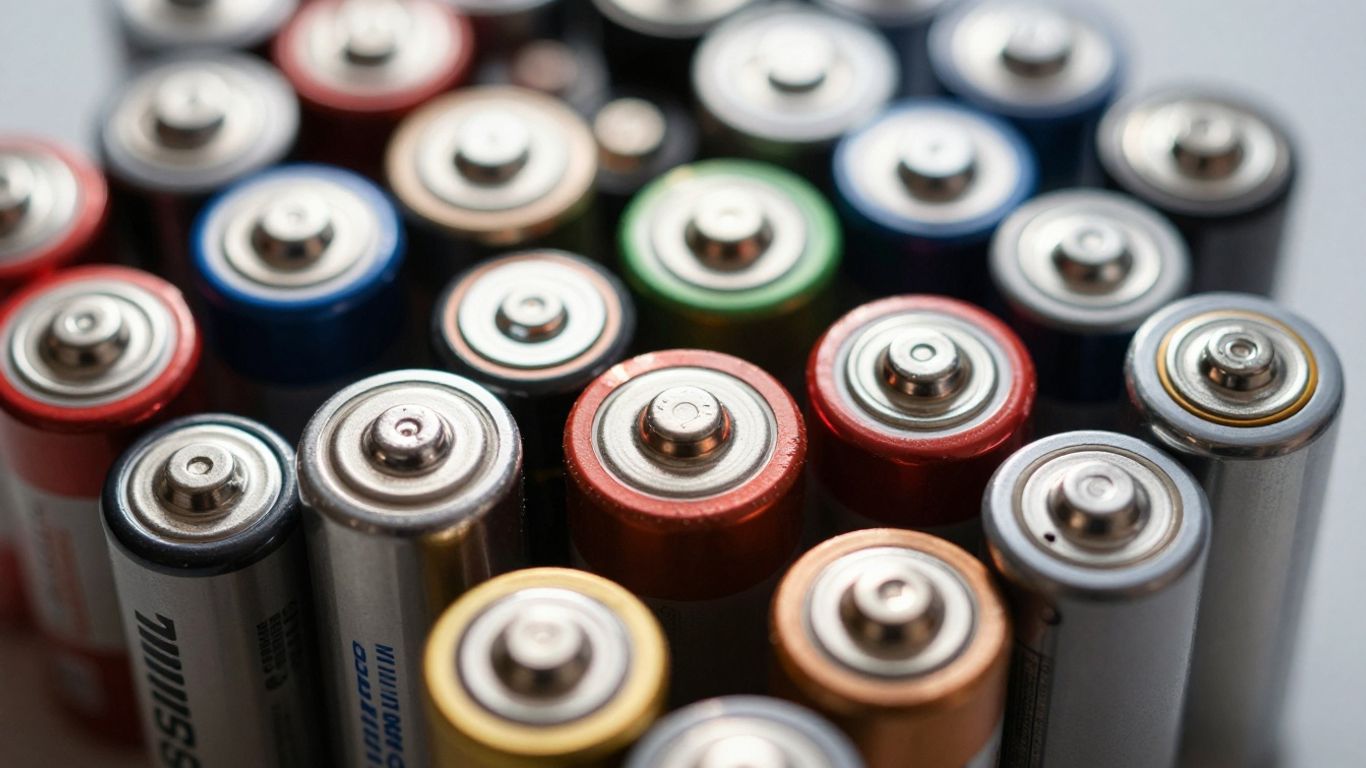
Once common for solar installations, particularly in off-grid locations, lead-acid batteries are now less prevalent in the market. They have several notable disadvantages. Their lifespan is generally limited to about 5 years, and they are not sealed, which requires particular attention during installation and handling. Furthermore, they require regular maintenance to function optimally, and their non-recyclable nature raises environmental concerns. Although they may have been an economical option initially, these constraints make them less attractive for modern solar systems.
Lithium-ion and Lithium Iron Phosphate (LFP) Batteries
Lithium technology now dominates the solar storage market. Lithium batteries offer a significantly longer lifespan, reaching up to 15 years, and are recyclable. Within this family, several sub-types can be distinguished:
- Lithium-ion: These batteries are characterised by high energy density and low self-discharge. They are high-performing but can represent a more substantial initial investment.
- Lithium-ion polymer: They offer a slightly shorter lifespan than standard lithium-ion batteries and are more sensitive to temperature variations, but provide a good level of safety.
- Lithium Iron Phosphate (LiFePO4 or LFP): This is the most widespread technology for solar panels currently. They combine a long lifespan, enhanced safety, and solid performance, making them a preferred choice for many installations. These LFP batteries are often recommended for their excellent durability/performance ratio.
Choosing the Right Battery Technology
The choice of battery technology will depend on several factors, including your budget, your storage needs, and the desired lifespan for your system. For smaller applications, such as motorhomes or auxiliary solar systems, 12V or 24V batteries, including lithium models, can be a suitable solution [b13c]. Monobloc batteries, based on lead technology, may still be appropriate for small installations requiring little maintenance [1831]. However, for a domestic 3000W solar installation, current trends and long-term performance strongly favour lithium-ion batteries, and specifically LFP models, for their reliability and longevity.
The Crucial Role of the Hybrid Inverter
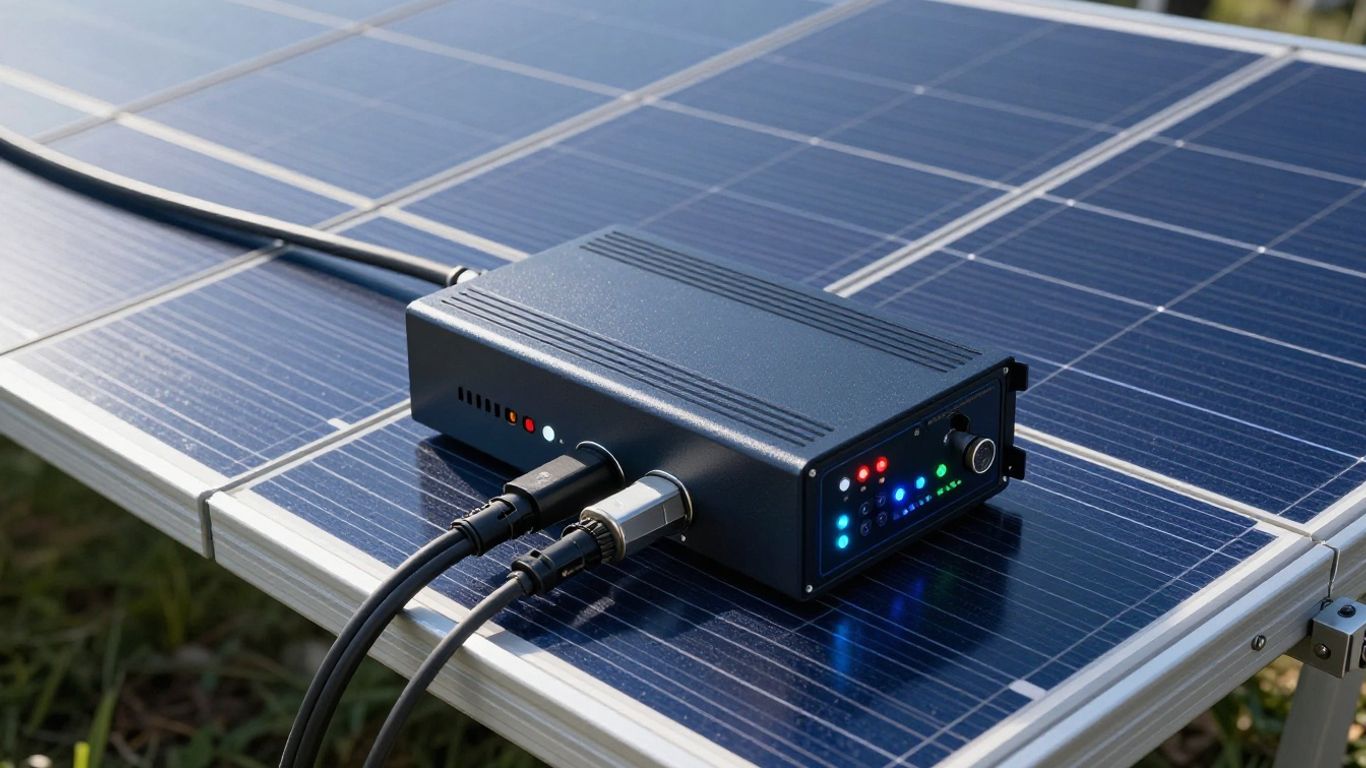
For a solar installation with storage to function correctly, the hybrid inverter plays a central role. It doesn’t just convert the direct current (DC) produced by your panels into alternating current (AC) usable by your appliances, as a conventional inverter would. Its function goes far beyond that.
How a Hybrid Inverter Works
The hybrid inverter is specifically designed to manage both the production from your solar panels, your household’s consumption, and the storage of energy in a battery. It acts as the brain of your system. It constantly monitors the panels’ production, the battery’s state of charge, and your electricity needs. It decides where the energy goes: directly to your appliances, to the battery for storage, or to the public grid if you produce more than you consume and the battery is full.
Battery Charging and Discharging Management
Intelligent battery management is one of the key functions of the hybrid inverter. It uses an Energy Management System (EMS) to optimise charging and discharging. This means it ensures the battery is charged when there is surplus production and discharges to power your home when the panels are not producing enough (e.g., at night or in cloudy weather). This system helps preserve the battery’s lifespan by avoiding overly aggressive charge and discharge cycles. Modern batteries also incorporate their own management system (BMS) for enhanced protection.
The ‘Offgrid’ Option for Total Independence
If your goal is to be as independent as possible from the electricity grid, or if you are in an un-connected area, the ‘Offgrid’ option of the hybrid inverter is what you need. With this configuration, your installation can continue to operate even in the event of a general public grid outage. The inverter automatically switches to the energy stored in the battery to maintain power to your essential appliances. This guarantees continuity for your electricity supply.
It is important to note that the battery’s storage capacity and the inverter’s power must be correctly sized to meet your needs, especially if you opt for ‘Offgrid’ mode. A battery that is too small will not provide the expected independence, while a battery that is too large can represent an unnecessary investment and potentially degrade its lifespan if not used wisely.
Understanding Depth of Discharge and Usable Capacity
When discussing batteries for solar panels, two terms often come up: Depth of Discharge (DoD) and usable capacity. It is important to grasp these concepts to avoid making mistakes when choosing your storage system.
What is Depth of Discharge (DoD)?
Depth of Discharge, often abbreviated as DoD, represents the percentage of a battery’s total capacity that has been used before it is recharged. In simple terms, it is the amount of energy you can draw from your battery without damaging it. The higher the depth of discharge, the more stored energy you can use. For example, a battery with an 80% depth of discharge means you can use 80% of its total capacity before it needs to be recharged.
Impact of Depth of Discharge on Lifespan
It is important to know that fully discharging a battery every time significantly reduces its lifespan. It’s a bit like overworking a muscle: it wears out faster. Manufacturers therefore recommend not exceeding a certain discharge threshold to preserve the battery’s longevity. Modern lithium batteries, for example, generally support a depth of discharge of 80%, which is much better than older lead-acid technologies that often struggled to exceed 50%.
Here is a simplified comparison table:
| Battery Type | Recommended Depth of Discharge | Impact on Lifespan |
|---|---|---|
| Lead-Acid | 50% | Reduced |
| Lithium-ion / LFP | 80% | Optimal |
Usable Capacity vs. Total Capacity: What to Remember
This is where the distinction becomes important. The total capacity of a battery is the maximum amount of energy it can store. However, due to the depth of discharge, you cannot use all of this energy. The usable capacity is therefore the amount of energy actually available for your appliances. It is calculated by multiplying the total capacity by the depth of discharge.
For example, for a 10 kWh battery with an 80% depth of discharge:
Usable capacity = 10 kWh * 0.80 = 8 kWh
So, you have 8 kWh usable, not 10 kWh. It is therefore essential to look at the usable capacity indicated by the manufacturer, or to calculate it yourself, to correctly size your storage system and know how much energy you can actually consume. Also, do not forget that there are always some energy losses during charge and discharge cycles, especially if you use an inverter. For a more precise estimate, you need to take into account the inverter’s efficiency and line losses. For example, to use 1 kWh, you will need to store approximately 1.14 kWh if you have a standard inverter.
It is tempting to want a battery with a huge total capacity, thinking you will maximise your independence. However, excessive capacity that exceeds your actual needs and production capacity represents an unnecessary investment and can even be less efficient in the long run. The goal is to find the right balance between production, storage, and consumption.
Optimising Storage: Should You Multiply Batteries?
It is tempting to think that maximum storage capacity is the ideal solution to keep all your solar energy and avoid buying electricity from the grid. However, multiplying batteries or opting for an oversized model represents a significant financial investment. Furthermore, a large-capacity battery requires a proportional number of solar panels to be properly powered. This leads to the question of whether the savings achieved will justify such an initial investment.
As a general rule, the most sensible approach is to choose a battery whose capacity is reasonably suited to your needs. This allows you to store some of your surplus energy. The rest of this surplus can then be sold to an authorised buyer, which can provide a supplementary income. This strategy often makes your installation more profitable faster than buying excessive storage capacity.
The Limits of Unlimited Storage Capacity
Investing in excessive storage capacity is not always the best option. Your solar panel production varies considerably with the seasons, influenced by daylight hours and sunshine. Your electricity needs, on the other hand, tend to be higher in winter (heating, lighting) than in summer. Accumulating too many batteries can therefore mean a significant investment that will not be fully utilised, especially during the winter months when solar production is lower. It is therefore preferable to adapt the size of your storage system to your actual consumption and production.
Matching the Battery to Your Actual Needs
To determine the appropriate storage capacity, it is essential to assess your daily energy consumption. An annual electricity bill can give you a good indication of your average consumption. There is no point in acquiring a battery whose capacity you will only use a fraction of. The goal is to find a balance: store enough to cover your needs when solar production is low, without over-investing in capacity that will remain unused most of the time. Also, consider the battery’s depth of discharge (DoD), which determines the amount of energy that can actually be used without compromising its lifespan. A battery with a well-defined usable capacity will be more relevant than a theoretical total capacity.
Selling Surplus: A Profitable Strategy
When your solar production exceeds your consumption and battery capacity, selling the surplus becomes an attractive option. Instead of leaving this energy unused or oversizing your storage system, selling it to an obligated buyer can generate income. Although the selling price of surplus energy is generally lower than the purchase price of grid electricity, this approach often leads to greater overall savings than investing heavily in storage. It’s about finding the right balance between self-consumption, storage, and selling surplus to optimise the profitability of your solar installation. For optimal management of your surplus, you might consider virtual storage solutions.
The idea is not to have a gigantic battery, but rather a well-sized battery that meets your specific needs. Unstored surplus can be sold, and energy deficits can be compensated by the grid. This balanced approach is often more economical in the long run.
Precise Sizing of Your Storage System
It is tempting to want maximum storage capacity to keep all your solar energy and minimise purchases from the grid. However, a battery that is too large is not always the ideal solution. Investing in excessive storage capacity represents a higher initial cost, which can extend the return on investment period. Furthermore, a very large battery requires a significant number of solar panels to be properly charged.
Why an Oversized Battery is Not Ideal
Oversized storage capacity can lead to unnecessary costs. It must be considered that the profitability of a solar installation depends on a balance between production, consumption, and storage. A battery that is never filled to its usable capacity represents an investment that will not be fully exploited. It is therefore preferable to aim for a capacity adapted to your actual needs, even if it means selling surplus energy when production exceeds consumption and available storage. Lithium iron phosphate (LFP) batteries are often recommended for their good performance-price ratio and their lifespan.
The Importance of a Balance Between Production and Consumption
The main objective of a solar battery is to smooth out the variations between your panels’ production and your consumption. A well-sized system allows for maximum self-consumption by using stored solar energy during periods when the panels are not producing (night, bad weather). It is therefore necessary to accurately assess your daily and annual consumption, as well as the expected production from your solar panels, taking into account your location and the orientation of your installation.
Considering Seasonal Variations in Production
Solar energy production is not constant throughout the year. In summer, with longer days and stronger sunshine, production is generally higher than in winter. Your electricity needs can also vary, often being higher in winter (heating, lighting). It is therefore necessary to take these seasonal variations into account when sizing your battery. A balanced approach involves sizing the battery to cover a significant portion of your needs during periods of low production, while also planning to sell surplus during summer peaks. This avoids having an underutilised battery for part of the year and an oversized one for the other.
Here is a simplified example to illustrate the importance of balance:
| Season | Solar Production (kWh/day) | Electricity Consumption (kWh/day) | Storage Requirement (kWh) |
|---|---|---|---|
| Summer | 10 – 12 | 10 | 2 – 4 (for the night) |
| Winter | 2 – 4 | 12 | 8 – 10 (to cover the deficit) |
As you can see, storage needs vary significantly. A battery that is too small will not suffice in winter, while a battery that is too large will be underutilised in summer.
Plug-and-Play Solar Kits and Their Batteries
How Small-Scale Solar Kits Work
Plug-and-play solar kits are an increasingly popular solution for those who want to produce their own electricity without undertaking complex work. These systems are designed to be plugged directly into a standard electrical socket, greatly simplifying installation. They are ideal for apartments, balconies, or small houses where a traditional installation would be difficult or even impossible. The idea is to be able to start self-consuming the energy produced almost immediately after plugging it in. It’s an accessible way to get started with solar energy, often without requiring professional intervention for the initial connection. These kits allow for a degree of small-scale energy independence.
Battery Compatibility with Plug-and-Play Installations
For plug-and-play solar kits, integrating a storage battery is an option that can significantly improve independence. Some kits already include a battery, but it is also possible to add one separately. Compatibility is a point to check carefully. Batteries designed for these systems are generally more compact and intended for simplified management. They allow you to store excess energy produced during the day for use in the evening or at night, thereby increasing the self-consumption rate. It is important to ensure that the chosen battery is compatible with the kit’s inverter and complies with current safety standards.
Choosing the Right Battery for a Solar Kit
Choosing the right battery for a plug-and-play kit requires an assessment of your needs. You need to consider the production capacity of your solar kit and your usual electricity consumption. A battery that is too small will not store enough energy, while an oversized battery represents an unnecessary cost and may not be used to its full potential, which can affect its lifespan. Lithium-iron phosphate (LFP) batteries are often recommended for their longevity and safety. It is wise to consult the technical specifications and, if possible, seek advice to find the right balance between capacity, cost, and performance. Remember to check the battery’s depth of discharge (DoD), as it directly influences the amount of energy that can actually be used and the equipment’s lifespan. A battery with a higher DoD will allow you to utilise a larger portion of its total capacity.
Adding a battery to a plug-and-play solar kit transforms a simple installation into a more independent system, capable of providing electricity even when the sun isn’t shining. This requires careful selection to optimise investment and efficiency.
Here are some points to consider when choosing:
- Storage Capacity: Assess your nighttime or no-sun day consumption.
- Output Power: Ensure the battery can power your appliances simultaneously.
- Lifespan: Prioritise technologies offering a long warranty and a high number of charge/discharge cycles.
- Dimensions and Weight: Check if the battery can be easily installed in the available space.
- Connectivity: Some batteries offer apps to track real-time production and consumption.
When to Call a Professional for Your Solar Battery
Installing a storage system for your solar panels is a project that requires careful consideration. One might be tempted to manage everything oneself, especially with the amount of information available online. But let’s be honest, there are times when expert help makes all the difference. It’s a bit like wanting to fix your car: you can watch tutorials, but without the right tools and know-how, you risk doing more damage than repairs.
The Importance of Personalised Expertise
Every home, every consumption pattern, every geographical situation is unique. What works for your neighbour won’t necessarily work for you. A professional will first analyse your actual consumption, the power of your solar installation, and even the orientation of your panels. They will take into account factors like the duration of sunshine in your region, which varies greatly between summer and winter. The aim is to avoid oversizing or undersizing your system, as both scenarios can be costly in the long run. For example, a battery that is too large may never be fully utilised, especially in winter, while a battery that is too small will not cover your needs during peak consumption.
How a Professional Helps with Sizing
Calculating the necessary storage capacity is a key point. You need to balance your panel production, your daily consumption, and the surplus you wish to store. A professional uses precise simulation tools to estimate this. For example, they will explain why it is often more sensible to sell part of the surplus energy rather than storing an excessive amount. They will help you understand the difference between the total capacity and the usable capacity of the battery, taking into account the recommended depth of discharge (DoD) to extend its lifespan. They can also advise you on the best technologies, such as lithium iron phosphate (LFP) batteries, which are often recommended for 3000W installations [c0b7].
Consulting Reviews Before Making a Decision
Before you start, it’s always a good idea to see what other users say. But be careful, online reviews can sometimes be contradictory. A professional can help you interpret these reviews and put them into the context of your project. They can also present you with options you might not have considered, such as plug-and-play solar kits if your situation is suitable, or explain the benefits of a hybrid inverter for optimal energy management. Don’t forget that installing a battery is a long-term investment, and a wrong decision can be costly. Calling an expert ensures an informed choice and a high-performing installation that truly meets your real needs [06c3].
Here are some points to consider when making your choice:
- Your energy needs: What is your average daily consumption? When do you consume the most?
- Your solar production: What is the power of your panels? What is the average sunshine in your region?
- Your budget: How much are you willing to invest in storage?
- Battery lifespan: How many years do you expect your system to last?
Precise sizing of your storage system is key to a profitable and efficient solar installation. You need to find the right balance between sufficient storage capacity to cover your needs and a reasonable investment, taking into account seasonal variations in production and consumption.
Wondering when it’s time to seek help for your solar battery? If you notice your system isn’t performing as well as it used to, or if you have doubts about its maintenance, it might be time to call in an expert. Don’t wait for small problems to become big issues! For personalised advice and professional assistance, visit our website today.
Conclusion: What Choice to Make for Your Solar Battery?
Choosing the right battery for your 3000W solar installation is a bit like choosing the right companion for a long journey. It requires thought. We’ve seen that there are options, from physical batteries to virtual solutions, and each has its advantages. For many, a physical battery isn’t always the immediate answer, especially due to cost and lifespan. But if you’re aiming for total independence or are in an isolated area, it can truly be a game-changer. The most important thing is to accurately calculate your real needs. A battery that’s too large is money down the drain, and one that’s too small won’t be of much use. Think about usable capacity, not just total capacity, and don’t forget the depth of discharge. And frankly, to avoid making mistakes, asking for a professional’s opinion is often the best idea. They can help you find the right balance so that your investment is profitable and truly matches your lifestyle.
Frequently Asked Questions
Why put a battery with solar panels?
Installing a battery with your solar panels is like having your own energy reserve. When your panels produce more electricity than you use, the battery keeps it for later. This way, you can use this stored energy in the evening or when there’s no sun, making you less dependent on the electricity grid and potentially lowering your bills.
Can you use solar panels without a battery?
Absolutely! You can definitely use your solar panels without a battery. The electricity produced will be consumed directly by your appliances. If you produce more than you consume at that moment, the surplus is then sold to the grid. This is a simpler option to start with, without the initial investment of a battery.
How do I know what size battery to choose?
To choose the right battery size, you need to look at how much electricity you generally consume, especially in the evening when the panels aren’t producing. Check your old electricity bills to get an idea of your daily consumption. You need to find a balance: a battery that’s too small won’t store enough, and one that’s too large will be expensive and won’t be fully utilised.
What is the difference between a battery’s total capacity and usable capacity?
Total capacity is the maximum amount of energy the battery can hold. But you can’t always use all of that energy without damaging the battery. Usable capacity is the amount of energy you can actually use safely to extend the battery’s life. It’s this usable capacity you should look at to correctly size your needs.
Do I need to buy multiple batteries?
Not necessarily. It’s often smarter to have a battery whose capacity closely matches your actual needs. If you produce much more energy than you can store, it’s more profitable to sell that surplus to the grid rather than buying a huge battery that won’t always be full. You need to find the right balance.
What is a hybrid inverter and why is it important?
The hybrid inverter is the conductor of your solar installation with a battery. It doesn’t just convert the current from your panels into usable electricity for your home; it also intelligently manages the charging and discharging of your battery. It decides when to store energy, when to use it, and when to draw from the grid if necessary, all while protecting your battery.
Can ‘plug-and-play’ solar kits have a battery?
Yes, absolutely! ‘Plug-and-play’ solar kits, which are simpler to install, can also be equipped with batteries. Some kits are sold directly with a small battery, and for others, you can add one separately. The idea remains the same: store the energy produced to use it when you need it.
Should I hire a professional to choose my battery?
It is strongly recommended to consult a professional. Choosing the right battery depends on many factors: your consumption, your panel power, your location, etc. An expert can perform precise calculations to help you choose the ideal capacity and the most suitable technology, thus avoiding costly mistakes and ensuring your system functions optimally.

Journaliste spécialisée en transition énergétique et consultante RSE. À 42 ans, Claire combine une formation en journalisme (Master Sciences Po) et un diplôme d’ingénierie environnementale (École des Mines / INSA). Après 10 ans dans la presse économique et 7 ans en cabinet de conseil RSE, elle écrit pour aider les décideurs B2B à comprendre les réglementations, les enjeux climatiques et les innovations énergétiques.